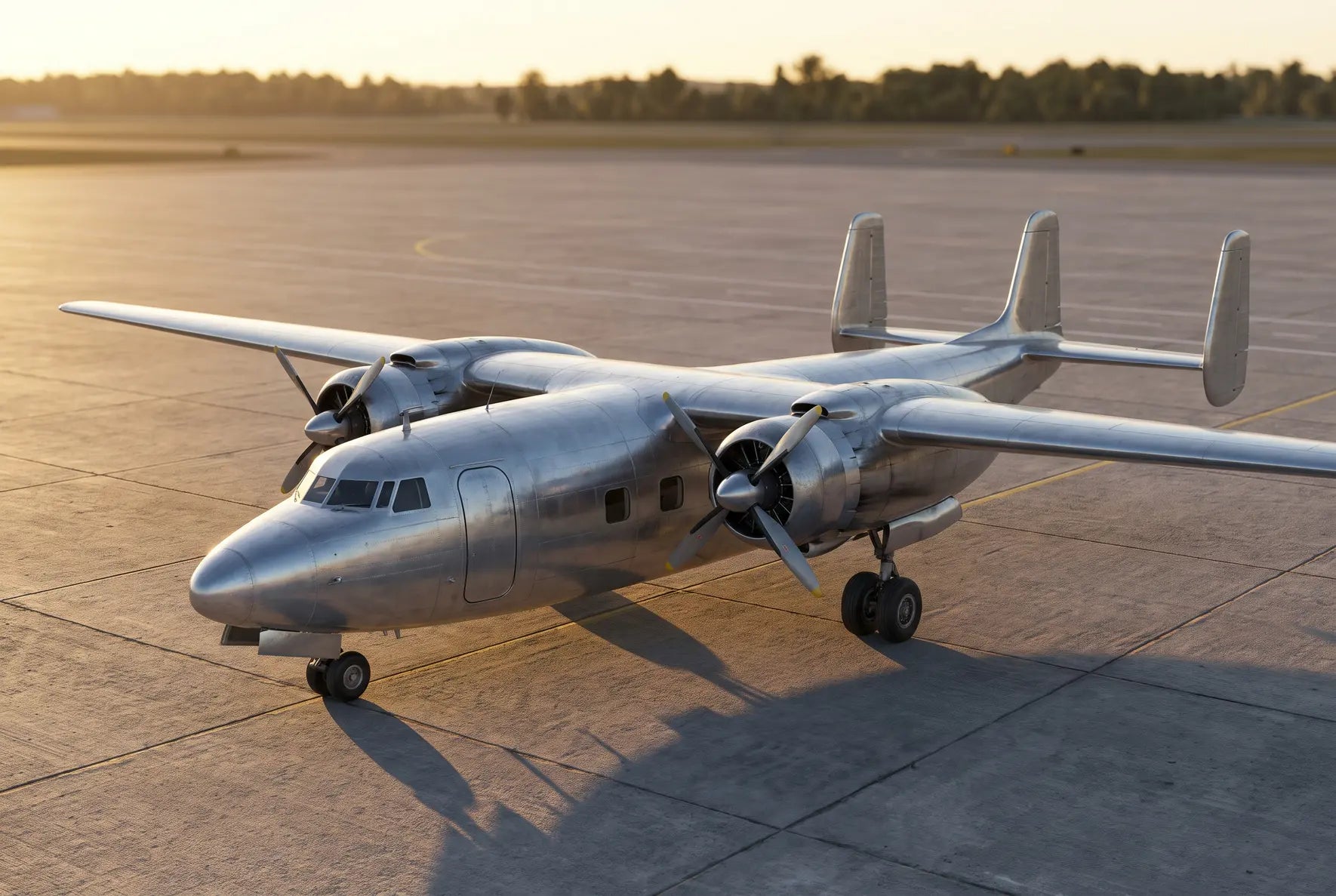
History and Development of the Airspeed Ambassador (AS.57)
The Airspeed AS.57 Ambassador was one of Britain's most technically ambitious post-war airliners, conceived as a modern, pressurised replacement for the ubiquitous Douglas DC-3 on short- and medium-haul European routes. Its origins lay in the wartime Brabazon Committee, which defined the future needs of British commercial aviation. The Ambassador answered the Committee's Type 2 / Type IIA recommendation and Specification C.25/43 for a piston-engined feederliner offering higher speed, greater comfort and cabin pressurisation than the unpressurised transports of the era.
The aircraft was designed and built by Airspeed Ltd, with the design led by A. E. Hagg, later remembered as one of the most elegant British airliners of its generation. Airspeed received its Brabazon Type IIA contract in 1945, and detailed prototype work began soon after the war.
The chronological development milestones are well documented:
- First prototype (G-AGUA) made its maiden flight at Christchurch, Dorset on 10 July 1947, flown by test pilot George Errington.
- Public debut at the Farnborough Air Show in September 1947.
- Second prototype (G-AKRD) first flew on 26 August 1948.
- British European Airways (BEA) ordered 20 aircraft in September 1948.
- The first production Ambassador 2 (G-ALZN) flew on 10 April 1951.
- BEA entered the type into scheduled service on 13 March 1952, initially on the London to Paris Le Bourget route.
A total of 23 airframes were built between 1947 and 1953, comprising two prototypes and 21 production aircraft. BEA marketed its fleet as the "Elizabethan Class", naming individual aircraft after Elizabethan-era figures. The airline flew its last Ambassador service on 30 July 1958, replacing the type with the turboprop Vickers Viscount. Ex-BEA aircraft continued in charter and scheduled work with independent operators such as Dan-Air, Autair and BKS Air Transport well into the 1960s.
The Ambassador is also indelibly linked with the Munich air disaster. On 6 February 1958, BEA Ambassador G-ALZU, operating Flight 609 and carrying the Manchester United football team, crashed on its third take-off attempt at Munich-Riem Airport in slush conditions, killing 23 of the 44 people on board. The tragedy shaped public memory of the type and remains one of the best-known aviation accidents of the 1950s.
What set this variant apart
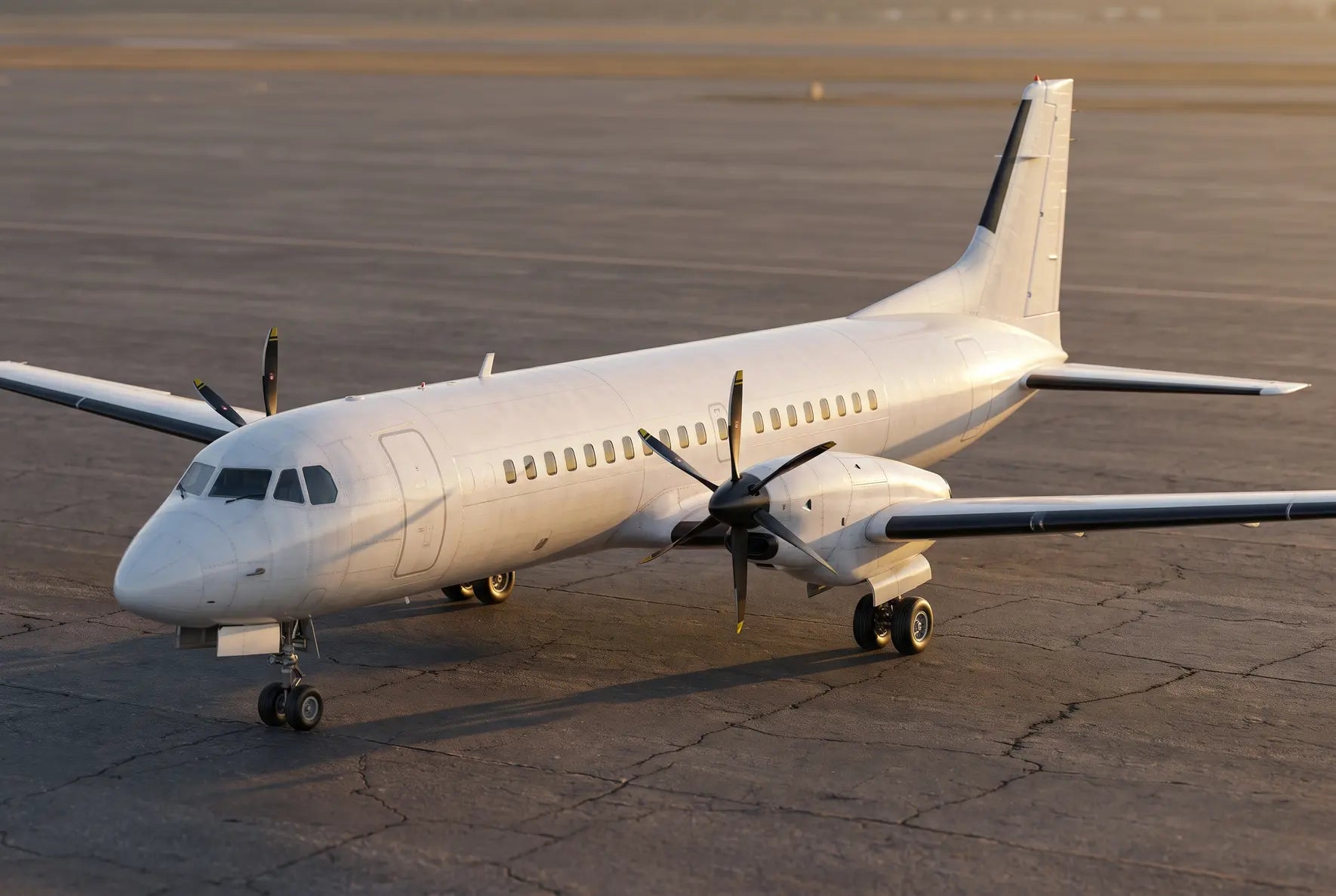
The airline-standard Ambassador 2 represented the fully developed configuration, distinct from the earlier prototypes that flew with lower-rated Centaurus engines and detail differences in structure and cabin fit. The production version combined a pressurised circular fuselage, refined aerodynamics and the definitive Bristol Centaurus 661 radial engines. Unusually for a European pressurised airliner of its day, the Ambassador used a high-wing, laminar-flow cantilever layout rather than the low wing of contemporaries such as the Douglas DC-6 or the Handley Page Hermes, giving it competitive cruise performance and a striking silhouette accentuated by its distinctive triple tail. Technical details are documented in aviation references such as flugzeuginfo.net and Aeropedia.
The following identifiers summarise the features that define the production Ambassador 2:
- Engines: two Bristol Centaurus 661 18-cylinder, sleeve-valve radials, roughly 2,600 to 2,625 hp each.
- Configuration: all-metal high-wing cantilever monoplane with a laminar-flow, high-aspect-ratio wing and integral fuel tanks.
- Tail: distinctive triple fins and rudders mounted on the tailplane.
- Fuselage: pressurised, near-circular cross-section for comfortable operation around 20,000 ft.
- Undercarriage: retractable tricycle gear, main units retracting forward into the engine nacelles.
- Capacity: typically 47 passengers in BEA layout, up to 60 in high-density configurations.
- Dimensions: wingspan about 115 ft (35.05 m); length about 82 ft (25 m).
- Weights and performance: maximum take-off weight around 52,000 lb; cruise near 300 mph at 20,000 ft; maximum speed about 312 mph.
Technically sophisticated yet piston-powered, the Ambassador occupied a short transitional niche between the piston and turboprop eras. Its advanced aerodynamics and passenger comfort earned it praise, but the arrival of the faster, smoother Vickers Viscount turboprop quickly outclassed it, explaining both its relatively brief front-line career and its modest production run.

A vintage Dan-Air London aircraft is parked on the tarmac, with ground crew visible beside it. The airplane is positioned at an airport with signs and baggage carts nearby.
Airspeed AS.57 Ambassador: Technical Specifications and Systems
The Airspeed AS.57 Ambassador was conceived in 1943 under the British Brabazon Committee as a pressurised, twin-piston short- and medium-haul airliner intended to replace the Douglas DC-3 on European routes. Its design priorities were passenger comfort, cruise efficiency and respectable field performance rather than long range, which is why it paired a high-mounted, high aspect-ratio laminar-flow wing with a near-circular pressurised fuselage and a distinctive triple-fin tail. The result was an aircraft clearly faster and more comfortable than the DC-3, though it was soon eclipsed commercially by the turboprop Vickers Viscount.
As a member of the immediate post-war British airliner generation, the Ambassador inherited all-metal construction methods and Bristol sleeve-valve radial technology, while introducing a retractable tricycle undercarriage that improved ground handling, cockpit visibility and cabin-floor level for boarding. Only 23 airframes were built between 1947 and 1953, most operated by British European Airways as the Elizabethan Class.
- Wingspan: 35.05 m (115 ft)
- Length: 24.69 m (81 ft)
- Height: approximately 5.59 m (18 ft 4 in)
- Wing area: around 111 m2 (1,200 sq ft)
- Empty weight: 16,277 kg (35,884 lb)
- Maximum take-off weight: 23,587 kg (52,000 lb)
- Cruise speed: about 483 km/h (300 mph) at 20,000 ft, 65% power
- Maximum speed: approximately 502 km/h (312 mph)
- Service ceiling: operationally around 7,300 to 7,600 m (24,000 to 25,000 ft)
- Range: around 720 miles with standard fuel and full payload, up to roughly 1,950 miles at economical cruise with optional centre-section tanks
- Fuel capacity: 1,000 imp gal in integral wing tanks, with provision for a further 600 imp gal in centre-section bag tanks
- Powerplant: two Bristol Centaurus 661 sleeve-valve radials, about 2,625 hp (1,957 kW) take-off each
- Accommodation: flight crew of three; typically 47 passengers, up to 60 in high-density layouts
Systems, handling and performance context
The Ambassador used a conventional mechanical flight-control system, with ailerons, elevators and rudders acting on a triple-fin tail that supplied adequate directional stability. Its NACA laminar-flow wing was optimised for efficient cruise rather than very short-field work, yet the aircraft still managed a take-off run of roughly 3,270 ft and a landing distance near 2,565 ft at maximum weight, which suited moderately sized European airfields. Contemporary accounts describe it as stable and pleasant to fly, and its pressurised fuselage allowed comfortable operation at around 20,000 ft. Avionics reflected 1950s IFR practice, with VHF communications, ADF and standard flight instrumentation appropriate to BEA's short-haul network. This kind of network and equipment context sits at the heart of how carriers differentiate their fleets, a theme explored in our overview of the differences between low-cost and legacy airlines.
Published figures for the Ambassador vary noticeably between sources, and this is expected rather than contradictory. Cruise speed, range and ceiling depend on power setting, cabin density, take-off weight, fuel fit (wing tanks alone versus additional bag tanks) and atmospheric assumptions. A quoted 300 mph cruise at high power differs from lower airline scheduling speeds, and a 720-mile full-payload range is not comparable to a maximum-fuel figure. Numbers should therefore be read with their stated conditions in mind rather than as absolute values.
The Bristol Centaurus 661 engines
Production Ambassadors were powered by two Bristol Centaurus 661 engines, each an 18-cylinder, two-row, air-cooled radial developed by the Bristol Aeroplane Company. The Centaurus family originated in the late 1930s as a large-displacement successor to earlier Bristol radials such as the Hercules, and it employed Bristol's signature sleeve-valve mechanism instead of conventional poppet valves. This gave good volumetric efficiency and smooth running, and with roughly 53.6 litres of displacement the Centaurus is often cited as one of the most powerful British piston aero engines to reach production service. A two-speed supercharger maintained performance at altitude.
Beyond the Ambassador, the Centaurus powered a range of late-war and post-war British types, including the Hawker Sea Fury naval fighter, the Hawker Tempest II, the Blackburn Firebrand, and Bristol's own Brigand and Buckingham. Its arrival at the practical power and complexity limit of large piston engines coincided with the rise of turboprops and jets, which soon displaced it, mirroring the Ambassador's own brief front-line career.
Airspeed Ambassador vs DC-4 vs Viscount 700 vs Lockheed Constellation L-749A Specifications
Scroll horizontally to see more →
| Parameter | Airspeed Ambassador | Douglas DC-4 | Vickers Viscount 700 | Lockheed Constellation L-749A |
|---|---|---|---|---|
| Entry into service | 1947 | 1942 | 1953 | 1947 |
| Engines | 2 × Bristol Centaurus 661 piston engines | 4 × Pratt & Whitney R-2000 radial piston engines | 4 × Rolls-Royce Dart turboprops | 4 × Wright R-3350 radial piston engines |
| Length | 25.0 m | 28.6 m | 28.2 m | 29.2 m |
| Wingspan | 35.1 m | 35.8 m | 32.0 m | 37.5 m |
| Height | 5.6 m | 8.4 m | 8.5 m | 7.2 m |
| Typical seating and layout (short description + approximate passengers) | 2-class: 47–60 passengers | 2-class: 44–62 passengers | 2-class: 48–71 passengers | 2-class: 60–95 passengers |
| MTOW | 26 t | 33 t | 27 t | 52 t |
| Range | 780 nm | 2,200 nm | 1,700 nm | 4,150 nm |
| Cruise speed | 0.26 Mach | 0.24 Mach | 0.40 Mach | 0.35 Mach |
| Service ceiling | 24,000 ft | 22,300 ft | 25,000 ft | 24,000 ft |
| Program note | Main British postwar pressurised short-to-medium-haul airliner; a refined four-spar high-wing piston transport for premium trunk routes. | Earlier unpressurised four-engine piston airliner; a larger long-range baseline for comparison in the same broad era. | Early turboprop short-haul airliner; a later, faster successor in the same regional market niche. | Long-range four-engine piston airliner; a larger intercontinental competitor from the same generation. |
Scroll horizontally to see more →
The table compares four mid-century airliners across size, powerplants, capacity, and performance. The Airspeed Ambassador is smaller and lighter than the DC-4 and far below the L-749A in MTOW and range (780 nm vs 2,200 and 4,150 nm). The Viscount 700 stands out for turboprops and the highest cruise Mach (0.40), while the Constellation offers the longest range and greatest seating potential.
Airspeed Ambassador Operations: Routes, Missions and Airlines Worldwide
The Airspeed AS.57 Ambassador was conceived as a pressurised short- to medium-haul airliner, built to replace the Douglas DC-3 on European trunk routes. With a practical commercial range of roughly 1,400 to 2,200 km and a cruise speed near 415 to 420 km/h, it was suited to stage lengths between about 300 and 1,200 km. Typical missions included short intra-European hops such as London to Paris (around 340 km) and slightly longer legs like London to Zurich (around 800 km). You can review the full technical profile on the Airspeed Ambassador reference page.
Only 23 aircraft were built between 1947 and 1953, so utilisation was concentrated rather than widespread. In scheduled service it worked hub-and-spoke networks centred on major hubs like London Heathrow, feeding secondary European capitals. After withdrawal from front-line scheduled duty, the fleet migrated to point-to-point charter and inclusive-tour work, where its higher capacity and better performance than the DC-3 were valued. The main operational challenge for later operators was the small, ageing fleet: piston-engine economics, limited spares and the rapid arrival of jet and turboprop competitors shortened its commercial life.
Where the Airspeed Ambassador operates
The type was overwhelmingly a European aircraft, with limited spread into Asia (the Middle East) and Oceania. In Europe it served both scheduled trunk routes and, later, holiday charter networks. Available operator records do not confirm airline operations across the Americas (neither North America nor South America) or across continental Africa, so its geographic footprint remained narrow compared with contemporaries.
In Europe the aircraft handled short- and medium-haul passenger duties from London and other bases. In Asia its only documented use was a military transport role in Jordan. No scheduled or charter operators in the Americas or in Africa are documented in the surviving fleet lists.
- Europe: British European Airways (BEA) was the principal original customer, operating up to 22 aircraft from 1952 to 1960 as its Elizabethan Class, inaugurating the type on London to Paris on 13 March 1952 and running short- to medium-haul continental services until scheduled use ended on 30 July 1958. Dan-Air became the major post-BEA user, flying inclusive-tour and charter services; BKS Air Transport, Autair and the Swiss carrier Globe Air also operated the type on European charter work into the 1960s and early 1970s.
- North & South America: no confirmed airline operators of the type are documented in either region.
- Asia: the Royal Jordanian Air Force operated three aircraft from 1959 in a state and military transport role, the type's principal use in the Middle East.
- Africa: no confirmed airline operators of the type are documented on the continent.
Typical seating configurations
Cabin layouts varied with the operator and mission. The standard BEA Elizabethan Class configuration was designed for around 50 passengers, reflecting a network carrier balancing comfort and capacity on short trunk routes. Lower-density or mixed layouts fell in the 47 to 49 seat range, offering more generous pitch, while high-density charter fits reached the maximum certified 60 seats. As a rule, network operators favoured the mid-range 47 to 50 seat cabins, whereas leisure and inclusive-tour operators such as Dan-Air pushed towards the upper end to improve seat-mile economics. The pressurised, triple-fin, high-wing design gave a relatively quiet and comfortable cabin for its era. Detailed period figures and operator histories are summarised by the British Airliner Collection and the Aeropedia technical entry. For context on how legacy short-haul fleets shape regional flying careers, see our overview of Gulf Air pilot conditions.
In this video, discover the Airspeed Ambassador, the Silver Wing and an often overlooked hero of 1950s aviation. Learn why this distinctive aircraft mattered and what set its design and service apart.
Airspeed Ambassador Safety Record: How Safe Is This Airliner?
The Airspeed AS.57 Ambassador was a small fleet by any measure, with only 23 airframes built between 1947 and 1953. Its most intensive service came with British European Airways (BEA), which operated around 20 examples branded as the "Elizabethan Class" from 1952 until the final BEA flight on 30 July 1958. During that period the type carried roughly 2.4 million passengers over some 31 million miles, before further service with charter and scheduled operators such as Dan-Air, BKS Air Transport and Autair into the 1960s. Set against that traffic, the Ambassador's accident history is limited: aviation summaries record around seven hull losses across the type's life, of which two were fatal. For a piston-engined airliner of the early 1950s, operating on short European runways in demanding winter weather, that record is broadly consistent with its contemporaries and does not point to any systemic design flaw.
Major accidents and what changed afterwards
Two events stand out in the type's history, and each shaped later operating practice.
- BEA Flight 609, Munich, 6 February 1958. An Ambassador (registration G-ALZU) carrying the Manchester United team and officials failed to become airborne during a third take-off attempt from a slush-contaminated runway at Munich-Riem, overran the surface and broke up, resulting in 21 deaths. The official investigation, and a subsequent British review, concluded that slush on the runway created decelerating drag that prevented the aircraft reaching safe lift-off speed, rather than engine failure or inadequate de-icing. Captain James Thain was ultimately exonerated. The accident became a landmark case in runway-contamination research, prompting systematic studies of slush and standing-water drag, the introduction of contaminated-runway take-off performance corrections, and more rigorous runway condition reporting later reflected in ICAO standards.
- Other hull losses. The remaining fatal and non-fatal write-offs were largely individual operational mishaps, typically landing accidents, overruns in adverse weather or ground-handling damage. Details for individual events can be reviewed through recognised safety databases such as the Aviation Safety Network. Importantly, these were isolated occurrences rather than a recurring technical defect, which is why the Ambassador never attracted the airworthiness concerns seen with some other postwar designs.
How safe is the Airspeed Ambassador?
Judged against traffic volume, the Ambassador's safety profile was acceptable for its generation. It featured all-metal construction, a pressurised cabin, a high-aspect-ratio wing and a three-fin tail arrangement that offered sound directional stability, with a three-person crew and conservative Bristol Centaurus radial engines. Where accidents occurred, weather and immature contaminated-runway procedures were more decisive than the airframe itself, and the standard operating procedures and regulatory oversight of the era were still evolving, as the Munich inquiry demonstrated. The aircraft was eventually eclipsed commercially by the turboprop Vickers Viscount rather than retired for safety reasons. Readers comparing early piston airliners with later heavy types may find the contrast with a modern freighter such as the Boeing 747-200F instructive, as decades of accumulated lessons have progressively tightened design and operational margins. Viewed in that long-term context, and supported by industry safety data, the overriding conclusion holds that aviation remains one of the safest modes of transport.
01 What kind of routes and range was the Airspeed Ambassador designed for?
The Airspeed Ambassador was designed as a short- to medium-haul airliner, originally to replace the Douglas DC-3 on busy regional routes within Europe and to nearby destinations. Typical operations included sectors of a few hundred miles, such as domestic UK services and cross‑Channel flights for British European Airways. Depending on payload and cruise speed, maximum range with lighter loads and full fuel could exceed 1,600 nautical miles, but airlines usually used the Ambassador on routes well below its theoretical maximum. This made it well suited to frequent, multi-leg schedules rather than long non‑stop journeys.
02 What was the passenger experience like inside an Airspeed Ambassador cabin?
The Airspeed Ambassador offered a relatively modern cabin for its era, with options for pressurisation that allowed more comfortable cruising at higher altitudes than older unpressurised piston airliners. Standard layouts carried around 40–47 passengers, with BEA using both economy and more spacious first‑class “Silver Wing” configurations. The high‑mounted wing kept engines and propellers below the cabin floor, which helped reduce some vibration and gave passengers good downward visibility through the windows. However, as a large piston‑engined aircraft, it remained noisier and less smooth than later turboprops and jets, especially during take‑off and climb.
03 Which airlines operated the Airspeed Ambassador and on what kinds of routes?
The main operator of the Airspeed Ambassador was British European Airways (BEA), which ordered the type as its post‑war DC‑3 replacement on European and domestic UK routes. BEA flew the Ambassador on services such as London to major UK cities and to nearby European destinations, often branding the fleet as the “Elizabethan Class.” After BEA introduced the Vickers Viscount, several Ambassadors moved to charter operators that used them for inclusive‑tour flights and ad‑hoc holiday charters. In total, only 23 aircraft were built, so the type never achieved the widespread global presence of larger contemporary airliners.
04 How does the performance of the Airspeed Ambassador compare with similar aircraft of its time?
Powered by two Bristol Centaurus radial engines, the Airspeed Ambassador cruised at around 300 mph (about 260 knots) at 20,000 feet, which was competitive with other large piston airliners of the early 1950s. Its service ceiling of roughly 24,000–25,000 feet and ability to carry around 40–60 passengers placed it between smaller types like the DC‑3 and more advanced early turboprops such as the Vickers Viscount. While the Ambassador’s fuel efficiency and speed were reasonable for a piston design, turboprops soon surpassed it in operating economics and performance. This performance gap was a major reason why the Ambassador’s airline service life was relatively short.
05 What is known about the safety record and key design features of the Airspeed Ambassador?
The Airspeed Ambassador incorporated several forward‑looking design features for its era, including an all‑metal, high‑wing structure and optional pressurised fuselage, aimed at improving passenger comfort and operational flexibility. It had a crew of three and robust landing gear designed for medium‑length runways, supporting operations into many post‑war European airports. Safety performance must be viewed in the context of 1950s piston airliner operations, where engine reliability and navigation technology were not at modern standards, but the Ambassador did not develop a reputation for unusual structural or handling problems. Its relatively small fleet size means the statistical record is limited compared with large contemporaries like the DC‑3.
06 If travelling on an Airspeed Ambassador today, what would a passenger notice about seating, windows and ride quality?
A passenger would experience a narrow‑body cabin with 2‑abreast seating on each side of the aisle in most configurations, giving a relatively intimate feel compared with modern high‑capacity jets. The high wing and large radial engines below the cabin would produce noticeable propeller noise and some low‑frequency vibration, especially near the wing root and over the engines, so seats further forward or aft would likely feel slightly quieter. Window views would be good, with little wing structure blocking the horizon, making the Ambassador popular for enthusiasts who value scenery. In turbulence, its sturdy high‑wing design and moderate speed would give a firm but predictable ride, typical of large piston airliners from the early post‑war period.