


Air Algérie Overview & Company Profile
Air Algérie is the flag carrier of Algeria and one of the oldest airlines on the African continent. Its roots trace back to 1947, when the Compagnie Générale de Transports Aériens (CGTA) was founded under French colonial rule to connect Algeria with mainland France. In 1953, the carrier merged with Compagnie Air Transport, an Air France subsidiary, to form Air Algérie. Following Algeria's independence in 1962, the government progressively took control, and by 1972, the airline became 100% state-owned, a status it retains to this day under the Ministry of Transport.
Headquartered in Algiers and operating from its main hub at Houari Boumediene International Airport (ALG), Air Algérie currently serves 81 destinations across 30 countries, along with 33 domestic airports. In 2025, the airline transported 8.8 million passengers (an 11% year-on-year increase), and management has set a target of 9.8 million for 2026. The airline is a member of the International Air Transport Association (IATA), the Arab Air Carriers Organization (AACO), and the African Airlines Association (AFRAA), though it does not belong to any global alliance. Under CEO Hamza Benhamouda, the airline is undergoing a major restructuring to transform into a holding company with specialized subsidiaries for domestic flights, ground operations, maintenance, and pilot training.
Fleet Composition & Renewal Programme
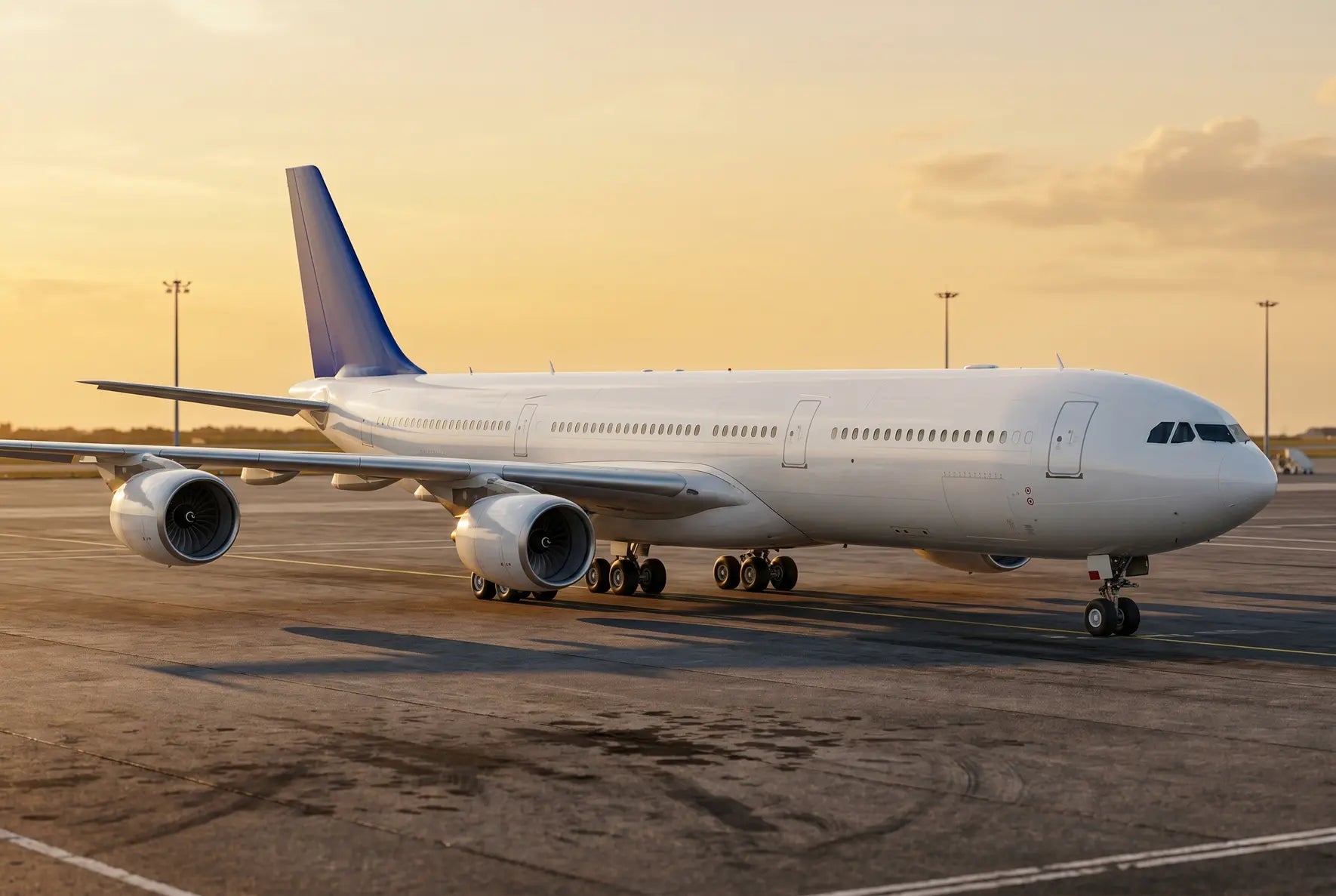
Air Algérie operates a mixed fleet of Boeing narrowbodies for short- and medium-haul routes, Airbus widebodies for long-haul services, and ATR turboprops for domestic and regional connections. With an average fleet age of approximately 17 years, the airline has historically been among the older-fleet operators in North Africa. That is changing rapidly: a major fleet renewal programme launched in 2023 is injecting new-generation aircraft into the fleet, with deliveries of the Airbus A330-900neo already underway and Boeing 737-9 MAX and ATR 72-600 aircraft on order.
| Aircraft Type | Role | In Service | Notes |
|---|---|---|---|
| Boeing 737-800 | Narrowbody | 25 | Core short/medium-haul workhorse. Europe, North Africa, Middle East, domestic trunk routes. |
| Boeing 737-600 | Narrowbody | 5 | Smallest NG variant. Ageing fleet (20+ years). Slated for retirement once 737 MAX arrives. |
| Boeing 737-700C | Combi | 2 | Convertible passenger/cargo in ~30 minutes. Used for cargo ops and seasonal flexibility. |
| Airbus A330-200 | Widebody | 8 | Long-haul fleet. 3-class layout (18J + 14W + 219Y). Being supplemented, then replaced, by A330neo. |
| Airbus A330-900neo | Widebody | 2 | First delivered Nov 2025 ("November 54"). 3 classes: 18J + 24W + 266Y. 8 more on order. |
| ATR 72-500 | Regional Turboprop | 12 | Domestic routes. Operated by Domestic Airlines subsidiary (launched Aug 2025). |
| ATR 72-600 | Regional Turboprop | 3 | Newer variant. 16 additional on order from ATR, deliveries from June 2026. |
Fleet data based on Flightradar24 and industry sources as of early 2026. One Lockheed C-130 Hercules is also operated for cargo. Numbers exclude temporarily parked or stored aircraft.
The centrepiece of the renewal is the Airbus A330-900neo. According to Airbus, Air Algérie will receive a total of 10 A330neos, making it the largest operator of the type in Africa. These aircraft will enable the airline to launch transatlantic routes (Montreal, potentially New York) and new Asian services (Guangzhou, Kuala Lumpur via codeshare). On the narrowbody side, 8 Boeing 737-9 MAX aircraft are on order, with deliveries expected from 2027, replacing the ageing 737-600 fleet. For the domestic network, a record order of 16 ATR 72-600s will strengthen the Domestic Airlines subsidiary starting mid-2026.
New First Officers at Air Algérie are typically assigned to the Boeing 737-800 for short- and medium-haul operations, or to the ATR 72 for the domestic network. Transition to widebody operations (A330-200 or A330neo) is seniority-based. With 10 new A330neos entering the fleet over the next two years, widebody transition opportunities should increase. Air Algérie has partnered with CPaT Global for e-learning pilot training across all fleet types.
Pilot Salary & Compensation
Air Algérie pilot salaries are paid in Algerian Dinar (DZD), which is subject to a significant gap between the official exchange rate and the parallel market rate. This makes euro-equivalent comparisons challenging. Compensation includes a monthly base salary, flight-hour supplements, per diem allowances for layovers, and seniority-based increments. There is no publicly documented profit-sharing or bonus scheme comparable to European carriers. Salaries are negotiated through the SPLA (Syndicat National des Pilotes de Ligne Algériens) collective agreement.
First Officer (Copilote / OPL) Pay Scale
| Seniority | Monthly Gross (DZD) | Euro Equivalent (est.) | Notes |
|---|---|---|---|
| Entry (ATR / domestic) | ~200,000 DZD | ~€1,200 - €1,500 | First assignment, typically on turboprop fleet. |
| Confirmed F/O (B737) | ~500,000 DZD | ~€3,000 - €3,700 | After initial training and line check. Short/medium-haul Boeing operations. |
| Senior F/O (B737) | ~650,000 - 800,000 DZD | ~€4,000 - €5,100 | Experienced narrowbody F/O. Upper range per job listing data. |
Captain (Commandant de Bord / CDB) Pay Scale
| Seniority / Fleet | Monthly Gross (DZD) | Euro Equivalent (est.) | Notes |
|---|---|---|---|
| Captain (short/medium-haul B737) | ~800,000 - 1,000,000 DZD | ~€5,000 - €6,200 | Base Captain on Boeing 737 European and regional routes. |
| Captain (long-haul A330) | ~1,000,000 - 1,500,000 DZD | ~€6,200 - €9,500 | Widebody operations. Montreal, China, Gulf routes. Highest compensation band. |
Figures are estimates compiled from industry reports, pilot job postings, and Algerian economic analysis sources. Euro equivalents use approximate blended rates (~160 DZD/€) given the gap between official and parallel exchange rates.
These figures should be interpreted with caution. The Algerian Dinar is not freely convertible, and the parallel market rate can be 40-50% weaker than the official rate. This means the purchasing power of these salaries within Algeria is significantly higher than the euro equivalent suggests, but remitting funds abroad is complicated. Compared to European carriers, Air Algérie salaries are substantially lower in absolute terms. However, the cost of living in Algeria is also dramatically lower: housing, food, and daily expenses are a fraction of Paris or London prices. Pilots should factor in local purchasing power when evaluating compensation. Always verify current figures with the SPLA union or Air Algérie HR directly.
Roster Pattern & Quality of Life
Air Algérie operates under Algerian civil aviation regulations supervised by the ANAC (Agence Nationale de l'Aviation Civile), with flight and duty time limitations defined in the SPLA collective agreement for flight crew (Personnel Navigant Technique). The rules broadly align with ICAO standards, though they are not EASA-compliant as Algeria is not an EASA member state. The roster framework is structured around monthly and weekly caps, with specific rest provisions for different operation types.
Under the SPLA agreement, pilots receive a mandatory 36 consecutive hours of rest after every 7 service days, including 2 local nights. The maximum interval between weekly rest periods is 168 hours. Each civil month must include at least one rest period covering both a Friday and a Saturday (Algeria's weekend). For pilots returning from layovers, rest requirements scale with the duration of absence: 36 hours for absences under 72 hours, and 56 hours for absences of 72 hours or more.
📅 Sample Month: Medium-Haul First Officer (ALG, Boeing 737)
Long-haul crews operating the A330 on routes to Paris, Montreal, or Guangzhou follow different patterns. Typical rotations involve 1-2 days of flying with a 24-48 hour layover at destination, followed by recovery days at base. Pre-flight rest at base must be at least 24 hours for long-haul sectors. Duty-time extensions are limited to a maximum of 2 hours per 7-day period and are prohibited during the low circadian phase (typically 02:00-06:00).
All Air Algérie pilots are based at Algiers Houari Boumediene Airport (ALG). There is no base bidding system or alternative base options (though Oran and Constantine are secondary operational airports). Living in or near Algiers is effectively required. The cost of living in Algiers is significantly lower than in European capitals: a comfortable apartment in a good neighbourhood costs a fraction of what it would in Paris or London. However, pilots should be aware that Algeria has strict currency controls, and the Algerian Dinar is not freely convertible, which can complicate personal financial planning for those with commitments outside the country.
Benefits & Social Protections
As a state-owned national carrier, Air Algérie provides its employees with the standard Algerian social protection framework, supplemented by company-specific aviation benefits. While the package does not match the depth of European flag carrier benefits (no dedicated pilot pension fund, for example), the combination of state-backed social security, job stability, and airline travel privileges forms a reasonable package within the regional context.
The strongest benefit of flying for Air Algérie may be intangible: job security. As a 100% government-owned flag carrier, the airline benefits from sovereign backing. While this does not guarantee immunity from financial pressures, it means pilots are unlikely to face the sudden layoffs or furloughs that private carriers sometimes impose during downturns. The trade-off is that compensation and benefits tend to lag behind privately operated competitors, and bureaucratic processes can be slower. Pilots considering Air Algérie should weigh this stability against the higher earning potential available at Gulf or European carriers.
Career Progression & Seniority
Career progression at Air Algérie follows a seniority-based system. Upgrade from First Officer to Captain depends on years of service, performance evaluations, and fleet availability. The airline does not publicly disclose exact upgrade timelines, but industry estimates suggest approximately 8-15 years for Captain upgrade, depending on fleet growth and retirement cycles. With the current fleet expansion programme bringing 10 new A330neos and 8 Boeing 737 MAXs, upgrade opportunities are expected to improve over the coming years as new positions open.
| Career Milestone | Typical Timeline | Notes |
|---|---|---|
| Join as F/O (ATR or B737) | Day 1 post-training | Most new recruits assigned to B737-800 or ATR 72 for domestic ops. |
| Confirmed F/O (line qualified) | 6-12 months | After completing line training and initial operating experience checks. |
| Senior F/O / Widebody transition | 5-8 years | Transition to A330 operations. Seniority-dependent. Expanding A330neo fleet should create more slots. |
| Captain upgrade (narrowbody) | ~8-15 years | Command assessment required. Seniority list position is the primary factor. |
| Captain on widebody (A330) | 15-20+ years | Top of the seniority list. Long-haul command on A330-200 or A330neo. |
| Training Captain / TRI / TRE | Variable | Separate selection and ANAC-approved instructor training required. |
Air Algérie has historically recruited primarily Algerian nationals, and there is limited evidence of direct-entry Captain recruitment from outside the airline. The carrier does not operate a formal published cadet programme, though the planned Air Algérie Academy (announced as part of the holding company restructuring) is expected to formalise pilot training pathways. Currently, self-sponsored pilots with ANAC-issued licences are the primary recruitment pool.
The 2023-2035 fleet renewal plan is the most significant growth driver for pilot careers at Air Algérie in decades. With 10 A330neos, 8 Boeing 737 MAXs, and 16 ATR 72-600s entering the fleet, the airline will need substantial numbers of additional pilots. Management has already partnered with CPaT Global (USA) for advanced e-learning training across all fleet types. For pilots joining now, the timing could be favourable: fleet growth typically accelerates both initial hiring and Captain upgrade timelines. The absorption of Tassili Airlines into the group also broadens the operational network.
Recruitment Process & Requirements
Air Algérie recruits pilots through periodic campaigns announced on its careers portal and in Algerian media. The most recent documented recruitment drive (July 2025) sought qualified pilots under a self-sponsoring (autofinancement) model on permanent contracts (CDI). The airline set nine mandatory conditions for applicants, reflecting both Algerian regulatory requirements and company-specific criteria.
Mandatory Requirements (9 Conditions)
Additional Preferred Criteria
Beyond the mandatory conditions, Air Algérie values experience in air operations and proficiency with IT tools. Personal qualities emphasised include discipline, strong communication skills, decisiveness under stress, a sense of responsibility, and the ability to work effectively in a multi-crew environment.
Selection Process
Application Submission
Candidates send a complete dossier via email to recruitment.pnt@airalgerie.dz. The dossier must be a single PDF file containing: CV, cover letter, CPL/IR/ME licence copy, baccalauréat and university certificates, MCC certificate, Class 1 medical, national ID, birth certificate, military service status, criminal record extract (recent), ANEM registration, and last signed logbook page.
File Screening
Air Algérie reviews all submitted dossiers against the nine mandatory criteria. Only candidates meeting every requirement are shortlisted. The airline specifies that non-compliant applications are automatically excluded.
Technical Assessment & Interview
Shortlisted candidates undergo technical evaluations and interviews. Details vary by campaign, but historically include aeronautical knowledge tests, English proficiency assessment, and a panel interview evaluating CRM awareness, communication skills, and situational judgement.
Simulator Assessment
Candidates may be required to complete a simulator session to assess handling skills and multi-crew coordination. This stage is conducted by ANAC-approved examiners and Type Rating Instructors (TRI) under the airline's operations manual procedures.
Medical & Contract
Successful candidates proceed to medical verification and contract signing. Assignment is to Algiers (ALG) base. Type rating training follows on the assigned fleet (typically Boeing 737-800 or ATR 72), funded by the airline.
Algerian nationality is non-negotiable for all pilot positions at Air Algérie. There is no expatriate or foreign pilot pathway, unlike Royal Air Maroc which actively recruits international pilots. All licences must be issued or validated by the ANAC. Pilots trained abroad will need to convert their licences through the Algerian authority. French and Arabic are the working languages of the company, though only English proficiency (ICAO Level 4) is formally listed as a recruitment condition. Recruitment campaigns are not run on a fixed annual schedule, so candidates should monitor the Air Algérie portal and Algerian aviation media regularly.
Top 5 Layover Destinations
Air Algérie's international network has expanded significantly under the 2025-2026 growth plan, with new routes to Africa, Asia, and enhanced European services. Long-haul layovers are primarily on A330-operated routes, while medium-haul European layovers occur on the Boeing 737 fleet. Layover durations vary depending on schedule frequency and crew rotation patterns, but typically range from 12 to 48 hours. Hotels are contracted by the airline.
All crew hotels are contracted and booked by the airline. Transport between hotel and airport is provided. Under Algerian FTL rules, pilots must have a minimum rest opportunity before the next duty period that at least equals the prior service time (minimum 12 hours at base, 10 hours away). Long-haul flights over 11 hours require augmented crew. Layover destination assignments are determined by roster allocation and seniority. The airline's expanding network, with new routes to Johannesburg, Abuja, Accra, and potentially New York and Havana, will significantly increase the variety of layover destinations available to pilots.
How Air Algérie Compares: Airline Radar Chart
How does Air Algérie stack up against its two closest regional competitors: Tunisair and Royal Air Maroc? All three are North African flag carriers with government ownership or involvement, serving similar European, African, and Middle Eastern markets. Below is a comparative analysis across five key pilot career metrics.
Key Takeaways from the Comparison
Royal Air Maroc leads on salary and fleet. RAM offers the highest pilot compensation in North Africa, with Captain packages reaching €10,000/month for Boeing 737 operators and €6,700/month for expatriate First Officers. The airline actively recruits international pilots through agencies like Brookfield Aviation, offering expat contracts with accommodation allowances, positioning tickets, and international health insurance. Its fleet is more modern on average, and membership in the oneworld alliance opens broader career networking.
Air Algérie wins on job security. As a 100% state-owned carrier backed by Algeria's hydrocarbon-rich economy, Air Algérie offers arguably the strongest job security of the three. The massive fleet renewal programme (34 aircraft on order) signals long-term government commitment. However, lower salaries in absolute terms and currency conversion challenges are real drawbacks.
Tunisair faces significant operational challenges. With only about 14-20 operational aircraft in 2025 (down from 28 in 2010), Tunisair is struggling with fleet availability, maintenance backlogs, and financial restructuring. Pilot salaries are reportedly the lowest of the three carriers. While restructuring plans target 21 aircraft by end-2026, the airline's recovery remains uncertain, and career progression opportunities are limited by the small fleet size.
Fleet modernisation is reshaping the landscape. Air Algérie's A330neo deliveries and 737 MAX orders will bring its fleet quality much closer to Royal Air Maroc within 2-3 years. For pilots prioritising long-term stability over immediate earning power, Air Algérie's trajectory is arguably the most promising of the three.
Scores are editorial estimates based on publicly available salary data, fleet information, pilot job postings, union publications, and industry reports. They represent a general assessment for pilots evaluating North African flag carriers for a long-term career. Individual experiences vary based on seniority, fleet, contract type (local vs. expat), and personal circumstances. Scores will be updated as new data becomes available.
Union & Industrial Relations
The primary union representing Air Algérie pilots is the SPLA (Syndicat National des Pilotes de Ligne Algériens). The SPLA negotiates the collective agreement governing flight crew working conditions, including duty-time limitations, rest provisions, salary scales, and career progression rules. The union represents pilots specifically (Personnel Navigant Technique), separate from cabin crew and ground staff unions.
SPLA Structure
The SPLA's relationship with Air Algérie management has historically oscillated between constructive dialogue and periodic tension. The union has publicly stated its preference for social dialogue over industrial action, particularly under the current management team. During the 2024 Hajj season and summer peak, the SPLA expressed confidence in the airline's direction and cooperated with operational requirements.
Recent Industrial History
The current industrial climate appears relatively calm, with the SPLA prioritising constructive engagement over confrontation. The fleet renewal programme and growth ambitions have created a more positive atmosphere. However, potential pain points remain: salary levels that lag behind regional competitors, currency constraints, and the ongoing restructuring into a holding company could all generate future friction. Union membership is recommended for all pilots, as the SPLA is the primary vehicle for negotiating working conditions and protecting career interests.
Verdict: Who Is Air Algérie For?
🎯 Our Take
Air Algérie is a flag carrier in transformation. The airline is executing the most ambitious fleet renewal in its history, expanding its route network across Africa and Asia, restructuring into a modern holding company, and investing in pilot training infrastructure. For Algerian pilots, it represents the country's premier aviation career, with the stability of state ownership and the promise of a growing, modernising fleet.
The trade-offs are clear: salaries are well below European and Gulf standards, the Algerian Dinar's restricted convertibility complicates financial planning for those with international obligations, career progression can be slow in a seniority-heavy system, and the benefits package, while adequate within Algeria, lacks the depth of European equivalents (no dedicated pilot pension, limited documented loss-of-licence coverage). The Algerian nationality requirement also means this is not an option for international pilots.
For Algerian nationals committed to building a career at home, the timing may be opportune. The fleet is growing, new routes are opening, and the airline is investing in its people. Those who join during this expansion phase could benefit from accelerated progression as new aircraft and new positions become available.
1 Can non-Algerian citizens apply to fly for Air Algérie?
No. Algerian nationality is a mandatory requirement for all pilot positions at Air Algérie. This applies to both the self-sponsored pilot stream and any future cadet programme. There is no expatriate pilot recruitment pathway, unlike at Royal Air Maroc which actively hires foreign pilots on contract.
2 What licence do I need to apply?
You need an ATPL (theoretical) and a CPL/IR/ME (practical), both issued by ANAC (Algeria's National Civil Aviation Agency). You also need an MCC (Multi-Crew Cooperation) qualification, a valid Class 1 Medical, and ICAO English Level 4 minimum. If your licence was obtained abroad, it must be converted through ANAC before you can apply.
3 Does Air Algérie have a cadet programme?
As of early 2026, Air Algérie does not operate a formal published cadet programme. Recruitment is primarily through the self-sponsoring (autofinancement) pathway, where candidates must already hold the required ANAC licences. However, the airline has announced plans for an Air Algérie Academy as part of its holding company restructuring, which may introduce structured ab-initio training in the future.
4 How much do Air Algérie pilots earn?
Salaries are paid in Algerian Dinar (DZD). Entry-level First Officers on ATR domestic routes earn approximately 200,000 DZD/month. Confirmed F/Os on Boeing 737 operations earn around 500,000-800,000 DZD/month. Captains on long-haul A330 widebody routes can reach 1,000,000-1,500,000 DZD/month. Euro equivalents vary significantly depending on whether you use the official or parallel exchange rate. Within Algeria, these salaries provide a comfortable standard of living.
5 How long does it take to upgrade to Captain?
Upgrade timelines are not publicly disclosed, but industry estimates suggest approximately 8-15 years for Captain upgrade on narrowbody, depending on fleet growth and retirement cycles. Widebody Captain positions may take 15-20+ years. The ongoing fleet expansion (34 new aircraft on order) should create additional command positions and potentially accelerate timelines in the coming years.
6 What is the base location for Air Algérie pilots?
All pilots are based at Algiers Houari Boumediene International Airport (ALG). There are no alternative base options. Oran and Constantine are secondary operational airports, but pilots must be based in Algiers. Living in or near the capital is essentially required.
7 How does Air Algérie compare to Royal Air Maroc for pilots?
Royal Air Maroc pays significantly more (Captain packages up to €10,000/month), offers expatriate contracts with housing and travel benefits, and belongs to the oneworld alliance. However, Air Algérie offers stronger job security through 100% state ownership, is undergoing more aggressive fleet expansion (34 aircraft ordered vs. RAM's more incremental growth), and the cost of living in Algiers is lower than Casablanca. RAM is the better choice for immediate earning power; Air Algérie may appeal more to those prioritising long-term stability.
8 Is Air Algérie a safe airline?
Air Algérie holds IOSA certification from IATA, the international safety audit standard. The airline operates under ANAC oversight, which aligns with ICAO standards. The fleet renewal programme is replacing older aircraft with new-generation A330neos and will add Boeing 737 MAXs. The airline has also invested in pilot training through its partnership with CPaT Global. While historically Air Algérie had a less modern fleet, the current trajectory is strongly positive from a safety and equipment perspective.
Official Links & Resources
Before applying or making any career decisions, always verify information directly with official sources. Below are the key websites and organisations relevant to Air Algérie pilot careers.
Since Air Algérie does not run recruitment campaigns on a fixed annual schedule, the best way to stay informed is to monitor the e-candidature portal on the Air Algérie website regularly. Algerian aviation news sites such as TSA and Visa Algérie typically report on new recruitment drives within hours of their announcement. Networking with current Air Algérie pilots on LinkedIn can also provide valuable insider perspective on the application process and working conditions.