

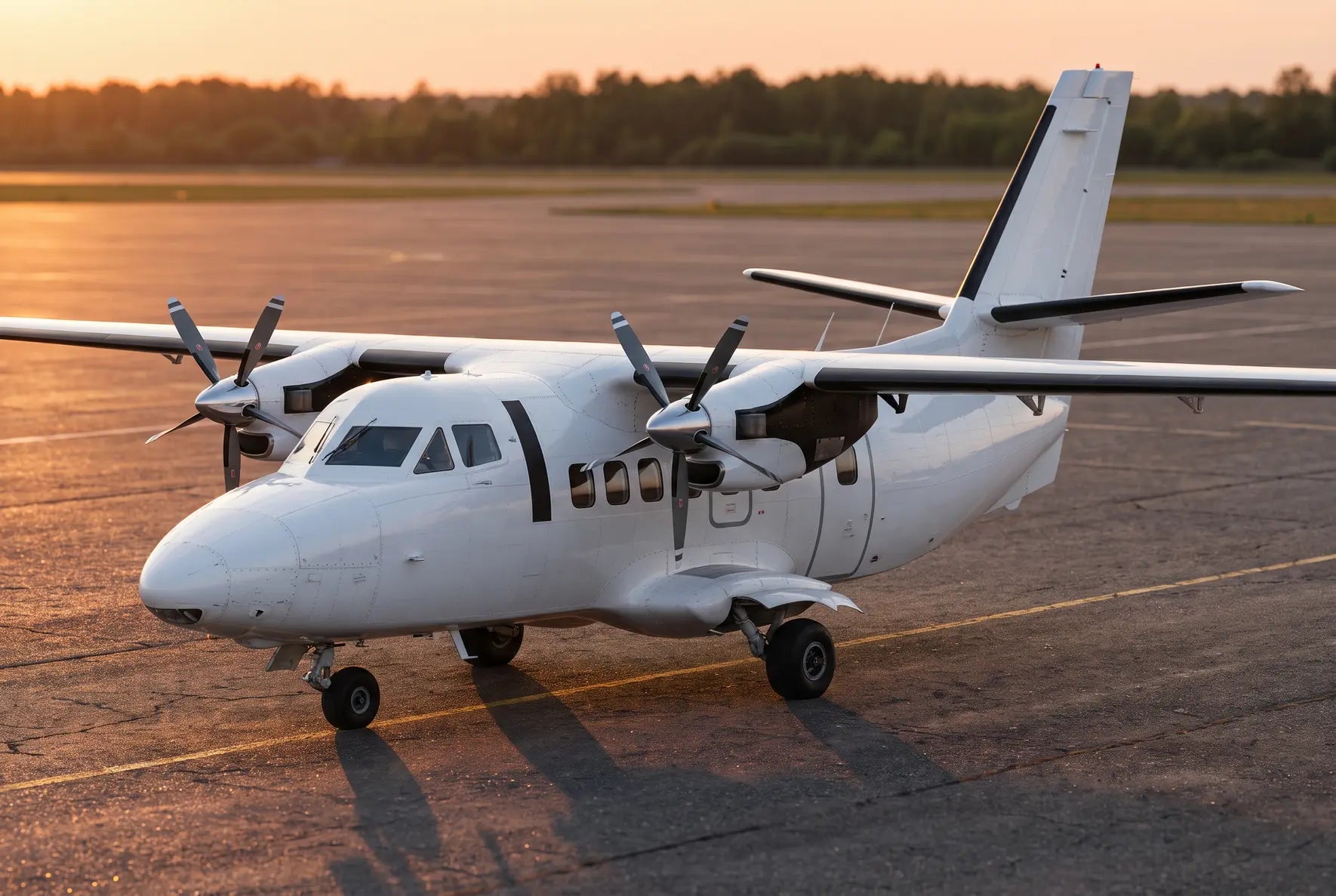
Let L-410 History and Development: From Aeroflot Commuter to Modern Turboprop
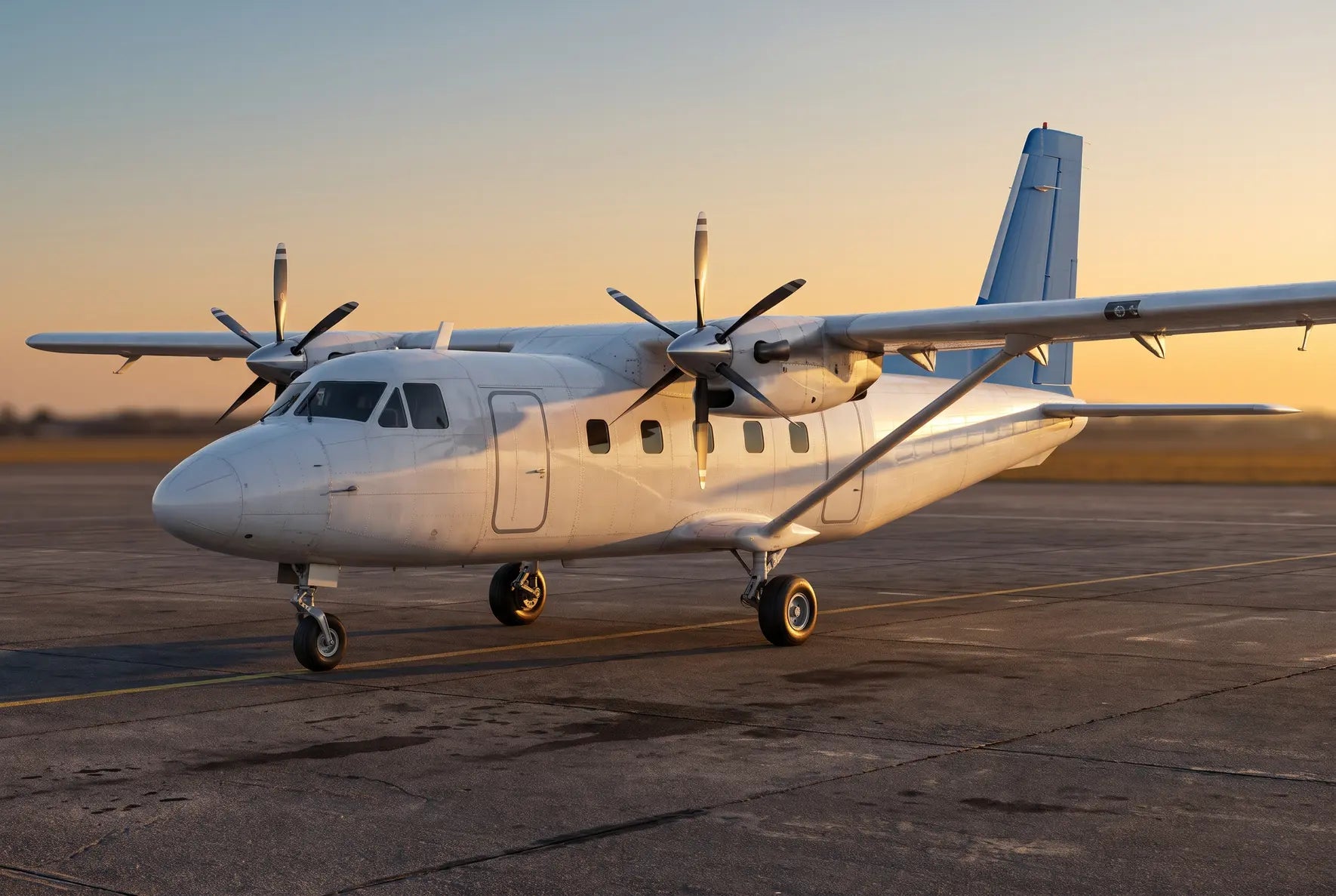
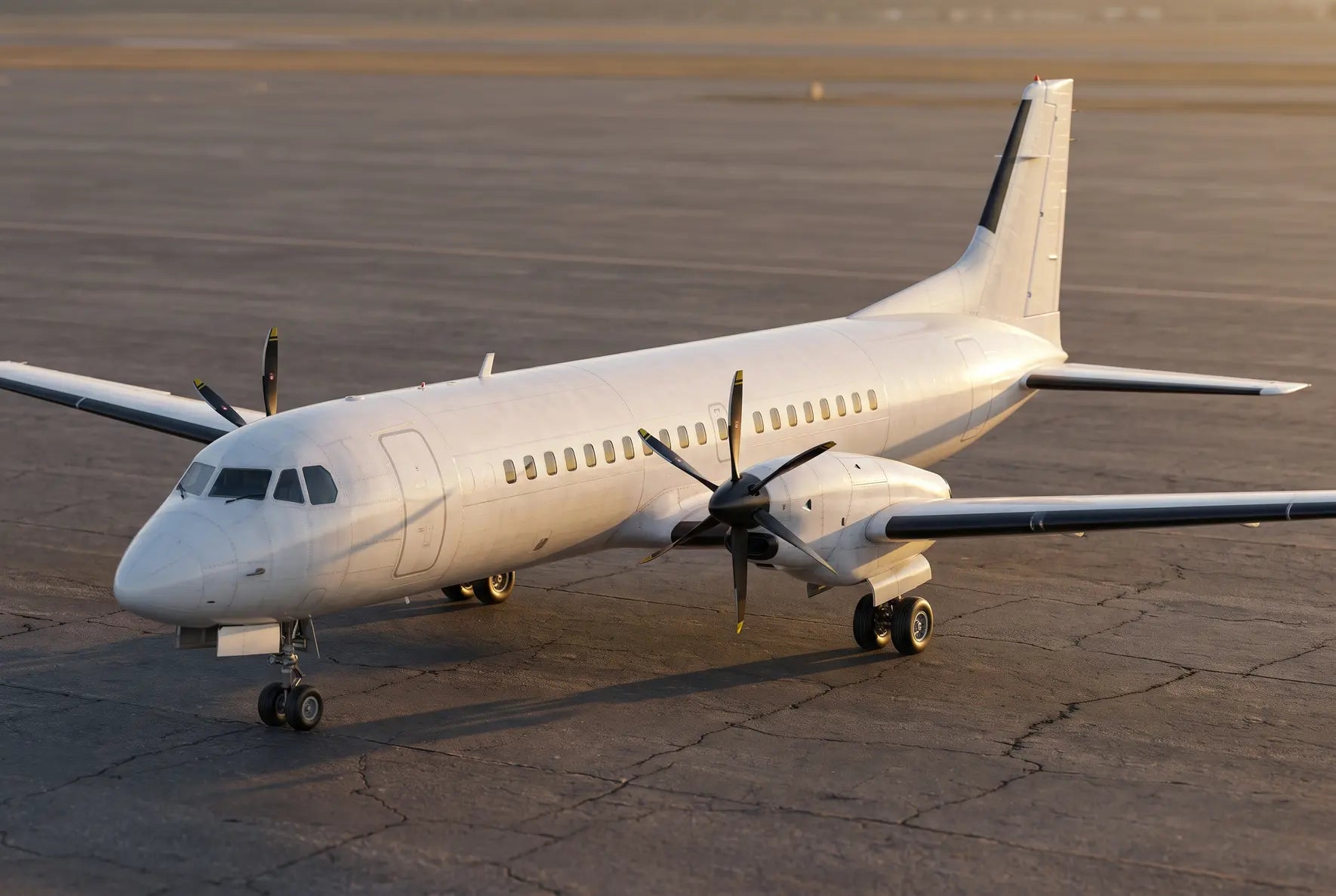
The Let L-410 Turbolet is a twin-engine, high-wing, short-range transport designed and built by Let Kunovice, the Czechoslovak (now Czech) manufacturer that has traded as Aircraft Industries, a.s. since 2005. The programme answered a Soviet Aeroflot requirement for a modern 19-seat commuter capable of short take-off and landing (STOL) from short, often unpaved strips across the USSR local-service network, and to operate reliably in harsh climatic conditions.
Design work began in the mid-1960s, and the first prototype flew on 16 April 1969. Early aircraft were powered by imported Pratt & Whitney Canada PT6A-27 turboprops. Series production began around 1970-1971, and the type quickly became one of the most widely used 19-seat turboprops in the Eastern Bloc, with more than 1,200 examples built since production started.
The aircraft's evolution is largely an engine and airframe story:
- L-410A (early 1970s): first production version with PT6A-27 engines.
- L-410M (mid-1970s): re-engined with the Czech Walter M601A to localise production.
- L-410UVP (late 1970s): the designation stands for Upravené Vzletové Parametry ("modified take-off parameters"), introducing a larger wing and enhanced STOL performance.
- L-410UVP-E (1980s): higher maximum take-off weight, structural reinforcement and systems upgrades.
The variants from the M through the E series (including the E20) are covered by an EASA type certificate held by Aircraft Industries, whose data sheet lists the L-410A, L-410M, L-410UVP, L-410UVP-E and L-410UVP-E20 with their approved weights, performance and limitations. Anyone pursuing a commercial career flying the type will also need to meet the medical requirements set by the same authority, summarised in this guide to the EASA Class 1 medical.
What sets the L-410UVP-E20 apart
The L-410UVP-E20, in production since the late 1980s, became the most numerous "classic" Turbolet, with roughly 200 built and deliveries to more than 30 countries. It refined the UVP-E baseline rather than replacing the airframe: current production examples use modern GE H80-200 engines (a General Electric development of the Walter M601) paired with five-blade Avia AV-725 propellers, giving improved hot-and-high performance, climb and range. The variant retains the characteristic wingtip fuel tanks and a conventional analog-based cockpit, distinguishing it from the later New Generation aircraft.
The following identifiers help distinguish the L-410UVP-E20 from adjacent sub-variants:
- Engines: GE H80-200 (Walter M601-derived) with FADEC-era management on current builds.
- Propellers: five-blade Avia AV-725.
- Wing: enlarged UVP STOL wing with wingtip fuel tanks.
- Configuration: unpressurised 19-seat cabin, fixed-gear high-wing layout.
- Certification: listed on the EASA type certificate data sheet alongside earlier E-series aircraft.
The L-410NG and the manufacturer today
The most significant departure is the L-410NG ("New Generation"), launched in 2010 under the MOSTA project. Its prototype first flew on 29 July 2015, and EASA, FAA and Russian certification were completed in late 2017, with serial production from 2018. Unlike the E20, the NG features a lengthened fuselage and redesigned wing, higher take-off weight and payload, substantially greater fuel capacity and range, uprated GE H80-family engines and a modern glass cockpit with integrated avionics and synthetic vision. On the corporate side, Russian group UGMK acquired Aircraft Industries in September 2013, after which part of L-410 production was licensed to UZGA in Ekaterinburg, while the Czech plant continued building the UVP-E20 and NG.

A colorful L-410 UVP-E20 aircraft is captured flying against a backdrop of scattered clouds in a clear blue sky. The plane displays a unique red, white, and blue paint scheme.
Let L-410 Technical Specifications, Systems and Engine Highlights
The Let L-410 Turbolet is a twin-engine, high-wing turboprop designed for short regional sectors and access to short or unpaved runways. The mission logic is straightforward: carry up to 19 passengers or roughly 1.7 t of cargo over short stages, operate from remote and undeveloped strips, and keep acquisition and maintenance costs low. That mission drives the main design trade-offs. Rugged short-field performance and a robust, all-metal high-wing structure take priority over long range and high cruise speed, so the aircraft favours accessibility and payload flexibility rather than outright cruise efficiency.
The modern L-410 UVP-E20 inherits the family's pressureless, high-wing layout, tricycle landing gear and reversible propellers, while adding uprated engines, optional tip tanks and a higher maximum weight than earlier UVP-E aircraft. It shares design DNA with other Eastern European regional turboprops of its era; for a contrasting Soviet-lineage regional design, see our overview of the Ilyushin Il-114.
- Wingspan: about 19.98 m with tip tanks (roughly 19.48 m without), per operator and type technical data.
- Length: 14.42 m; height: about 5.83 m; wing area: roughly 35 m².
- MTOW: 6,600 kg (E20); 6,400 kg on standard UVP-E.
- Maximum landing weight: approximately 6,200 to 6,400 kg, depending on source and configuration.
- Operating empty weight: around 3,980 kg (UVP-E).
- Maximum payload: about 1,615 to 1,650 kg; usable cabin volume near 11 m³.
- Engines: two GE H80-200 turboprops, roughly 597 kW (about 800 shp) class, driving AV-725 propellers.
- Fuel: up to about 1,000 kg without tip tanks, or roughly 1,300 kg with tip tanks.
- Cruise speed: roughly 380 to 386 km/h (about 205 to 208 kt), condition-dependent.
- Range: around 700 km at full payload; maximum technical range near 1,400 to 1,500 km with reduced load.
- Service ceiling: about 4,200 m at typical weights; higher absolute ceilings are quoted at lighter weights.
- Passengers: up to 19; typical flight crew of two.
- Certification: approved for IFR, Category I ILS and flight in icing conditions.
Systems and handling-relevant technology
The L-410 uses conventional mechanically actuated flight controls, which suits its operating philosophy and simplifies field maintenance. Propellers are constant-speed, feathering and reversible, giving useful ground braking and short-field control on contaminated or soft surfaces. The free-turbine engine layout decouples the propeller from gas-generator speed, which improves throttle response and low-speed handling. Automation is modest by design: the aircraft supports single-pilot or two-pilot IFR operations with an autopilot certified for Category I approaches, and avionics fits vary from legacy analogue panels to modern glass-cockpit and ADS-B refits, depending on operator and build standard.
Published performance numbers vary for good reasons. Range, cruise speed and field lengths shift with cabin density, weights, fuel load, tip-tank fitment, atmospheric conditions and runway surface and slope. Manufacturer and operator figures often use different reference altitudes and weights, so values here should be read as representative rather than absolute, and any operational planning should use the certified flight manual and current EASA type-certificate data.
Engines: from Walter M601 to GE H80
The L-410 was conceived around the Walter M601, the first turboprop developed by Walter Aircraft Engines of Czechoslovakia. First run in 1967 and certified in the mid-1970s, the M601 is a reverse-flow, two-shaft, free-turbine turboprop, with take-off ratings that grew through the M601D, E and F variants from roughly 540 to 580 kW. More than 4,500 M601 engines were produced between 1975 and 2000, powering not only the L-410 and the improved L-420 but also agricultural and utility types such as the Z-37T Turbo, the Ayres/Thrush, the PZL-130 Orlik trainer and various conversions.
After GE acquired Walter in 2008, the business became GE Aviation Czech (now part of GE Aerospace) and developed the M601 into the GE H80. The H80 gained FAA type certification in 2012 and offers about 597 kW (roughly 800 shp), with the wider H-Series spanning the H75 (about 750 shp) and H85 (about 850 shp). It retains the two-spool, reverse-flow, free-turbine architecture but adds updated materials, aerodynamics and controls to improve power, efficiency and a reported time between overhauls of about 3,600 flight hours. On the L-410 the engines drive Avia propellers, historically the V508 and V510 families and, on modern H-Series installations, the multi-blade AV-725, while Hartzell propellers appeared on early PT6A-powered L-410 aircraft and various Western conversions.
Let L-410 Family vs ATR 42-600 Specifications Comparison
Scroll horizontally to see more →
| Parameter | Let L-410 | Let L-410 UVP-E20 | Let L-410 NG | ATR 42-600 |
|---|---|---|---|---|
| Entry into service | 1969 | 1984 | 2018 | 2012 |
| Engines | 2 × Walter M601A turboprop | 2 × Walter M601E turboprop | 2 × GE H85 turboprop | 2 × Pratt & Whitney Canada PW127XT-M turboprop |
| Length | 14.42 m | 14.47 m | 14.42 m | 22.67 m |
| Wingspan | 19.98 m | 20.20 m | 20.20 m | 24.57 m |
| Height | 5.83 m | 5.95 m | 5.95 m | 7.59 m |
| Typical seating and layout (short description + approximate passengers) | Commuter turboprop: 17–19 passengers | Commuter turboprop: 19 passengers | Updated commuter/business turboprop: 19 passengers | Regional turboprop: 42–50 passengers |
| MTOW | 6 t | 6.4 t | 7 t | 18.6 t |
| Range | 1,000 nm | 800 nm | 1,270 nm | 800 nm |
| Cruise speed | 0.34 Mach | 0.34 Mach | 0.41 Mach | 0.48 Mach |
| Service ceiling | 24,000 ft | 24,000 ft | 28,000 ft | 25,000 ft |
| Program note | Original lightweight twin-turboprop commuter for short-haul feeder and regional utility work. | Baseline upgraded export and operator standard with improved avionics and performance. | Modernized re-engined version positioned as the current production model in the family. | Contemporary larger regional turboprop competitor offering higher capacity and cabin comfort. |
Scroll horizontally to see more →
The table compares key specs across the Let L-410 variants (original, UVP-E20, and NG) and the ATR 42-600. The L-410 series is much smaller and lighter (6–7 t MTOW) with 17–19 seats, while the ATR carries 42–50 passengers at 18.6 t. The L-410 NG leads the group on range (1,270 nm) and improves speed and ceiling, but the ATR is the fastest and largest overall.
Let L-410 Routes, Missions and Airlines Around the World
The Let L-410 Turbolet is a 19-seat, twin-engine turboprop built for short, thin regional routes that larger aircraft cannot serve economically. In everyday commercial service, sectors usually fall between 100 and 400 km, with some regional legs extending to roughly 500-700 km where payload and fuel reserves allow. Its maximum technical range reaches about 1,300-1,430 km with light payload, but real-world missions rarely approach that figure. Because turnarounds are quick and legs are short, operators typically fly four to eight sectors per day, accumulating around three to six hours of daily block time depending on network and maintenance schedules.
The type is defined by its short-field ability: it can operate from runways of roughly 400-830 m, including unpaved grass, gravel and snow surfaces, in temperatures from -50 to +50 °C. This makes it a natural fit for point-to-point and feeder networks linking small communities to larger airports, rather than dense hub-and-spoke systems. Most operations serve secondary and tertiary airfields with minimal infrastructure, though the aircraft is also certified for IFR and ILS CAT I approaches, allowing use at fully equipped regional airports. The main operational challenges are its narrow cabin, limited seat count and modest payload-range trade-off, which restrict it to genuinely thin markets where demand and runway length rule out bigger turboprops such as those that once fed larger widebody services like the McDonnell Douglas DC-10-40.
Where the Let L-410 Operates
The manufacturer, Aircraft Industries (Let Kunovice), reports that the type serves operators across five continents. In Europe, it is used by small regional and charter airlines as well as several air forces, often on short domestic and cross-border links. Across North & South America, it appears mainly in charter, commuter and mixed passenger-cargo roles, particularly in remote Alaskan, Central American and Amazonian regions where short airstrips dominate. In Asia, large numbers operate throughout Russia, the CIS and Southeast Asia on rugged regional routes. In Africa, it is common for regional, tourist and community flights, frequently in mixed passenger-cargo configurations into unpaved strips.
- Europe: Van Air Europe (Czech Republic) has flown it on Central European regional services and contracted routes; Citywing and Manx2 marketed short Isle of Man links such as Blackpool; LGW Luftfahrtgesellschaft Walter (Germany) used it on regional feeder services; RAF-Avia (Latvia) operates it on Baltic cargo and passenger missions; Silver Air has used it on short-haul Central European and Mediterranean routes.
- North & South America: Bering Air (Alaska) is a long-time operator using flexible passenger-cargo layouts and the type's side cargo door for remote community flights; Nature Air (Costa Rica) flew it on short tourist and domestic routes into remote airstrips.
- Asia: PB Air (Thailand) previously operated it on domestic routes, while numerous carriers across Russia and the CIS use it for remote regional services in Siberia, the Far East and Central Asia.
- Africa: ZanAir and Air Excel (both Tanzania) use it on regional and safari-oriented routes, connecting small towns and lodges with larger airports, often on short unpaved strips.
Typical Seating and Cabin Layouts
The L-410 UVP-E20 is certified for up to 19 passengers plus two crew, with documented alternatives of 17 and 15 seats. The cabin is single-aisle and narrow, about 1.95 m wide and 1.66 m high, with a seat pitch near 0.76 m (about 30 in) in a forward-facing 1+2 arrangement. Network and scheduled commuter operators generally favour the full 19-seat layout, sometimes with headrests and service tables, plus a rear toilet and luggage compartment. Leisure, charter and cargo-focused operators, especially in Africa and Alaska, often choose 15- or 17-seat configurations to free up baggage or cargo space, staying within the 19-occupant limit. Detailed row-by-row seat maps are not published by the manufacturer, but cabin geometry and certification data are set out in the official Aircraft Industries L-410 specifications and cross-referenced comparative L-410 variant data.
In this video, follow an economy trip report on Trade Air’s Let L-410 Turbolet, flying from Zagreb to Osijek. See the onboard experience and what makes this rare domestic Croatian turboprop route unique.
Let L-410 Safety Record: How Safe Is This Regional Turboprop?
The Let L-410 Turbolet has one of the longest operating histories of any regional turboprop, having first flown in 1969 and entered service in the early 1970s. With over 1,200 aircraft built and more than five decades of continuous operation, this Czech twin-engine commuter has accumulated a substantial body of service experience. According to consolidated data referenced by the Aviation Safety Network, the type has been involved in roughly 118 to 132 hull-loss accidents with approximately 428 to 479 fatalities over its lifetime. It is important to put those figures in context: the L-410 is designed to operate from short, unprepared, and semi-prepared runways in remote regions and extreme climates, and the majority of accidents cluster in demanding operating environments rather than mainstream scheduled service. Analysts consistently attribute most events to operational practices, weather, and maintenance conditions rather than fundamental design flaws.
Notable Accidents and Serious Incidents
Several documented occurrences illustrate the primary risk factors and the lessons drawn from them:
- Sakha Avia (1993), Aldan, Russia: The aircraft stalled on final approach after being overloaded, shifting the centre of gravity too far aft. All 24 occupants were killed. The event reinforced the need for stricter weight-and-balance discipline and closer operator oversight on remote charter routes.
- Tropical Airways Flight 1301 (2003), Haiti: The aircraft stalled on approach after a loss of visual meteorological conditions at low altitude, resulting in 21 fatalities. The investigation underscored approach discipline, weather minima, and stall awareness during regional operations.
- Khabarovsk Airlines Flight 463 (2017), Nelkan, Russia: A malfunction caused the right propeller to enter negative pitch in flight, leading to loss of control short of the runway. Six of seven on board died, while a young child survived. Findings, summarised in the official investigation record, focused on the propeller pitch control system and related maintenance and inspection procedures.
- UK AAIB report (2013, non-fatal): On an L-410 UVP-E, a balance plug failed from a fatigue crack and damaged the engine, though the casing contained the debris. The published AAIB bulletin documented the fatigue mechanism and supported revised inspection guidance for the affected component.
How Safe Is the Let L-410 Today?
Assessing the type quantitatively is difficult because published fleet totals of flight hours and cycles are not documented, so a precise accident rate per million hours cannot be stated with confidence. Qualitatively, however, the modern L-410 UVP-E20 and L-420 variants are certified by EASA and the FAA respectively, meaning they comply with contemporary small-aeroplane structural, systems, and performance standards. The manufacturer describes the airframe as an all-metal, high-wing design built for reliable operation in extreme conditions, and improvements in standardised procedures, systems, and simulator-based training since the early 2010s have accompanied a stronger safety profile for the latest models. Regulatory oversight of maintenance, crew training, and operations rests with national civil aviation authorities, and the technical profile of the aircraft is summarised in resources such as the SKYbrary aircraft entry. For readers comparing this regional platform with much larger long-haul jets, our overview of the Boeing 747-8i illustrates how design philosophy scales with mission and passenger volume. Broader industry statistics from bodies such as ICAO continue to confirm that, across all aircraft categories, commercial aviation remains one of the safest modes of transport.
01 What kind of routes and missions is the Let L-410 typically used for?
The Let L-410 is primarily used on short regional routes, often connecting small cities, islands, or remote communities to larger hubs. Its design allows it to operate from short and sometimes unpaved runways, making it suitable for commuter flights, charter services, and cargo or utility missions. Many operators use the L-410 on sectors of roughly 100–400 km, where larger regional jets would be uneconomical. It is also common in harsh-climate operations, including mountainous areas and regions with limited airport infrastructure.
02 What is the passenger experience like inside a Let L-410?
The Let L-410 usually features a narrow single-aisle cabin with a typical configuration of around 17–19 seats, depending on the variant and operator. The cabin is functional rather than luxurious, with relatively limited headroom and smaller overhead space compared with larger regional aircraft. Noise levels are higher than in modern turbofan airliners because of the proximity of the turboprop engines, although earplugs or headphones usually make the ride comfortable for most passengers. Flights are typically short, and boarding is quick, which many travellers appreciate on regional hops.
03 Which airlines and operators commonly fly the Let L-410 and on what types of routes?
The Let L-410 is flown by a variety of regional and charter airlines, as well as government and special-mission operators, particularly in Europe, Africa, Latin America, and parts of Asia. It is often used on public service obligation routes, subsidized lifeline connections, and niche tourist routes to smaller airports. Some operators use it for island-hopping services, scenic flights, and access to ski or remote adventure destinations where runway length or surface is limiting. The aircraft’s versatility also makes it popular with air taxi companies and operators providing medical transport, cargo, or surveillance missions.
04 How does the performance and fuel efficiency of the Let L-410 compare with similar aircraft?
The Let L-410 is a twin-engine turboprop optimized for short takeoff and landing performance rather than maximum speed or range. Its fuel burn is generally efficient on short sectors, making it competitive for routes where larger aircraft would fly under capacity. Compared with some newer designs, the L-410 may have slightly higher operating costs per seat, but its ability to use small airfields and carry payload into demanding environments often offsets this. For operators focused on rugged utility and flexible mission profiles, the performance characteristics are a strong advantage.
05 What should passengers know about the Let L-410’s safety record and design features?
The Let L-410 has been in service since the 1970s, and over time it has accumulated a long operational history with multiple variants and upgrades. As with any older regional type, there have been incidents, but these are typically linked to specific operational conditions, weather, and maintenance practices rather than a single inherent design flaw. Modernized versions, such as the L-410 UVP-E and NG, incorporate updated avionics, improved engines, and structural enhancements that support contemporary safety standards. The aircraft’s twin-engine layout, robust landing gear, and STOL capability are intended to provide reliable operation from challenging airfields when operated within approved limits.
06 Are there any practical tips for travellers flying on a Let L-410, such as seat choice or ride comfort?
On a Let L-410, seats near the middle of the cabin typically offer a slightly smoother ride and a more balanced noise level compared with seats very close to the propellers or the rear bulkhead. Window alignment can vary by operator, but choosing a seat slightly forward of the wing often provides the best outside view on scenic or island routes. Because the aircraft flies at lower altitudes and on shorter legs, turbulence may be felt more distinctly than on large jets, but the structure is designed to withstand such conditions safely. Travellers may find it helpful to bring earplugs or noise-reducing headphones and to pack light, as cabin baggage space is limited.