

Ilyushin Il-114: History and Development of the Regional Turboprop
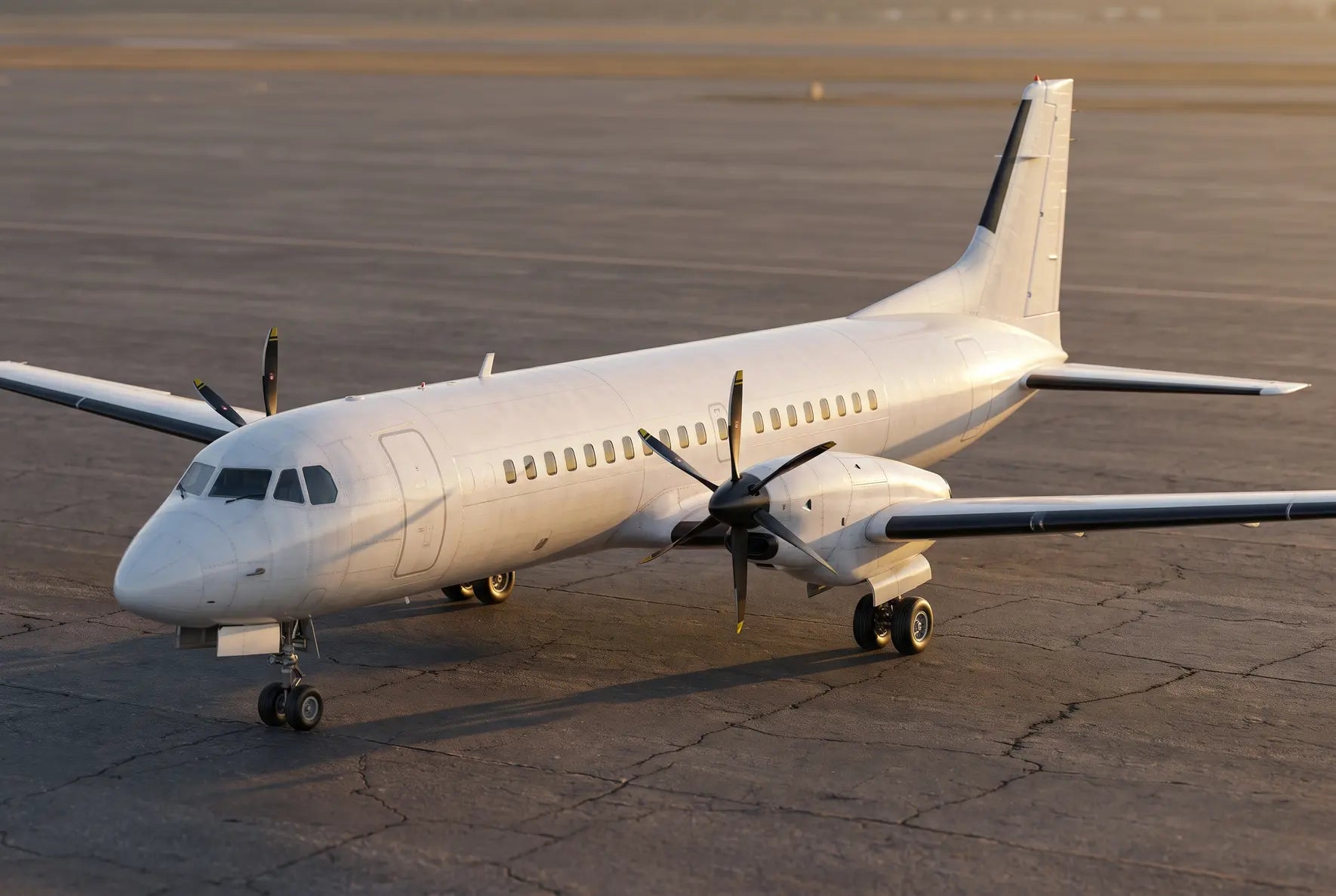
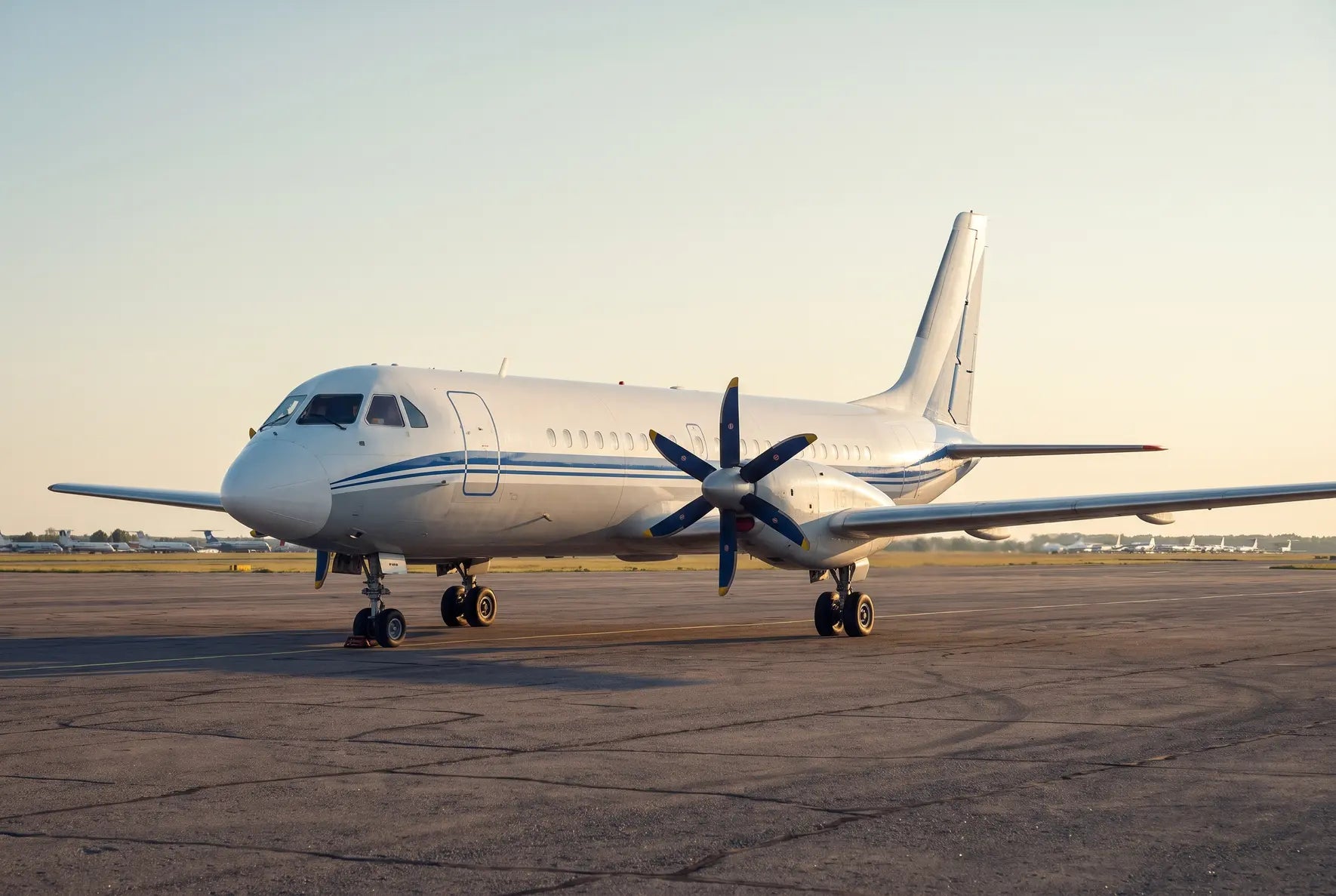
The Ilyushin Il-114 is a twin-turboprop regional airliner conceived in the Soviet Union to replace the ageing Antonov An-24 on short-haul domestic routes. It was designed by the Ilyushin Design Bureau, a manufacturer better known for large transports and airliners, in response to an Aeroflot specification for a 60-seat regional aircraft. Formal design studies began in June 1986, and prototype assembly followed in 1989.
The aircraft made its maiden flight on 29 March 1990 from Zhukovsky airfield. Development was set back when one prototype crashed in July 1993, an event that temporarily interrupted the programme. Combined with the economic turbulence following the dissolution of the USSR, this delayed the type certificate until April 1997. Commercial service began with Uzbekistan Airways in August 1998. Like its contemporaries in the early jet and turboprop eras profiled in our coverage of the Bristol Britannia, the Il-114 reflected a design philosophy shaped by the needs and constraints of its time.
Production and manufacturers
Serial manufacturing took place at the Tashkent Aviation Production Organization (TAPO) in Uzbekistan. Output remained low: roughly 20 to 25 airframes were completed, including prototypes, freighters and the export-oriented Il-114-100. TAPO wound down aircraft production and ceased operations in March 2013. In 2016 the Russian government decided to restart production domestically, with the modernized Il-114-300 assigned to Russian facilities.
Two principal derivatives shaped the family. The Il-114-100, an up-engined variant fitted with Pratt & Whitney Canada PW127 turboprops in place of the Russian powerplant, first flew in January 1999 and received CIS certification in December 1999. The base aircraft used engines of the Klimov TV7-117 family.
What distinguishes the Il-114-300
The Il-114-300 is a deep modernization rather than a minor update, developed to relaunch production in Russia and to remove reliance on imported engines and systems. Assembly of the first prototype began in 2019, and it made its first flight from Zhukovsky on 16 December 2020, an event reported by AIN. The programme has faced repeated schedule slips: serial-production targets moved from 2021 to 2023 and then to 2024, with an initial batch of around eight aircraft. Development was also affected by wider United Aircraft Corporation setbacks, including scrutiny following the crash of the related Il-112V transport.
The following points summarise the main variant identifiers that set the Il-114-300 apart from the earlier Il-114 and Il-114-100:
- Engines: Klimov TV7-117ST-01 turboprops with roughly 12 to 14% more take-off power, versus the earlier TV7-117S and the PW127 on the Il-114-100.
- Avionics: new Russian-made digital flight and navigation systems replacing the largely analog cockpit of the original aircraft.
- Cockpit crew: designed for a two-pilot flight deck.
- Structure: updated structural elements with increased use of composite materials.
- Performance: cruise around 500 km/h and a service ceiling near 7,600 m, with range extended to roughly 1,400 km carrying 64 passengers.
- Production philosophy: an all-Russian solution positioned against the ATR 72 and Dash 8/Q400 class.
In effect, the Il-114-300 retains the original airframe concept and regional mission while introducing modern engines, digital systems and structural improvements, making it a comprehensively updated successor to the first-generation Il-114.

An Ilyushin Il-114 aircraft is depicted in flight against a clear sky. The plane features distinctive red, blue, and white markings on its fuselage and tail.
Ilyushin Il-114 Technical Specifications and Systems Overview
The Ilyushin Il-114 is a twin-turboprop regional airliner designed for short and medium routes, with an emphasis on operations from modest, unpaved or lightly prepared airfields across regions where infrastructure is limited. Its mission profile favours rugged field performance and low operating costs over outright speed, which is typical of the 60-seat turboprop class it competes in alongside aircraft such as the Bombardier Dash 8 Q300. The airframe uses a conventional low-wing layout with a T-tail and retractable tricycle gear, trading cruise speed against the ability to serve secondary airports economically.
The modernized Il-114-300 keeps the same overall size and weight class as the baseline aircraft but adds updated Russian avionics, revised systems and a more powerful engine and propeller package, reflecting a design that balances payload, range and short-runway capability rather than optimising any single parameter.
Specs that matter (baseline Il-114 unless noted):
- Wingspan: approximately 30.0 m (the Il-114-300 is cited at about 29.87 m).
- Length: about 26.88 m.
- Height: about 9.19 m.
- MTOW: 23,500 kg.
- Operating empty weight: approximately 15,900 kg.
- Passenger capacity: 64 in the baseline single-class layout; up to 68 in the modernized Il-114-300 cabin.
- Cruise speed: around 500 km/h.
- Service ceiling: commonly cited between 7,600 m and 8,000 m depending on source and configuration.
- Range: the baseline aircraft is published at up to about 5,100 km at reduced payload, while the Il-114-300 is quoted at roughly 1,400 km with a full passenger load.
- Fuel capacity: about 8,360 L on the baseline Il-114 and around 8,780 L on the Il-114-300.
- Engines: Klimov TV7-117 family turboprops (see below).
- Avionics: the Il-114-300 introduces a digital suite reported as the TsPNK-114M2, with an Aerosila TA-14-114 auxiliary power unit.
Systems and handling-relevant technology
The Il-114-300 modernization centres on digital systems intended to reduce crew workload and improve dispatch reliability. According to programme descriptions summarised by Airport Technology, the aircraft integrates an updated navigation system, automatic cabin pressure control, wing-flap control, fuel control and indication, wheel braking, and anti-icing control as coordinated subsystems. Engine operation is managed by a FADEC (Full Authority Digital Engine Control), which simplifies power setting and protects the engine across its operating envelope. These features move the type away from the more manual, hydromechanical philosophy of earlier Soviet turboprops toward automation better suited to modern regional operations.
Published performance figures for the Il-114 should be read with care. Numbers vary because range, field length and ceiling depend on cabin density, selected weights, operator options, atmospheric assumptions and runway condition. A range quoted at reduced payload cannot be compared directly with one quoted at full passenger load, and takeoff or landing distances shift with temperature, altitude and surface. For that reason the values above are best treated as representative published figures rather than fixed guarantees.
Engines: the Klimov TV7-117 family
The Il-114 is powered by the Klimov TV7-117 turboprop, a fourth-generation engine developed from the 1980s under Klimov in Saint Petersburg and certified in 1997 for the Il-114 and Il-114T. The programme is now managed under Russia's United Engine Corporation (UEC/ODK) as ODK-Klimov, with serial production historically shared across the Klimov, Chernyshev and Baranov plants. The engine uses a modular, free-turbine architecture aimed at improved fuel economy, reliability and service life compared with older designs.
The baseline TV7-117S is rated at around 2,800 shp (roughly 2,088 kW) with an overall pressure ratio of about 16 and a dry weight near 360 kg. The modernized TV7-117SM added FADEC control around 2002, while the production TV7-117ST-01 developed for the Il-114-300 raises takeoff power to about 3,100 shp (roughly 2,313 kW), pairing a BARK-65SM digital control unit with a new Aerosila AV112-114 propeller; it was certified by Russian authorities in the 2022-2023 period. Beyond the Il-114 series, the TV7-117 family also powers or has been offered for the Ilyushin Il-112V transport and the TVRS-44 Ladoga regional aircraft, while closely related turboshaft derivatives (TV7-117V and TV7-117VK) power rotorcraft such as the Mil Mi-38 and have been associated with the Mi-28 and Kamov Ka-52.
Ilyushin Il-114 vs ATR 72-600 vs Dash 8 Q400 vs Antonov An-140: Key Specifications
Scroll horizontally to see more →
| Parameter | Ilyushin Il-114 | ATR 72-600 | Bombardier Dash 8 Q400 | Antonov An-140 |
|---|---|---|---|---|
| Entry into service | 1999 | 2010 | 2000 | 2002 |
| Engines | 2 × Klimov TV7-117S turboprops | 2 × Pratt & Whitney Canada PW127M turboprops | 2 × Pratt & Whitney Canada PW150A turboprops | 2 × Klimov TV3-117VMA-SBM1 turboprops |
| Length | 26.9 m | 27.2 m | 32.8 m | 22.6 m |
| Wingspan | 29.9 m | 27.1 m | 28.4 m | 24.5 m |
| Height | 9.05 m | 8.7 m | 8.3 m | 8.2 m |
| Typical seating and layout (short description + approximate passengers) | 1-class: 60–64 passengers | 1-class: 68–78 passengers | 1-class: 70–78 passengers | 1-class: 50–52 passengers |
| MTOW | 23.5 t | 23 t | 29.3 t | 21 t |
| Range | 540 nm | 825 nm | 1,100 nm | 1,300 nm |
| Cruise speed | 0.40 Mach | 0.41 Mach | 0.50 Mach | 0.42 Mach |
| Service ceiling | 26,000 ft | 25,000 ft | 27,000 ft | 26,000 ft |
| Program note | Russian regional turboprop designed for short-haul local routes with modest range and 60–64 seat capacity. | Baseline Western regional turboprop widely used for short-haul feeder services with high-frequency operations. | Higher-performance Western turboprop offering faster cruise and greater payload for longer regional routes. | Ukrainian/Russian regional turboprop positioned slightly smaller than Il-114, serving similar short-haul markets. |
Scroll horizontally to see more →
The table compares core specs of four regional turboprops, highlighting how the Il-114 fits the 60–64 seat, short-haul niche. It has similar MTOW to the ATR 72-600 but far shorter range (540 vs 825 nm). The Dash 8 Q400 is the performance leader with the highest MTOW (29.3 t), fastest cruise (0.50 Mach), and longer range. The smaller An-140 seats fewer passengers yet lists the longest range (1,300 nm).
Ilyushin Il-114 Operations, Routes and Airlines Around the World
The Ilyushin Il-114 was conceived as a short-haul regional turboprop, built to connect small communities with larger cities on sectors that rarely exceed one to two hours. With a cruise speed of about 500 km/h (270 kt) and a practical range of roughly 1,500 to 2,000 km with a full payload, typical commercial legs fall between 300 and 1,000 km, meaning flight times of around 0.8 to 2.0 hours. In multi-sector regional service, a single airframe can realistically fly several legs per day, in line with the utilisation patterns of comparable turboprops such as the ATR 42.
Operationally, the aircraft is designed for point-to-point and feeder missions rather than dense hub-to-hub trunk routes. A key strength is its ability to serve regions with poor airfield infrastructure: the manufacturer states it can operate from short and unpaved runways, and the modernised Il-114-300 is described as capable of using dirt strips and unequipped airports, with provision for ski landing gear in Arctic conditions. This makes it well suited to secondary and remote airfields where jets cannot operate. The main operator challenge has historically been the very limited production run (only around 25 airframes built) and the type's near-total dependence on domestic Russian and Central Asian markets, which restricted spare-parts ecosystems and commonality with Western fleets.
Where the Ilyushin Il-114 Operates
Commercial operation of the type has been geographically narrow. In practice it has served Asia (specifically Central Asia) and the wider Russian and CIS domestic network, with no sustained scheduled service documented in Europe beyond Russia, nor in North & South America or Africa. In Central Asia the aircraft handled domestic feeder routes, while in Russia it was flown by regional carriers and is now the focus of the Il-114-300 revival aimed at Siberia, the Far East and the Arctic. Prospective and planned operators for the new variant are again concentrated in Russia's regions.
- Europe (Russia/CIS): Vyborg Airlines operated early Il-114 airframes on Russian regional routes. For the Il-114-300, Aurora Airlines (Far East) has been reported with an order for around 19 aircraft, with additional interest from carriers such as KrasAvia, Polar Airlines and Vologda Air Enterprise for domestic and remote-region feeder service.
- North & South America: No documented commercial operators. The type was positioned as a competitor to Western turboprops but never entered service in these markets.
- Asia (Central Asia): Uzbekistan Airways was the launch customer, introducing the type on 27 August 1998 and flying the Il-114 and Il-114-100 on domestic Uzbek routes as its principal civil operator.
- Africa: No documented commercial operators of the type.
Typical Seating and Cabin Layouts
The Ilyushin Il-114 is offered almost exclusively as a single-class regional aircraft. The baseline Il-114 and the PW127H-powered Il-114-100 typically seat 64 passengers in a four-abreast (2-2) layout at roughly 76 cm (30 in) pitch, while a Klimov TV7-117-powered example has been listed at 60 seats. The modernised Il-114-300 carries 52 to 68 passengers depending on configuration, with 64 seats as the basic fit and 68 quoted by the manufacturer as the maximum. Because operators here are network and lifeline carriers rather than leisure charter airlines, high-density all-economy cabins dominate and no multi-class business layouts are documented in open sources. Detailed cabin data for the type can be reviewed via technical databases such as airlines-inform. Readers interested in how regional turboprops fit smaller US markets can compare this profile with carriers like Mokulele Airlines, whose short-hop operations illustrate the same point-to-point logic on a different aircraft family.
In this video, discover how Russia’s modernized Il-114-300 turboprop tackles high-risk Altai certification trials and then flies internationally to Baikonur, showcasing key milestones in its demanding test campaign.
Ilyushin Il-114 Safety Record and How Safe Is This Turboprop?
The Ilyushin Il-114 is a 60-seat regional turboprop conceived in the mid-1980s to replace the Antonov An-24 on Soviet short-haul routes. The first prototype flew on 29 March 1990, type certification followed in April 1997, and passenger operations began around 1998 with Uzbekistan Airways as the principal operator. Production has always been very limited: most specialist references place total airframes built in the 17 to 25 range, including prototypes, the Il-114T freighter and the Pratt & Whitney-powered Il-114-100. Because the in-service fleet has been small and geographically confined to a handful of operators, the aircraft has accumulated comparatively few flight cycles and hours. Any assessment of its safety record must therefore be read in that context: limited exposure rather than an extensive global operating history. Within that small footprint, documented serious events are rare, and there is no widely reported history of fatal crashes in scheduled airline service.
Notable accidents and what changed afterwards
The most significant safety event in the programme occurred during flight testing rather than revenue operations.
- Il-114 prototype, 1993, Zhukovsky (Russia): During a development test flight near Zhukovsky airfield, a prototype was lost after the propeller feathering system activated inadvertently due to a fault in the electronic propeller control. Human factors were also cited as contributory. Afterwards, the electronic control system was reprogrammed to prevent unintended feathering, and test flights were suspended pending investigation. The accident had a lasting programme impact, as government funding for the Il-114 was subsequently withdrawn, sharply constraining further development and production. Accident histories for post-Soviet types are commonly indexed through recognised databases such as the Flight Safety Foundation's Aviation Safety Network.
- In-service operations, Uzbekistan Airways and Vyborg Airlines: Open specialist sources do not document a series of fatal hull losses in regular passenger service. The absence of high-profile airline disasters is itself a meaningful data point, although it reflects a small fleet as much as extensive proven experience. Independent investigations of post-Soviet events are typically handled by the Interstate Aviation Committee (MAK).
How safe is the Ilyushin Il-114?
Judged against its modest traffic volume, the Il-114 has a quiet operational record, with its main safety event confined to early prototype testing. The design philosophy emphasised rugged operation from secondary and less-prepared airfields, and the modernised Il-114-300 introduces domestic Klimov TV7-117ST-01 engines certified in 2022 and updated avionics, both of which passed structured certification processes. Safety in any turboprop operation depends less on the airframe alone than on the combination of standard operating procedures, recurrent crew training and regulatory oversight, which for this type falls under Russian and CIS civil-aviation authorities. Readers comparing turboprops with widebody designs may find the engineering trade-offs in our coverage of the Boeing 747SP a useful contrast in scale and mission. Placed in the wider picture, global data from bodies such as the International Civil Aviation Organization and the International Air Transport Association consistently show accident rates trending very low over time, confirming that commercial aviation remains one of the safest modes of transport available.
01 What kind of routes and range is the Ilyushin Il-114 designed for?
The Ilyushin Il-114 is a regional turboprop airliner optimized for short to medium local routes, typically up to about 1,000–1,400 km with a full passenger load, depending on variant. In lighter configurations, the Il-114 and Il-114-300 can reach around 5,000 km, allowing longer repositioning or special missions. It is intended for domestic and regional services, especially in areas with limited infrastructure such as the Russian North, Siberia, and the Far East. Airlines and operators can use it on sectors similar to those served by aircraft like the ATR 42/72 or De Havilland Dash 8.
02 What is the cabin layout and passenger comfort like on the Ilyushin Il-114?
The Ilyushin Il-114 typically features a single-aisle cabin with a 2–2 seat layout, meaning no middle seats and a more comfortable arrangement for regional flights. Standard capacity is around 60–64 passengers, while the Il-114-300 can seat up to 68, depending on configuration. The newer Il-114-300 interior includes updated lighting, modern service panels, and refreshed seats to improve comfort on flights of 1–3 hours. As a turboprop, cabin noise is higher near the engines, but the four-abreast layout and relatively small cabin can provide a cozy, straightforward travel experience.
03 Which airlines or operators are expected to use the Ilyushin Il-114 and Il-114-300?
Historically, the original Ilyushin Il-114 was used by regional operators in Russia and the CIS for short-haul routes, often replacing older Soviet-era types. The Il-114-300 program is aimed at Russian domestic airlines that need to replace ageing Antonov An-24/An-26 aircraft and reduce dependence on imported regional turboprops. It is intended for carriers serving remote and secondary airports with shorter runways and limited ground support. As production ramps up, the Il-114-300 is expected to appear primarily on Russian regional networks and potentially on specialized patrol, transport, and medical missions.
04 How does the Ilyushin Il-114 perform compared with similar regional turboprops?
The Ilyushin Il-114 and Il-114-300 offer cruise speeds around 450–500 km/h, comparable to other regional turboprops such as the ATR 72 or Dash 8. Typical take-off and landing distances are short—down to roughly 750 m for take-off and 550 m for landing on the Il-114-300—making the aircraft suitable for smaller airfields. Fuel efficiency figures around 20–21 g per passenger-kilometre place it in the competitive range for its class. Its design prioritizes reliable operations in harsh climates and from basic runways rather than maximum speed or ultra-low fuel burn.
05 What is known about the safety and design features of the Ilyushin Il-114?
The Ilyushin Il-114 was designed as a modern replacement for older regional aircraft, with emphasis on improved systems, twin turboprop reliability, and operation from difficult airfields. The Il-114-300 adds updated digital avionics, modern Russian engines and systems, and enhanced performance margins on short runways. Its relatively low cruise altitude around 7,600–8,000 m, robust landing gear, and ability to operate in cold climates support reliable regional service rather than high-altitude long-haul missions. As with any type, the safety record depends heavily on operator practices, maintenance, and adherence to regulatory standards, rather than on the aircraft alone.
06 As a passenger, what should be known when flying on the Ilyushin Il-114?
On the Ilyushin Il-114, choosing a seat away from the propellers—typically closer to the front of the cabin—can reduce perceived noise and vibration compared with seats over or behind the wings. The 2–2 seating layout means every passenger has either a window or aisle seat, with no middle seats, which helps comfort and boarding. The aircraft’s turboprop design and relatively low cruise altitude can make turbulence feel more noticeable than on some larger jets, but flight durations are usually short and the airframe is built for regional conditions. Travellers on the Il-114-300 variant can expect a more modern interior, updated lighting, and improved seat ergonomics compared with older Il-114 cabins.