

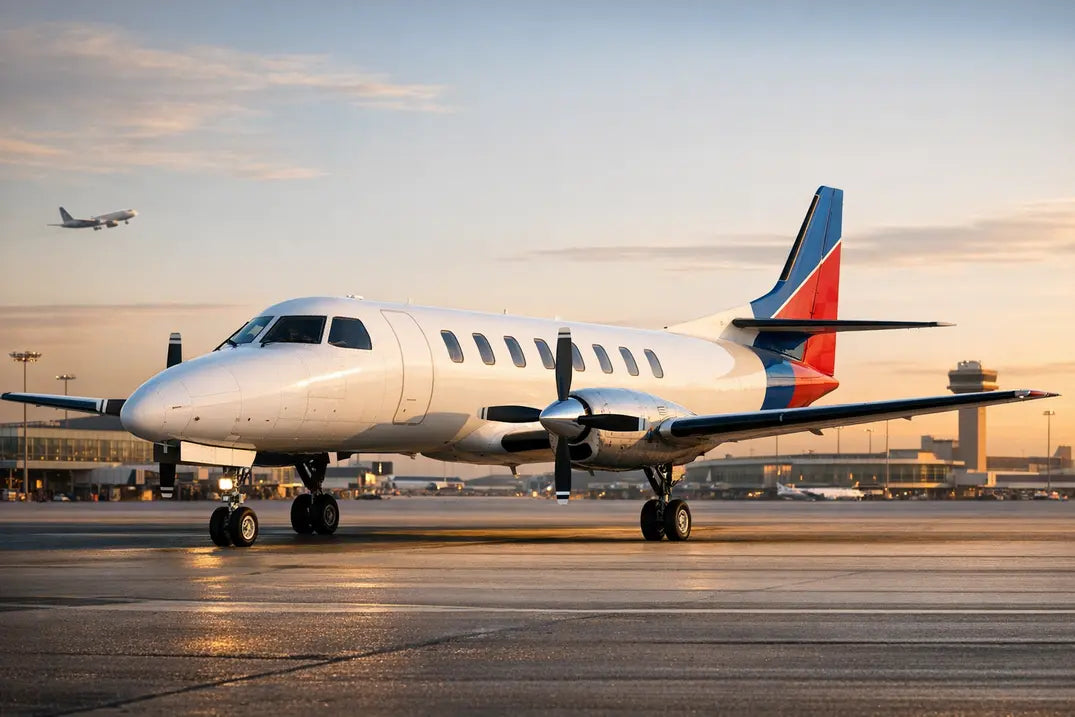
Fairchild Swearingen Metro II programme history and variant development
The Fairchild Swearingen Metro II sits at the centre of the Metro and Merlin line: a pressurised, twin engine turboprop family that was created to deliver airline like speed and range on short regional sectors, while still being practical for small airports and limited ground infrastructure. In a safety investigation context, the Transportation Safety Board of Canada describes the Metro II as a commuter passenger aircraft and notes that it was originally manufactured by Swearingen and later made by Fairchild Industries, reflecting the programme’s shift from an entrepreneurial design house to a larger industrial owner with production capacity.
Chronology: from prototype Metro to the Fairchild Swearingen Metro II
Late 1960s marks the opening chapter for the wider Metro and Merlin product line, which Ontic’s current Metro Merlin support organisation summarises as being introduced in that period and adopted worldwide for passenger and cargo work.
According to Airways Magazine’s historical note on the Metroliner first flight, prototype construction began in 1968, and the prototype first flew on 26 August 1969. The same account identifies early financial pressure on Swearingen and the need for outside support to secure the programme’s future.
1972 is a key corporate milestone. In an obituary for designer and entrepreneur Ed Swearingen, AOPA reports that he sold a 90 percent share of his company to Fairchild, an ownership change that helped stabilise funding and industrial backing for the Metro and its derivatives.
January 1973 is cited by Airways Magazine as the point when the passenger variant entered airline service with Commuter Airlines, an operational milestone that anchored the design in the emerging US commuter airline market.
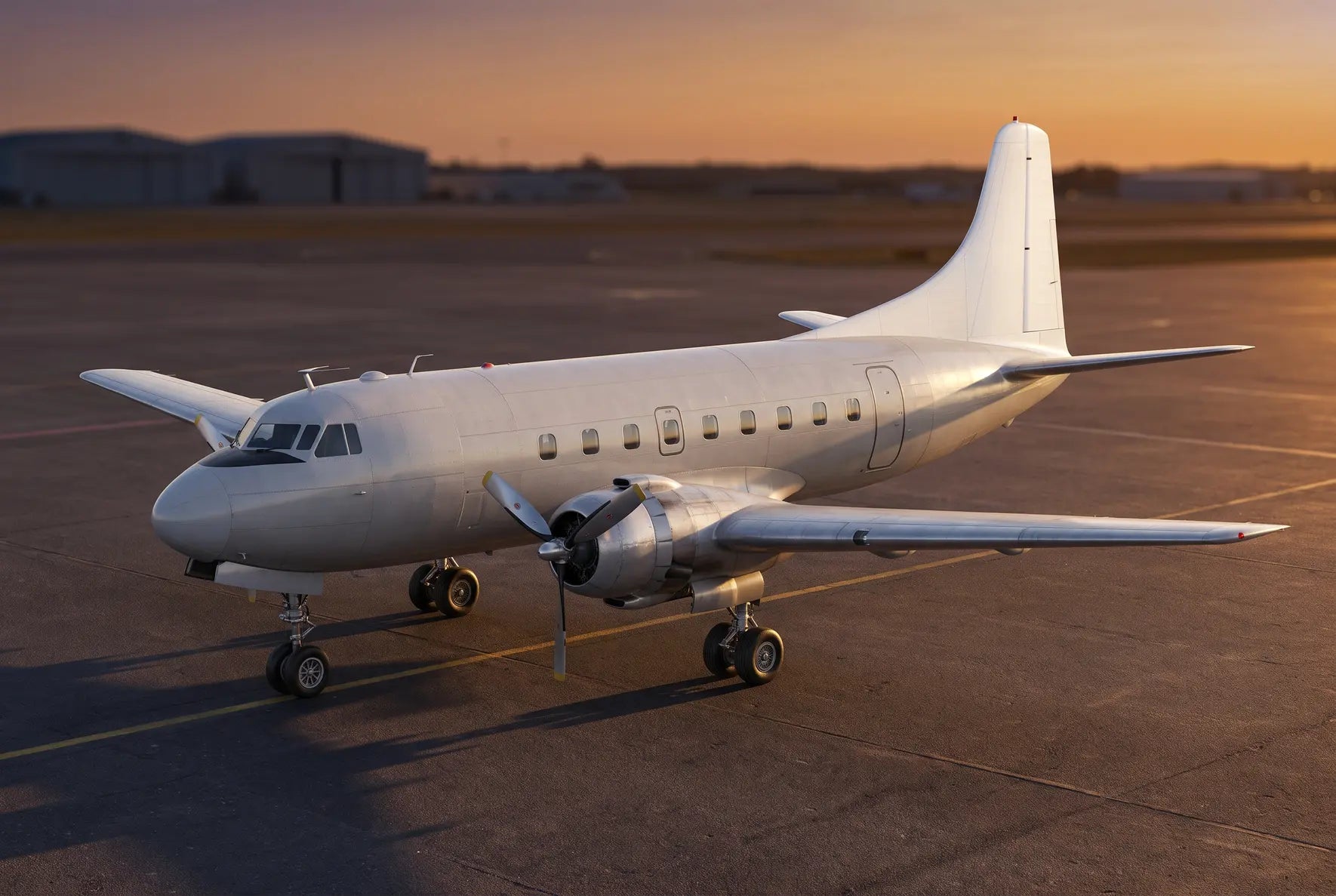
1974 is when the Metro II becomes a distinct, named step in the family. The Transportation Safety Board of Canada report A15P0081 states that the SA226 TC Metro II was originally manufactured beginning in 1974, and later made by Fairchild Industries. In the same period, Airways Magazine summarises the Metro II as an upgraded evolution of the early Metro, introducing larger windows and offering an optional rocket assisted takeoff installation to improve hot and high performance margins in demanding takeoff scenarios.
From a certification and continuing airworthiness perspective, operators and maintainers will often encounter the Metro II through its FAA type certificate grouping. The Aviation DataSource Type Certificate Data Sheet index lists the SA226 TC under FAA TCDS A8SW, which is the umbrella approval reference commonly used when tracking configuration, approved modifications, and continuing airworthiness data across the SA226 TC fleet.
1980 is presented by Airways Magazine as the next major development step, when the SA227 AC Metro III followed with upgraded engines and structural improvements that increased maximum takeoff weight, showing how the Metro II bridged the original Metro concept and the higher capability SA227 generation.
Finally, the identity of the manufacturer and design approval holder matters because it determines who controls the baseline data and support infrastructure. The Transportation Safety Board of Canada noted in 2015 that the type certificate was held by M7 Aerospace at that time, while Metro Merlin now states that Ontic has acquired the type certificate for all Metroliner and Merlin models, signalling a modern shift of fleet support to a specialist legacy airframe organisation.
What differentiates the Fairchild Swearingen Metro II from adjacent variants
The Fairchild Swearingen Metro II is best understood as the early Metro brought to a more mature commuter standard, before the later SA227 series moved the family into higher weight and more heavily upgraded structures. In day to day spotting and records work, the Metro II is identified less by a single headline performance number and more by a bundle of configuration cues and programme milestones tied to its production era.
Variant identifiers that help recognise a Fairchild Swearingen Metro II include:
- Production start: manufactured beginning in 1974 (as stated in the Transportation Safety Board of Canada report A15P0081)
- Family position: an upgraded Metro step between the prototype era and the later SA227 generation, with the Metro III following in 1980 (as summarised by Airways Magazine)
- Exterior cue: introduction of larger windows compared with earlier Metro aircraft (as noted by Airways Magazine)
- Performance option: optional rocket assisted takeoff provision aimed at improving hot and high takeoff performance margins (as noted by Airways Magazine)
- Certification reference: typically tracked under FAA TCDS A8SW for the SA226 TC group (as listed in Aviation DataSource’s index)
In operational terms, the Metro II era also helps explain why the aircraft became a familiar sight in smaller markets before regional jets took over many routes. For readers comparing successive generations of regional aircraft, a later example of that shift is the Bombardier CRJ1000, which illustrates how networks that once relied on high performance commuter turboprops eventually transitioned toward higher capacity regional jets on many sectors.

A Fairchild SA-227DC Metro 23 aircraft operated by Vee H Aviation is shown mid-flight with landing gear deployed against a clear blue sky.
Metro II technical specifications, systems highlights, and performance context
The Fairchild Swearingen Metro II (SA226 TC) is a pressurised commuter turboprop designed around short to medium sectors where schedule reliability, climb performance and cruise efficiency matter more than cabin comfort. In regulatory material it is described as a 22 seat aeroplane configured for 20 passenger seats plus two pilot seats, and it sits in a weight class that shaped many of its operational trade offs, including payload planning and runway performance margins.
Technically, the Metro II sits at the intersection of airline style utilisation and small aeroplane certification. For travellers used to regional jets, it is a useful contrast case: the Metro II prioritises low infrastructure requirements and turboprop economics, whereas a jet like the Bombardier CRJ700 targets higher cruise altitudes and different turn around constraints.
- Variant and designation: Fairchild SA226 TC, marketed as Metro II, listed under FAA Type Certificate Data Sheet A8SW in regulatory material. Federal Register discussion of SA226 TC and its certification listing
- Cabin pressurisation: described as a pressurised aeroplane in FAA rulemaking context. Federal Register
- Seating configuration (rulemaking description): 20 passenger seats plus two pilot seats. Federal Register
- Maximum takeoff weight (rulemaking description): 12,500 lb. Federal Register
- Certification history (rulemaking description): initially certificated under 14 CFR Part 23 Amendment 6 in 1970 and later certificated under SFAR 41C in 1982. Federal Register
- Design life goal used in FAA context: 35,000 hours cited for SA226 TC in an FAA design life goal table. Federal Register table extract
- Engine family association in continuing airworthiness material: Fairchild SA226 series is listed with Honeywell TPE331 in EASA continuing airworthiness reference material. EASA Easy Access Rules continuing airworthiness page
Systems and handling relevant technology
The Metro II’s continued airworthiness record is closely tied to control system integrity and power lever rigging discipline. EASA has published Safety Information Bulletins for the SA226 and SA227 family that highlight practical risk areas pilots and engineers care about, including the engine power lever interface. EASA SIB CE 16 04 In the same family, EASA has also issued guidance covering aileron and rudder control system concerns, which underlines the importance of inspections, rigging checks and correct maintenance actions in a fleet that often flies frequent cycles. EASA SIB CE 15 05R1 EASA SIB CE 16 06
Landing gear related service experience is also a key operational consideration, particularly for aircraft used in regional and remote operations with higher cycle counts. EASA has published a bulletin addressing main landing gear yoke torque link lug and shaft concerns for the SA226 and SA227 series, reinforcing the need for targeted inspections in maintenance programmes. EASA SIB CE 17 04
Published performance numbers for the Metro II can vary significantly across documents because the aircraft’s real world capability depends on configuration and assumptions: passenger and baggage density, actual operating weight against the 12,500 lb limit cited in FAA material, engine and propeller configuration, and atmospheric and runway conditions. For pilot planning and engineering comparisons, performance figures should be treated as condition dependent, with special care taken to match the referenced weight, temperature, altitude and runway state to the intended operation.
Engines: Honeywell TPE331 family in the Metro II
The Metro II is associated with the Honeywell TPE331 turboprop family in continuing airworthiness references for the SA226 series. EASA Easy Access Rules listing Honeywell describes the TPE331 as originally designed in 1959 and certified in 1965, developed for multiple applications across military, regional airline, agricultural and general aviation aircraft. The series is described as including 18 engine models and 106 configurations, with more than 13,000 engines delivered and more than 122 million flight hours. Honeywell TPE331 product page
From an engineering perspective, the TPE331 page also provides useful system level cues relevant to operation and maintenance. Listed elements include a negative torque sensing system and torque and temperature limiting, along with features such as dual continuous ignition and a fuel anti ice heating system, reflecting a design optimised for responsive power changes and operational robustness when correctly maintained. Honeywell TPE331 specifications and components overview
Comparison of Fairchild Swearingen Metro Series and Embraer EMB 120 Brasilia
Scroll horizontally to see more →
| Parameter | Fairchild Swearingen Metro II | Metro III | Metro 23 | Embraer EMB 120 Brasilia |
|---|---|---|---|---|
| Entry into service | 1974 | 1980 | 1981 | 1985 |
| Engines | 2 × Garrett TPE331-3 | 2 × Garrett TPE331-11 | 2 × Garrett TPE331-12 | 2 × Pratt & Whitney PW118 |
| Length | 18.1 m | 18.1 m | 18.9 m | 20.0 m |
| Wingspan | 17.4 m | 20.9 m | 20.9 m | 20.0 m |
| Height | 5.1 m | 5.1 m | 5.5 m | 5.9 m |
| Typical seating and layout | Single class: 19 passengers | Single class: 19 passengers | Single class: 23 passengers | Single class: 30 passengers |
| MTOW | 6.6 t | 7.3 t | 8.2 t | 11.3 t |
| Range | 600 nm | 1,000 nm | 1,500 nm | 1,900 nm |
| Cruise speed | 0.45 Mach | 0.46 Mach | 0.47 Mach | 0.48 Mach |
| Service ceiling | 25,000 ft | 31,000 ft | 31,000 ft | 30,000 ft |
| Program note | Baseline 19-seat regional turboprop for short routes | Wider wingspan and higher MTOW for improved performance | Stretched fuselage for 23 seats, FAR Part 23 certified | Modern competitor with higher capacity and speed |
Scroll horizontally to see more →
This table compares four regional turboprop aircraft in terms of dimensions, engines, performance, and capacity. The EMB 120 Brasilia stands out with the highest capacity at 30 passengers, longer range, and faster cruise speed. Among the Metro series, the Metro 23 offers upgraded seating and range over its predecessors, while the original Metro II is notably smaller and less powerful.
Fairchild Swearingen Metro II routes, missions and airline operators
The Fairchild Swearingen Metro II, also marketed as the Metroliner II, is a compact, pressurised commuter turboprop built around the economics of a 19 seat cabin. In airline service, it typically appears where frequency and runway access matter more than cabin comfort: thin regional passenger links, contract freight, resource industry shuttles, and time critical medical flights. These are often point to point services between secondary airports, or hub and spoke feeder routes into a larger airline or cargo network. When traffic grows beyond the Metro II’s niche, the usual next step is upgauging to larger regional turboprops such as the Bombardier Dash 8 Q300.
Sector lengths are usually short to medium. Perimeter Aviation publishes a cruise speed of 300 mph and a range of 1100 statute miles for its Metro II, and also frames payload planning around a 200 statute mile trip length (with payload reductions for longer trips). This places many real world legs in the “about an hour block time” bracket once climb, descent, and ground time are added, while still leaving reserves for weather and alternates. The same operator notes a fuel range of up to 4 hours, which supports longer positioning or medical ferry flights when payload and conditions allow. Details are outlined on Perimeter Aviation’s fleet overview.
Daily utilisation depends heavily on mission. In scheduled commuter flying, the Metro II is often tasked with multiple short rotations per day, maximising aircraft cycles rather than stage length. In feeder freight, utilisation is shaped by sorting windows at hubs. Ameriflight, a major North American Metroliner operator, describes weekday schedules where routes typically operate five days per week and pilots average 60 flight hours per month, a useful reference point for the time on wing that this class of aircraft can generate in contract flying. See Ameriflight’s Metroliner route and utilisation notes.
Operationally, the Metro II is valued for combining speed with access. Its pressurisation and airline style performance make it practical on longer regional legs, while the basic airframe can still serve short or unimproved runways in remote environments when properly equipped and operated. Perimeter Aviation states that its Metro II can operate into short gravel runways in adverse weather conditions and uses the type exclusively for aeromedical service, highlighting how the aircraft fits demanding dispatch profiles where time to scene and runway access are critical. Like many legacy commuter types, Metro II fleets also require robust continued airworthiness planning. Regulators have issued a range of airworthiness actions for the SA226 series; for example, the FAA has mandated repetitive inspections of cockpit heated windshields to address inner glass ply fracture risks, which can add scheduled maintenance burden and spares considerations. The directive is published by the US Department of Transportation at Airworthiness Directives, M7 Aerospace SA226 and SA227 series.
Where the Metro II operates around the world
In Europe, the Fairchild Swearingen Metro II is best known from its historical role as a high frequency commuter aircraft and, later, as a small freighter supporting overnight express and ad hoc cargo. In North & South America, the type has seen extensive use both as a classic regional airline workhorse on thin routes and as a contract cargo platform linking smaller cities to larger sorting hubs, alongside specialist roles such as air ambulance. In Asia, including Australia, it has been used on remote community links, charter services, and resource industry support flights, where the combination of speed and small runway access is valuable. In Africa, Metro II operations have often centred on charter and tourism missions and on specialist connectivity where infrastructure and terrain make aircraft performance and operational discipline decisive.
- Europe: Crossair operated the Metro II in regional airline service; Swiftair used SA226 TC Metro II aircraft in cargo operations within Spain; Zorex Air Transport operated Metro II aircraft in European repositioning and operational flying; Golden Air used the Metro II in Scandinavian commuter operations; Delta Air has also been associated with Metro II operations in the region, illustrating the type’s long standing role as a small, flexible air transport platform.
- North & South America: Perimeter Aviation operates Metro II aircraft for aeromedical missions and also runs Metroliner family aircraft across scheduled and charter networks in remote Canadian markets; Key Lime Air has operated Metro II aircraft in the United States, including cargo missions; Air Wisconsin historically operated the Metro II on scheduled passenger services; SkyWest Airlines also operated Metro II aircraft in scheduled commuter flying; in Mexico, operators such as Aeronaves TSM and Aero Cuahonte have been associated with SA226 TC Metro II operations, reflecting the type’s continuing relevance for regional logistics and secondary market connectivity; in Canada, Propair operated the Metro II on scheduled services, documented in official investigation material such as TSB Aviation Investigation Report A02C0072.
- Asia: In Australia, Skywest Airlines (Australia) used the Metro II in scheduled passenger flying; Bush Pilots Airways operated Metro II aircraft in regional operations; Casair has used the Metro II on non scheduled charter and air taxi missions; Jetcraft operated Metro II aircraft in Australia, aligning with the type’s established niche in remote and contract flying.
- Africa: Magnum Airlines operated the Metro II in Southern Africa; Ryan Blake Air Charter used the type on non scheduled charter flying in East Africa, including tourism oriented missions; Eagle Aviation has been associated with Metro II operations in the region, illustrating how the aircraft has been used for specialised transport tasks beyond mainstream scheduled networks.
Typical seating and cabin layouts
In its classic airline role, the Fairchild Swearingen Metro II is most closely associated with a 19 seat commuter layout, balancing revenue potential with simple cabin staffing and fast turnarounds at small airports. Published type data and operator material also reflect that seating and payload are mission dependent: Aviation Safety Network lists a maximum of 20 passengers for the Swearingen Metro series, while noting the Metro II as the SA226 TC variant with its distinctive larger windows. The ASN type overview is at Swearingen Metro specifications.
Specialist operators frequently trade seats for mission equipment. Perimeter Aviation describes its Metro II as dedicated to aeromedical service, equipped with a removable stretcher system, built in oxygen capacity of 3400 L, medical power and monitoring equipment, and a large rear cargo door sized for stretcher loading, an example of how the same airframe can shift from commuter duty to intensive care transport. Cargo and logistics operators typically remove or reduce seating to prioritise volume and weight flexibility, while charter operators may configure fewer seats to increase comfort or accommodate baggage and mission kits. Across all variants, the Metro II’s cabin size and systems make it most competitive when loads are modest but time, weather capability, and runway access are operational priorities.
In this video, the Flightline Fairchild Swearingen Metro III EC-GPS is seen operating a regular cargo flight at Tampere-Pirkkala Airport, arriving from Stockholm Arlanda and departing the next day to Malmo.
Fairchild Swearingen Metro II safety record and overall safety
The Fairchild Swearingen Metro II, also known as the Swearingen SA226 TC Metro II, is a pressurised twin turboprop commuter aircraft designed for frequent short sectors, often in demanding weather and into smaller airports. Introduced in the mid 1970s and still used in some cargo and remote passenger roles, it has accumulated decades of high cycle service across many operators. Public sources do not provide a single consolidated figure for total flights or cycles flown by the Metro II fleet worldwide, but the scale of utilisation is indicated by the broader Metroliner family’s long production run and widespread airline adoption. Aviation Safety Network lists a production total for the Metro family and basic timeline data, which helps frame the Metro II’s safety record against its long service life (Aviation Safety Network Metro specifications). As with many commuter types that worked intensively in the 1970s through 1990s, the most consequential events on the Metro II were often driven by operational factors such as weather decision making, airspace conflicts, and human performance, rather than a single recurring structural design defect.
Major accidents and serious incidents, and what changed afterwards
- Air Wisconsin, 1980 (Valley, Nebraska): a Metro II was lost after continued flight into severe convective weather, leading to dual engine power loss from precipitation and subsequent loss of control. The NTSB report highlighted the risks of thunderstorm penetration at commuter altitudes and the limitations of airborne weather radar in heavy precipitation, alongside gaps in the dissemination of critical weather information by the air traffic system. Industry wide emphasis that followed included more conservative convective weather avoidance, clearer weather briefing and dispatch practices, and improved controller and flightcrew awareness of radar attenuation and storm structure (NTSB Aircraft Accident Report AAR8015).
- SkyWest Airlines flight 1834, 1987 (Kearns, Utah): a Metro II was involved in a midair collision in visual conditions within a radar service area. The NTSB identified the intrusion of the other aircraft into the controlled environment and noted factors including the absence of a Mode C transponder on the general aviation aircraft and limits to air traffic control’s ability to provide collision protection under those circumstances. The enduring safety lessons were a stronger focus on transponder equipage where required, disciplined navigation and airspace compliance, and a realistic understanding that see and avoid has limits, especially in terminal environments (NTSB investigation DCA87MA018).
- Carson Air flight 66, 2015 (British Columbia): a Metro II operating a cargo service was destroyed following a high speed descent and in flight breakup. The Transportation Safety Board of Canada reported that alcohol intoxication almost certainly played a role, while the precise initiating reason for the descent could not be determined. Reported safety actions included strengthened operator policies on alcohol, longer abstention time than the regulatory minimum, enhanced reporting tools, and wider attention to the need for comprehensive substance abuse programmes in safety sensitive aviation roles (TSB Canada report A15P0081).
How safe is the Fairchild Swearingen Metro II today
In general terms, the Fairchild Swearingen Metro II can be operated safely when flown within its performance and environmental limits, maintained to approved programmes, and supported by robust standard operating procedures and training, particularly for weather assessment, stabilised approaches, and abnormal and emergency handling. Like many ageing commuter aircraft, real world safety is strongly shaped by the operator’s safety culture and oversight, including crew proficiency monitoring, risk based dispatch decisions, and continuing airworthiness management. When assessing safety in context, it helps to compare any individual aircraft type’s accident history against the very large number of commercial flights flown globally each year. IATA’s latest annual safety reporting for commercial aviation illustrates how rare accidents are at a system level, with accident rates typically expressed per million flights, and separate turboprop metrics that provide additional context for commuter operations (IATA 2024 Annual Safety Report release). For readers also interested in how safety management scales from commuter aircraft to long haul widebody operations, the same principles of disciplined procedures, training, and oversight apply across categories, including types such as the Boeing 767 200ER. Overall, the Metro II’s safety depends less on the airframe label than on how consistently the aircraft is operated and maintained, and aviation remains one of the safest modes of transport.
01 What is the typical range and mission profile of the Fairchild Swearingen Metro II?
The Fairchild Swearingen Metro II has a range of about 600 nautical miles with full passengers, making it ideal for short-haul regional routes and commuter flights. It excels in serving smaller airports with its short takeoff and landing distances of around 2,000 feet. Operators often use it for time-sensitive cargo runs or connecting remote areas.
02 How is the cabin laid out on the Fairchild Swearingen Metro II, and what is the passenger experience like?
The Metro II features a pressurized cabin seating up to 19 passengers in a single-class layout with larger squared-oval windows for better views. It provides a roomy, air-conditioned interior with options for flexible passenger-cargo configurations via a rear cargo door. Noise levels are typical for early turboprops but have been reduced in upgraded models with four-bladed propellers.
03 Which airlines operate the Fairchild Swearingen Metro II and on what routes?
Airlines like Perimeter Aviation in Canada use the Metro II for northern and remote routes, including gravel strips, with modifications for efficiency. It serves commuter services, oil industry shuttles, and short-haul cargo for automotive sectors. Common operations focus on regional networks connecting small communities.
04 How does the Fairchild Swearingen Metro II perform compared to similar aircraft?
Powered by twin Garrett TPE331 turboprops, the Metro II cruises at 276-278 knots with a service ceiling of 25,000-27,000 feet, offering good short-field performance. It compares favorably to peers like the Beechcraft 1900 for fuel efficiency on routes under 600 miles but has a lower max weight of 12,500-13,100 pounds. Its design prioritizes commuter flexibility over long-range speed.
05 What is the safety record and key design features of the Fairchild Swearingen Metro II?
06 What practical tips should passengers know when flying on a Fairchild Swearingen Metro II?
Opt for seats near the wings for less turbulence sensitivity, as this turboprop handles bumps steadily due to its sturdy build. Large windows provide excellent views, and the compact cabin feels spacious for 19 seats with overhead bins for carry-ons. Expect a smooth pressurized ride above weather, though prop noise is noticeable on older models.