Antonov An 158: History, Development Path and What Makes This Variant Unique
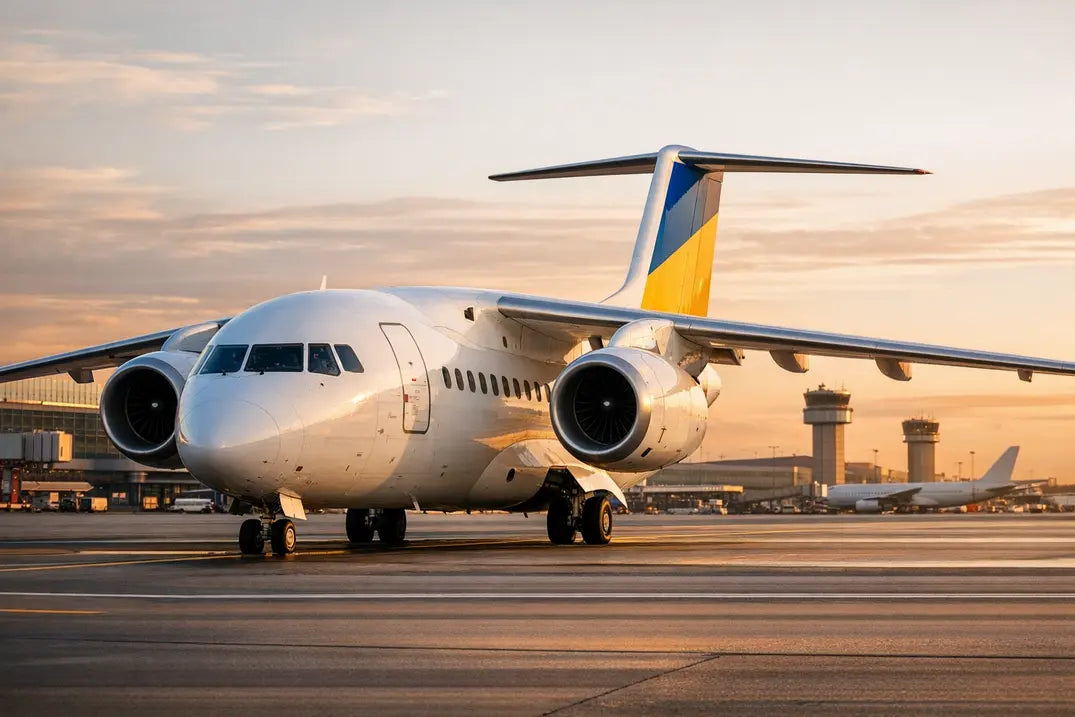
The Antonov An 158 (also designated An 148 200) is a stretched regional jet developed by the Ukrainian state enterprise Antonov Company, headquartered in Kyiv. Antonov, founded in 1946 by aircraft designer Oleg Antonov, has a long history of producing transport and regional aircraft. The An 158 was conceived as a higher capacity evolution of the Antonov An 148, itself a short to medium range regional jet that first flew on 17 December 2004 and received type certification from the Interstate Aviation Committee (IAC) and the State Aviation Administration of Ukraine in February 2007. The An 148 family was designed to replace ageing Soviet era regional aircraft and offer airlines a modern, fuel efficient option capable of operating from short and unprepared runways.
The An 148 programme gained traction with orders from carriers in Ukraine, Russia, and other post Soviet states, but market demand for a higher capacity variant led Antonov to launch development of the stretched derivative. On 26 September 2009, Antonov officially initiated the An 158 programme as a modification of the An 148, aiming to seat up to 99 passengers over routes ranging from 2,500 to 4,500 km. More than 200 enterprises from 15 countries contributed components and systems to the aircraft, reflecting the international scope of the programme.
Key Milestones in the An 158 Programme
The development and certification of the Antonov An 158 proceeded at a rapid pace once the programme was formally launched.
15 April 2010: The first An 158 prototype was rolled out from the final assembly facility in Kyiv. 28 April 2010: The aircraft completed its maiden flight, piloted by test pilot Sergii Troshin. July 2010: The An 158 was flown to the United Kingdom for display at the Farnborough International Airshow, marking its international debut. February 2011: The aircraft received type certification from both the IAC (Russia) and the State Aviation Administration of Ukraine, clearing the way for serial production and commercial deliveries. 20 March 2013: The first serial production An 158 (serial number 201 01) made its maiden flight. 22 April 2013: The first delivery was made to Cubana de Aviación (registration CU T1710), marking entry into commercial service. June 2013: The An 158 was presented at the Paris Le Bourget Airshow. Between 2013 and 2014, at least five additional airframes were completed for Cubana, with deliveries continuing into mid 2014.
Serial production was carried out at the Antonov Serial Plant in Kyiv, with cooperation from Russia's Voronezh Aircraft Production Association (VASO) for certain An 148 family airframes. Powerplant production was handled by Motor Sich in Zaporizhzhia, Ukraine, based on designs by Ivchenko Progress, the engine design bureau responsible for the D 436 148 turbofan fitted to both the An 148 and the An 158.
It is worth noting that the An 158 never received EASA or FAA type certification, which limited its operational footprint to countries recognising Ukrainian or Russian aviation authority approvals. Pilots and crew operating aircraft under these certification frameworks still require rigorous medical assessments comparable in purpose to the EASA Class 1 Medical required in European aviation.
What Differentiates the An 158 from the An 148
The Antonov An 158 shares the same high wing, T tail configuration and twin engine layout as its predecessor, but several important changes distinguish the stretched variant. The fuselage was lengthened by approximately 1.7 metres through the addition of two fuselage plugs, increasing overall aircraft length to around 34.4 metres (compared to approximately 29.13 metres for the baseline An 148). This extension added roughly 5 cubic metres of cabin volume and raised the maximum single class seating capacity from 85 (An 148) to 99 passengers.
According to Antonov's official specifications, the An 158 features an improved wing design that delivers 8.5% greater fuel efficiency than the An 148, attributed in part to aerodynamic refinements including wingtip fences. These upward curving devices at the wingtips reduce induced drag from wingtip vortices, improving lift to drag ratio during cruise. The maximum takeoff weight (MTOW) remained at 43,700 kg, the same as the An 148 100E, while maximum payload increased to 9,800 kg.
The following summarises the principal variant identifiers of the An 158 compared to the baseline An 148:
- Engines: 2 × Ivchenko Progress D 436 148 turbofans, each producing approximately 6,830 kgf (67 kN) of takeoff thrust, with an optional D 436 148FM variant offering up to 70 kN
- Fuselage stretch: +1.7 m over the An 148, total length approximately 34.4 m
- Maximum seating: Up to 99 passengers in single class layout
- MTOW: 43,700 kg
- Cruise speed: 800 to 870 km/h
- Service ceiling: 12,200 m (40,000 ft)
- Wingtip devices: Wingtip fences for improved aerodynamic efficiency
- Certification: IAC and Ukrainian aviation authority (no EASA or FAA approval)
Programme Challenges and Fleet Grounding
The An 158 programme faced significant obstacles that ultimately curtailed production and operations. Following Russia's annexation of Crimea in 2014, cooperation between Ukrainian and Russian aerospace enterprises broke down, disrupting the supply of critical components and engine parts. This severely impacted Antonov's ability to support the aircraft in service and deliver new airframes.
Cubana de Aviación, the sole commercial operator of the An 158, experienced persistent maintenance difficulties and spare parts shortages. By April 2018, only one of the airline's six An 158 jets remained operational. In May 2018, Cuban aviation authorities ordered the grounding of the entire An 158 fleet due to recurring technical issues, including engine overheating, structural concerns, and flight control anomalies. No confirmed return to regular commercial service has been reported since that grounding. Total production of the An 158 is estimated at approximately six airframes, and no further orders or deliveries have materialised.

The Antonov An-148, a twin-engine jet aircraft, is captured mid-flight against a clear sky. Known for its high-wing configuration, this regional airliner is seen in a slight bank, showcasing its aerodynamic form.
Antonov An 158 Technical Specifications, Systems and Engine Overview
The Antonov An 158 (also designated An 148 200) is a stretched derivative of the An 148 family, designed to serve regional and short haul routes with up to 99 to 102 passengers. It retains the high wing monoplane layout and underwing mounted engines of its predecessor, a configuration that protects the powerplants from foreign object damage and allows operations from unprepared or short runways at airfields up to 3,000 m above sea level. The fuselage stretch over the An 148 adds roughly 1.7 m of cabin length, enabling a higher seat count without altering the wing, empennage or cockpit architecture.
The core design trade off of the An 158 prioritises hot and high field performance and operational autonomy over ultra long range. With a manufacturer stated range of up to 2,500 km carrying 99 passengers and a maximum range envelope of up to 4,500 km at reduced payload, the type was conceived for airlines operating in regions with limited ground infrastructure. Its built in airstairs and auxiliary power unit (APU) allow self sufficient turnarounds, which was a key selling point for its principal operator, Cubana de Aviación.
- Overall length: 31.63 m
- Wingspan: 28.91 m
- Height: 8.20 m
- Cabin width (internal): 3.13 m
- Typical seating: 99 passengers (economy 3+2 abreast) or up to 102 in high density
- Maximum take off weight (MTOW): 43,700 kg
- Maximum landing weight (MLW): 37,800 kg
- Maximum payload: 9,800 kg
- Engines: 2 × Ivchenko Progress D 436 148 turbofans, each rated at approximately 6,830 kgf (67 kN) take off thrust
- Cruise speed: 800 to 870 km/h (430 to 470 kt) at altitude
- Service ceiling: 12,200 m (40,000 ft)
- Manufacturer range (99 pax): approximately 2,500 km
- Take off field length: approximately 1,900 m at MTOW, sea level, ISA conditions
- Avionics baseline: five 6×8 in LCD multifunction displays (Aviapribor), dual Rockwell Collins FMS with GPS/GLONASS
- Autopilot capability: Cat IIIA ILS autoland, P RNAV (RNP 1), B RNAV (RNP 5)
Flight Controls, Avionics and Systems Architecture
The An 158 features a four channel digital fly by wire (FBW) flight control system with a pilot selectable mechanical backup. If two or more FBW channels fail, the crew can revert to direct mechanical links for ailerons, elevator and rudder. Unlike Western FBW implementations that use sidesticks and complex envelope protections, the An 158 retains conventional control yokes and simpler control laws that replicate traditional aircraft handling qualities. This philosophy was a deliberate choice by Antonov to ease crew transition, particularly relevant for operators in markets where type rating resources are limited. For pilots considering roles in diverse fleets, understanding such differences is part of presenting oneself effectively during recruitment; resources like tips for writing a pilot cover letter can help candidates highlight adaptability to various aircraft philosophies.
The avionics suite follows a dark cockpit philosophy, with five LCD panels displaying engine, flight and navigation data only when attention is required. The dual FMS supports automated SID, STAR, approach and missed approach sequences, while additional equipment includes TAWS, TCAS, ACARS, wind shear detection and a two hour cockpit voice recorder. Engine management relies on full authority digital engine control (FADEC), and a built in auto diagnosis system supports line maintenance at airfields with limited technical infrastructure. Flight spoilers double as automatic lift dumpers on touchdown, assisting deceleration alongside the braking system.
Published performance figures for the An 158 can vary depending on the operator selected cabin configuration, actual operating empty weight, atmospheric conditions (temperature, pressure altitude and humidity), runway surface state and regulatory assumptions. For example, the take off field length of approximately 1,900 m applies at MTOW under sea level ISA conditions; at elevated or hot airfields the figure increases. Range values depend on passenger count, cargo load and reserve fuel policy. Readers should treat manufacturer numbers as baseline references rather than absolute guarantees and consult airline specific data for operational planning.
D 436 148 Turbofan: History, Specifications and Applications
The An 158 is powered by two Ivchenko Progress D 436 148 turbofan engines, produced by Motor Sich in Zaporizhzhia, Ukraine. The D 436 family originated in the 1980s at the Ivchenko Progress design bureau as a triple spool, high bypass turbofan intended to fill a thrust class above the older D 36 series. The baseline D 436 delivers around 7,650 kgf (75 kN) of take off thrust with an overall pressure ratio of 25.2, a bypass ratio of approximately 4.95 and a turbine inlet temperature of 1,550 K.
For the An 148 and An 158 applications, the engine was derated to the D 436 148 variant, producing around 6,400 to 6,830 kgf (62.8 to 67.0 kN) at take off, a measure that extends time between overhauls and improves engine life. Specific fuel consumption at take off is in the range of 0.351 to 0.374 kg/kgf·h, while cruise SFC at 11,000 m and Mach 0.75 is approximately 0.60 kg/kgf·h. The D 436 148 variant introduced improvements including an updated accessory gearbox, a revised thrust reverser and composite materials on the core fairing and main jet nozzle, contributing to reduced noise and slightly lower weight compared to the baseline.
Beyond the An 148 and An 158, variants of the D 436 family have been proposed or used on several platforms, including the Yak 42M and a transport rated D 436TP version designed for maritime operations producing 7,500 kgf. A higher thrust geared fan derivative, the D 436TX, was studied at 117 to 135 kN but has not entered series production. The close operational ties between the D 436 and Motor Sich meant that geopolitical disruptions between Ukraine and Russia after 2014 significantly affected spare parts supply, ultimately contributing to fleet groundings among operators such as Cubana de Aviación.
Antonov An-158 vs Embraer E195 vs Sukhoi Superjet 100 vs ATR 72-600 Specifications
Scroll horizontally to see more →
| Parameter | Antonov An-158 | Embraer E195 | Sukhoi Superjet 100 | ATR 72-600 |
|---|---|---|---|---|
| Entry into service | 2011 | 2013 | 2011 | 2016 |
| Engines | 2 × Progress D-436-148 | 2 × PW1900G | 2 × SaM146 | 2 × PW127M |
| Length | 34.4 m | 38.7 m | 29.9 m | 29.0 m |
| Wingspan | 28.9 m | 28.7 m | 27.8 m | 27.1 m |
| Height | 8.6 m | 10.5 m | 10.3 m | 7.7 m |
| Typical seating and layout | 2-class: 85–99 passengers | 2-class: 114–120 passengers | 2-class: 75–100 passengers | 2-class: 68–78 passengers |
| MTOW | 43.7 t | 51.8 t | 49.8 t | 23.0 t |
| Range | 1,350 nm | 2,300 nm | 2,490 nm | 900 nm |
| Cruise speed | 0.82 Mach | 0.82 Mach | 0.82 Mach | 0.50 Mach |
| Service ceiling | 40,000 ft | 41,000 ft | 40,000 ft | 25,000 ft |
| Program note | Stretched regional jet based on An-148 for 85-99 passengers | Largest E-Jet E2 variant for high-density regional routes | Russian regional jet competitor in 75-100 seat segment | Turboprop benchmark for short regional routes up to 78 seats |
Scroll horizontally to see more →
The table compares key specs of four regional aircraft, highlighting how the An-158 sits between the Superjet 100 and E195 in size and capacity. The E195 is the heaviest and offers strong range (2,300 nm), while the Superjet slightly leads in range (2,490 nm). The ATR 72-600 stands apart as a turboprop with lower cruise speed (0.50 Mach), shorter range (900 nm), and much lower MTOW (23.0 t).
Antonov An-158 Operations: Airlines, Routes and Typical Missions Worldwide
The Antonov An-158 was designed as a regional jet for short to medium haul missions, covering stage lengths of roughly 1,500 to 2,600 km with a full load of up to 99 passengers. According to Antonov's official specifications, the type can reach up to 4,000 km in lighter configurations, which translates into flight times between approximately 1 hour 50 minutes and 4 hours 50 minutes at its cruise speed of around 820 km/h. The aircraft was conceived for high frequency domestic and intra regional services, with quick turnarounds enabled by two passenger doors on the left side (the forward door integrates built in airstairs) and two service doors on the right.
A defining characteristic of the Antonov An-158 is its ability to operate from short and poorly equipped airfields. Certified for runways as short as 1,900 m at maximum take off weight and approved for unpaved strips with bearing strengths down to 6 kgf/cm², the type suits both point to point networks linking secondary airports and hub and spoke operations feeding larger gateways. Its high wing layout keeps engines clear of debris, an advantage at regional fields with limited infrastructure. In practice, the aircraft was intended for markets in the developing world where runway quality and ground support equipment can be limited.
Despite these design strengths, operators of the Antonov An-158 faced serious challenges. Only six production airframes were ever delivered, all to a single commercial customer. Heavy reliance on components sourced from Russia (historically around 60 to 70 percent of parts in the An 148/158 family) meant that geopolitical tensions between Ukraine and Russia from 2014 onward disrupted the supply chain severely. Spare parts became scarce, and serial production at the Antonov plant in Kyiv halted after 2015. Operators reported persistent mechanical, electrical and hydraulic failures, alongside engine reliability issues with the D 436 148 turbofans, ultimately grounding the entire commercial fleet. For context on how other regional aircraft families have achieved greater commercial success through standardisation and broad operator networks, see this overview of the Airbus A320 family.
Where the Antonov An-158 Operates (and Operated)
The commercial footprint of the Antonov An-158 has been extremely limited compared to Western regional jets. The type never entered scheduled service in Europe, Asia or Africa with revenue carrying airlines in those regions. Its only confirmed commercial operator was based in the Caribbean, serving domestic routes within Cuba. Antonov itself retained airframes in Ukraine for testing, certification and demonstration purposes, while orders from carriers in North Korea and discussions with Iran did not result in confirmed An-158 deliveries for scheduled passenger service.
Broadly, the Antonov An-158 programme illustrates how a technically capable design can struggle when production volumes remain low, supply chains are geopolitically vulnerable and after sales support cannot be sustained. The absence of operators across multiple continents stands in stark contrast to its design ambitions.
- Europe: No airline in Europe operated the Antonov An-158 on scheduled commercial services. Antonov State Enterprise in Kyiv, Ukraine, retained at least two airframes (including UR-EXJ) for flight testing, certification trials and demonstration tours at events such as the Paris and Farnborough air shows. Russian carriers Angara Airlines and Saratov Airlines operated the closely related An-148 variant on domestic routes, but not the stretched An-158 itself.
- North & South America: Cubana de Aviación of Cuba was the sole commercial operator worldwide. The airline received six An-158 airframes (registrations CU-T1710 through CU-T1716) between April 2013 and July 2015, configured with 98 seats for domestic services from its hub at Havana José Martí International Airport. Routes included connections to regional Cuban cities. By early 2017, recurring technical problems began grounding individual aircraft, and in May 2018 the Instituto de Aeronáutica Civil de Cuba formally suspended the entire fleet to prevent accidents. All six aircraft remain stored at Havana as of 2025, despite Antonov's 2019 pledge to restore them to airworthiness.
- Asia: Air Koryo of North Korea confirmed an order for one An-158 in addition to An-148 deliveries, but available records do not show a completed delivery or entry into scheduled passenger service of the An-158 variant with this carrier.
- Africa: No airline in Africa has operated the Antonov An-158. Although the aircraft's unpaved runway capability was marketed toward developing markets on the continent, no orders or deliveries to African operators have been documented.
Typical Seating Configurations of the Antonov An-158
The Antonov An-158 cabin is arranged in a five abreast (3+2) layout with a single aisle, within an internal cabin width of 3.13 m and a headroom of 2.00 m. According to Antonov's published cabin data, the manufacturer offered several layout options. A high density all economy configuration seated up to 99 or 102 passengers with a seat pitch of approximately 28 to 30 inches (711 to 762 mm). Two class layouts ranged from 86 to 92 seats, with a small business class section in a 2+2 arrangement at 35 inch (889 mm) pitch up front and economy seats at 30 inch (762 mm) pitch in the rear.
Cubana de Aviación, as the only scheduled operator, used a 98 seat single class economy configuration. Because no network carrier with a premium cabin ever operated the type, documented two class configurations remained limited to manufacturer proposals rather than in service reality. The cabin width of 3.13 m, as noted by defence and aerospace references, makes the An-158 markedly wider than some competing regional jets in the same seat count bracket, offering a degree of shoulder room advantage in the five abreast layout.
In this video, watch an Antonov An-158 demonstration and learn how this stretched An-148 variant features a longer fuselage and seating for up to 100 passengers, reflecting its design and build.
Antonov An 158 Safety Record: How Safe Is This Regional Jet?
The Antonov An-158 is a stretched derivative of the Antonov An-148 regional jet family. Only six An-158 airframes were built, all delivered to Cubana de Aviación between 2013 and 2015. With such a small fleet and limited years of commercial service before the type was grounded, the An-158 itself has no recorded hull losses, fatal accidents or serious incidents attributed directly to the variant. That said, the broader An-148/An-158 family experienced two notable accidents during pre-delivery testing and airline operations that carry important safety lessons for the entire type.
Notable Accidents and Incidents Involving the An-148/An-158 Family
2011 Garbuzovo Test Flight Crash (An-148)
On 5 March 2011 an Antonov An-148-100E (test registration 61708), assembled by VASO and undergoing demonstration flights before delivery to the Myanmar Air Force, broke apart in mid-air near Garbuzovo in the Belgorod Oblast of Russia. All six crew members on board were killed. The official investigation by the Russian Ministry of Industry found that the crew allowed the aircraft to exceed its never exceed speed (VNE) by over 110 km/h during a practice emergency descent. The resulting aerodynamic loads triggered low-frequency oscillations and catastrophic structural failure. Contributing factors included deviations from flight manual procedures and a lack of proper crew coordination. Following this event, regulators and Antonov reviewed test flight protocols, crew resource management standards, and speed monitoring procedures during non-standard manoeuvres. Full details are available at the Aviation Safety Network database entry.
2018 Saratov Airlines Flight 703 (An-148)
On 11 February 2018, Saratov Airlines Flight 703, operated by an An-148-100B (RA-61704), crashed near Stepanovskoye shortly after departing Moscow Domodedovo, killing all 71 occupants. The Interstate Aviation Committee (MAK) final report classified the event as a loss of control in flight (LOC-I). Investigators determined that the crew did not activate pitot probe heaters before take-off, leading to ice blockage of all three dynamic pressure probes. Erroneous airspeed readings prompted the crew to pitch down aggressively, triggering a high-speed dive from which recovery was not achieved. The report highlighted multiple systemic shortcomings: the crew ignored six cockpit warning messages before departure, the airline's safety management system was deficient, and regulatory oversight of crew training and certification was inadequate.
As a direct consequence, the Russian Ministry of Transport grounded all An-148 and An-158 aircraft in the country. Cuban aviation authorities followed in May 2018, ordering Cubana de Aviación to ground its entire An-158 fleet after identifying repeated failures in mechanical, hydraulic and electrical systems, plus evidence of structural cracks and abnormal engine temperature behaviour.
Cubana de Aviación Operational Difficulties
Even before the 2018 groundings, Cubana's An-158 fleet experienced chronic spare parts shortages caused by the breakdown of the Russia-Ukraine supply chain after 2014. In May 2017 alone, the airline cancelled 38 of 116 scheduled flights due to delayed component deliveries. By early 2023, the last active An-158 in the Cubana fleet (CU-T1716) ceased operations following a manufacturer directive linked to abnormal engine temperatures. As of 2025, all six An-158s remain stored at Havana Airport with no confirmed date for return to service.
How Safe Is the Antonov An-158?
Evaluating how safe the Antonov An-158 is requires context. The variant itself has never suffered a fatal accident or hull loss during commercial operations. The two accidents summarised above involved the An-148 sub-variant and stemmed largely from human factors and organisational failings rather than fundamental design defects. From a design standpoint, the An-148/An-158 family incorporates a four-channel digital fly-by-wire flight control system with a pilot-selectable mechanical backup, full-authority digital engine control (FADEC), a terrain awareness warning system (TAWS) and traffic collision avoidance system (TCAS). The high-wing configuration with underwing engine nacelles provides strong foreign object damage protection, supporting operations from unprepared runways. The type was certified to AP-25 standards, harmonised with FAR-25 and EASA CS-25, the same structural and system safety benchmarks applied to Western regional jets.
However, the type faces practical challenges that affect perceived safety. Extremely limited production (approximately 40 An-148/158 combined) means the fleet lacks the statistical depth of types like the Tupolev Tu-154B or Western equivalents such as the Embraer E-Jet family, where millions of flight hours allow more robust accident-rate comparisons. Supply chain fragmentation between Ukraine and Russia has hampered ongoing airworthiness support, a factor that indirectly elevates operational risk regardless of inherent design quality.
According to IATA's annual safety reports, the global commercial aviation accident rate has fallen steadily over the past two decades. When properly maintained, crewed by well-trained pilots and overseen by rigorous regulatory frameworks, modern regional jets, including the An-158, offer a level of structural and system safety consistent with contemporary standards. Aviation remains one of the safest modes of transport, and the An-158's design reflects many of the same redundancy and fail-safe principles found across the industry.
01 What is the typical range and mission profile of the Antonov An-158?
The Antonov An-158 has a range of up to 2600 km with 89-102 passengers, making it ideal for regional routes like intra-European or domestic flights in large countries. It cruises at 800-870 km/h at altitudes up to 12,200 m, with a takeoff runway requirement of about 1900 m at maximum takeoff weight. This suits it for medium-haul missions on less equipped airfields.
02 What is the cabin layout and passenger experience like on the Antonov An-158?
The An-158 accommodates up to 102 passengers in a single-class layout, typically 3+2 in economy or 2+2 in premium, with a cabin width of 3.13 m and headroom of 2 m for comfortable seating. Overhead bins are larger than competitors, and features include forward/rear galleys and drop-down screens for entertainment. Passengers enjoy a quiet ride thanks to high-mounted engines reducing noise.
03 Which airlines operate the Antonov An-158 and on what routes?
Airlines like Fly Ukraine have operated the An-158, primarily on short to medium regional routes in Eastern Europe and nearby regions. It serves high-density routes up to 2500-2600 km, such as connecting major cities with smaller airports. Operations focus on areas with challenging airfields due to its short takeoff capability.
04 How does the Antonov An-158 perform compared to similar aircraft?
The An-158 offers a 2500-2600 km range with 9-9.8 t payload, powered by two D-436-148 engines with low fuel burn of 1800 kg/h for 99 passengers, outperforming some regional jets in efficiency on shorter runways. It matches competitors like the Embraer E175 in capacity but excels on unpaved or high-elevation fields up to 3000 m. Cruise speed of 820-870 km/h provides competitive travel times.
05 What is the safety record and key design features of the Antonov An-158?
The An-158 meets AP-25 standards harmonized with FAR-25 and CS-25, certified in 2011 by Ukrainian and Interstate Aviation Committee authorities, with modern fly-by-wire controls and five LCD displays in the cockpit. High-wing design with underwing engines protects against foreign object damage, and it includes auto-diagnosis systems for reliability. No major incidents reported in limited operations, emphasizing safe operations in diverse conditions.
06 What practical tips should travelers know about flying on the Antonov An-158?
Seat choices in rows with 2+2 offer more space; windows are ample due to the high wing, providing good views. It handles turbulence steadily at high cruise altitudes, and quick boarding via left-side doors with built-in steps speeds up turns. Expect efficient service with dual galleys, suitable for routes under 3 hours.