


History and Development of the ATR 42-300: Program Launch, Milestones and Variant Origins
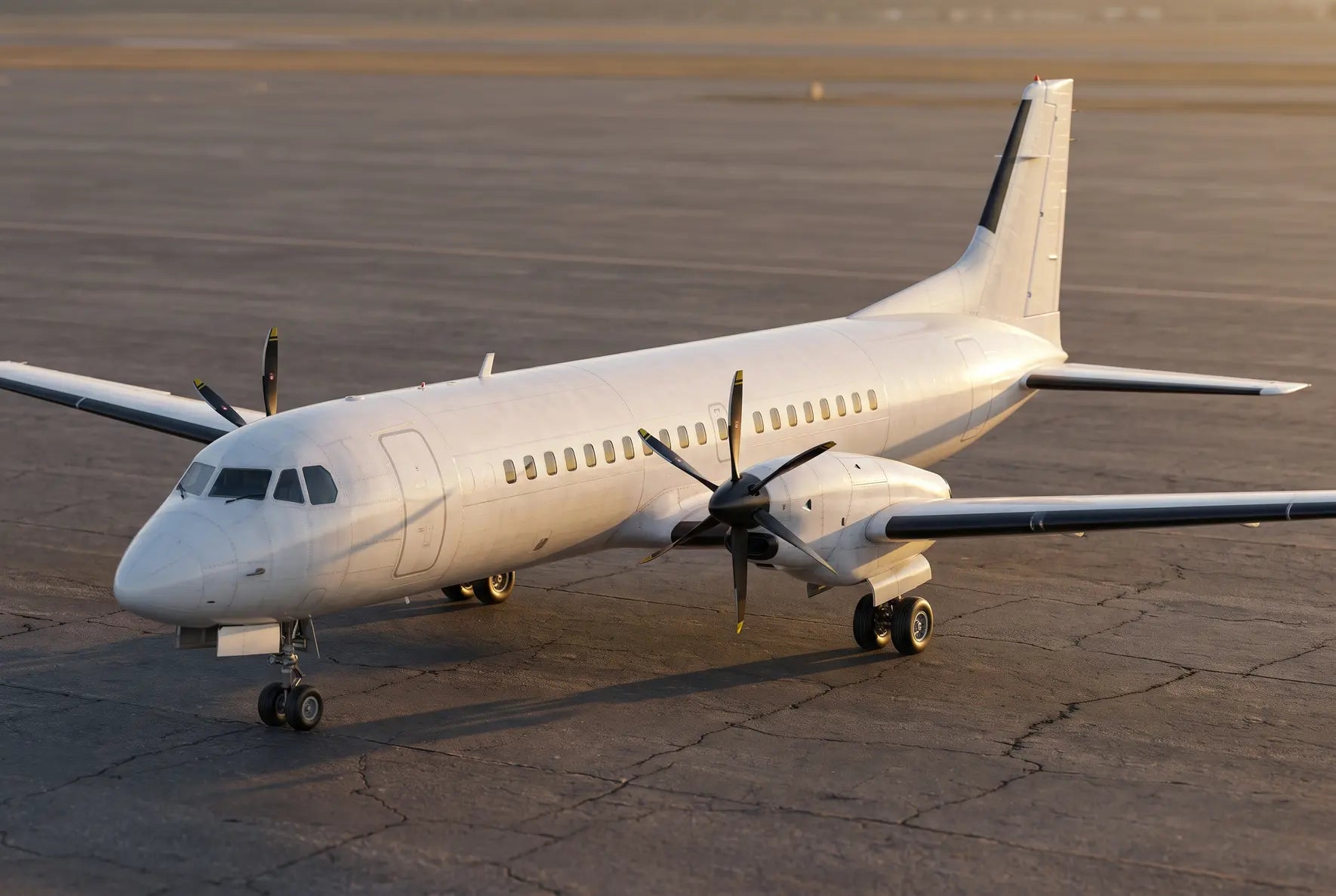
The ATR 42-300 is the original production variant of the ATR 42 regional turboprop family, born from a strategic Franco-Italian partnership that reshaped short-haul aviation in Europe and beyond. Its development story is one of cross-border industrial cooperation, pioneering use of composite materials, and a rapid path from concept to commercial service that established ATR as a dominant force in the regional aircraft market.
Origins of ATR and the Launch of the ATR 42 Program
In the late 1970s, both French manufacturer Aérospatiale and Italian manufacturer Aeritalia (now Leonardo S.p.A.) independently studied designs for a new generation of fuel-efficient regional turboprops. Recognising the benefits of pooling resources, the two companies signed a formal cooperation agreement on November 4, 1981, creating the ATR (Avions de Transport Régional) consortium, headquartered in Toulouse, France. The ATR 42 program had been formally launched in October 1981, targeting a 42-seat aircraft optimised for short-haul routes with low operating costs.
The industrial work split reflected each partner's strengths: Aérospatiale in Toulouse was responsible for the cockpit, fuselage centre section, and final assembly, while Aeritalia in Naples manufactured the outer wings, wing-fuselage fairings, and tail assembly. This collaborative model, with components transported between France and Italy, became a defining feature of the ATR program and remains in place today under the ATR brand (now jointly owned by Airbus and Leonardo).
Key Milestones: From First Flight to Entry into Service
Development progressed swiftly. The first of two ATR 42 prototypes, registered F-WEGA, completed its maiden flight on August 16, 1984, from Toulouse. The flight confirmed the soundness of the high-wing, T-tail design powered by two Pratt & Whitney Canada PW120 turboprop engines, each rated at 1,800 SHP at takeoff.
The ATR 42-300 received type certification in September 1985 from the French Direction Générale de l'Aviation Civile (DGAC). Just weeks later, on December 3, 1985, the first production aircraft was delivered to French launch customer Air Littoral. The airline operated its inaugural revenue flight on December 23, 1985, connecting Béziers Cap d'Agde Airport to Paris Orly.
Commercial momentum built quickly. By August 1988, Texas Air Corporation placed a major order for 50 ATR 42-300 aircraft, and Trans World Express received the 100th production unit that same year. In September 1989, ATR announced it had reached a total of 400 sales across the ATR 42 family. The success of the ATR 42-300 also prompted the launch of the stretched ATR 72 in January 1986, just one month after the first ATR 42 entered service.
Pioneering Use of Composite Materials
One of the most notable aspects of the ATR 42-300 was its extensive use of composite materials at a time when such technology was rarely applied to regional airliners. Approximately 19% of the aircraft's structural weight consisted of composites, including Kevlar/Nomex, carbon fibre reinforced polymer (CFRP)/Nomex, and glass fibre reinforced polymer (GFRP)/Nomex sandwich structures. These materials were used in the fin, T-type tail surfaces, wing-body fairings, engine cowlings, cabin floor panels, rudder, elevators, nose wheel doors, and main landing gear fairings. This approach delivered meaningful weight savings and improved resistance to corrosion and fatigue, reducing long-term maintenance requirements. Pilots and flight crew operating the ATR 42-300 were required to hold valid medical certificates in accordance with civil aviation authority regulations, a standard that has evolved alongside the aircraft's operational history.
What Distinguishes the ATR 42-300 from Other ATR 42 Variants
The ATR 42-300 was the baseline production model, and understanding its specifications helps clarify how subsequent variants evolved. The earlier ATR 42-200 designation refers to pre-production and prototype aircraft with lower maximum operating weights but an otherwise identical airframe. The ATR 42-320, introduced as an improved derivative, replaced the PW120 engines with more powerful Pratt & Whitney Canada PW121 units rated at 2,100 SHP, offering better performance in hot and high-altitude airport environments. The much later ATR 42-500 represented a more significant evolution, featuring PW127E engines, six-blade propellers, a modern EFIS glass cockpit, a redesigned cabin interior, and structural reinforcements for higher operating weights and faster cruise speeds.
The following list summarises the key identifiers of the ATR 42-300 variant:
- Engines: 2 × Pratt & Whitney Canada PW120 turboprops (1,800 SHP takeoff rating per engine)
- Propellers: 4-blade Hamilton Standard 14SF-5, 3.96 m diameter
- Maximum takeoff weight (MTOW): 16,700 kg (basic) or 16,900 kg (optional)
- Typical passenger capacity: 42 to 50 seats depending on configuration
- Composite content: approximately 19% of structural weight (Kevlar/Nomex, CFRP, GFRP)
- Dimensions: wingspan 24.60 m, length 22.70 m, height 7.60 m
- Service ceiling: 25,000 ft
- Production period: 1985 to 1996

An ATR 42-500 aircraft operated by Hop! for Air France is shown flying against a clear blue sky. The aircraft's design features a prominent propeller and distinct red and blue livery.
ATR 42 300 Technical Specifications, Systems and Engine Overview
The ATR 42 300 was designed from the outset as a rugged, fuel efficient regional turboprop optimised for short haul routes and operations from short or unprepared runways. Developed jointly by Aérospatiale and Aeritalia (now Leonardo and Airbus), the variant entered production as the standard series model following the limited run ATR 42 200. Its high wing configuration, fixed landing gear geometry and twin turboprop layout offered a deliberate trade off: slightly lower cruise speed compared to regional jets in exchange for superior runway flexibility, lower fuel burn per seat and reduced operating costs on thin routes. With a standard cabin configured for 48 passengers, the ATR 42 300 filled a niche between smaller commuter aircraft and larger turboprops such as the de Havilland Canada Dash 8 family.
From a design standpoint, the aircraft inherited the ATR family's signature features: a high mounted wing with integral fuel tanks, a large rear cargo door for versatile loading, and a pressurised fuselage enabling operations up to FL250. The variant was built to deliver reliable performance in warm climates and at elevated airfields, while keeping maintenance requirements straightforward for smaller regional carriers. For those looking to deepen their understanding of turboprop flight characteristics and operational decision making, specialised aviation coaching resources can provide additional context.
- Overall length: 22.67 m (74 ft 5 in)
- Wingspan: 24.57 m (80 ft 7 in), wing area 54.5 m²
- Height: 7.59 m (24 ft 11 in)
- Fuselage diameter: 2.87 m (9 ft 5 in) external
- Typical seating: 48 passengers in standard configuration (up to 50 in high density at 30 inch pitch)
- Maximum takeoff weight (MTOW): 16,700 kg (36,817 lb) basic; 16,900 kg (37,257 lb) optional
- Operating empty weight (OEW): approximately 10,285 kg (22,674 lb) manufacturer baseline; around 10,900 kg (24,030 lb) typical in service
- Maximum landing weight (MLW): 16,400 kg (36,155 lb)
- Fuel capacity: 4,500 kg (9,921 lb) maximum usable
- Engines: 2 × Pratt & Whitney Canada PW120 turboprops, each flat rated at 1,800 SHP for takeoff
- Propellers: Hamilton Standard 14SF 5, four blade, 3.96 m (13 ft) diameter
- Maximum cruise speed: 266 KTAS at 95% MTOW, ISA, optimum flight level
- Range (manufacturer figures): approximately 449 NM with maximum passengers and reserves; extended range configurations possible with reduced payload
- Service ceiling: FL250 (25,000 ft)
- Takeoff field length: 1,090 m (3,576 ft) at basic MTOW, ISA, sea level
- Landing distance: 887 m (2,910 ft) at basic MLW, sea level, under EASA Air Ops conditions
- Rate of climb (two engines): 1,320 ft/min at ISA, sea level, MTOW
Systems Architecture, Flight Controls and Handling
The ATR 42 300 uses a fully mechanical flight control system, with cables, rods and bell cranks linking the cockpit controls to the primary surfaces: ailerons, elevators and rudder. There is no fly by wire technology on this variant. Roll is controlled via the control wheels, with spring tabs providing aerodynamic load compensation and electrical trim available for fine adjustment. Pitch control is achieved through mechanically linked elevators, incorporating a pitch coupling mechanism that can be disengaged through differential force. Yaw is managed through interconnected rudder pedals linked by cables to the tail section. Secondary controls include hydraulically actuated flaps, governed electronically by a multifunction computer, and roll spoilers that are mechanically linked to the ailerons.
Automation on the ATR 42 300 is deliberately minimal, reflecting the aircraft's design era and regional mission. Electrical trim operates on all three axes, and a yaw damper provides directional stability in cruise. The autopilot system (AFCS) offers basic modes such as heading select, navigation tracking, approach, vertical speed and altitude hold, with a flight director guiding the crew. Stall protection relies on dual stick shakers and a single stick pusher, both driven by the multifunction computer. The braking system uses multi disc brakes with anti skid protection. Engine management on the PW120 is handled by a hydromechanical fuel control system with electronic monitoring, predating the full authority digital engine control (FADEC) found on later ATR variants such as the ATR 42 500 and ATR 42 600.
Published performance figures for the ATR 42 300 should always be read in context. Values for range, takeoff distance and cruise speed vary depending on operator selected MTOW options, cabin density, atmospheric conditions (ISA or ISA+10/+20), runway elevation, surface condition, and the reserve fuel policy applied. Manufacturer brochures typically quote ideal conditions at sea level and ISA. Real world operational numbers may differ notably, especially in hot and high environments. Comparing data across sources requires attention to the assumptions behind each figure.
Pratt & Whitney Canada PW120: The Engine Behind the ATR 42 300
The ATR 42 300 is powered exclusively by two Pratt & Whitney Canada PW120 turboprop engines, each flat rated at 1,800 SHP for normal two engine takeoff and certified for 2,000 SHP in one engine inoperative (OEI) conditions. Maximum continuous power is 1,700 SHP, with maximum cruise power at 1,619 SHP. Each engine drives a four blade Hamilton Standard 14SF 5 propeller with a diameter of 3.96 m. Total fuel flow at maximum cruise is approximately 568 kg/hr for both engines combined.
The PW100 engine family was developed by Pratt & Whitney Canada (now a division of RTX Corporation) during the late 1970s and early 1980s to meet growing demand for efficient, reliable powerplants in the emerging regional turboprop market. The PW120 was the baseline member of this family and was certificated alongside the ATR 42 programme, entering service in the mid 1980s. The engine features a free turbine design with a two spool gas generator, and it became one of the most widely used turboprops of its generation. Its direct derivative, the PW121, offered increased ratings (1,900 SHP takeoff, 2,100 SHP OEI) and was selected for the ATR 42 320, which targeted improved performance in hot and high conditions.
Beyond the ATR family, the broader PW100 series has powered a wide variety of regional and utility aircraft. Variants of the engine family are found on the de Havilland Canada Dash 8 series, the Dornier 328, the British Aerospace ATP and the Embraer EMB 120 Brasilia, among others. With over 10,000 engines delivered across all PW100 variants, the family has accumulated a strong service record in regional aviation worldwide. The PW120 itself remains a well understood powerplant among maintenance organisations, with a mature support network and established overhaul intervals.
ATR 42 and ATR 72 Variant Specifications Comparison
Scroll horizontally to see more →
| Parameter | ATR 42-300 | ATR 42-320 | ATR 42-500 | ATR 72-600 |
|---|---|---|---|---|
| Entry into service | 1985 | 1988 | 1996 | 2019 |
| Engines | 2 × Pratt & Whitney Canada PW120 | 2 × Pratt & Whitney Canada PW121 | 2 × Pratt & Whitney Canada PW127E/F | 2 × Pratt & Whitney Canada PW127M |
| Length | 22.7 m | 22.7 m | 22.7 m | 27.2 m |
| Wingspan | 24.6 m | 24.6 m | 24.6 m | 27.1 m |
| Height | 7.6 m | 7.6 m | 7.6 m | 7.7 m |
| Typical seating and layout | Single-class: 42–48 passengers | Single-class: 42–48 passengers | Single-class: 48–50 passengers | Single-class: 68–78 passengers |
| MTOW | 16.9 t | 16.9 t | 18.6 t | 23.0 t |
| Range | 449 nm | 459 nm | 852 nm | 900 nm |
| Cruise speed | 0.27 Mach | 0.27 Mach | 0.30 Mach | 0.30 Mach |
| Service ceiling | 25,000 ft | 25,000 ft | 25,000 ft | 25,000 ft |
| Program note | Baseline model of ATR 42 family, introduced PW120 engines for regional routes | Higher power PW121 engines for hot/high and short runway operations | Modernized version with PW127 engines, increased MTOW and range | Stretched 70-seat version, newest generation with latest PW127M engines |
Scroll horizontally to see more →
The table compares key specs across ATR 42-300/320/500 and the larger ATR 72-600. The ATR 42 models share the same dimensions and ceiling, but the -500 brings higher MTOW and a major range jump (852 nm) versus the early -300/-320 (~450 nm). The ATR 72-600 is longer with greater wingspan, seats far more passengers, and delivers the highest MTOW and range (900 nm).
ATR 42-300 Operations, Typical Routes, Missions and Airlines Around the World
The ATR 42-300 was designed from the outset as a short haul regional workhorse, optimised for sectors between 200 and 450 nautical miles. According to ATR's official performance sheet, a 200 NM sector takes roughly 62 minutes of block time with a fuel burn of around 503 kg, while a 300 NM leg requires approximately 86 minutes and 682 kg of fuel. These short cycle times allow operators to schedule six to seven sectors per day, translating into roughly 2,000 to 2,400 annual flight hours per airframe. Industry maintenance data published by Aircraft Commerce confirms an average flight cycle of about 50 minutes and around 200 cycles per month for a typical regional operator.
The aircraft excels in hub and spoke networks connecting secondary or regional airports to larger hubs, but it is equally at home on point to point routes linking smaller communities that lack jet service. Its ability to operate from runways as short as 1,100 metres at maximum takeoff weight, combined with a landing distance of under 900 metres, makes it a natural fit for constrained airfields with limited infrastructure. Operators have also deployed the type on island hopping services, cargo and combi missions, and even medevac operations, thanks to its low loading sill of 1.2 metres and optional forward cargo door.
Challenges for operators centre on the classic turboprop trade offs. Cruise speed tops out at around 266 KTAS, considerably slower than regional jets, which limits the aircraft's appeal on longer or time sensitive routes. Payload and range are inversely linked: carrying the maximum payload of approximately 4,640 kg reduces range significantly, and high altitude or hot temperature conditions further erode takeoff performance. As the fleet ages, sourcing replacement parts and maintaining compliance with evolving regulatory requirements also become increasingly important considerations. Pilots aspiring to fly regional turboprops such as the ATR 42-300 often encounter rigorous selection processes; airlines that recruit through structured aptitude testing are outlined in this guide to DLR pilot tests and the airlines that use them.
Where the ATR 42-300 Operates Across the Globe
Since its entry into service in 1985, the ATR 42-300 has been flown by dozens of airlines on every inhabited continent. In Europe, it served as a feeder aircraft for major flag carriers and independent regional airlines linking secondary cities to national hubs. Across North and South America, it connected remote northern communities in Canada, provided commuter service in the United States, and linked regional cities in Venezuela and Colombia. In Asia, the type found a role on domestic and inter island routes in countries such as Myanmar, Iran, Taiwan and Indonesia. In Africa and the Pacific, it operated on thin routes where runway length and passenger volumes made larger aircraft impractical, including inter island services in French Polynesia and regional hops in Morocco and Equatorial Guinea.
Although many of these operators have since transitioned to newer ATR variants such as the ATR 42-500 or ATR 42-600, a small number of airframes remain in active service or in cargo and charter roles. The following list highlights notable airlines by region, drawing on fleet records compiled by Wikipedia and Planespotters.net.
- Europe: Ryanair operated three ATR 42-300s and one ATR 42-320 during its early years as a small Irish regional carrier, well before it became a low cost giant. Air Littoral in France used the type on short domestic feeder routes, while Si Fly in Italy flew three examples on regional services. Air Lithuania operated three ATR 42-300s for Baltic connectivity, Croatia Airlines deployed the variant on domestic links, and Finncomm Airlines used it to serve Finnish regional airports.
- North and South America: American Eagle Airlines in the United States employed the ATR 42-300 as a commuter feeder to American Airlines hubs. Calm Air in Canada used the type to serve remote northern communities in Manitoba and Nunavut, accumulating some of the highest cycle counts in the global fleet. Silver Airways operated the variant on short hops across Florida and the Caribbean. In South America, SBA Airlines in Venezuela ran two ATR 42-300s alongside twelve ATR 42-320s on domestic routes, and Aces Colombia used the aircraft for regional connectivity.
- Asia and Pacific: Air Mandalay in Myanmar operated two ATR 42-300s and two ATR 42-320s on domestic and tourism routes. Iran Aseman Airlines used one ATR 42-300 for regional domestic flights. TransAsia Airways in Taiwan deployed the type on inter city services, and Nusantara Air Charter in Indonesia flew it on island hopping charters. In the Pacific, Air Tahiti was a prominent operator, using ATR 42-300s from 1988 onward to connect dozens of islands across French Polynesia from its base in Papeete before transitioning to newer ATR 42-600 models.
- Africa: Royal Air Maroc operated four ATR 42-300s on regional routes within Morocco and to neighbouring countries. Ceiba Intercontinental Airlines in Equatorial Guinea also used the type for regional services connecting the mainland to the island of Bioko.
Typical Seating Configurations on the ATR 42-300
The manufacturer's standard cabin layout for the ATR 42-300 seats 48 passengers in an all economy, 2+2 abreast arrangement at a seat pitch of 30 inches. The cabin measures approximately 2.57 metres (8 ft 5 in) wide and 1.91 metres (6 ft 3 in) high, providing adequate headroom and aisle space for a regional turboprop of its era. Full details of the standard configuration appear in ATR's official specification document.
In practice, seat counts vary between 42 and 48 depending on the operator and the mission profile. Network carriers feeding passengers to long haul hubs tended to maximise capacity at 46 to 48 seats to keep unit costs low; for instance, Precision Air in Tanzania and Winair in the Caribbean both configured their aircraft with 48 economy seats in a standard 2+2 layout. Airlines operating in harsher climates or on longer sectors sometimes opted for lower density arrangements: Calm Air in northern Canada configured its ATR 42-300 with 42 seats to allow additional overhead storage and passenger comfort on routes serving remote indigenous communities. DAT (Danish Air Transport) chose a 46 seat layout with a seat width of approximately 18 inches and 3 inches of recline. Beyond standard passenger configurations, combi conversions allowed operators to mix cargo bays with reduced passenger seating at a roomier 33 inch pitch, with flexible options ranging from 10 to 42 passengers alongside cargo containers.
In this video, watch an ATR 42-300 operated by Lease Fly during start-up and takeoff at Lannion Airport, capturing engine spool-up, taxi moments, and the aircraft’s departure from the runway.
ATR 42 300 Safety Record and How Safe Is This Regional Turboprop
The ATR 42-300 entered commercial service in 1985 as the initial production variant of the ATR 42 family, a programme that has accumulated more than four decades of operational history across dozens of airlines worldwide. According to data compiled on the ATR 42 type, the full ATR 42 family has been involved in 47 recorded aviation accidents and incidents, resulting in 34 hull losses and 276 fatalities. These figures span every sub-variant and cover operations on every continent, including demanding environments such as mountainous terrain, tropical weather and Arctic cold. When assessed against the roughly 476 ATR 42 airframes produced and the millions of revenue flights completed since the mid-1980s, the overall loss rate remains comparable to that of other regional turboprops of the same generation.
Notable Accidents and Incidents Involving the ATR 42 300
Several events directly involving the ATR 42-300 or its closest sub-variants have shaped the type's safety narrative. Each led to measurable changes in design, regulation or operational practice.
- ATI Flight 460 (15 October 1987, Conca di Crezzo, Italy) – An Aero Trasporti Italiani ATR 42-312 (registration I-ATRH) struck high terrain near Lake Como approximately 15 minutes after departing Milan on a scheduled flight to Cologne. All 37 occupants were killed. Icing conditions were present during the climb phase, and the crew progressively lost control. The accident drew early attention to the behaviour of the ATR 42 wing in icing environments and contributed to a broader review of ice protection on the type.
- Icing related incidents and American Eagle Flight 4184 (1988 to 1994) – Throughout the late 1980s and early 1990s, several ATR 42 and ATR 72 aircraft experienced uncommanded roll excursions in icing conditions. The most significant event was the crash of an ATR 72-212 operating as American Eagle Flight 4184 on 31 October 1994 near Roselawn, Indiana, which killed all 68 people on board. The NTSB investigation (report AAR-96/01) determined that ice ridges forming beyond the de-icing boots caused aileron hinge moment reversal and loss of roll control. Although that accident involved the ATR 72, the findings applied directly to the ATR 42-300. As a result, the FAA and DGAC issued airworthiness directives requiring extended de-icing boots covering up to 12.5 percent of the wing chord, prohibiting autopilot engagement in known icing, and mandating enhanced crew training for recognising and exiting freezing rain and drizzle. These modifications and procedural changes were retrofitted across the entire ATR 42 and ATR 72 fleet.
- Trigana Air Service Flight 267 (16 August 2015, near Oksibil, Indonesia) – An ATR 42-300 (registration PK-YRN) operating a domestic flight from Jayapura crashed into mountainous terrain in Papua province during adverse weather. All 54 occupants, comprising 50 passengers and 4 crew members, were killed. The accident was classified as controlled flight into terrain (CFIT). Investigators pointed to challenging meteorological conditions in the highland region as a major factor. The event renewed focus on terrain awareness warning systems and operational procedures for flights into remote, high-elevation airports in the Asia Pacific region.
- Calm Air Flight 464 (26 November 2020, Naujaat, Nunavut, Canada) – A Calm Air ATR 42-300 (registration C-FAFS) suffered a runway excursion during landing at Naujaat Airport on a cargo flight from Rankin Inlet. After touchdown, only the right propeller entered reverse thrust while the left did not respond, creating asymmetric forces that pulled the aircraft off the runway. The nose gear collapsed and the airframe sustained substantial damage. There were no fatalities, though the captain received serious injuries when the seat restraint released during the event. The Transportation Safety Board of Canada (TSB) investigation highlighted the propeller control malfunction and underscored the importance of propulsion system reliability during Arctic operations.
How Safe Is the ATR 42 300 Today
Evaluating the safety of the ATR 42-300 requires context. The variant was produced between 1985 and 1996, meaning most airframes have now been in service for three decades or more. Many have been retired or converted to freighter roles, reducing the number of passenger-carrying flights. The hull losses attributed to the type occurred across a wide range of operating environments, and a significant proportion involved factors external to the aircraft design, such as weather, terrain, crew decision making or maintenance practices. The lessons drawn from the icing incidents of the early 1990s, in particular, led to some of the most sweeping airworthiness directives ever applied to a regional aircraft programme and materially improved the safety of every ATR 42 and ATR 72 still flying.
From a design standpoint, the ATR 42-300 benefits from the inherent characteristics of a high-wing, twin-turboprop configuration: low approach speeds, short-field capability and predictable handling at low altitudes. Modern oversight from EASA and national regulators ensures that continuing airworthiness requirements, including mandatory inspections and service bulletins, are maintained throughout the operational life of each airframe. ATR itself publishes fleet safety data showing a stable fatal accident rate and an improving hull loss trend across its turboprop fleet since 2018.
For travellers who may encounter the ATR 42-300 on regional routes or who are interested in the broader context of classic commercial aircraft, it is worth noting that commercial aviation as a whole remains statistically the safest form of mass transportation. According to IATA's annual safety report, the global fatal accident rate for commercial flights continues its long-term downward trajectory. The ATR 42-300, supported by decades of operational feedback, regulatory improvements and design upgrades, reflects that wider industry commitment to continuous safety enhancement.
01 What is the typical seating capacity and cabin layout of the ATR 42-300?
The ATR 42-300 typically seats 42 to 48 passengers in a standard single-aisle configuration with a comfortable cabin width allowing shoulder-to-shoulder seating. Airlines often arrange it in a 1-2 abreast layout for regional flights, providing decent legroom on short routes. Passenger experience includes larger windows and moderate noise levels from the turboprop engines.
02 What is the range and typical mission profile for the ATR 42-300?
The ATR 42-300 has a range of about 449 nautical miles with maximum passengers, ideal for short regional routes under 300 nautical miles. It excels on missions like 200-300 NM block flights, consuming around 500-700 kg of fuel per trip. Common uses include connecting smaller airports with takeoff distances as short as 1,090 meters.
03 Which airlines operate the ATR 42-300 and on what routes?
Airlines such as Air New Zealand, Aer Arann, and various regional carriers in Europe, Asia, and South America operate the ATR 42-300. They use it primarily for short-haul routes to remote or secondary airports, like island hops or intra-regional flights under 500 NM. Its short-field performance suits unpaved or short runways.
04 How does the ATR 42-300 perform in terms of speed, fuel efficiency, and climb?
The ATR 42-300 cruises at around 266 knots true airspeed with a rate of climb of 1,320 feet per minute at sea level. Powered by two Pratt & Whitney PW120 engines, it offers good fuel efficiency at 568 kg per hour in cruise, outperforming jets on short routes. Compared to similar turboprops, it balances economy and a 25,000-foot service ceiling.
05 What is the safety record and key design features of the ATR 42-300?
The ATR 42-300 maintains a solid safety record for regional turboprops, bolstered by redundant systems and Pratt & Whitney engines rated at 1,800 SHP. Design features include a high-wing configuration for stability on rough strips and short landing distances of 887 meters. It handles one-engine scenarios with a ceiling above 9,000 feet.
06 What should passengers know about flying on the ATR 42-300, like seat choice and turbulence?
Opt for window seats over the wings for the smoothest ride and best views through the large oval windows. Turbulence feels more noticeable in turboprops due to lower altitudes, but the ATR 42-300's stable airframe copes well on regional routes. Noise is moderate; noise-canceling headphones help, and expect quick climbs to efficient cruise levels.