

McDonnell Douglas MD-90-30: Program History, Development and Variant Origins
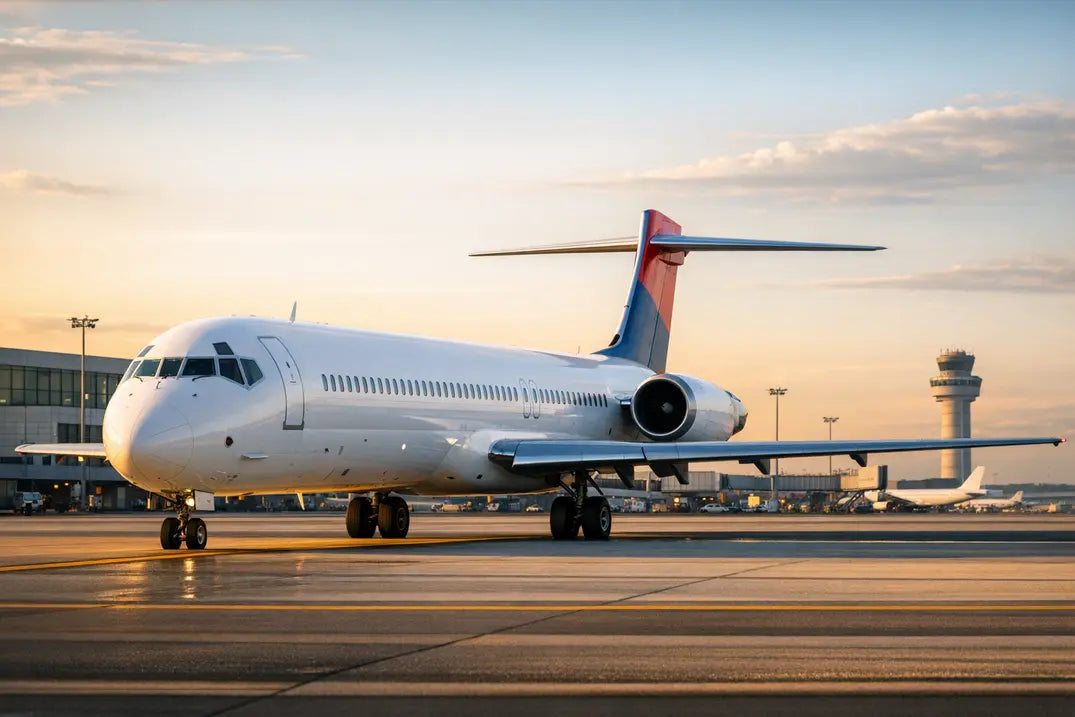
The McDonnell Douglas MD-90-30 represents the third generation of the legendary Douglas DC-9 narrowbody airliner family. Conceived as a modernised and stretched successor to the popular MD-80 series, it was designed to offer airlines improved fuel efficiency, lower noise levels, and greater passenger capacity while retaining the proven rear-mounted engine configuration and T-tail layout that defined the lineage since 1965.
McDonnell Douglas, headquartered in St. Louis, Missouri, had been continuously evolving the DC-9 platform through the MD-81, MD-82, MD-83, MD-87, and MD-88 variants throughout the 1980s. By the late 1980s, the manufacturer recognised the need for a more substantial upgrade to remain competitive against the Airbus A320 family and the evolving Boeing 737 series. The key decision was the selection of the IAE V2500 high-bypass turbofan engine, jointly developed by International Aero Engines, which promised significantly better fuel economy, reduced emissions, and notably quieter operation compared to the Pratt & Whitney JT8D-200 low-bypass engines fitted to the MD-80 fleet.
Program Launch and Key Milestones
The MD-90 programme was officially launched on November 14, 1989, when Delta Air Lines signed on as the launch customer with an order for 50 aircraft and options for 110 more. Delta intended the MD-90-30 to replace its ageing fleet of Boeing 727s on domestic routes across the United States. This commitment gave McDonnell Douglas the authority to proceed with full-scale development and production at its facility adjacent to Long Beach Airport, California.
The prototype MD-90 completed its first flight on February 22, 1993, marking a key step toward certification. The flight test programme confirmed the performance improvements offered by the V2500 powerplant and the stretched airframe. The FAA awarded the type certificate (TCDS No. A6WE) on November 16, 1994, clearing the way for customer deliveries. The first delivery to Delta Air Lines took place on February 24, 1995 (Ship 9202), and commercial service began on April 2, 1995, with operations between Dallas, Texas, and Reno, Nevada.
Additional milestones followed as the type entered service with other carriers. SAS Scandinavian Airlines became the first European operator in 1996. However, the programme's trajectory changed significantly when Boeing completed its merger with McDonnell Douglas in August 1997. Boeing chose to prioritise its own 737 family, and no new MD-90 orders were accepted after the merger. Delta subsequently cancelled its remaining 19 options in favour of the Boeing 737-800. Production wound down with the final delivery to Saudi Arabian Airlines in 2000, bringing total output to approximately 116 aircraft.
A notable chapter in the MD-90-30 story involved a co-production agreement with the Shanghai Aviation Industrial Corporation in China. Under the so-called Trunkliner programme (designated MD-90-30T), up to 40 aircraft (later reduced to 20) were to be assembled at Jiangwan Airfield. Ultimately, only two MD-90-30T airframes were completed before the programme was cancelled following Boeing's phase-out decision. The tooling and manufacturing experience gained in Shanghai later contributed to the development of the COMAC ARJ21 regional jet. Delta Air Lines operated the type for over 25 years, flying the final MD-90 passenger service on June 2, 2020, as documented by the Delta Flight Museum.
What Distinguishes the MD-90-30 from Other Variants
The MD-90-30 was the baseline and overwhelmingly the most produced version of the MD-90 family. Compared to the MD-80 series from which it evolved, the MD-90-30 featured a fuselage stretched by 57 inches (1.4 metres), bringing total length to approximately 152 feet 7 inches (46.5 metres) and accommodating around 153 to 172 passengers depending on cabin configuration. The switch from JT8D-200 engines to the IAE V2525-D5 turbofans represented the most significant technical change, delivering improved specific fuel consumption and making the MD-90 one of the quietest commercial jets of its era. The cockpit was upgraded to an EFIS glass configuration building on the avionics suite first introduced in the MD-88. Structural reinforcements, including strengthened landing gear, supported a maximum takeoff weight of 156,000 lb (70,760 kg).
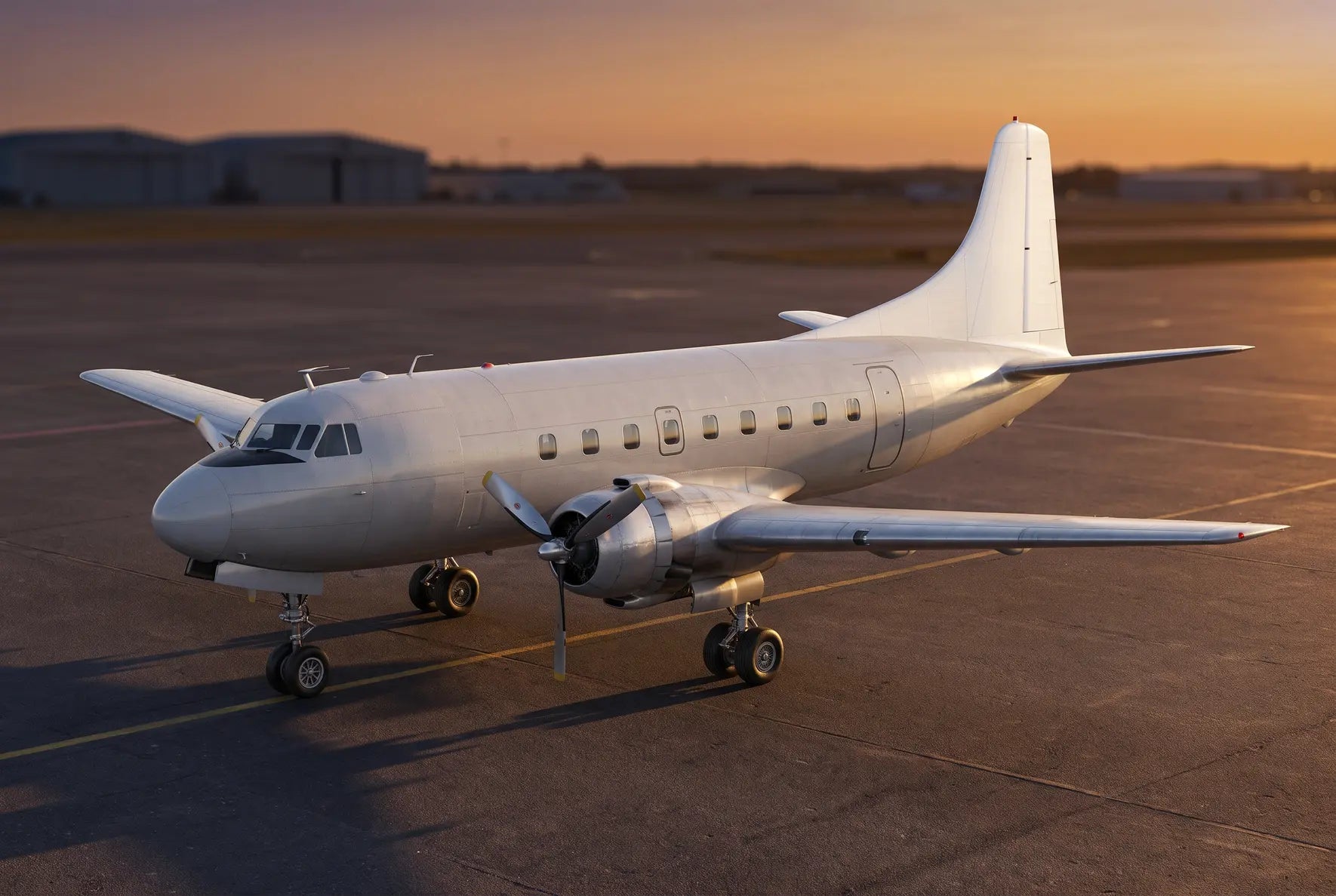
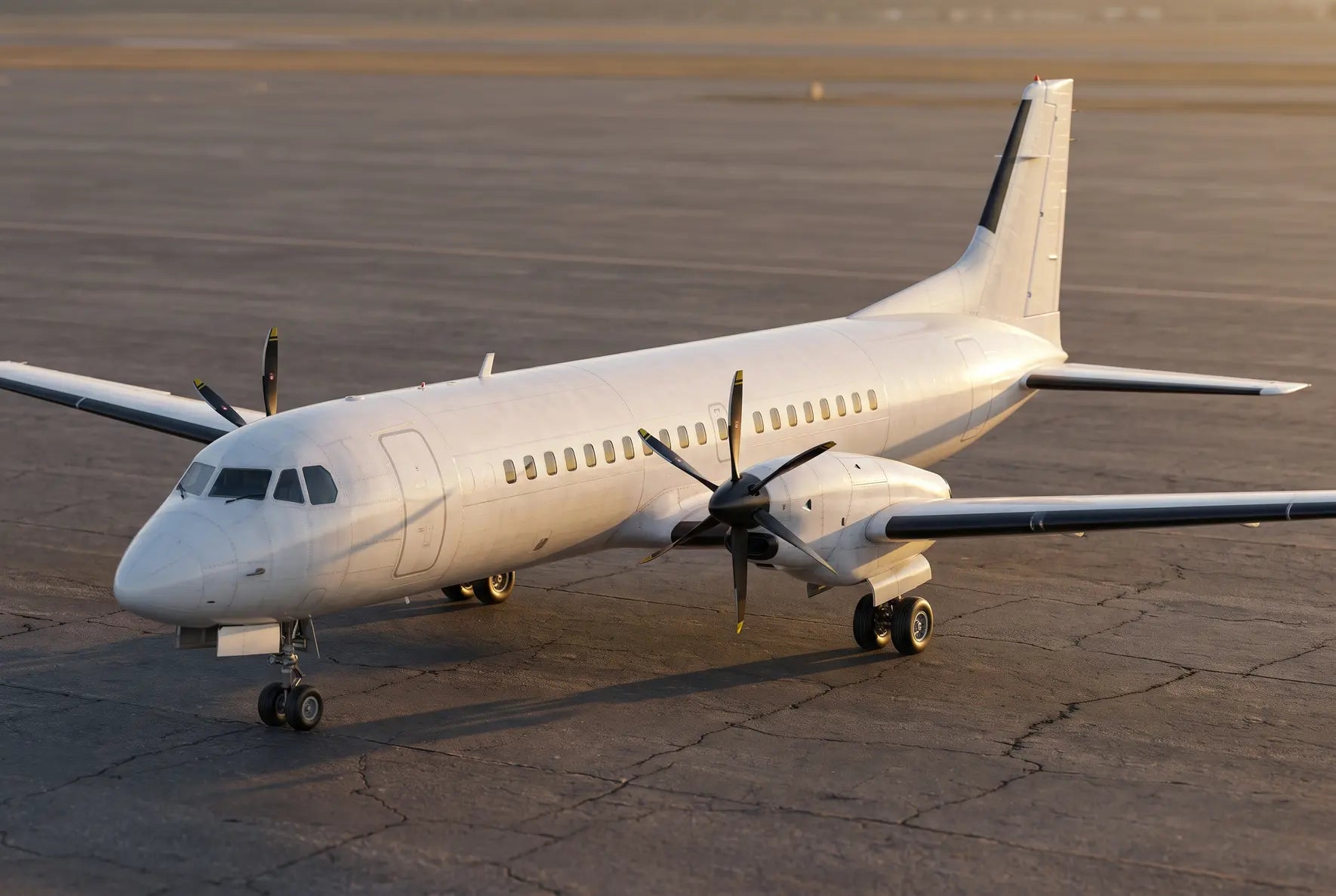
Within the MD-90 family itself, the MD-90-30ER (Extended Range) was a higher gross weight derivative with a maximum takeoff weight of 168,000 lb, uprated IAE V2528-D5 engines, and additional fuel capacity, enabling longer range operations. Only two MD-90-30ER aircraft were built. A single MD-90-30IGW (Increased Gross Weight) was also produced. Proposed but never built variants included the MD-90-50 long-range model and the further stretched MD-90-55. For enthusiasts interested in how other regional turboprop families from the same era evolved, the Fokker F27-100 offers an interesting parallel story of European aircraft development.
Key variant identifiers for the McDonnell Douglas MD-90-30 include:
- Engines: Two IAE V2525-D5 high-bypass turbofans (V2528-D5 on the ER variant)
- Fuselage length: 152 ft 7 in (46.5 m), a 57-inch stretch over the MD-80
- Maximum takeoff weight: 156,000 lb (70,760 kg) for the standard MD-90-30
- Typical seating: 153 passengers (two-class) to 172 (single-class)
- Cockpit: EFIS glass flight deck derived from the MD-88 avionics suite
- FAA type certificate: TCDS No. A6WE, certified November 16, 1994
- Production total: Approximately 116 aircraft (1993 to 2000)

A Delta Airlines McDonnell Douglas MD-90 aircraft is captured mid-flight against a backdrop of blue sky and clouds. The image showcases the airplane's sleek design and distinctive airline branding.
McDonnell Douglas MD 90 30 Technical Specs, Systems and Engine Details
The McDonnell Douglas MD 90 30 was designed as a short to medium range narrowbody airliner, seating up to 172 passengers in a high density layout or around 155 in a typical two class configuration. As the baseline production variant of the MD 90 programme, the 30 combined a stretched fuselage inherited from the DC 9/MD 80 lineage with the new generation IAE V2500 engine family. The result was a quieter, more fuel efficient aircraft that competed directly with the Airbus A320 and Boeing 737 800 on domestic and regional routes.
Key design trade offs centred on keeping a proven airframe architecture (T tail, aft mounted engines, five abreast cabin) while improving propulsive efficiency and reducing community noise. The MD 90 30 shared the same wing planform and control surface geometry as the MD 80 series but benefited from updated systems integration, a modernised flight deck and significantly lower engine noise levels. For anyone preparing for aviation exams, the MD 90 30 is a useful study case in incremental airliner development.
- Overall length: 46.50 m (152.6 ft)
- Wingspan: 32.90 m (107.8 ft)
- Height: 9.30 m (30.5 ft)
- Typical seating: 153 to 172 passengers (two class to high density)
- Maximum Takeoff Weight (MTOW): 70,760 kg (156,000 lb) standard; higher weight options available on the ER variant up to approximately 75,300 kg (166,000 lb)
- Maximum Landing Weight (MLW): approximately 64,410 kg (142,000 lb)
- Fuel capacity: approximately 22,100 litres (5,840 US gal)
- Engines: 2 × IAE V2525 D5 turbofans, each rated at 25,000 lbf (111 kN); optional V2528 D5 rated at 28,000 lbf (125 kN)
- Cruise speed: Mach 0.76 (approximately 811 km/h or 438 kt) at typical cruise altitude
- Service ceiling: 37,000 ft (11,278 m)
- Range: approximately 2,000 to 2,200 NM with a standard passenger load, depending on configuration and weight option
- Takeoff field length: approximately 2,200 m (7,200 ft) at MTOW, sea level, standard conditions
Systems, Avionics and Handling Technology
The MD 90 30 flight deck featured an Electronic Flight Instrument System (EFIS), a Flight Management System (FMS) and an Inertial Reference System (IRS). Engine and aircraft systems data were presented on LED dot matrix displays, and a thrust rating panel allowed pilots to select thrust settings between 25,000 and 28,000 lbf depending on operational requirements. Aircraft delivered to certain operators, notably Saudi Arabian Airlines, were fitted with a full glass cockpit configuration including overhead display panels.
Primary flight controls on the MD 90 30 continued the aerodynamic control tab philosophy inherited from the DC 9 family. Rather than relying on fully powered hydraulic actuators for the elevator and rudder, the aircraft used aerodynamic tabs mounted on trailing edges to move control surfaces. The MD 90 introduced an additional anti float tab on the elevator to improve pitch authority and handling quality during approach. Ailerons were hydraulically powered, consistent with previous models in the family.
Published performance figures for the MD 90 30 can vary depending on a range of factors. Operator selected options such as cabin density, optional fuel tank configurations and chosen engine thrust rating directly affect achievable range and payload. Atmospheric assumptions (temperature, pressure altitude, runway elevation), runway surface condition and regulatory requirements (e.g. balanced field length calculations under FAR Part 25) further influence takeoff distances and climb performance. All figures quoted above should be read as representative values under standard conditions, not as absolute guarantees for every operation.
IAE V2500 Engine Family: The Powerplant Behind the MD 90 30
The MD 90 30 was exclusively powered by engines from the IAE V2500 family, specifically the V2525 D5 and optionally the higher thrust V2528 D5. The V2500 is a two shaft, high bypass turbofan developed by International Aero Engines (IAE), a multinational consortium originally formed in 1983. The founding members were Pratt & Whitney (United States), Rolls Royce (United Kingdom), Japanese Aero Engines Corporation (JAEC, Japan), MTU Aero Engines (Germany) and Fiat Aviazione (Italy). Fiat later withdrew as a shareholder, and Rolls Royce sold its stake in 2012, leaving Pratt & Whitney, JAEC and MTU as the principal partners today.
The V2500 programme first ran in 1987, achieved FAA certification in 1988 and entered revenue service in 1989 on the Airbus A320. The D5 sub series was adapted for the MD 90, with engine accessories relocated to the side of the nacelle instead of the bottom to accommodate the type's aft fuselage mounting position. The V2525 D5 delivered a rated takeoff thrust of 25,000 lbf (111 kN), while the V2528 D5 provided up to 28,000 lbf (125 kN) for operators requiring additional performance margins on longer routes or from challenging airfields.
Beyond the MD 90, the V2500 family has powered the Airbus A320 family (A319, A320 and A321) as its primary application and has also been selected for the Embraer KC 390 military transport in a dedicated variant. By 2025, the V2500 had accumulated over 300 million flight hours across nearly 3,000 aircraft worldwide, making it one of the most widely operated engine families in commercial aviation.
MD-90-30 vs MD-90-30ER vs Boeing 717-200 vs Boeing 737-800 Specifications
Scroll horizontally to see more
| Parameter | McDonnell Douglas MD-90-30 | MD-90-30ER | Boeing 717-200 | Boeing 737-800 |
|---|---|---|---|---|
| Entry into service | 1995 | 1996 | 1999 | 1998 |
| Engines | 2 × IAE V2525-D5 | 2 × IAE V2528-D5 | 2 × Rolls-Royce BR715 | 2 × CFM56-7B |
| Length | 46.5 m | 46.5 m | 34.3 m | 39.5 m |
| Wingspan | 32.9 m | 32.9 m | 28.9 m | 35.8 m |
| Height | 9.3 m | 9.3 m | 8.5 m | 12.5 m |
| Typical seating and layout | 2-class: 155–170 passengers | 2-class: 155–170 passengers | 2-class: 110–134 passengers | 2-class: 162–189 passengers |
| MTOW | 71 t | 75 t | 62 t | 79 t |
| Range | 2,400 nm | 2,800 nm | 2,500 nm | 3,100 nm |
| Cruise speed | 0.76 Mach | 0.76 Mach | 0.76 Mach | 0.78 Mach |
| Service ceiling | 37,000–41,000 ft | 37,000–41,000 ft | 37,000 ft | 41,000 ft |
| Program note | Longest MD-90 variant, stretched DC-9 successor for medium-haul with V2500 engines | Extended range version with higher MTOW and aux fuel for longer missions | Direct MD-90 successor with new fuselage/wings, optimized for short/medium routes | Mainline narrowbody competitor with higher capacity and range flexibility |
Scroll horizontally to see more
The table compares key specs of the MD-90-30, MD-90-30ER, Boeing 717-200, and Boeing 737-800. The MD-90 variants share dimensions and Mach 0.76 cruise, but the -30ER boosts MTOW (75 t vs 71 t) and range (2,800 vs 2,400 nm). The 717 is shorter with lower capacity and MTOW, while the 737-800 offers the highest range (3,100 nm), higher cruise (Mach 0.78), and larger seating potential.
McDonnell Douglas MD-90-30 Operations: Airlines, Routes and Typical Missions Worldwide
The McDonnell Douglas MD-90-30 was designed for short to medium haul operations, covering stage lengths typically between 1.5 and 3.5 hours. With a maximum range of approximately 2,045 nautical miles (3,787 km) in its standard variant and up to 2,455 nautical miles (4,547 km) in the extended range MD-90-30ER, the aircraft was well suited to domestic trunk routes and regional international services. Powered by two IAE V2500-D5 turbofans producing up to 28,000 pounds of thrust each, the type cruised at Mach 0.76 (approximately 811 km/h) and reached a service ceiling of 37,000 to 41,000 feet.
Operators typically achieved around 2,000 to 2,500 flight hours per year, translating to roughly seven block hours per day with an average cycle time of about 1.3 hours. This profile made the McDonnell Douglas MD-90-30 a natural fit for high frequency hub and spoke networks, where quick turnarounds and multiple daily rotations are essential. Delta Air Lines, the largest and final operator, exploited these characteristics extensively at its Atlanta hub, dispatching the type on dozens of domestic spokes each day. The aircraft also performed well at hot and high altitude airports such as Reno and Denver, where the V2500 engines provided reliable climb performance.
From a point to point perspective, the type was less common. Its range and single aisle cabin limited its appeal on longer or higher density leisure routes where the competing Airbus A320 and Boeing 737 families offered greater flexibility and a wider support ecosystem. Operational challenges included a relatively small global fleet of only 116 aircraft produced, which constrained spare parts availability and maintenance expertise outside Delta's own TechOps division. Following the 1997 Boeing and McDonnell Douglas merger, no new orders were placed, and the production line closed in 2000. Airlines that lacked deep in house MRO capabilities found the type increasingly expensive to support, accelerating retirements in favour of newer generation narrowbodies. For aspiring pilots interested in the single aisle jet category, programmes such as the Avion Express cadet pathway to the A320 illustrate how the industry has shifted toward the A320 family as the dominant short haul platform.
Where the McDonnell Douglas MD-90-30 Operated Around the World
Although total production was modest, the McDonnell Douglas MD-90-30 saw service across four broad regions. In North America, the type was overwhelmingly concentrated with Delta Air Lines, which used it on dense domestic routes from 1995 until its retirement in June 2020. In Asia, several carriers in China, Japan and Taiwan deployed the aircraft on busy domestic corridors during the late 1990s and 2000s. Europe saw limited but notable use by Scandinavian and Swiss operators on intra European services. In the Middle East, Saudi Arabian Airlines operated the largest fleet outside the United States. Africa had only marginal exposure to the type, with no large scale operations recorded.
- North America – Delta Air Lines was the launch customer and by far the dominant operator, accumulating up to 78 airframes through direct orders and second hand acquisitions from Asian and European carriers. The airline deployed the MD-90-30 on short haul routes across the eastern and central United States, as well as services to hot and high altitude destinations. Reno Air (later absorbed by American Airlines) also operated a small number of aircraft on western US routes before being integrated into the American system.
- Asia – Japan Air System (later merged into Japan Airlines) operated 16 aircraft on Japanese domestic services. In China, China Northern Airlines and subsequently China Southern Airlines flew 13 units on high frequency domestic trunk routes. Taiwanese carriers UNI Air and EVA Air together operated around 14 aircraft on the island's short domestic and regional sectors. Most Asian fleets were eventually sold to Delta Air Lines as the type was phased out in the region.
- Europe – Scandinavian Airlines (SAS) operated eight MD-90-30 aircraft on intra Scandinavian and European routes. Blue1 in Finland leased five of these airframes for similar missions. Swiss leisure carrier Hello used six aircraft on European charter services, occasionally wet leasing them to Iceland Express and BritishJET for seasonal demand.
- Middle East and Africa – Saudi Arabian Airlines (Saudia) was the region's sole major operator with 29 aircraft, deploying them on domestic and short haul regional routes across the Arabian Peninsula. On the African continent, no confirmed large scale MD-90-30 operations have been documented in authoritative fleet records.
Typical Seating Configurations on the McDonnell Douglas MD-90-30
The McDonnell Douglas MD-90-30 features a circular fuselage cross section with a cabin width of 3.11 metres, arranged in a five abreast (3+2) layout in economy class. Maximum single class capacity reaches 172 passengers at tight seat pitch, while a standard mixed class arrangement accommodates around 153 passengers over a 32.05 metre long cabin.
Network carriers generally opted for a two class layout. Delta Air Lines, the best documented operator, configured its MD-90-30 fleet with 16 First Class seats at 37 inch pitch and 19.6 inch width, 25 Comfort+ seats at 34 inch pitch, and 117 Main Cabin seats at 30 to 31 inch pitch with 18.1 inch seat width, for a total of 158 seats. Asian operators such as Japan Air System favoured similar two class splits with modest first or business class cabins forward. Charter and leisure operators, including Hello, leaned toward higher density all economy layouts approaching 170 seats to maximise revenue per flight. Saudi Arabian Airlines also used a two class configuration on its domestic and regional network. Detailed seat maps and fleet specifications are archived by the Delta Flight Museum.
In this video, watch a Delta Air Lines McDonnell Douglas MD-90-30 take off from Sarasota–Bradenton International Airport, with the Boeing 737-8 Max second prototype visible on the ground during flight testing.
McDonnell Douglas MD-90-30 Safety Record and How Safe Is This Aircraft
The McDonnell Douglas MD-90-30 compiled one of the more favourable safety records among narrowbody airliners. A total of 116 airframes were produced between 1993 and 2000, and the type entered revenue service in 1995. Over roughly two decades of commercial flying, the global MD-90 fleet accumulated hundreds of thousands of flight hours across operators on four continents. During that entire span, the Aviation Safety Network lists three hull loss accidents and just one passenger fatality, a figure that was not the result of an aeronautical failure but rather an act of criminal negligence involving prohibited materials smuggled on board. No occupant has ever died as a direct consequence of a design flaw, structural failure or systems malfunction on the MD-90-30.
Notable Accidents and Incidents Involving the MD-90-30
Uni Air Flight 873 (24 August 1999, Hualien, Taiwan) remains the most significant event in the type's history. Moments after the MD-90-30 (registration B-17912) touched down on Runway 21, an explosion erupted in an overhead luggage bin. A passenger had smuggled gasoline in plastic containers, and the fuel vapour ignited on contact with a short circuit from a motorcycle battery stowed in the same compartment. One passenger later died from burn injuries, and 28 others were treated for burns or smoke inhalation. The aircraft's upper fuselage was destroyed by fire, writing off the airframe. Taiwan's Aviation Safety Council investigation concluded that the cause was entirely external to the aircraft; no mechanical deficiency contributed. The event reinforced worldwide calls for stricter cabin baggage screening, tighter regulations on the carriage of flammable liquids and batteries, and enhanced cabin crew firefighting training.
Lion Air PK-LIO (23 February 2009, Batam, Indonesia) involved a gear-up landing after the nose landing gear failed to extend. The flight crew followed published procedures and brought the MD-90-30 to a stop on the runway without injuries to the passengers or crew. The aircraft sustained substantial structural damage to the lower fuselage and was subsequently written off. The Indonesian National Transportation Safety Committee (NTSC) examined the nose gear extension mechanism, and the findings contributed to maintenance advisory updates for the landing gear retraction system on DC-9 derivative types.
Lion Air Flight JT-793 (9 March 2009, Jakarta, Indonesia) saw another MD-90-30 (PK-LIL) depart the runway surface at Soekarno-Hatta International Airport after an unstabilised approach in heavy rain and a 20-knot crosswind. The aircraft touched down left of the centreline, deployed only one thrust reverser, and skidded off the paved surface. Both main landing gear assemblies collapsed, and the right wing tip struck the ground. All 172 occupants evacuated without injury. Investigators attributed the accident to the continuation of an unstabilised approach below the decision altitude and to the crew's delayed corrective actions. The event underscored the importance of strict adherence to stabilised approach criteria and prompted procedural reviews within the operator's training programme.
How Safe Is the McDonnell Douglas MD-90-30?
When the single non-aeronautical fatality is placed alongside the cumulative flight hours and cycles logged by 116 airframes over more than two decades, the MD-90-30's record compares very well with its narrowbody contemporaries. None of the hull losses resulted from a systemic design deficiency; instead, external factors such as prohibited cargo and operational decision-making were cited as primary causes. Like other members of the DC-9 family lineage, the MD-90-30 benefited from decades of iterative refinement, including a strengthened fuselage, improved cabin materials and the modern IAE V2500 high-bypass turbofan engines, which offered enhanced reliability over the earlier JT8D powerplants fitted to MD-80 series aircraft.
The FAA issued multiple airworthiness directives throughout the type's service life, mandating repetitive inspections for overwing frame cracking, engine aft mount fastener integrity and updates to safe-life component replacement intervals. These proactive measures reflect the robust regulatory oversight applied to every certificated transport aircraft and helped maintain structural integrity as individual airframes accumulated cycles.
Regulatory bodies such as the FAA, EASA and national authorities in the Asia-Pacific region continuously monitored MD-90 operations, ensuring that standard operating procedures, crew training requirements and maintenance programmes remained current. The type's retirement from most fleets by the early 2020s was driven by economics and fuel efficiency rather than by safety concerns. According to IATA safety data, commercial aviation consistently records fewer than 0.2 fatal accidents per million flights, making it one of the safest modes of transport in existence. The MD-90-30's service history aligns comfortably with that broader trend.
01 What is the typical range of the McDonnell Douglas MD-90-30?
The McDonnell Douglas MD-90-30 has a range of about 3,950 to 4,400 km with maximum fuel, suitable for medium-haul routes. With typical two-class passenger loads of around 153 passengers, it achieves up to 4,021 km. Extended range variants like the MD-90-30ER reach up to 4,426 km with auxiliary tanks.
02 Which airlines operated the McDonnell Douglas MD-90-30 and on what routes?
Delta Air Lines was the primary operator and launch customer, receiving the first delivery in 1995, and remained the sole operator with 26 aircraft as of 2020. It served domestic and regional U.S. routes, as well as some international medium-haul flights. Other airlines like Alaska Airlines and Japan Airlines used it for similar high-frequency routes.
03 How does the McDonnell Douglas MD-90-30 perform compared to the Boeing 737-800 or Airbus A320?
The MD-90-30 cruises at Mach 0.76 to 0.84, with a range of around 2,200 nautical miles, competing directly with the 737-800 and A320 on efficiency. It features quieter IAE V2500 engines and a stretched fuselage for 155 passengers, offering good fuel burn at 1,356 gallons per hour. Its design emphasized low noise and economical thrust settings for high-density routes.
04 What is the cabin layout and passenger experience like on the McDonnell Douglas MD-90-30?
The MD-90-30 typically seats 155 passengers in a single-aisle layout with a stretched fuselage from the MD-80 family. Passengers enjoy a relatively quiet cabin thanks to advanced high-bypass engines, one of the quietest in its class at introduction. Comfort is standard for narrowbody jets, with good window views and stable handling in turbulence due to winglets.
05 What is the safety record of the McDonnell Douglas MD-90-30?
The MD-90-30 has a strong safety record with no fatal hull-loss accidents attributed to design flaws. It includes advanced features like a glass cockpit, flight management system, and inertial reference for reliable operations. Its design supports high cycle counts up to 37,461 sorties with robust load factors.
06 What should passengers know about flying on the McDonnell Douglas MD-90-30?
Seat choices in rows with window seats offer good views, as the aircraft has a service ceiling of 37,000 to 41,000 feet for smooth cruises. It handles turbulence steadily due to winglets and low-wing design. Noise levels are low, making it comfortable for medium-haul flights of 2,000 to 4,000 km.