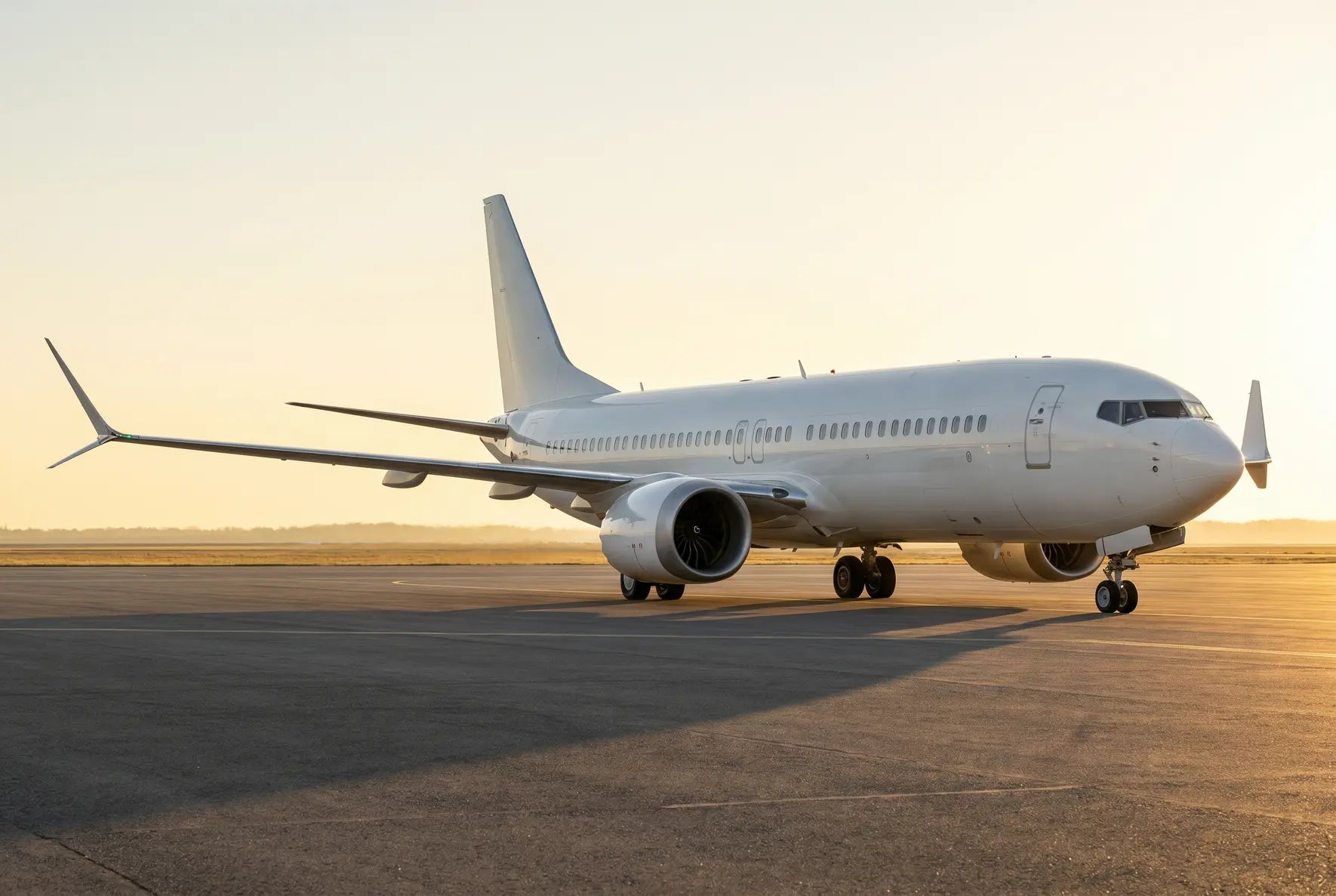
Boeing 737 MAX 9: Program History, Development Path, and Variant Distinctions
The Boeing 737 MAX 9 is the stretched member of the fourth-generation 737 MAX family, developed by Boeing Commercial Airplanes as a direct successor to the 737-900ER. The variant was designed to offer airlines higher passenger capacity than the MAX 8 while retaining the efficiency gains common to the MAX platform, including new engines, advanced winglets, and aerodynamic refinements. Its development story spans over a decade and includes landmark milestones alongside significant program challenges that reshaped aviation safety standards worldwide.
The broader 737 MAX program was officially unveiled on 30 August 2011, when Boeing announced a re-engined successor to the 737 Next Generation (NG) family. The decision followed intense competitive pressure from the Airbus A320neo, which had been gaining significant market traction. Southwest Airlines served as the launch customer for the MAX family. Initially, the announcement focused on what would become the MAX 8, but Boeing quickly expanded the lineup. The 737 MAX 9 variant was formally announced on 13 March 2012, positioning it as the higher-capacity option in the family to replace the 737-900ER and compete with denser A321neo configurations.
Boeing designed and assembled the MAX family at its historic Renton, Washington facility. The company describes the MAX program as having followed a disciplined six-year design-to-delivery schedule. While the MAX 8 served as the lead certification variant, with its first flight on 29 January 2016 and FAA certification in March 2017, the MAX 9 followed a parallel but slightly later timeline. The first 737 MAX 9 was rolled out in early March 2017 at Renton. Its maiden flight took place on 13 April 2017, launching a dedicated flight-test campaign. The FAA granted type certification for the 737 MAX 9 in February 2018, approximately eleven months after the MAX 8 received its approval. The first delivery occurred on 21 March 2018 to Thai Lion Air, part of the Lion Air Group. Alaska Airlines and United Airlines became early North American operators of the type shortly thereafter.
The 737 MAX fleet, including all MAX 9 aircraft, was grounded worldwide in March 2019 following two fatal accidents involving MAX 8 aircraft: Lion Air Flight 610 in October 2018 and Ethiopian Airlines Flight 302 in March 2019. Investigations identified the Maneuvering Characteristics Augmentation System (MCAS) as a central factor. Before the MAX could return to service, Boeing was required to redesign MCAS to use inputs from both angle-of-attack sensors, limit the system to a single activation per event, and provide clearer cockpit indications. Mandatory simulator-based pilot training was also introduced. The FAA cleared the MAX family to return to service on 18 November 2020, with airlines resuming MAX 9 operations progressively after completing the required modifications and training.
A further challenge arose on 5 January 2024, when Alaska Airlines Flight 1282, operated by a 737 MAX 9, experienced the in-flight separation of a mid-cabin door plug shortly after departure from Portland, Oregon. All 177 occupants survived. The NTSB investigation determined that four critical bolts securing the door plug had been removed during factory rework and never reinstalled, pointing to manufacturing and quality-control failures at Boeing. The FAA issued an Emergency Airworthiness Directive on 6 January 2024, grounding all door-plug-equipped MAX 9 aircraft until inspections were completed. Affected aircraft began returning to service from late January 2024. The incident prompted mandatory structural inspections, enhanced parts-tracking procedures at Boeing, and strengthened FAA production oversight across the 737 MAX program. Similar to how earlier aircraft programs shaped industry safety practices, the MAX 9 experience contributed to lasting changes in manufacturing quality standards and regulatory surveillance.
What Sets the Boeing 737 MAX 9 Apart from Other MAX Variants
The Boeing 737 MAX 9, designated 737-9 by the manufacturer and B39M under the ICAO system, occupies a distinct position between the shorter MAX 8 and the longer MAX 10. At 42.16 m (138 ft 4 in), the MAX 9 fuselage is approximately 2.64 m longer than the MAX 8, achieved through an additional fuselage plug section. This stretch allows for a typical two-class capacity of 178 to 193 passengers, compared to 162-178 on the MAX 8, with a maximum single-class layout of up to 220 seats. Unlike the MAX 10, the MAX 9 retains the standard 737 main landing gear design without the levered-suspension system required by the MAX 10 to prevent tail strikes during rotation, giving the MAX 9 more conventional runway performance characteristics.
The MAX 9 shares the same CFM International LEAP-1B engines and Advanced Technology (AT) split-tip winglets used across the entire MAX family. However, it is typically equipped with a slightly higher thrust rating of approximately 130 kN (29,317 lbf) per engine, compared to approximately 125 kN on the MAX 8, to support its higher maximum takeoff weight of 88,314 kg (194,700 lb). Its published range of approximately 3,550 nautical miles (6,570 km) is comparable to that of the MAX 8 when an optional auxiliary centre fuel tank is installed. The MAX 9 also features a distinctive door arrangement: aircraft configured below a certain seat threshold may use a sealed mid-cabin door plug in place of a functional emergency exit, a configuration that became the subject of intense scrutiny following the January 2024 incident.
Key variant identifiers for the Boeing 737 MAX 9 include:
- Manufacturer designation: Boeing 737-9
- ICAO type code: B39M
- Engines: 2x CFM International LEAP-1B (approximately 130 kN / 29,317 lbf per engine)
- Winglets: Boeing Advanced Technology split-tip winglets
- Overall length: 42.16 m (138 ft 4 in)
- Wingspan: 35.9 m (117 ft 10 in)
- MTOW: 88,314 kg (194,700 lb)
- Typical range: approximately 3,550 nmi (6,570 km)
- Typical capacity: 178-220 passengers depending on configuration

A Boeing 737 Max 9 aircraft with Alaska Airlines livery is captured in flight against a clear blue sky. The plane is showcasing its distinct branding and design.
Boeing 737 MAX 9 Technical Specifications, Systems, and Engine Overview
The Boeing 737 MAX 9 is the stretched, higher-capacity member of the 737 MAX family, designed to replace the 737-900ER on medium-haul routes. It balances increased passenger capacity with competitive range, seating between 178 and 220 passengers depending on cabin configuration. Its design philosophy prioritises fuel efficiency and lower operating costs over its predecessor, combining the proven 737 airframe lineage with new-generation CFM LEAP-1B engines, advanced technology split-tip winglets, and an updated flight deck.
Compared to the shorter MAX 8, the MAX 9 trades roughly 250 nautical miles of range for a cabin that is nearly 2.7 metres (9 feet) longer. It inherits the 737 family's single-aisle, low-wing, twin-engine layout and retains type-rating commonality across MAX variants, which is a significant consideration for airline operators managing pilot rosters and fleet flexibility. Boeing states the MAX family delivers a 20% reduction in CO2 emissions and significant noise improvements relative to the Next Generation 737.
- Overall length: 42.16 m (138 ft 4 in)
- Wingspan (with split-tip winglets): 35.92 m (117 ft 10 in)
- Height: 12.30 m (40 ft 4 in)
- Fuselage external width: 3.76 m (12 ft 4 in)
- Typical two-class seating: 178 to 193 passengers; maximum single-class capacity up to 220
- Maximum Takeoff Weight (MTOW): approximately 88,314 kg (194,700 lb)
- Maximum Landing Weight (MLW): 74,500 kg (164,000 lb)
- Usable fuel capacity: approximately 25,800 litres (6,800 US gal)
- Design range: approximately 3,550 nm (6,570 km) with a typical two-class layout
- Cruise speed: Mach 0.79 (approximately 839 km/h / 453 kt at cruise altitude)
- Service ceiling: 41,000 ft (FL410)
- Engines: 2x CFM International LEAP-1B turbofans, up to approximately 28,000 lbf (130 kN) thrust per engine
- Avionics: Collins Aerospace integrated suite with four 15.1-inch landscape LCD displays
- Flight crew: 2 (captain and first officer)
Systems, Flight Controls, and Handling Technology
The 737 MAX 9 retains the 737 family's conventional control architecture rather than adopting a full fly-by-wire primary flight control system. Pilot inputs on the control column and rudder pedals are transmitted through cables and hydraulic actuators, as on all previous 737 generations. However, the MAX adds significant digital enhancements in the flight control computers, including the Maneuvering Characteristics Augmentation System (MCAS), which was redesigned after the 2018-2019 accidents so that the flight control computers cross-check both angle-of-attack sensors before activating. The spoiler system incorporates updated digital flight control computers relative to the NG generation.
The flight deck features four large 15-inch LCD displays derived from Boeing's widebody display philosophy, integrated navigation, all-weather capability, and electronic flight bag connectivity. Engine control is managed through a Full Authority Digital Engine Control (FADEC) system integrated with the LEAP-1B's electronic engine controller (EEC). The braking system retains the 737's electronically controlled autobrake and anti-skid architecture, providing reliable deceleration performance across runway conditions.
Published performance figures for the 737 MAX 9, including range, takeoff field length, and payload, should always be interpreted with care. Real-world values depend heavily on operator-selected cabin configurations (which affect operating empty weight), engine thrust rating selection, atmospheric conditions (temperature, altitude, humidity), runway surface state, and regulatory calculation methods. Boeing's Airplane Characteristics for Airport Planning document provides reference values for infrastructure planning, but operators rely on the Airplane Flight Manual (AFM) and airline performance systems for dispatch-level accuracy.
CFM International LEAP-1B: The Sole Engine of the 737 MAX
The 737 MAX 9 is powered exclusively by the CFM International LEAP-1B, a twin-spool, high-bypass turbofan produced by CFM International, the 50/50 joint venture between GE Aerospace (United States) and Safran Aircraft Engines (France). The LEAP program was launched as "LEAP-X" in 2008 as the successor to the CFM56 family, one of the most produced jet engines in history. The LEAP-1B variant was selected as the sole powerplant for the Boeing 737 MAX in August 2011 and achieved joint FAA and EASA type certification in May 2016.
The LEAP-1B features a fan diameter of approximately 69.4 inches (1.76 m) with 18 three-dimensionally woven carbon-fibre composite fan blades, a significant advancement over the metallic fan blades of the CFM56-7B used on the 737NG. Its bypass ratio is approximately 9:1, compared to the CFM56-7B's 5.1:1, and the overall pressure ratio reaches about 41:1 versus approximately 28:1 for its predecessor. The combustor uses CFM's second-generation Twin-Annular Pre-mixing Swirler (TAPS II) technology with additively manufactured fuel nozzles, while the hot section incorporates ceramic matrix composite (CMC) shrouds and titanium aluminide low-pressure turbine blades to reduce weight and improve thermal performance. According to MTU Aero Engines, the LEAP-1B delivers maximum takeoff thrust of approximately 28,000 lbf with a bypass ratio of 8.6:1.
Boeing offers several LEAP-1B thrust ratings for the MAX family, ranging from the LEAP-1B21 at approximately 23,000 lbf to the LEAP-1B28 at approximately 27,900 lbf. The 737 MAX 9 is typically associated with the higher thrust ratings (LEAP-1B27 and LEAP-1B28) to accommodate its higher maximum takeoff weight. The LEAP engine family is not exclusive to Boeing: the LEAP-1A variant powers Airbus A320neo family aircraft (A319neo, A320neo, A321neo) as one of two engine options alongside the Pratt & Whitney PW1100G-JM, while the LEAP-1C is the sole powerplant for the COMAC C919. Across the entire family, the LEAP has accumulated tens of millions of flight hours since entry into service, making it one of the most widely operated new-generation narrowbody engines in commercial aviation.
Boeing 737 MAX 9 vs MAX 8 vs MAX 10 vs Airbus A321neo Specifications
Scroll horizontally to see more →
| Parameter | Boeing 737 MAX 9 | Boeing 737 MAX 8 | Boeing 737 MAX 10 | Airbus A321neo |
|---|---|---|---|---|
| Entry into service | 2017 | 2017 | 2023 | 2017 |
| Engines | 2 × CFM International LEAP-1B | 2 × CFM International LEAP-1B | 2 × CFM International LEAP-1B | 2 × CFM International LEAP-1A |
| Length | 42.16 m | 39.52 m | 43.80 m | 44.51 m |
| Wingspan | 35.90 m | 35.90 m | 35.90 m | 35.80 m |
| Height | 12.30 m | 12.30 m | 12.30 m | 11.76 m |
| Typical seating and layout (short description + approximate passengers) | 2-class: 178–193 passengers | 2-class: 162–178 passengers | 2-class: 188–204 passengers | 2-class: 180–220 passengers |
| MTOW | 88.50 t | 82.20 t | 89.80 t | 97.00 t |
| Range | 3,550 nm | 3,550 nm | 3,300 nm | 3,500–4,000 nm |
| Cruise speed | 0.79 Mach | 0.79 Mach | 0.79 Mach | 0.78 Mach |
| Service ceiling | 41,000 ft | 41,000 ft | 41,000 ft | 39,800 ft |
| Program note | Stretched mid-size member of the 737 MAX family, optimized for higher-capacity short- to medium-haul routes. | Baseline 737 MAX variant offering a balance of capacity, range, and economics for global single-aisle operations. | Longest 737 MAX variant aimed at replacing high-density 737-900ER / 757-200 on busy short- to medium-haul routes. | Airbus’s competing new-generation single-aisle, offering similar capacity and range with alternative engine options to the 737 MAX family. |
Scroll horizontally to see more →
The table compares key specs of the 737 MAX 9, MAX 8, MAX 10 and A321neo across size, capacity, weights and performance. The A321neo is longest and has the highest MTOW (97.0 t) and the widest seating range (180–220), while the MAX 8 is shortest and lowest MTOW. Range is similar for MAX 8/9 (3,550 nm), lower for MAX 10 (3,300 nm), and potentially higher for the A321neo (up to 4,000 nm).
Boeing 737 MAX 9 Operations: Typical Routes, Missions and Airlines Worldwide
The Boeing 737 MAX 9 is designed for short-to-medium-haul missions, though several operators stretch it to sectors of six or even seven hours. With a maximum range of approximately 3,300 nautical miles (6,110 km), the aircraft covers everything from one-hour domestic shuttles to transcontinental and transatlantic routes. Typical flight lengths fall between one and four hours, although United Airlines schedules the type on sectors exceeding 3,600 miles, such as Newark to Lima, with block times approaching seven hours.
Daily utilisation for the Boeing 737 MAX 9 generally falls in the 9 to 11 block-hour range for network carriers during peak periods, with high-density operators sometimes reaching 12 block hours per day. On short domestic legs of two to four hours, the aircraft can fly four to six sectors per day, assuming turnaround times of 35 to 60 minutes at major hubs. On longer routes, the number of sectors decreases but total block hours remain similar.
The 737-9 operates effectively in both hub-and-spoke and point-to-point network models. Major carriers deploy it on high-demand spokes radiating from large hubs, while smaller operators use it for direct city-pair services where demand does not justify a widebody. It serves major international airports as well as secondary facilities, providing flexibility across a wide range of operational environments. One challenge specific to this variant has been the regulatory scrutiny that followed the January 2024 door-plug incident on Alaska Airlines Flight 1282, which led to a temporary FAA grounding and inspection campaign for affected aircraft. While the fleet has since returned to service, the episode temporarily reduced daily utilisation and highlighted the importance of production quality oversight.
Where the Boeing 737 MAX 9 Operates Around the World
The Boeing 737 MAX 9 is in service across four broad regions, though its largest concentration of operators is in North America. In Europe, a handful of carriers use it on medium-haul routes connecting hubs to leisure or transatlantic destinations. Across North and South America, the type is a domestic and regional workhorse, linking major hubs with high-frequency service. In Asia, it serves dense domestic networks and growing regional routes, while in Africa, it supports emerging international services from key hubs. Unlike its smaller sibling, the Airbus A300B4-200, which once dominated medium-haul widebody operations, the 737-9 fills a narrowbody niche focused on capacity growth within single-aisle economics.
- Europe: Icelandair operates the Boeing 737 MAX 9 on medium-haul European and transatlantic routes via its Keflavik hub, replacing older Boeing 757s on thinner North Atlantic markets and denser European sectors. Turkish Airlines deploys it on short-to-medium-haul spokes from Istanbul to destinations across Europe, the Middle East, North Africa and Central Asia, typically on routes where demand exceeds the capacity of a MAX 8 but does not require a widebody. Corendon Dutch Airlines uses a small number of the type on seasonal leisure routes from the Netherlands to Mediterranean and Canary Islands destinations in a point-to-point model.
- North and South America: United Airlines is one of the world's largest operators of the Boeing 737 MAX 9, deploying it across domestic trunk routes, transcontinental sectors and near-international services from its hubs at Newark, Denver, Houston and San Francisco. Alaska Airlines operates a significant fleet from its Seattle base on routes to the U.S. West Coast, Hawaii, Alaska and Mexico, progressively replacing older 737-900ERs. Aeromexico uses the type on domestic trunk routes and international services from Mexico City, Guadalajara and Monterrey. Copa Airlines flies it from its Hub of the Americas at Panama City Tocumen, connecting cities across North, Central and South America and the Caribbean on longer and higher-demand regional sectors.
- Asia: Flydubai operates the Boeing 737 MAX 9 on an extensive short-to-medium-haul network from Dubai to the Middle East, Indian subcontinent, Central Asia and parts of Europe. Lion Air uses the type on high-volume domestic trunk routes across Indonesia and selected regional sectors in Southeast Asia. Greater Bay Airlines flies it on regional routes from Hong Kong to mainland China, Japan, South Korea and Southeast Asia. SCAT Airlines operates it on domestic Kazakh routes and regional services to Russia, Turkey and the Middle East from bases at Almaty and Astana.
- Africa: Air Tanzania is the primary operator on the continent, using the Boeing 737 MAX 9 for regional African services and some longer international routes from its Dar es Salaam hub, benefiting from the type's range and fuel efficiency to develop emerging markets.
Typical Seating Configurations on the Boeing 737 MAX 9
Cabin layouts on the Boeing 737 MAX 9 vary considerably depending on the operator's business model, but total seat counts generally range from 166 to 220 seats. Network carriers typically configure the aircraft with a dedicated premium cabin and an economy section, resulting in totals at the lower to middle end of that range. United Airlines offers 179 seats in a layout comprising 20 first-class seats with 37-inch pitch, 45 to 48 Economy Plus seats with extra legroom and 111 to 114 standard economy seats. Alaska Airlines configures its 737-9 with 178 seats across 16 first-class seats at 41-inch pitch, 24 premium-class seats and 138 economy seats, though a refreshed layout reduces economy to 127 seats while expanding the premium section to 30 seats.
Copa Airlines uses a two-class layout of 166 seats, with 16 business-class seats and 150 economy seats including 24 designated Economy Extra positions. Leisure and low-cost operators tend to maximise economy seating and minimise premium cabins, pushing totals toward the higher end of the range. Across all configurations, the Boeing 737 MAX 9 retains the standard single-aisle, 3-3 economy layout common to the 737 family, with seat widths of approximately 17 to 18 inches in economy and 20 to 21 inches in premium cabins. The Boeing Sky Interior used on the MAX family features larger overhead bins and LED lighting, which contribute to a more open cabin feel regardless of configuration.
In this video, watch a trip report from United’s 737 MAX 9 Economy Class, focusing on the new interior. See cabin details, seating, and the overall onboard experience from boarding through the flight.
Boeing 737 MAX 9 Safety Record: Incidents, Fixes and How Safe It Is
The Boeing 737 MAX 9 entered commercial service in March 2018 when Thai Lion Air received the first delivery. As of 2025, approximately 260 to 300 units have been delivered to around ten operators worldwide, including United Airlines, Alaska Airlines, Copa Airlines, Aeromexico and Turkish Airlines. Over roughly seven years of revenue flying, the 737-9 MAX has recorded zero fatal accidents and zero hull losses, according to the Aviation Safety Network database for the type. The variant has been involved in a small number of non-fatal incidents, the most significant being the Alaska Airlines door-plug event in January 2024. While no fatalities have occurred on a MAX 9, the type was affected by the worldwide grounding of the entire 737 MAX family between March 2019 and late 2020 following two fatal crashes involving the MAX 8 variant.
Major Incidents Involving the Boeing 737 MAX 9 and the MAX Family
Alaska Airlines Flight 1282 (January 2024). On 5 January 2024, a Boeing 737-9 MAX operated by Alaska Airlines experienced the in-flight separation of a left mid-exit door plug shortly after departing Portland, Oregon. The cabin depressurised rapidly at around 16,000 feet, but the crew performed an emergency descent and returned safely. All 177 occupants survived, with only minor injuries reported. The NTSB final report (AIR-25-04) determined that four retaining bolts had never been reinstalled during manufacturing after a rivet rework, citing systemic shortcomings in Boeing's parts-removal documentation, training and quality assurance. The FAA responded with an Emergency Airworthiness Directive that grounded all 737-9 MAX aircraft fitted with a mid-cabin door plug until inspections confirmed proper bolt installation. Boeing was subsequently required to develop a design enhancement for the door-plug retention system, improve its manufacturing tracking processes and deliver recurrent training on parts-removal procedures. The FAA also intensified production oversight at Boeing and its fuselage supplier.
Lion Air Flight 610 (October 2018) and Ethiopian Airlines Flight 302 (March 2019). Although both accidents involved the 737 MAX 8, not the MAX 9, they led directly to the 21-month global grounding of every 737 MAX variant, including the MAX 9. The two crashes, which together claimed 346 lives, were traced to the Maneuvering Characteristics Augmentation System (MCAS) acting on erroneous angle-of-attack sensor data and repeatedly commanding nose-down trim without adequate crew awareness. In response, Boeing redesigned MCAS to require agreement from both AoA sensors before activation, limited the system to a single activation per event, bounded its total authority and added a cockpit disagree alert. Regulators worldwide mandated simulator-based training on MCAS failure scenarios, and the FAA reformed aspects of its certification and delegation processes before clearing the MAX to return to service from late 2020 onward.
How Safe Is the Boeing 737 MAX 9 Today?
With no fatal accidents in over seven years of operation and across hundreds of thousands of flights by multiple airlines, the Boeing 737 MAX 9 holds one of the strongest safety records of any narrowbody type currently flying. The design improvements mandated after the MAX 8 crashes and the manufacturing reforms triggered by the Alaska Airlines door-plug event have raised the safety baseline for the entire MAX family. The aircraft benefits from dual-channel flight control computers, redundant AoA sensing for MCAS, enhanced crew alerting and the ongoing regulatory scrutiny of the FAA's dedicated 737-9 MAX oversight programme. Standard operating procedures across operators align with ICAO standards, and recurrent training now explicitly addresses the failure modes revealed by past events.
Viewed against industry-wide data, commercial aviation remains one of the safest forms of transport. According to IATA, the global fatal accident rate for commercial jets stood at approximately 0.80 per million flights in 2023, and Boeing's own Statistical Summary of Commercial Jet Airplane Accidents shows a jet hull-loss fatal accident rate in the range of 0.1 to 0.2 per million departures in recent years. Every incident, including those that result in no injuries, feeds back into improved design, manufacturing and oversight, reinforcing a continuous safety loop that benefits passengers, crew and the broader industry.
01 What is the typical range and mission profile of the Boeing 737 MAX 9?
The Boeing 737 MAX 9 has a typical range of around 3,300 to 3,550 nautical miles, depending on configuration and payload. This allows airlines to use it on medium-haul routes such as transcontinental flights within North America, longer domestic services, and many intra-European or regional Asia-Pacific routes. It is designed as a high-capacity narrow-body aircraft for busy city pairs where a widebody is not justified. Airlines often choose it for routes that need both good range and a higher seat count than smaller 737 MAX variants.
02 What is the cabin like on a Boeing 737 MAX 9 in terms of layout and comfort?
The Boeing 737 MAX 9 uses a single-aisle cabin with a standard 3-3 seating layout in economy class. Many operators configure it with roughly 170 to 220 seats, often including a premium cabin or extra-legroom rows at the front and near exit rows. The MAX series features the Boeing Sky Interior, with sculpted sidewalls, larger pivoting overhead bins, and modern LED lighting, which can make the cabin feel more spacious. Noise levels are generally lower than older 737 generations thanks to newer engines and aerodynamic improvements, contributing to a quieter cruise experience.
03 Which airlines commonly operate the Boeing 737 MAX 9 and on what kinds of routes?
Airlines such as Alaska Airlines, United Airlines, Copa Airlines, and several carriers in Asia and the Middle East operate the Boeing 737 MAX 9. In North America, it is often used on transcontinental routes and high-demand domestic legs linking major hubs and leisure destinations. In Latin America, it serves dense regional and medium-haul international routes, for example between Central and South America. Many airlines deploy it on routes where passenger demand is strong but does not justify a widebody, or where frequency is more valuable than using a larger aircraft.
04 How does the Boeing 737 MAX 9 compare to similar aircraft in performance and fuel efficiency?
The Boeing 737 MAX 9 is designed to be more fuel efficient than the previous 737NG family, primarily through its CFM LEAP-1B engines and aerodynamic refinements such as advanced winglets. In airline service, this generally translates into lower fuel burn per seat compared with older 737-800 or 737-900ER aircraft of similar size. Its closest competitor is the Airbus A321neo, which usually offers slightly more range and seating, while the MAX 9 emphasizes commonality with existing 737 fleets and competitive economics on medium-haul routes. For passengers, the performance improvements are mostly noticeable as a quieter cabin and potentially fewer refueling stops on longer sectors.
05 What should passengers know about the Boeing 737 MAX 9 safety record and design changes?
The Boeing 737 MAX family underwent extensive review and modifications following the well-publicized accidents involving the MAX 8, which led to a worldwide grounding and recertification effort. Regulators required software changes to the flight control system, additional pilot training, and updates to cockpit alerts, all of which also apply to the Boeing 737 MAX 9. Since the return to service, the type has been closely monitored by airlines and authorities, with extra maintenance and inspection requirements in some areas. For travelers, this means the aircraft now operates under one of the most scrutinized safety oversight regimes in commercial aviation.
06 Are there practical tips for choosing a seat and understanding the ride on a Boeing 737 MAX 9?
On a Boeing 737 MAX 9, exit-row and bulkhead seats typically offer extra legroom, but some may have limited recline or slightly narrower seat cushions due to tray tables or armrest designs. The wings are relatively long and efficient, so sitting near the wing (around the middle of the cabin) often provides a slightly smoother ride in light to moderate turbulence compared with seats at the very front or back. Window alignment can vary by airline, but rows near the overwing exits sometimes have slightly misaligned or smaller windows, so checking a seat map before selecting can be helpful. Because the MAX 9 uses quieter engines, seats forward of the wing are often the quietest, while those behind the wing may experience more engine noise, especially during takeoff and climb.