History and Development of the Antonov An 10: From Soviet Decree to Turboprop Pioneer
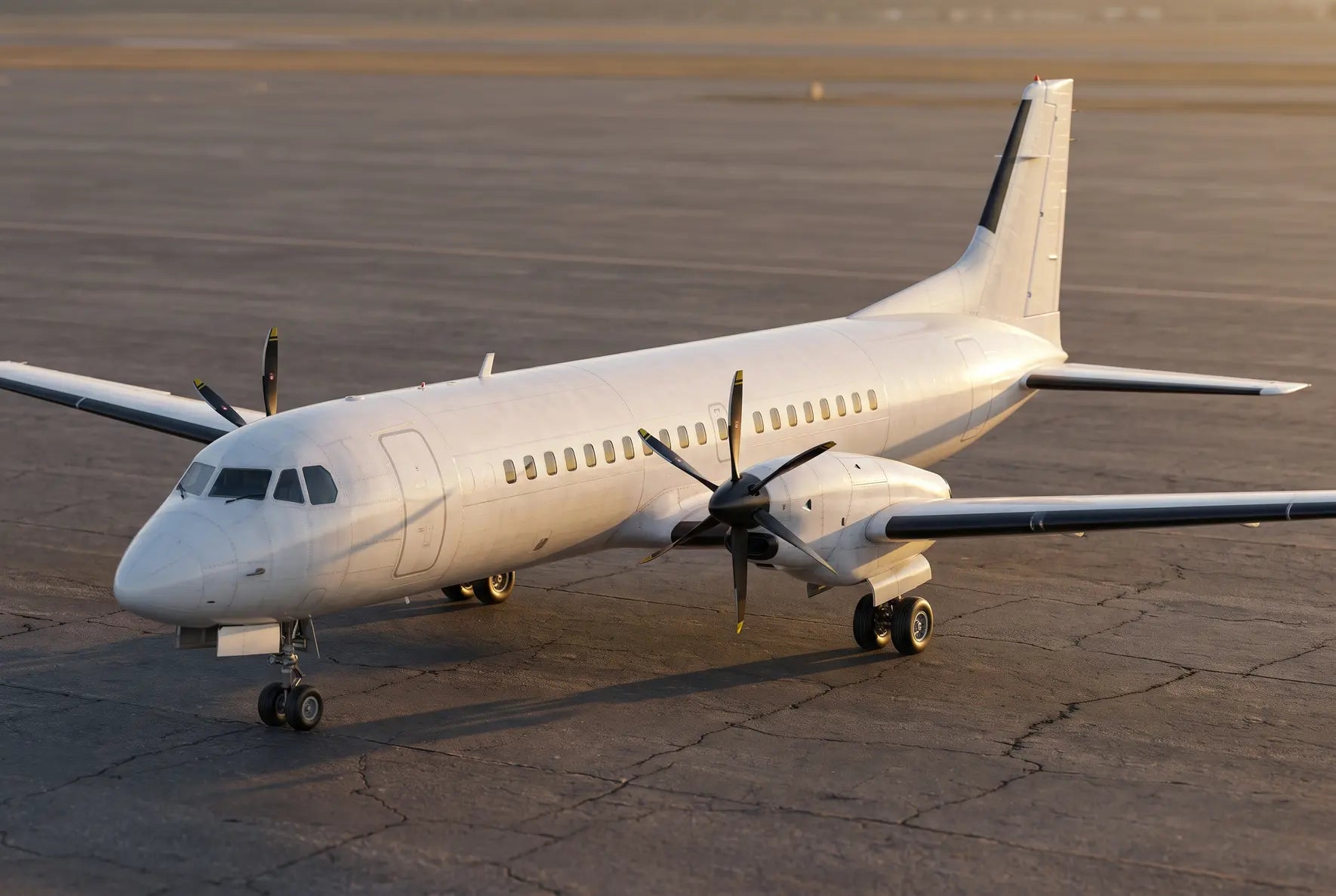
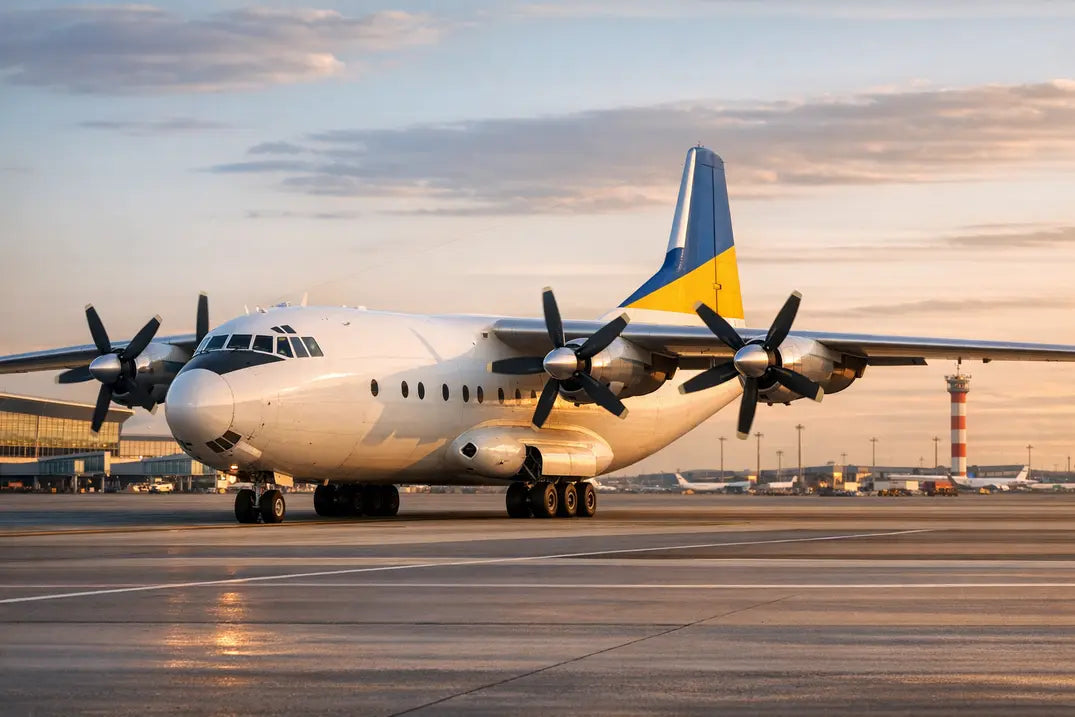
The Antonov An-10, designated Ukraina during its prototype phase, was a four-engine turboprop passenger airliner conceived to modernize Soviet domestic air travel across medium-range routes. Developed by the Antonov Design Bureau in Kyiv, the aircraft was built to serve routes of 500 to 2,000 kilometres, with a particular emphasis on operating from unpaved and semi-prepared runways that were common throughout the Soviet Union in the late 1950s.
The program originated from the success of the twin-engine Antonov An-8 military transport, which demonstrated the potential of turboprop technology for larger aircraft. On 30 November 1955, the USSR Council of Ministers enacted Decree No. 1956-1055, ordering the development of a four-engine passenger aircraft initially referred to as Product U ("Universal"). Shortly after, on 9 December 1955, the Ministry of Aviation Industry published Order No. 766, formally authorising development of the An-10. Design work under the leadership of Oleg Antonov and his engineering team progressed rapidly, with the prototype completed in approximately 15 months.
The prototype Antonov An-10 performed its maiden flight on 7 March 1957, piloted by test pilot Yakov Vernikov. Early testing revealed a significant directional stability deficiency, which engineers resolved by fitting a taller vertical fin and adding hexagonal auxiliary fins on the tailplane tips. The aircraft was publicly demonstrated in July 1957 and received a gold medal at the Brussels World's Fair in July 1958. Following the completion of state trials, the An-10 received mass production approval in June 1959.
Aeroflot inaugurated scheduled passenger service with the An-10 on 22 July 1959, operating the Kyiv to Moscow route. The aircraft quickly became one of the main passenger types in the Aeroflot fleet during the 1960s, favoured for its ability to carry up to 100 passengers while operating from austere airfields. On 29 April 1961, the An-10 set a speed record of 530.6 km/h over a 500 km closed circuit. By 1 June 1962, the type had carried its millionth passenger, and by 7 April 1969, the total reached 25 million.
The An-10 was manufactured at Zavod No. 64 in Voronezh, with a total of approximately 104 aircraft built across all variants, including prototypes and static test airframes. The type was never exported and served exclusively within the Soviet Union. Regarding engines, the initial prototype and first three production aircraft used Kuznetsov NK-4 turboprops due to availability constraints. From 1958 onward, all production aircraft were fitted with Ivchenko AI-20 series turboprop engines, each producing approximately 3,000 kW (4,000 shp), which offered better reliability and a longer service life. Across the Atlantic, turboprop and early jet designs were evolving in parallel; for context on how modern narrow-body aircraft have continued to push range boundaries, see this overview of the Airbus A321XLR.
An-10 vs. An-10A: What Set Each Sub-Variant Apart
The improved An-10A entered service with Aeroflot in February 1960, less than a year after the baseline model. Its most visible change was a fuselage stretched by two metres, allowing seating for 100 to 132 passengers depending on configuration, compared with 85 in the original An-10. The An-10A also featured redesigned ventral fins beneath the rear fuselage that replaced the earlier hexagonal endplate fins, improving both directional and longitudinal stability and delaying the onset of Mach buffet. Despite the increased capacity, the An-10A achieved a reduction in empty weight through structural optimisation, boosting maximum payload to 14,500 kg. Both variants shared the same AI-20K powerplant and similar performance figures, including a maximum speed of 715 km/h and a ferry range of 4,075 km. The An-10A was also cleared for ski-equipped operations in Arctic conditions, broadening its operational envelope.
Key identifiers that distinguish the An-10 family variants include:
- Engines: Prototype used Kuznetsov NK-4; all production aircraft fitted with Ivchenko AI-20A/AI-20K turboprops (approximately 3,000 kW each)
- Fuselage length: An-10A fuselage extended by 2 m over the baseline An-10
- Passenger capacity: An-10: 85 seats; An-10A: 100 to 132 seats
- Maximum payload: An-10A rated at 14,500 kg
- Stability modifications: Taller vertical fin and hexagonal auxiliary fins (An-10); redesigned splayed ventral fins (An-10A)
- NATO reporting name: Cat (shared by both variants)
The An-10 program came to an abrupt end following the crash of Aeroflot Flight 1491 on 18 May 1972. An An-10A descending toward Kharkiv Airport suffered catastrophic wing separation caused by fatigue cracks in the centre section lower panel, killing all 122 people on board. The subsequent investigation revealed that the affected area of the wing structure could not be properly inspected during routine maintenance due to a design limitation. Examination of other aircraft in the fleet confirmed that similar fatigue cracking had developed across multiple airframes. Aeroflot withdrew the An-10 from all passenger services in 1972, and the type was fully retired from military use by 1983. The An-10's brief operational career underscored the critical importance of fatigue-life management and inspectability in transport aircraft design, lessons that would influence subsequent Soviet airworthiness standards.

A black-and-white photograph of a Soviet-era Antonov An-10 aircraft on a runway, displaying its four turboprop engines and distinct nose design.
Antonov An-10 Technical Specifications, Systems, and Engine Overview
The Antonov An-10 was conceived as the Soviet Union's first dedicated turboprop airliner capable of carrying around 100 passengers on medium range domestic routes of 500 to 2,000 km. Derived from the twin engine Antonov An-8 military transport, the design retained the signature high wing layout and robust tricycle landing gear but doubled the powerplant count and introduced a fully pressurised circular cross section fuselage. The core design trade off favoured short field performance and the ability to operate from unpaved or semi prepared runways over outright speed or range, making it suited to the vast and often underdeveloped Soviet airfield network of the late 1950s.
The improved An-10A variant, which became the principal production model, stretched the fuselage and increased seating to between 100 and 132 passengers depending on cabin density. It adopted the more reliable Ivchenko AI-20K turboprops in place of the earlier AI-20A units, boosting payload capacity to a maximum of 14,500 kg. Like other Soviet turboprops of the era, such as the Ilyushin Il-12 family, the An-10 was expected to perform reliably in extreme climatic conditions, from Arctic cold to Central Asian heat.
- Wingspan: 38 m (124 ft 8 in)
- Overall length: 34 m (111 ft 7 in) for the An-10A
- Height: 9.83 m (32 ft 3 in)
- Wing area: 121.7 m² (1,310 ft²)
- Maximum takeoff weight (MTOW): 55,000 kg (121,254 lb)
- Empty weight: approximately 30,500 kg (67,240 lb)
- Fuel capacity: 10,250 kg
- Maximum payload: 14,500 kg (31,970 lb)
- Engines: 4 × Ivchenko AI-20K turboprops, each rated at 4,000 equivalent shaft horsepower (2,942 kW)
- Propellers: 4 blade AV-68 reversible pitch constant speed units, 4.5 m diameter
- Maximum speed: 726 km/h (392 kn / 451 mph)
- Typical cruise speed: 630 to 680 km/h (340 to 367 kn) at 10,000 m
- Service ceiling: 10,200 to 12,000 m (33,465 to 39,370 ft), depending on source and loading
- Range: approximately 2,000 km (1,080 nmi) with maximum payload; up to 4,075 km (2,200 nmi) with maximum fuel
- Passenger capacity: 84 (original An-10 with rear playroom) to 132 (high density An-10A)
- Crew: 4 to 5 flight deck crew plus cabin attendants
Systems, Flight Controls, and Handling Technology
The An-10 used conventional hydraulically boosted flight controls typical of large Soviet turboprops of its generation. The aircraft's early flight testing revealed significant directional instability, which was addressed through a series of aerodynamic modifications: the vertical stabiliser was enlarged, hexagonal tip fins were added to the horizontal tailplane, and later production aircraft received splayed ventral fins beneath the rear fuselage. These changes improved yaw authority during approach and high altitude cruise, delaying the onset of Mach buffet to approximately M 0.70. The four bladed AV-68 propellers featured reversible pitch capability, supporting short landing rolls on the type's intended unpaved strips. Antonov's own historical records emphasise that the aircraft's high takeoff and landing performance allowed it to serve routes inaccessible to other Soviet airliners of the period.
Published performance figures for the An-10 vary across sources for several reasons. Differences in passenger count, cargo loading, fuel reserves, atmospheric conditions (ISA versus hot and high scenarios), and runway surface type all influence achievable range, takeoff distance, and ceiling values. Early An-10 airframes and later An-10A production models also differed in fuselage length, engine sub variant, and maximum weights, which further explains discrepancies between references. Any performance number should be read in the context of the specific variant and the assumptions used by the source.
Ivchenko AI-20K Turboprop Engine
The production An-10A was powered by four Ivchenko AI-20K turboprop engines, each delivering 4,000 equivalent shaft horsepower (2,942 kW) at takeoff. The AI-20 family was designed by the Ivchenko Design Bureau (later known as Ivchenko Progress) in Zaporizhzhia, Ukraine, and series manufactured by Motor Sich. It became one of the most prolific turboprop engines in aviation history, with approximately 14,000 units produced (excluding Chinese licensed copies).
The AI-20 is a single shaft turboprop with a ten stage axial compressor, an annular combustion chamber with ten injectors, and a three stage power turbine designed to run at a constant speed of 12,300 RPM. The AI-20K variant, optimised for civil transport duty, had a dry weight of approximately 1,040 kg and a specific fuel consumption of around 0.264 kg/kWh in cruise. The engine family evolved through multiple designations: the AI-20A and AI-20K delivered 4,000 ehp; the AI-20M offered 4,250 ehp; while the later AI-20D series (used on the Antonov An-32) reached 5,180 ehp for hot and high operations.
The An-10 prototype originally flew with Kuznetsov NK-4 turboprops, which offered slightly higher power output. However, the NK-4 suffered from a significantly shorter service life, and a political decision favouring Ukrainian production led to its replacement by the AI-20 for all serial aircraft. Beyond the An-10, the AI-20 engine family powered a wide roster of Soviet era types, including the Ilyushin Il-18 airliner, the Antonov An-12 military transport, the Ilyushin Il-38 maritime patrol aircraft, the Beriev Be-12 amphibian, and the Antonov An-32 tactical transport. This broad adoption ensured robust spares availability and deep operational knowledge across the Soviet civil and military fleet.
Antonov An-10 vs An-12 vs Ilyushin Il-18 vs Tupolev Tu-114 Specifications Comparison
Scroll horizontally to see more →
| Parameter | Antonov An-10 | Antonov An-12 | Ilyushin Il-18 | Tupolev Tu-114 |
|---|---|---|---|---|
| Entry into service | 1959 | 1959 | 1959 | 1957 |
| Engines | 4 × Ivchenko AI-20K | 4 × Ivchenko AI-20 | 4 × Ivchenko AI-20M | 4 × Kuznetsov NK-12 |
| Length | 34.0 m | 34.1 m | 35.9 m | 54.1 m |
| Wingspan | 38.0 m | 38.0 m | 37.4 m | 51.1 m |
| Height | 9.8 m | 11.1 m | 10.2 m | 15.0 m |
| Typical seating and layout | 4-class: 85-132 passengers | N/A (military transport) | 4-class: 89-120 passengers | 4-class: 168-224 passengers |
| MTOW | 55 t | 61 t | 64 t | 170 t |
| Range | 2,200 nm | 2,300 nm | 4,000 nm | 2,500 nm |
| Cruise speed | 0.68 Mach | 0.66 Mach | 0.68 Mach | 0.72 Mach |
| Service ceiling | 33,500 ft | 33,500 ft | 39,000 ft | 40,000 ft |
| Program note | Soviet medium-haul turboprop airliner for 100 passengers | Military transport version of An-10 airlifter | Main Soviet medium/long-haul turboprop competitor | Large long-haul turboprop from Tu-95 bomber |
Scroll horizontally to see more →
The table compares key specs of four Soviet turboprops, showing how similar-era designs diverged in role and scale. An-10 and An-12 share near-identical dimensions and AI-20 engines, but the An-12 is a military transport. Il-18 offers the longest range (4,000 nm) and higher ceiling (39,000 ft) with moderate MTOW. Tu-114 stands out as the largest and heaviest (170 t) with the highest cruise (0.72 Mach) and biggest seating capacity.
Antonov An-10 Operations, Routes and Airlines Around the World
The Antonov An-10, designated Cat under the NATO reporting system, was a four-engine turboprop airliner purpose-built for medium-range domestic routes within the Soviet Union. The type was designed to cover stage lengths between 500 and 2,000 kilometres, with a maximum range of roughly 4,075 km on full fuel (carrying an 8,440 kg payload) and approximately 1,200 km when loaded to maximum capacity with 60-minute fuel reserves. Cruise speed sat between 630 and 680 km/h depending on loading and altitude. These characteristics placed the An-10 squarely in the short-to-medium-haul segment, comparable to Western contemporaries such as the Vickers Vanguard or the Lockheed L-188 Electra.
A defining feature of the aircraft was its ability to operate from unpaved, poorly prepared airstrips, a vital capability in a country with vast territories and limited airport infrastructure. This rough-field performance allowed Aeroflot to connect major Soviet cities with remote communities that lacked paved runways. During the 1960s, the An-10 became one of Aeroflot's principal passenger aircraft alongside the Tupolev Tu-104 and Ilyushin Il-18. By 1961, Aeroflot was flying 22 million passengers annually to 40 cities, and a significant share of those flights were operated by the An-10, the Tu-104, and the Il-18. In February 1960, the type even landed seven times on the ice platforms of the North Pole-8 and North Pole-9 drifting stations, marking the first time in Arctic aviation history that such operations had been conducted with a large turboprop airliner.
The Antonov An-10 operated in a point-to-point network model rather than a modern hub-and-spoke system. Soviet civil aviation at the time was centrally planned, and routes radiated from major cities such as Moscow, Kyiv, Simferopol, Lviv, Kharkiv, and Ulyanovsk. The inaugural passenger service took place on 22 July 1959 on the Moscow Vnukovo to Simferopol route, a popular connection linking the Soviet capital with the Crimean coast. Aeroflot also operated the type between Kyiv and Moscow, as well as services to Lviv-Snilow Airport. Because the airframe suffered from structural fatigue issues in the wing centre section, inspection of which was made impossible by the original design, the entire fleet was permanently grounded on 27 August 1972. It was subsequently replaced on most routes by the Ilyushin Il-18, the Antonov An-24, and later the Tupolev Tu-134.
Where the Antonov An-10 Operated
Unlike many Western airliners of the same era, the Antonov An-10 was never exported. Its entire operational career was confined to the Soviet Union, with Aeroflot as the sole civilian operator. The Soviet Air Force also used a military transport variant, the An-10TS, of which 45 were built (38 later loaned to the Ministry of Civil Aviation). A single An-10KP command post version was reportedly deployed near Berlin. No airline in Europe outside the USSR, North or South America, Asia, or Africa ever placed the type into scheduled service.
- Europe (Soviet Union): Aeroflot operated the An-10 exclusively within Soviet territory on domestic trunk routes. Key city pairs included Moscow to Simferopol, Kyiv to Moscow, and services into Lviv and Kharkiv. The aircraft connected European Russian and Ukrainian cities, often serving airports with limited infrastructure thanks to its rough-field capability.
- North and South America: The Antonov An-10 was never operated in the Americas. No airline in this region acquired or leased the type.
- Asia (Soviet Central Asia and Siberia): While detailed route data is limited, the An-10 is documented to have served remote Soviet destinations including operations in Siberia. One airframe (CCCP-11169) was damaged beyond repair during a landing accident at Mirnyy in the Sakha Republic in 1969, confirming operations deep into Siberian territory. The aircraft's unpaved-runway capability was particularly valued in these regions.
- Africa: The Antonov An-10 was never operated in Africa. No African carrier acquired or leased the type.
Typical Seating Configurations of the Antonov An-10
The original An-10 entered service with an 84-seat layout that provided generous legroom and even included a dedicated playroom for children at the rear of the cabin, a distinctive feature of early Soviet passenger aircraft. However, this configuration was considered an inefficient use of cabin space. Aeroflot progressively increased seating density over the life of the type. The An-10A, featuring a fuselage stretched by two metres, accommodated between 100 and 130 passengers. Over successive modifications, capacity rose from 85 to 100, then to 117, and ultimately to a maximum of 132 passengers by reducing seat pitch and seat width. At its densest, the An-10A could carry more passengers than its contemporary, the Ilyushin Il-18. Because Aeroflot was the sole operator and operated under a centrally planned system, there was no variation between network and leisure configurations; all aircraft followed standard Soviet civil aviation layouts dictated by the Ministry of Civil Aviation. For readers interested in exploring more aviation history and supporting further research, the book Ready for Takeoff offers an engaging companion resource.
In this video, discover the Soviet Antonov An-10 airliner, the passenger twin of the famed An-12 transport. See the An-10 prototype and learn about its distinctive thematic salon interior design.
Antonov An 10 Safety Record: Accidents, Incidents and Overall Assessment
The Antonov An-10 occupies a sobering place in aviation safety history. Approximately 104 airframes were built between 1957 and 1960, serving exclusively with Aeroflot on Soviet domestic routes from 1959 until the type was withdrawn from passenger service in 1972. During roughly 13 years of airline operations, the An-10 fleet transported more than 35 million passengers and 1.2 million tonnes of cargo. However, the type accumulated at least 15 hull loss accidents, resulting in approximately 373 fatalities. With a fleet of just over 100 aircraft, that loss rate was exceptionally high compared to Western contemporaries and even to other Soviet turboprops of the same era, such as the Ilyushin Il-18, which achieved a far longer and safer service life from a production run of more than 560 airframes.
Major Accidents and Their Consequences
Several catastrophic events defined the operational history of the An-10 and ultimately led to its permanent grounding.
- Aeroflot Flight 315 (November 1959, Lviv): An An-10 crashed approximately 2 km short of the runway at Lviv Snilow Airport, killing all 40 people on board. Investigators identified a combination of airframe icing and a design vulnerability in the aircraft's aerodynamic handling during approach in freezing conditions. Despite the severity of this event, operations continued while Antonov engineers studied the problem.
- Aeroflot Flight 315 (February 1960, Lviv): Just months later, an An-10A operating the same route designation crashed 1.4 km from Lviv Airport, killing 32 of 33 occupants. The investigation concluded that ice accumulation on the horizontal stabilizer caused a sudden pitch down at low altitude, making recovery impossible. Following this second disaster on the same route, Antonov mandated the installation of a thermal de-icing system on all remaining An-10s and revised approach procedures to limit flap deployment to 15° in icing conditions. These changes addressed the immediate icing hazard but did not resolve deeper structural concerns within the airframe.
- Aeroflot Flight 1491 (May 1972, Kharkiv): The final and deadliest accident involving the An-10 occurred on 18 May 1972. While descending through approximately 1,500 metres towards Kharkiv Osnova Airport, the aircraft suffered a catastrophic structural failure. Both wings separated from the fuselage, and the aircraft crashed into a wooded area near Rus'ka Lozova, killing all 122 occupants. The subsequent investigation, documented by the Aviation Safety Network, revealed that fatigue cracks had propagated through the lower panel of the wing centre section. Critically, the design of this area made visual inspection by maintenance technicians physically impossible, meaning the progressive weakening of the structure went undetected. Soviet aviation authorities immediately grounded the entire An-10 fleet from passenger service. A small number of airframes in satisfactory condition were transferred to the Soviet Air Force for limited cargo duties, but the type was fully retired by 1974.
The pattern across these events highlights two recurring themes: vulnerability to atmospheric icing in the early years and an underlying structural fatigue problem that proved to be a fleet wide design flaw. Each accident prompted corrective action, but the fundamental limitations of the An-10 airframe ultimately made continued passenger operations untenable.
How Safe Was the Antonov An 10?
By any modern standard, the Antonov An-10's safety record was poor. Its hull loss rate per aircraft produced was significantly higher than that of contemporary types. The Il-18, which served many of the same routes, demonstrated far greater structural durability and remained in service for decades after the An-10 was grounded. Western four engine turboprops of similar vintage, such as the Lockheed L-188 Electra (which itself faced a fatigue related crisis early in its career), underwent successful structural rework programmes and continued operating safely for years afterward.
Several factors contributed to the An-10's difficulties. The aircraft was designed under considerable time pressure during the late 1950s to meet Soviet civil aviation expansion targets, and the structural margins in the wing centre section proved inadequate for repeated pressurisation and flight load cycles. Maintenance and inspection regimes within Aeroflot at the time did not always match the demands of high cycle turboprop operations, and the lack of inspectability in critical areas of the airframe compounded the risk. Regulatory oversight in the Soviet Union followed a different model from Western airworthiness authorities, which sometimes slowed the implementation of fleet wide corrective actions. For those interested in how modern aircraft safety frameworks have evolved, the Boeing 737 900ER overview illustrates the level of ongoing structural monitoring and regulatory compliance expected of today's airliners.
It is important to place the An-10's record in historical context. The late 1950s and 1960s were a period of rapid learning across the global aviation industry. Structural fatigue was still an emerging field of study; the Bureau of Aircraft Accidents Archives shows that many aircraft types of that era, both Eastern and Western, experienced significant accident rates before lessons were codified into the robust airworthiness standards that exist today. The International Civil Aviation Organization (ICAO) now oversees a global safety framework that includes mandatory fatigue evaluation, damage tolerance analysis, and ageing aircraft programmes, all measures that might have prolonged the An-10's career had they existed at the time. Despite the tragic record of the Antonov An-10, commercial aviation has evolved into one of the safest forms of transport in the world, with fatal accident rates declining steadily decade after decade.
01 What was the typical range and mission profile of the Antonov An-10?
The Antonov An-10 was designed for medium-haul routes of 500 to 2,000 kilometers, with a range of 1,200 km carrying maximum payload of 14,500 kg or up to 4,075 km with lighter loads. It cruised at around 630-680 km/h at 10,000 meters, making it ideal for domestic Soviet routes like Kyiv to Moscow. Early operations focused on efficient passenger transport over these distances with a 60-minute fuel reserve.
02 How was the cabin laid out on the Antonov An-10, and what was the passenger experience like?
The Antonov An-10 had a pressurized circular fuselage with a cabin volume of 222 cubic meters, initially seating 85-100 passengers for ample legroom, later increased to 130-132 by reducing seat pitch. It offered a spacious feel compared to contemporaries, suitable for both passengers and cargo, though noise from four Ivchenko AI-20K turboprops was noticeable. Passengers experienced smooth flights on medium routes with good window views from its high-wing design.
03 Which airlines operated the Antonov An-10 and on what routes?
Aeroflot was the primary operator of the Antonov An-10, using it extensively on domestic Soviet routes starting in 1959, such as between Kyiv and Moscow. Some units served Soviet military needs, but civil operations dominated with about 104 aircraft built. It excelled on shorter to medium-haul flights within the USSR, often from underdeveloped airfields.
04 How did the Antonov An-10 perform compared to similar aircraft?
Powered by four 4,000 hp Ivchenko AI-20K turboprops, the Antonov An-10 reached a maximum speed of 715 km/h and had a service ceiling of 10,200 meters, with short takeoff and landing runs of 500-650 meters using reverse pitch props. It offered better payload capacity than the An-8 predecessor but was less efficient on very long routes than jets. Fuel capacity supported 3,000 km operational range, prioritizing versatility over pure speed.
05 What is the safety record of the Antonov An-10?
The Antonov An-10 had a mixed safety record, with improvements like taller vertical fins and ventral fins enhancing stability after early prototype issues. Challenges included wing fatigue and icing risks, leading to accidents and its retirement from Aeroflot in 1972 after a fatal wing failure crash. It was phased out by 1983, with design features like reversible-pitch props aiding safe short landings.
06 What practical features did passengers notice on the Antonov An-10?
Passengers on the Antonov An-10 enjoyed large windows from its high-wing setup for better ground views and handled turbulence well due to stable turboprop performance up to Mach 0.702. Seat choices varied with layouts from 85 spacious seats to denser 132-passenger configs, potentially affecting comfort on fuller flights. Its ability to use rough airfields meant reliable service on regional routes despite prop noise.