Airbus A321XLR History and Development: From Program Launch to Entry Into Service
The Airbus A321XLR (Xtra Long Range) is the latest and longest range member of the A321neo family, designed to open new long haul routes that were previously only viable with widebody aircraft. Its development responded to strong airline demand for a fuel efficient single aisle aircraft capable of connecting city pairs such as New York to Rome or London to India nonstop, filling a market gap left by the retirement of older types like the Boeing 757 and 767.
The A320 family has been the commercial backbone of Airbus since the original A320 entered service in 1988. Over the following decades, longer fuselage variants, new engine options, and structural refinements expanded the family's capabilities. The A321neo (new engine option), introduced in 2017, brought the CFM LEAP 1A and Pratt & Whitney PW1100G JM powerplants, delivering around 20% lower fuel consumption per seat. The A321LR (Long Range), certified in 2018, pushed range further to approximately 4,000 nautical miles by adding up to three additional centre tanks (ACTs) and raising maximum takeoff weight (MTOW) to 97 tonnes. However, airlines pressed for even greater range and operational flexibility, setting the stage for the XLR programme.
Programme Launch and Key Milestones
Airbus officially launched the A321XLR on 17 June 2019, the opening day of the Paris Air Show, backed by 31 initial commitments: 27 from Air Lease Corporation and 4 from Middle East Airlines. The announcement confirmed a range of up to 4,700 nautical miles (8,700 km), representing a 15% improvement over the A321LR and enabling flights of up to 11 hours.
Development moved swiftly from announcement to hardware. In April 2021, Airbus completed the first reinforced centre wing box (CWB) at its Saint Nazaire facility, a critical structural component needed to support the higher loads of the XLR. Three fully instrumented flight test aircraft were assembled at Hamburg Finkenwerder, alongside one A321neo prototype used in support roles.
The programme reached a pivotal moment on 15 June 2022, when the first A321XLR (MSN 11000), powered by CFM LEAP 1A engines, completed its maiden flight from Hamburg Finkenwerder. The flight lasted approximately four hours and 35 minutes, verifying flight controls, engines, and core systems. A second test aircraft, equipped with Pratt & Whitney PW1100G JM engines, and a third aircraft in full cabin configuration subsequently joined the campaign, accumulating hundreds of flight hours across Europe and beyond.
The European Union Aviation Safety Agency (EASA) granted type certification for the CFM LEAP 1A powered variant on 19 July 2024. The U.S. Federal Aviation Administration (FAA) followed with its own type certificate on 2 October 2024, although this was only publicly disclosed in December of the same year. Iberia, the launch operator, received its first A321XLR on 30 October 2024 and placed it into revenue service on 6 November 2024 on the Madrid to Paris Charles de Gaulle route. Aer Lingus, part of the International Airlines Group (IAG) alongside Iberia, took delivery of its first aircraft in December 2024.
Certification of the Pratt & Whitney PW1100G JM powered variant required additional time. EASA approved this engine option on 21 February 2025, paving the way for deliveries to airlines that selected the GTF powerplant. By mid 2025, Airbus had accumulated more than 500 orders for the A321XLR from carriers worldwide, including American Airlines, United Airlines, IndiGo, Air Canada, and Qantas, reflecting broad demand across full service and low cost segments alike. Several of these airlines are preparing to deploy the type on transatlantic, transcontinental, and medium haul routes. Aspiring pilots aiming for a career with operators that fly the latest Airbus narrowbodies can explore pathways such as the FTE Jerez and Iberia cadet programme, which is directly linked to one of the A321XLR launch customers.
What Sets the A321XLR Apart From the A321LR and A321neo
The single most significant engineering change that distinguishes the A321XLR from its predecessors is the permanent Rear Centre Tank (RCT). Unlike the A321LR, which uses removable auxiliary centre tanks (ACTs) installed in the forward cargo hold, the XLR integrates a structurally permanent fuel tank beneath the rear cabin floor, adding approximately 12,900 litres of additional fuel capacity. This design choice required Airbus to reinforce roughly 80% of the airframe through increased skin and structural thickness, according to the programme's chief engineer, as reported by FlightGlobal.
EASA scrutinised the RCT closely during certification, particularly regarding crashworthiness and kerosene leak protection in the event of a belly landing. To address these concerns, Airbus incorporated a crash resistant liner made from silicon and aramid fibres, an extended belly fairing (lengthened by 1.5 metres rearward), vertical reinforcements within the tank, and an inerting system to minimise fire risk. These modifications added development time but ensured the RCT met the stringent safety standards required for passenger aircraft.
Beyond the fuel system, the A321XLR features a redesigned main landing gear with a single stage oleo strut (replacing the double stage design of earlier A321 variants), upgraded wheels, tyres, and brakes rated for the higher MTOW of 101 tonnes, and simplified inboard flaps. The flight control system also introduced an electric rudder actuator (E rudder), replacing mechanical linkages that would have interfered with the RCT installation. All of these changes are transparent to flight crews, as the cockpit retains full commonality with the broader A320 family.
The following list summarises the verified variant identifiers that distinguish the A321XLR:
- Engine options: CFM LEAP 1A or Pratt & Whitney PW1100G JM (same as A321neo/LR, no thrust increase required)
- Maximum takeoff weight (MTOW): 101 tonnes (versus 97 tonnes for A321LR)
- Range: up to 4,700 nm / 8,700 km (versus approximately 4,000 nm for A321LR)
- Fuel system: permanent Rear Centre Tank (RCT) adding approximately 12,900 litres; total fuel capacity around 40,000 litres
- Structural reinforcements: approximately 80% of the airframe strengthened for higher loads
- Landing gear: single stage oleo main gear, reinforced nose gear, upgraded brakes and higher speed rated tyres
- Belly fairing: extended 1.5 m rearward to protect the RCT
- Flight controls: electric rudder actuator, simplified single slotted inboard flap
- Wingtip devices: Sharklets (same as A321neo/LR)
- Cabin: Airspace cabin with full long haul capability, including heated floor zones for extended flights

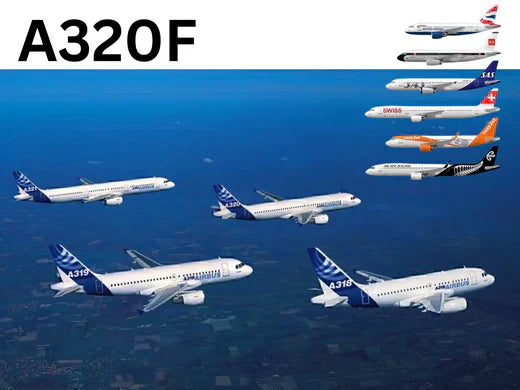
A Wizz Air Airbus A321 aircraft is captured mid-flight against a clear blue sky, showcasing its distinctive pink, purple, and white livery during landing approach.
Airbus A321XLR Technical Specifications, Systems and Engine Options
The Airbus A321XLR is engineered for a very specific mission: opening long, thin transatlantic and intercontinental routes that were previously only viable with widebody aircraft. To achieve a manufacturer range of up to 4,700 NM (8,700 km), the variant introduces a permanent Rear Centre Tank (RCT) integrated into the aft fuselage, a maximum takeoff weight increased to 101 tonnes, and reinforced landing gear and wing box structures. These changes build upon the proven A321neo platform while accepting a modest trade in lower hold cargo volume for the fuel capacity required to fly routes such as New York to Rome or Tokyo to Perth.
The A321XLR inherits the full fly by wire architecture, cockpit commonality, and Airspace cabin of the A320neo family. Its design philosophy prioritises narrowbody operating economics on sectors up to 11 hours of flight time, delivering approximately 30% lower fuel burn per seat than previous generation aircraft on equivalent routes. For airlines, the result is the ability to serve point to point demand without the seat count commitment of a widebody.
- Overall length: 44.51 m (146 ft)
- Wingspan: 35.80 m (117 ft 5 in), with Sharklet wingtip devices
- Height: 11.76 m (38.7 ft)
- Wing area: 122.4 m² (1,318 sq ft)
- Cabin width: 3.70 m (12 ft 1 in), single aisle with six abreast seating
- Typical seating (two class): 206 to 220 passengers
- Maximum single class seating: 244 passengers
- MTOW: 101 tonnes (222,667 lb)
- Range: up to 4,700 NM (8,700 km) per manufacturer data
- Maximum flight time: up to 11 hours
- Cruise speed: Mach 0.78 (approximately 833 km/h at cruise altitude)
- Engines: 2 × CFM International LEAP 1A or 2 × Pratt & Whitney PW1100G JM, each rated up to 35,000 lbf thrust
- Fuel system: standard wing tanks plus permanent Rear Centre Tank (RCT) of approximately 12,900 litres, with optional forward additional centre tank
- Avionics: integrated glass cockpit with fly by wire flight controls, standard across the A320neo family
- Certification: EASA Type Certificate issued July 2024 (LEAP 1A variant); PW1100G JM variant certified by EASA in February 2025
Systems, Flight Controls and Handling Technology
The A321XLR retains the full fly by wire flight control system from the A320neo family, including three Primary Flight Control Computers (PRIM), two Secondary Flight Control Computers (SEC), and two Flight Augmentation Computers (FAC). Together, these provide envelope protection, auto trim, and law reversion in degraded modes. Sidestick controllers and autopilot integration follow the standard Airbus automation philosophy, designed to reduce crew workload, a consideration that gains importance on the longer sectors this variant serves.
Braking is handled by carbon brakes with anti skid and autobrake systems. The landing gear has been strengthened to accommodate the higher MTOW of 101 tonnes. Performance computation relies on both the Flight Management and Guidance System (FMGS) and Electronic Flight Bag (EFB) applications, which support real time takeoff and landing calculations adjusted for the variant's increased fuel loads and operating weights. Engine management is governed by Full Authority Digital Engine Control (FADEC) on both engine options, enabling precise thrust optimisation and supporting procedures such as single engine taxi for fuel savings on the ground.
It is important to note that published performance figures for the A321XLR, as with any commercial aircraft, vary depending on operator selected cabin configuration, passenger count, cargo load, atmospheric conditions (temperature, altitude, wind), and runway surface state. Range values quoted by the manufacturer typically assume a standard two class layout and favourable conditions. Actual airline range on a given route may differ based on payload weight, reserve fuel policy, and en route winds. For this reason, specifications should always be read as reference values rather than absolute guarantees.
Engine Options: CFM LEAP 1A and Pratt & Whitney PW1100G JM
The A321XLR offers airlines a choice between two new generation powerplants, both representing a generational leap in narrowbody engine technology.
The CFM International LEAP 1A is produced by CFM International, a 50/50 joint venture between GE Aerospace (United States) and Safran Aircraft Engines (France). The LEAP programme was launched in July 2008 as the successor to the hugely successful CFM56 series. The first full LEAP 1A ground test took place in September 2013 at GE's facility in Peebles, Ohio, and the engine achieved its first flight on an Airbus A320neo in May 2015. FAA and EASA certification followed in late 2015 and 2016. The LEAP 1A features a bypass ratio of approximately 11:1, a fan diameter of 1.98 m (78 inches), and incorporates advanced materials including ceramic matrix composites (CMC) in hot section components and 3D woven carbon fibre fan blades, both firsts for a production commercial engine. Beyond the A320neo family, variants of the LEAP power the Boeing 737 MAX (LEAP 1B) and the COMAC C919 (LEAP 1C).
The Pratt & Whitney PW1100G JM belongs to the Geared Turbofan (GTF) engine family. It is manufactured by Pratt & Whitney (a division of RTX Corporation) with major risk sharing partners including MTU Aero Engines of Germany (responsible for the low pressure turbine and parts of the high pressure compressor, with an 18% programme share) and Japanese Aero Engines Corporation (JAEC, holding a 23% share). Preliminary GTF research began in the 1990s with Pratt & Whitney, MTU, and Fiat Avio. The defining feature is a planetary reduction gearbox that decouples the fan from the low pressure turbine, allowing the fan to rotate at a lower speed for aerodynamic efficiency while the turbine operates at its optimal higher speed. The PW1100G JM has a fan diameter of approximately 2.06 m (81 inches) and a bypass ratio of roughly 12:1. The engine received FAA certification in December 2014 and entered commercial service in January 2016 with Lufthansa. The broader GTF family also powers the Airbus A220 and Embraer E Jet E2 series in different variants. Both engine options on the A321XLR claim fuel efficiency improvements of 15% to 20% over their respective predecessors, along with significant reductions in noise footprint and NOx emissions.
Airbus A321XLR vs A321neo vs A321LR vs Boeing 737 MAX 8 Specifications Comparison
Scroll horizontally to see more →
| Parameter | Airbus A321XLR | Airbus A321neo | Airbus A321LR | Boeing 737 MAX 8 |
|---|---|---|---|---|
| Entry into service | 2024 | 2016 | 2018 | 2017 |
| Engines | 2 × CFM LEAP-1A or PW1100G | 2 × CFM LEAP-1A or PW1100G | 2 × CFM LEAP-1A or PW1100G | 2 × CFM LEAP-1B |
| Length | 44.51 m | 44.51 m | 44.51 m | 39.5 m |
| Wingspan | 35.80 m | 35.80 m | 35.80 m | 35.9 m |
| Height | 11.76 m | 11.76 m | 11.76 m | 12.3 m |
| Typical seating and layout | 2-class: 206–220 passengers | 2-class: 206–220 passengers | 2-class: 206–220 passengers | 2-class: 162–178 passengers |
| MTOW | 101 t | 97 t | 97 t | 82 t |
| Range | 4,700 nm | 4,000 nm | 4,000 nm | 3,500 nm |
| Cruise speed | 0.78 Mach | 0.78 Mach | 0.78 Mach | 0.79 Mach |
| Service ceiling | 41,000 ft | 41,000 ft | 41,000 ft | 41,000 ft |
| Program note | Longest-range narrowbody with permanent Rear Center Tank for ultra-long-haul point-to-point routes up to 4,700 nm | Standard A321neo baseline with improved efficiency over ceo generation | Long-range A321neo variant with 4,000 nm range for transatlantic and extended regional routes | Mainline narrowbody competitor with similar capacity but shorter range optimized for medium-haul operations |
Scroll horizontally to see more →
The table compares key specs of the Airbus A321XLR, A321neo, A321LR and Boeing 737 MAX 8, including dimensions, engines, seating, MTOW, range and performance. The A321XLR stands out with the highest MTOW (101 t) and longest range (4,700 nm) versus 4,000 nm for the A321neo/LR and 3,500 nm for the MAX 8. Airbus variants share the same size and cruise Mach 0.78, while the MAX 8 is shorter, seats fewer, and cruises slightly faster at Mach 0.79.
Airbus A321XLR Operations: Typical Routes, Missions and Airlines Worldwide
The Airbus A321XLR is designed to operate nonstop flights of up to 4,700 nautical miles (8,700 km), with a maximum flight time of approximately 11 hours. In practice, most scheduled services fall in the 7 to 10 hour range, covering routes such as Europe to the US East Coast, South Asia to Southern Europe, or Europe to West Africa and Brazil. The aircraft cruises at Mach 0.78 to 0.82, which is slightly slower than widebody competitors, adding roughly 20 to 30 minutes on transatlantic crossings. Despite this, the type offers approximately 30% lower fuel burn per seat compared with older generation aircraft on similar routes, making it economically attractive for thinner long haul markets that cannot fill a widebody.
The Airbus A321XLR excels in point to point operations, linking secondary or mid size cities directly across continents without routing passengers through congested hubs. It is equally suited to hub and spoke networks, where it complements widebody fleets by feeding long haul demand from smaller catchment areas or opening seasonal routes that would not justify a larger aircraft. Airlines typically achieve high daily utilisation with this type, often deploying the aircraft on a single long haul rotation per day (for example, a transatlantic round trip) or combining a medium haul sector with a long haul sector to maximise block hours. This operational flexibility, combined with its ability to operate from runways as short as approximately 7,300 feet at takeoff, allows airlines to serve airports that widebodies cannot easily reach.
Operators do face certain challenges. The narrowbody cabin, while featuring the latest Airbus Airspace interior, offers less space than a twin aisle aircraft for galleys, lavatories and crew rest areas on flights exceeding eight hours. Crew scheduling must account for duty time limits, and some airlines have introduced dedicated rest solutions adapted to the single aisle fuselage. ETOPS certification is also required for overwater operations, adding regulatory and maintenance complexity. Nonetheless, the lower operating cost per seat makes these trade offs worthwhile for the routes the aircraft is designed to serve.
Where the Airbus A321XLR Operates Around the World
Across Europe, the Airbus A321XLR has become a key tool for network carriers and ultra low cost operators alike, connecting European hubs to North America, South America, West Africa and the Middle East. In North and South America, major US carriers plan to use the type as a direct replacement for the ageing Boeing 757 on transatlantic and transcontinental routes, while Latin American low cost carriers see it as a path to intercontinental expansion. In Asia, the aircraft is attracting interest from carriers seeking to connect South Asia and Southeast Asia to Europe and the Middle East without widebody costs. In Africa and the Middle East, regional carriers plan to use the extended range to link their hubs to Europe, South Asia and East Africa. Unlike much larger types such as the Bombardier CRJ1000, which serves short regional hops, the Airbus A321XLR bridges the gap between regional and true long haul operations.
- Europe: Iberia became the global launch operator in late 2024, deploying its 182 seat A321XLR from Madrid to Boston, Washington DC, San Juan (Puerto Rico), Recife and Fortaleza in Brazil, with Newark and Toronto planned for 2026. Aer Lingus uses its 184 seat configuration to connect Dublin with Nashville, Indianapolis, Raleigh Durham and Washington Dulles, targeting secondary US cities year round. Wizz Air, the first ultra low cost carrier to receive the type with 47 on order, has launched services from London Gatwick to Jeddah and from Milan to Abu Dhabi. Other European operators or confirmed customers include Icelandair and Finnair, which plan to use the aircraft to extend their transatlantic and Asia connecting networks respectively.
- North and South America: American Airlines (50 on order) received its first aircraft in late 2025 and launched its inaugural A321XLR service from New York JFK to Edinburgh in March 2026, with Philadelphia to Porto also planned. United Airlines (50 on order) expects first deliveries in 2026 to replace Boeing 757s on transatlantic routes. Air Canada (30 on order) plans to deploy the type from Montreal to multiple European destinations. In South America, JetSMART (13 on order) intends to use the aircraft for intercontinental expansion from Chile.
- Asia: IndiGo holds the largest single order at approximately 70 aircraft and received its first in early 2026, planning routes from India to Southern Europe and East Asia, including Delhi to Athens. Cebu Pacific in the Philippines and AirAsia (70 on order) in Malaysia plan to use the type for medium to long haul low cost services across Asia, the Middle East and potentially Europe. Qantas (25 on order) in Australia plans to fly the aircraft deeper into Southeast Asia and the Pacific from 2028.
- Africa and the Middle East: Middle East Airlines (MEA) ordered 4 A321XLRs and plans to strengthen its Beirut based network into Africa and South Asia. Air Arabia has 20 on order for routes linking the UAE to Europe, India and Central Asia. Flynas in Saudi Arabia also plans to use the type for expansion into Europe and Africa. No African airline has publicly confirmed A321XLR orders as of early 2026.
Typical Seating Configurations on the Airbus A321XLR
Cabin layouts vary significantly depending on the operator's business model. According to Airbus, the aircraft accommodates up to 244 passengers in a high density single class layout, while typical two class configurations seat between 180 and 220 passengers.
Network carriers favour premium heavy configurations. Iberia fits 182 seats with 14 lie flat business class seats in a 1 1 layout and 168 economy seats. Aer Lingus configures 184 seats with 16 lie flat business class seats (alternating 2 2 and 1 1 throne seats) and 168 economy seats. American Airlines has chosen a particularly premium dense layout of just 155 seats: 20 enclosed Flagship Suite seats in a 1 1 arrangement, 12 premium economy seats and 123 main cabin seats. Qantas plans a 200 seat configuration with 20 business class seats and 180 economy seats, including 36 Economy Plus seats. United Airlines is expected to adopt a similar premium heavy approach with around 150 seats featuring lie flat Polaris business class. These configurations reflect the aircraft's role on competitive transatlantic and transcontinental routes where premium revenue is essential.
Low cost and leisure operators take a different approach, maximising density. Wizz Air operates an all economy layout to keep fares low on its ultra long haul services, while carriers like IndiGo and Cebu Pacific are expected to favour high density arrangements suited to price sensitive markets. The six abreast (3 3) economy cabin, standard across all configurations, features 18 inch wide seats on most airlines, with seat pitch typically ranging from 29 to 31 inches in economy and up to 34 inches in premium economy sections. Detailed seat maps for individual airlines are available on resources such as AeroLOPA.
In this video, Nicky and Liam fly from Madrid on the world’s first Airbus A321XLR with Iberia, offering a first-look review and comparing the Business Class experience against Economy.
Airbus A321XLR Safety Record: How Safe Is This Aircraft?
The Airbus A321XLR entered commercial service in late 2024 after receiving EASA type certification in July 2024 for the CFM LEAP 1A engine variant, followed by FAA certification in October 2024. The Pratt & Whitney GTF powered version received EASA approval in February 2025. As of early 2026, the A321XLR fleet remains small, with deliveries underway to airlines including Iberia (the launch customer), Aer Lingus and American Airlines. No accidents or incidents have been recorded involving the Airbus A321XLR since it began revenue operations. While the type is too new to generate statistically meaningful safety data of its own, it benefits from the mature design lineage of the Airbus A320 family, which has accumulated over 272 million flight cycles since 1988 and holds a dispatch reliability rate of 99.7%.
The A321XLR underwent one of the most scrutinised certification campaigns in recent commercial aviation history. EASA conducted over 900 flight test hours across three dedicated test aircraft, held more than 400 specialist meetings and reviewed over 500 technical documents. Much of this effort focused on the aircraft's defining feature: the rear centre tank (RCT), a 12,900 litre structural fuel tank integrated into the aft fuselage that gives the A321XLR its 4,700 nautical mile range. EASA imposed special conditions requiring the RCT to withstand vertical impact loads, resist external pool fires for a minimum of two and a half minutes to allow evacuation, and limit fuel leakage in the event of gear collapse or belly landing. Airbus addressed these requirements with reinforced belly fairings, a damage resistant inner liner and upgraded structural materials. The FAA applied its own conditions, including a five minute fire resistance standard for ground fire exposure. These measures reflect an elevated safety benchmark that goes beyond what was required for previous A321 variants.
Notable Incidents Involving the A321 Family
Although the A321XLR itself has no incident history, the broader A321 family has experienced a small number of significant events over more than two decades of service. Understanding these events provides context for how the type and the wider industry have evolved.
- Metrojet Flight 9268 (2015): An A321 200 operating from Sharm el Sheikh to St Petersburg broke up in flight over Egypt's Sinai Peninsula, killing all 224 occupants. Investigators determined that an explosive device had been placed in the aft cargo hold, making this an act of terrorism rather than a structural or mechanical failure. The event led to prolonged flight suspensions to the affected airport, independent security audits commissioned by Egypt and strengthened international standards for baggage screening and airport personnel vetting. The International Centre for Counter Terrorism published a detailed assessment of the security changes that followed.
- Daallo Airlines Flight 159 (2016): Shortly after departure from Mogadishu, Somalia, an explosive device detonated inside the cabin of an A321, tearing a hole in the fuselage. The flight crew returned the aircraft safely and one passenger (the bomber) was killed. The incident prompted immediate reviews of screening procedures at Mogadishu airport and reinforced international calls for enhanced explosive trace detection at airports in high risk regions.
- Ural Airlines Flight 178 (2019): An A321 struck a flock of gulls during departure from Zhukovsky Airport near Moscow, causing both engines to lose thrust. The crew executed a gear up landing in a nearby cornfield and all 233 occupants survived. The event highlighted the ongoing importance of wildlife hazard management around airports and supported ICAO guidelines on bird strike prevention, including habitat management and radar based detection systems.
In each of these cases, the root causes were external to the aircraft's design: terrorism, airport security shortcomings or wildlife hazards. None revealed systemic structural or avionics deficiencies in the A321 platform.
How Safe Is the Airbus A321XLR?
The A321XLR inherits the safety architecture of the A320 family, which includes fly by wire flight controls with flight envelope protection, a system that Airbus pioneered in the late 1980s. According to Airbus accident statistics, generation 4 aircraft (which include the A320 family) recorded a fatal accident rate of just 0.04 per million flight cycles in 2024. Flight envelope protection has helped reduce loss of control in flight (LOC I) fatal accident rates by approximately 90% compared with earlier generation aircraft. These figures place the A320 family among the safest aircraft types ever produced.
Beyond hardware, the A321XLR operates within a robust ecosystem of standard operating procedures (SOPs), recurrent crew training and continuous regulatory oversight from both EASA and the FAA. Airlines adopting the type must complete transition training programmes that address the specific handling characteristics and systems of the XLR variant, including fuel management for the rear centre tank. As with all modern airliners, the aircraft also benefits from real time data monitoring, predictive maintenance systems and global safety information sharing through bodies such as ICAO and the Aviation Safety Network. For those curious about how different aircraft types compare in terms of heritage and design philosophy, a look at classic types such as the Fokker F 27 100 offers a fascinating perspective on how far commercial aviation safety has progressed.
In summary, while the Airbus A321XLR is still building its own operational track record, it stands on the proven foundations of one of the most widely flown and thoroughly tested aircraft families in history. Commercial aviation remains statistically one of the safest modes of transport, and the A321XLR, with its enhanced certification standards and modern safety systems, is well positioned to uphold that record as its fleet continues to grow.
01 What is the maximum range of the Airbus A321XLR and what routes can it fly?
The Airbus A321XLR has a maximum range of 4,700 nautical miles (8,700 kilometers) with an endurance of approximately 11 hours. This enables it to connect city pairs traditionally served by larger widebody aircraft, such as New York to Rome, London to Vancouver, Delhi to London, and Sydney to Kuala Lumpur, making it ideal for long-haul point-to-point operations between primary and secondary cities.
02 How does the A321XLR differ from the standard A321neo?
The key difference is the A321XLR's extended range capability, achieved through a permanent Rear Center Tank holding an additional 12,900 liters of fuel, an increased maximum takeoff weight of 101 tonnes, and structural reinforcements to the landing gear and wing box. While the A321neo offers a maximum range of 4,000 nautical miles, the A321XLR extends this to 4,700 nautical miles, representing a 15 percent increase and enabling profitable operation of long, thin routes that don't justify widebody capacity.
03 What is the typical passenger capacity and cabin configuration of an A321XLR?
The A321XLR can accommodate up to 244 passengers in a high-density single-class layout, but most operators choose more comfortable two-class or three-class configurations. Typical configurations range from 180 to 220 seats, with airlines like American Airlines offering three-class cabins featuring lie-flat business seats, premium economy, and economy seating tailored to specific long-haul routes.
04 How fuel-efficient is the Airbus A321XLR compared to previous aircraft?
The A321XLR delivers approximately 30 percent lower fuel burn and CO2 emissions per seat compared to previous-generation competitors, achieved through advanced engines and aerodynamic improvements. Airlines can choose between two highly efficient engine options: the Pratt & Whitney PW1100G-JM and the CFM International LEAP-1A, both contributing to significant cost savings and sustainability improvements on long-haul routes.
05 Which airlines currently operate the Airbus A321XLR and on what routes?
Early operators of the A321XLR include Iberia, which uses a premium-focused 182-seat configuration for transatlantic flights, Qantas with a 197-passenger layout, and American Airlines with a spacious three-class cabin. These airlines leverage the aircraft's range and efficiency to open new long-haul routes between secondary cities and to offer frequency on thinner routes that would not support widebody operations.
06 How does the A321XLR compare to Boeing's 737 MAX in terms of capabilities?
The Airbus A321XLR significantly outperforms Boeing's 737 MAX family in range, offering 4,700 nautical miles compared to the 737 MAX-10's maximum of 3,100 nautical miles—a range advantage of roughly 1,600 nautical miles or more than 50 percent greater reach. This extended capability allows the A321XLR to serve intercontinental routes like New York to Rome that exceed the 737 MAX's operational envelope, making it the clear choice for airlines pursuing long-haul narrowbody expansion.