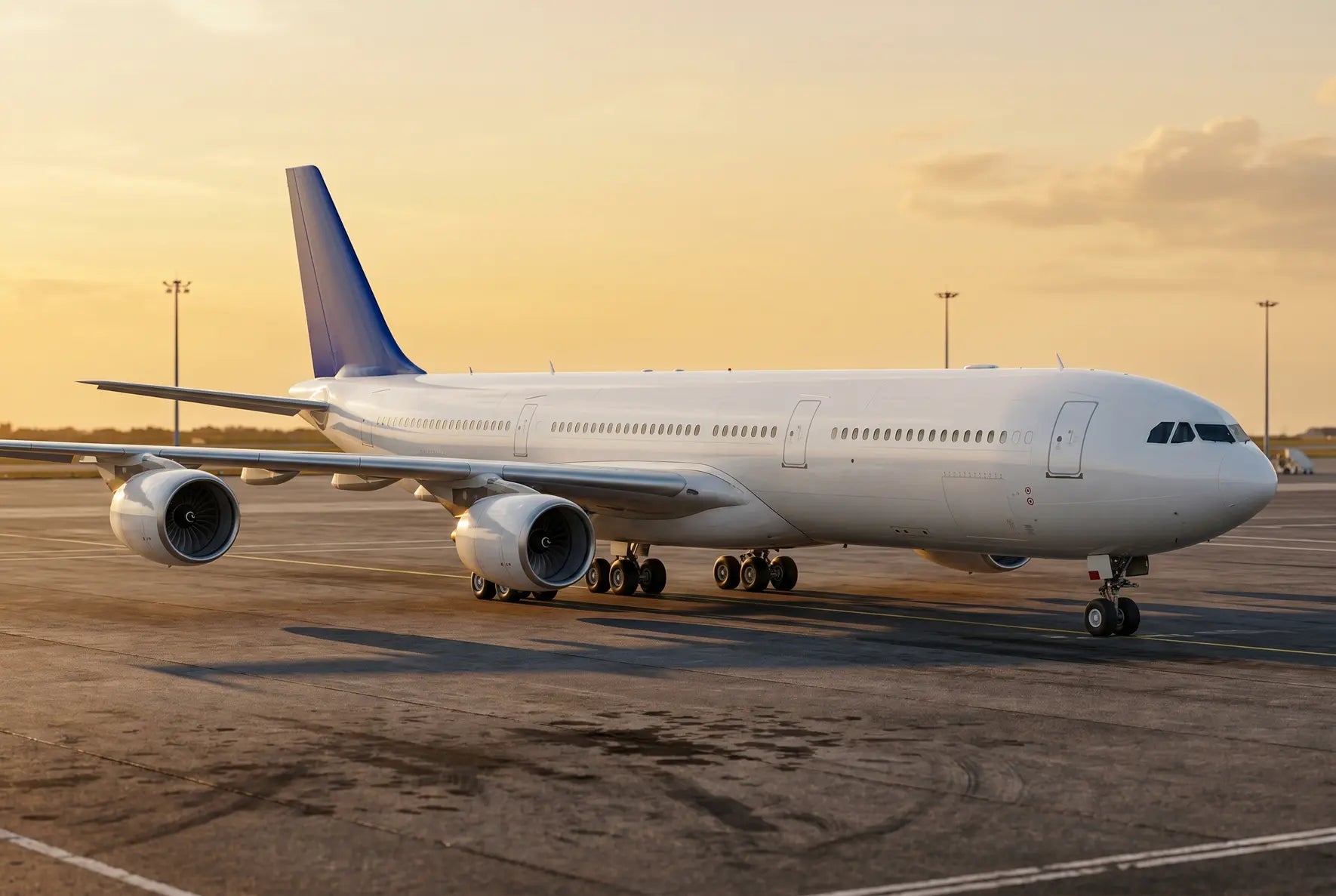



Wamos Air Overview & Company Profile
Wamos Air is a Spanish charter and ACMI (Aircraft, Crew, Maintenance, Insurance) specialist airline headquartered at Adolfo Suarez Madrid-Barajas Airport (MAD). Originally founded in 2003 as Pullmantur Air, a subsidiary of the Pullmantur cruise group, the airline was created to ferry passengers to and from cruise embarkation ports across the Mediterranean, Caribbean, and Baltic regions. The carrier rebranded to Wamos Air in 2014 after Springwater Capital acquired an 81% stake from the Royal Caribbean Group.
In 2022, Wamos Air discontinued all scheduled services to concentrate exclusively on charter flights and ACMI wet-lease operations. Its former Caribbean scheduled routes were transferred to Iberojet. This strategic pivot has positioned the airline as one of Europe's most experienced long-haul wet-lease providers, operating across more than 200 airports in 87 countries. In October 2024, Abra Group, the UK-based holding company behind Avianca and Gol Linhas Aereas, completed its acquisition of Wamos Air, adding a European wide-body specialist to its Latin American aviation portfolio. The airline continues to operate independently under its existing management team.
Wamos Air's client list reads like a who's who of international aviation. Recent and current ACMI clients include Air New Zealand (Pacific routes, October 2025 to April 2026), Philippine Airlines (Manila to Sydney/Melbourne), Etihad Airways (Rome to Abu Dhabi), LATAM Airlines, Saudia, Avianca, and Iberia. The airline holds IOSA certification (since 2012) and a Spanish Air Operator Certificate (AOC E-055) issued under EASA authority. As of 2025, Wamos Air employs approximately 1,784 staff and transports over 3 million passengers annually.
Fleet Composition & Aircraft Types
Wamos Air operates an exclusively wide-body fleet of Airbus A330 aircraft, having completed the transition from its legacy Boeing 747 fleet in 2020. The current fleet of 13 aircraft is split between the A330-200 and A330-300 variants, providing a single-type rating environment that simplifies training and crew management. The airline planned to expand to 15 aircraft in 2025, and parent company Abra Group announced the addition of up to seven A330neo wide-bodies to its group fleet, though the exact timeline for Wamos Air deliveries remains unconfirmed.
Each aircraft in the Wamos Air fleet is individually configured to meet diverse client requirements. Configurations range from high-density all-economy layouts seating up to 408 passengers (ideal for cruise and leisure charters) to dual-class business and economy setups for premium ACMI operations. In 2025, the airline selected new Unum One business class seats for its A330-200 fleet to improve passenger comfort on long-haul services.
| Aircraft Type | Role | In Service | Notes |
|---|---|---|---|
| Airbus A330-200 | Long-haul widebody | 5 | Extended range variant. Used for PAL, Etihad ACMI. Registrations include EC-NBN. New business seats in 2025. |
| Airbus A330-300 | Long-haul widebody | 8 | High-capacity variant. Up to 408 pax. Used for Air NZ Pacific routes. Registrations include EC-NHM, EC-NTX, EC-ODQ, EC-ODR, EC-OLG. |
| Airbus A330neo | Next-gen widebody | On order | Part of Abra Group fleet plan (up to 7 for group). More fuel-efficient, extended range. |
Fleet data as of early 2026. Numbers are approximate and subject to change with ongoing deliveries and client requirements.
Historical Fleet: The Boeing 747 Era
Before its all-Airbus transition, Wamos Air operated a significant Boeing 747 fleet that defined the airline's identity for over a decade. Three Boeing 747-200Bs served from 2004 to 2008, alongside a single 747-300 (2003 to 2008). The airline's most substantial wide-body operation involved ten Boeing 747-400 aircraft introduced from 2008 and gradually retired through 2020. The transition to the more fuel-efficient A330 family reflected broader industry trends and allowed Wamos Air to significantly reduce operating costs while modernizing its product offering.
For pilots, the all-A330 fleet is a notable operational advantage. A single type rating covers every aircraft in the fleet, eliminating the need for costly fleet transitions or additional type rating investments. Whether you are operating a cruise charter to Cancun or an ACMI rotation for Air New Zealand across the Pacific, the cockpit environment remains identical. This simplification also means more flexible crew scheduling and fewer training interruptions compared to multi-fleet operators.
Pilot Salary & Compensation
Wamos Air does not publicly disclose its pilot pay scales, a practice common among smaller charter and ACMI operators that tend to negotiate compensation individually rather than publishing rigid salary tables. The airline historically operated without a collective agreement (the first company committee elections were only attempted in late 2023/early 2024), which means there is no publicly available SEPLA-negotiated pay scale for Wamos Air. Prospective applicants should request detailed compensation information directly from the airline's recruitment team.
To provide context, the following estimates are based on Spanish aviation industry benchmarks, European A330 operator comparisons, and publicly available data from European pilot salary databases. The average gross pilot salary in Spain is approximately €77,269 according to Euronews data from 2025. Charter and ACMI operators generally offer compensation below the levels of major flag carriers but above regional airline pay.
Estimated First Officer (F/O) Pay Range
| Experience Level | Estimated Monthly Gross | Estimated Annual Gross | Notes |
|---|---|---|---|
| Entry F/O (Year 1) | €3,500 – €4,500 | ~€42,000 – €54,000 | Based on Spanish charter industry benchmarks |
| Mid-career F/O (3-5 yrs) | €5,000 – €6,500 | ~€60,000 – €78,000 | Includes flight pay and per diems |
| Senior F/O (7+ yrs) | €6,500 – €8,000 | ~€78,000 – €96,000 | Approaching upgrade eligibility |
Estimated Captain Pay Range
| Experience Level | Estimated Monthly Gross | Estimated Annual Gross | Notes |
|---|---|---|---|
| New Captain | €8,000 – €10,000 | ~€96,000 – €120,000 | Initial command on A330 |
| Experienced Captain (5+ yrs) | €10,000 – €13,000 | ~€120,000 – €156,000 | Includes all allowances and premiums |
| Senior Captain / TRI | €12,000 – €15,000 | ~€144,000 – €180,000 | Training captain roles command premium |
All figures are editorial estimates based on Spanish market data, European charter operator benchmarks, and wide-body pilot salary surveys. Actual Wamos Air compensation may differ. Verify directly with the airline.
These salary figures are estimates only. Wamos Air has historically operated without a formal collective agreement, which means compensation structures may vary between individual contracts. SEPLA and USO-Air Sector have filed complaints regarding unequal per diem allowances among staff with different entry dates (differences of €80 to €105 per assignment), suggesting that pay equity has been a concern. The tight European pilot labor market as of 2025-2026 has driven upward pressure on charter operator salaries, so current offers may exceed these estimates. Always negotiate directly and request full compensation breakdowns including base salary, hourly flight premiums, per diems, and any bonuses.
How Wamos Air Pay Compares in Spain
For context, Iberia captains on long-haul wide-bodies earn in the range of €150,000 to €220,000+ annually under the SEPLA collective agreement (10th agreement, valid through 2027), while Iberia first officers start at substantially lower figures. Vueling co-pilots earn approximately €39,000 to €47,000, with per diems of around €54 (domestic) and €96 (international). Air Europa pilots secured an 11.5% wage increase through 2025 following a 26-day strike in 2023. Charter operators like Wamos Air typically sit between the Vueling/regional level and the Iberia/Air Europa mainline level for equivalent experience.
Roster Pattern & Quality of Life
As a charter and ACMI specialist, Wamos Air's roster patterns differ significantly from traditional scheduled airlines. Rather than fixed monthly route networks, crew schedules are driven by aircraft availability and client mission requirements. This creates a more variable work pattern: pilots may experience concentrated periods of intensive flying (especially during peak summer and holiday seasons) followed by quieter stretches. ACMI deployments for airlines like Air New Zealand or Philippine Airlines may involve multi-week positioning abroad, operating regular rotations on behalf of the client carrier.
All Wamos Air operations fall under EASA Flight Time Limitation (FTL) rules, which cap annual flight time at 900 block hours, total duty time at 60 hours in any seven consecutive days, and mandate minimum rest periods between duty assignments. The Spanish implementation of EASA FTL provides the regulatory baseline for all roster construction at Wamos Air.
📅 Sample Month: A330 First Officer (ACMI Deployment)
The sample above is illustrative. Actual rosters will vary substantially depending on the current ACMI contract, charter season, and operational requirements. During peak deployments (such as the Air New Zealand winter season or summer cruise charters), flying intensity will be higher. Off-peak months may feature more days off or training periods.
Wamos Air's sole crew base is Madrid-Barajas (MAD). All pilots are based in Madrid, with no secondary base options currently available. However, the charter/ACMI model means pilots may spend extended periods away from home base. For example, the Air New Zealand contract requires positioning to Auckland for Pacific operations lasting several months. Similarly, the Etihad Rome ACMI involves regular Rome-Abu Dhabi rotations. While these international deployments offer unique travel experiences, they require significant personal flexibility and can strain family life during peak deployment seasons.
Benefits, Travel Perks & Social Protections
As a Spanish-registered employer, Wamos Air is subject to Spain's comprehensive social security system, which provides a strong baseline of statutory employee protections. However, the absence of a formal collective agreement for most of the airline's history means that employer-specific benefits beyond the statutory minimum are less transparent than at unionized carriers like Iberia or Air Europa.
The lack of a formal collective agreement at Wamos Air means that many employer-specific benefits (supplemental health insurance, occupational pension, loss of license coverage, staff travel details) are not publicly documented. Prospective pilots should request a full benefits summary during the recruitment process. Spanish statutory protections provide a solid floor, including generous parental leave (16 weeks for both parents), sick leave coverage, and access to the public healthcare system. However, the absence of a formal SEPLA-negotiated agreement leaves room for individual contract variations that may not match the standards at unionized Spanish carriers.
Career Progression & Seniority
Career progression at Wamos Air follows the standard aviation industry seniority model, where the length of service determines schedule preferences, vacation timing, and upgrade eligibility. However, as a smaller operator with approximately 1,784 total staff (including non-pilot personnel), Wamos Air's pilot roster is considerably smaller than at major carriers, which has implications for upgrade opportunities and fleet transition timelines.
The all-A330 fleet eliminates one common career hurdle: fleet transitions. At multi-type operators, pilots often wait years for a seniority-based bid to transfer from narrowbody to widebody aircraft. At Wamos Air, every pilot flies the same type from day one, which means career progression focuses solely on the First Officer to Captain upgrade.
| Career Milestone | Estimated Timeline | Notes |
|---|---|---|
| Join as First Officer (A330) | Day 1 | Direct entry with valid A330 type rating or completion of company-provided TR. |
| Senior First Officer | 3-5 years | Increased seniority, better roster preferences, higher pay step. |
| Captain upgrade | 5-10+ years (estimated) | Depends on fleet growth and retirements. Smaller roster = fewer upgrade slots. |
| Training Captain (TRI/TRE) | Variable | Requires captain experience plus instructor aptitude. Additional pay premium. |
Wamos Air accepts direct-entry captains, which distinguishes it from strictly seniority-based carriers like Air France that promote exclusively from within. Experienced A330 captains from other operators can join directly at the command level, provided they meet type rating and experience requirements. This is typical of charter and ACMI operators that need operational flexibility and cannot always wait for internal upgrades.
The 2024 acquisition by Abra Group (Avianca, Gol) could open new career pathways for Wamos Air pilots in the medium term. Abra Group announced plans for up to seven A330neo wide-bodies and 50 additional A320neo narrowbodies across its group fleet. While no formal inter-airline transfer or secondment programs have been announced, the group structure creates potential for future mobility between Wamos Air, Avianca, and other Abra properties. Pilots should monitor developments as the integration matures.
Recruitment Process & Requirements
Wamos Air recruits pilots on a rolling basis, with positions advertised through the airline's official careers portal at wamosair.com/work-with-us, as well as on LinkedIn and the Spanish job platform Infojobs. The airline does not operate a cadet or ab-initio programme; all pilot hires are experienced professionals with existing type ratings or sufficient experience to complete A330 conversion training.
Minimum Requirements
Selection Stages (Typical)
Online Application
Submit CV and credentials through the Wamos Air careers portal, LinkedIn, or Infojobs. Include license details, type ratings, language certifications, and total flight hours.
Preliminary Screening
HR review of qualifications, license validity, right-to-work documentation, and language proficiency. Candidates not meeting minimum requirements are filtered at this stage.
Technical Interview
Assessment of aircraft systems knowledge, operational procedures, and technical competency. May include A330-specific questions for candidates with existing type rating.
Simulator Assessment
Proficiency check in A330 simulator (or equivalent). Evaluates basic flying skills, CRM, decision-making, and handling of non-normal situations.
HR Interview & Offer
Final interview covering CRM aptitude, cultural fit, and availability for charter/ACMI deployment patterns. Successful candidates receive a contract offer. Type rating training (approximately 36 days including rest days for the A330 initial course) follows if needed.
Spanish language proficiency is essential. While Wamos Air accepts lived experience in Spanish-speaking countries as proof of language competency (rather than requiring formal ICAO certification), all internal communications, company procedures, and union interactions are conducted in Spanish. Pilots without Spanish proficiency should not apply. The airline's flexible approach to language documentation is an advantage for internationally experienced pilots who may lack formal ICAO Spanish certificates but have genuine operational fluency.
How Wamos Air Compares: Airline Radar Chart
How does Wamos Air stack up against two comparable Spanish operators, Air Europa (long-haul scheduled carrier) and Privilege Style (charter/ACMI specialist)? Below is a comparative analysis across the five core metrics. Scores are editorial estimates based on publicly available data, industry benchmarks, and pilot community feedback.
Key Takeaways from the Comparison
Air Europa leads across most metrics. As a scheduled long-haul carrier with a SEPLA collective agreement and 787 Dreamliner fleet, Air Europa offers higher salaries, better-documented benefits, and stronger union protections. The 11.5% pay increase secured through the 2023 strike action demonstrates the power of collective bargaining. However, Air Europa's own financial challenges and the delayed IAG acquisition create some job security uncertainty.
Wamos Air's fleet score is its strongest point. The modern, homogeneous A330 fleet provides an excellent operational environment. Pilots gain genuine wide-body experience on a single type rating, operating across diverse international markets. The planned A330neo deliveries should further modernize the fleet. Neither Air Europa's mixed 737/787 fleet nor Privilege Style's smaller operation match this combination of fleet modernity and single-type simplicity.
Privilege Style shares Wamos Air's charter DNA but operates on a smaller scale with less publicly available information about pilot conditions. Both operators offer the adventure and variety of charter flying but lack the structured career frameworks of larger airlines.
Benefits and salary transparency remain Wamos Air's weakness. The absence of a formal collective agreement, combined with the 2024 labor disputes, places Wamos Air below both Air Europa and Iberia for compensation predictability. The Abra Group acquisition could improve this situation over time.
Scores are editorial estimates based on publicly available salary data, union publications, airline press releases, and industry benchmarks from sources including SEPLA, ECA, and European pilot salary databases. They represent a general assessment for an experienced pilot evaluating long-term career options. Individual experiences will vary based on seniority, contract terms, and deployment patterns.
Union & Industrial Relations
The union situation at Wamos Air has been among the most contentious in recent Spanish aviation history. For over two decades, the airline operated without formal worker representation or a collective agreement, a situation described by SEPLA as "residual and archaic in the sector." The attempt to change this in late 2023 and early 2024 triggered a bitter confrontation between management and unions that drew national attention.
SEPLA: Spain's Pilot Union
Recent Disputes & Key Events
The labor situation at Wamos Air is in transition. The creation of the SEPLA section and the push for formal company committee elections represent a significant shift toward worker representation after 20 years without it. SEPLA chief delegate Joan Bauza stated that pilots are working to "build a fairer, more dignified Wamos Air." The Abra Group acquisition may also influence labor relations, as the parent company's other airlines (Avianca, Gol) operate with established union frameworks. Prospective pilots should ask about the current status of collective agreement negotiations, per diem equalization, and any ongoing legal proceedings during the recruitment process.
Verdict: Who Is Wamos Air For?
🎯 Our Take
Wamos Air occupies a unique niche in European aviation: a dedicated wide-body charter and ACMI specialist offering genuine international operational diversity. The all-A330 fleet provides modern, single-type flying across an extraordinary range of destinations and clients, from Pacific island routes for Air New Zealand to Middle Eastern services for Etihad. The 2024 acquisition by Abra Group adds financial backing and potential future career pathways within a growing Latin American aviation group.
The trade-offs are significant and should not be overlooked. The airline's troubled labor relations history, including the retaliatory dismissals during unionization efforts and the absence of a formal collective agreement, represent serious concerns for any pilot evaluating long-term employment. Salary transparency is poor compared to carriers with established SEPLA agreements, and the charter/ACMI business model creates inherent roster unpredictability that can challenge work-life balance. Benefits beyond Spanish statutory minimums are unconfirmed.
For pilots seeking wide-body A330 experience, international operational variety, and an adventurous career path, Wamos Air can serve as a valuable stepping stone or an interesting career chapter. For pilots prioritizing salary transparency, roster stability, and strong collective representation, a carrier with an established SEPLA agreement (such as Iberia or Air Europa) may be a better fit.
1 Do I need to speak Spanish to fly for Wamos Air?
Yes. Wamos Air requires Spanish language proficiency at ICAO Level 5 or equivalent. The airline accepts lived or work experience in Spanish-speaking countries as alternative proof of proficiency. All internal communications and company procedures are conducted in Spanish. English at ICAO Level 4 or above is also required.
2 Does Wamos Air provide the A330 type rating?
The airline prefers candidates with existing A330/A350 type ratings, but pilots without the rating may be considered if they demonstrate willingness to complete the A330 initial type rating course (approximately 36 days including rest days). Whether Wamos Air funds the type rating or requires pilot contribution should be clarified directly with the recruitment team, as policies may vary.
3 What is the upgrade timeline from F/O to Captain?
Upgrade timelines at Wamos Air are not publicly disclosed. At charter and ACMI operators of this size, upgrade typically takes 5 to 10+ years depending on fleet growth and retirement patterns. The airline does accept direct-entry captains, so external candidates with A330 command experience can join directly at the captain level.
4 Can non-EU citizens apply?
Wamos Air requires all applicants to have legal right to live and work in the European Union. EU/EEA citizens and Swiss nationals qualify automatically. Non-EU citizens with valid EU work permits may be eligible. The airline does not appear to offer visa sponsorship.
5 What aircraft does Wamos Air operate?
Wamos Air operates an all-Airbus fleet of 13 A330 aircraft: 5 A330-200s and 8 A330-300s. This means a single type rating covers the entire fleet. The parent company Abra Group has announced plans for A330neo deliveries, which would further modernize the fleet.
6 Is there a collective agreement at Wamos Air?
As of early 2026, Wamos Air does not have a formal collective agreement with SEPLA. The airline operated for over 20 years without worker representation. A SEPLA union section was created in late 2023, and efforts toward establishing a company committee and negotiating a collective agreement are ongoing. This is a significant factor for prospective pilots to consider.
7 How does the ACMI business model affect my daily work?
Under ACMI contracts, Wamos Air provides the aircraft, crew, maintenance, and insurance while the client airline retains commercial control. For pilots, this means operating flights branded as (for example) Air New Zealand or Etihad, wearing Wamos Air uniform but following the client's operational procedures where applicable. Deployments can involve positioning to overseas bases for weeks or months. The variety is a major attraction, but the unpredictability and time away from home are important quality-of-life considerations.
8 Who owns Wamos Air now?
Since October 2024, Wamos Air has been owned by Abra Group, a UK-based aviation holding company that also controls Avianca (Colombia) and Gol Linhas Aereas (Brazil). Abra Group acquired Wamos Air to strengthen connectivity between Latin America and Europe and to leverage the airline's wide-body ACMI expertise. Wamos Air operates independently under its existing management team.
Official Links & Resources
Before applying or making career decisions, always verify information directly with official sources. These are the key websites and organizations relevant to Wamos Air pilot careers:
Keep an eye on the SEPLA Wamos Air section page for the latest updates on collective agreement negotiations and labor developments. The union situation is evolving rapidly, and any formal agreement would significantly change the employment landscape at the airline. Also monitor the Abra Group press releases for fleet expansion announcements that could signal increased hiring.