

Flexjet Overview & Company Profile
Flexjet is one of the world's largest fractional private jet operators, headquartered in Richmond Heights (Cleveland), Ohio, where the company opened a 50 million dollar global headquarters in 2023. Founded in 1995 as a subsidiary of Bombardier, Flexjet was acquired by Directional Aviation Capital in 2013 and today sits at the heart of OneSky Flight, a portfolio of private aviation brands that also includes Sentient Jet, FXAir, Sirio, and Skyjet. The company celebrated its 30th anniversary in 2025 and now operates more than 340 business jets and helicopters across North America, Europe, and the Middle East.
For pilots, Flexjet occupies a distinctive place in the U.S. aviation job market. Unlike scheduled passenger airlines, Flexjet sells fractional shares, leases, and jet cards: owners buy a portion of a specific aircraft type and request flights on demand, often with as little as a few hours' notice. That on-demand model shapes every aspect of the pilot experience, from the home-base system (pilots live wherever they choose from more than 110 U.S. gateway cities) to the intense captain upgrade pace. The company is chaired by Kenn Ricci, a long-time aviation entrepreneur whose Directional Aviation also owns Flight Options and CorporateCare platforms, with day-to-day operations led by CEO Michael Silvestro.
Flexjet withdrew from a planned SPAC merger with Horizon Acquisition Corporation II in April 2023 and remains privately held. In July 2025 the company closed an 800 million dollar equity raise led by LVMH-affiliated L Catterton alongside KSL Capital Partners and the J. Safra Group, the largest private investment ever committed to a private aviation business. That capital is now funding the largest fleet expansion in Flexjet's history, anchored by a 7 billion dollar Embraer order announced in February 2025 for up to 212 Phenom 300E, Praetor 500, and Praetor 600 aircraft through 2030. The company has also become the launch customer for Otto Aerospace's Phantom 3500, expected to enter service in 2030.
Flexjet launched its European operation in 2019 and now runs a Tactical Control Centre at London Farnborough Airport, with satellite offices in Mayfair (London), Malta, and Milan (where sister company Sirio handles maintenance). In December 2025 Flexjet received General Authority of Civil Aviation approval to operate domestic flights within Saudi Arabia, becoming only the second international operator certified for in-country private flying. European pilots are home-based across the UK and EU with similar base flexibility to the U.S. operation.
Fleet Composition & Type Ratings
Flexjet operates one of the most diverse business jet fleets in the world, spanning four manufacturers and every segment from light jets to ultra-long-range flagships. Unlike an airline fleet organized around route economics, a fractional fleet is sized to match demand for specific cabin classes: owners buying a share of a Phenom 300 want a Phenom 300 dispatched, not a substitute. That constraint pushes Flexjet to operate meaningful numbers of each type and to keep pilots tightly paired with their aircraft through seniority-based bidding.
The fleet reached approximately 340 aircraft by late 2025 after a record year of deliveries, up from roughly 270 at the start of 2023. The February 2025 Embraer agreement (worth up to 7 billion dollars for 182 firm aircraft plus 30 options) is expected to nearly double the Embraer segment alone by 2031. In the large-cabin segment, Flexjet formally introduced the Gulfstream G700 in September 2025 and aims to reach 12 G700s by the end of 2026, bringing the total large-cabin fleet to roughly 70 aircraft. Starlink high-speed internet was rolled out across the entire large-cabin fleet in March 2026.
| Aircraft Type | Segment | Approx. In Service | Notes |
|---|---|---|---|
| Embraer Phenom 300 / 300E | Light jet | ~55+ | Backbone of the light fleet. Fast Captain upgrade (~8 months historically). Major deliveries continuing through 2030. |
| Embraer Praetor 500 | Midsize | Fleet growing | Part of the 7 billion dollar 2025 Embraer order. Transcontinental midsize, modern avionics (Rockwell Collins Pro Line Fusion). |
| Embraer Praetor 600 | Super-midsize | ~17+ | Long-range super-midsize. Europe and U.S. operations. Significant additional deliveries scheduled. |
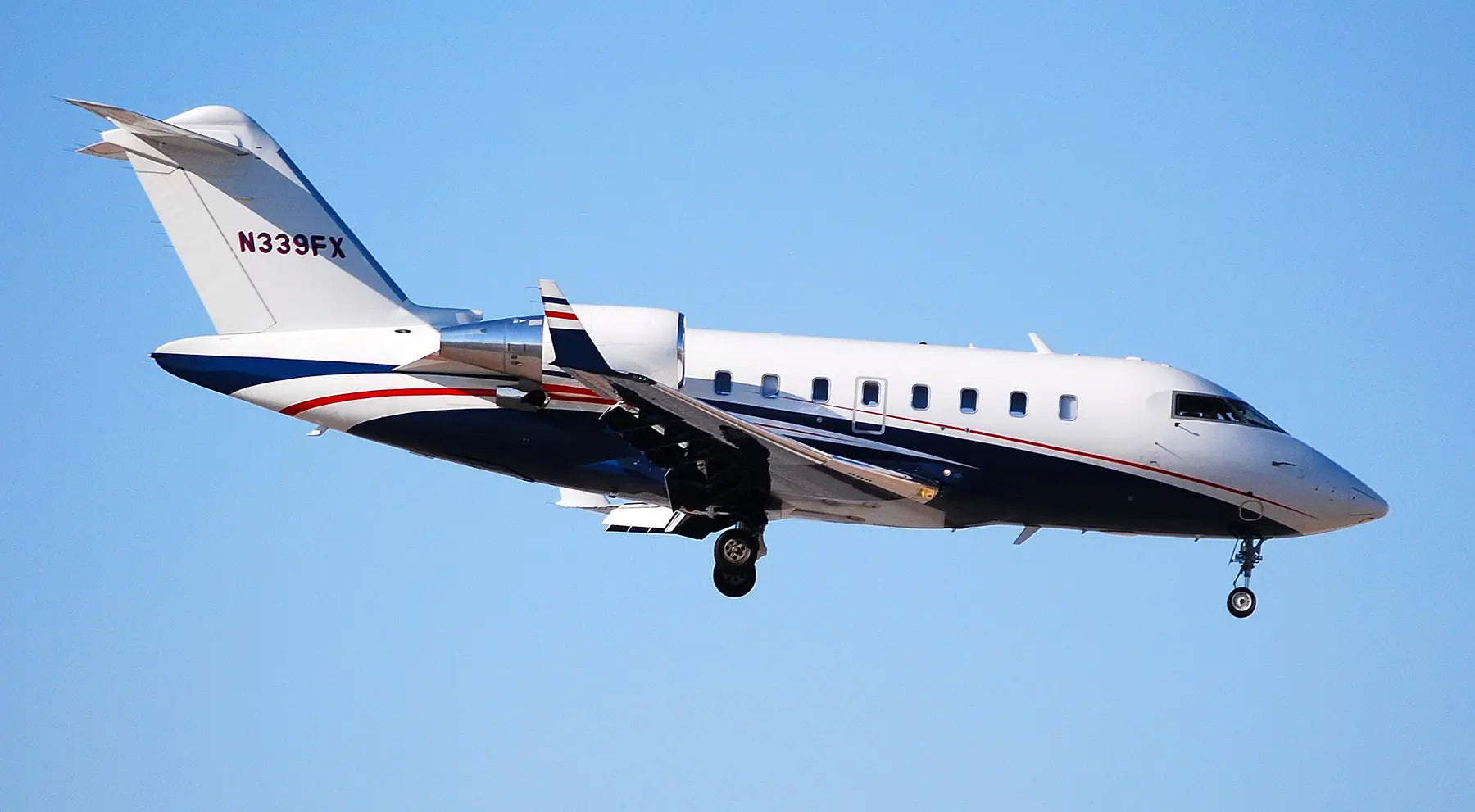
| Bombardier Challenger 300 | Super-midsize (legacy) | Legacy fleet | Older type, still flying but fleet transitioning to 350 / 3500 variants. |
| Bombardier Challenger 350 / 3500 | Super-midsize | ~86 combined (mid-size total) | Popular Red Label type for owners. Large pilot pool. Ongoing Challenger 3500 deliveries. |
| Gulfstream G450 | Large-cabin | ~28 | Mature large-cabin widebody. European operations. Gradual replacement via G700. |
| Gulfstream G650 / G650ER | Ultra-long-range | ~19 | Flagship prior to G700 arrival. Riva Volare custom interior collaboration unveiled 2025. |
| Gulfstream G700 | Ultra-long-range | 3 (scaling to 12 by end-2026) | Introduced Sep 2025. Largest and fastest in the Flexjet fleet. New type rating pathway for senior pilots. |
| Sikorsky S-76 | Helicopter | Fleet in U.S. Northeast, UK, Florida | Rotorcraft division. Fractional and charter helicopter service. |
Fleet counts are approximate and sourced from company press materials, Simple Flying, and pilot forums as of late 2025. Private operators do not publish monthly fleet updates, so numbers shift continuously with deliveries, retirements, and leasing.
Flexjet pays for the initial type rating on the assigned aircraft. Most new First Officers enter on the Phenom 300 (light jet) or Challenger 350/3500 (midsize) lines, which together account for the majority of the fleet. Initial training is conducted at CAE Dallas (DFW), with approximately 60 days of ground and simulator training followed by 25 hours of Initial Operating Experience (IOE) with a line instructor pilot. Recurrent training runs on a six-month cycle, exceeding FAR Part 135 minima: Flexjet cites three simulator and checkride exercises per year for all crews, roughly triple the regulatory requirement. Transition between fleets is seniority-based, with large-cabin slots (G450, G650, G700) generally reserved for more senior pilots.
The combination of the 7 billion dollar Embraer deal, the G700 ramp, and the stated plan to reach more than 600 aircraft by the early 2030s translates directly into heavy pilot hiring. Flexjet has publicly signaled an intent to hire more than 250 pilots during 2026 alone, with monthly new-hire classes. For job seekers this is a historically favorable window, but rapid growth also stretches training capacity, base network, and dispatch operations. Candidates should ask current pilots about realistic expectations for IOE duration and type-rating start dates during peak hiring waves.
Pilot Salary & Compensation Breakdown
Flexjet pilot pay is structured around a daily rate rather than hourly block pay, which is the norm in fractional aviation. A pilot's gross compensation is built from four layers: the base daily rate for days worked, a tax-free per diem paid for every duty day, multiple annual bonuses (productivity, fuel saving, and fractional performance), and retirement contributions. Because pilots typically work between 14 and 18 duty days per month, annual gross figures cluster between roughly 175,000 dollars for a first-year First Officer and 350,000+ dollars for a senior large-cabin Captain, placing Flexjet firmly among the top-paying Part 135 operators in the U.S.
Pay scales are set unilaterally by the company (Flexjet pilots are non-union, as detailed in the labor-relations section below). Recent pay raises have been rolled out to keep pace with NetJets' 2024 contract, and the published 2025-2026 pay scale on pilot forums shows meaningful year-on-year increases, particularly on the Challenger 350/3500 and Praetor lines. Independent benchmarks are available through Airline Pilot Central, which aggregates pilot-reported data across the fractional segment.
First Officer (FO) Pay Scale
| Seniority | Daily Rate | Annual Base (est.) | With per diem & bonuses |
|---|---|---|---|
| Year 1 (entry) | ~$751 / day | ~$135,000 – $150,000 | ~$165,000 – $185,000 |
| Year 2 | ~$770 / day | ~$140,000 – $155,000 | ~$170,000 – $190,000 |
| Year 3 | ~$790 / day | ~$145,000 – $160,000 | ~$175,000 – $195,000 |
| Year 4+ (capped) | ~$810 / day | ~$150,000 – $165,000 | ~$180,000 – $200,000 |
First Officer daily rates are broadly equivalent across aircraft types at Flexjet. Most First Officers upgrade to Captain within 1 to 3 years, so the FO pay scale effectively caps at a short plateau.
Captain (PIC) Pay Scale by Aircraft Type
| Aircraft | Year 1 Captain | Year 5 Captain | Year 10+ Captain |
|---|---|---|---|
| Phenom 300 (light) | ~$650 / day | ~$732 / day | ~$848 – $1,070+ / day |
| Challenger 350 / 3500 (super-midsize) | ~$741 / day | ~$842 / day | ~$988 – $1,276 / day |
| Praetor 500 / 600 (midsize) | ~$750 – $800 / day | ~$850 – $900 / day | ~$950 – $1,100 / day |
| Gulfstream G450 / G650 / G700 (large) | ~$950 – $1,050 / day | ~$1,100 – $1,200 / day | ~$1,250 – $1,400+ / day |
Captain daily rates from 2025-2026 Flexjet pay scales reported on pilot forums. Large-cabin and Praetor figures are estimates triangulated from fractional industry benchmarks, as company-published rates for those fleets are less transparent than for Phenom and Challenger lines.
Bonuses & Additional Compensation
These figures are compiled from publicly available sources including Airline Pilot Central, Airline Pilot Forums pilot-reported pay scales, Flexjet's official careers page, and aviation industry analyses. Daily rates are updated approximately annually and may change after this article is published. Because Flexjet pilots are not represented by a union, there is no public collective bargaining agreement to reference for authoritative rate tables. Always verify current pay scales directly with Flexjet recruiting during the interview process and by speaking with current line pilots on your target aircraft type.
Schedule Patterns & Quality of Life
Schedule design is arguably the single biggest differentiator between fractional operators and scheduled airlines, and Flexjet has invested heavily in its Flexbid Preferential Bidding System (PBS). Rather than assigning random monthly schedules built around route pairings, Flexjet pilots bid preferences (rotation length, start days, geographic blackouts) and receive a personalized schedule that respects seniority. In practice this means most pilots work between 14 and 18 duty days per month, with 12 to 16 days off at home.
Three broad schedule models coexist within the company. The standard PBS "green line" produces tours of 4 to 8 duty days followed by 4 to 7 days off, refreshed across 13 bid periods per year. Some legacy pilots still hold variations of fixed 8-on/6-off or 7-on/7-off tours, although these are increasingly phased out in favor of PBS. Finally, the premium Red Label dedicated-crewing model (reserved for super-midsize and larger aircraft tied to specific owners) lets a pool of three Captains co-manage the schedule directly, with maximum flexibility for those at the top of the seniority list.
📅 Sample Month — Challenger 350 First Officer (Flexbid PBS)
Unlike airline flying, a "duty day" in a fractional operation can include anything from a single short leg to four or five legs crisscrossing the country. Flexjet schedules a dedicated travel day at the start and end of each tour, paid as a duty day, so pilots are not on their own time while deadheading to the first launch airport. Rest between duty periods follows FAR Part 135 and Part 91K rules, with typical layover hotels being 4-star properties booked by Flexjet dispatch rather than by the crew.
The single most-cited lifestyle advantage of Flexjet (and fractional flying generally) is the home-base network. Pilots select from more than 110 U.S. gateway airports as their "home base" and commute via airline ticket (paid by the company) only on the first and last days of each tour. There is no required relocation to a hub. For pilots with families rooted outside of major airline hubs (small towns, mountain states, the Southeast), this structure alone can be the deciding factor versus a major airline that demands Newark, Chicago, or Atlanta living.
The upside of on-demand flying is variety: no two days look alike, and pilots routinely see a dozen different airports per tour. The downside is unpredictability within a tour. Unlike airlines where the monthly trip sheet is fixed, Flexjet crews frequently receive next-day or same-day re-routings to cover owner demand. Pilots who value strict predictability and never flying weekends will be better served by a legacy airline role. Pilots who value variety, home-base flexibility, and short upgrade timelines tend to thrive in this environment.
Benefits, 401(k) & Retirement
Flexjet's benefits package is designed to compete directly with the top of the fractional and legacy airline market. Because pilots work fewer calendar days than typical airline crews but perform high-intensity on-demand flying, the retirement and health components carry outsized weight in total compensation. Flexjet does not operate a defined-benefit pension (the norm for U.S. aviation today), relying instead on a combination of 401(k) matching and deferred compensation to build long-term retirement wealth.
A mid-career Captain earning roughly 250,000 dollars in base compensation who contributes the 2026 IRS-indexed maximum to their 401(k) captures the full 6% company match (roughly 15,000 dollars), plus the 18,000 dollar annual deferred compensation once vested, for a combined employer retirement contribution of about 33,000 dollars per year. Stacked over a 20-year career with reasonable market returns, that structure produces retirement outcomes competitive with, but not equal to, the defined-benefit plus profit-sharing packages seen at legacy U.S. airlines or the French CRPN scheme used by European flag carriers.
Unlike airlines with jump-seat reciprocity and buddy-pass programs spanning SkyTeam or Star Alliance, fractional operators cannot offer global airline travel perks. Pilots do not get subsidized airline tickets for personal travel (beyond the commute flights directly tied to duty). There is also no traditional pilot pension plan (no defined-benefit component), and no Retiree Medical trust comparable to the legacy airline post-2005 structures. Pilots planning long-term finances should treat Flexjet as a defined-contribution employer.
Career Progression & Upgrade Timelines
Career progression at Flexjet is built around a seniority-based system with exceptionally fast upgrades. All Captains come from within, as Flexjet does not accept direct-entry PIC hires, and all new pilots enter as First Officers on a defined aircraft type. What sets Flexjet apart from almost every U.S. airline is the speed at which pilots move to the left seat: historically, the average Phenom 300 First Officer has upgraded to Captain in under a year, and even large-cabin Captain upgrades typically happen within 2 to 3 years. The company has publicly committed to a 5-year upgrade guarantee, meaning any qualifying pilot who has not upgraded after five years is prioritized for the next available Captain slot.
Seniority determines fleet transitions, base-airport assignments, schedule priority, and bidding access to premium product lines like Red Label. Because the fleet is growing fast (nearly doubling by 2031 under current orders), upgrade velocity is expected to remain strong through the late 2020s. Candidates evaluating Flexjet versus NetJets should note that NetJets reports an average upgrade timeline of around 19 months, broadly comparable to Flexjet depending on which aircraft type you are hired onto.
| Career Milestone | Typical Timeline | Notes |
|---|---|---|
| Initial type rating (CAE Dallas) | ~60 days | Paid by Flexjet. Ground school + full motion sim. |
| Initial Operating Experience (IOE) | ~25 flight hours | Line flying with a Check Airman / Line Instructor Pilot. |
| F/O to Captain (Phenom 300) | ~8 to 12 months | Fastest upgrade path. Large light-jet fleet with steady attrition to midsize. |
| F/O to Captain (Challenger 350 / 3500) | ~12 to 24 months | Super-midsize workhorse. Large pilot pool, strong demand. |
| F/O to Captain (Praetor 500 / 600) | ~18 to 30 months | Midsize Embraer line, growing rapidly with 2025 order. |
| F/O to Captain (Large cabin: G450 / G650 / G700) | ~24 to 36 months | Most senior pilot group. Longer wait but flagship operations. |
| Guaranteed upgrade | 5 years max | Company-stated cap: if not upgraded by year 5, priority placement. |
| Check Airman / Line Instructor | Variable | Separate selection. Requires 1,000+ hours PIC on type typically. |
Flexjet is in a historically strong hiring posture. The February 2025 Embraer order for 182 firm aircraft plus 30 options, combined with the G700 ramp and the stated goal of exceeding 600 aircraft by the early 2030s, has translated into publicly announced plans to hire more than 250 pilots in 2026 alone with monthly new-hire classes. For candidates this creates three concrete advantages: (1) shorter queue times for interview slots, (2) strong Captain upgrade velocity in the near term, and (3) broader aircraft transition options as new fleets come online. Historic periods of slower growth produced longer upgrade waits, so current conditions should not be assumed permanent.
Because Flexjet does not hire direct-entry Captains, pilots who join Flexjet mid-career and later decide to move on typically do so laterally into other fractional or corporate roles, or to a regional / legacy airline via a standard application path. Fractional seniority does not transfer to airlines, so a 10-year Flexjet Captain joining a U.S. major will still start at the bottom of the airline seniority list. That reality has not stopped many pilots from building full careers at Flexjet: the combination of home basing, fast upgrade, and six-figure compensation from year one is often compelling enough to stay for the long haul.
Recruitment Process & Requirements
Flexjet recruits exclusively through a direct-application process, with no cadet program or ab-initio pathway. All candidates must already hold an FAA Airline Transport Pilot (ATP) certificate and accumulate competitive turbine flight experience before applying. The published hiring minimums have eased somewhat compared to the post-pandemic pilot shortage peak, but the competitive bar remains high: successful candidates in 2025 have averaged well over 3,000 total hours. Applicants submit through the Flexjet careers portal, and recruiters often respond within one to two business days during active hiring waves.
Published Hiring Requirements
Selection Stages
Online Application
Submit via the Flexjet careers portal. Include resume, logbook summary, certificates, and medical. Military, Part 135, and Part 91K backgrounds are viewed especially favorably. Response time is typically 1 to 3 business days during active hiring waves.
Recruiter Phone or Video Interview
A 30 to 45 minute conversation focused on resume review, flight experience, schedule flexibility, and motivation ("Why Flexjet?"). Preferred bases and aircraft preferences may be discussed informally. Candidates who advance receive an invitation to the in-person stage in Dallas.
In-Person Assessment at CAE Dallas (DFW)
Flexjet flies candidates into DFW the day before, with hotel and shuttle provided. The assessment day begins around 06:30 with breakfast, a 2-hour company presentation, and Q&A, followed by the panel interview and simulator evaluation. Groups typically include 5 to 12 candidates.
Simulator Evaluation
Conducted on a Learjet 45 or Challenger 601 simulator depending on the day's schedule. The scenario is designed to be hand-flown and forgiving: normal takeoff, vectors, ILS approach to landing, and typically a V1 cut or engine-out return. Evaluators are assessing basic airmanship, CRM, and systems knowledge rather than exotic emergencies.
Panel Interview
30 to 45 minute panel interview with chief pilots, recruiting, and line pilots. Expect standard HR-style behavioral questions, a technical review (ATP PTS-level systems and regulations), and fractional-specific scenarios about dealing with owners, schedule changes, and on-demand reroutes.
Conditional Offer, Class Date & Training
Successful candidates receive a conditional offer within days, followed by a class date at CAE Dallas. Initial type rating runs approximately 60 days, followed by 25 hours of IOE on the line. New-hires typically start reserve flying immediately after IOE release.
Three themes show up repeatedly in reports from pilots who have successfully completed the Flexjet selection. First, study the company's fleet and fractional business model: interviewers look for candidates who understand why fractional is different from airline flying. Second, treat the simulator ride as a CRM exercise, not a checkride: the evaluators want to see how you communicate with a sim partner and how you handle standard callouts. Third, be honest about schedule preferences during the recruiter call: Flexjet would rather place a candidate on a sustainable tour pattern from day one than have them quit six months in.
Home Bases & Gateway Cities
Fractional flying does not produce scheduled layover destinations the way a long-haul airline does: owners choose where they fly, and crews follow. What Flexjet does offer instead is something most airlines cannot match: the ability for pilots to live wherever they choose from a network of more than 110 U.S. gateway airports, commuting to work via a company-paid airline ticket on the first and last day of each tour. Five of the most popular pilot gateways are profiled below, with a sixth card covering Flexjet's growing European bases.
During the interview Flexjet asks which of the 110+ U.S. gateway cities the candidate would like to be based in. If the airport has existing Flexjet dispatch activity, the pilot is assigned there on hire. If not, pilots can sometimes request to "add" a gateway, which Flexjet evaluates against local demand. At the start of each tour, the company books and pays for a commercial flight from the pilot's home airport to the first aircraft-launch location. That travel day is a paid duty day. The same applies on the return at the end of the tour. Pilots keep personal loyalty miles earned on these tickets.
On-tour layovers are determined entirely by owner demand. Flexjet pilots may overnight in Aspen, Teterboro, Nassau, London, or a small regional FBO depending on the dispatch of the day. Hotels are 4-star or equivalent and are booked by Flexjet dispatch, not by the crew. Rest periods follow FAR 135 and 91K rules with minimum 10-hour rest opportunities between duty periods, and longer rest on multi-pilot augmented operations. Unlike airline long-haul, pilots do not choose their layover destinations.
How Flexjet Compares: Fractional & Private Jet Radar
The two most common benchmarks for a Flexjet career are NetJets (Flexjet's largest direct fractional competitor, based in Columbus, Ohio and owned by Berkshire Hathaway) and VistaJet (the global on-demand operator owned by Vista Global Holding, headquartered in Malta). Each offers a distinctly different pilot proposition, and the radar below compares all three on the six scorecard dimensions used above. Scores are editorial estimates based on publicly available compensation data, pilot-reported working conditions, union agreements, and industry benchmarks.
Key Takeaways from the Comparison
NetJets holds the structural edge on total compensation and benefits. The NJASAP-negotiated contract revision ratified on April 13, 2024 includes a 52.5% compounded base wage increase through 2029, with base salaries documented between 86,000 and over 400,000 dollars, and reported average total compensation above 228,000 dollars in 2023 projected higher going forward. NetJets also offers the most predictable schedule in the industry (the classic 7-on / 7-off) and operates from more than 200 gateway bases, slightly more than Flexjet.
Flexjet closes the gap on fleet diversity and upgrade velocity. Flexjet's fleet ranges from the Phenom 300 to the G700 and includes helicopters, a broader spread than NetJets (which concentrates on Embraer, Cessna, and Bombardier jets). Captain upgrade on Flexjet's Phenom line has historically been among the fastest in U.S. aviation. The 2025 Embraer and Gulfstream orders position Flexjet for aggressive growth, which should continue to benefit junior pilots via faster upgrades.
VistaJet trails on pay but wins on global exposure. VistaJet Captain pay has historically clustered in the 80,000 to 100,000 euro range with performance bonuses, notably below U.S. fractional pay. The trade-off is truly global flying (Malta-based operations with routings across Europe, the Middle East, Africa, Asia, and the Americas) and an all-Bombardier Global large-cabin fleet. Pilots prioritizing international long-haul exposure or EU residency sometimes prefer VistaJet despite the pay gap.
Union representation is the structural differentiator. NetJets pilots are represented by NJASAP, a single-carrier union that has successfully negotiated multiple contracts since 2005. Flexjet pilots are not unionized (see Section 10 for the full history). VistaJet pilots are likewise non-union. For candidates who value contractual pay scales, formal work rules, and defined grievance procedures, NetJets is the clear winner in this comparison.
Scores are editorial estimates based on publicly available salary data reported by Airline Pilot Central and Airline Pilot Forums, NJASAP and Teamsters press materials, corporate press releases, and pilot interviews. They represent a general assessment for an experienced pilot considering a long-term career. Individual experiences will vary based on base city, fleet, seniority, and personal priorities. Pay scales across all three companies have moved significantly in 2024 and 2025, and the figures cited may be updated as new agreements take effect.
Union History & Labor Relations
Flexjet's labor history is a central part of evaluating the company. Unlike the vast majority of U.S. airlines (and unlike fractional competitor NetJets), Flexjet pilots are currently not represented by a union. That is the result of a well-documented multi-year effort to organize, followed by a pilot-led decertification. Understanding that history matters: it explains the current pay-setting mechanism (company-initiated), the absence of a formal grievance procedure, and why Flexjet's marketing leans heavily into "direct relationship with management" language.
Timeline of Flexjet Pilot Labor Representation
What Non-Union Representation Means in Practice
For a prospective pilot, the current non-union status has three tangible implications worth thinking through carefully.
1. Pay scales are set by the company. Flexjet has broad discretion to raise or restructure pay scales, and has done so multiple times since 2018, usually in response to market pressure from NetJets and the broader U.S. pilot shortage. There is no formal pay-parity guarantee, no protected scope clause, and no collectively bargained minimum work rules.
2. Work rules are unilaterally determined. Schedule structures (PBS, 8/6, 7/7, Red Label), bidding rules, base-gateway policies, and uniform standards can be adjusted by management. Pilots have a Professional Standards function and a Pilot Advisory Group for feedback, but no binding negotiation power.
3. Dispute resolution is internal. Without a collective bargaining agreement, formal grievance procedures rely on internal HR processes and at-will employment norms. This contrasts sharply with the NJASAP structure at NetJets, where arbitration and grievance mechanisms are contractually defined.
Flexjet's non-union status is neither inherently better nor worse than the unionized alternative: it is a trade-off. The company has delivered competitive pay and consistent growth under the current model, and many pilots report strong satisfaction. However, candidates who value contractual pay scales, formal work rules, and defined grievance procedures may prefer NetJets (NJASAP) as their primary fractional target. Candidates who prefer a direct employee-employer relationship with rapid upgrades and an expanding fleet may prefer Flexjet. Either way, the ongoing OneSky vote in May 2026 is a development worth monitoring before accepting an offer.
Verdict: Who Is Flexjet For?
🎯 Our Take
Flexjet is one of the most compelling pilot career opportunities in U.S. private aviation today. The combination of a diverse, modern fleet (from the Phenom 300 to the G700), exceptionally fast Captain upgrades (as little as 8 to 12 months on the light-jet line), first-year total compensation approaching 200,000 dollars, home-base flexibility from 110+ U.S. cities, and an aggressive growth trajectory backed by an 800 million dollar 2025 capital raise makes it a genuinely competitive alternative to regional and even some legacy airline paths.
The trade-offs are equally real. Flexjet is non-union, which means pay scales, work rules, and grievance procedures are managed internally rather than contractually. The schedule, while averaging 12 to 16 days off per month, is less predictable than a fixed airline bid line, and on-tour reroutes are routine. There is no defined-benefit pension and no airline-style travel benefits. For candidates optimizing for long-term airline seniority, Flexjet fractional time does not transfer to a major airline seniority list.
For pilots who want a sophisticated, high-paying, fast-progressing Part 135/91K career without relocating to an airline hub, Flexjet is arguably the strongest option on the market alongside NetJets. The choice between the two often comes down to a single question: how much do you value union representation versus a direct-relationship culture?
1 What is the actual first-year total compensation at Flexjet?
For a first-year First Officer on the published 751 dollar daily rate, gross total compensation typically lands between 165,000 and 185,000 dollars. That figure includes the base daily pay for roughly 180 to 200 duty days, the 42 dollar per-diem for each of those days (approximately 8,500 dollars tax-free), the productivity bonus if 220+ days are worked, the Fly-Right fuel bonus, the fractional performance bonus, and the 6% 401(k) match on eligible earnings. First-year take-home may be higher if a signing or relocation bonus is offered during an active hiring wave.
2 How quickly can I upgrade to Captain?
Upgrade time is aircraft-dependent. On the Phenom 300 light-jet line, recent pilots have upgraded in as little as 8 to 12 months. On the Challenger 350/3500 super-midsize line it is typically 12 to 24 months. On the Praetor 500/600 line it ranges from 18 to 30 months, and on the large-cabin G450/G650/G700 line it is closer to 24 to 36 months. Flexjet has publicly stated a 5-year upgrade guarantee, meaning any qualifying pilot who has not upgraded by year five is prioritized for the next Captain slot.
3 Is Flexjet a union or non-union operation?
Flexjet pilots are currently non-union. The group voted to join Teamsters Local 1108 in 2015, was awarded an arbitrated contract in October 2017 that management declined to implement, and then voted approximately 75% in favor of decertifying the union in May 2018. The company has operated under a direct employee-employer model since then. A separate decertification vote covering OneSky Flight pilots (the parent group including Flexjet and Flight Options) is reportedly scheduled for May 2026; candidates should confirm the current status during recruiting conversations.
4 What are the real hiring minimums in 2025 and 2026?
The published minimums are 1,500 total hours with an unrestricted ATP certificate, 500 hours PIC, 100 hours night, 75 hours instrument, and 50 hours multi-engine. In practice, successful candidates in 2025 have averaged more than 3,400 total hours with significant turbine PIC time. Military aviators, Part 135 captains, and Part 91K copilots are particularly competitive. The minimum age is 23, a Class 1 FAA medical is required, and U.S. work authorization plus a valid passport are mandatory.
5 Where do Flexjet pilots live?
Anywhere they choose, within a network of more than 110 U.S. gateway airports. Flexjet pilots do not relocate to a hub city. At the start of each tour the company pays for a commercial airline ticket from the pilot's home airport to the first dispatch point, and that travel day is paid as a duty day. Popular bases include Teterboro (TEB), Westchester (HPN), Dallas Love Field (DAL), Naples (APF), Van Nuys (VNY), and dozens of smaller regional airports. European pilots are similarly home-based across the UK and EU.
6 Does Flexjet pay for the type rating?
Yes. Flexjet pays for the initial type rating on the assigned aircraft, conducted at the CAE training center in Dallas (DFW). Initial training runs approximately 60 days of ground school and simulator sessions, followed by 25 hours of Initial Operating Experience (IOE) with a Check Airman. Recurrent training also occurs at Flexjet's expense on a six-month cycle, with the company running approximately three simulator and checkride exercises per year, well above the regulatory minimum.
7 How does the Flexjet schedule actually work?
Most pilots fly under the Flexbid Preferential Bidding System, rotating 4 to 8 duty days on with 4 to 7 days off between tours. Some legacy pilots hold fixed 8-on / 6-off or 7-on / 7-off rotations, although these are being phased toward PBS. Senior Captains on super-midsize and larger aircraft can bid the Red Label dedicated-crewing option, which lets three Captains co-manage the schedule of a single owner-dedicated aircraft. Average days off per month land between 12 and 16.
8 How does Flexjet compare to NetJets for pilot careers?
NetJets and Flexjet are the two dominant fractional operators in the U.S. NetJets is unionized under NJASAP, ratified a major contract revision in April 2024 (with a 52.5% compounded base increase through 2029), runs a more predictable 7-on / 7-off default schedule, and operates from more than 200 gateway bases. Flexjet is non-union, offers comparable but less transparent pay scales, has a more flexible bidding system, a broader fleet (including G700 and helicopters), and generally faster upgrades on the Phenom and Challenger lines. The choice usually comes down to union representation preference versus direct-relationship culture, plus specific aircraft and base interest.
Official Links & Resources
Before applying or making any career decision, verify information directly from the official sources. The resources below are the most useful for researching Flexjet, its parent company OneSky Flight, the broader U.S. fractional segment, and the regulatory bodies that govern Part 135 and Part 91K operations.
Bookmark the Flexjet section of Airline Pilot Forums. It is the single most active public source of current-pilot reporting on pay scales, bidding outcomes, reserve expectations, and training experiences. Reading six months of recent threads before your interview will put you ahead of most candidates on the behavioral and fractional-scenario questions. Cross-reference anything you read against the official careers page, since forum data is often 12 to 18 months stale on compensation specifics.