easyJet Europe Overview & Company Profile
easyJet Europe Airline GmbH is the EU-licensed subsidiary of the easyJet Group, established on 18 July 2017 and headquartered in Vienna, Austria. The airline was created in direct response to Britain's vote to leave the European Union, allowing the easyJet brand to maintain full traffic rights across the EU, EEA, and Switzerland under an Austrian Air Operator Certificate (AOC). It is a wholly owned subsidiary of easyJet plc, the UK-based parent company founded in 1995 by Sir Stelios Haji-Ioannou and headquartered at London Luton Airport.
easyJet Europe operates approximately 135 aircraft across 29 bases in continental Europe, making it one of the largest low-cost carriers on the continent by fleet size. The airline's network covers destinations across Western, Central, and Southern Europe as well as North Africa and the eastern Mediterranean. Key bases include Milan Malpensa, Berlin, Amsterdam, Barcelona, Naples, Lisbon, and Vienna. The easyJet Group as a whole carried over 100 million passengers in 2024, operating more than 1,000 routes to over 160 airports across 35 countries. easyJet Europe handles a significant share of this traffic through its continental network. easyJet is not a member of any airline alliance.
Financially, the easyJet Group reported total revenue of £10.1 billion for fiscal year 2025 (up 9% year-on-year), with group headline profit before tax of £665 million. The airline reached a net cash position of £602 million as of September 2025. With aggressive expansion plans, including new bases at Milan Linate and Rome Fiumicino in spring 2025 (following EU regulatory approval linked to the Lufthansa/ITA Airways merger), easyJet Europe is actively growing its continental footprint.
Fleet Composition & Aircraft Types
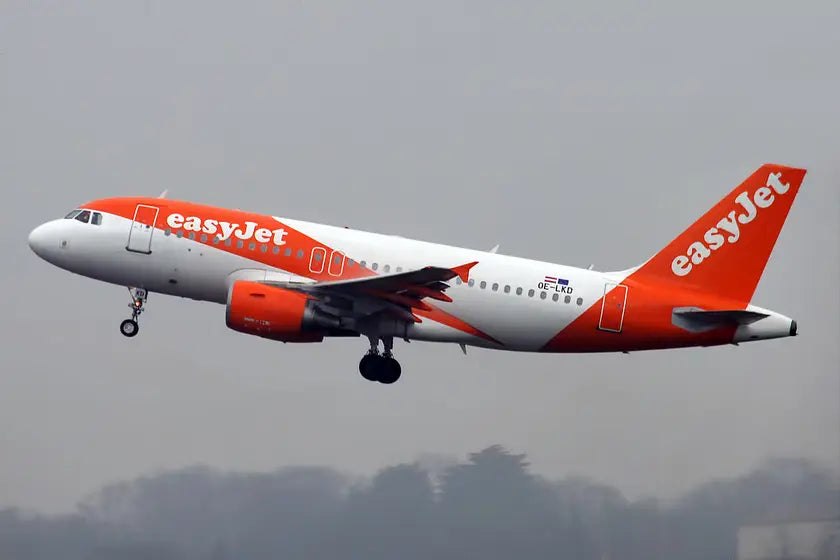
easyJet Europe operates an exclusively Airbus A320 family fleet, comprising four variants: the A319-100, A320-200 (ceo), A320neo, and A321neo. This single-family strategy simplifies pilot training and maintenance, as all four types share a common type rating (with endorsement differences for the neo variants). The fleet averages approximately 11.2 years of age and is undergoing a significant modernization program, with older A319s gradually being replaced by larger, more fuel-efficient neo-generation aircraft.
| Aircraft Type | Pax Capacity | In Service (est.) | Notes |
|---|---|---|---|
| Airbus A319-100 | 156 | ~35 | Oldest sub-fleet (~18 years avg.). Being phased out as A321neo deliveries increase. |
| Airbus A320-200 (ceo) | 180 / 186 | ~74 | Current workhorse. Two-class seating configurations depending on base. |
| Airbus A320neo | 186 | ~18 | CFM LEAP-1A engines. 15% more fuel-efficient than ceo. Deliveries ongoing. |
| Airbus A321neo | 235 | ~8 | Largest variant. Best per-seat economics. Growing share of the fleet. |
Fleet figures as of mid-2025 based on Planespotters.net and easyJet corporate data. Numbers are approximate and fluctuate with seasonal leasing and deliveries.
The group placed a landmark order in December 2023 for 157 additional A320neo family aircraft (56 A320neo and 101 A321neo), with deliveries scheduled between 2029 and 2034. Options exist for a further 100 aircraft. This order, valued at approximately $20 billion at list prices, signals a clear strategic shift toward the larger A321neo. For pilots, this means the fleet will progressively upgauge: expect fewer A319 assignments and more A321neo flying over the coming decade. By 2034, the total group fleet could reach approximately 389 aircraft. The FY2026 delivery schedule includes 17 A320neo, rising to 30 in FY2027 and 43 in FY2028.
All four aircraft types in the easyJet Europe fleet share the Airbus A320 family common type rating, with specific endorsement differences between ceo and neo variants. Pilots joining easyJet Europe will typically be assigned to whichever variant is based at their home station. As the fleet transitions from A319/A320ceo to A320neo/A321neo, existing pilots receive company-funded endorsement training. The A321neo, while sharing the same type rating, has operational differences in weight, performance, and handling that require formal endorsement training.
Pilot Salary & Compensation
Pilot compensation at easyJet Europe is structured around a base salary, sector pay (per flight sector flown), per diem allowances, and various bonuses. Pay scales vary significantly depending on the pilot's contract country, as easyJet Europe employs pilots under local employment law in each base country (Austria, Italy, Germany, France, Spain, Portugal, Netherlands, etc.). This means a Captain based in Milan may have different gross pay than a Captain based in Berlin, even though both fly for easyJet Europe under the same Austrian AOC.
It is important to note that easyJet Europe pay scales are generally lower than easyJet UK equivalents. UK-based Captains can earn up to £191,000 total compensation, while continental European Captains typically earn between €147,000 and €162,000 in base salary depending on seniority and contract year. This pay differential is a known factor in pilot career planning and has been a source of tension in recent union negotiations, particularly in Italy where pilots have called for compensation parity with French and Spanish colleagues.
First Officer (F/O) Pay Scale (Continental Europe)
| Seniority / Step | Annual Base (est.) | Notes |
|---|---|---|
| Year 1 (entry F/O) | €36,000 - €41,000 | Starting salary for new hires. Varies by base country. |
| Year 2-3 | €44,000 - €50,000 | Incremental increases per year of service. |
| Year 3-5 (Senior F/O) | €50,000 - €60,000 | Promotion to SFO after ~12 months adds ~€5,000-€8,000. |
| Senior F/O (5+ years) | €60,000 - €80,000 | Experienced SFO before command upgrade. |
Figures represent estimated annual gross base salary for continental European contracts. Total compensation including sector pay, per diems, and allowances will be higher. easyJet UK F/O pay starts at approximately £57,000, significantly above European rates.
Captain Pay Scale (Continental Europe)
| Seniority | Annual Base (est.) | Notes |
|---|---|---|
| New Captain (from 03/2025) | ~€147,000 | Entry-level command salary per Spanish contract data. |
| Captain (from 03/2026) | ~€159,000 | Scheduled increase in March 2026. |
| Captain (from 03/2027) | ~€162,000 | Scheduled increase in March 2027. |
| Senior Captain / Training Capt. | €165,000 - €180,000+ | Training Captains receive 12.5-20% uplift above base. |
Captain figures based on publicly available Spanish contract data (Pilot Jobs Network). Actual pay varies by base country. easyJet UK Captains earn approximately £144,000-£191,000 (equivalent to ~€170,000-€225,000).
Additional Pay Components
Beyond base salary, easyJet pilots earn sector pay per flight sector. F/O sector pay is approximately €20-25 per sector, while Captains receive higher rates. On a typical 4-sector day, this adds €80-100+ per duty. Over a year, sector pay can add €15,000-€25,000 to total compensation. Per diem allowances cover meals and incidentals on overnight stops, with rates varying by destination city. Loyalty bonuses become available after two years of service. Training Captains, Line Training Captains, and Type Rating Examiners receive salary uplifts of 12.5% to 20% above their base captain salary.
These figures are compiled from publicly available sources including Pilot Jobs Network, Aviation Insider, and pilot community reports. easyJet Europe employs pilots under multiple national contracts (Austrian, Italian, German, French, Spanish, Portuguese, Dutch), and pay scales differ between countries due to local labor law, tax regimes, and collective bargaining agreements. The figures above are best estimates for continental European contracts. Always verify current pay scales directly with easyJet's recruitment team or the relevant national pilot union before making career decisions.
Roster Pattern & Quality of Life
easyJet Europe operates a short-haul, point-to-point network, which means pilots typically depart and return to their home base on the same day. Overnight stops are relatively rare compared to legacy carriers. This operational model has a significant impact on quality of life: most pilots sleep at home most nights, which is a genuine advantage for those with families or who value routine.
Rostering at easyJet follows two main patterns depending on rank. Flexi-crew (typically new Second Officers and First Officers) operate on a flexible duty pattern with varying start times. Fixed roster (Senior First Officers and Captains) typically follow a 5-late / 4-off / 5-early / 3-off rotation, providing more predictable scheduling. Since April 2018, easyJet has offered a preferential bidding system allowing pilots to indicate monthly preferences for early or late assignments.
📅 Sample Month: Fixed Roster, First Officer (Continental Base)
A typical flying day involves 2 to 4 sectors. Two-sector days usually mean longer routes (e.g., to the Canary Islands, Greece, or Egypt), while four-sector days are short turnarounds (e.g., base to Alicante and back, then base to Amsterdam and back). Three-sector days occasionally result in an overnight stay at an outstation. Maximum duty blocks are five consecutive days of flying.
easyJet Europe pilots can be based at any of the airline's 29 continental European bases. Popular bases include Milan Malpensa, Berlin, Amsterdam, Barcelona, Naples, Lisbon, Porto, Nice, Lyon, and Vienna. Base selection is influenced by operational needs and pilot preference during recruitment, though availability varies. Because easyJet operates primarily same-day return flights, pilots at most bases return home after their duty. This is a significant quality-of-life advantage over airlines with extensive overnight operations. However, living costs vary dramatically between bases (Amsterdam and Nice vs. Naples or Porto), which should be factored into the effective value of the salary package.
Benefits, Travel Perks & Pension
As a major European employer, easyJet Europe provides a benefits package that combines statutory national requirements with company-specific perks. The benefits vary somewhat by base country, as pilots are employed under local labor law. However, several core benefits apply across the network. The package is competitive for a low-cost carrier, though it does not match the comprehensive offerings of legacy flag carriers like Air France or Lufthansa.
The easyJet Europe benefits package is solid for a low-cost carrier but should be evaluated in context. Legacy carriers like Air France offer 45 days of annual leave, dedicated pilot pension funds (CRPN), and comprehensive profit-sharing schemes. Gulf carriers offer tax-free salaries, housing allowances, and education grants. easyJet's advantages lie elsewhere: the ability to be based in your home country, sleep at home most nights, and progress to command in 5-8 years rather than 15+. For many pilots, the lifestyle trade-off is worth the difference in raw compensation and benefits.
Career Progression & Seniority
One of easyJet Europe's strongest selling points is its relatively fast career progression. Unlike legacy carriers where Captain upgrade can take 10-15+ years, easyJet pilots typically reach command in 5 to 8 years. The airline operates a merit-based promotion system that emphasizes demonstrated competency and operational performance rather than strict seniority-based queue progression.
The career ladder at easyJet Europe follows a clear structure: Second Officer (for those entering via the cadet programme), First Officer, Senior First Officer, and Captain. Beyond command, specialized roles include Training Captain, Line Training Captain, Type Rating Examiner (TRE), Type Rating Instructor (TRI), Base Captain, and CRM Instructor. easyJet also accepts direct entry Captains from other airlines, which is a significant difference from carriers like Air France that only promote from within.
| Career Milestone | Typical Timeline | Notes |
|---|---|---|
| Cadet training (Generation easyJet) | 18-24 months | Fully funded (~€100,500). Training at CAE academies in Brussels, Madrid, Milan, or Gatwick. |
| Join as Second Officer / F/O | Day 1 post-training | Assigned to an A320 family base. Flexi-crew roster. |
| Promotion to Senior First Officer | ~12 months | Based on demonstrated competency, not automatic. ~€5,000-€8,000 pay increase. |
| Command upgrade (Captain) | 5-8 years | Requires min. 4,000 total hours + 1,000 PIC. Command assessment: interview + simulator check. |
| Training Captain / TRE / TRI | Variable (post-command) | Requires instructor qualification. 12.5-20% salary uplift. Separate selection process. |
| Base Captain | Variable | Supervisory role managing pilots at a specific base. Management pathway. |
easyJet announced plans to recruit 1,000 new pilots by 2028 as part of a five-year recruitment drive, according to the airline's official announcement. In 2024 alone, 520 pilots were externally hired (up 16.6% from the prior year). This aggressive recruitment reflects fleet expansion, retirements, and the global pilot shortage. Management consultancy Oliver Wyman forecasts the industry could face a shortage of nearly 80,000 pilots by 2032. For aspiring pilots, this means easyJet Europe is actively hiring and command opportunities should remain plentiful through the late 2020s.
Recruitment Process & Requirements
easyJet recruits pilots through three distinct pathways: the Generation easyJet Pilot Training Programme (cadet path for candidates with little or no flight experience), Direct Entry First Officer (experienced pilots from other airlines), and Direct Entry Captain (experienced commanders). All pathways lead to employment on easyJet Europe or easyJet UK aircraft, with base allocation determined during the recruitment process.
Generation easyJet Cadet Programme
Direct Entry First Officer
Direct Entry Captain
Selection Stages
Online Application
Submit CV with aviation employment history, license details, and evidence of minimum entry criteria via careers.easyjet.com. Upload passport, current medical certificate, aviation licenses, and training records.
Online Technical Assessment
Conducted via Microsoft Teams. Computer-based aptitude testing covering motor skills, spatial awareness, mathematical reasoning, and technical comprehension. Duration: approximately 2 hours. For cadets, this is the primary screening stage.
Non-Technical Assessment (Virtual)
Presentation, group exercise, and one-to-one competency-based interview. Evaluates communication, problem-solving, leadership, teamwork, and alignment with easyJet values. Conducted remotely.
Assessment Centre & Simulator
Held at London Gatwick or Milan training facilities. Includes technical simulator assessment (for direct entry candidates), psychometric testing conforming to EASA requirements, and final competency evaluation. Captains undergo a full command-level simulator assessment.
Medical & Offer
Class 1 Medical verification (if not already held). Successful candidates receive a formal offer with base allocation, type rating training dates, and contract details. Cadets proceed to the 18-24 month training programme at CAE.
For First Officers recruited through the Generation easyJet cadet programme, type rating training is fully funded by the airline. For some direct entry positions, easyJet may also fund the A320 type rating. However, recent recruitment notices for certain seasonal or contractual easyJet Europe positions have indicated self-funded type rating requirements, with candidates expected to pay approximately £22,000 independently. This varies by recruitment campaign and contract type. Always confirm the type rating policy for your specific position before accepting an offer.
How easyJet Europe Compares: Airline Radar Chart
How does easyJet Europe stack up against Europe's other two major low-cost carriers, Ryanair and Wizz Air? Below is a comparative analysis across five key metrics. Scores are editorial estimates based on publicly available salary data, pilot reports, union publications, and industry benchmarks.
Key Takeaways from the Comparison
easyJet Europe leads on work-life balance. The 5/4/5/3 fixed roster, 144 days off plus 28 leave days, and predominantly home-base return flights give easyJet a clear edge over Ryanair's often less predictable scheduling and Wizz Air's Eastern European base model. The preferential bidding system adds further flexibility that competitors have been slower to implement.
Salary is competitive but not market-leading. easyJet Europe Captain base pay of ~€147,000-€162,000 is slightly above Wizz Air continental rates but below Ryanair UK figures (approximately £145,000 total). The key differentiator is that easyJet UK Captains earn up to £191,000, creating an internal pay gap. Ryanair Captains in the UK earn up to approximately £145,000 total package. All three airlines lag significantly behind legacy carrier captain pay.
Career progression is fastest at easyJet. With a typical 5-8 year path to command (compared to similar timelines at Ryanair and Wizz Air), all three LCCs offer faster upgrade than legacy carriers. easyJet's merit-based system and active direct entry Captain recruitment create multiple pathways to the left seat.
Job security favors easyJet and Ryanair. Both are financially strong, profitable airlines with substantial order books. Wizz Air has faced more financial volatility. easyJet's net cash position of £602 million and group revenue of £10.1 billion provide a solid foundation. Ryanair, as Europe's largest LCC, benefits from unmatched scale. Wizz Air's ultra-low-cost model creates efficiency but also greater exposure to economic downturns.
Fleet modernization is broadly similar. All three airlines operate Airbus A320 family (easyJet, Wizz Air) or Boeing 737 family (Ryanair) narrowbody fleets. easyJet's transition to neo variants is well underway, and the 157-aircraft order secures its fleet through 2034. Ryanair's 737 MAX deliveries are progressing despite Boeing delays. Wizz Air operates an all-neo fleet (A320neo/A321neo), giving it the youngest fleet average of the three.
Radar chart scores are editorial estimates based on publicly available salary data, pilot community reports, union publications, airline financial statements, and industry benchmarks from Aviation Insider, Pilot Jobs Network, and the European Cockpit Association. They represent a general assessment for a pilot evaluating long-term career options in European LCCs. Individual experiences will vary based on base country, contract type, seniority, and personal priorities.
Union & Industrial Relations
Union representation at easyJet Europe is fragmented across multiple national unions, reflecting the airline's multi-country base structure. Unlike a single-AOC carrier where one union typically dominates, easyJet Europe pilots are represented by different unions depending on their base country. This creates a complex bargaining landscape where pay scales, roster rules, and working conditions can differ between bases even within the same airline.
Across the easyJet Group, approximately 83.9% of employees (as of September 2024) are covered by collective labor agreements, indicating substantial union representation overall. In the UK, the British Airline Pilots' Association (BALPA) represents approximately 4,000 easyJet UK pilots. On the continent, pilots engage with national unions including Italian pilot unions (ANPAC, USB Lavoro Aereo), French unions (SNPL), Spanish unions, and the Austrian vida trade union.
Recent Disputes & Strike History
The fragmented union landscape means your experience will depend heavily on which country you are based in. Italian-based pilots have been the most vocal about pay disparities, while UK-based pilots benefit from BALPA's strong negotiating position. If you join easyJet Europe, check which union represents pilots at your target base and review their current collective agreement. The ongoing push for pay parity across European bases could benefit continental pilots in coming years, but negotiations are complex and progress varies by country. Union membership is voluntary but widely recommended.
Verdict: Who Is easyJet Europe For?
🎯 Our Take
easyJet Europe is a strong choice for pilots seeking fast career progression, European base flexibility, and a predominantly home-based lifestyle. The 5-8 year path to command is one of the fastest in European aviation, and the airline's aggressive hiring plan (1,000 pilots by 2028) means opportunities are abundant. The fully funded Generation easyJet cadet programme removes one of the biggest barriers to entry for aspiring pilots, and the single type rating across the entire A320 family fleet simplifies training.
The trade-offs are clear: continental European pay scales lag behind easyJet UK equivalents and are significantly below legacy carrier Captain salaries. Benefits are functional but not exceptional. The fragmented union landscape means working conditions vary by base country, and recent strike actions in Italy highlight unresolved tensions around pay parity and roster stability. The fleet, while modern, is limited to short-haul narrowbody operations with no widebody career path.
For pilots who prioritize reaching command quickly, living in their home country, sleeping at home most nights, and building hours on the A320 family (the world's most widely operated aircraft type), easyJet Europe delivers. It is an excellent stepping stone for pilots building experience toward legacy or long-haul carriers, and for many, it becomes a fulfilling long-term career in its own right.
1 What is the difference between easyJet UK, easyJet Europe, and easyJet Switzerland?
The easyJet Group operates three separate airlines, each with its own Air Operator Certificate (AOC). easyJet UK holds a UK CAA AOC and operates from British bases (Gatwick, Luton, Bristol, etc.). easyJet Europe holds an Austrian AOC (Austro Control) and operates from continental European bases (Milan, Berlin, Amsterdam, etc.). easyJet Switzerland holds a Swiss FOCA AOC and operates from Basel and Geneva. All three share the same brand, livery, and booking system, but pilots are employed under different contracts with different pay scales and terms. easyJet UK generally offers the highest pilot pay.
2 Does easyJet pay for the type rating?
It depends on the recruitment pathway. The Generation easyJet cadet programme is fully funded, including type rating. For direct entry First Officers and Captains, easyJet has historically funded type rating training for many positions. However, some recent easyJet Europe recruitment campaigns have required self-funded type ratings (~£22,000). Always confirm the type rating policy for your specific position before accepting. If funded, easyJet typically provides training at its own simulator facilities in London Gatwick or Milan.
3 How long does it take to become a Captain at easyJet Europe?
Typically 5 to 8 years from joining as a First Officer, which is significantly faster than legacy carriers (10-15+ years). You need a minimum of 4,000 total flight hours and 1,000 pilot-in-command hours. The command upgrade involves an assessment including interview and simulator check. Promotion is merit-based rather than strictly seniority-based. easyJet also recruits direct entry Captains from other airlines, so external experienced pilots can join directly in the left seat.
4 Can non-EU citizens apply to easyJet Europe?
You need an unrestricted right to work in the EU, EEA, UK, or Switzerland, along with the ability to travel without restriction across easyJet's network. Visa sponsorship is not typically available. If you hold valid residency and work authorization in an EU member state, you may satisfy employment eligibility regardless of citizenship. Check the specific requirements on the easyJet careers portal for your target base country.
5 Can I choose my base at easyJet Europe?
Base allocation is discussed during the recruitment process, and you can express preferences. However, final assignment depends on operational needs and vacancies. easyJet Europe operates 29 bases across continental Europe, so there is significant geographic flexibility. Popular bases include Milan Malpensa, Berlin, Amsterdam, Barcelona, Naples, Lisbon, and Nice. Internal base transfers are possible but depend on vacancies and seniority.
6 Why are easyJet Europe salaries lower than easyJet UK?
The pay differential reflects several factors: different national labor markets, cost of living adjustments, separate collective bargaining agreements, and the historical strength of UK pilot unions (BALPA). UK-based easyJet Captains can earn up to £191,000 total, while continental Captains earn approximately €147,000-€162,000 in base salary. This gap has been a source of ongoing union tension, with Italian-based pilots in particular pushing for "European-level pay parity." The gap may narrow over time as continental union negotiations progress.
7 Is easyJet a good first airline for a new pilot?
Yes, particularly through the Generation easyJet cadet programme. The training is fully funded (~€100,500), delivered at CAE's world-class academies, and guarantees employment upon completion. You join one of Europe's largest airlines with a clear career pathway to Captain in 5-8 years. The A320 type rating is the most transferable in the industry. The short-haul operation builds hours efficiently, and the home-based lifestyle is ideal for new pilots still adjusting to airline life. The main downside for cadets is that continental starting salaries (~€36,000-€41,000) are modest.
8 How does easyJet Europe compare to Ryanair for pilots?
Both are top-tier European LCCs with similar career progression timelines and compensation ranges. easyJet generally scores higher on quality of life (more predictable rosters, fewer overnight stops, preferential bidding) and company culture. Ryanair offers slightly higher total compensation at the Captain level in some markets and unmatched scale as Europe's largest airline. Ryanair's labor relations history has been more contentious, though this has improved in recent years. The choice often comes down to base preferences (easyJet has more Western European bases, Ryanair covers more Eastern European cities) and personal priorities around roster vs. pay.
Official Links & Resources
Before applying or making any career decisions, always verify information directly with official sources. These are the key websites and organisations relevant to easyJet Europe pilot careers:
Monitor the easyJet pilot careers page regularly, as recruitment campaigns open and close throughout the year. The Generation easyJet cadet programme typically runs annual intake cycles. For experienced pilots, direct entry positions are advertised on a rolling basis. Joining pilot communities on forums like PPRuNe (Professional Pilots Rumour Network) can provide real-time insights from current easyJet pilots about base life, roster experiences, and ongoing union negotiations.