

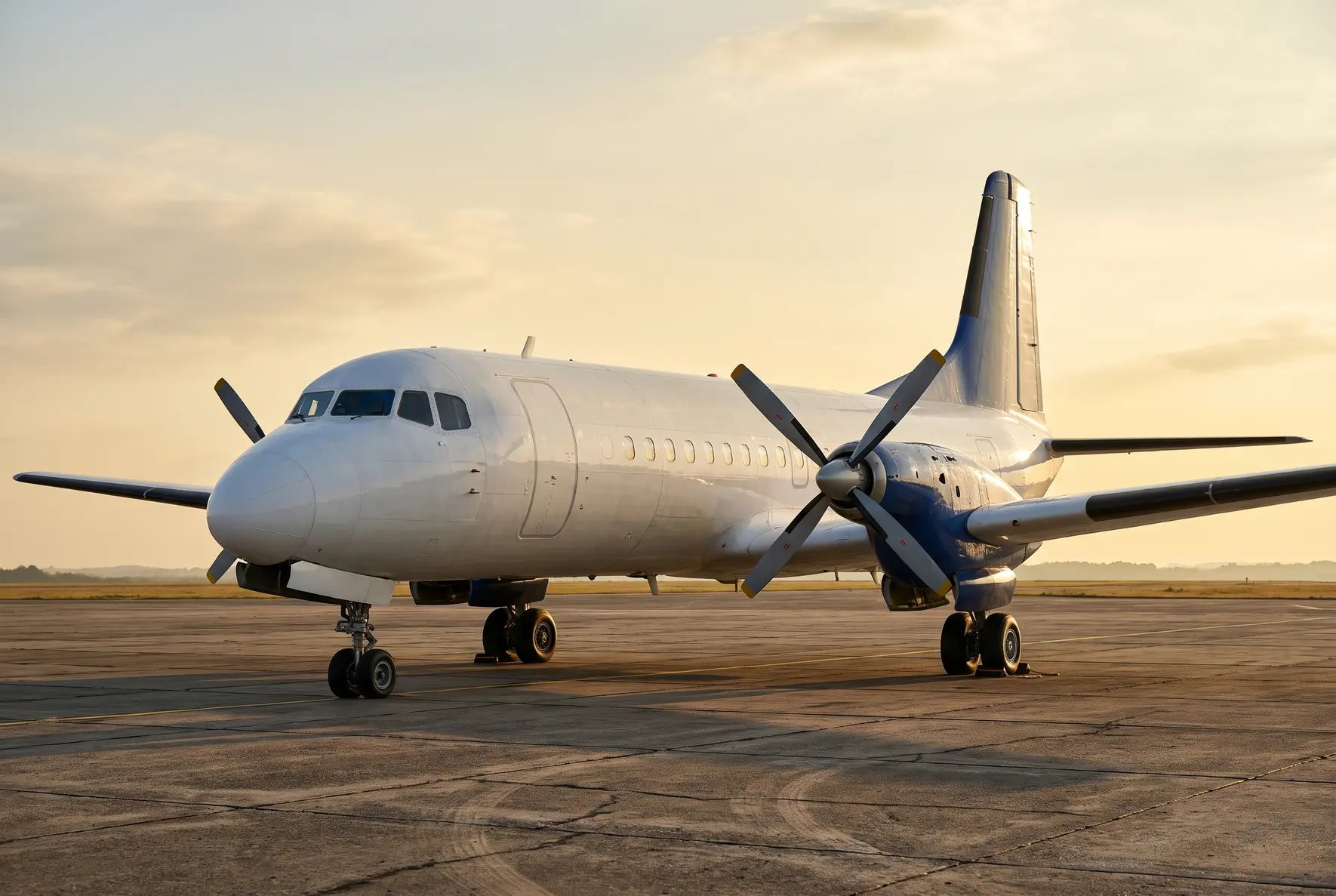
NAMC YS-11 History and Development: From MITI Plan to YS-11A-200
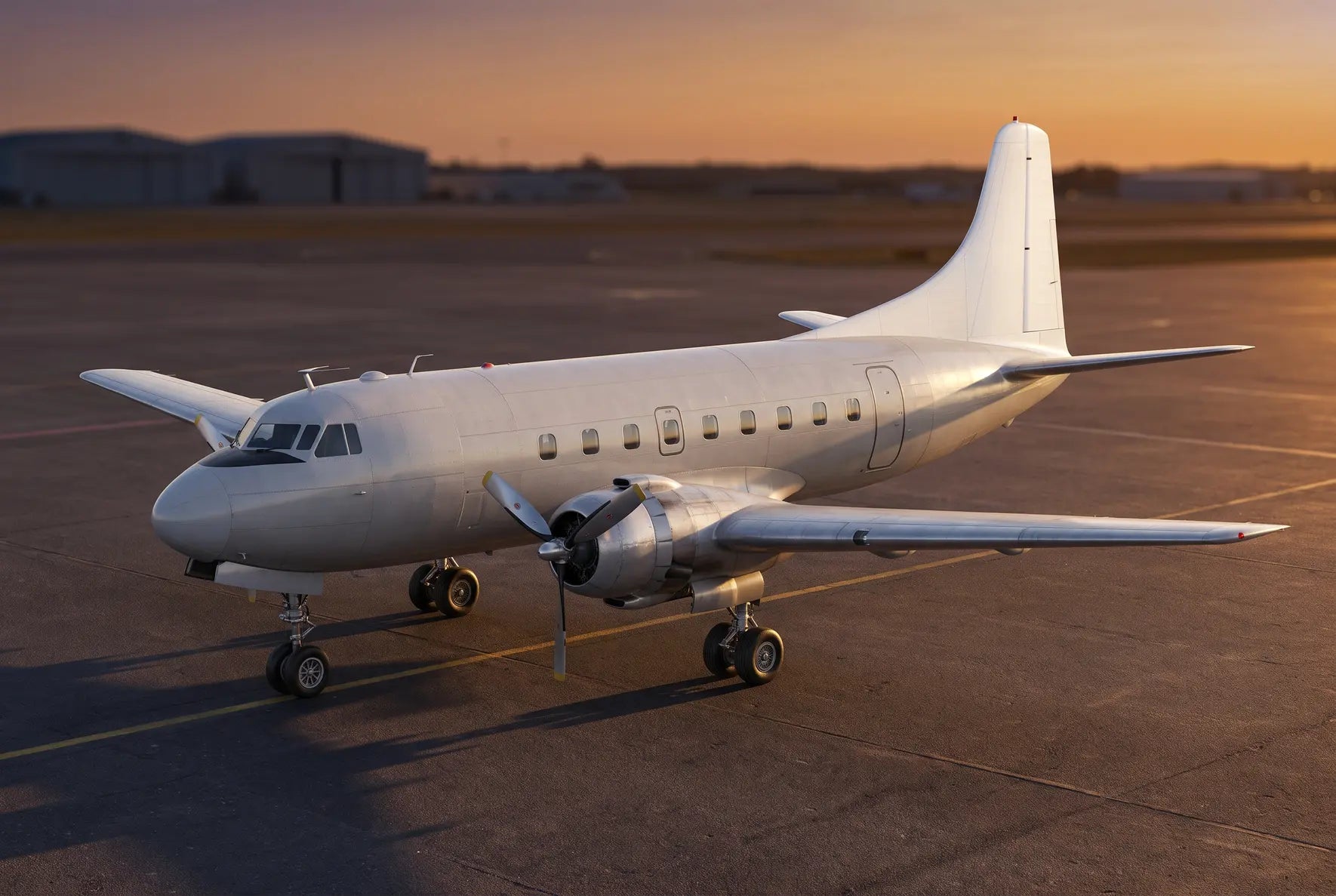
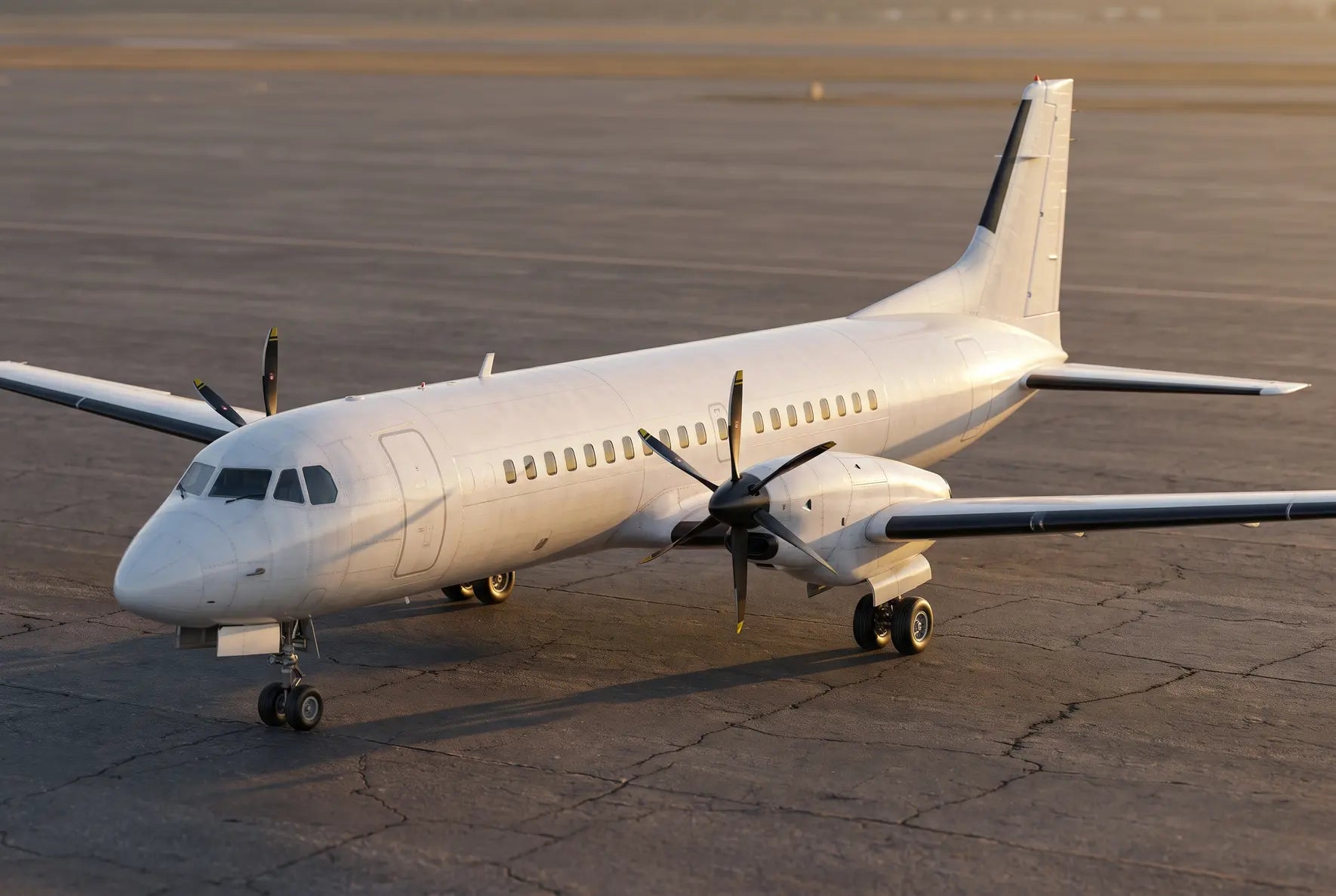
The NAMC YS-11 holds a singular place in aviation history as the first airliner wholly designed and manufactured in Japan after the Second World War. The program grew out of a national ambition to rebuild a domestic aircraft industry that had been dismantled during the post-war occupation. In 1954, Japan's Ministry of International Trade and Industry (MITI) launched a study for a domestic short-haul transport intended to replace ageing piston types such as the Douglas DC-3 on regional routes, while reviving Japanese aerospace design and manufacturing skills.
To carry the project forward, MITI brought the country's leading aerospace firms into a single consortium. The Nihon Aircraft Manufacturing Corporation (NAMC) was formally established in 1959, pooling the expertise of companies including Mitsubishi, Kawasaki, Fuji and others. The aircraft that emerged was a clean, low-wing twin turboprop optimised for short-field performance and high payload, powered by the proven Rolls-Royce Dart engine. Choosing an established British powerplant reduced technical risk and eased both certification and export acceptance.
The chronological milestones of the program are well documented:
- 1954: MITI initiates the domestic transport-aircraft study.
- 1959: NAMC founded to design and build the new airliner.
- 30 August 1962: first flight of the prototype YS-11.
- 23 October 1964: first flight of the first production aircraft.
- 30 March 1965: first delivery; commercial operations began in April 1965 with launch customer Toa Airways.
- 1962 to 1974: production run, with 182 airframes built across all civil and military versions.
The last airframe was delivered on 11 May 1973 to the Japan Maritime Self-Defense Force. Production ended in 1974, largely because the home market became saturated and foreign sales faced intense competition from established Western turboprops. Further details on the wider family are catalogued in the NAMC YS-11 reference record.
What sets the YS-11A-200 apart
The family progressed from the original YS-11-100 baseline to the improved YS-11A series, introduced around 1966 with higher operating weights aimed at the international market. The YS-11A-200 is the increased-gross-weight passenger variant within that series. Compared with the YS-11-100, whose maximum take-off weight was about 23,500 kg (51,810 lb), the A-200 raised maximum gross weight to roughly 24,500 kg (54,010 lb), an increase of around 1,000 kg achieved through structural strengthening rather than any change to the airframe geometry. This allowed the variant to carry a heavier payload, reported at up to about 6,600 kg, and to serve higher-density or international routes more economically.
The airframe geometry, four-abreast cabin and Dart engines remained essentially common across the series, so the A-200's distinctions lie in weights, payload and configuration. It also served as the structural basis for two derivatives: the YS-11A-300 combi with a large cargo door, and the YS-11A-400 pure freighter used by Japanese defence forces. The later YS-11A-500, produced from 1970, pushed gross weight further to around 25,000 kg.
The principal variant identifiers for the YS-11A-200 can be summarised as follows:
- Engines: two Rolls-Royce Dart Mk 542-10 / 542-10K turboprops, approximately 3,030 hp each.
- Maximum take-off weight: about 24,500 kg (54,010 lb), increased over the YS-11-100.
- Passengers: up to 64 in a single-class, four-abreast layout.
- Dimensions: length 26.3 m, wingspan 32.0 m, height about 9.0 m.
- Market role: increased-gross-weight passenger model developed for international operators.
The program was technically competent but commercially constrained. Domestic demand was finite, foreign penetration remained limited, and decades later rising retrofit costs, such as fitting modern collision-avoidance equipment estimated at around one million US dollars per aircraft, made continued commercial use uneconomic. The final commercial YS-11 flight in Japan took place on 30 September 2006 with Japan Air Commuter, while military examples flew on with the Japan Air Self-Defense Force until retirement in March 2021. Despite remaining a one-generation program, the YS-11 is widely regarded as the catalyst for Japan's post-war return to civil aircraft manufacturing, as recorded by the aviation heritage record and reflected decades later in Japan's renewed regional-aircraft ambitions. For pilots interested in operating heritage and regional types, our guide on how to write a pilot's cover letter offers practical recruitment advice.

An aircraft of the Japan Maritime Self-Defense Force is captured mid-flight against a clear blue sky. The plane, a P-3 Orion, features distinct markings and is part of the military fleet.
NAMC YS-11 Technical Specifications, Systems and Performance
The NAMC YS-11 was conceived as a rugged, short-to-medium-haul regional airliner for the Japanese domestic network and export markets, where modest runways, hot conditions and frequent short sectors shaped its design. The result favours field performance and payload over outright range or speed: a low-mounted wing of generous area, twin turboprops with reversible propellers, and a pressurised cabin sized for 52 to 64 passengers. As a 1960s clean-sheet design from the Nihon Aircraft Manufacturing Corporation, it reflects the engineering practice of its era rather than a derivative of an existing family, though it shares its powerplant lineage with the most successful Western turboprops of the time.
The dominant civil model, the YS-11A-200, balanced empty weight against a useful payload, accepting a relatively low cruise altitude and speed in exchange for short-field capability and operational simplicity. Readers comparing this generation of turboprops with modern jet-age regional designs may find the contrast useful alongside our coverage of the COMAC C919.
- Wingspan: 32.0 m (105 ft 0 in)
- Length: 26.3 m (86 ft 3 in)
- Height: 8.99 m (29 ft 6 in)
- Wing area: 94.8 m² (1,020 ft²)
- Operating empty weight: 14,600 kg (32,187 lb)
- Maximum takeoff weight (MTOW): 23,500 kg (51,808 lb)
- Maximum payload: 5,400 kg (11,904 lb)
- Typical passengers: 64 in single class (52 to 64 depending on layout); 2 flight crew
- Cruise speed: approx. 450 to 454 km/h (~245 kn), with maximum speed near 470 km/h
- Range: up to ~2,200 km (1,188 NM); about 1,100 km with maximum payload
- Service ceiling: roughly 6,980 to 7,000 m (~23,000 ft)
- Engines: two Rolls-Royce Dart Mk 542-10K turboprops, ~3,060 shp (2,280 kW) each, driving four-blade Dowty Rotol reversible propellers
Systems and Handling-Relevant Technology
The YS-11 uses a conventional mid-20th-century airliner architecture. Primary flight controls (ailerons, elevators and rudder) are mechanically actuated through cable and linkage systems with trim tabs, and there is no fly-by-wire. High-lift comes from trailing-edge flaps used at takeoff and landing, while a retractable tricycle landing gear is hydraulically actuated. Each Dart drives a constant-speed, fully reversible four-blade propeller offering beta and reverse modes, which is central to the aircraft's short-field landing performance. Pressurisation and air-conditioning support the cruise altitude, and propeller and engine ice-protection provisions are fitted. Original avionics were analog and radio-navigation-centric (VOR/ILS, ADF, transponder), with some surviving airframes later receiving GPS navigators and basic autopilot functions as service-life upgrades.
Published figures should be read as representative rather than absolute. Real-world takeoff and landing distances, range and cruise performance vary with cabin density and seating layout, operating weight, flap setting, temperature, altitude and runway condition, as well as the assumptions used by each data source. Quoted field lengths near 1,110 m for takeoff and 660 m for landing reflect standard-day, sea-level reference conditions and will change accordingly in service. Detailed certified values such as maximum landing weight or total fuel capacity are not consistently published in open authoritative sources, so they are best confirmed against the operator's flight manual.
The Rolls-Royce Dart Powerplant
The YS-11 is powered by the Rolls-Royce Dart, a two-spool turboprop and one of the earliest commercially successful turboprop engines, first run in the late 1940s and entering airline service in the early 1950s. The Mk 542 series fitted to the YS-11 is a later, higher-power development rated at roughly 3,030 to 3,060 shp per engine, with minor variation in the figures reflecting different ratings and rounding. The Dart's reliability and longevity made it a defining engine of the first turboprop generation, remaining in production for decades. Beyond the YS-11, the Dart powered several landmark aircraft, including the Vickers Viscount, the Fokker F27 Friendship, the Hawker Siddeley (Avro) HS 748 and the Grumman Gulfstream I. This shared lineage means the YS-11, despite being a uniquely Japanese design, sits firmly within the broader family of Dart-powered regional turboprops that shaped post-war short-haul aviation.
NAMC YS-11 vs Fokker F27 vs HS 748 vs DHC-7 Dash 7: Regional Turboprop Specifications Comparison
Scroll horizontally to see more →
| Parameter | NAMC YS-11 | Fokker F27 Friendship | Hawker Siddeley HS 748 | de Havilland Canada DHC-7 Dash 7 |
|---|---|---|---|---|
| Entry into service | 1965 | 1960 | 1964 | 1983 |
| Engines | 2 × Rolls-Royce Dart turboprop | 2 × Rolls-Royce Dart turboprop | 2 × Rolls-Royce Dart turboprop | 4 × Pratt & Whitney Canada PT6A-50 turboprop |
| Length | 26.3 m | 23.8 m | 20.4 m | 24.6 m |
| Wingspan | 32.0 m | 29.0 m | 30.5 m | 28.4 m |
| Height | 9.0 m | 8.5 m | 8.2 m | 8.4 m |
| Typical seating and layout (short description + approximate passengers) | Single-class: 60–64 passengers | Single-class: 44–52 passengers | Single-class: 40–58 passengers | Single-class: 50–54 passengers |
| MTOW | 23.5 t | 20.0 t | 19.5 t | 21.0 t |
| Range | 1,140 nm | 1,060 nm | 1,060 nm | 700 nm |
| Cruise speed | 0.44 Mach | 0.44 Mach | 0.42 Mach | 0.40 Mach |
| Service ceiling | 25,000 ft | 27,000 ft | 25,000 ft | 20,000 ft |
| Program note | Japan’s first domestically developed regional turboprop, aimed at replacing older piston airliners on short-haul routes. | European high-wing regional turboprop benchmark of the early jet era, widely used for short-haul services. | British rugged regional turboprop optimized for short and rough-field operations, competing with other Dart-powered types. | Canadian STOL turboprop designed for very short runways and challenging airports, trading cruise efficiency for field performance. |
Scroll horizontally to see more →
The table compares four classic regional turboprops across size, payload, performance, and program roles. The NAMC YS-11 is the largest and heaviest (26.3 m, 23.5 t MTOW) and also offers the longest range at 1,140 nm, narrowly ahead of the F27 and HS 748 (1,060 nm). All three are Dart-powered and cruise around Mach 0.42–0.44, while the Dash 7 uses four PT6As, trades speed and range (Mach 0.40, 700 nm) for STOL capability and earlier runway flexibility.
NAMC YS-11 Operations: Routes, Missions and Airlines Worldwide
The NAMC YS-11 was designed as a short- to medium-haul regional turboprop, and its career reflected that role almost everywhere it flew. Powered by two Rolls-Royce Dart engines, it cruised at around 468 km/h and offered a practical range between roughly 1,835 km and 2,390 km (about 990 to 1,290 nmi), placing it firmly in the regional category rather than trunk or long-haul service. Typical missions were short domestic and feeder legs flown with multiple sectors per day, linking major hubs with provincial cities, islands and secondary fields.
Operationally, the type suited hub-and-spoke feeder networks and point-to-point regional routes where larger jets were uneconomical. Its short-field performance, with takeoff and landing distances generally well under 1,500 to 1,800 m depending on weight, allowed it to serve airports with limited infrastructure, mountainous terrain or short runways. The main challenges for operators emerged later in its life: rising maintenance costs, ageing systems and overcapacity on some routes led several carriers to retire the type by the late 1980s, while others kept airframes flying for decades by converting them to freighters carrying up to roughly 10,000 lb of cargo.
Where the YS-11 operates around the world
Across the four broad regions, the YS-11 settled into recognisable patterns. In Asia, especially Japan, it was a core domestic regional airliner feeding major cities and serving island communities. In North America and South America, it flew regional passenger and feeder services as well as cargo and postal work. In Europe, its footprint was niche, centred on Greece and military use. In Africa, it filled a practical role as a short-field passenger and freight aircraft for states with limited infrastructure.
The aircraft was a contemporary of larger Soviet widebodies such as the Ilyushin Il-86, but it occupied the opposite end of the network, handling thin regional sectors rather than dense trunk routes.
- Europe: Olympic Airways of Greece operated the type on domestic and regional routes, including short flights between Athens and the Greek islands, where its short-field capability was an asset. European civil use beyond Olympic was largely limited, with the Greek Air Force employing the aircraft for transport and training.
- North & South America: Piedmont Airlines was the most prominent early US operator, flying short- to medium-haul routes across the eastern United States. American Eagle and Simmons Airlines used it for feeder services into larger hubs, while Reeve Aleutian Airways and Hawaiian Airlines applied it to inter-island and weather-challenged sectors. In South America, Cruzeiro do Sul and VASP in Brazil and Aerolineas Argentinas and Austral in Argentina ran domestic regional services.
- Asia: All Nippon Airways and Japan Air Lines used the YS-11 on domestic and feeder routes, with Toa Airways among the first operators in 1965. Japan TransOcean Air and Japan Air Commuter handled island-hopping services, while Philippine Airlines, Merpati Nusantara, China Airlines and Korean Air flew regional and domestic sectors elsewhere in the region.
- Africa: Air Afrique used the type on short intra-African routes, while Trans Gabon Airlines, Gabon Express and Gambia Airways operated regional passenger and cargo services. Several African airframes remained active as freighters into the 2010s and around 2020.
Typical seating and cabin layouts
The YS-11 was a two-abreast turboprop, with capacity most often cited at 64 passengers in a single-class layout. In practice, real-world configurations ranged from about 52 to 64 seats, reflecting different operator missions. Network and feeder carriers such as Piedmont and the Japanese domestic operators generally favoured dense, all-economy cabins near the maximum to maximise short-sector revenue, while charter, government and combi users adopted lower seat counts or mixed passenger-cargo arrangements. Premium-heavy layouts were uncommon, as the compact fuselage and short flight times offered little scope for differentiated cabins.
In this video, discover the last days of the NAMC YS-11 turboprop airliner, Japan’s first aircraft designed and manufactured by Nihon Aircraft Manufacturing Company, and learn about its legacy and final operations.
NAMC YS-11 Safety Record: How Safe Is This Turboprop Airliner?
The NAMC YS-11 was Japan's first post-war commercial airliner, with around 182 aircraft built between 1962 and 1974 by the Nihon Aircraft Manufacturing Corporation. Its commercial career spanned roughly four decades, from the first deliveries to Toa Airways in 1965 to the final scheduled Japanese flight, operated by Japan Air Commuter, on 30 September 2006. Military use continued even longer, with the Japan Air Self-Defense Force retiring its last aircraft in 2021. Across this long service life, operated by many carriers in mixed terrain and weather, the YS-11 accumulated several hull losses and a number of fatal accidents. Placed against the size of the fleet and the decades flown, this record is broadly typical of a 1960s-era regional turboprop rather than evidence of a fundamental design flaw. Detailed event-by-event data can be reviewed through the Aviation Safety Network database.
Notable Accidents and What Changed Afterwards
A small number of events illustrate the main safety themes associated with the type, namely approach errors, mid-air conflict and contaminated-runway handling. The lessons drawn from these accidents reflect wider improvements in regional operations during the period.
- All Nippon Airways Flight 533 (1966): A YS-11-111 (JA8658) crashed into the Seto Inland Sea during a go-around at Matsuyama, Japan, with 50 fatalities. The aircraft touched down long, attempted a go-around, then lost altitude. The official cause was recorded as undetermined, with no confirmed pre-impact failure. The event reinforced the importance of stabilised approach criteria and disciplined go-around procedures. The accident summary is recorded by the Aviation Safety Network.
- Toa Domestic Airlines Flight 63 (1971): The deadliest YS-11 accident, a mid-air collision with a Japan Air Self-Defense Force F-86F over Shizukuishi, Iwate Prefecture, killing all 68 occupants of the airliner. The investigation attributed the collision to the military trainee pilot's failure to see and avoid the civil traffic and a delayed corrective manoeuvre. The accident led to stricter separation between military training airspace and civil routes in Japan and stronger see-and-avoid and air traffic control practices.
- ANA runway overrun (wet runway): A YS-11 carrying 53 occupants landed long on a wet runway, aquaplaned and overran by about 132 m, losing its undercarriage. All on board escaped uninjured, but the aircraft was written off. The probable cause cited an incorrect approach configuration combined with reduced braking on a contaminated surface, underlining the need for accurate touchdown points and awareness of aquaplaning risk.
How Safe Is the NAMC YS-11?
Judged against its traffic volume, the YS-11 carried passengers safely on the large majority of its flights over more than 40 years, and most serious accidents stemmed from operational and human factors rather than airframe or engine deficiencies. The design philosophy was conservative and utilitarian: a sturdy airframe paired with the well-proven Rolls-Royce Dart turboprop, optimised for short regional sectors into smaller airfields rather than extreme speed or altitude. Safety gains over the type's life came mainly through improved standard operating procedures, crew training and tightened regulatory oversight, including later directives from Japan's Ministry of Land, Infrastructure, Transport and Tourism that accelerated retirement or modernisation. Comparable awareness of human factors and fitness applies to crews on modern fleets as well, a theme explored in our look at pilot working conditions at TUI Airways. Seen in this wider context, and consistent with long-term global data published by bodies such as the International Civil Aviation Organization, commercial aviation remains one of the safest modes of transport available.
01 What kind of routes and range was the NAMC YS-11 designed for?
The NAMC YS-11 was designed as a regional turboprop airliner for short to medium-haul routes, typically between 300 and 1,500 miles. Its maximum range is around 2,200 km, with about 1,100 km when carrying maximum payload, making it well suited to domestic networks and thinner international routes. Airlines used it on sectors such as intercity services within Japan, short regional hops in Southeast Asia, and secondary routes in North America. The aircraft’s strong short-field performance also made it popular on airports with shorter runways or challenging terrain.
02 How comfortable is the cabin on the NAMC YS-11 for passengers?
The NAMC YS-11 has a pressurized cabin with a typical single-class layout of 52 to 64 seats in a four-abreast configuration, giving passengers a relatively spacious feel compared with many modern regional jets. Seat pitch varied by airline, but the wider fuselage for a turboprop of its era allowed reasonably comfortable seating for regional flights. As with most classic turboprops, cabin noise levels are higher near the engines and propellers, especially around the wing, while seats forward of the wing tend to be quieter. Overall, passenger comfort is comparable to other 1960s turboprops and is generally considered adequate for flights of one to two hours.
03 Which airlines operated the NAMC YS-11 and on what types of routes?
The NAMC YS-11 served a wide range of operators, including major Japanese airlines such as All Nippon Airways and Japan Air Commuter, as well as various regional and charter carriers in Asia, Europe, and North America. It was also used by several air forces and government agencies as a transport and VIP aircraft, reflecting its versatility beyond commercial service. Commercial airlines commonly deployed the YS-11 on domestic trunk and regional routes, island services, and cross-border flights where traffic volumes did not justify larger jets. In later years, it became a niche aircraft on lower-density routes and in markets that valued its ruggedness and short-field capabilities.
04 How does the NAMC YS-11 compare to similar turboprops in performance and efficiency?
Powered by two Rolls-Royce Dart turboprop engines of around 3,060 shp each, the NAMC YS-11 cruises at roughly 450 km/h with a service ceiling close to 23,000 ft, performance broadly comparable to contemporaries such as the Fokker F27 and Avro 748. Its range of up to about 2,200 km and payload of around 5,400 kg allowed flexible combinations of passengers and cargo on regional missions. The YS-11 gained a reputation for being rugged, stable, and efficient on short-field operations, particularly at airports with limited runway length. While modern turboprops are more fuel-efficient and quieter, the YS-11 offered solid economics for its era, especially on sectors where jets were less practical.
05 What is the safety record and notable design features of the NAMC YS-11?
The NAMC YS-11 has a generally respectable safety record for an aircraft of its generation, with incidents more often linked to operational factors and weather than to fundamental design flaws. Its design includes a low-mounted wing, robust landing gear, and a pressurized cabin, contributing to reliable operations in varied conditions. The use of proven Rolls-Royce Dart engines gave the YS-11 power and reliability, and the aircraft’s handling characteristics were refined over time from early production issues. Many airframes served for decades, including in demanding military and regional roles, which supports its reputation as a durable and dependable turboprop.
06 What should a passenger know when choosing a seat on a NAMC YS-11 flight?
On the NAMC YS-11, seats ahead of the wing are typically preferred for a quieter ride, as they are farther from the propellers and main gear, while seats near or behind the wing experience more noise and vibration. Window views are good throughout, thanks to the relatively large rectangular windows, but wing-adjacent seats offer views of the engines and flaps that aviation enthusiasts often enjoy. The aircraft’s sturdy turboprop design and lower cruising altitude compared with jets can give a slightly more “connected” feel to turbulence, though its stable wing and robust structure handle such conditions well. Passengers sensitive to noise and motion often choose forward cabin seats, whereas enthusiasts might select seats over the wing to observe the aircraft’s classic turboprop operation up close.