

History and Development of the Ilyushin Il-86: USSR's First Wide-Body
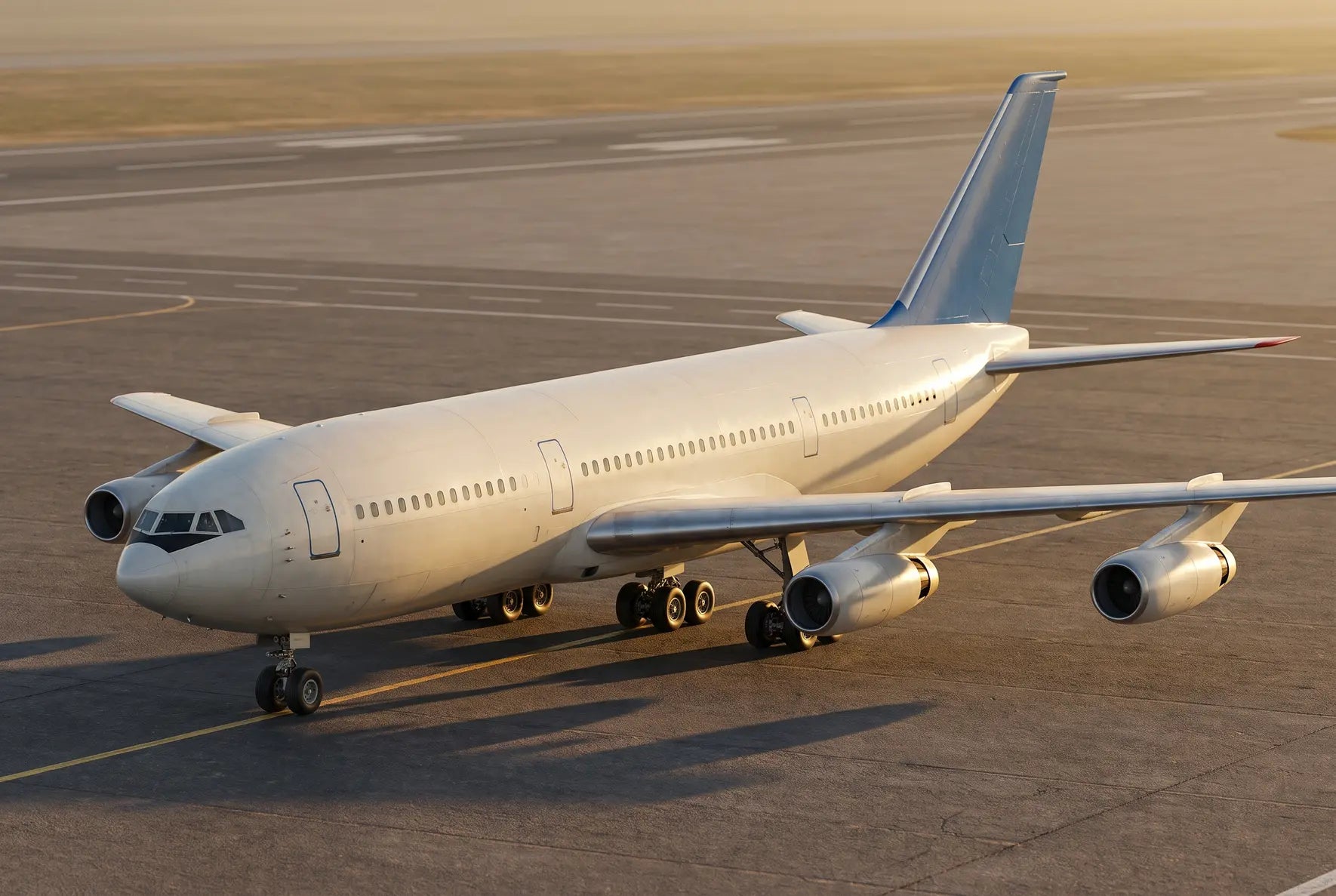
The Ilyushin Il-86 holds a unique place in aviation as the Soviet Union's first wide-body airliner. Its origins lie in the late 1960s, when Aeroflot and Soviet civil aviation authorities recognised the need for a high-capacity "aerobus" comparable to Western jets such as the Boeing 747, McDonnell Douglas DC-10, Lockheed L-1011 and the later Airbus A300. The brief, however, was distinct: Soviet planners wanted a medium-range wide-body able to carry roughly 350 passengers, optimised for the USSR's dense domestic network and frequently austere airport infrastructure rather than for intercontinental sectors.
The aircraft was developed by the Ilyushin Design Bureau (OKB-240), one of the USSR's foremost aircraft design organisations. Development took close to a decade, and the prototype made its first flight on 22 December 1976 from Khodynka airfield in Moscow. Certification followed in 1980, and the type entered service with Aeroflot on 26 December 1980, narrowly missing the original goal of operating in time for the 1980 Moscow Olympics.
Power came from four Kuznetsov NK-86 turbofans, the engine being certified in April 1979. The NK-86 was a low-bypass design with a service life of around 10,000 hours and an overhaul interval near 4,000 hours. Production ran from 1976 until 1991, with a total of 106 aircraft built. Further technical and operational detail is documented in the Il-86 type record.
What Sets the Il-86 Apart
The Il-86's defining feature was its self-sufficiency at airports lacking modern ground support equipment. It pioneered a "luggage-at-hand" concept: passengers boarded via retractable built-in airstairs at lower-deck level, stowed their own bags in vestibule compartments, then climbed internal stairs to the main passenger cabin. This made the aircraft unusually independent of jet bridges, baggage carts and external stairs. Compared with the later Ilyushin Il-96, which used more efficient high-bypass engines and offered greater range and modern systems, the Il-86 remained the heavier, earlier-generation design built around infrastructure independence rather than fuel economy. Readers interested in regional wide-cabin design contrasts may also explore our coverage of the Bombardier CRJ1000.
The principal identifiers that distinguish this variant include:
- Four Kuznetsov NK-86 low-bypass turbofans (certified April 1979)
- Maximum take-off weight of approximately 206 tonnes
- Capacity of up to 350 passengers in high-density layout
- Range of roughly 2,700 nautical miles, reflecting a medium-range mission
- Dimensions: length 59.94 m, wingspan 48.06 m, height 15.81 m, wing area 320.20 m²
- Unique "luggage-at-hand" lower-deck boarding with built-in retractable airstairs
The programme was not without criticism. Observers noted that the NK-86 was based on technology more typical of the late 1960s, leaving the aircraft behind contemporary Western high-bypass turbofans in efficiency and noise. The resulting modest range limited the Il-86 to domestic and short- to medium-haul international services rather than the intercontinental routes Western wide-bodies were capturing. These shortcomings directly motivated the move to the more advanced Il-96, which addressed efficiency, range and systems sophistication while retaining Ilyushin's wide-body experience.

An Aeroflot Ilyushin Il-86 aircraft is captured mid-flight against a clear blue sky. The large passenger jet is descending, showcasing its engines and landing gear.
Ilyushin Il-86 Technical Specifications, Systems and Engines
The Ilyushin Il-86 was the Soviet Union's first wide-body airliner, conceived as a high-capacity, medium-range "aerobus" for busy domestic and international trunk routes. Its design prioritised passenger volume, structural robustness and independence from ground equipment over outright efficiency or long range. The result was a four-engine, nine-abreast (3-3-3) twin-aisle aircraft that traded fuel economy and reach for ramp self-sufficiency, a large cabin and the ability to operate from airports with limited handling infrastructure.
Technically, the Il-86 borrowed heavily from established Ilyushin and Soviet practice: conventional hydraulically powered controls, a four-person flight crew and a low-bypass propulsion package adapted from an earlier engine family. These choices shortened development but capped its competitiveness against contemporary Western wide-bodies. Readers comparing it with modern narrow-body design philosophy may find the Boeing 737 MAX 7 a useful reference point for how priorities shifted toward efficiency.
- Length: approximately 59.5-59.8 m
- Wingspan: approximately 48.1 m
- Height: approximately 15.8 m
- Fuselage diameter: approximately 6.0 m (cabin width approximately 5.7 m)
- MTOW: approximately 215 t (474,000 lb)
- Operating empty weight: approximately 115-118 t
- Payload: approximately 40-42 t
- Passenger capacity: approximately 234 in three-class, up to approximately 350 high-density
- Cruise speed: Mach 0.80-0.82, approximately 850-870 km/h (around 460-490 kt per SKYbrary)
- Service ceiling: approximately 11,000-12,000 m (FL370 and above)
- Range: roughly 3,600-5,000 km depending on payload and reserves; design mission of around 3,500 km with full passenger load
- Fuel capacity: approximately 86 t
- Takeoff field length: approximately 2,800 m
- Engines: four Kuznetsov NK-86 turbofans, approximately 127-127.5 kN (28,600 lbf) each
Systems and Handling-Relevant Technology
The Il-86 used conventional mechanical signalling to hydraulic servo-actuators rather than fly-by-wire, with four independent hydraulic systems supplying primary surfaces, flaps, slots and spoilers for redundancy. Automation was typical of its late-1970s generation: an autopilot suitable for IFR cruise and coupled approaches, flight director and Soviet radio-navigation equipment, but no integrated glass cockpit. Because avionics were not advanced enough to offload navigation and systems monitoring, the type retained a four-person crew of two pilots, a flight engineer and a navigator. One of its most distinctive features was self-sufficiency on the ground: built-in retractable airstairs and a lower-deck "luggage at hand" baggage system let passengers load their own bags via conveyors into compartments beneath the cabin, reducing dependence on jetways and ground staff.
Published figures for the Il-86 vary noticeably between sources, and this is expected. Range, field length and cruise numbers depend on cabin density, selected MTOW, operator weight options, reserve assumptions and atmospheric and runway conditions. Soviet data sheets also sometimes quote maximum-design values alongside practical full-payload figures, so quoted ranges of roughly 3,600 km up to about 5,800 km describe different load and reserve cases rather than a single absolute capability.
Engines: The Kuznetsov NK-86
All Il-86s were powered by four Kuznetsov NK-86 low-bypass turbofans, designed by the Kuznetsov Design Bureau at Kuibyshev (today Samara) and entering service around 1979-1980. Rather than develop a clean-sheet engine under tight programme deadlines, Kuznetsov produced the NK-86 as an enlarged, uprated derivative of the earlier NK-8 family. Each engine delivered about 127.5 kN (28,663 lbf) of takeoff thrust with a modest bypass ratio near 1.15-1.18:1 and an overall pressure ratio around 12.9:1. That low bypass ratio meant high exhaust velocity, contributing to high fuel burn and only marginal ICAO Annex 16 Chapter 3 noise compliance, with takeoff noise reported around 105.7 EPNdB.
The NK-8 lineage gives the engine a broad family context. The NK-8 first appeared around 1967 at roughly 21,000 lbf and powered other major Soviet jets: NK-8-2 variants drove early Tupolev Tu-154 models, while NK-8-1 and NK-8-4 variants served early Ilyushin Il-62 and Il-76 aircraft before many were re-engined with Soloviev D-30KU turbofans. The NK-86 itself, however, was unique to the Il-86. Its derivation from a 1960s low-bypass core limited pressure ratio and turbine temperature growth, so its specific fuel consumption stayed well above contemporary Western high-bypass engines such as the General Electric CF6 or Pratt & Whitney JT9D. This combination of modest thrust for a 215 t airframe, high fuel consumption and marginal noise compliance is why the Il-86 was widely regarded as underpowered and thirsty. Re-engining with modern high-bypass turbofans was discussed, but no large-scale conversion was completed, and the type was gradually retired as the PS-90A-powered Il-96 and imported aircraft took over.
Ilyushin Il-86 vs A300B4-200 vs 767-200 vs DC-10-30: Wide-Body Airliner Specifications
Scroll horizontally to see more →
| Parameter | Ilyushin Il-86 | Airbus A300B4-200 | Boeing 767-200 | McDonnell Douglas DC-10-30 |
|---|---|---|---|---|
| Entry into service | 1980 | 1974 | 1982 | 1972 |
| Engines | 4 × Kuznetsov NK-86 turbofans | 2 × General Electric CF6-50 or Pratt & Whitney JT9D turbofans | 2 × Pratt & Whitney JT9D or General Electric CF6 turbofans | 3 × General Electric CF6-50 or Pratt & Whitney JT9D turbofans |
| Length | 59.8 m | 54.1 m | 48.5 m | 55.5 m |
| Wingspan | 48.1 m | 44.8 m | 47.6 m | 50.4 m |
| Height | 15.8 m | 16.5 m | 15.8 m | 17.7 m |
| Typical seating and layout (short description + approximate passengers) | 2–3-class: 234–350 passengers | 2-class: 250–280 passengers | 2-class: 200–224 passengers | 3-class: 250–270 passengers |
| MTOW | 215 t | 165 t | 159 t | 263 t |
| Range | 2,700 nm | 3,300 nm | 3,900 nm | 5,800 nm |
| Cruise speed | 0.80 Mach | 0.82 Mach | 0.80 Mach | 0.82 Mach |
| Service ceiling | 39,000 ft | 39,000 ft | 43,000 ft | 42,000 ft |
| Program note | Soviet Union’s first wide-body airliner, a medium-range, high-capacity domestic “aerobus” optimised for operation from less-developed airports. | Early European twin-engine wide-body, designed for medium-haul trunk routes and pioneering the wide-body concept for shorter sectors. | First-generation twin-engine wide-body aimed at efficient medium- to long-haul services, offering lower fuel burn than tri- and quad-jets. | Long-range tri-jet wide-body positioned for intercontinental services, competing with early jumbo and wide-body types on high-demand routes. |
Scroll horizontally to see more →
The table compares four early wide-body airliners by entry into service, dimensions, engines, seating, MTOW, range, and performance. The Il-86 stands out as a Soviet quadjet with high passenger capacity but the shortest range (2,700 nm). The A300 and 767 are lighter twinjets with longer ranges (3,300–3,900 nm) and similar cruise speeds. The DC-10-30 has the highest MTOW (263 t) and by far the longest range (5,800 nm), reflecting its intercontinental role.
Ilyushin Il-86 Operations and Airlines: Routes, Missions and Operators
The Ilyushin Il-86 was designed as a short- to medium-haul wide-body for high-density traffic. Its first commercial flight, an Aeroflot service from Moscow to Tashkent, took place on 26 December 1980. Operational range sat around 3,700 km, with design figures of roughly 5,000 km when carrying about 300 passengers under standard reserves, according to the type's documented service history. In practice, most sectors fell in the 1,000 to 3,500 km band, making the aircraft a domestic and regional trunk-route workhorse rather than a long-haul machine.
The four Kuznetsov NK-86 turbofans burned close to three tonnes of fuel per hour, which the SKYbrary aircraft database and other sources note constrained both range and payload. This pushed operators toward short, repeated rotations on dense city pairs rather than thin long-haul routes.
A distinctive operational feature was the "luggage at hand" concept. The Il-86 carried built-in retractable airstairs and lower-deck baggage rooms accessible directly by passengers, with internal stairs leading to the main cabin. This reduced dependence on jet bridges and ground equipment, letting it serve major hubs and less-equipped secondary airports across the Soviet network within a hub-and-spoke model centred on Moscow's Sheremetyevo, Domodedovo and Vnukovo.
Where the Il-86 Operates
Across Europe, the type flew high-density scheduled and charter services from Moscow to Eastern European capitals and larger Western cities such as Frankfurt, beginning in 1981. In North & South America, Aeroflot ran exceptional long-haul missions with technical stops, including Moscow to Havana via Shannon and Gander, and South American routes to Buenos Aires, Montevideo and Lima via Sal, Cape Verde. In Asia, it linked Moscow with Central Asia and the Caucasus, while in Africa the aircraft mainly appeared as a refuelling stop at Sal rather than serving local end-destinations.
- Europe: Aeroflot was the dominant operator on domestic and intra-European trunk routes, with numerous post-Soviet Russian successor carriers, including charter and holiday operators flying to European resorts, keeping the type busy until civil passenger service ended around 2011. Russian carriers such as Vnukovo Airlines and Krasnoyarsk Airlines are documented users.
- North & South America: No regional airlines operated the type; Aeroflot alone reached the continent on scheduled services to Cuba and South America, always with one or more refuelling stops.
- Asia: Uzbekistan Airways operated the aircraft as one of the few non-Russian users, alongside CIS services into Central Asia.
- Africa: No mainstream African carrier flew the type in regular service; the region served chiefly as an en-route stop on Aeroflot's transatlantic flights.
The post-Soviet operator landscape mirrored the breakup of state aviation, the same fragmentation that gave rise to many Russian carriers profiled in our overview of a notable Russian airline. Armenian Airlines in the Caucasus was another documented non-Russian operator. Only three of the 106 airframes built were exported.
Typical Seating
The Il-86 used a twin-aisle, nine-abreast 3-3-3 economy layout. Network operators favoured mixed-class cabins, with one widely cited Aeroflot configuration carrying 320 passengers split into 18 first, 56 business and 246 economy seats; some documentation lists 234 seats in a three-class fit. Leisure and charter operators pushed density toward an all-economy 350-seat arrangement. Detailed configuration and specification data are summarised by Airlines Inform and the Ilyushin Il-86 technical reference.
In this video, discover why the Soviet Il-86 wide body airliner failed, exploring its design goals, operational limits, and the economic and political pressures that shaped its brief service and legacy.
Ilyushin Il-86 Safety Record and How Safe Is It Really?
The Ilyushin Il-86 holds a notable position among first-generation wide-body airliners: across roughly 106 aircraft built and more than three decades of service from its 1980 entry into commercial operation, the type was never involved in a fatal accident while carrying paying passengers. Public summaries drawn from the Aviation Safety Network record around four hull losses and approximately 23 fatalities in total, all of which occurred on crew, training, ferry or ground operations rather than on revenue flights. Set against the fleet size, the largely domestic Soviet and post-Soviet route network operated by carriers such as Aeroflot, Pulkovo Aviation Enterprise, Vnukovo Airlines and KrasAir, and the type's medium-range mission profile, this is a strong outcome for an early Soviet four-engine jet. The relatively small fleet does, however, limit the statistical robustness of any per-flight comparison.
Notable Accidents and Serious Incidents
A small number of events shaped the type's operational history. Each is summarised neutrally below, with the operator, year and primary factors followed by what changed afterwards.
- Pulkovo Aviation Enterprise, 2002, Moscow Sheremetyevo. On a non-revenue ferry and training flight, an Il-86 failed to rotate correctly during takeoff, overran the runway and was destroyed. The 14 fatalities were crew members; no passengers were aboard. Investigators attributed the outcome primarily to takeoff configuration and crew technique rather than a structural design flaw. Russian operators subsequently tightened heavy-jet conversion training and reinforced takeoff-configuration cross-checks, particularly for non-standard crews on ferry and training sorties. Details are catalogued via the ASN Il-86 type index.
- Aeroflot, early 1980s, uncontained engine failure. An aircraft (SSSR-86004) experienced an uncontained failure of a Kuznetsov NK-86 engine, with separation and debris damage, followed by a survivable emergency landing without fatalities. This and a related engine-loss event prompted enhanced inspection regimes for the NK-86 engines and their mounts, including more frequent monitoring and revised lifetime limits on critical rotating parts.
- Ground and runway-excursion occurrences. Additional hull losses arose from a landing overrun in adverse conditions and a ground or towing collision. These were driven by ground-operations and runway-surface factors, with no passenger fatalities, and reinforced attention to airport handling procedures.
Notably, no major structural redesign of the airframe followed these events; corrective action focused on engines, maintenance and crew procedures.
How Safe Is the Ilyushin Il-86?
Judged on raw counts, the Il-86's passenger-safety record is excellent, with zero passenger fatalities across its commercial life and only one major fatal hull loss, that on a training flight attributed mainly to crew and procedural factors. Its conservative Soviet design philosophy, four-engine layout offering traditional engine-out redundancy, robust landing gear and multiple hydraulic systems, suited the medium-range domestic trunk routes it flew, reducing exposure to oceanic engine-out scenarios. Certified by Soviet authorities in 1980 under standards not harmonised with the FAA or JAA, the type operated abroad through bilateral approvals and never faced a certification-related grounding. As with any aircraft, safety ultimately depends as much on standard operating procedures, training and regulatory oversight as on airframe design, a theme equally relevant to modern carriers and the demanding pilot working conditions explored elsewhere on this site. Readers comparing safety across the industry can consult the long-run statistics maintained by the International Civil Aviation Organization and the broad accident overviews compiled by the Bureau of Aircraft Accidents Archives. Taken together, the evidence supports the wider point that commercial aviation remains one of the safest modes of transport ever devised.
01 What kind of routes and range was the Ilyushin Il-86 designed for?
The Ilyushin Il-86 was designed as a short- to medium‑range wide-body airliner, with a typical range of about 4,000–5,000 km depending on payload and conditions. In Soviet service it was mainly used on dense domestic trunk routes and international flights within Europe, the Middle East, and parts of Asia rather than true long‑haul transcontinental sectors. Its four‑engine layout and robust design made it suitable for operations from large but sometimes less‑equipped airports across the former USSR and neighbouring countries. This mission profile positioned it as a high‑capacity workhorse rather than an ultra‑long‑range flagship.
02 What is the cabin layout and passenger experience like on the Ilyushin Il-86?
The Ilyushin Il-86 typically offered a 3‑3‑3 seating layout across its wide fuselage, with a cabin width of around 5.7–6 meters, giving a spacious feel compared with some contemporary aircraft. Early configurations were planned for 234 seats in two classes or up to about 350 seats in a high‑density layout, with multiple lavatories and galley areas to support full loads. A distinctive feature was the lack of central overhead bins in some cabins, creating a higher, more open ceiling but leaving less space for traditional carry‑on storage. Noise levels were higher than on modern twin‑engine jets, especially near the wings and engines, but broadly comparable to other first‑generation wide‑bodies of its era.
03 Which airlines flew the Ilyushin Il-86 and on what kinds of routes?
The Ilyushin Il-86 was operated primarily by Aeroflot and later by Russian and other CIS carriers after the breakup of the Soviet Union, with a small number used by a Chinese airline. Airlines typically deployed it on high‑demand routes linking Moscow and other major Soviet or Russian cities with regional hubs and popular holiday destinations. Internationally, it was seen on routes between the USSR/Russia and cities in Europe, the Middle East, and occasionally Asia, where slot‑constrained airports benefited from its high seat capacity. As newer aircraft became available and fuel prices rose, the Il‑86 was gradually retired from most scheduled services and is now rarely seen in commercial passenger use.
04 How does the Ilyushin Il-86 compare with Western wide-body jets of its time?
The Ilyushin Il-86 was similar in size and capacity to aircraft like the early Airbus A300 and the McDonnell Douglas DC‑10, and in some dimensions it approached the Boeing 747 short‑haul "Medium" role. However, its Kuznetsov NK‑86 engines gave it higher fuel burn than contemporary Western designs, which limited its economic efficiency on longer sectors. In cruise it typically flew around Mach 0.78–0.82, broadly comparable in speed and altitude to Western wide‑bodies, but with shorter practical range. Its main advantages were rugged landing gear, built‑in airstairs, and the ability to operate from less‑equipped airfields, reflecting Soviet infrastructure needs more than pure fuel efficiency.
05 What is notable about the safety record and design features of the Ilyushin Il-86?
The Ilyushin Il-86 has a relatively modest accident record for a first‑generation wide‑body, especially considering its intensive use on domestic routes with challenging winter conditions. Its design emphasized structural robustness, with strong landing gear and high‑lift devices to allow operations from airfields originally intended for smaller aircraft. The four‑engine layout provided redundancy for overland and remote‑region flights, consistent with Soviet safety philosophy at the time. As with any older type, safety in later years depended heavily on maintenance quality and operational standards, which varied between operators as the fleet aged.
06 As a passenger, what practical things should be known about flying on an Ilyushin Il-86?
On the Ilyushin Il-86, boarding often took place through built‑in lower‑deck airstairs leading to internal stairways up to the main cabin, and baggage could be stowed in dedicated underfloor compartments as part of the "luggage at hand" concept. Seats in front of the wings were generally quieter, while those near or behind the wings experienced more engine noise and vibration than on modern twin‑jets. Window alignment could vary slightly between rows, so travellers keen on views usually preferred forward window seats. The aircraft’s wide, heavy airframe tended to give a stable ride in cruise, but like most large wide‑bodies, turbulence comfort depended more on weather and flight level than on any unique handling trait of the Il‑86 itself.