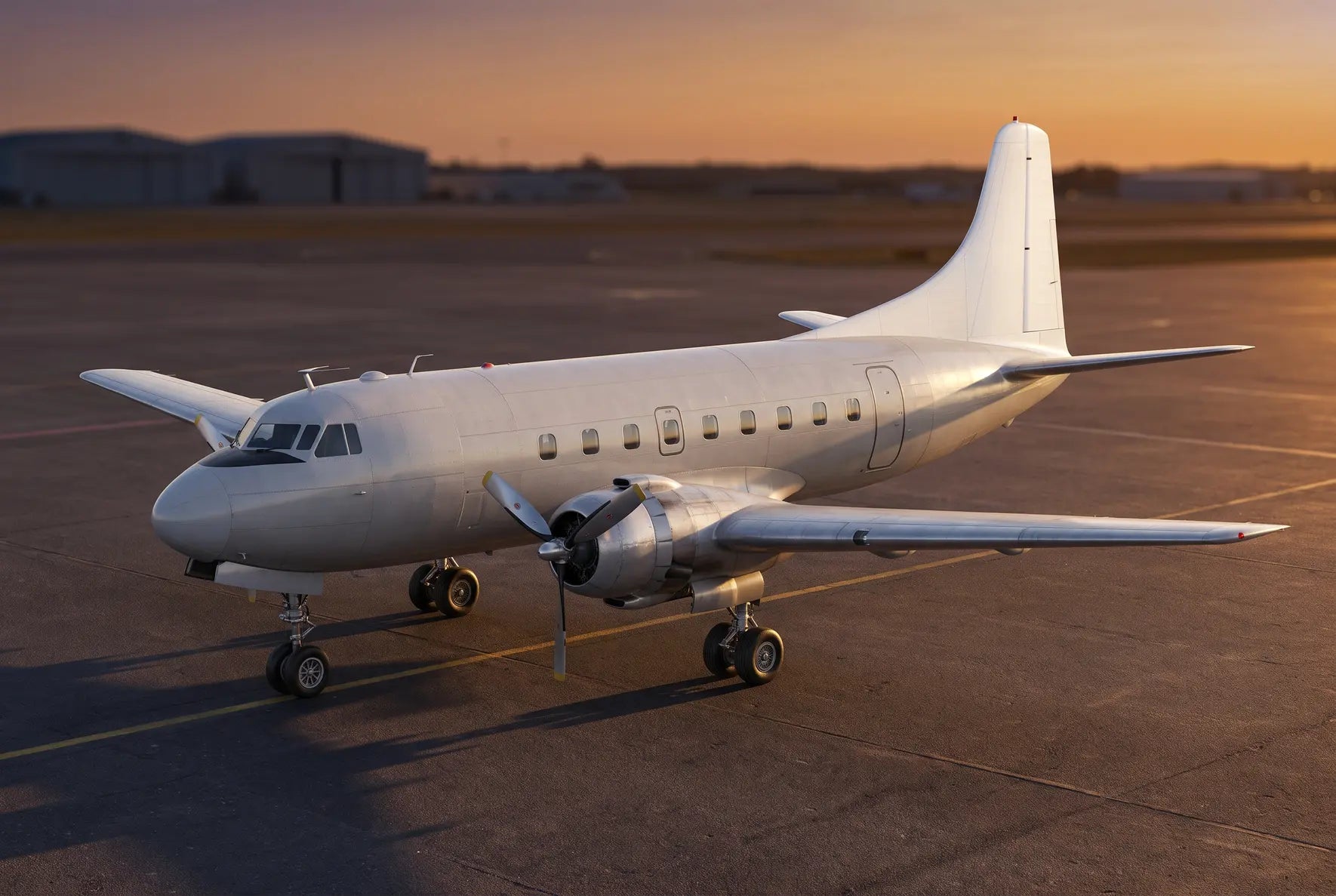


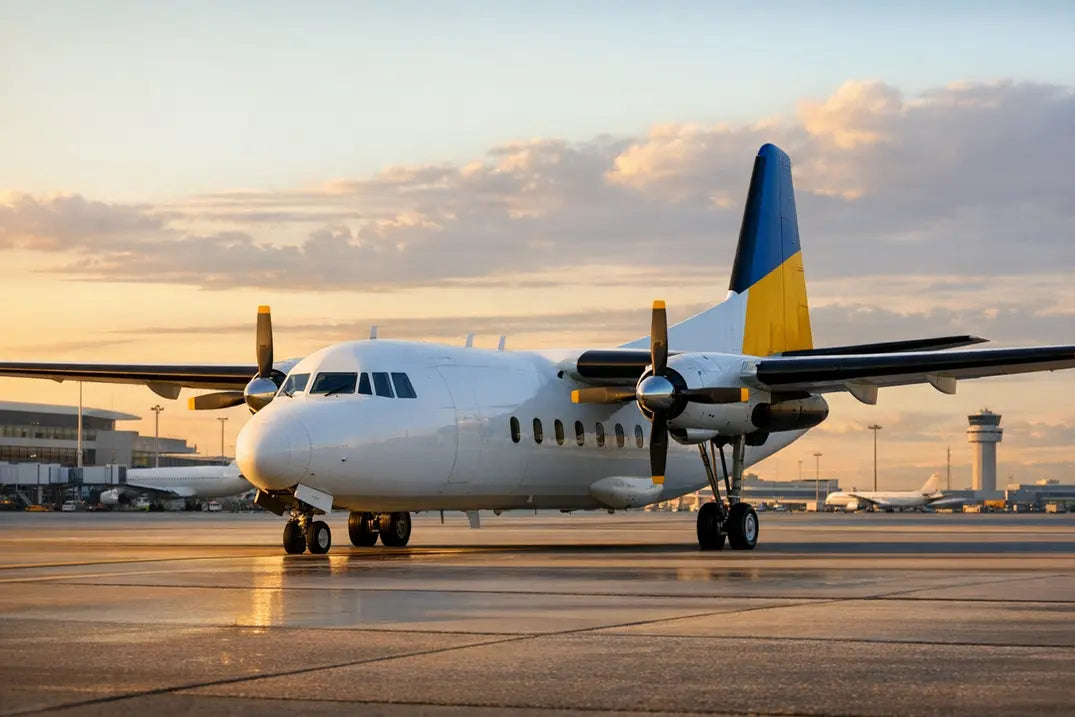
Fokker F27-100 history: launch, certification milestones, and evolution
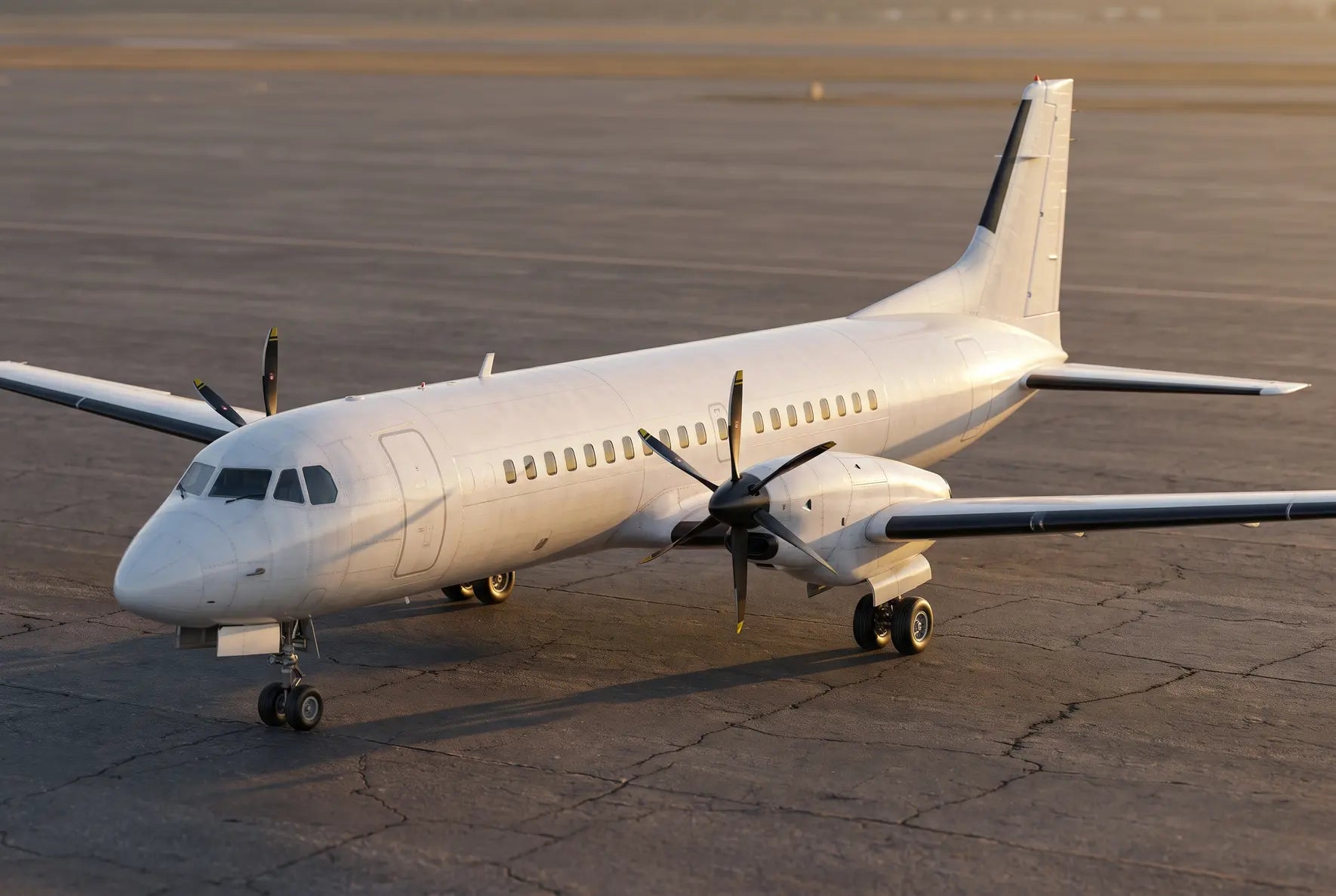
The Fokker F27-100 was the first production member of the Fokker F27 Friendship family. In the Flight Safety Foundation Aviation Safety Network type summary, the Friendship 100 is explicitly listed as the first production model, and the type’s entry into service is given as November 1958.
A historical narrative from Museums Victoria describes the Friendship series as a twin engined turboprop that became one of the most successful post war western short haul airliners, powered in production by the Rolls Royce Dart turboprop engine and also built in the United States by Fairchild.
Programme launch and early milestones
At Aviodrome, the Dutch aviation museum, the Friendship is presented as a short and medium distance passenger aircraft accommodating up to 44 passengers, with the prototype making its first test flight on 24 November 1955. The museum also highlights an advanced construction approach in which some metal parts were glued rather than riveted, delivering weight savings and improved streamlining.
Museums Victoria notes that the first prototype flew in 1955 and that the production prototype followed in 1957, ahead of the first major airline deliveries. It also records an early order milestone: six aircraft were ordered in 1956 on behalf of Trans Australia Airlines, with deliveries planned to begin in 1959, supporting the replacement of Douglas DC 3 aircraft on country services.
Certification, the Mark 100 standard, and the path to later variants
For variant level development, the most precise reference is approved certification data. The EASA Type Certificate Data Sheet EASA.A.036 for the Fokker F27 identifies Fokker Aircraft as the original manufacturer and Fokker Services B.V. as the current type certificate holder. It shows the F27 Mark 100 approved on 29 October 1957, which corresponds to the commercial Fokker F27-100 baseline.
That same data sheet maps how later Friendship subvariants were developed from the Mark 100 standard. The Mark 200, 300, 400, 600 and 700 are shown as approved on 25 May 1965: Mark 200 is the Mark 100 with a different engine installation, while Mark 300 adds a large forward cargo door and an all metal cargo floor. Mark 400 applies the same cargo changes to the Mark 200 standard, and Mark 600 and Mark 700 add the large forward cargo door to the Mark 200 and Mark 100 baselines respectively. The stretched fuselage Mark 500 is shown as approved on 17 May 1968. Museums Victoria notes that Friendship production ended in 1986, and that the aircraft remained widely used into the 1980s before being replaced on many routes by newer types, including the later Fokker 50.
Within the Mark 100 series, EASA.A.036 defines the engine and weight options that distinguish the Fokker F27-100 from later Marks. The Mark 100 uses two Rolls Royce Dart 511, Dart 511-7E or Dart 514-7 engines with a reduction gearing ratio of 0.086 : 1. Maximum takeoff weight is listed as 35,700 lb in the basic configuration, with higher limits approved through modifications and alternate engine installations up to 40,500 lb. While museum descriptions often quote around 44 passengers for the passenger role, the type certificate limits the Friendship series to a maximum of 48 passengers subject to the approved interior arrangement, and states that ETOPS is not applicable.
Fokker Services Group type certificate listings provide a direct route to current EASA and FAA documentation for all F27 marks, helping operators trace which approvals apply to a specific F27-100 aircraft configuration.
How the Fokker F27-100 differs from neighbouring variants
The Fokker F27-100 is best understood as the passenger baseline of the Friendship family. Its closest passenger derivative, the F27-200, is described in EASA.A.036 as the Mark 100 with a different engine installation, moving to the Dart 528 and later Dart 532 and related engines, and a different reduction gearing ratio of 0.093 : 1. Cargo and combi models were created by adding a large forward cargo door and, on Mark 300 and Mark 400, an all metal cargo floor; the Mark 700 keeps the Mark 100 baseline but adds the large forward cargo door.
Variant identifiers that help confirm a Fokker F27-100 in technical documentation include:
- Friendship 100 or F27 Mark 100, with approval recorded as 29 October 1957
- Two Rolls Royce Dart 511 family engines, including Dart 511, 511-7E, or 514-7 installations
- Reduction gearing ratio 0.086 : 1 for the Mark 100 engine installation
- Maximum takeoff weight approvals from 35,700 lb up to 40,500 lb, depending on engine fit and approved modifications
- Certification maximum of 48 passengers, subject to the approved interior arrangement
- No large forward cargo door, distinguishing it from Mark 300 and Mark 700 cargo focused variants
For a jet age comparison in short haul fleet development, the McDonnell Douglas MD 88 profile offers a useful contrast to the turboprop Fokker F27-100.

A Fokker F27 Friendship aircraft in flight, painted with distinctive markings for the U.S. Army Parachute Team, known as the Golden Knights.
Fokker F27‑100 technical specs, fuel, weights and key systems
The Fokker F27‑100, identified as the F27 Mark 100 in certification records, was the first production Friendship variant, optimised for short to medium range sectors where fuel efficiency, runway margins and simple ground support matter as much as block speed. The design inherits the family’s classic regional transport priorities, but the Mark 100’s early Dart engine installations and lower certified weight steps mean that payload, climb and reserve fuel decisions are tightly linked to the exact engine and modification standard embodied in a given airframe.
The EASA type certificate data sheet for the Fokker F27 is the most dependable public reference for what is actually approved on the Mark 100, including engine models, certified weight steps and the optional fuel and water methanol capacities. Reading those limits as envelopes, rather than a single headline number, helps explain why performance claims for the F27‑100 often differ between operators and publications.
Specs that matter for the F27‑100 (option and modification dependent):
- Engine options (Mark 100) Two Rolls Royce Dart turboprops: Dart 511, Dart 511‑7E or Dart 514‑7.
- Takeoff power rating (ISA sea level, wet takeoff) 1,570 shp per engine with Dart 511 or Dart 511‑7E; 1,670 shp per engine with Dart 514‑7, both at 14,500 rpm.
- Propellers Two Dowty Rotol constant speed propellers, model R175/4‑30‑4/13E, four blades, 12.0 ft nominal diameter; feathered pitch +83° with a short term 17,000 rpm limit.
- MTOW (certified, option dependent) 16,200 kg (35,700 lb) basic; up to 18,370 kg (40,500 lb) depending on engine and approved modifications.
- MLW (certified, option dependent) 15,430 kg (34,000 lb) basic; up to 18,150 kg (40,000 lb) with approved modifications.
- Maximum zero fuel weight 14,700 kg (32,400 lb) basic; up to 15,970 kg (35,200 lb) depending on fuel tank option and approved modifications.
- Usable fuel capacity 972 US gal total (two wing tanks of 475.5 US gal each plus two collector tanks of 13.4 US gal each); 1,357 US gal total with enlarged wing tanks (665 US gal each) per approved modification.
- Water methanol capacity 80 US gal total (two nacelle tanks of 40 US gal each); 106.8 US gal total with an approved modification.
- Engine oil capacity 8 US gal total (two engine tanks of 4 US gal each).
- Maximum certified passengers Up to 48, subject to approved interior arrangement.
- Stall warning system Required equipment includes an approved stall warning system, with AiResearch and U.S. Science installations listed in the data sheet.
Systems and handling relevant highlights
From a pilot’s perspective, the Mark 100 sits firmly in the hands on turboprop era: performance is managed through engine and propeller limitations and handbook based calculations, not by a digital flight management system. The type certificate data emphasises this by referencing the approved Flight Manual for airspeed limits, centre of gravity and fuel specifications, and by making the stall warning system mandatory. Operationally, dispatch relief is structured around classic system groupings, and the UK regulator’s Fokker F27 Master Minimum Equipment List is a useful pointer to what tends to drive dispatch restrictions, with dedicated sections including auto flight, landing gear, pneumatics and water injection.
Several certification items translate directly into handling technique. The approved Dowty Rotol R175/4‑30‑4/13E propellers have defined pitch stops, including a published feather setting of +83°, and the data sheet includes an instruction to avoid continuous operation below 7,000 rpm. On takeoff, water methanol can be a material performance lever on aircraft equipped for wet ratings, but it also adds another consumable to monitor and another system that must be serviceable for the planned power setting. For readers using type study as part of career planning, the CV and cover letter collection can support application preparation alongside technical revision.
Published performance figures for the F27‑100 can differ substantially because they may assume different certified weight steps, fuel tank configuration, and Dart variant, and may or may not include water methanol use for takeoff. Even when the same weights are used, quoted cruise or range figures depend on atmospheric assumptions (ISA deviations, cruise altitude and wind), reserve and diversion policy, and the cabin and cargo mass model. Field performance is equally sensitive to runway slope and surface condition, as well as engine and propeller condition.
Rolls Royce Dart engines on the F27‑100
The F27‑100 is approved with three Dart installations: Dart 511, Dart 511‑7E and Dart 514‑7. The certification data links the higher wet takeoff rating of the 514‑7 (1,670 shp) with a higher Mark 100 certified MTOW step, while the 511 and 511‑7E are listed at 1,570 shp for wet takeoff. In all cases, the rating structure is explicit about time limits and temperature ceilings, so engine management is fundamentally about staying inside JPT or TGT and rpm limits rather than chasing a single torque number.
For the wider propulsion family, the EASA type certificate data sheet for Dart series engines (EASA E.065) describes the Dart as a turboprop using a two stage centrifugal compressor feeding seven straight flow combustion chambers, with power extracted by a multi stage axial turbine and transmitted to the propeller through a reduction gearbox. For the 511‑7E, 514 and 514‑7 group, that document lists a propeller reduction gear ratio of 0.086 : 1, matching the Mark 100 installation described in the F27 data sheet.
The Dart’s history also helps explain why it became a default choice for mid century regional transports. The RAF Museum’s Rolls Royce Dart exhibit notes that design work began in 1945, with test bed aircraft including the Lancaster in 1947 and the Dakota in 1949, and that airline service began in 1953 with the Dart engined Viscount. The same exhibit lists well known Dart powered airframes such as the Viscount, Argosy, Herald, Friendship, Andover and Convair 600, placing the F27‑100’s powerplant in a broader ecosystem of proven transport applications.
Comparison of Regional Turboprop Aircraft: Fokker F27 Variants, Fairchild FH-227, and ATR 42-300
Scroll horizontally to see more →
| Parameter | Fokker F27-100 | Fokker F27-500 | Fairchild FH-227 | ATR 42-300 |
|---|---|---|---|---|
| Entry into service | 1958 | 1964 | 1966 | 1985 |
| Engines | 2 × Rolls-Royce Dart Mk.514-7 | 2 × Rolls-Royce Dart Mk.532-7 | 2 × Rolls-Royce Dart Mk.529-7 | 2 × Pratt & Whitney PW120 |
| Length | 23.6 m | 25.1 m | 25.5 m | 26.5 m |
| Wingspan | 29.0 m | 29.0 m | 29.0 m | 24.6 m |
| Height | 8.5 m | 8.7 m | 8.4 m | 7.1 m |
| Typical seating and layout | Single-class: 40 passengers | Single-class: 52 passengers | Single-class: 52 passengers | Single-class: 42–48 passengers |
| MTOW | 18.4 t | 20.8 t | 20.4 t | 16.9 t |
| Range | 925 nm | 1,040 nm | 790 nm | 1,500 nm |
| Cruise speed | 0.28 Mach | 0.28 Mach | 0.28 Mach | 0.32 Mach |
| Service ceiling | 27,800 ft | 29,500 ft | 27,800 ft | 25,000 ft |
| Program note | Original baseline passenger variant with standard engines | Stretched fuselage for higher capacity | US license-built stretched version with improved performance | Modern successor with composite materials and higher power engines |
Scroll horizontally to see more →
This table compares regional turboprop aircraft in terms of dimensions, performance, and capacity. The Fokker F27-100 is the earliest entry from 1958, while the ATR 42-300 is the most modern with the highest range and cruise speed. The FH-227 and F27-500 offer the most seating capacity, reflecting their stretched designs, but the ATR benefits from newer technology and better fuel efficiency potential.
Fokker F27-100 operations: routes, missions and airlines worldwide
The Fokker F27-100 was the first production Friendship and a classic short to medium range turboprop optimised for high frequency regional flying. Under the F27 family certification, the Mark 100 is approved with two Rolls Royce Dart engines from the 511 series and has take off weight options from 16,200 kg up to 18,370 kg depending on the embodied service bulletins. Typical published Mark 100 cruise figures are in the 420 km/h class, with ranges commonly quoted around 1,700 km to 1,930 km depending on payload and reserves, making it most efficient on sectors of a few hundred kilometres rather than near maximum range legs.
At a 420 km/h cruise, 250 km of still air distance corresponds to about 36 minutes of cruise time, 500 km about 1 hour 11, and 800 km about 1 hour 54, before allowing for climb, descent and vectoring. This profile fits hub and spoke feeder services into major airports and dense point to point networks between secondary cities, where the aircraft could depart from shorter runways and smaller ramps without the turnaround complexity of larger airliners. Multi sector days were normal, and high time Friendship airframes were reported to have completed about 80,000 flights, illustrating how commuter schedules can drive very high cycle utilisation. For practical passenger questions about classic turboprops, see the Ready for Takeoff FAQ.
Today the remaining airworthy F27-100 airframes are more likely to appear in charter, utility and special mission work than in mainstream scheduled passenger service. Operating challenges are typical of a legacy transport: ageing structure management, Dart engine support, and avionics updates needed for modern surveillance and navigation requirements. Payload can also be constrained on hot and high departures compared with later Friendship marks that used higher power Dart ratings. For regulatory context, EASA lists the F27 type certificate holder and associated data sheets in its public manufacturers list, while downloadable type certificate references are collated by Fokker Services Group.
Where the Fokker F27-100 flew: routes and airlines by region
Across its service life, the Fokker F27-100 was used mainly as a DC 3 replacement on short routes, with its pressurised cabin and turbine reliability supporting higher daily frequencies from regional airports. In Europe, it supported national and regional carriers linking secondary cities to hubs, later moving into charter and specialist operations. In North & South America, a smaller number of F27-100s worked with commuter airlines and independents on short sectors where 40 to 48 seats matched demand. In Asia, including Australia and New Zealand, the type became a backbone on domestic and island links. In Africa, it combined thin scheduled routes with ad hoc charter flying, often moving between operators over a long working life.
The common operational environment was a network of secondary airports with modest infrastructure, where a robust turboprop could self support quick turnarounds, handle variable weather, and maintain schedules with multiple sectors per day. As fleets aged, many airframes migrated to cargo conversions or mixed passenger and freight work on the same regional city pairs, prioritising dependable dispatch and flexible payload over maximum cruise speed.
- Europe: Aer Lingus introduced the variant in scheduled service and used it on short domestic and near international sectors; Luxair operated F27-100s on regional links from Luxembourg; Braathens SAFE used the type on Scandinavian routes; in Spain, Spantax and Aviaco flew F27-100s on domestic and leisure services; Turkish Airlines operated early Friendships on internal routes and regional international links.
- North & South America: in the United States, commuter operators such as Pilgrim Airlines and Business Express used the F27-100 to provide higher capacity regional schedules on short sectors; in Latin America, operators including Taymi Compania de Aviacion and Aerocondor de Colombia employed the type on domestic and regional services, while Avex International Airlines is an example of later life charter style use.
- Asia: in Australasia, New Zealand National Airways and later Air New Zealand used F27-100s to connect main cities with regional airports, and Trans Australia Airlines introduced the type on Australian regional services; in island environments, operators such as Maldives Airways used the aircraft on short overwater links, and Laoag International Airlines operated F27-100s on domestic routes.
- Africa: Tunisavia operated F27-100s on North African regional flying; in East and Central Africa the type often moved into utility and charter work, including operations by SASCO Air Charter in Sudan; in West Africa, Air Bissau used the aircraft on thin scheduled links where a sub 50 seat turboprop balanced capacity with runway and infrastructure limits.
Typical seating and cabin layouts on the Fokker F27-100
Most passenger configured Fokker F27-100 aircraft used a simple single class, four abreast cabin, typically around 44 seats, reflecting its original regional airline brief. The certification limit for the Mark 100 is higher: the EASA type certificate data sheet lists a maximum of 48 passengers for the early marks, subject to an approved interior arrangement, which explains why seat counts can vary across operators and conversions. The relevant approvals and limitations are detailed in the EASA.A.036 type certificate data sheet for the Fokker F27.
Network carriers tended to keep seating close to the nominal mid 40s to balance comfort and baggage handling margins on high frequency routes, while charter operators sometimes aimed for higher density within the certified limit. The long service life also meant many airframes were rebuilt for non standard missions, from corporate transport to utility work, so published seat maps are rarely representative unless tied to a specific operator and year.
This video explores the fascinating rise and fall of the Fokker F27 Friendship, the groundbreaking turboprop that revolutionized regional air travel and left a lasting legacy in aviation history.
Fokker F27-100 safety record and overall safety in service today
The Fokker F27-100 is the first production version of the F27 Friendship, a 40 to 52 seat turboprop that entered airline service in November 1958. An ICAO history overview notes that the first F27-100 off the assembly line was delivered to Aer Lingus that month, and that 586 F27s were built by Fokker with another 205 produced in the United States under licence by Fairchild. With hundreds of airframes operating for decades on short regional sectors, the Friendship 100 accumulated a very large number of takeoffs and landings, so its accident history reflects both the aircraft and the operational environments of mid century regional aviation.
High utilisation is central to understanding risk on this variant. Aviation Safety Network lists a design service objective of 90,000 flights and 90,000 flight hours for the F27 family. Individual airframes could approach that high cycle profile: the Pilgrim Airlines F27-100 involved in a 13 January 1984 accident at New York JFK had accumulated 39,945 flights and 42,040 hours (accident entry). Against that exposure, serious accidents and incidents involving the Friendship 100 tend to group around operational themes such as approach and landing in marginal visibility, controlled flight into terrain, icing and anti ice configuration, and weight and balance control, rather than a single recurring airframe failure mode.
Notable F27-100 accidents and the safety lessons they reinforced
- Trans Australia Airlines, 1960 (VH-TFB) On a night approach to Mackay after holding due to fog, the aircraft impacted the sea about 12 km short of the runway. The investigation could not determine a single probable cause, but discussed the difficulty of maintaining accurate height and descent awareness at night with few visual cues. Modern mitigations for similar scenarios centre on strict use of published instrument procedures and minima, stabilised approach criteria, and conservative go around decision making when visual references are unstable.
- Philippine Air Lines, 1967 (PI-C501) Flight 345 crashed during approach to Mactan after loss of control at low altitude; investigators cited load distribution that placed the centre of gravity aft of the permitted limit as a contributing factor. The long term safety response to accidents of this type is procedural and training based: accurate weight and balance calculations, verified load sheets, clear loading responsibilities, and an operational culture that treats centre of gravity limits as non negotiable (Aviation Safety Network record).
- Pilgrim Airlines, 1984 (N148PM) Shortly after takeoff from New York JFK, one propeller autofeathered and the second engine experienced a power loss; the aircraft returned and contacted the runway before the landing gear extended fully, resulting in a substantial write off with no fatalities. The NTSB determined that the probable cause involved engine anti ice use and inadequate preflight inspection, highlighting the need for consistent icing and anti ice procedures, contamination checks, and training on how anti ice configuration can affect turboprop performance (NTSB/AAR 84/12).
- Aeronica, 1985 (YN-BZF) On a long range ferry flight, auxiliary cabin fuel tanks had been installed for extended range; the crew later reported difficulty retrieving fuel from the auxiliary system and diverted in deteriorating weather before the aircraft collided with terrain during descent. The investigation concluded that the crew did not complete a satisfactory functional airborne check of the auxiliary ferry fuel system before relying on it, and identified weather as a major factor. For ferry and special mission F27-100 operations, the safety lessons are clear: use only properly engineered and documented modifications, prove system functionality early, and apply conservative fuel and diversion planning in remote areas (Aviation Safety Network record).
How safe is the Fokker F27-100?
The Fokker F27-100 was certified as a transport aircraft and was engineered with the redundancy and structural margins expected of an airliner; its long service history also shows that the basic design can sustain very high cycle use. Safety in any remaining Friendship 100 operation is therefore driven less by the model name than by the operator: maintenance discipline on ageing airframes, compliance with airworthiness directives, effective oversight by national aviation regulators, and SOPs that manage the recurring risk areas highlighted by the historical record (icing, stabilised approaches, and weight and balance). For context on contemporary airline safety, IATA’s 2024 Annual Safety Report cites an all accident rate of 1.13 per million flights, with seven fatal accidents among 40.6 million flights in 2024 (IATA Releases 2024 Safety Report). The same system approach to safe outcomes applies across classic airliners, from the Friendship to larger aircraft such as the Boeing 747 300. Aviation remains one of the safest modes of transport.
01 What is the typical passenger capacity and range of the Fokker F27-100?
The Fokker F27-100 accommodates 40 passengers in a single-class configuration and offers a design range of approximately 1,715 to 1,930 kilometers (1,067 to 1,199 miles), depending on weight and conditions. This range made it suitable for regional routes connecting cities within a few hours of flight time, typical of European and regional Asian operations during the 1960s and beyond.
02 How does the Fokker F27-100 compare in performance to other regional aircraft of its era?
The Fokker F27-100 cruises at 420 kilometers per hour (260 miles per hour) with two Rolls-Royce Dart turboprop engines producing 1,670 horsepower each. Its maximum takeoff weight of 18,350 kilograms and ability to operate from relatively short airfields of around 710 meters made it competitive with other twin-engine regional airliners, offering a good balance of payload, range, and field performance.
03 What kind of airports could operate the Fokker F27-100?
The Fokker F27-100 required a takeoff distance of approximately 710 meters and a landing distance of around 580 meters at typical operating weights, allowing it to use smaller regional airfields without sophisticated infrastructure. This capability made the aircraft valuable for developing nations and remote regions where larger international airports were unavailable, contributing to its widespread adoption.
04 How many passengers could sit comfortably, and what was the cabin environment like?
The standard Fokker F27-100 carried 40 passengers in a single cabin with a relatively spacious layout for a regional turboprop of that generation. The aircraft featured a stable flight platform with excellent endurance of up to 11 hours, and the turboprop engines, while audible, provided the reliable power needed for consistent regional service on medium-range routes.
05 Which airlines commonly operated the Fokker F27-100 and on what types of routes?
The Fokker F27-100 entered service in 1958 and was widely adopted by regional and national carriers across Europe, Asia, and other regions for short- to medium-haul routes connecting smaller cities and regional hubs. Its ability to operate profitably on thinner routes with modest passenger numbers made it a workhorse for carriers seeking cost-effective regional expansion without the operational complexity of larger jets.
06 Was the Fokker F27-100 a safe aircraft, and what design features contributed to safety?
The Fokker F27-100 proved to be a reliable and stable aircraft platform, with its twin Rolls-Royce Dart engines providing proven turboprop reliability and redundancy. The aircraft's design emphasized stability and ease of handling, qualities that contributed to its reputation as a dependable regional transport during decades of service with operators worldwide.