
Red Wings Overview & Company Profile
Red Wings Airlines is a Russian hybrid carrier founded in 1999, originally as VARZ-400 (Vnukovo Avia Repair Factory), and rebranded to its current name in 2007. Headquartered at Moscow Domodedovo Airport, it ranks among Russia's ten largest airlines by passenger volume, operating both scheduled passenger services and on-demand charter flights across a network of over 100 domestic and international destinations.
The airline has positioned itself as a strategic player in Russian aviation, particularly in the post-2022 sanctions era, by expanding its use of domestically-manufactured aircraft. Red Wings operates from three principal bases and has acquired the freight specialist Sky Gates Airlines, adding cargo operations to its portfolio. With approximately 49 government-subsidized routes providing essential connectivity to remote Russian regions, the airline plays a significant social role in Russia's vast transportation network.
Fleet Composition & Type Ratings
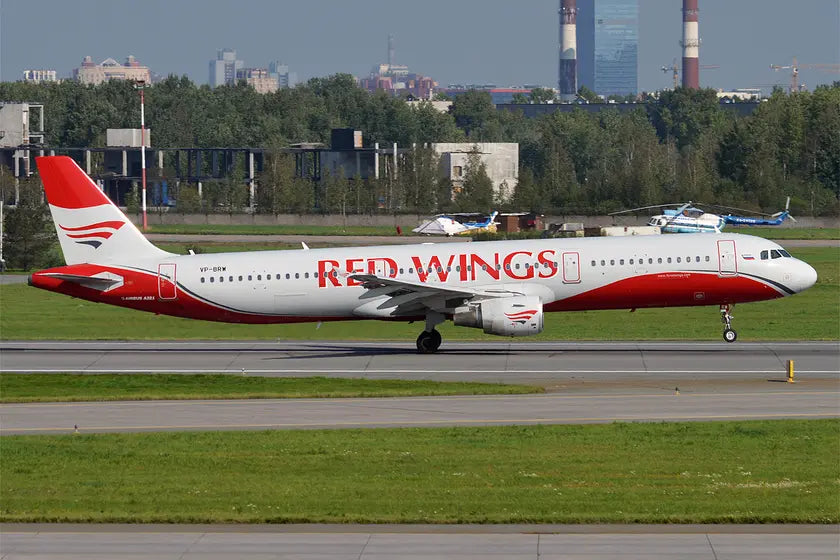
Red Wings operates one of Russia's most diverse fleets, combining Russian-built regional jets, Western narrow-bodies, and ageing wide-body aircraft. The fleet has been evolving rapidly in response to Western sanctions, with an increasing focus on domestically-manufactured aircraft. The airline has recently introduced restored Tupolev Tu-214s and plans to add Ilyushin Il-114-300 turboprops — making it the launch customer for the latter type.
| Aircraft Type | Role | In Service | Routes / Notes |
|---|---|---|---|
| Sukhoi Superjet 100 (SSJ100) | Regional Jet | 22 | Fleet backbone. 95-seat config. Regional domestic routes bypassing Moscow. SaM146 engines. |
| Boeing 777-200ER | Wide-body | 3 | Long-haul charter (Phuket, Sri Lanka). Avg. age 28.4 yrs. ~412 pax high-density. |
| Tupolev Tu-214 | Narrow-body | 2 | Restored ex-Transaero aircraft. 194–210 seats. PS-90A engines. Yerevan, Georgia, Israel routes. |
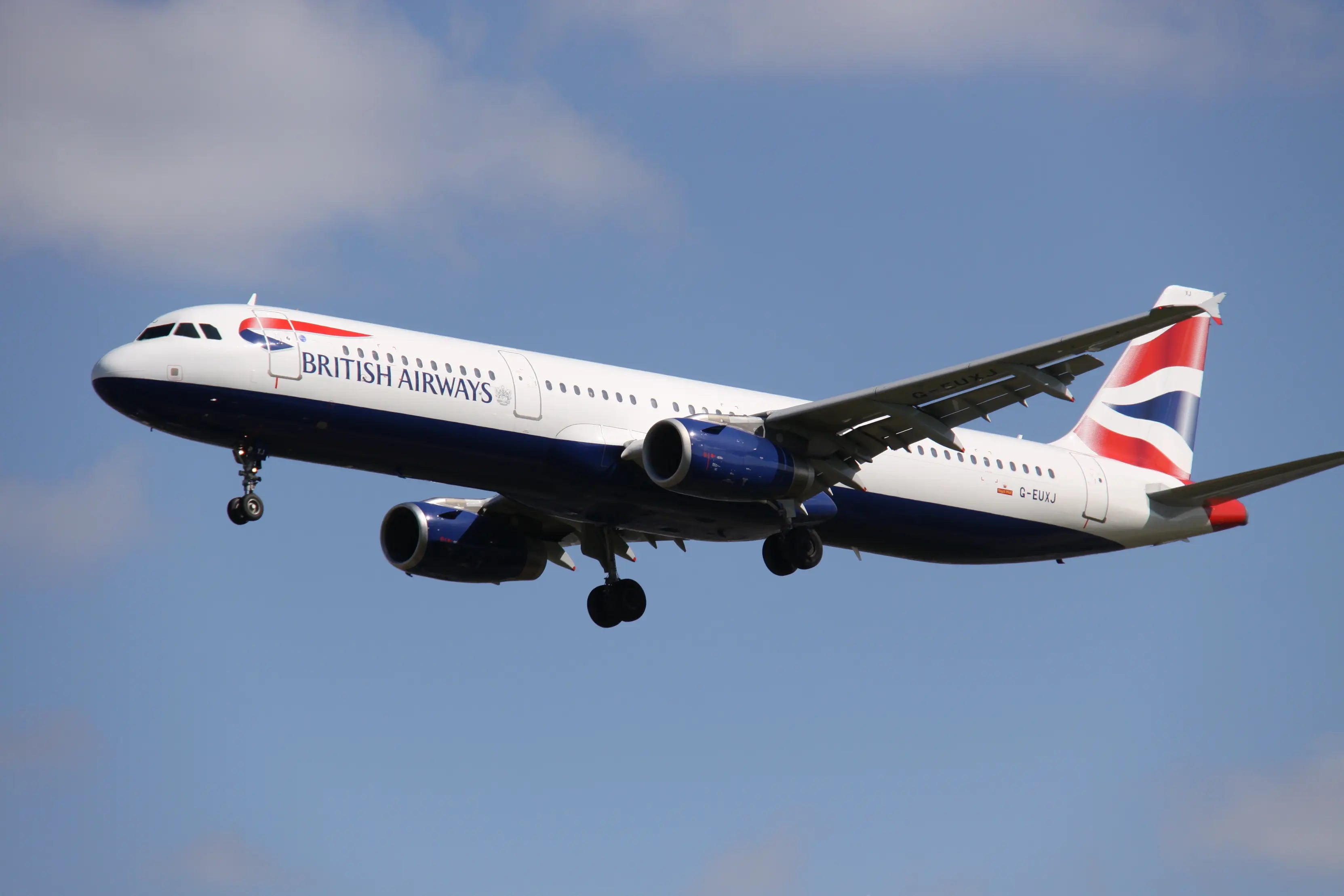
| Airbus A320-200 | Narrow-body | ~4 | Medium-haul scheduled and charter. ~140 pax economy. |
| Airbus A321-200 | Narrow-body | ~8 | Higher-capacity routes. ~200 pax economy. Moscow, Sochi, Turkey, UAE routes. |
Fleet data as of early 2026. Numbers are approximate based on Airfleets and official Red Wings data.
Upcoming Fleet Additions
| Aircraft Type | Expected | Quantity | Notes |
|---|---|---|---|
| Ilyushin Il-114-300 | 2026 | 3 | Turboprop regional. Red Wings as launch customer. Unpaved runway capability. |
| Additional Tu-214 | 2026–2027 | TBD | Continued fleet expansion with restored and new-build Russian aircraft. |
Red Wings pilots may need to hold type ratings across four fundamentally different aircraft families — Airbus (A320 family), Boeing (777), Sukhoi (SSJ100), and Tupolev (Tu-214) — each with distinct system architectures, flight laws, and emergency procedures. This multi-type environment creates significant ongoing training obligations but also builds an unusually broad skillset. The shift toward Russian-built aircraft means pilots increasingly need proficiency on platforms rarely seen outside the CIS aviation market.
Pilot Salary & Compensation Breakdown
Red Wings does not publicly disclose pilot compensation details. The figures below are compiled from Russian aviation industry surveys, government salary databases, and pilot forums. Russian airline pilot pay is substantially lower than Western equivalents in absolute terms, though purchasing power within Russia provides more context. All figures are gross annual estimates in Russian Rubles (RUB) with approximate USD equivalents at March 2026 exchange rates (~100 RUB = $1 USD).
First Officer (Second Pilot) Estimated Pay
| Experience Level | Monthly (RUB) | Annual Gross (RUB) | Annual (USD est.) |
|---|---|---|---|
| Entry-level FO | 50,000 – 80,000 | 600,000 – 960,000 | ~$6,000 – $9,600 |
| Mid-career FO (3–5 yrs) | 80,000 – 100,000 | 960,000 – 1,200,000 | ~$9,600 – $12,000 |
| Senior FO (5+ yrs) | 100,000 – 125,000 | 1,200,000 – 1,500,000 | ~$12,000 – $15,000 |
Captain Estimated Pay
| Experience Level | Monthly (RUB) | Annual Gross (RUB) | Annual (USD est.) |
|---|---|---|---|
| Junior Captain | 135,000 – 170,000 | 1,636,000 – 2,000,000 | ~$16,400 – $20,000 |
| Mid-career Captain | 170,000 – 220,000 | 2,000,000 – 2,600,000 | ~$20,000 – $26,000 |
| Senior Captain (widebody) | 220,000 – 245,000 | 2,600,000 – 2,930,000 | ~$26,000 – $29,300 |
Allowances & Per Diems
| Component | Amount | Notes |
|---|---|---|
| Domestic per diem | 700 RUB/day (~$7) | Government-established rate for domestic overnight travel. |
| International per diem | 2,500 RUB/day (~$25) | Government-established rate for international travel. |
| Night/overtime premiums | Variable | Regulated by Russian labor code. Typically 1.5x–2x base rate. |
Figures are rough estimates from industry-wide Russian aviation salary data. Red Wings-specific numbers are not publicly available.
These salary figures appear extremely low by Western standards but must be viewed in the context of Russian cost of living. The average Russian salary in 2025 was approximately 75,000–85,000 RUB/month, meaning even entry-level FO pay is broadly in line with national averages. Captain salaries place pilots in Russia's upper-middle class. However, post-2022 inflation and sanctions-driven cost increases (particularly for imported goods) have eroded purchasing power. The CEO of Red Wings has publicly acknowledged financial pressures from spare parts costs increasing 2–3x since sanctions while government subsidies remain frozen at 2020 levels — which may constrain compensation growth.
Roster Pattern & Quality of Life
Specific rostering details for Red Wings are not publicly disclosed. The information below reflects general Russian aviation regulatory requirements (aligned with ICAO standards) and industry norms for carriers of comparable size and route structure.
📅 Estimated Sample Month — Regional FO (SSJ100, DME Base)
Red Wings' regional and medium-range route structure means shorter individual flight segments (1.5–4 hours) compared to long-haul operations. Pilots operating the SSJ100 fleet on regional domestic routes may complete 3–4 sectors per duty day, accumulating 6–8 block hours. The Boeing 777 long-haul charter operations to destinations like Phuket (8–10 hours) follow a completely different pattern with longer layovers and fewer monthly duty days.
Red Wings' three operational bases create significant lifestyle considerations. Moscow Domodedovo (DME) is the primary hub — located ~40 km south of central Moscow with notoriously congested access. Yekaterinburg Koltsovo (SVX) is the secondary hub, 1,800 km east of Moscow, serving the Urals region. Zhukovsky (ZIA) is the third base, south of Moscow. Pilots based far from their home city face relocation or complex commuting across Russia's vast distances. Government per diem rates of just 700 RUB/day ($7) are insufficient to cover accommodation in major cities, placing a financial burden on commuting pilots.
Benefits, Travel Perks & Retirement
Red Wings does not publicly disclose its employee benefits package. The information below reflects Russian labor law requirements and standard practices in the Russian aviation industry. Specific details should be verified during the interview process.
The lack of publicly available information about Red Wings' benefits package is a notable gap. Unlike major Western carriers where union-negotiated contracts are often publicly accessible, Russian airline employment terms are typically confidential. Prospective pilots should request detailed benefits documentation during the hiring process. The absence of an international alliance means staff travel perks are limited to Red Wings' own network — a significant disadvantage compared to carriers within SkyTeam, Star Alliance, or oneworld.
Career Progression & Seniority
Career progression at Red Wings follows a seniority-based model typical of international airlines, though specific timelines are not publicly documented. The airline's diverse fleet and expanding operations create multiple pathways for pilot development, from regional SSJ100 operations to wide-body Boeing 777 flying.
| Career Milestone | Typical Timeline | Notes |
|---|---|---|
| Join as First Officer (SSJ100 or A320) | Day 1 | Most likely entry fleet for new hires. SSJ100 regional operations from SVX or DME. |
| Transition to different type | 2–5 years | Move between SSJ100, A320/A321, Tu-214 based on fleet needs and seniority. |
| Captain upgrade | 5–10 years (est.) | Depends on fleet growth, retirements, and individual performance assessments. |
| Wide-body Captain (B777) | 10+ years | Limited positions given only 3 B777 in fleet. Most senior pilots. |
| Training Captain / Examiner | Variable | Requires instructor qualification. Increasingly important with fleet diversification. |
Red Wings' fleet expansion (Tu-214, Il-114-300 on order) and the broader Russian aviation industry's need for pilots following sanctions-era disruption create potential acceleration of career progression timelines. The airline's multi-type operations offer rare breadth of experience — few airlines worldwide operate four distinct aircraft families simultaneously. However, Red Wings' limited international network post-sanctions constrains exposure to global aviation practices, and type ratings on Russian aircraft (SSJ100, Tu-214, Il-114) have limited transferability to Western carriers.
Recruitment Process & Requirements
Red Wings does not appear in major international pilot recruitment databases (AviaPersonnel, FlightDeckFriend, etc.), suggesting the airline recruits primarily through Russian-language channels, flight schools, and internal referral networks. The hiring process is closed to most international applicants.
Estimated Minimum Requirements
Estimated Selection Process
Application
Submitted through Russian-language recruitment channels. CV, license copies, and flight time records required. Online application via Red Wings' corporate portal or Russian aviation job boards.
Document Verification
License validation, flight time verification, and medical certificate review by airline HR and flight operations department.
Technical Interview & Simulator Assessment
Technical knowledge evaluation and simulator proficiency check on assigned aircraft type. Assessment of CRM skills, emergency procedures, and decision-making under pressure.
Security Clearance & Contract
Background check by Russian security services. Upon clearance, employment contract issued with base assignment and initial fleet designation.
International pilots seeking employment at Red Wings face significant barriers: Russian language fluency is non-negotiable, foreign license validation by Rosaviatsiya is complex, and the airline shows no evidence of active international recruitment in 2025–2026. The post-sanctions environment has further isolated Russian aviation from international talent pools. For Russian-trained pilots, Red Wings represents a viable career option among Russia's mid-tier carriers, with the advantage of multi-type fleet experience.
Top 5 Destinations & Route Network
Red Wings' route network spans over 100 destinations, with a focus on domestic Russian connectivity and seasonal international charter services. Since Red Wings primarily operates regional and medium-haul routes, most flights involve same-day returns rather than traditional overnight layovers. The long-haul B777 charter operations offer the main overnight layover opportunities.
Unlike major Western airlines where exotic long-haul layovers are a major career perk, Red Wings' network is predominantly domestic and short-haul. Most regional SSJ100 routes involve same-day returns with no overnight layover. The limited international network has shrunk further post-sanctions, with EU and US destinations eliminated entirely. The few remaining international routes serve CIS countries, Turkey, UAE, and select Asian charter destinations. Pilots seeking diverse international layover experiences will find Red Wings' offerings limited compared to carriers like Aeroflot.
How Red Wings Compares: Airline Radar Chart
How does Red Wings stack up against Russia's two other major carriers — Aeroflot (flag carrier) and S7 Airlines (largest private Russian airline)? Below is our comparative analysis across the same six metrics used in the scorecard above.
Key Takeaways from the Comparison
Aeroflot dominates on every metric. As Russia's flag carrier with a fleet of 180+ aircraft, Aeroflot offers substantially higher salaries (senior captains reportedly earning 4–5M+ RUB/year), a far more extensive international route network, stronger job security through government ownership, and comprehensive benefits. It is the aspirational employer for Russian pilots.
S7 Airlines offers a middle ground. Russia's largest private carrier operates a modern Airbus fleet (A320neo family and 737 MAX) from its Novosibirsk and Moscow bases. Compensation and benefits sit between Red Wings and Aeroflot, with a more predictable operational environment and newer aircraft fleet.
Red Wings trails on salary and fleet quality. Lower compensation, an aging and heterogeneous fleet (28-year-old B777s alongside new SSJ100s), and limited benefits transparency place Red Wings at a competitive disadvantage for pilot recruitment. The airline's strengths are its multi-type fleet diversity and government-supported regional mission — but these are niche advantages.
Scores are editorial estimates based on publicly available salary data, pilot forums, fleet age data, route network analysis, and industry benchmarks. The Russian aviation industry is notably opaque regarding employment conditions, so scores involve more estimation than comparable Western airline assessments. Individual experiences will vary significantly based on fleet assignment, base location, and seniority.
Safety Record & Operational Culture
Red Wings' safety record includes several significant incidents that prospective pilots should be aware of. Understanding the airline's operational history provides important context about the working environment, aircraft reliability expectations, and safety culture.
Red Wings underwent an IATA IOSA (Operational Safety Audit) in April 2025, demonstrating commitment to meeting international safety standards. However, the pattern of incidents across multiple aircraft types — mechanical failures, fire suppression system malfunctions, runway excursions — suggests that pilots must operate with heightened vigilance for systems failures. The aging Boeing 777 fleet (28+ years) and sanctions-constrained spare parts supply add operational complexity. Pilots at Red Wings should expect a working environment where non-normal situations may occur more frequently than at carriers with newer, more homogeneous fleets.
Verdict: Who Is Red Wings For?
🎯 Our Take
Red Wings Airlines occupies a unique niche in Russian aviation — a mid-sized hybrid carrier that offers exceptional fleet diversity (four aircraft families) and plays an important social role connecting remote Russian communities. For Russian-licensed pilots seeking multi-type experience or an entry into commercial aviation, Red Wings provides genuine opportunities that may not be available at more selective carriers like Aeroflot.
The trade-offs are significant: compensation is modest even by Russian standards, the fleet includes aging aircraft with documented reliability concerns, benefits transparency is poor, and the post-sanctions environment creates operational uncertainties around spare parts, aircraft availability, and long-term fleet planning. The limited international network means fewer layover perks and less exposure to global aviation standards compared to flag carriers.
Red Wings is best suited for Russian-trained pilots in the early-to-mid stages of their career who want to build diverse type-rating experience, are comfortable operating in a challenging operational environment, and view the position as a stepping stone or a stable mid-career option within Russian aviation.
1 Can non-Russian pilots apply to Red Wings?
In practice, Red Wings appears to recruit exclusively through Russian-language channels and does not actively seek international pilots. Non-Russian applicants would need fluent Russian, a license validated by Rosaviatsiya (Russia's civil aviation authority), appropriate work permits, and security clearance from Russian authorities. The post-sanctions environment has further reduced international recruitment activity across all Russian airlines.
2 What aircraft types will I fly?
Red Wings operates the Sukhoi Superjet 100, Airbus A320/A321, Boeing 777-200ER, and Tupolev Tu-214. Fleet assignment depends on operational needs and seniority. The SSJ100 fleet (22 aircraft) is the most common assignment. The airline plans to add Ilyushin Il-114-300 turboprops in 2026, potentially introducing a fifth aircraft family. Pilots may hold ratings on multiple types simultaneously.
3 How does Red Wings compare to Aeroflot for pilots?
Aeroflot is significantly more attractive on virtually every metric: higher salaries, a newer and more modern fleet, extensive international network, stronger job security through government ownership, and more comprehensive benefits. Red Wings' advantage lies in potentially faster career progression at a smaller airline, greater fleet diversity, and a less competitive hiring process. Many pilots view Red Wings as a stepping stone toward Aeroflot or other major carriers.
4 Is Red Wings safe to fly for?
Red Wings underwent an IATA IOSA safety audit in April 2025 and operates under Rosaviatsiya regulatory oversight. However, the airline has experienced notable incidents including a fatal crash in 2012, engine fires in 2018 and 2025, and multiple runway excursions. The aging Boeing 777 fleet (avg. 28 years) and sanctions-related spare parts challenges add operational complexity. Pilots should expect a working environment that requires heightened vigilance compared to carriers with newer fleets.
5 What bases are available?
Red Wings operates from three main bases: Moscow Domodedovo (DME), Yekaterinburg Koltsovo (SVX), and Zhukovsky (ZIA). Moscow Domodedovo is the primary hub and headquarters. Base assignment depends on operational needs and seniority. Pilots not residing near their assigned base may need to relocate or establish commuting arrangements across Russia's vast distances.
6 How much do Red Wings pilots earn?
Red Wings does not publicly disclose pilot salaries. Based on Russian aviation industry data, captain compensation is estimated at 1.6–2.9 million rubles annually (~$16,000–$29,000 USD), while first officers earn approximately 600,000–1.5 million rubles (~$6,000–$15,000 USD). These figures are modest by international standards but represent middle-to-upper-class income within Russia. Per diem allowances are government-regulated at 700 RUB/day domestic and 2,500 RUB/day international.
7 What impact have sanctions had on operations?
Western sanctions since 2022 have significantly impacted Red Wings' operations. Spare parts costs have increased 2–3x according to the CEO. The SSJ100 engines (PowerJet SaM146, a Franco-Russian joint venture) lost Safran maintenance support. Western destinations have been eliminated from the route network. The airline has responded by expanding its Russian-built aircraft fleet (Tu-214, planned Il-114-300) and focusing on CIS and Asian destinations. These changes affect pilot workload, fleet reliability, and career development opportunities.
8 Are type ratings on Russian aircraft transferable internationally?
Type ratings on Russian-built aircraft (SSJ100, Tu-214, Il-114-300) have very limited transferability to Western carriers, as these types are operated almost exclusively by CIS airlines. Airbus A320/A321 and Boeing 777 type ratings are globally recognized and transferable, though pilots would need to revalidate their license with the relevant foreign aviation authority (EASA, FAA, etc.) before operating for a non-Russian carrier.
Official Links & Resources
Before applying or making any career decisions, always verify information directly with official sources. Below are the key websites and organisations relevant to Red Wings pilot careers:
Bookmark RuAviation (ruavia.su) — it's one of the few English-language sources covering Russian aviation industry developments in detail, including Red Wings fleet acquisitions, route launches, and regulatory changes. For Russian-language coverage, aviaforum.ru and frequentflyers.ru host active pilot and aviation enthusiast communities with insider perspectives on Russian carrier operations.