

Boeing 737 MAX 10: Program Launch, Development and Key Milestones
The Boeing 737 MAX 10 is the largest member of the 737 MAX family, itself the fourth generation of a single-aisle line that first flew in 1967. The MAX family exists because Boeing needed a re-engined answer to the Airbus A320neo. The board approved the 737 MAX program in August 2011, pairing the airframe with CFM International LEAP-1B turbofans for lower fuel burn. The MAX 10 was created to close the top of that range, giving airlines a high-density variant positioned directly against the A321neo.
Boeing officially launched the aircraft at the Paris Air Show on 19 June 2017, announcing capacity for up to 230 passengers and lower trip and seat-mile costs than its rival. The variant arrived with strong commercial backing: within days of launch Boeing reported 361 orders and commitments from 16 customers. The official launch release details the design changes that define the aircraft, including a 66-inch fuselage stretch over the MAX 9 and a levered main landing gear.
The development path was shaped by the wider MAX crisis. Following the Lion Air accident in October 2018 and the Ethiopian Airlines accident in March 2019, both linked to the MCAS system on the MAX 8, the entire family was grounded worldwide. The FAA rescinded the grounding in November 2020 after changes to MCAS, revised training and additional modifications. These events, combined with the pandemic, pushed the MAX 10 timeline back repeatedly.
Key milestones for the variant:
- 19 June 2017: program launch at the Paris Air Show.
- 18 June 2021: first flight, from Renton, Washington, to Boeing Field.
- Certification targets slipped from an original 2020 goal, to 2023, and subsequently toward 2026 as testing continued.
Certification proved the most contentious chapter. A U.S. statutory December 2022 deadline required new transport designs to meet updated crew-alerting standards, a rule that directly affected the MAX 7 and MAX 10. Boeing sought and obtained legislative relief, allowing certification to proceed with agreed safety enhancements rather than a fully redesigned crew-alerting system. Full type approval from the FAA and later EASA remained outstanding as testing advanced, including a redesign of the engine anti-ice system.
What sets the 737 MAX 10 apart
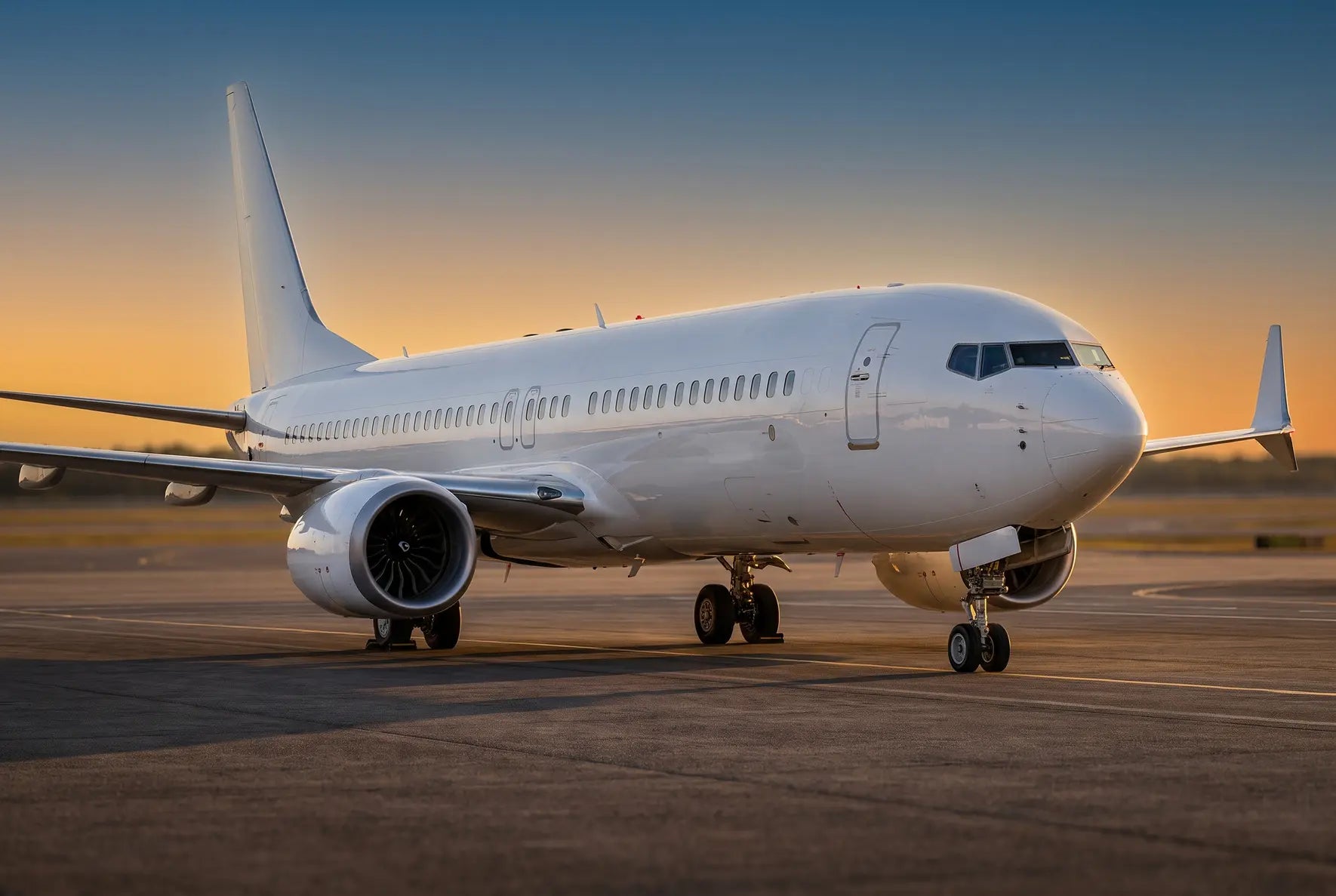
The MAX 10 differs from its closest sibling, the 737 MAX 9, mainly through fuselage length, landing-gear geometry and seat count. Boeing added roughly 66 inches (about 1.6 m) of fuselage, raising typical two-class capacity to around 188 to 204 seats and maximum capacity toward 230. To rotate this longer body on takeoff without tail strikes, engineers introduced a semi-levered (levered) main landing gear that extends the effective wheel position during rotation, letting the variant operate from the same runways as shorter 737s. The high-density focus explains its role as Boeing's principal answer to the A321neo in the largest single-aisle segment, a class of aircraft increasingly deployed on longer domestic and leisure routes, including the kind of demanding operations flown by carriers such as Hawaiian Airlines.
The following identifiers summarise what distinguishes this variant:
- Engines: CFM International LEAP-1B high-bypass turbofans.
- Fuselage: approximately 43.8 m long, about 66 inches longer than the MAX 9.
- Landing gear: levered (semi-levered) main landing gear for takeoff rotation clearance.
- Capacity: roughly 188 to 204 seats in two classes, up to 230 in single class.
- Range: about 3,300 nautical miles (6,100 km).
- Maximum takeoff weight: approximately 92,000 kg (about 203,000 lb).
Anchor customers underline the variant's market position, with United Airlines, Vietjet Air, Lion Air and Flydubai among the largest order holders. Produced by Boeing Commercial Airplanes, a division of The Boeing Company, the 737 MAX 10 continues the long evolution of a family that has served the single-aisle market for more than half a century.

A Boeing 737 Max 9 operated by Alaska Airlines is captured mid-flight against a clear blue sky. The aircraft features the distinctive Alaska Airlines livery with a prominent logo on the tail.
Boeing 737 MAX 10: Technical Specifications, Systems and Engines
The Boeing 737 MAX 10 is the largest member of the 737 MAX family, stretched to carry more passengers than the MAX 9 while sharing the same wing, systems and single-aisle architecture. Its mission is high-density, short-to-medium-haul flying, where capacity per departure and low seat-mile cost matter more than long range. The central engineering trade-off is fuselage length versus takeoff geometry: to keep tail clearance on rotation without penalising runway performance, Boeing introduced a semi-levered main landing gear that raises the effective rotation angle, letting the longer airframe use runways comparable to those of shorter MAX variants.
Compared with the earlier Boeing 757-200M, the MAX 10 targets a different niche: it favours efficiency and commonality over the 757's long range and hot-and-high muscle, inheriting the MAX platform's Advanced Technology winglets, updated avionics and CFM LEAP-1B propulsion.
- Overall length: 43.8 m (143 ft 8 in), the longest 737 built
- Wingspan (with AT winglets): 35.9 m (117 ft 10 in)
- Height: 12.3 m (40 ft 4 in)
- Maximum takeoff weight (MTOW): 89,760 kg (197,900 lb)
- Typical seating: 185-210 in two-class; up to 230 single-class
- Range: up to 3,100 nmi (5,740 km) at typical payload
- Engines: 2 x CFM International LEAP-1B
- Cruise speed: approximately Mach 0.79 (operational figure)
- Service ceiling: around 41,000 ft (MAX series)
Systems and handling-relevant technology
The MAX 10 keeps the 737's conventional hydraulically actuated primary flight controls rather than a full fly-by-wire architecture, while using electronic control for the spoilers. The flight deck follows the MAX baseline with large-format displays and modern avionics supplied by Rockwell Collins and Honeywell, supporting flight-management performance computation, autobrake and anti-skid functions common to the family. Engine control is handled by FADEC on the LEAP-1B, and the platform integrates health-monitoring capabilities that assist line maintenance and dispatch reliability.
Published performance numbers vary because they depend on operator choices and conditions. Cabin density, selected MTOW option, actual operating weights, reserve policy, and atmospheric assumptions (temperature, altitude, runway condition and wind) all shift real-world range, field length and cruise figures. Manufacturer values such as the 3,100 nmi range and Mach 0.79 cruise should therefore be read as representative rather than absolute, and definitive certified limits appear in the aircraft's type certificate data sheet.
Engines: the CFM International LEAP-1B
The MAX 10 is powered exclusively by the CFM International LEAP-1B, produced by CFM International, the 50/50 joint venture between GE Aerospace and Safran Aircraft Engines. The LEAP family succeeded the widely used CFM56 and was engineered around advanced materials and aerodynamics to reduce fuel burn, emissions and noise. According to CFM, the LEAP-1B delivers roughly 15% lower fuel consumption and carbon emissions than the CFM56 it replaces. The engine features 3D-woven carbon-fibre composite fan blades and case, ceramic matrix composite (CMC) hot-section parts, additively manufactured fuel nozzles and titanium aluminide airfoils.
CFM lists the LEAP-1B with a fan diameter of 69 inches and maximum takeoff thrust around 28,000 lbf, with ratings tailored across the MAX family. The engine received type certification from both EASA and the FAA. Its siblings power other modern narrowbodies: the LEAP-1A on the Airbus A320neo family and the LEAP-1C on the COMAC C919, giving the LEAP line one of the broadest single-aisle footprints in service.
Boeing 737 MAX 10 vs Airbus A321neo vs 737 MAX 9 vs A321neo LR Specs Comparison
Scroll horizontally to see more →
| Parameter | Boeing 737 MAX 10 | Airbus A321neo | Boeing 737 MAX 9 | Airbus A321neo LR |
|---|---|---|---|---|
| Entry into service | N/A | 2017 | 2018 | 2019 |
| Engines | 2 × CFM International LEAP-1B | 2 × CFM International LEAP-1A or Pratt & Whitney PW1100G-JM | 2 × CFM International LEAP-1B | 2 × CFM International LEAP-1A or Pratt & Whitney PW1100G-JM |
| Length | 43.8 m | 44.5 m | 42.2 m | 44.5 m |
| Wingspan | 35.9 m | 35.8 m | 35.9 m | 35.8 m |
| Height | 12.4 m | 11.8 m | 12.3 m | 11.8 m |
| Typical seating and layout (short description + approximate passengers) | 2-class: 188–204 passengers | 2-class: 180–220 passengers | 2-class: 178–193 passengers | 2-class: 180–200 passengers |
| MTOW | 89.8 t | 97 t | 88.3 t | 97 t |
| Range | 3,300 nm | 4,000 nm | 3,550 nm | 4,000 nm |
| Cruise speed | 0.79 Mach | 0.78 Mach | 0.79 Mach | 0.78 Mach |
| Service ceiling | 41,000 ft | 39,800 ft | 41,000 ft | 39,800 ft |
| Program note | Largest Boeing 737 MAX variant, optimized for high-capacity short- and medium-haul routes. | Baseline high-capacity Airbus A321neo narrow-body, primary competitor to larger 737 MAX variants. | Stretched Boeing 737 MAX member offering more seats than MAX 8 while retaining similar range. | Longer-range A321neo version targeting transcontinental and selected transatlantic narrow-body missions. |
Scroll horizontally to see more →
The table compares key specs of the 737 MAX 10, A321neo, 737 MAX 9 and A321neo LR, covering engines, dimensions, seating, MTOW, range and performance. A321 variants are slightly longer and offer higher MTOW (97 t) and longer range (4,000 nm) than the MAX 10 (3,300 nm) and MAX 9 (3,550 nm). Boeing models cruise a bit faster (Mach 0.79) and have higher ceilings (41,000 ft). Seating overlaps, with MAX 10 generally the highest-capacity 737 option.
Boeing 737 MAX 10 Operations, Routes and Airlines Worldwide
The Boeing 737 MAX 10 is the largest and highest-capacity member of the 737 MAX family, conceived as a high-density workhorse for short- and medium-haul flying. Its stated design range is up to 3,100 nautical miles (5,740 km) according to Boeing's official specifications, with several technical sources quoting up to roughly 3,300 nautical miles (about 6,110 km) under favourable payload and reserve assumptions. In practice, most daily missions fall in the 500 to 2,000 nautical mile band, meaning sectors of roughly one to three hours, with longer legs of up to around 3,000 nautical miles reserved for transcontinental or leisure routes. Because the aircraft trades range for seats, it holds the shortest reach in the MAX family, a point often noted when comparing it with the longer-legged Airbus A321neo family.
Modern single-aisle jets of this class are typically scheduled for around 8 to 12 block hours per day, with ultra-high-utilisation low-cost carriers pushing toward the upper end and network carriers with more complex banks operating closer to the lower end. Operators use the type in two broad ways. At full-service airlines it fits hub-and-spoke networks, serving high-demand trunk routes between major hubs and large focus cities where a widebody would be excessive but capacity above a MAX 8 or MAX 9 is welcome. At low-cost and hybrid carriers it supports dense point-to-point flying, including busy leisure city pairs and some cross-border sectors.
Operators do face challenges. The stretched fuselage and a maximum take-off weight near 89,760 kg (about 197,900 lb) mean longer take-off runs and greater tail-strike sensitivity, which Boeing addressed with a revised body contour and modified landing-gear geometry. Runway length can constrain deployment at shorter or hot-and-high airports when operating near maximum weight. The most visible hurdle has been certification: the variant remained uncertified into 2024 to 2025, and delivery uncertainty has forced airlines to keep older narrowbodies such as the 757 and 737-900ER in service longer. Crew planning and pilot recruitment for expanding narrowbody fleets is a related pressure, an issue explored in this look at flying for a regional carrier such as Loganair.
Where the Boeing 737 MAX 10 Operates
Order commitments span several regions, though many first deliveries were still pending as of 2024 to 2025. Across North & South America, large United States network carriers anchor the order book, using the type for high-density domestic trunk and near-international routes, while Brazilian interest points to intra-South American deployment. In Europe, low-cost and leisure carriers are the natural fit for dense point-to-point flying. In Asia and the Middle East, growing low-cost groups and regional operators are set to use the aircraft on high-volume short-haul networks. In Africa, no firm, publicly documented orders for this specific variant have been confirmed.
- North & South America: United Airlines is the largest customer, with orders reported at around 100 aircraft or more to replace ageing 757s and 737-900ERs on hub trunk routes; Delta Air Lines has committed to the 737-10 with deliveries indicated from 2025, as noted in its media kit; GOL Linhas Aereas of Brazil is listed among customers for regional and domestic use.
- Europe: Pegasus Airlines, based in Turkey, ordered up to 200 of the 737-10 for dense low-cost operations, as confirmed by Boeing's announcement.
- Asia and the Middle East: Lion Air of Indonesia, VietJet Air of Vietnam and flydubai of the United Arab Emirates appear among customers due to receive the variant for high-density short-haul and regional international flying.
- Africa: no specific carrier with a firm, publicly documented order for this variant has been identified in authoritative sources.
Typical Seating and Cabin Layouts
Cabin configurations vary with operator type. Boeing publishes a typical two-class range of 185 to 210 seats and a maximum of 230 seats, reflecting the exit limit for a high-density single-class layout. Network carriers generally favour two-class cabins, pairing a small business or premium section with economy, with documented example layouts around 204 seats, such as 16 business and 188 economy, and reference configurations near 189 seats. Leisure and low-cost operators lean toward all-economy, high-density arrangements approaching the 230-seat maximum, typically in a 3-3 layout. The Boeing 737 MAX page remains the primary reference for these figures, and individual airline fleet and seat-map pages are the best sources for confirmed cabin details once aircraft enter service.
In this video, take a look inside the Boeing 737 MAX 10 at the Farnborough International Airshow, focusing on its very low overhead luggage racks, and learn why Delta has already placed an order for the aircraft.
Boeing 737 MAX 10 Safety Record and How Safe It Really Is
The Boeing 737 MAX 10 is the largest member of the 737 MAX family, sized to compete with jets such as the Airbus A321neo. Because the variant is still completing its FAA certification process and has not yet entered commercial service, it has no in-service accident or serious incident history of its own. Any realistic assessment of how safe the MAX 10 is likely to be must therefore draw on the operational record of its closest sub-variants, the MAX 8 and MAX 9, which share the same airframe, systems architecture and flight-control philosophy. Those variants now accumulate millions of flights and cycles each year across large global fleets, and understanding their record puts the MAX 10's expected safety profile into context.
Major accidents and serious incidents in the 737 MAX family
Three events shaped the safety story of the platform the MAX 10 belongs to.
- Lion Air Flight 610 (Lion Air, 2018): A MAX 8 was lost shortly after departure. Investigators identified the Maneuvering Characteristics Augmentation System (MCAS), which could command repeated nose-down trim from a single erroneous angle-of-attack input, as a central factor. Details are held in the Aviation Safety Network record.
- Ethiopian Airlines Flight 302 (Ethiopian Airlines, 2019): A second MAX 8 was lost under similar circumstances, again involving MCAS activation and erroneous sensor data. The two accidents led to a worldwide grounding of the type.
- Alaska Airlines Flight 1282 (Alaska Airlines, 2024): A MAX 9 suffered a door plug blowout during climb, tied to manufacturing and quality-control issues rather than a flight-control law problem. All occupants survived, and the event is documented by the NTSB.
The response was substantial. MCAS was redesigned so it can no longer repeatedly trim the aircraft nose-down and now cross-checks multiple sensors. Abnormal and runaway-stabilizer procedures were revised, MAX-specific pilot training was strengthened, and global regulators including the EASA imposed additional certification scrutiny. After the door plug event, tighter production inspections and oversight were applied to MAX 9 manufacturing and delivery. These changes carry directly into the MAX 10, which is certified against the post-grounding standard.
How safe is the Boeing 737 MAX 10?
Once in service, the MAX 10 is expected to reflect the corrected design philosophy and reinforced oversight that now govern the family. Accident rates are best judged against traffic volume: the returned MAX fleet has flown millions of revenue flights, and serious-event rates have remained very low relative to that activity. Standard operating procedures, recurrent simulator training and the layered certification requirements applied by the FAA and EASA all contribute to that outcome, as does the broader safety culture built through crew discipline and reporting, a theme explored in this look at pilot working conditions at Smartwings. For a wider statistical view, industry data compiled by IATA consistently show long-term improvement in commercial aviation safety. Taken together, the design corrections, procedural changes and regulatory oversight position the MAX 10 to perform in line with modern narrowbody standards, and aviation remains one of the safest modes of transport available.
01 What typical routes and range does the Boeing 737 MAX 10 operate on?
The Boeing 737 MAX 10 is designed for short- to medium-haul flights, with a maximum range of about 3,300 nautical miles (around 6,110 km). This makes it suitable for dense domestic routes, transcontinental services, and regional international flights such as North America coast-to-coast or intra-Europe and Asia routes. Airlines are expected to deploy it on high-demand city pairs where passenger numbers justify a larger narrow-body aircraft. Its range and capacity allow it to replace or complement older 737s and compete directly with aircraft like the Airbus A321neo on similar missions.
02 How many passengers can the Boeing 737 MAX 10 carry and what is the cabin like?
The Boeing 737 MAX 10 typically seats about 188 to 204 passengers in a two-class layout, with a maximum single-class capacity of up to 230 seats depending on the airline’s configuration. The cabin features the Boeing Sky Interior, with sculpted sidewalls, larger-looking windows, and LED mood lighting designed to make the cabin feel more spacious and comfortable. Standard 3-3 seating and a single aisle mean boarding and deplaning are similar to other 737s, but the stretched fuselage offers more seat rows for airlines focusing on capacity. Overhead bins and lighting are optimized to improve the sense of space and reduce clutter in the cabin.
03 What is the passenger experience like on a Boeing 737 MAX 10 in terms of comfort and noise?
The Boeing 737 MAX 10 benefits from quieter LEAP-1B engines and aerodynamic improvements that reduce overall noise levels compared with many older 737 variants. Cabin noise is usually moderate, with the quietest experience found toward the front and in front of the wings, rather than near the engines and trailing edge. Seat comfort depends heavily on the airline; some carriers offer slimline seats and tighter pitch to maximize capacity, while others provide more legroom and upgraded seats. The Sky Interior lighting and improved air systems aim to reduce fatigue on medium-haul flights, making the overall experience comparable to or slightly better than late-generation 737 and other modern single-aisle jets.
04 Which airlines are expected to operate the Boeing 737 MAX 10 and on what kind of routes?
Major carriers that already fly other Boeing 737 MAX variants, such as large North American and international airlines, are the most likely operators of the Boeing 737 MAX 10 as it enters service. These airlines plan to use the MAX 10 on busy trunk routes, high-frequency domestic services, and regional international flights where demand is strong but a widebody aircraft is not necessary. It is particularly suited to routes competing with Airbus A321neo services, where high seat counts and good operating economics are important. Over time, passengers can expect to see the Boeing 737 MAX 10 on many popular business and leisure routes with high daily frequencies.
05 How does the Boeing 737 MAX 10 perform in terms of fuel efficiency and role compared with similar aircraft?
The Boeing 737 MAX 10 uses CFM LEAP-1B high-bypass turbofan engines and advanced winglets to improve fuel burn and reduce emissions versus older 737 generations. This efficiency helps airlines achieve a lower seat-mile cost, especially when the aircraft is operated near its typical capacity of 180–210 passengers. In role and performance, it is positioned as Boeing’s answer to high-capacity single-aisle competitors such as the Airbus A321neo, offering similar range with a focus on maximizing seats on short- and medium-haul routes. Its combination of efficiency and capacity makes it attractive for airlines looking to densify busy routes without moving to widebody aircraft.
06 What should travellers know about safety and seat choice on the Boeing 737 MAX 10?
The Boeing 737 MAX 10 incorporates the same core design improvements introduced across the MAX family, including updated flight control systems, modern engines, and enhanced cockpit technology, following extensive review and regulatory oversight after earlier MAX incidents. From a passenger perspective, the safest and most comfortable seat choice is influenced more by airline layout than by the aircraft model, but travellers who prefer a quieter ride often choose seats forward of the wings and away from the engines. Over-wing seats may experience slightly more vibration during turbulence, while seats near the front can feel smoother, especially in choppy conditions. As with any modern airliner, the Boeing 737 MAX 10 is subject to stringent certification and ongoing safety monitoring before and during airline service.