
Airbus A321neo: History, Program Launch, and Development of the Best-Selling Narrowbody
The Airbus A321neo is the stretched, re-engined member of the A320neo family, developed by European manufacturer Airbus to defend and extend the commercial dominance of its single-aisle product line. The original A321, first flown in March 1993 and introduced with Lufthansa in January 1994, was the largest variant of the A320 family. By the late 2000s, rising fuel costs and growing environmental pressure created demand for a substantially more efficient successor, without the cost and risk of an all-new aircraft design.
Airbus responded by launching the A320neo ("new engine option") family on 1 December 2010. This single program encompassed the A319neo, A320neo, and A321neo. Rather than designing a clean-sheet airframe, Airbus paired the proven A321 fuselage and systems with next-generation engines and aerodynamic improvements. The strategy allowed airlines to retain crew training, maintenance procedures, and operational commonality across the A320 family while achieving significant gains in fuel efficiency, range, and payload.
Key Milestones in the A321neo Program
Development of the A321neo progressed through several well-documented stages:
- December 2010 - Airbus formally launched the A320neo program, including the A321neo, offering airlines a choice of two new-generation engine types: the CFM International LEAP-1A and the Pratt & Whitney PW1100G-JM geared turbofan.
- 9 February 2016 - The A321neo completed its maiden flight from Hamburg-Finkenwerder, Germany, marking the beginning of the flight-test and certification campaign.
- 15 December 2016 - The A321neo powered by Pratt & Whitney PW1100G-JM engines received type certification from EASA, with FAA validation following shortly after under bilateral agreements.
- 1 March 2017 - Airbus achieved simultaneous EASA and FAA certification for the A321neo equipped with CFM International LEAP-1A engines.
- March 2017 - The first A321neo was delivered to Virgin America, leased through GECAS, configured with 184 seats and LEAP-1A engines.
- 31 May 2017 - The A321neo entered commercial service with Virgin America, establishing its operational debut.
- September 2017 - All Nippon Airways (ANA) took delivery of its first A321neo, starting domestic scheduled services in October 2017.
The program was not without challenges. The Pratt & Whitney PW1100G-JM engine family experienced well-documented early-service issues, including rotor bow problems, premature component wear, and extended engine start times. These led to delivery slowdowns and temporary operational restrictions for some operators. The CFM LEAP-1A experienced fewer high-profile teething problems, though both engine families went through typical new-engine maturity processes. Airbus and both engine manufacturers implemented retrofit campaigns and design improvements over subsequent years to resolve these issues.
Another evolution involved the cabin configuration. Early A321neo deliveries used the traditional A321ceo exit door arrangement. Airbus later introduced the Cabin-Flex (ACF) layout, which repositioned and optimized emergency exits to allow denser seating configurations of up to 244 passengers in a high-density layout, compared to roughly 236 seats on the earlier door arrangement. This change was important for low-cost carriers seeking the lowest possible seat-mile cost.
What Distinguishes the Airbus A321neo From Other A321 Variants
The A321neo sits between the older A321ceo (current engine option) and the later A321LR and A321XLR long-range derivatives. The core differences from the A321ceo are the new-generation engines and standard Sharklet wingtip devices, which together deliver approximately 15 to 20 percent lower fuel burn per seat and roughly 500 nautical miles of additional range. Compared to the A321LR and A321XLR, the baseline A321neo does not include the additional centre fuel tanks or higher maximum takeoff weights that enable ultra-long-haul narrowbody operations.
The A321neo has become one of the most popular narrowbody aircraft in commercial aviation, operated by a wide range of carriers. Major operators include airlines such as American Airlines, Lufthansa, JetBlue, Delta Air Lines, Wizz Air, IndiGo, and many others. Its ability to serve as a replacement for the Boeing 757 on longer domestic and transatlantic routes has made it a strategic fleet choice worldwide.
The following list summarises the key variant identifiers for the Airbus A321neo:
- Engine options: CFM International LEAP-1A or Pratt & Whitney PW1100G-JM geared turbofan
- Wingtip devices: Sharklet winglets (standard)
- Typical seating: 180 to 220 passengers (two-class), up to 244 in high-density Cabin-Flex layout
- Maximum takeoff weight: up to approximately 97 tonnes, depending on configuration
- Range: up to approximately 4,000 nm (7,400 km)
- Fuel efficiency: approximately 15-20% lower fuel burn per seat compared to the A321ceo
- Cabin configuration: Cabin-Flex (ACF) option available for optimized seating capacity

The image shows a Wizz Air passenger airplane in mid-flight against a clear blue sky. The aircraft features a distinctive pink and white color scheme with visible branding.
Airbus A321neo Technical Specifications, Systems, and Engine Options
The Airbus A321neo is the largest member of the A320neo family, designed to maximise single-aisle economics on medium- to long-haul routes. Its core design trade-off balances higher maximum take-off weight and extended range against the runway and gate constraints typical of narrowbody operations. The "neo" (New Engine Option) designation reflects two key changes over the A321ceo: next-generation engines (CFM LEAP-1A or Pratt & Whitney PW1100G-JM) and large aerodynamic wingtip devices called Sharklets. Combined, these deliver roughly 15-20% lower fuel burn per seat compared with the previous generation, depending on cabin configuration and mission.
The A321neo inherits full cockpit commonality with the rest of the A320 family, meaning pilots qualified on any A320-family variant require only minimal differences training to transition. This cross-crew qualification philosophy significantly reduces airline training and operational costs. Three sub-variants exist: the standard A321neo, the A321LR (Long Range, with additional centre tanks), and the A321XLR (Extra Long Range, with a structural rear centre tank). The specifications below focus on the baseline A321neo.
- Overall length: 44.51 m
- Wingspan (with Sharklets): 35.80 m
- Height: 11.76 m
- Fuselage external width: 3.95 m
- Maximum cabin width: 3.70 m
- Typical two-class capacity: 180-220 passengers; maximum certified single-class: 244 passengers
- Maximum take-off weight (MTOW): 97,000 kg (213,848 lb); lower MTOW options available
- Maximum landing weight (MLW): 79,200 kg
- Maximum zero fuel weight (MZFW): 75,600 kg
- Typical operating empty weight (OEW): approximately 48,000-49,000 kg (configuration-dependent)
- Fuel capacity: 32,940 litres (standard wing and centre tanks)
- Range: up to 4,000 nm (7,400 km) with approximately 206 passengers in a typical two-class layout
- Maximum operating Mach number (Mmo): M 0.82
- Typical cruise speed: M 0.78 (approximately 450 kt TAS)
- Maximum operating altitude: 39,800 ft
- Engines: CFM International LEAP-1A (up to 33,000 lbf) or Pratt & Whitney PW1100G-JM (up to 33,110 lbf)
- Noise compliance: ICAO Annex 16 Chapter 4 and Chapter 14
- Avionics: Airbus A320-family digital fly-by-wire cockpit with EFIS/ECAM displays and Integrated Modular Avionics (IMA)
- Cargo: up to 10 LD3-45W containers (approximately 51.7 m³ underfloor)
Systems Architecture and Handling Technology
The A321neo uses the Airbus digital fly-by-wire (FBW) flight control system built around three Primary Flight Control Computers (PRIMs), two Secondary Flight Control Computers (SECs), and two Flight Augmentation Computers (FACs). In Normal Law, the system provides load-factor-demand pitch control with automatic trim, bank-angle protection, and full flight-envelope protections including high angle-of-attack (alpha-floor), overspeed, and pitch-attitude limits. Alternate and Direct laws exist for degraded scenarios, and a mechanical backup covers the rudder and trimmable horizontal stabiliser. Because of the A321's longer fuselage, Airbus incorporated a dedicated rotation law with electronic tail-strike protection logic that limits commanded pitch rate when tail clearance becomes critical during take-off.
Braking is managed by a dual-channel Brake and Steering Control Unit (BSCU) providing normal braking via the Green hydraulic system and alternate braking via the Yellow system. Anti-skid modulation, autobrake (LO, MED, MAX/RTO), and nosewheel steering are all integrated within the BSCU. Both engine options use full-authority digital engine control (FADEC) with dual-channel electronic engine controllers, handling everything from automatic start sequencing to thrust scheduling, EGT limit protection, and engine health monitoring. Maintenance is supported by the Centralised Fault Display System (CFDS), which collects real-time data from virtually all line-replaceable units and feeds ECAM cockpit alerts as well as post-flight maintenance reports accessible via the MCDU.
Published performance figures for the A321neo should always be read with context. Range, take-off field length, and payload capability all vary significantly depending on the operator's selected MTOW option, cabin density, atmospheric conditions (temperature, pressure altitude), runway state, and specific engine rating. Airbus publishes detailed performance charts in the A321 Aircraft Characteristics document for precise airport planning, but headline marketing figures represent optimised, standard-day assumptions rather than guaranteed operational values.
Engine Options: CFM LEAP-1A and Pratt & Whitney PW1100G-JM
The A321neo offers a choice between two powerplants, each representing a different technological approach to next-generation narrowbody propulsion. The CFM International LEAP-1A is a conventional direct-drive two-spool turbofan produced by CFM International, the 50/50 joint venture between GE Aerospace and Safran Aircraft Engines. LEAP is the successor to the legendary CFM56, the world's best-selling commercial jet engine. The LEAP-1A introduces 3D-woven carbon-fibre composite fan blades, a Twin Annular Pre-Swirl (TAPS) combustor with 3D-printed fuel nozzles, and ceramic matrix composite (CMC) turbine shrouds. For the A321neo, it delivers a maximum take-off thrust of approximately 33,000 lbf, with a bypass ratio of about 11:1 and a 78-inch (198 cm) fan diameter. The LEAP-1A received joint EASA/FAA type certification in 2015, and the A321neo powered by LEAP-1A was certified in March 2017. Beyond the A320neo family, closely related LEAP variants power the Boeing 737 MAX (LEAP-1B) and the COMAC C919 (LEAP-1C).
The Pratt & Whitney PW1100G-JM belongs to the PW1000G Geared Turbofan (GTF) family. Its defining feature is an epicyclic reduction gearbox between the fan and the low-pressure turbine, allowing the fan to spin more slowly for better propulsive efficiency and lower noise, while the LP turbine operates at higher, more efficient speeds. On the A321neo, the PW1100G-JM produces up to approximately 33,110 lbf of take-off thrust, with a bypass ratio of around 12:1 and a fan diameter of roughly 81 inches (206 cm). The GTF architecture is also used across other platforms: the PW1500G powers the Airbus A220 family, the PW1900G powers the Embraer E-Jet E2 series, and the related PW800 family serves Gulfstream business jets. Both LEAP-1A and PW1100G-JM offer approximately 15% lower specific fuel consumption at engine level compared with the CFM56 and IAE V2500 they replace, with per-seat fuel savings on the A321neo reaching 15-20% versus the A321ceo depending on mission and cabin layout.
Airbus A321neo vs A321ceo vs A321LR vs A321XLR Specifications Comparison
Scroll horizontally to see more →
| Parameter | Airbus A321neo | Airbus A321ceo | Airbus A321LR | Airbus A321XLR |
|---|---|---|---|---|
| Entry into service | 2016 | 1994 | 2018 | 2024 |
| Engines | 2 × CFM LEAP-1A or Pratt & Whitney PW1100G-JM | 2 × CFM56-5B or IAE V2500 | 2 × CFM LEAP-1A or Pratt & Whitney PW1100G-JM | 2 × CFM LEAP-1A or Pratt & Whitney PW1100G-JM |
| Length | 44.51 m | 44.51 m | 44.51 m | 44.51 m |
| Wingspan | 35.80 m | 35.80 m | 35.80 m | 35.80 m |
| Height | 11.76 m | 11.76 m | 11.76 m | 11.76 m |
| Typical seating and layout (short description + approximate passengers) | 2-class: 180–220 passengers | 2-class: 185–220 passengers | 2-class long-range: 206 passengers | 2-class long-range: 180–220 passengers |
| MTOW | 97 t | 93.5 t | 97 t | 101 t |
| Range | 4,000 nm | 3,000 nm | 4,000 nm | 4,700 nm |
| Cruise speed | 0.78 Mach | 0.78 Mach | 0.78 Mach | 0.78 Mach |
| Service ceiling | 41,000 ft | 39,100 ft | 41,000 ft | 41,000 ft |
| Program note | Baseline A320-family neo model; high-capacity single-aisle workhorse with better fuel burn and range than the ceo. | Previous-generation baseline A321; the classic high-density short/medium-haul stretched A320-family airliner. | Long-range variant of the A321neo; adds extra fuel capacity for transatlantic missions and higher-range missions. | Ultra-long-range variant of the A321neo; the flagship single-aisle for the longest missions and premium thin routes. |
Scroll horizontally to see more →
The table compares key specs across the A321 family, showing how the neo generation improves on the ceo and how LR/XLR extend capability. A321neo and A321LR share modern LEAP-1A/PW1100G engines and 97 t MTOW with 4,000 nm range, while the older A321ceo has lower MTOW (93.5 t), shorter 3,000 nm range and a lower ceiling. The A321XLR adds the highest MTOW (101 t) and longest range at 4,700 nm, targeting the longest single-aisle routes.
Airbus A321neo Operations: Typical Routes, Missions and Airlines Worldwide
The Airbus A321neo serves as a versatile workhorse across short-, medium- and, in its LR/XLR variants, long-haul networks. On standard domestic and regional services, it typically covers sectors of 500 to 2,000 nautical miles, translating into flights of roughly one to four and a half hours. Carriers operating the type on these routes commonly achieve four to six flight cycles per day, accumulating between eight and eleven block hours daily. On longer missions flown by the A321LR or A321XLR, stage lengths extend to 2,500 to 4,000 nautical miles or more (five to nine hours), with daily utilisation of around two to four sectors and eight to twelve block hours, depending on scheduling and night-flying patterns.
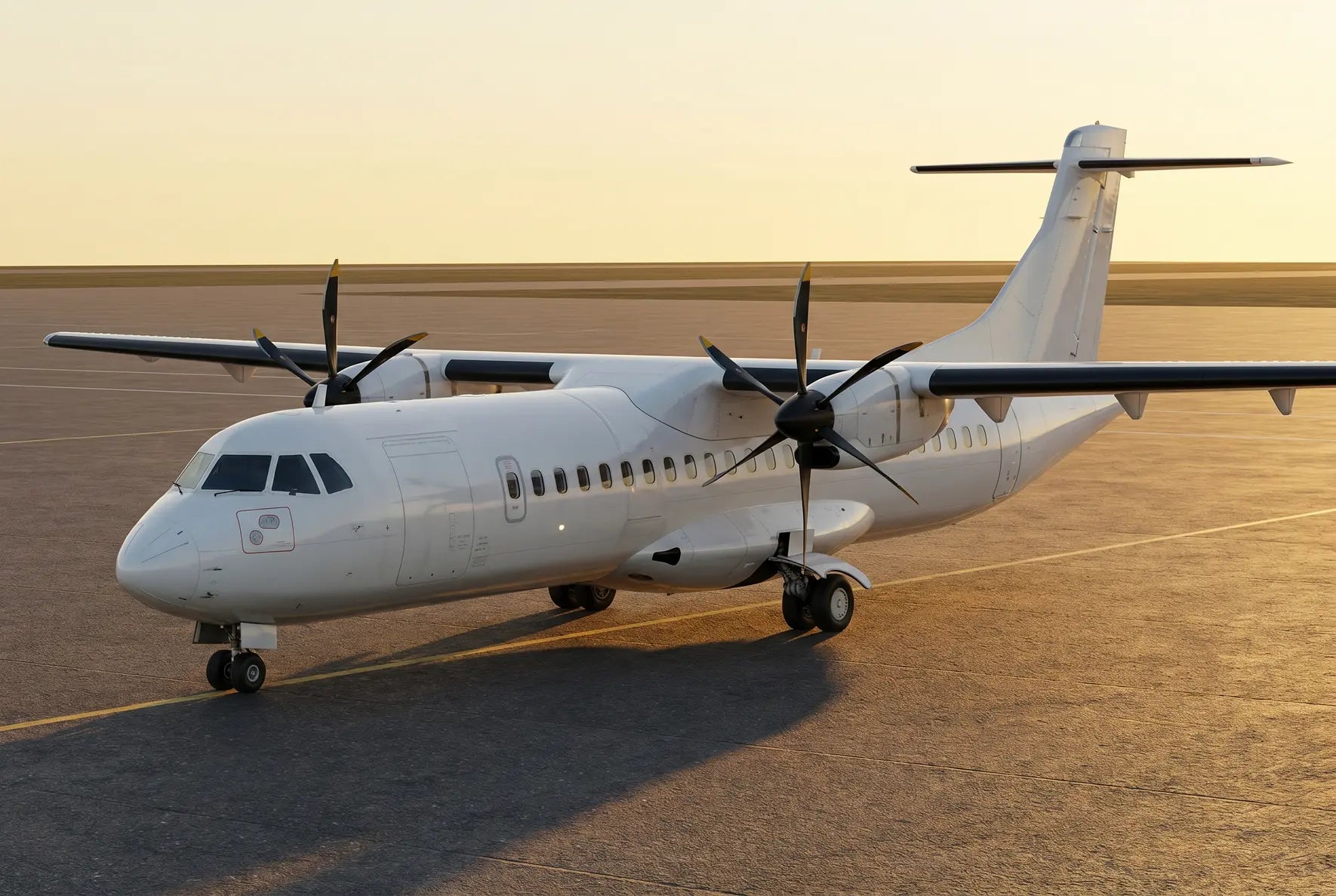
In hub-and-spoke networks, legacy airlines deploy the Airbus A321neo to feed passengers into major intercontinental hubs and to serve dense trunk routes where high capacity and competitive seat-mile costs are essential. Low-cost and ultra-low-cost carriers favour the type equally for point-to-point operations, using its single-aisle efficiency to connect secondary cities without routing through congested hubs. The A321LR and A321XLR have opened a new category of "long thin" point-to-point markets, enabling narrowbody transatlantic crossings and hub-bypass routes that were previously uneconomical. The aircraft operates comfortably from both large international airports and shorter runways at secondary facilities, although operators on longer sectors must balance payload restrictions with fuel requirements, and high-density configurations can extend turnaround times if boarding processes are not optimised. For readers interested in how a very different aircraft fills a regional niche, the ATR 42-600 offers an instructive contrast at the opposite end of the capacity spectrum.
Where the Airbus A321neo Operates Around the World
The Airbus A321neo is now one of the most widely operated single-aisle aircraft on the planet. In Europe, it dominates intra-continental services for both full-service and low-cost carriers, while A321LR variants have enabled narrowbody transatlantic flying from cities such as Dublin and Lisbon. Across North and South America, the type anchors domestic transcontinental routes, cross-border services and leisure flying to the Caribbean and Latin America, with Canadian carriers also using the A321LR for transatlantic leisure routes. In Asia, India and China represent the largest deployment bases, complemented by extensive regional networks across Southeast Asia, East Asia and the Middle East. Africa has a smaller but growing presence, with the type linking North and East African hubs to Europe and the Gulf.
- Europe: Lufthansa and Swiss operate the type on dense intra-European trunk routes from Frankfurt, Munich and Zurich. Wizz Air runs one of the world's largest A321neo fleets on its pan-European low-cost network. easyJet uses it as a high-capacity workhorse across short- and medium-haul sectors. Turkish Airlines deploys the aircraft on both domestic routes and regional services to Europe, Central Asia and North Africa. Aer Lingus flies the A321LR on transatlantic routes from Dublin and Shannon, while TAP Air Portugal uses the LR variant from Lisbon to the US East Coast and Brazil. La Compagnie operates an all-business-class A321neo on Paris and Nice to New York services.
- North and South America: American Airlines and Delta Air Lines field large A321neo fleets on domestic trunk and transcontinental routes, with Delta alone operating around 85 aircraft with 70 more on order. United Airlines deploys the type on high-demand domestic segments. Frontier Airlines uses a sizeable fleet for ultra-low-cost domestic and leisure routes. Air Canada flies the type on Canadian trunk, transborder US and Caribbean routes, and Air Transat relies on the A321LR for transatlantic leisure services. In South America, Azul Brazilian Airlines and LATAM Airlines operate the aircraft on high-density domestic Brazilian routes and regional international sectors. Volaris in Mexico uses it for domestic services and cross-border flying to the United States.
- Asia: IndiGo is the world's largest A321neo operator, deploying the type across Indian domestic trunk routes and expanding into regional international services to the Middle East and Southeast Asia. Air India uses it on domestic and Gulf routes. In China, China Southern, China Eastern and Spring Airlines operate large fleets on domestic and regional networks. Cathay Pacific uses the A321neo on regional services from Hong Kong to Mainland China, Japan and Southeast Asia. Cebu Pacific and VietJet Air deploy the type in high-density low-cost operations across Southeast Asia. ANA flies it on Japanese domestic trunk routes. In the Middle East, Etihad Airways and Gulf Air use the type on regional routes to the Indian subcontinent and North Africa, while Air Arabia operates it on low-cost services from the UAE. In Oceania, Air New Zealand flies the A321neo on domestic and trans-Tasman sectors.
- Africa: EgyptAir uses the A321neo on regional routes from Cairo to the Middle East, North Africa and Europe. Several European and Gulf carriers, including Turkish Airlines, TAP Air Portugal and Etihad Airways, also serve African destinations with the type, connecting North and East African cities to their respective hubs.
Typical Seating Configurations on the Airbus A321neo
Cabin layouts vary considerably depending on an operator's business model. Full-service network carriers generally configure the aircraft in a two-class arrangement seating approximately 180 to 200 passengers. American Airlines, for example, fits 20 First Class and 176 Main Cabin seats for a total of 196, while Delta Air Lines offers layouts ranging from 164 to 194 seats depending on the ratio of First, Comfort+ and Main Cabin rows. United Airlines seats around 200 passengers across First and Economy, including roughly 57 Economy Plus extra-legroom seats. On long-range A321LR services, Aer Lingus installs 16 lie-flat Business Class seats alongside 168 Economy seats for a 184-seat total optimised for transatlantic comfort.
Low-cost carriers push densities higher, typically fitting 215 to 239 passengers in an all-economy 3-3 layout with slimline seats at around 28 to 29 inches of pitch. Wizz Air, IndiGo and Frontier Airlines all operate near the upper end of this range. Leisure and charter operators usually fall between the two extremes, seating 200 to 230 passengers with a possible small extra-legroom zone. Airbus certifies the A321neo for a maximum single-class capacity of up to 244 seats, though few airlines push all the way to that limit in revenue service. A comprehensive overview of available layouts can be found at SeatMaps, and the official Airbus A321neo page provides detailed manufacturer specifications.
In this video, we examine whether the Airbus A321neo is the ideal aircraft for airlines worldwide, highlighting its capabilities and what makes it a standout option in today’s commercial aviation market.
Airbus A321neo Safety Record: Accidents, Incidents and How Safe It Really Is
Since entering commercial service in 2017, the Airbus A321neo has accumulated an outstanding safety record. As of mid-2025, more than 1,750 aircraft had been delivered to around 88 customers worldwide, according to publicly available order and delivery data. Despite millions of revenue flights across dozens of operators on every continent, the A321neo has recorded zero fatal accidents and zero hull losses. The Aviation Safety Network database for the A21N type designator lists a number of incidents and occurrences, but none that resulted in the destruction of an airframe or the loss of passenger or crew lives. In the broader context of commercial aviation, that record places the A321neo among the safest aircraft types currently in operation.
Notable Incidents and Airworthiness Actions
Although no catastrophic event has occurred, several serious incidents and airworthiness concerns have shaped ongoing safety improvements for the A321neo fleet.
- ELAC pitch-up behaviour (2019). During certification testing and early operations, Airbus and the European Union Aviation Safety Agency (EASA) identified a flight-control-law anomaly affecting certain A321neo aircraft. Under a narrow combination of high weight, aft centre of gravity and specific flap or slat settings, the Elevator Aileron Computer (ELAC) could command a nose-up pitch that reduced stall margins beyond acceptable limits. EASA issued Airworthiness Directive 2019-0171, mandating temporary operating limitations such as restricted aft-CG envelopes and certain autopilot constraints. A subsequent directive required a permanent ELAC software update that corrected the flight-control laws across the entire certified envelope. No accident resulted from this issue, and the fix has been applied fleet-wide.
- Pratt & Whitney PW1100G-JM engine reliability concerns (2023-2024). A significant proportion of A321neo operators use the Pratt & Whitney geared turbofan. Durability issues, including premature wear in combustor sections and a contaminated powdered-metal problem in certain high-pressure turbine disks, prompted both the FAA and EASA to issue airworthiness directives requiring accelerated inspections and mandatory engine removals. While these measures caused considerable fleet disruption, they were preventive in nature and no hull-loss accident has been linked to the PW1100G on any A321neo. Airlines operating CFM LEAP-1A-powered A321neos were not affected by these particular directives.
- Tailstrike events across multiple operators. Several A321neo operators, notably IndiGo and JetBlue, experienced tailstrikes during takeoff or go-around manoeuvres between 2024 and 2026. The A321neo is one of the longest single-aisle aircraft in production, and its geometry makes precise pitch management during rotation and flare essential. Investigations have generally pointed to operational and training factors rather than design shortcomings. Airbus has reinforced standard operating procedures and recommended enhanced simulator exercises for pilots transitioning to the type. Airlines operating long-haul narrowbody routes such as those flown by French Bee place particular emphasis on crew proficiency for extended A321neo missions.
How Safe Is the Airbus A321neo?
Viewed against global traffic volumes, the A321neo's safety performance is exceptional. According to Airbus's own statistical analysis of commercial aviation accidents, the ten-year moving average fatal accident rate for all commercial jets stood at approximately 0.09 fatal accidents per million flights as of 2024. Modern fourth-generation narrowbodies, the category to which the A321neo belongs, achieve rates roughly three times lower than the overall fleet average, which still includes older-generation aircraft. The broader A320 family has historically posted a fatal hull-loss rate of around 0.12 per million departures, one of the lowest of any airliner type ever produced. The A321neo, with zero fatal events across its entire operational history, currently sits well below even that benchmark.
Several design principles contribute to this record. The A321neo inherits the Airbus fly-by-wire architecture that provides hard envelope protections against stall, overspeed and excessive bank angles. Triplex-redundant flight-control computers, dual-redundant hydraulic and electrical systems, and a highly standardised cockpit shared across the entire A320 family reduce the likelihood of both mechanical failure and human error. Regulatory oversight from EASA and the FAA ensures that every airworthiness concern, whether related to software logic or engine components, is addressed through mandatory directives before it can develop into a systemic risk.
No aircraft type can claim absolute immunity from risk, but the combination of proven design philosophy, rigorous certification standards, proactive airworthiness management and a growing body of incident-free operational experience confirms that the Airbus A321neo is among the safest commercial aircraft flying today. Commercial aviation as a whole remains the safest mode of long-distance transport, and the A321neo contributes positively to that record.
01 What is the Airbus A321neo designed for?
The Airbus A321neo is the re-engined, more efficient version of the A321, built mainly for short- to medium-haul routes with strong passenger demand. It is commonly used on busy domestic trunk routes, intra-European flights, transcontinental services, and some thinner long-haul routes when airlines want lower trip costs than a widebody. With the right cabin and fuel tank options, some airlines also use it on longer missions across the Atlantic or to parts of the Middle East and Asia.
02 How far can the Airbus A321neo fly?
Range depends on the exact configuration, but the Airbus A321neo is typically advertised at around 3,500 nautical miles, and longer-range variants can go farther. That makes it suitable for many routes that are too long for older narrowbodies but not large enough to justify a widebody. In practice, payload, winds, airport elevation, and cabin layout can all affect how far an airline can fly it nonstop.
03 Is the Airbus A321neo comfortable for passengers?
Passenger comfort is usually good for a single-aisle aircraft, especially on airlines that fit fewer seats or offer extra-legroom rows. The cabin is typically quieter than older A321ceo aircraft because the new engines and airframe improvements reduce noise, especially near the wings and in the cabin during climb. Comfort still depends heavily on the airline’s seat pitch, recline, and cabin density rather than the aircraft type alone.
04 What kinds of airlines and routes use the Airbus A321neo?
The Airbus A321neo is widely used by full-service, low-cost, and hybrid airlines, including large operators such as Lufthansa, American Airlines, IndiGo, Wizz Air, and many others. It is a strong fit for high-demand domestic routes, leisure markets, point-to-point city pairs, and medium-range trunk routes where frequency matters. Some carriers also use the longer-range versions for premium transatlantic flights and other missions that need more range than a standard narrowbody.
05 What makes the Airbus A321neo more efficient than older A321s?
The main gains come from newer engines, aerodynamic refinements, and changes to the airframe that cut fuel burn and maintenance needs compared with the earlier A321ceo. Airlines generally value the A321neo because it can carry many passengers with lower trip fuel than widebody aircraft and better economics than older single-aisle models. For many operators, it also offers more seats and better range than the Boeing 737 MAX 9 or 737 MAX 10 in similar missions, depending on the layout and route.
06 Is the Airbus A321neo safe, and which seats are best?
The Airbus A321neo shares the strong safety foundation of the A320 family, one of the most widely operated jet families in the world. Modern versions include updated systems, improved engine technology, and advanced flight controls, while the overall safety record reflects both the aircraft design and the operational standards of the airlines that fly it. For travelers, practical seat choices often include rows near the wing for a steadier feel, window seats for views, and avoiding the last row if extra recline or quieter cabin areas are important.