
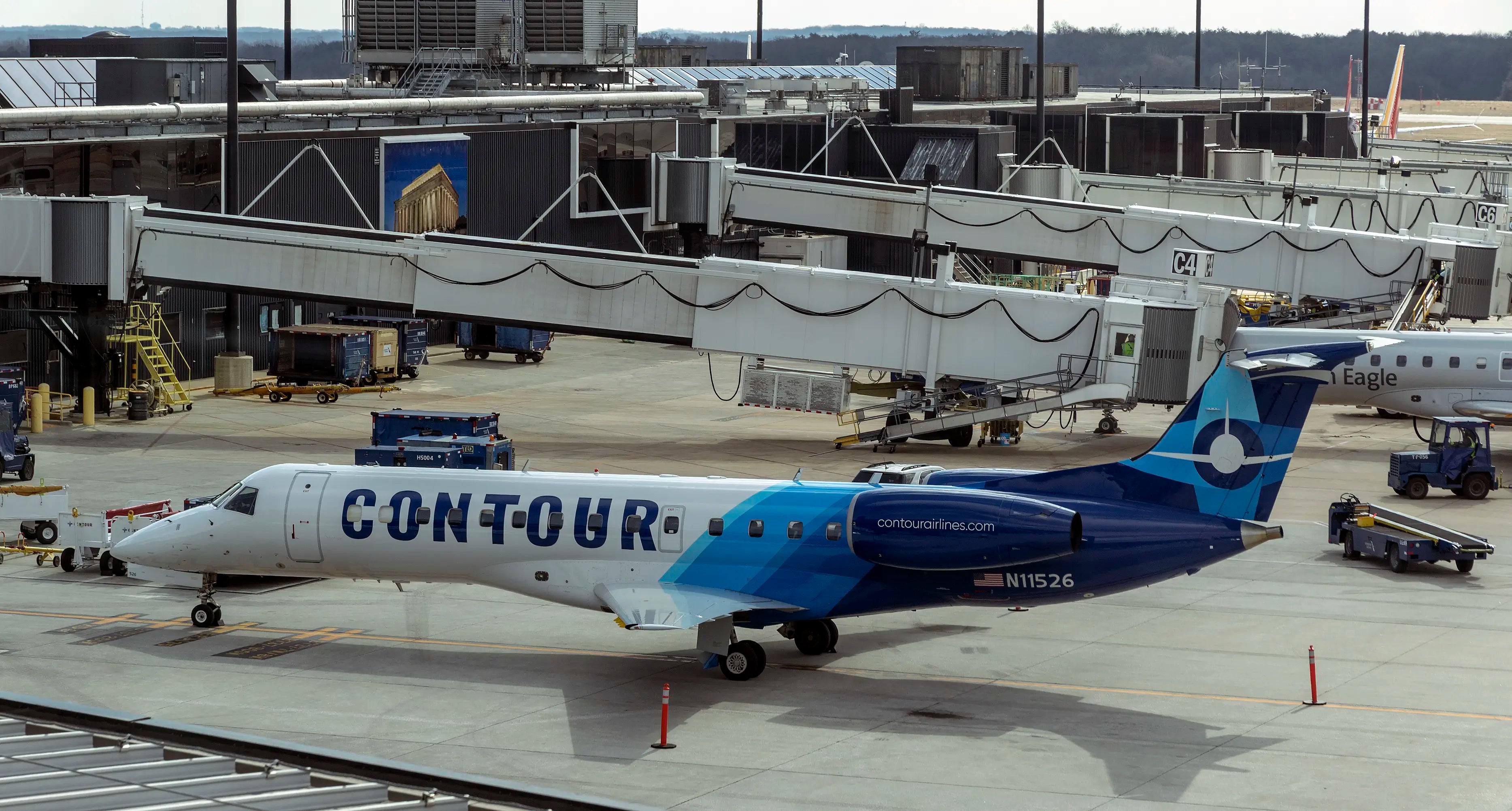
Contour Airlines Overview & Company Profile
Contour Airlines is a regional airline headquartered in Smyrna, Tennessee, operating as the scheduled service brand of its parent company, Corporate Flight Management Inc. (d/b/a Contour Aviation). Founded in 1982 as an aircraft management and charter company, Contour Aviation launched its scheduled airline service in 2016 with an inaugural flight from Nashville to Tupelo, Mississippi. Today, it operates approximately 90 daily flights across 36 destinations and 35 routes, connecting small and mid-sized communities to major airline hubs throughout the United States and the Caribbean.
Contour runs the second-largest Essential Air Service (EAS) network in the country, providing federally subsidized air service to communities that would otherwise lose airline connectivity. The airline operates under FAR Part 135 as a public charter operator, chartering regional jets from its parent company and reselling seats to the public. This regulatory structure sets Contour apart from typical Part 121 regional carriers and has implications for pilot qualifications, scheduling rules, and operational flexibility.
In early 2024, SkyWest Airlines purchased a 25% ownership stake in Contour, gaining access to the airline's infrastructure and personnel while supplying CRJ-200 aircraft and partnering on pilot recruitment. This strategic investment has expanded Contour's fleet and opened a formal pilot pathway to SkyWest and, through SkyWest, to major carriers like United Airlines and Delta Air Lines. In January 2025, Ben Munson was appointed President of Contour Airlines, reporting to founder and CEO Matt Chaifetz.
Contour holds interline agreements with American Airlines, United Airlines, and JetBlue, enabling passengers to book single-ticket itineraries with baggage transfer and access to frequent flyer programs. The JetBlue partnership, signed in February 2025, expanded Contour's commercial reach to over 100 additional destinations. With approximately 700+ team members and nearly 20,000 flight segments annually, Contour ranks as one of the ten largest Part 135 operators in the United States.
Fleet Composition & Aircraft Types
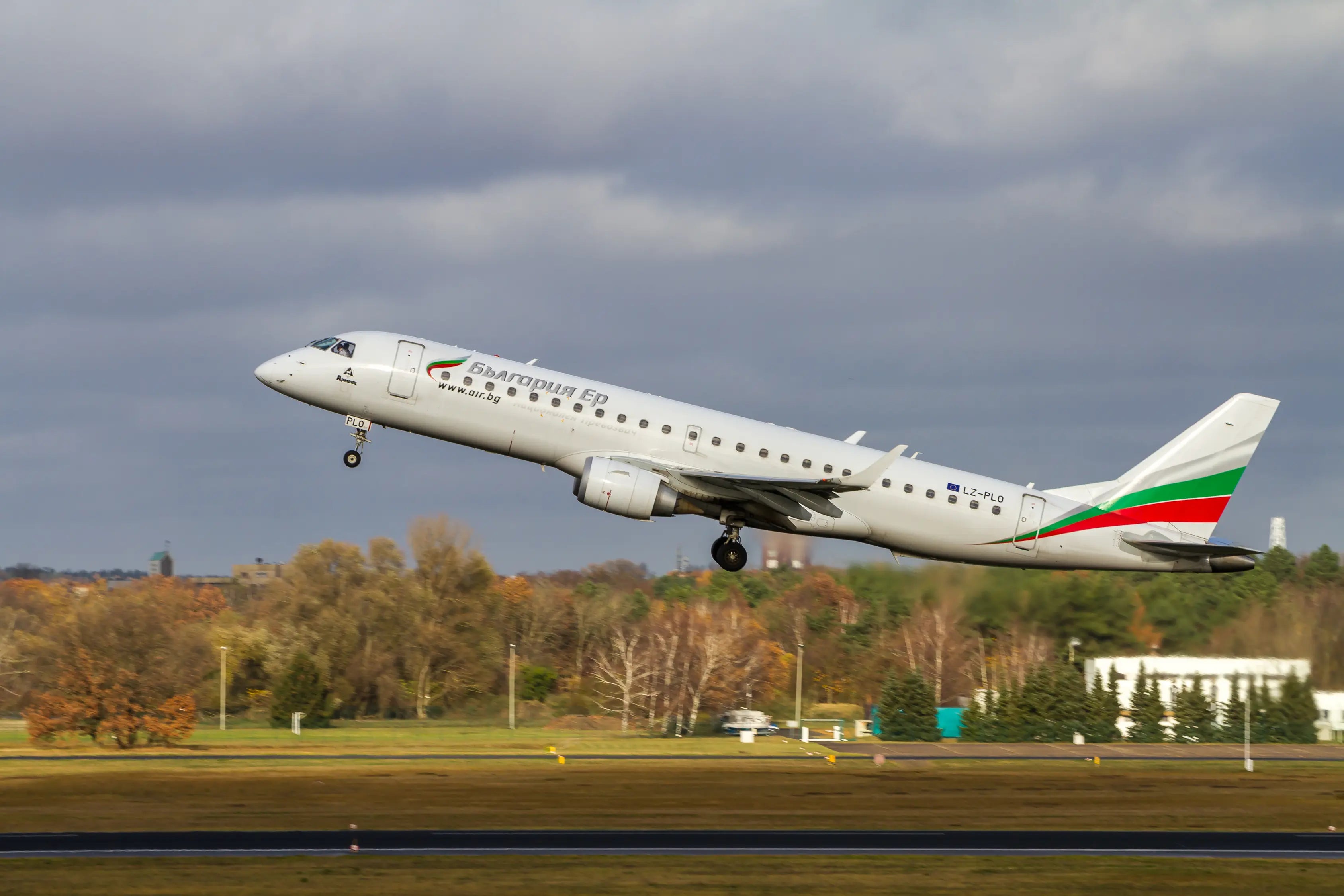
Contour Airlines operates an all-regional-jet fleet centered on the Embraer ERJ family and the Bombardier CRJ-200. All aircraft are configured with leather seating, 36-inch seat pitch in every row, complimentary snacks and beverages, and free checked and carry-on baggage. The fleet expansion in 2024 was accelerated by the SkyWest partnership, which brought CRJ-200 aircraft into the Contour operation and opened new base possibilities.
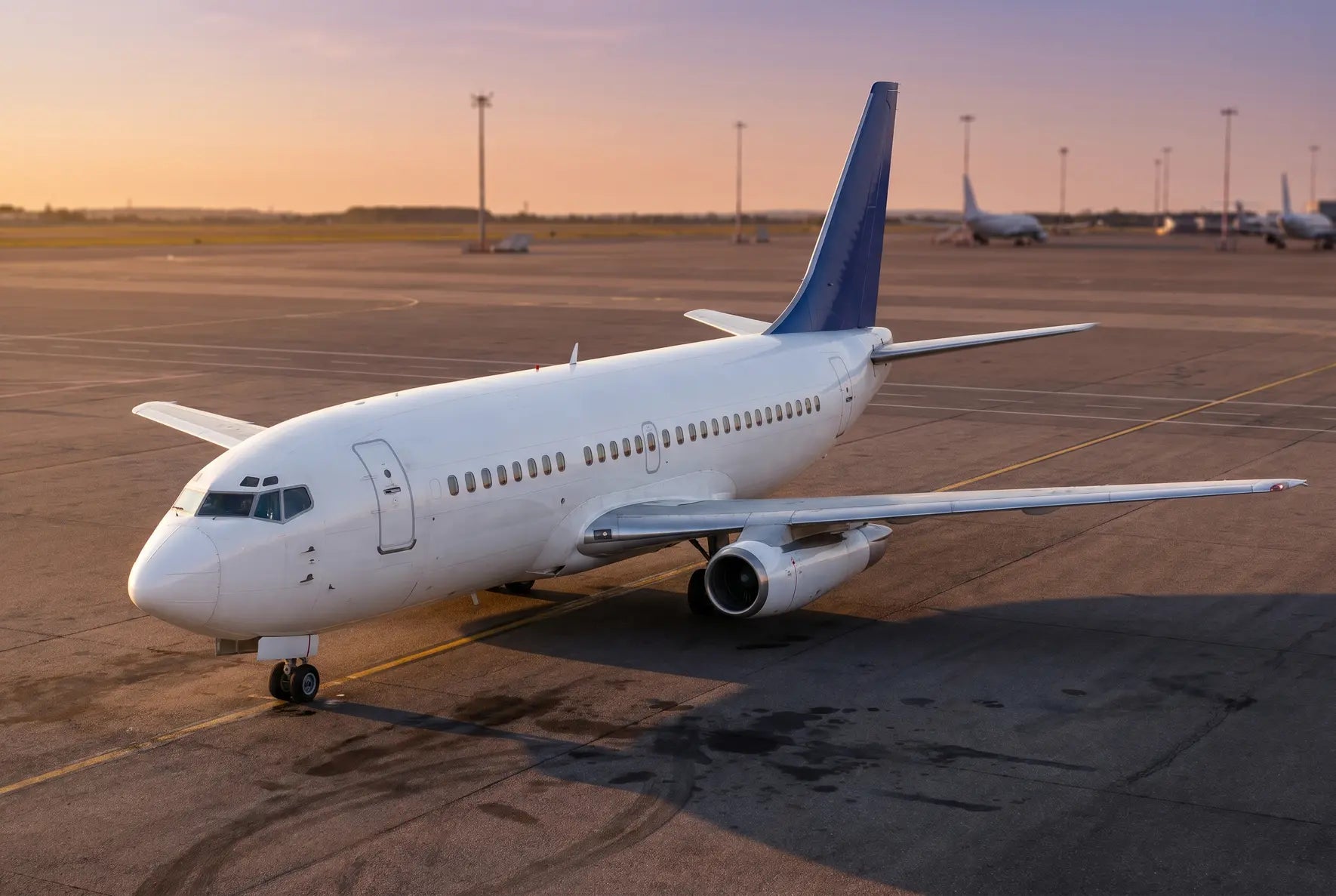
In April 2019, Contour retired its legacy BAe Jetstream 31/32 turboprop fleet, transitioning fully to jet operations. The ERJ-135, with its 30-seat configuration, remains the backbone of the scheduled airline operation, particularly on EAS routes where smaller capacity is required. The CRJ-200 and ERJ-145 serve higher-demand routes and charter operations, while the ERJ-140 bridges the gap between the two.
| Aircraft Type | Role | In Service | Seats | Routes / Notes |
|---|---|---|---|---|
| Embraer ERJ-135 | Regional Jet | ~10 | 30 | Core EAS routes and short-haul scheduled service. Backbone of Contour's network. |
| Embraer ERJ-140 | Regional Jet | ~8 | 44 | Medium-demand routes. Bridges capacity between ERJ-135 and CRJ-200. |
| Embraer ERJ-145 | Regional Jet | ~3 | 50 | Higher-demand routes and charter operations. |
| Bombardier CRJ-200 | Regional Jet | ~10 | 50 | Supplied via SkyWest partnership. Chicago, Fort Lauderdale, White Plains bases. |
Fleet data as of early 2026. Approximately 31 aircraft in total. Numbers are approximate and may fluctuate with charter demand and ongoing fleet changes.
Contour covers the cost of type rating for pilots recruited through its official hiring process. Training is conducted at FlightSafety International, CAE, and LOFT simulation centers, as well as at Contour's headquarters in Smyrna, Tennessee. The training program lasts approximately 7 to 8 weeks for new hire pilots, with salary beginning on the first day of onboarding. Individual hotel rooms and transportation are provided during training. IOE (Initial Operating Experience) is conducted on the assigned aircraft type.
The ERJ-135, ERJ-140, ERJ-145, and CRJ-200 are all mature aircraft types that entered service in the late 1990s and early 2000s. While Contour maintains its fleet to high standards, pilots coming from newer glass-cockpit aircraft may notice older avionics and systems. The ERJ family features Honeywell Primus avionics, while the CRJ-200 uses Collins Pro Line 4. Neither type features modern heads-up displays or electronic flight bags as standard, though operational procedures may vary.
Pilot Salary & Compensation Breakdown
Contour Airlines uses a base annual compensation model rather than the hourly pay structure common at most Part 121 regional carriers. Pilots are paid a guaranteed annual salary that covers a base of 18 working days per month. Days worked beyond 18 in a given month are compensated at 150% of the daily rate. This structure provides income predictability, though it means compensation is not directly tied to block hours flown.
In addition to base salary, Contour offers several lump-sum bonuses that can significantly boost first-year earnings, particularly for Captains. According to Airline Pilot Central, a first-year ERJ or CRJ Captain can reach up to $185,500 in total compensation when all applicable bonuses are included. First Officer pay starts lower than at most Part 121 regionals, reflecting the Part 135 operating environment and the lower minimum hour requirements for entry.
Captain (PIC) Pay Scale
| Year of Service | Annual Base Guarantee | Approximate Daily Rate (18 days) |
|---|---|---|
| Year 1 | $118,000 | ~$546/day |
| Year 2 | $120,950 | ~$560/day |
| Year 3 | $123,973 | ~$574/day |
| Year 4 | $127,073 | ~$588/day |
| Year 5 | $130,249 | ~$603/day |
| Year 7 | $136,843 | ~$633/day |
| Year 10 | $147,365 | ~$682/day |
Captain base annual compensation increases at approximately 2.5% per year on anniversary date. Daily rates calculated by dividing annual base by 216 working days (18/month x 12).
First Officer (SIC) Pay Scale
| Year of Service | Annual Base Guarantee | Approximate Daily Rate (18 days) |
|---|---|---|
| Year 1 | $36,000 | ~$167/day |
| Year 2 | $37,170 | ~$172/day |
| Year 3 | $38,285 | ~$177/day |
| Year 5 | $40,321 | ~$187/day |
| Year 10 | $42,378 | ~$196/day |
First Officer pay is significantly below Part 121 regional averages. However, the low entry minimums (500 hours total time) and rapid upgrade potential to Captain are key factors in the value proposition for early-career pilots.
Bonuses & Additional Compensation
Salary figures are compiled from Contour's official careers page, Airline Pilot Central, and industry job postings. Actual compensation depends on aircraft type, base assignment, bonus eligibility, and days worked per month. The $185,500 first-year Captain figure assumes qualification for all available bonuses (signing, type rating, retention, and overrides), which not all pilots will receive. FO compensation is notably low compared to the Part 121 regional market, where first-year FOs at carriers like SkyWest or Endeavor Air can earn $50,000 to $90,000+. Always verify current rates directly with Contour's recruiting team.
Roster Pattern & Quality of Life
Contour Airlines operates under FAR Part 135 duty and rest rules, which differ significantly from the Part 121 regulations that govern most regional airlines. Part 135 rules offer operators more flexibility in scheduling but also mean that pilots do not benefit from the enhanced fatigue protections introduced under Part 117 (which applies only to Part 121 carriers). The typical scheduling pattern depends on your aircraft type, base, and whether you are homebased or commuting.
Pilots on the Embraer (ERJ) side typically work a 4 to 5 days on, 3 days off rotation, resulting in roughly 12 days off per month. Homebased PICs may work an 8 on, 6 off pattern, which also yields around 12 days off per month but with longer stretches of flying followed by more consolidated rest. The CRJ operation follows similar patterns, though specific schedules can vary by base and seasonal demand.
Base pay covers 18 working days per month. If a pilot is scheduled or volunteers to work beyond 18 days in a calendar month, those additional days are compensated at 150% of the base daily rate, providing a meaningful overtime incentive.
📅 Sample Month: ERJ Captain (Charlotte Base)
One of Contour's most distinctive quality-of-life features is the home basing option for Captains (PICs). Qualifying PICs can be based at their home airport rather than commuting to a crew base, provided they live in the lower 48 states and meet operational requirements. Parking is paid at crew bases and for homebased pilots. Non-homebased pilots who choose to live in their base city receive an additional $7,500 annual incentive. Current ERJ crew bases are Charlotte, NC (CLT) and Phoenix, AZ (PHX). CRJ bases are located in Chicago, IL (ORD), Fort Lauderdale, FL (FLL), and White Plains, NY (HPN).
Benefits, Travel Perks & Retirement
Contour Airlines offers a competitive benefits package for a Part 135 operator, anchored by Cigna nationwide health insurance and a 6% company-matched 401(k) plan. While the benefits do not reach the depth of a large Part 121 carrier (no pension plan, no defined-benefit retirement), they compare favorably to other Part 135 operators and smaller regional airlines. Benefits are administered through the parent company, Contour Aviation.
Per diem rates at Contour are paid on an hourly basis (not daily), which is standard for Part 135 operations but differs from many Part 121 carriers that use flat daily rates. The domestic scheduled rate of $2.08 per hour translates to approximately $50 for a 24-hour period. International and charter rates are higher, with charter domestic at $3.08/hr and international charter at $4.14/hr. Per diem is paid during the entirety of training as well, providing income support from day one.
Career Progression & Pathway Programs
Career progression at Contour Airlines is one of the airline's strongest selling points. Unlike large Part 121 regionals where upgrade to Captain can take 2 to 5+ years, Contour's Part 135 structure and smaller pilot group mean that First Officers can upgrade to Captain in as little as 12 months, provided they meet the minimum flight time requirements (1,500 hours total time, 500 hours PIC, 500 hours multi-engine). This rapid upgrade path is a key reason many early-career pilots choose Contour over larger carriers despite the lower First Officer pay.
The most significant career development at Contour in recent years is the SkyWest Pilot Pathway Program, established alongside SkyWest's 25% equity investment. This program creates a structured pipeline from Contour to SkyWest and, ultimately, to major carriers.
| Career Milestone | Typical Timeline | Notes |
|---|---|---|
| Join as First Officer (SIC) | Day 1 (500+ hours) | Minimum 500 TT / 50 ME. Entry on ERJ or CRJ depending on base availability. |
| Complete type rating training | 7-8 weeks | Salary from day 1. FlightSafety/CAE/LOFT. Hotel and transport provided. |
| Upgrade to Captain (PIC) | ~12 months | Requires 1,500 TT / 500 PIC / 500 ME. ATP/CTP provided by Contour. |
| Gain Captain experience | 1-3 years as PIC | Build PIC turbine time. Eligible for Line Check Pilot ($25K override). |
| Transition to SkyWest | Variable | Direct Entry Captain at SkyWest via Pathway Program. Accelerated seniority. |
| Major airline pathway | Via SkyWest | Guaranteed interview with Delta. United Pilot Pathway Program eligible. |
SkyWest Pilot Pathway Program
The SkyWest Pilot Pathway is available to Contour First Officers who sign the pathway agreement during their initial phone interview. The program flow is: join Contour as an FO with 500 hours, upgrade to Captain once eligible, then transition to SkyWest as a Direct Entry Captain. At SkyWest, pathway pilots receive enhanced benefits including accelerated company seniority, access to SkyWest's pilot pathway orientation and workshops, a dedicated mentor, interview preparation, and eligibility for SkyWest's guaranteed pilot interview programs with Delta Air Lines and the United Airlines Pilot Pathway.
FLT Academy 500-Hour Program
Contour also partners with FLT Academy on a dedicated 500-hour pathway. Students completing FLT's training program receive a guaranteed First Officer interview at Contour upon reaching 500 total hours and 25 multi-engine hours. The program is designed as a rapid entry point: build hours as an FO, upgrade to Captain at 1,500 hours, and then either remain at Contour or transition to SkyWest via the pathway program.
At most Part 121 regional airlines, a pilot hired as an FO might wait 2 to 5 years for a Captain upgrade, depending on attrition and growth. At Contour, the combination of Part 135 regulations, a smaller pilot group, and continuous growth means that qualified FOs can upgrade in roughly 12 months. That upgrade represents a pay jump from approximately $36,000 to $118,000+, which more than triples the annual income. For a pilot focused on building turbine PIC time as quickly as possible, whether for SkyWest, a major airline, or a cargo carrier, Contour's upgrade timeline is among the fastest in the industry.
Recruitment Process & Requirements
Contour Airlines recruits pilots on a rolling basis through its online careers portal. The airline hires for two distinct positions: Captain (PIC) and First Officer (SIC). Because Contour operates under Part 135, the minimum hour requirements for First Officers are significantly lower than at Part 121 carriers, making it an attractive entry point for pilots with as few as 500 total hours.
Captain (PIC) Requirements
First Officer (SIC) Requirements
Selection Process
Online Application
Submit your resume and application through the Contour Careers portal. All questions must be fully answered or the application will be automatically screened out. Include all relevant flight time, certificates, and references.
Preliminary Phone Interview
A Contour recruiter contacts qualified applicants for a phone screening. This call covers your background, career goals, and availability. For SIC applicants, the SkyWest Pilot Pathway Agreement is discussed at this stage.
Formal Interview
An in-person or web-based interview conducted by Flight Operations leadership. Expect questions about CRM, decision-making, and your aviation career trajectory. The interview is conversational rather than a technical grilling.
Background Checks
Comprehensive background screening: PRIA-PRD (Pilot Records Database), DOT Drug and Alcohol testing, criminal history check, reference verification, fingerprinting, National Driver Record check. No excessive checkride failures permitted.
Training & Onboarding
Successful candidates receive a training date. Salary begins on day one of onboarding (typically 2 weeks before simulator training). The full training program runs 7 to 8 weeks, with training at FlightSafety International, CAE, LOFT, Contour HQ, and online WBT modules. Individual hotel rooms and transportation are provided throughout.
Contour emphasizes cultural fit and attitude alongside qualifications. The airline values pilots who see Contour as either a long-term home or a committed stepping stone. Incomplete applications are automatically rejected, so take the time to answer every question thoroughly. The 1-year prorated training agreement for new hire PICs means you are not locked in for an extended period. Contour does not enforce loss of medical, which is a notable pilot-friendly policy for those concerned about career protection.
How Contour Compares: Airline Radar Chart
How does Contour Airlines stack up against two relevant comparison points: Cape Air (a fellow Part 135/regional operator targeting early-career pilots) and SkyWest Airlines (the Part 121 regional giant that owns 25% of Contour and serves as its pathway destination)? Below is a comparative analysis across five key metrics. Scores are editorial estimates based on publicly available data, pilot reports, and industry benchmarks.
Key Takeaways from the Comparison
Contour's Captain pay is competitive for Part 135, but FO pay lags significantly. A Year 1 Contour Captain earns $118,000, which is above Cape Air's ~$80,000 first-year Captain rate and comparable to entry-level Part 121 regional Captain pay. However, Contour FOs start at just $36,000, well below SkyWest's approximately $102,000 first-year FO rate and even below Cape Air's entry-level figures. The trade-off is Contour's rapid upgrade timeline.
Career progression is Contour's strongest card. No other comparison airline offers the combination of a 500-hour entry, 12-month Captain upgrade, and a formal pathway to a major regional carrier (SkyWest) and then to legacy airlines (United, Delta). Cape Air offers a similar low-hour entry but routes through its JetBlue Advanced Gateway program, which is more limited. SkyWest requires 1,500 hours and an ATP to apply directly.
SkyWest dominates on fleet, benefits, and job security. With 502 aircraft, 4,300 pilots, Part 121 protections, and codeshare agreements with United, Delta, American, and Alaska, SkyWest offers stability that neither Contour nor Cape Air can match. However, SkyWest does not offer the same rapid career building or the home-basing flexibility that Contour provides to its Captains.
Cape Air suits pilots who want piston/turboprop PIC time and lifestyle bases. Cape Air's Cessna 402 and Tecnam P2012 fleet, Caribbean and resort bases, and employee stock ownership plan appeal to pilots who prioritize lifestyle over jet time. However, the time built at Cape Air is less directly applicable to a jet airline career than Contour's turbine jet PIC hours.
Scores are editorial estimates based on research into publicly available salary data, Airline Pilot Central profiles, pilot forum reports, airline press releases, and industry benchmarks. They represent a general assessment for a pilot evaluating career options. Individual experiences will vary based on seniority, base assignment, and personal priorities. SkyWest is included as the pathway destination and partial owner, not as a direct peer, to illustrate the career trajectory Contour pilots can achieve.
Union & Industrial Relations
Contour Airlines is a non-union carrier. Pilots are not represented by ALPA (Air Line Pilots Association), the Teamsters, or any other labor organization. This is consistent with many Part 135 operators in the United States, where unionization rates are significantly lower than at Part 121 airlines.
The absence of union representation means that pilot compensation, scheduling practices, work rules, and grievance procedures are set by management rather than through collective bargaining. There is no published collective agreement, no seniority-based bidding protections beyond what management chooses to implement, and no formal grievance arbitration process. Pilots who have disputes with the company must resolve them through internal channels or individual legal action.
From a pilot's perspective, the non-union environment has both advantages and disadvantages. On the positive side, Contour can adjust pay, bonuses, and policies more quickly in response to market conditions, as evidenced by the competitive signing and retention bonuses introduced during the post-pandemic pilot shortage. Management has shown willingness to improve conditions proactively, such as the home-basing policy for PICs and the non-enforcement of loss of medical.
On the other hand, pilots have no collective voice if conditions change unfavorably. There is no contractual guarantee that current bonus levels, base pay scales, or scheduling practices will remain in place. The 1-year prorated training agreement is relatively pilot-friendly compared to some operators, but terms can change for future hires without pilot input.
As of early 2026, there are no publicly known unionization efforts or ALPA organizing campaigns at Contour Airlines. The SkyWest partnership adds a layer of complexity, as SkyWest itself is also non-union (SkyWest pilots voted down ALPA representation in past elections). Pilots who value collective bargaining protections should weigh this factor carefully. Those who prioritize flexibility, rapid career progression, and a direct relationship with management may find the non-union environment acceptable, particularly if Contour is viewed as a stepping stone rather than a long-term career destination.
Verdict: Who Is Contour Airlines For?
🎯 Our Take
Contour Airlines occupies a unique niche in the U.S. pilot career landscape. It is not the highest-paying regional, nor does it offer the most modern fleet or the strongest labor protections. What it does offer is an exceptionally fast path from low-hour pilot to turbine jet Captain, backed by a formal pathway to SkyWest and ultimately to major airlines like United and Delta.
The trade-offs are clear: First Officer pay ($36,000) is among the lowest in the industry, the fleet consists of aging regional jets, the airline is non-union, and Part 135 fatigue rules are less protective than Part 121. However, pilots who can tolerate a year of low FO pay in exchange for a rapid Captain upgrade (and a tripling of income) will find Contour's value proposition compelling. The $118,000+ Captain salary, home-basing options, and SkyWest pathway create a career trajectory that is difficult to replicate elsewhere.
For flight school graduates with 500 hours who want to be flying as a jet Captain within 18 months and building the turbine PIC time that majors value most, Contour is one of the most efficient pathways available today.
1 How quickly can I upgrade from First Officer to Captain at Contour?
Most First Officers can upgrade to Captain in approximately 12 months, provided they meet the minimum requirements of 1,500 total hours, 500 PIC hours, and 500 multi-engine hours. Contour provides ATP/CTP training for upgrade candidates at no cost. The upgrade represents a pay increase from approximately $36,000 to $118,000+, making it one of the most impactful career milestones in regional aviation.
2 Is Contour Airlines a Part 121 or Part 135 carrier?
Contour operates under FAR Part 135 as a public charter operator. The airline charters regional jets from its parent company, Corporate Flight Management Inc., and resells seats to the public. This structure has regulatory implications: Part 135 permits lower minimum flight hours for SIC positions (no ATP required for FOs) and operates under different duty/rest rules than Part 121 carriers. Pilots should understand these differences before joining.
3 What is the SkyWest Pilot Pathway Program?
The SkyWest Pilot Pathway is a formal agreement allowing Contour pilots to transition to SkyWest Airlines as Direct Entry Captains once they meet eligibility requirements. At SkyWest, pathway pilots receive accelerated company seniority, enhanced benefits start dates, a dedicated mentor, and access to SkyWest's guaranteed interview programs with Delta Air Lines and the United Airlines Pilot Pathway. The agreement is discussed during the initial phone interview and is available to SIC (FO) applicants.
4 Can I be homebased as a Contour pilot?
Yes, home basing is available for Captains (PICs) who meet certain conditions. Homebased PICs can start and end their trips from their home airport rather than commuting to a crew base. Parking is paid for both crew-based and homebased pilots. Non-homebased pilots who choose to live in their assigned base city receive an additional $7,500 annual incentive. Home basing is generally available within the lower 48 states.
5 Does Contour count as airline experience for major airline applications?
Yes, Contour time counts as turbine PIC or SIC experience, which is what major airlines evaluate most heavily. The ERJ-135/145 and CRJ-200 are all jet aircraft with two-crew operations, and PIC time on these types is highly valued by legacy carriers, LCCs, and cargo operators. The SkyWest Pathway specifically guarantees interviews at Delta and access to the United pathway. Multiple Contour pilots have been hired directly by legacy carriers, LCCs, and major freight operators.
6 What happens if I lose my medical at Contour?
Contour has a notable pilot-friendly policy: the airline does not enforce loss of medical. This means that if you temporarily lose your FAA Class 1 Medical Certificate, you will not be immediately terminated. The specific arrangements depend on your situation, but this policy provides more job security than many operators that terminate pilots the moment their medical lapses. Contact Contour's HR department for details on how this works in practice.
7 Is the First Officer pay really only $36,000?
Yes, the Year 1 FO base annual guarantee is $36,000, which is significantly below Part 121 regional averages (where first-year FOs can earn $50,000 to $90,000+). This is the primary trade-off for the 500-hour entry and rapid upgrade path. The expectation is that most FOs will upgrade to Captain within approximately 12 months, at which point compensation jumps to $118,000+. Pilots should plan their finances accordingly for the FO period, keeping in mind that per diem, overtime beyond 18 days, and the training agreement terms help offset the initial low pay.
8 What training agreement does Contour require?
Contour requires a 1-year prorated training agreement for new hire PICs (Captains). This means the repayment obligation decreases proportionally each month over the 12-month period. If you leave after 6 months, you would owe approximately 50% of the training cost. This is relatively pilot-friendly compared to some operators that require 2 to 3-year agreements with full repayment. For FOs, the training agreement terms may differ; confirm details during the recruitment process.
Official Links & Resources
Before applying or making career decisions, always verify information directly with official sources. These are the key websites and organizations relevant to a Contour Airlines pilot career:
The best source of current, unfiltered pilot feedback on Contour is the Airline Pilot Forums (Contour Airlines thread). Active posters include current and former Contour pilots who discuss scheduling realities, management culture, and day-to-day operations. For structured data, Airline Pilot Central maintains an updated profile with pay scales, hiring minimums, and benefit details. Cross-reference both sources before making your decision.