Sukhoi Superjet 100 programme history, milestones, and evolution
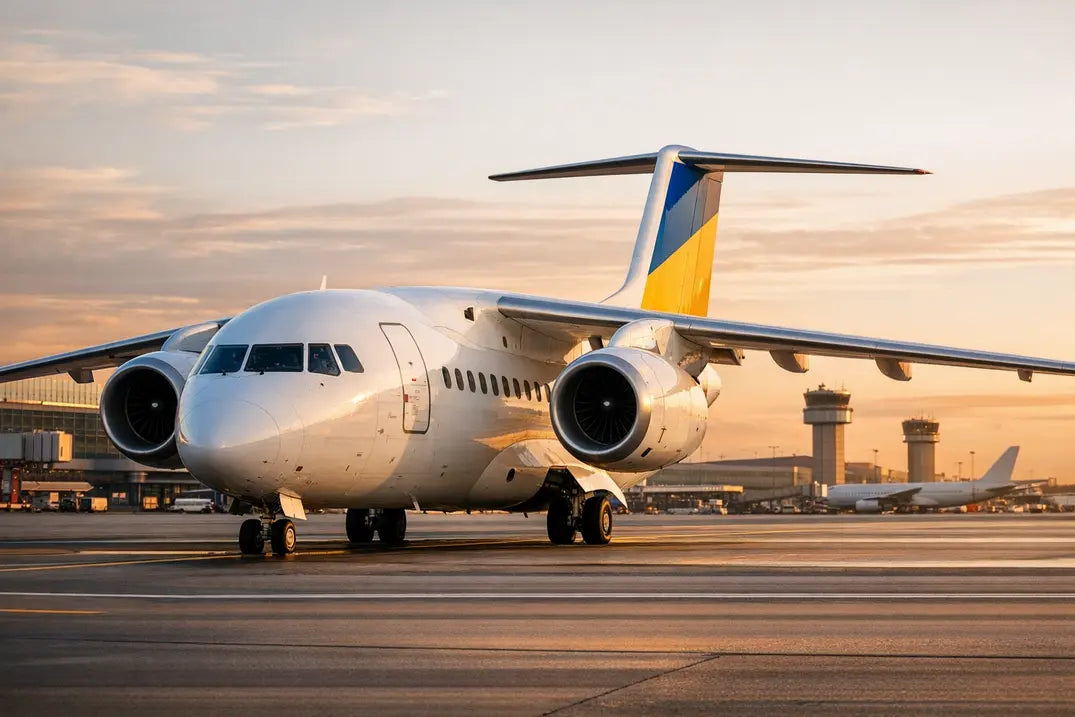
The Sukhoi Superjet 100 is a modern Russian regional jet developed as a post Soviet attempt to build a competitive civil airliner with an international supplier base and certification path beyond Russia. The programme is rooted in the Russian Regional Jet concept and is now presented by United Aircraft Corporation as a Superjet 100 family manufactured by the Regional Aircraft branch of PJSC Irkut Corporation, with a published programme timeline and key milestones on the official UAC Superjet 100 page.
For context, regional jets like the Sukhoi Superjet 100 sit at the far end of a century of airliner evolution, from early pressurised transports such as the Boeing 307 Stratoliner to today’s fly by wire short haul fleets. The Superjet’s distinguishing feature is not novelty of category, but the programme’s deliberate mix of Russian airframe production with a multinational systems and support ecosystem.
Why the Sukhoi Superjet 100 programme started
According to UAC’s published history, May 2000 marks the incorporation of Sukhoi Civil Aircraft to implement projects for the design and production of regional civil aircraft intended to be globally competitive, with the initial project framed as a family designated RRJ60/75/95. This family approach reflected an early intent to cover multiple seating sizes, but the programme later concentrated on the largest member as market and route studies matured.
The propulsion and supplier strategy was set early. UAC notes that in December 2002, after a bidding process, the contract for development and delivery of a power generator for the RRJ95 was awarded to the designers of the SaM146 engine, jointly developed by Snecma and Saturn. EASA later recorded that April 2003 was the point when the SaM146 was selected to power the aircraft, tying engine and airframe development schedules together within a single certification plan, documented in EASA’s engine certification press release EASA certifies Franco Russian SaM146 PowerJet engine.
UAC also lists a long catalogue of Western and Russian suppliers formalised during October 2003 bids for basic systems, including Thales for avionics, Messier Bugatti Dowty for landing gear, Honeywell for the auxiliary power unit, Liebherr for flight control systems, Intertechnique for fuel systems, Parker for hydraulic systems, and B E Aerospace for interiors. This supplier architecture is part of what made the Sukhoi Superjet 100 distinct from many earlier Russian civil programmes, because it was designed from the outset to support a broader certification and customer base.
Launch decisions, prototypes, certification, and entry into service
The programme narrowed its focus as operating economics became clearer. UAC states that in 2005, a review of airline route networks concluded that the RRJ60 and RRJ75 performance figures were not cost effective, so development continued with the RRJ95 project. Industrial capability followed: February 2005 saw the establishment of a branch in Komsomolsk on Amur for final assembly, alongside a re equipment programme at production sites using manufacturing methods such as jigless assembly and automatic riveting. State level support is recorded by UAC in August 2005 through a governmental research and development contract under the Sukhoi Superjet 100 programme within the Federal Target Program Development of Russian Civil Aviation in 2002 2010 and Through 2015.
Commercial momentum arrived early, at least on paper. UAC records December 7, 2005 as the date Aeroflot became the first customer in the SSJ100 programme, purchasing 30 aircraft. The RRJ95 branding evolved into the marketed Superjet identity during July 2006, when UAC says the new name for RRJ95 airplanes was announced at the Farnborough International Aerospace Show on July 17, 2006, after which it was known as Sukhoi Superjet 100.
International cooperation expanded beyond equipment suppliers. Boeing’s own corporate release confirms that the company acted as an advisor to Sukhoi and its partners beginning in 2002, and that on June 9, 2007 Boeing and Sukhoi signed an expanded agreement covering areas such as training, manuals, and spares management, outlined in Boeing and Sukhoi Announce Expanded Agreement. UAC then highlights August 2007 as the month when UAC, Sukhoi, Finmeccanica, SCA and Alenia Aeronautica entered into a framework agreement for strategic partnership, followed by August 22, 2007 when Sukhoi and Alenia Aeronautica announced the establishment of the SuperJet International joint venture to support customisation, training, global after sales service, and deliveries in multiple regions.
The first aircraft milestones arrived quickly. UAC records the first public presentation of a flight model on September 26, 2007 in Komsomolsk on Amur, followed by the maiden flight on May 19, 2008. The propulsion programme hit a key regulatory milestone when the SaM146 received EASA certification on June 23, 2010, described by EASA as the first EASA certified engine jointly designed and produced in Europe and Russia, in EASA certifies Franco Russian SaM146 PowerJet engine.
Aircraft certification and airline entry followed. UAC states that January 2011 brought a Type Certificate from the Aircraft Register of the Interstate Aviation Committee, allowing commercial operations. For entry into service detail, SuperJet International reports that the aircraft was delivered to Armavia on April 19, 2011 and performed its first commercial flight on April 21, 2011. UAC also lists June 2011 as the month Aeroflot operated its first commercial flight with the type.
The European validation milestone is clearly dated: EASA states it issued a Type Certificate for the RRJ 95B known as Sukhoi Superjet 100 on February 3, 2012, and notes the aircraft as the first Russian passenger aircraft certified by EASA since the agency’s creation, in EASA certifies the Sukhoi Superjet 100 (RRJ 95B). UAC then records June 2013 as the official handover of the first Superjet 100 to Interjet at the Paris Air Show, marking a high profile export delivery.
The programme also faced a major reputational setback during its early international marketing. The National Transportation Safety Committee of Indonesia investigated the May 9, 2012 accident involving a Sukhoi RRJ 95B during demonstration flying at Mount Salak. The NTSC final report dated December 17, 2012 states that recorded data showed the aircraft, engines and systems were not factors in the accident, and analyses factors such as pilot situational awareness and air traffic services context, in the NTSC Aircraft Accident Investigation Report (Mount Salak, Sukhoi RRJ 95B). In practical terms, events like this typically sharpen operator focus on terrain awareness, disciplined minimum altitude management, and demonstration flight planning, even when no mechanical cause is identified.
Incremental evolution continued through certified derivatives. UAC notes that August 2013 brought a supplement to the Type Certificate for the RRJ 95LR 100 extended range version, enabling commercial operation by Russian airlines, and that March 2014 saw Gazprom Avia place the long range version into commercial operation. On the engine side, SuperJet International reports that EASA issued a type certificate for the higher thrust SaM146 1S18 on January 17, 2012, describing it as a version that extends range for the Long Range aircraft. UAC also describes a third certified version with increased engine thrust to improve takeoff performance, and notes that the Superjet New import substitution modification is at the first prototype stage of production.
What differentiates the Sukhoi Superjet 100 from close sub variants
In service and certification language, the Sukhoi Superjet 100 label covers a family that can look similar on the ramp but differs in range and thrust packages, and also in mission specific derivatives. The closest neighbours to the baseline passenger variant are the Basic and Long Range configurations, plus a higher thrust certified version aimed at improved takeoff performance. Beyond airline service, the same platform supports special interiors and business oriented derivatives, while the Superjet New is positioned as a later import substitution direction rather than a simple performance sub variant.
Variant identifiers that help recognise the Sukhoi Superjet 100 and place it in the programme timeline include:
- RRJ 95 roots, with the Sukhoi Superjet 100 name announced at Farnborough on July 17, 2006 per UAC
- RRJ 95B EASA type certification on February 3, 2012, enabling operation under EASA based regulatory frameworks
- PowerJet SaM146 as the core engine family, with EASA engine certification dated June 23, 2010
- Basic range cited by EASA as 3,048 km for the basic version, with UAC describing the Long Range configuration as exceeding 4,000 km
- Five abreast cabin cross section, with UAC citing an aisle width up to 508 mm and maximum seats up to 103, supporting the aircraft’s positioning in the 100 seat regional segment

A Sukhoi Superjet 100 regional aircraft is shown in flight against a backdrop of partly cloudy skies, highlighting its sleek design and aerodynamic profile.
Sukhoi Superjet 100 specs, performance limits and key systems
The Sukhoi Superjet 100 is a twin turbofan, single aisle regional jet whose technical design targets high utilisation on short to medium range sectors, typically with frequent cycles and quick turnarounds. In practical terms, what matters most is how the certified weight variants, fuel capacity, and engine thrust options shape payload range capability, hot and high margins, and runway flexibility, rather than any single headline number.
Under EASA certification the aircraft is listed as the RRJ 95B, and its approved configuration baseline plus major change options are captured in the EASA Type Certificate Data Sheet EASA.IM.A.176. This is useful because it separates the airframe’s certified limits from marketing ranges and provides a clear view of which options, such as higher maximum take off weight, are tied to specific propulsion installations.
- EASA certified model designation: RRJ 95B, commercial designation Sukhoi Superjet 100, per EASA.IM.A.176.
- Overall dimensions: length 29.940 m, height 10.283 m, wingspan 27.80 m, wing area 83.80 m², per EASA.IM.A.176.
- Maximum certified masses: maximum ramp weight 46,055 kg, maximum take off weight 45,880 kg, maximum landing weight 41,000 kg, maximum zero fuel weight 40,000 kg, per EASA.IM.A.176.
- Higher MTOW option: maximum take off weight 49,450 kg when equipped per the relevant EASA major change referenced in EASA.IM.A.176.
- Engines: two PowerJet SaM146 turbofans, with approved installations including SaM146 1S17 and SaM146 1S18, per EASA.IM.A.176.
- Sea level static take off thrust ratings: 76.84 kN for the SaM146 1S17 installation and 79.00 kN for the SaM146 1S18 installation, per EASA.IM.A.176.
- Usable fuel capacity: 15,805 litres total usable fuel, with fuel density noted as 0.78 kg per litre in EASA.IM.A.176.
- Certified speed limits: VMO 308 kt IAS and MMO 0.81 Mach, per EASA.IM.A.176.
- Operational envelope limits (selected): maximum airport elevation 8,466 ft, environmental ground temperature from plus 45°C to minus 40°C, per EASA.IM.A.176.
- Wind limits (selected): maximum crosswind 30 kt and maximum tailwind 10 kt for take off and landing, per EASA.IM.A.176.
- Maximum approved seating capacity: 103 passengers for emergency evacuation approval, per EASA.IM.A.176.
- Range context (basic version): operating range for the basic version stated as 3,048 km in EASA’s RRJ 95B certification press release.
Systems architecture and operationally relevant technology
The Superjet 100’s systems philosophy reflects a modern regional jet cockpit and handling concept: high levels of automation, digital flight control laws, and an emphasis on predictable responses across the certified envelope. From a certification perspective, the aircraft’s approval basis includes dedicated items addressing features such as flight envelope protection, a normal load factor limiting system, and low energy awareness, as shown in the special conditions listed in EASA.IM.A.176. For line operations, this matters because it frames how the aircraft protects margins in manoeuvring and energy management, and it influences both training and standard operating procedures.
For all weather capability, the EASA data sheet lists approvals and demonstrated capabilities that include low weather minima up to CAT IIIA operations (subject to required equipment and approvals) and operations in icing conditions, as well as items such as RVSM and performance features like flexible take off and vertical navigation, per EASA.IM.A.176. This places the aircraft in the same operational conversation as other contemporary regional jets regarding approach minima planning, dispatch decision making, and crew workload management in poor weather.
On the avionics and maintenance side, Superjet International describes an integrated modular avionics baseline supplied by Thales and an AFDX data network architecture, alongside a centralised maintenance system designed to record, analyse, and support troubleshooting of faults, as presented in the Superjet International SSJ100 product brochure. For operators, the practical value is less about the acronyms and more about what they enable: modular updates, strong system segregation with deterministic data communication, and a maintenance workflow that can support quicker fault isolation in service.
Core utility systems are documented in the EASA data sheet in a way that pilots and engineers can map to real world operational constraints. Examples include the Honeywell RE220 (RJ) auxiliary power unit installation and a nominal 3000 psi class hydraulic system, both specified in EASA.IM.A.176. These details shape ground autonomy, dispatch considerations at outstations, and the expected architecture for flight control actuation, landing gear, and braking related hydraulics, even when airline specific equipment selections vary.
Because the Sukhoi Superjet 100 is operated by a two pilot crew in a highly procedural, automation rich environment, early pathway training concepts such as the multi crew pilot licence often come up in discussions about how airlines structure ab initio jet training and multi crew cooperation. For background on that licensing pathway and how it relates to airline cockpit operations, see the Multi Crew Pilot Licence MPL overview.
Published performance numbers for the Superjet 100 can vary noticeably between sources because they may be based on different certified configurations and assumptions. The EASA type certificate data sheet covers a baseline RRJ 95B and also references major changes that affect propulsion installation and maximum take off weight, so a range, field length, or climb claim that is accurate for one configuration may not apply to another. Beyond configuration, variations in seating density, payload, usable fuel planning, atmospheric model, runway condition, and operator specific options can all shift the achieved range and runway performance, so comparisons are most meaningful when the assumptions are stated explicitly.
PowerJet SaM146 engines: variants, certification and operating context
The Sukhoi Superjet 100 is powered by the PowerJet SaM146 engine family, a programme run by PowerJet, a joint venture between Snecma of France (Safran group) and NPO Saturn of Russia. EASA notes that the SaM146 was selected by Sukhoi Civil Aircraft in April 2003 to power the Sukhoi Superjet 100, and that EASA handed over the type certificate for the engine on 23 June 2010, making it a notable example of a jointly designed Europe and Russia civil engine programme in the modern certification era, as described in EASA’s SaM146 certification press release.
From a numbers standpoint, EASA’s 2010 press release cites a take off thrust of 76.8 kN and a dry weight of 1,700 kg for the SaM146 at the time of certification, providing a useful reference point for the engine’s thrust class and installation weight, per EASA. The aircraft’s own EASA type certificate data sheet then ties specific sea level static thrust ratings to installed variants in the airframe approval, listing 76.84 kN for the SaM146 1S17 installation and 79.00 kN for the SaM146 1S18 installation, per EASA.IM.A.176.
In service terms, the two key options to understand are the baseline thrust installation and the higher thrust variant associated with higher weights and extended missions. Superjet International reports that the SaM146 1S18 received an EASA type certificate on 17 January 2012, and links that approval to higher take off thrust enabling the Sukhoi Superjet 100 95 Long Range to operate at higher maximum take off weight and to increase range to 4,578 km with a full passenger load. This ties directly to the airframe view in EASA.IM.A.176, where the higher MTOW option is explicitly listed as a certified configuration difference.
For cockpit and maintenance integration, the SaM146 is described in Superjet International material as being controlled by a FADEC system, and the same brochure discusses the aircraft’s broader focus on modular avionics and centralised maintenance data handling, which together influence day to day operation, fault reporting, and troubleshooting tempo in airline service, per the Superjet International SSJ100 product brochure. In operational planning, the engine choice is therefore not only about thrust: it also affects the certified weight variant available to the operator, the achievable payload range trade, and how much margin exists at high elevation airports within the certified limits noted in the EASA data sheet.
Regional Jet Comparison: Sukhoi Superjet 100 vs Competitors
Scroll horizontally to see more →
| Parameter | Sukhoi Superjet 100 | Sukhoi Superjet 100 LR | Embraer E190 | Bombardier CRJ1000 |
|---|---|---|---|---|
| Entry into service | 2012 | 2013 | 2005 | 2015 |
| Engines | 2 × PowerJet SaM146 | 2 × PowerJet SaM146 | 2 × GE CF34-10E | 2 × GE CF34-8C5 |
| Length | 29.8 m | 29.8 m | 36.2 m | 38.8 m |
| Wingspan | 27.8 m | 27.8 m | 28.7 m | 26.8 m |
| Height | 10.3 m | 10.3 m | 10.3 m | 10.4 m |
| Typical seating and layout | 2-class: 75–95 passengers | 2-class: 75–95 passengers | 2-class: 97–114 passengers | 2-class: 90–104 passengers |
| MTOW | 46 t | 49 t | 51 t | 41 t |
| Range | 1,650 nm | 2,470 nm | 2,450 nm | 1,540 nm |
| Cruise speed | 0.78 Mach | 0.78 Mach | 0.78 Mach | 0.82 Mach |
| Service ceiling | 41,000 ft | 41,000 ft | 41,000 ft | 41,000 ft |
| Program note | Baseline regional jet with fly-by-wire for short/medium haul | Extended range variant with increased fuel capacity | Direct competitor with higher capacity and similar range | Stretched CRJ variant targeting similar regional market |
Scroll horizontally to see more →
This table compares key specifications of the Sukhoi Superjet 100 and its main regional jet competitors: the Superjet 100 LR, Embraer E190, and Bombardier CRJ1000. The E190 offers the highest capacity and MTOW, while the Superjet 100 LR leads in range. The CRJ1000, with the highest cruise speed, is longer but has the lowest MTOW. All aircraft share a ceiling of 41,000 ft, highlighting their suitability for regional operations.
Sukhoi Superjet 100 routes, missions and airline operators worldwide
Sukhoi Superjet 100 operations are built around short haul and medium haul missions where frequency matters more than pure range. In airline service, the type has been used to connect major hubs to secondary cities, to add capacity on dense domestic corridors, and to replace older regional jets or turboprops on sectors that regularly fill 75 to 100 seats. Published performance figures for the standard range Superjet 100 show an operating range of about 3,048 km, while the long range variant is quoted at about 4,578 km, which sets the outer boundary for longer regional missions where airport pairs and payload allow.
Operational tempo is strongly driven by turn efficiency and by the network role chosen by the operator. In early intensive service, Aeroflot reported that the Sukhoi Superjet 100 typically performed three or four return flights per day and achieved a daily utilization from 9 to 14.5 flight hours, on regional routes from Moscow to destinations including Saint Petersburg, Nizhny Novgorod, Yekaterinburg, Ufa and Astrakhan. Based on that published pattern, a typical day can imply roughly 6 to 8 sectors, and a broad average of about 1.1 to 2.4 flight hours per sector depending on the day’s schedule and ground times. For pilots moving into regional jet operations, airline selection and application quality still matter as much as aircraft type knowledge, and practical guidance on structure and tone can be found in this internal resource: 10 tips to write a pilot’s cover letter.
Outside Russia, one of the best documented high utilization examples came from Interjet in Mexico. In its first four weeks of service, Interjet’s initial Sukhoi Superjet 100 aircraft were reported with an average daily utilization of 9.74 block hours and a dispatch reliability of 99.03%, with typical domestic sectors ranging from a shortest published flight of 0 h 42 min to a longest published flight of 1 h 43 min. Later operator updates also documented longer domestic missions, including a published longest flight of 3 h 09 min between Mexico City and Tijuana. These figures highlight two recurring themes for the Superjet: it can support multi sector days on medium density markets, and it can stretch to longer domestic sectors when scheduled and performance conditions permit. For operator reported utilization and stage length examples, see Superjet International Interjet operational results.
In Europe, CityJet introduced the Sukhoi Superjet 100 on a mix of scheduled, charter and wet lease flying. CityJet’s early operational data reported almost 1,000 flight hours over more than 740 flights, across more than 60 European airports. That equates to an average flight time of roughly 1 h 21 min per flight, a profile that matches the aircraft’s role as a short sector workhorse. This sort of operation typically values quick turnarounds, high daily sector counts, and flexibility to match demand patterns on routes that may be too thin for larger narrowbody aircraft but too long or too constrained for turboprops. For an operator summary of this utilisation profile, see Superjet International CityJet utilisation update.
In Russia and in the wider Eurasian environment, the Sukhoi Superjet 100 has also been operated in demanding weather and infrastructure conditions. Yakutia Airlines, for example, published operational statistics showing 2,660 flight hours over 1,084 flight cycles, implying an average flight time of roughly 2 h 27 min per flight cycle. The same operator notes also describe operations during severe winter conditions where temperatures can fall below 50 degrees Celsius, while using the aircraft to link remote regional points and international destinations in Asia. This aligns with a broader Superjet pattern: frequent flights into regional airports, where reliability, parts availability, and local maintenance capability can be as decisive as runway length or payload performance.
Operator challenges are not only technical but also regulatory and supply chain related. In Europe, the aircraft’s EASA type certificate suspension has had direct airworthiness consequences for EU registered aircraft of the type, which is one reason why sustained airline operations in the region have been limited in recent years. For an official summary of the operational implication of EASA type certificate suspension, see EASA FAQ on operation of aircraft types with suspended type certificates. In parallel, the Superjet’s international support model has been affected by sanctions and by the SaM146 engine support ecosystem. Public reporting in 2022 described a complete stop of spare part deliveries and engine related support flows for the SaM146, pushing operators toward workarounds, local repair development, and parts management strategies. A contemporaneous report from Interfax summarises this stoppage in plain terms: Interfax report on SaM146 support and spare parts stoppage.
Despite these constraints, the aircraft’s current operational intensity within Russia is frequently presented as high. A United Aircraft Corporation statement carried by TASS reported that, for four airlines, average daily flight time per aircraft exceeded eight hours in the third quarter of 2024, while flight regularity was reported around 97 to 98%. For the operational context and those utilisation figures, see TASS summary of UAC SSJ100 fleet utilisation statistics. For aviation enthusiasts and engineers, the key takeaway is that the Superjet’s performance in service is highly operator and ecosystem dependent: network design, parts availability, and maintenance capability can materially change how many flights a day the airframe can actually deliver.
Where the aircraft operates
Globally, Sukhoi Superjet 100 airline operations have been uneven, with the strongest concentration in Europe when Russia is included, and more limited footprints elsewhere. In Europe, the type has primarily served domestic and near abroad missions from Russian hubs and large regional bases, and it has also appeared in Western Europe through short lived leasing and charter operations. In North and South America, the best documented airline use has been in Mexico on domestic routes that match the aircraft’s seat capacity and multi sector daily rhythm. In Asia, the aircraft has supported a mix of domestic connectivity and short international links in Southeast Asia and the Russian Far East, where regional airports and weather extremes shape dispatch planning. In Africa, interest has been reported through procurement discussions and marketing activity, but confirmed airline operations have been limited compared with other regions.
- Europe includes major and niche operators. Aeroflot used the Sukhoi Superjet 100 for high frequency services out of Moscow on domestic trunk and feeder routes, building multi sector days with three or four return flights. Azimuth Airlines has been a dedicated Superjet operator focused on regional point to point flying. CityJet introduced the type on European scheduled, charter and wet lease missions, using it for short sectors across dozens of airports. Severstal, Yamal Airlines and Yakutia Airlines have also been cited as operators of the type in regional networks, typically linking secondary cities where demand supports a 75 to 100 seat jet.
- North & South America has had a smaller airline footprint. Interjet is the most documented operator, using the Sukhoi Superjet 100 from Mexico City to mid density domestic destinations with short sectors down to 0 h 42 min and longer domestic missions documented up to 3 h 09 min. The operator reported multi sector daily utilisation near 9.74 block hours in early service, illustrating a schedule built on frequent turns rather than long stage lengths.
- Asia has included both scheduled and developing market use cases. Lao Central took delivery of the Sukhoi Superjet 100 with plans to deploy it on domestic and regional international routes from Laos to cities such as Bangkok, Hanoi, Ho Chi Ming and Singapore. Sky Aviation in Indonesia received the type for scheduled and charter flying within the archipelago, a geography that naturally fits one to two hour stage lengths and multi hop days. Yakutia Airlines has used the aircraft to connect the Russian Far East while also operating selected international links into Asia, demonstrating the aircraft’s relevance where long ground distances and sparse populations favour air links.
- Africa has not seen broad, sustained airline deployment of the Sukhoi Superjet 100 in the same way as Russia, Europe or Mexico. Public reports have linked carriers such as EgyptAir to procurement discussions, and the type has been marketed in the region, but confirmed long term scheduled airline operations have been limited, reflecting both support ecosystem constraints and the availability of competing regional aircraft backed by larger global MRO networks.
Typical seating and cabin trends
Cabin layouts on the Sukhoi Superjet 100 vary by network and commercial model, but the aircraft’s five abreast economy cross section usually leads to a 2 and 3 seating pattern that is familiar to travellers from other modern regional jets. Published industry summaries describe a typical two class capacity of about 87 seats, while dense single class layouts have been quoted up to 108 seats. Operators that prioritise comfort and branding have also adopted distinctive high pitch layouts. CityJet’s aircraft were delivered in a 98 seat configuration with a reported 32 inch seat pitch and an interior designed by Pininfarina, reflecting a product positioned for premium regional flying and wet lease work. Interjet’s early western market aircraft were delivered in a documented 93 seat configuration with a reported 34 foot seat pitch, aiming for a more spacious domestic product.
Network carriers commonly use a small business cabin paired with a standard economy section to protect yield on corporate and government flows, while leisure oriented operations tend to favour high density single class seating on price sensitive routes. Aeroflot’s original standard specification contract referenced a single class 98 seat arrangement, showing how the same airframe can be configured either as a high capacity shuttle tool or as a two class feeder aircraft depending on the brand strategy and route economics. For documented examples of CityJet and Interjet cabin specifications, see Superjet International CityJet delivery description and Leonardo delivery note for Interjet.
In this video, experience what it's like to fly aboard the Russian-built Sukhoi Superjet as aviation vlogger Josh Cahill shares his journey, highlighting the aircraft's performance, comfort, and ongoing reliability issues.
Sukhoi Superjet 100 safety record and how safe the aircraft is
The Sukhoi Superjet 100 has been in revenue service since April 2011 and has operated mainly on short haul sectors with frequent take offs and landings, a profile that typically builds cycles quickly. It received European certification in February 2012, when EASA issued a type certificate for the RRJ 95B model marketed as the Sukhoi Superjet 100, confirming compliance with the relevant airworthiness and environmental requirements for European operations.
In safety terms, the Sukhoi Superjet 100 has experienced a small number of high profile fatal accidents across more than a decade of service, alongside many uneventful daily flights. Public, audited fleet wide totals for flights and cycles are not consistently published in one consolidated source, but individual aircraft records in official investigation files illustrate typical exposure: the Aeroflot aircraft involved in the 5 May 2019 accident had accumulated 2,710 flight hours and 1,658 cycles since new, while the Gazpromavia aircraft involved in the 12 July 2024 ferry flight accident had accumulated 7,183 hours and 3,071 cycles.
As with any modern airliner, overall risk is shaped as much by operator SOP discipline, training, maintenance quality, and regulatory oversight as by the baseline design. The most useful way to read the Sukhoi Superjet 100 safety record is therefore to look at what the investigations identified and what was changed afterwards, rather than to rely on headline events alone.
Major accidents and serious incidents: what happened and what changed
- Sukhoi Civil Aircraft Company, 2012 (Indonesia, Mount Salak): The National Transportation Safety Committee of Indonesia investigated the loss of a Sukhoi Superjet 100 during a demonstration flight on 9 May 2012. The report describes a controlled flight into terrain scenario in which the crew were not sufficiently aware of the mountainous environment, cockpit attention was degraded by prolonged non operational discussion, and the crew response to TAWS alerts was inappropriate, including inhibiting the warning system. The investigation also identified air traffic service issues, including missing or ineffective minimum safe altitude warning protections for the terrain sector and ATC situational factors. After the accident, the report records safety actions including refresher training for the manufacturer’s test pilots with emphasis on proper response to TAWS warnings, additional training on IFR operations and minimum safe altitude, and additional preparation for demonstration flying in mountainous regions, alongside air traffic service actions such as inserting Mount Salak data into the radar system and strengthening controller training and staffing. See the official NTSC final report.
- Aeroflot, 2019 (Russia, Sheremetyevo): On 5 May 2019, a Sukhoi Superjet 100 operating a scheduled domestic service returned to Moscow Sheremetyevo after an atmospheric electricity impact, then suffered a severe outcome during the subsequent landing sequence. The Interstate Aviation Committee interim report documents key operational contributors including an overweight landing context, a challenging manual landing with multiple touchdowns, and a post landing fire after structural damage. The same report highlights procedural touchpoints that became central to safety discussions and operator reinforcement, including stabilised approach criteria, go around triggers linked to alerts and approach stability, and explicit guidance on bounce recovery technique. The IAC investigation file also shows the aircraft’s relatively high cycle count for its age, reflecting the short haul utilisation pattern common for the type. See the IAC investigation page and interim report.
- Gazpromavia, 2024 (Russia, Kolomna district, ferry flight): On 12 July 2024, a Sukhoi Superjet 100 long range variant operating a non passenger ferry flight after scheduled maintenance crashed near Kolomna. The Interstate Aviation Committee published interim and final investigation materials, including a factual sequence describing an abnormal trajectory with increasing airspeed and an unsuccessful recovery attempt. Importantly for prevention, the IAC completion note states that safety actions recommended during the investigation led the aircraft designer to issue operator communications reinforcing strict compliance with the Aircraft Maintenance Manual during maintenance, to develop and introduce flight crew guidance for similar events into the Emergency and Abnormal Procedures section of the RRJ 95 flight crew documentation, and to enact an additional maintenance bulletin. See the IAC investigation page for the interim and final report links.
How safe is the Sukhoi Superjet 100
Any single type’s safety cannot be judged fairly without exposure data, operational context, and a comparison set. The Sukhoi Superjet 100 operates far fewer sectors globally than the highest volume narrowbody families, so simple “accidents per year” comparisons are misleading. What can be said from the available evidence is that the type meets modern transport category certification expectations, including the European type certification milestone, and it is operated under standard airline frameworks such as recurrent training, flight data monitoring where implemented, and continuing airworthiness programmes supervised by civil aviation authorities.
The accident record also shows familiar safety themes rather than a unique failure pattern: terrain awareness discipline and ATC defences in the 2012 demonstration accident, approach and landing energy management and go around decision making in the 2019 Aeroflot accident, and the interaction of technical state, maintenance processes, automation, and manual recovery in the 2024 ferry flight accident. In each case, the official investigation outputs emphasised corrective actions in training, procedures, and documentation, which is how airline safety normally improves.
To place this in the broader context of commercial aviation, global safety statistics consistently show that fatal accidents are rare relative to total traffic. For example, IATA reported 40.6 million flights worldwide in 2024 with seven fatal accidents, alongside a low fatality risk metric, illustrating how much safety performance is driven by systematic learning and oversight across the industry. That system level view also helps when considering operational complexity: long duration flying introduces additional planning and fatigue management considerations, discussed in this internal overview of ultra long haul operations, even though the Sukhoi Superjet 100 is primarily a regional aircraft.
Overall, the Sukhoi Superjet 100 can be described as a modern certified regional jet whose safety outcomes depend heavily on robust maintenance, conservative operational decision making, and disciplined SOP execution. As with all air transport, the most important safety indicator for passengers remains the strength of the operator and regulator safety system, and aviation continues to be one of the safest modes of transport.
EASA type certification announcement for the Sukhoi Superjet 100 NTSC final report on the 2012 Mount Salak Sukhoi Superjet 100 accident (PDF) IAC investigation file for the 2019 Aeroflot RRJ 95B accident IAC investigation file for the 2024 Gazpromavia RRJ 95LR 100 accident IATA 2024 Safety Report press release ultra long haul flight duration and operational complexity
01 What is the typical range of the Sukhoi Superjet 100?
The Sukhoi Superjet 100 has a range of about 3,050 km with maximum payload in its standard version, extending to 4,420 km or up to 4,578 km in the long-range 95LR variant. This makes it suitable for regional routes like Moscow to Sochi or European intra-continental flights. It features optimized fuel capacity and performance for efficient missions.
02 How is the cabin layout and passenger comfort on the Sukhoi Superjet 100?
The Sukhoi Superjet 100 accommodates up to 93-100 passengers in a flexible layout with a 17-meter cabin length, 2.1-meter height, and generous width that avoids a claustrophobic feel. Large 17-inch tall windows allow ample natural light, and some configurations include LED lighting to simulate daylight cycles reducing jet lag. Noise levels meet ICAO Chapter 4 standards thanks to long-duct nacelle engines.
03 Which airlines operate the Sukhoi Superjet 100 and on what routes?
Major operators include Aeroflot, Azimuth, and Red Wings in Russia, with some international use by carriers like Interjet in Mexico before grounding. They typically fly short to medium-haul regional routes, such as within Russia, Eastern Europe, or connecting to high-altitude airports. The aircraft excels on hot-and-high runways up to 13,000 feet.
04 How does the Sukhoi Superjet 100 perform compared to similar aircraft?
Powered by two PowerJet SaM146 engines, the Sukhoi Superjet 100 cruises at Mach 0.78-0.82 with a max speed of 950 km/h, offering short-field capability with takeoff runs around 1,530-1,800 meters. It provides 8-10% lower cash operating costs and better fuel efficiency per seat than rivals like Embraer E190 or Bombardier CRJ1000. Winglets improve fuel burn by 3% and hot-high performance.
05 What safety features does the Sukhoi Superjet 100 have?
The Sukhoi Superjet 100 is the first 100-seat jet with full fly-by-wire controls, optimizing handling and reducing crew workload while meeting FAR-25 and ICAO standards. Advanced avionics include Category 3A autoland for low visibility, pilot monitoring for fatigue detection, and runway awareness systems. It operates reliably in extreme temperatures from -54°C to +45°C.
06 What should passengers know about flying on the Sukhoi Superjet 100?
Seat choices near the wings offer smoother turbulence ride due to the aircraft's stable fly-by-wire system and quick climb to 41,000 feet in about 25 minutes. Large windows provide excellent views, and the quiet cabin enhances comfort on 2-4 hour flights. It handles crosswinds up to 23 knots well, ensuring stable operations.