

Boeing 767 300F History and Development: From Program Launch to Cargo Workhorse
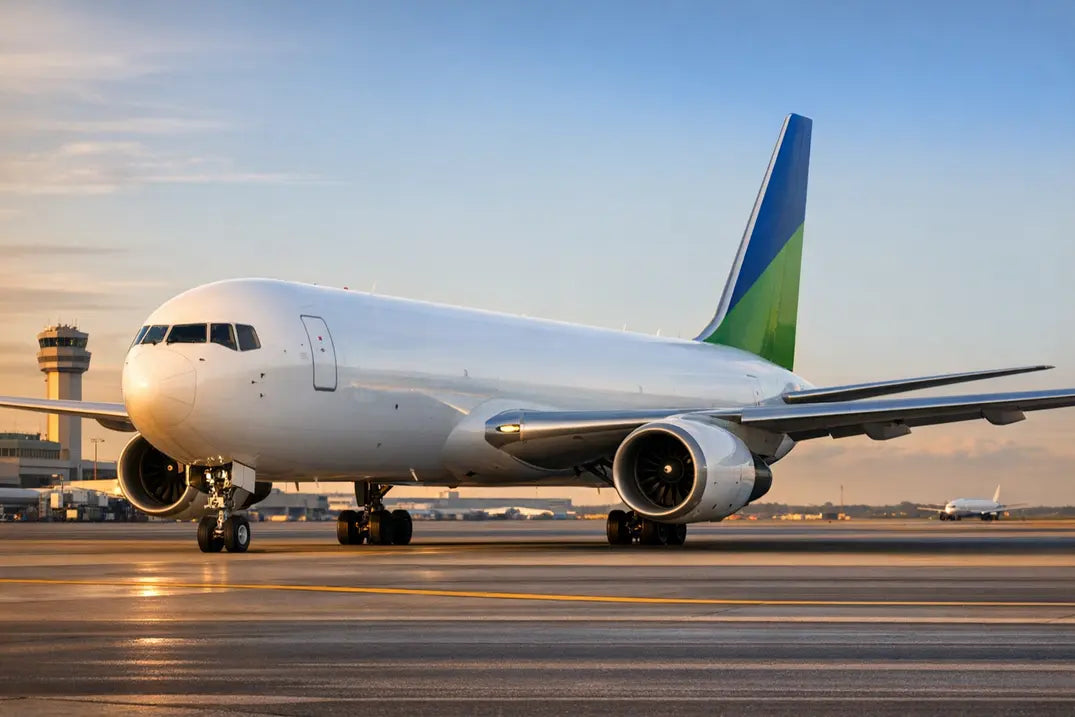
The Boeing 767 300F is a purpose built production freighter derived from the proven 767 300ER passenger airframe. Conceived to fill a growing demand for a medium widebody cargo aircraft capable of replacing ageing narrowbody freighters such as the Douglas DC 8, the 767 300F combined the structural maturity of the 767 family with a completely new freight optimised fuselage. Built at Boeing's Everett, Washington facility, the aircraft has become one of the most important dedicated freighters in commercial aviation, relied upon by express cargo carriers and airlines worldwide.
Origins of the 767 Program and the Path to a Dedicated Freighter
The wider Boeing 767 family traces its roots to the 7X7 program, launched on July 14, 1978. The original 767 200 prototype completed its first flight on September 26, 1981, and received FAA type certification on July 30, 1982 under Type Certificate A1NM. The stretched 767 300 entered service with Japan Airlines in 1986, followed by the extended range 767 300ER in 1988. These passenger variants established the airframe's reputation for twin engine reliability on medium to long haul routes, while also proving its economic efficiency against older tri jets and quad jets.
By the early 1990s, express parcel carriers were seeking a modern widebody freighter that could carry heavier, palletised loads over intercontinental distances. UPS Airlines approached Boeing, and on January 15, 1993, UPS placed a landmark order for 30 firm aircraft plus 30 options, officially launching the 767 300F programme. This made UPS both the launch customer and the driving force behind the variant's creation. In November 1993, Asiana Airlines ordered a general market version of the freighter, featuring mechanical freight handling systems and environmental controls for perishable and live cargo.
Key Programme Milestones
Development moved rapidly once the programme was authorised. A full scale mockup was completed in early 1994, followed by final assembly. The aircraft rolled out in May 1995 and completed its maiden flight on June 20, 1995, taking off from Paine Field in Everett with the registration N301UP. Just four months later, on October 16, 1995, the 767 300F entered revenue service with UPS Airlines, marking one of the shortest development to service timelines for a widebody freighter programme.
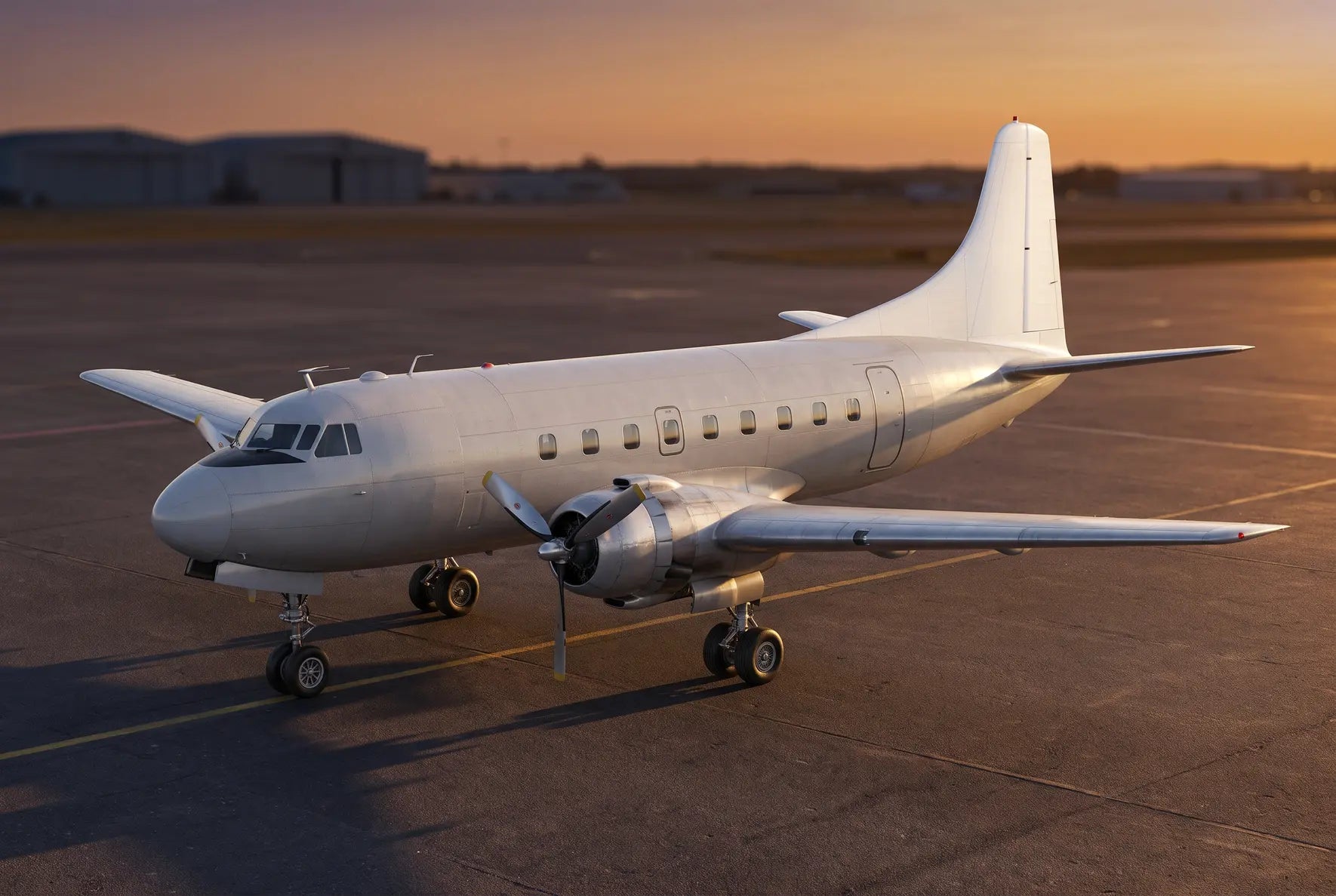
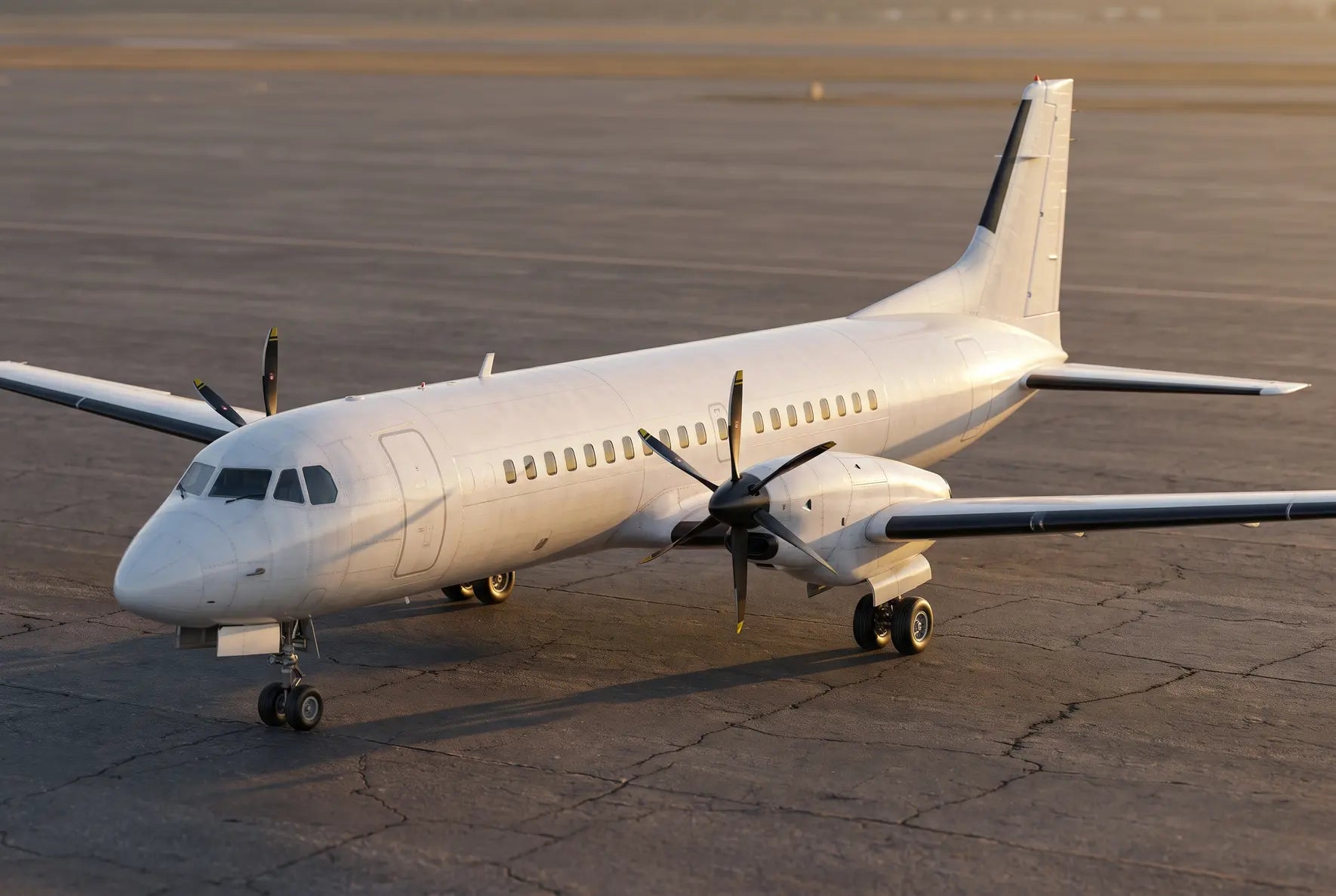
Since then, the 767 300F has attracted substantial orders from major cargo operators. FedEx Express ordered 50 aircraft (with 50 options) in July 2015, while UPS continued to expand its fleet with an additional 19 units ordered in December 2021. In October 2005, Boeing also launched the 767 300BCF (Boeing Converted Freighter) programme, offering passenger to freighter conversions for carriers seeking lower acquisition costs. In October 2024, Boeing announced that production of the 767 freighter would cease in 2027, partly driven by ICAO Stage 5 emissions and noise standards taking effect in 2028. A domestic FAA exemption allows continued operation of existing airframes in the United States until 2033. While the 767 300F may share its general size class with smaller turboprops converted for regional freight, such as the Fairchild Swearingen Metro II, its intercontinental range and palletised cargo capability place it in an entirely different operational category.
What Distinguishes the Boeing 767 300F from Related Variants
As a factory built freighter, the 767 300F was engineered from the outset without passenger windows, cabin furnishings, or overhead bins. Its fuselage incorporates a large forward main deck cargo door (approximately 340 × 262 cm), a structurally reinforced main deck floor rated for heavy palletised loads, and strengthened landing gear and wing structure to handle higher operational weights. The main deck accommodates up to 24 standard pallets (88 × 125 in), while the lower hold adds further containerised or bulk capacity for a total volume of approximately 438 m³.
By contrast, the 767 300BCF is a passenger to freighter conversion that retains the original fuselage shell, with metal plugs fitted over former window apertures. Although the BCF offers nearly identical cargo volume and a comparable structural payload of around 50 to 56.5 tonnes, the production freighter benefits from factory integrated reinforcements, potentially lower long term maintenance burden, and the option for operator specific configurations from the assembly line.
The following summarises the verified variant identifiers for the Boeing 767 300F:
- Engines: General Electric CF6 80C2 or Pratt & Whitney PW4000 series turbofans
- Maximum Takeoff Weight (MTOW): approximately 186,880 kg (412,000 lb)
- Maximum Structural Payload: 52,700 kg (116,000 lb)
- Range with Maximum Payload: 3,225 nmi (5,975 km)
- Main Deck Pallet Positions: up to 24 (88 × 125 in)
- Cargo Door: large forward left side main deck door, approximately 340 × 262 cm
- FAA Type Certificate: A1NM (shared with all 767 series models)
- No passenger windows: purpose built freighter fuselage from factory

A Delta Air Lines Boeing 767-332 aircraft is captured in flight against a clear blue sky. The plane, displaying the airline's distinctive branding, seems to ascend gracefully, with all landing gear retracted.
Boeing 767-300F Technical Specifications, Systems and Engine Options
The Boeing 767-300F is a purpose built production freighter derived from the Boeing 767-300ER airframe. Designed from the outset for medium to long haul cargo operations, it combines the proven widebody structure of the 767 family with a reinforced main deck floor, a large side cargo door, and the deletion of passenger systems to maximise payload volume. The core design trade off centres on balancing structural payload capacity against transoceanic range: with a full revenue load of approximately 52,700 kg the aircraft can cover around 3,225 nmi (6,025 km), making it well suited for express freight corridors across the Atlantic or between Asia and North America.
Two crew operation, twin engine fuel efficiency, and lower operating costs compared to older four engine freighters such as the DC 10F or 747 Classic variants have made the 767-300F a favourite among integrators and cargo airlines worldwide. The airframe shares the same fuselage cross section, wing, and landing gear as the passenger 767-300ER, which simplifies spares management and maintenance planning across mixed fleets.
- Overall length: 54.94 m (180 ft 3 in)
- Wingspan: 47.57 m (156 ft 1 in), no winglets on production standard
- Height: 15.85 m (52 ft)
- MTOW options: 186,880 kg (412,000 lb); some earlier builds at 185,520 kg (408,000 lb)
- MZFW: 140,160 kg (309,000 lb)
- MLW: 147,870 kg (326,000 lb)
- Maximum structural payload: approximately 56,500 kg (124,600 lb)
- Revenue payload (typical): approximately 52,700 kg (116,200 lb)
- Total cargo volume: 438.2 m³ (15,469 ft³), including main deck 336.5 m³ and lower holds
- Main deck cargo door: 3.40 m × 2.59 m, accommodating standard 88 × 125 in pallets
- Fuel capacity: approximately 91,370 litres (24,140 US gal)
- Range with maximum payload: 3,225 nmi (6,025 km)
- Cruise speed: Mach 0.80 (approximately 850 km/h), varies with altitude, weight, and temperature
- Engines: General Electric CF6-80C2B6F (60,800 lbf) or CF6-80C2B7F; Pratt & Whitney PW4062 (62,000 lbf) also certified
- Avionics baseline: two crew glass cockpit with EFIS, dual FMC, triple redundant flight control computers, EICAS
Systems, Flight Controls, and Handling Technology
The 767-300F retains the conventional hydraulic flight control architecture found across the 767 family. Three independent hydraulic systems (left, centre, and right) power the primary control surfaces: ailerons, elevators, rudder, and spoilers. Secondary high lift devices include leading edge slats and trailing edge flaps. Spoiler control modules within the flight control electronics manage ground spoiler deployment, in flight speedbrake, and roll augmentation, receiving input from rotary and linear variable differential transformers. The system is not fly by wire; instead it relies on mechanical linkages backed by hydraulic actuators under the supervision of triple redundant flight control computers.
The flight deck features Boeing's digital glass cockpit with cathode ray tube (later LCD retrofit) colour displays for primary flight, navigation, and engine parameters. Dual flight management computers handle performance computation, lateral and vertical navigation, and fuel predictions. An autobrake system with selectable deceleration modes supports both landing rollout and rejected takeoff scenarios, working in conjunction with carbon multi disc brakes and an anti skid system. Aspiring airline pilots preparing for technical screening and cognitive aptitude evaluations may find resources such as cut e pilot test preparation guides helpful for understanding the assessment process used by operators of aircraft like the 767.
Published performance figures for the 767-300F should always be interpreted with caution. Specific range, payload, and field length numbers vary depending on operator selected MTOW options, atmospheric conditions (ISA deviation, airport elevation, runway slope), cargo loading configuration, and whether auxiliary fuel options are installed. Boeing's Airport Compatibility document, for example, provides pavement loading data for several weight variants rather than a single number. Fuel burn and range claims quoted by airlines or lessors may reflect different reserve policies, step climb profiles, or wind assumptions, so direct comparisons between sources require careful normalisation.
Engine Options: CF6-80C2 and PW4000-94
The dominant powerplant on the 767-300F is the General Electric CF6-80C2 family, a high bypass turbofan that traces its lineage back to the original CF6-6 engine developed for the Douglas DC 10 in the early 1970s. GE introduced the CF6-80C2 series in the mid 1980s, incorporating advances from the NASA Energy Efficient Engine programme, including improved compressor aerodynamics, single crystal turbine blades, and a full authority digital engine control (FADEC) system. The variant most commonly associated with the 767-300F is the CF6-80C2B6F, rated at 60,800 lbf of takeoff thrust and flat rated to 30 °C. Key parameters include a bypass ratio of approximately 5.15 to 5.3, a fan diameter of 93 inches (2.36 m), an overall pressure ratio of around 31 to 33, and a dry weight near 4,472 kg. According to MTU Aero Engines, the CF6-80C2 programme has accumulated tens of millions of flight hours across more than 3,200 engines delivered. Major operators such as FedEx Express have selected the CF6 for large 767-300F fleet orders, and the engine also powers Boeing 747-400, Airbus A300-600, A310, and MD 11 aircraft.
The alternative powerplant is the Pratt & Whitney PW4000 94 inch fan series. Entering revenue service in 1987 as a direct successor to the JT9D that launched the widebody era on the Boeing 747, the PW4000-94 retained the same nacelle interfaces as the JT9D while offering significant improvements in fuel consumption, durability, and time on wing. The series spans 52,000 to 62,000 lbf of thrust; the PW4062, rated at 62,000 lbf, sits at the top of that range and is certified for 767 operations. With a bypass ratio of approximately 4.8 to 5.0, a 94 inch fan diameter, and a dry weight around 4,341 kg, the PW4000-94 delivers competitive efficiency in the same thrust class as the CF6-80C2. Pratt & Whitney reports that more than 2,500 PW4000-94 engines have been delivered, logging over 150 million flight hours. Beyond the 767, the PW4000-94 family powers the Airbus A300-600, A310-300, Boeing 747-400, and MD 11. Both engine families are ETOPS 180 certified, which underlines the reliability standard required for twin engine freighter operations across oceanic routes.
Boeing 767-300F vs 767-300ER vs 767-400ERF vs Airbus A330-200F Specifications Comparison
Scroll horizontally to see more →
| Parameter | Boeing 767-300F | Boeing 767-300ER | Boeing 767-400ERF | Airbus A330-200F |
|---|---|---|---|---|
| Entry into service | 1995 | 1988 | 2008 | 2010 |
| Engines | 2 × GE CF6-80C2 | 2 × GE CF6-80C2 / PW4000 / RR RB211 | 2 × GE CF6-80E1 | 2 × GE CF6-80E1 / PW4000 |
| Length | 54.9 m | 54.9 m | 61.4 m | 58.8 m |
| Wingspan | 47.6 m | 47.6 m | 52.6 m | 60.3 m |
| Height | 15.9 m | 15.9 m | 15.9 m | 17.4 m |
| Typical seating and layout | Freighter: 52.7 t payload | 3-class: 200–260 passengers | Freighter: 112 t payload | Freighter: 70 t payload |
| MTOW | 186 t | 186 t | 196 t | 242 t |
| Range | 3,225 nm | 5,990 nm | 4,970 nm | 5,400 nm |
| Cruise speed | 0.80 Mach | 0.80 Mach | 0.80 Mach | 0.82 Mach |
| Service ceiling | 41,000 ft | 43,100 ft | 43,100 ft | 41,000 ft |
| Program note | Standard freighter version of stretched 767-300 | Long-range passenger baseline of 767-300 family | Extended freighter with raked wingtips and larger payload | Mainline Airbus widebody freighter competitor |
Scroll horizontally to see more →
The table compares key specs of Boeing 767 variants and the Airbus A330-200F, covering dimensions, engines, payload/seating, MTOW, range, and cruise. The 767-300ER is the long-range passenger option (5,990 nm) versus the shorter-range 767-300F freighter (3,225 nm). The 767-400ERF is longer with higher payload, while the A330-200F has the highest MTOW and a wider wingspan.
Boeing 767-300F Operations: Typical Missions, Routes and Airlines Worldwide
The Boeing 767-300F is one of the most widely operated widebody freighters in the world, designed from the outset for medium to long haul cargo missions. With a maximum range of approximately 3,255 nautical miles (6,025 km) carrying a payload of up to 52.7 tonnes, the aircraft fills a critical gap between smaller narrowbody freighters and larger widebody types such as the Boeing 777F. Its cruise speed of Mach 0.80 (approximately 850 km/h) allows operators to complete transcontinental sectors efficiently, while its cargo volume of 438 m³ across main and lower decks makes it well suited for both dense freight and lightweight, high volume shipments.
Typical sector lengths for the Boeing 767-300F range from 2 to 8 hours on domestic and intraregional routes, and up to 10 hours or more on intercontinental legs. Express freight integrators such as FedEx Express and UPS Airlines typically operate the type on overnight hub and spoke networks, where the aircraft departs in the evening, flies to a central sorting hub, and returns before dawn. This pattern means that daily utilisation can be relatively modest, sometimes between 8 and 12 block hours per day, because aircraft spend significant time on the ground during daytime sorting windows. On longer point to point cargo routes, however, utilisation can climb higher, approaching 12 to 16 block hours per day for airlines operating continuous schedules across time zones.
The Boeing 767-300F operates effectively across hub and spoke and point to point networks alike. Its fuselage width allows it to serve major international cargo hubs with full pallet handling infrastructure, yet the aircraft's moderate size also makes it viable at secondary or regional airports where larger freighters would be underutilised. Operators value the type for transporting a wide variety of goods, including e commerce parcels, automotive parts, perishable products, pharmaceuticals and oversized items such as machinery or aerospace components. For aviation enthusiasts wanting to learn more about aircraft like this, the book Ready for Take Off provides a broader perspective on commercial aviation.
Operators face several challenges with the Boeing 767-300F fleet. Many airframes, particularly converted examples, are now more than 25 years old, which increases maintenance costs and can trigger additional structural inspections. In February 2026, the FAA proposed a new airworthiness directive requiring inspections of titanium cargo track fittings on certain Boeing 767-300F aircraft after suspect material certifications were discovered. Boeing has also announced that production of the 767-300F will end in 2027, driven in part by stricter emissions and noise standards taking effect in 2028. This means operators will increasingly rely on passenger to freighter conversions (767-300BCF and 767-300BDSF variants) to maintain fleet capacity in the years ahead.
Where the Boeing 767-300F Operates Around the World
The Boeing 767-300F is a truly global freighter. In North America, it dominates express freight networks, connecting major sorting hubs with cities across the continent and transatlantic destinations. In Asia, the type serves both domestic Japanese cargo routes and intra regional links connecting production centres with distribution hubs. Africa sees a growing presence of the type, where cargo airlines use it to support trade corridors linking the continent with the Middle East, Europe and Asia. In Europe, the Boeing 767-300F is less common among mainline operators, but converted variants serve integrator networks and contract cargo operations.
- North & South America: This is the largest market for the Boeing 767-300F. FedEx Express operates approximately 146 examples, making it the single largest operator of the type worldwide, using the aircraft on domestic US routes from its Memphis superhub as well as on transatlantic and transpacific sectors. UPS Airlines fields over 100 Boeing 767 freighters (including approximately 90 factory built 767-300F and additional conversions) from its Louisville Worldport hub, covering domestic overnight express and international routes. Amazon Air relies heavily on the 767-300BDSF conversion variant, operating approximately 80 to 90 examples through partner airlines such as ATSG (via ABX Air and Air Transport International) and 21 Air, feeding fulfilment centres across the United States. Cargojet in Canada operates a fleet of over 20 Boeing 767 freighters (primarily 767-300ER BDSF conversions plus one factory 767-300F received in 2025) on its overnight domestic Canadian network and charter services.
- Europe: The Boeing 767-300F has a more limited presence in Europe compared to North America. Converted variants are used by integrator subcontractors and ACMI lease providers supporting cargo operations for companies like DHL. The type occasionally appears on transatlantic routes operated by North American carriers serving European destinations.
- Asia: ANA Cargo in Japan operates four factory built Boeing 767-300F aircraft alongside two 767-300BCF conversions, using them on both domestic and international cargo routes across the Asia Pacific region. SF Airlines in China also operates 767 freighter variants to support the country's booming e commerce logistics sector. My Freighter in Uzbekistan has built a fleet of eight Boeing 767-300F aircraft, using them as the backbone of Central Asia's largest cargo airline to connect the region with international markets.
- Africa: Astral Aviation in Kenya operates 767 freighter variants and announced plans to expand with additional 767-300F aircraft in 2026, supporting cargo flows between East Africa, the Middle East and Asia. The type helps bridge the gap in dedicated freighter capacity across the continent, where demand for air cargo continues to grow.
Cargo Configuration and Deck Layout
As a pure freighter, the Boeing 767-300F carries no passengers. Instead, the entire fuselage is configured for cargo, with a reinforced main deck and a large forward cargo door measuring 340 cm by 262 cm (134 by 103 inches). The factory built 767-300F accommodates 22 standard pallets (P6P or PMC size, 244 by 318 cm) on the main deck, providing approximately 336 m³ of volume. The lower deck adds further capacity for containers (LD2 or LD3 types) or additional pallets, bringing total cargo volume to approximately 438 m³. According to Boeing, the structural gross payload reaches 56.5 tonnes, with a net revenue payload of approximately 51.6 tonnes.
Converted variants such as the 767-300BCF (Boeing Converted Freighter) and the 767-300BDSF (a conversion by IAI Bedek) offer similar pallet positions on the main deck but typically carry slightly less payload than the factory built version due to the additional structural weight introduced during conversion. The ANA Cargo specifications page illustrates both factory and BCF layouts side by side, showing comparable ULD positions but minor differences in maximum compartment weights. For operators, the choice between a factory freighter and a conversion often depends on aircraft availability, capital cost and the specific payload requirements of their network. Both configurations feature powered cargo handling systems on main and lower decks, enabling efficient loading and unloading at freight terminals worldwide.
In this video, explore options to replace the Boeing 767-300 and 767-300ER, with context on its production history and fleet numbers, and learn what available aircraft could best fill its role.
Boeing 767 300F Safety Record: Accidents, Incidents and How Safe It Is
The Boeing 767 300F belongs to the broader Boeing 767 family, a twin engine widebody programme that first entered commercial service in 1982. Over more than four decades, roughly 1,200 Boeing 767 airframes of all variants have been delivered and many remain in active operation. The purpose built 767 300F freighter variant has been in production since 1995, with well over 200 units delivered to major cargo operators such as FedEx, UPS and Amazon Air. In the context of millions of flight hours and cycles accumulated across that fleet, the 767 family has recorded approximately 17 hull loss events across all variants as of 2016, a figure that is low relative to the total number of airframes delivered and the decades of service logged. The vast majority of 767 300F freighters have operated without a single hull loss accident, reflecting the robustness of the platform and the rigorous maintenance standards applied by its operators.
Notable Accidents and Incidents Involving the Boeing 767 300F and Related Variants
While the dedicated 767 300F has a limited accident history, several events involving freighter configured 767 aircraft have shaped safety practices across the cargo aviation industry.
- Atlas Air Flight 3591 (February 2019) — A Boeing 767 375ER(BCF) operating for Amazon Air on behalf of Atlas Air crashed into Trinity Bay, Texas, during approach to Houston George Bush Intercontinental Airport. All three occupants were fatally injured. The NTSB final report (AAR 20/02) determined that the first officer inadvertently activated go around mode, became spatially disoriented and made nose down inputs. Contributing factors included inadequate monitoring by the captain and the first officer's concealment of prior training deficiencies. The investigation led the NTSB to issue six new safety recommendations (A 20 36 through A 20 41) addressing pilot hiring verification, standardised evaluation of performance deficiencies, and a study into automatic ground collision avoidance systems for transport category aeroplanes.
- Lauda Air Flight 004 (May 1991) — Although this involved a 767 300ER passenger variant rather than a freighter, the accident had far reaching consequences for the entire 767 programme. An uncommanded thrust reverser deployment during climb caused loss of control and the aircraft was destroyed. The event resulted in design changes to thrust reverser actuation systems across the 767 and 747 fleets, including additional locking mechanisms, and prompted revised certification requirements worldwide.
- LATAM Airlines 767 300ER Freighter Incident (June 2019) — A LATAM cargo configured 767 300ER on approach to Frankfurt encountered severe windshear. During the escape manoeuvre the aircraft reached a nose up pitch of 48 degrees and an airspeed as low as 117 knots, entering an aerodynamic stall. The crew temporarily lost control but recovered after losing approximately 1,000 feet and landed safely. The investigation highlighted the importance of windshear recovery training and standard operating procedures for energy management during approach.
Each of these events reinforced the aviation industry's commitment to learning from incidents. Post accident changes included enhanced pilot record sharing protocols, improved automation training syllabi and updated windshear escape procedures, all of which benefit Boeing 767 300F operators today.
How Safe Is the Boeing 767 300F?
When measured against the volume of traffic it supports, the Boeing 767 300F has an excellent safety profile. The type benefits from a design philosophy rooted in redundancy: dual engine reliability proven through decades of ETOPS (Extended range Twin engine Operations) certification, a pioneering two crew glass cockpit shared with the Boeing 757 that reduces workload and enhances situational awareness, and a structurally robust airframe engineered for high cycle freighter operations. Operators of the 767 300F, including major integrators and cargo airlines, adhere to stringent standard operating procedures (SOPs), mandatory maintenance programmes and continuous airworthiness directives issued by the FAA and other regulatory authorities.
The broader Boeing 767 family has a reported fatal accident rate of approximately 0.2 per million flights, placing it among the safer widebody types ever built. For aspiring pilots considering a career in cargo aviation, understanding how freighter operations prioritise safety culture and crew resource management is essential. Resources such as the latest pilot training pathways can help candidates prepare for the operational standards expected at airlines flying the 767 300F and similar types.
Aviation, as confirmed by data published in Boeing's annual Statistical Summary of Commercial Jet Airplane Accidents, remains one of the safest modes of transport. The Boeing 767 300F, supported by decades of fleet experience, continuous design improvements and rigorous regulatory oversight, reflects that broader safety trend and continues to serve as a trusted platform for global air freight.
01 What is the typical range and mission profile of the Boeing 767-300F?
The Boeing 767-300F has a maximum range of around 3,225 nautical miles, making it suitable for medium to long-haul cargo missions across continents. It excels on transatlantic or transpacific routes carrying up to 52,480 kg of payload, balancing efficiency with substantial freight capacity. Operators use it for e-commerce freight and time-sensitive cargo delivery.
02 Which airlines commonly operate the Boeing 767-300F and on what routes?
Major cargo operators like Atlas Air, FedEx, and UPS frequently use the Boeing 767-300F for their fleets. These airlines deploy it on high-demand freight routes such as North America to Europe or Asia-Pacific networks. Its versatility supports both scheduled cargo services and charter operations for oversized loads.
03 How does the Boeing 767-300F perform in terms of fuel efficiency and speed?
Powered by twin engines like GE CF6 or PW4000 series producing up to 60,600 N thrust each, the Boeing 767-300F cruises at 485 KIAS with a fuel burn of about 3,606 gallons per hour. It offers superior fuel efficiency over older four-engine freighters due to its advanced aerodynamics and high-bypass turbofans. This makes it economical for medium-capacity cargo hauls.
04 What are the key design features of the Boeing 767-300F for cargo operations?
The Boeing 767-300F features a large forward main deck cargo door and automated power drive units for efficient loading of pallets and containers. Its main deck handles nearly all standard cargo types, with a total volume exceeding 438 cubic meters including lower compartments. The two-person glass cockpit shares type ratings with 767 passenger models, simplifying crew training.
05 How does the Boeing 767-300F compare to similar cargo aircraft?
Compared to the Airbus A330-200F, the Boeing 767-300F offers similar payload around 52,000 kg but with a slightly shorter range suited for medium-haul efficiency. It provides better operational commonality with existing 767 fleets versus four-engine DC-10 freighters, reducing costs through twin-engine design. Its proven reliability positions it well in the growing e-commerce cargo market.
06 What is the safety record and notable safety features of the Boeing 767-300F?
The Boeing 767-300F inherits a strong safety record from the 767 family, with advanced digital avionics and flight management systems enhancing pilot situational awareness. Its high-bypass engines and robust structure contribute to low incident rates in cargo service. Common type ratings with passenger 767s ensure experienced crews operate it reliably on global routes.