ATR 72-500: History, Development and What Sets This Variant Apart
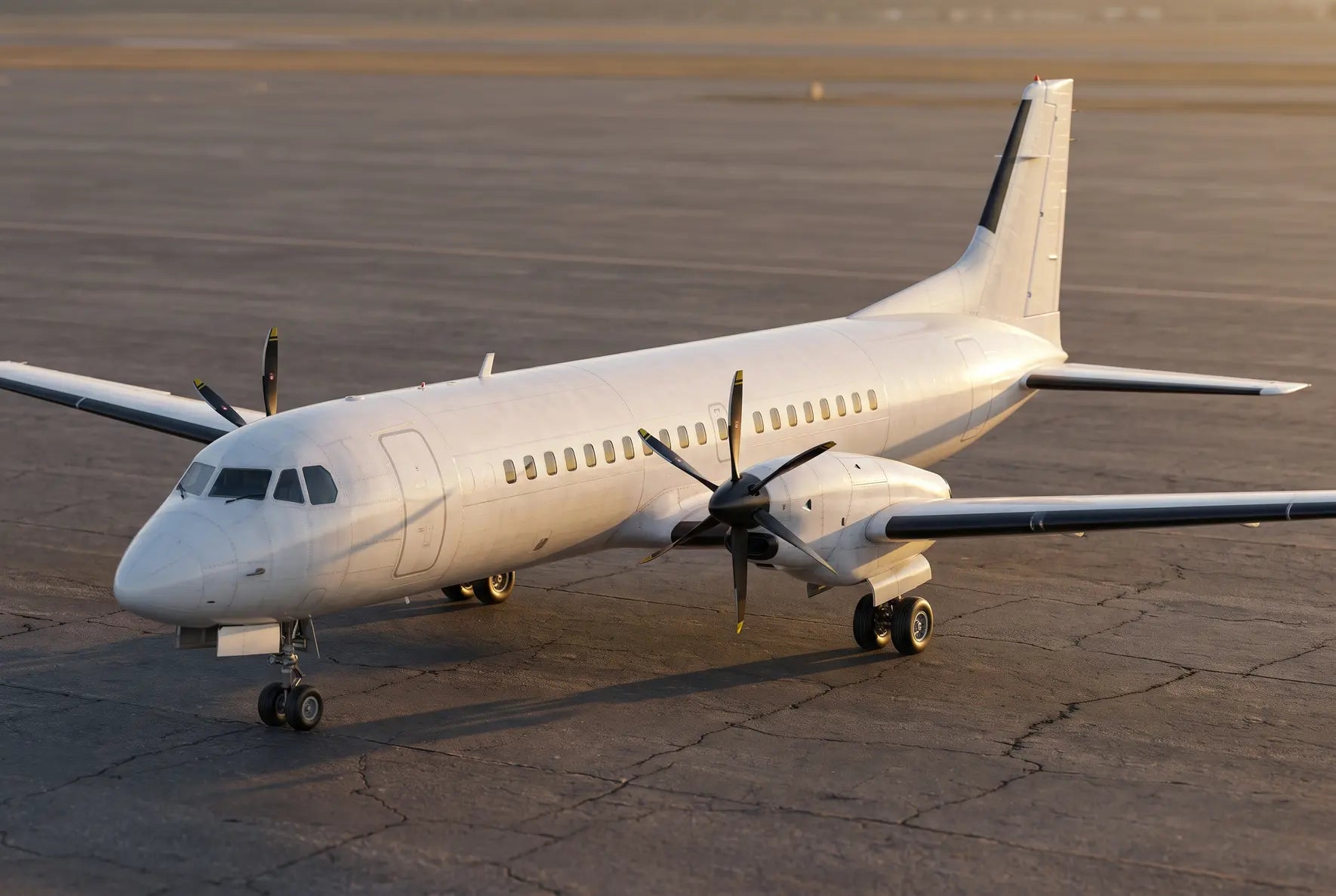
The ATR 72-500 is a twin engine turboprop regional airliner produced by ATR (Avions de Transport Régional), a Franco-Italian joint venture established on 4 November 1981 between Aérospatiale (now part of Airbus) and Aeritalia (now Leonardo). Headquartered in Blagnac, near Toulouse, France, ATR was created to address growing demand for efficient and flexible regional air connectivity. The company first developed the ATR 42, which entered service in 1985, followed by a larger, stretched derivative: the ATR 72.
On 15 January 1986, ATR announced the launch of the ATR 72 programme. The new aircraft extended the ATR 42 fuselage by approximately 4.5 metres, increased wingspan, and boosted fuel capacity by about 10%, raising standard seating from around 48 to approximately 70 passengers. The original ATR 72 prototype completed its maiden flight on 27 October 1988. Airworthiness certification from the French DGAC followed on 25 September 1989, and the type entered commercial service with Finnair on 27 October 1989. With its combination of low operating costs, short field performance and regional versatility, the ATR 72 family stepped into a market segment once served by earlier turboprops such as the Fokker F27, gradually replacing older fleets at airlines worldwide.
Through the early 1990s, ATR refined the ATR 72 in successive variants, including the ATR 72-210, which introduced the Pratt & Whitney Canada PW127 engine for improved performance in hot and high altitude conditions. Building on this platform, ATR developed a further enhanced version designated ATR 72-212A under its official type certificate. This aircraft completed its first flight on 19 January 1996, as recorded in ATR's official milestones. The French DGAC granted certification on 14 January 1997, and the first delivery took place on 31 July 1997 to American Eagle, the regional affiliate of American Airlines.
In May 1998, ATR officially rebranded the ATR 72-212A under the commercial name ATR 72-500, a designation intended to underscore commonality with the simultaneously marketed ATR 42-500 and to signal the significant improvements over previous versions. The variant quickly gained traction among regional operators. On 28 April 2000, the 600th ATR aircraft overall, an ATR 72-500, was delivered to Italian carrier Air Dolomiti, marking a major production milestone for the manufacturer.
The ATR 72-500 remained in production until the introduction of its successor. ATR announced the next generation ATR 72-600 series in January 2007. The ATR 72-600 prototype performed its first flight in 2009 and received EASA certification in October 2011, after which production progressively transitioned to the newer variant.
What Distinguishes the ATR 72-500 from Earlier and Later Variants
The ATR 72-500 introduced a set of targeted upgrades over the ATR 72-210 it replaced. The most visible change was the adoption of six blade Hamilton Sundstrand 568F composite propellers, replacing the four blade units fitted to the ATR 72-210. These new propellers, combined with a reduced diameter and lower rotational speed, delivered noticeably lower cabin noise and vibration levels. The powerplant was upgraded to the Pratt & Whitney Canada PW127F or PW127M, each rated at 2,475 SHP for take off, offering improved performance margins, particularly in demanding hot and high altitude operating environments.
A key systems improvement was the introduction of Propeller Electronic Control (PEC), enabling fully automatic propeller management, whereas the ATR 72-210 (ATR 72-212 in type certificate terms) relied on manual propeller settings. The cabin benefited from enhanced comfort features and the widest cross section in the turboprop market, as noted by the manufacturer. Structural modifications included updated landing gear, wheels, brakes, and a composite tailplane, all adapted for revised operational weights. The ATR 72-500 also shared a common cockpit architecture with the ATR 42-500, simplifying pilot transition and reducing training costs for operators flying both types.
Compared to the later ATR 72-600, the ATR 72-500 retained conventional analogue cockpit instruments rather than the full glass cockpit (Thales avionics suite) introduced on the 600 series. The ATR 72-600 also raised maximum take off weight to 23,000 kg, compared to the ATR 72-500's 22,000 kg, and brought further cabin refinements.
The following list summarises the key variant identifiers of the ATR 72-500:
- Official type certificate designation: ATR 72-212A (EASA TCDS A.084)
- Engines: Pratt & Whitney Canada PW127F or PW127M, each rated at 2,475 SHP
- Propellers: Hamilton Sundstrand 568F, six blade composite units with Propeller Electronic Control (PEC)
- Maximum take off weight: 22,000 kg (48,501 lb)
- Operating empty weight: approximately 12,950 kg (28,549 lb)
- Typical seating: 68 to 70 passengers
- Cruise speed: approximately 275 KTAS (510 km/h)
- Range with full passenger load: approximately 772 nautical miles

The image shows a Firefly ATR 72-500 aircraft with distinctive orange and white livery, flying in a clear blue sky. The airplane is used by the Malaysian airline Firefly for regional routes.
ATR 72-500 Technical Specifications, Systems and Engine Overview
The ATR 72-500, formally certified as the ATR 72-212A under EASA type certificate, is a twin turboprop regional airliner designed for short haul operations on routes typically under 800 nautical miles. Built around a high wing, unpressurised lower fuselage, and fixed undercarriage philosophy shared across the ATR 72 family, the variant balances payload capacity, short field performance and fuel efficiency. It is optimised for regional networks where runway length, operating economics and frequency matter more than speed.
Compared to the earlier ATR 72-200 and 72-210, the 500 series introduced more powerful Pratt & Whitney Canada PW127F engines, six blade propellers for improved efficiency and reduced cabin noise, and higher maximum weight options. The result is enhanced hot and high performance, a faster cruise speed and better payload range capability, all while retaining the low operating costs that define the ATR family.
- Wingspan: 27.05 m (88 ft 9 in)
- Overall length: 27.17 m (89 ft 2 in)
- Height: 7.65 m (25 ft 1 in)
- Engines: 2 × Pratt & Whitney Canada PW127F turboprops, 2,475 SHP takeoff power (2,750 SHP single engine inoperative)
- Propellers: Hamilton Standard 568F, 6 blade, 3.93 m (12.9 ft) diameter
- Max takeoff weight (MTOW): 22,000 kg (48,501 lb) basic; 22,500 kg (49,604 lb) optional
- Max landing weight (MLW): 21,850 kg basic; 22,350 kg optional
- Operating empty weight (OEW): approximately 12,950 kg (28,549 lb)
- Max zero fuel weight (MZFW): 20,000 kg basic; 20,300 kg optional
- Max payload (at typical in service OEW): 7,000 kg (15,432 lb) basic; 7,350 kg optional
- Fuel capacity: 5,000 kg (11,023 lb)
- Typical seating: 68 passengers (standard); up to 74 in high density layout
- Max cruise speed: 275 KTAS (510 km/h) at optimum flight level, ISA conditions
- Service ceiling: 25,000 ft (7,600 m)
- Range with max passengers: approximately 772 NM (1,430 km), manufacturer figure with standard fuel reserves
- Takeoff field length: 1,224 m (4,016 ft) at basic MTOW, sea level, ISA
- Landing distance: 899 m (2,949 ft) at basic MLW, sea level
- Avionics: Thales New Avionics Suite (NAS) glass cockpit on later production aircraft, replacing earlier Honeywell systems
Systems, Flight Controls and Automation
The ATR 72-500 uses conventional mechanical flight controls actuated through cable and rod systems, with spring tabs providing aerodynamic load compensation on the ailerons and rudder. Roll control is achieved via one aileron per wing supplemented by spoilers for augmentation. Dual elevators are mechanically linked through a pitch coupling mechanism that disengages at a set differential force, providing redundancy in the event of a control jam. Stall protection relies on dual stick shakers (one per control column) and a single stick pusher activated by the Multi Function Computer (MFC) using angle of attack data from dual alpha probes.
The Automatic Flight Control System (AFCS) provides autopilot capability on all three axes, a flight director and yaw damper. The automation philosophy prioritises pilot authority: the crew selects modes such as vertical speed, indicated airspeed or altitude hold, while the system reduces workload during cruise and approach phases. The Thales glass cockpit, available on later production aircraft, features five LCD screens covering primary flight, navigation and engine warning displays, along with an embedded Flight Management System (FMS).
Published performance figures for the ATR 72-500 should always be read with context. Takeoff and landing distances vary with airport elevation, temperature (ISA deviation), runway condition, aircraft weight configuration and optional MTOW selection. Range depends on passenger count, cargo load, reserve policy and wind conditions. ATR's official specification sheet provides baseline figures under standardised assumptions, but operators routinely adjust calculations for local conditions. Pilots and engineers working within regional networks such as those described in our guide to airline pilot conditions will recognise how these variables shape daily operational planning.
Engines: The Pratt & Whitney Canada PW127F
The ATR 72-500 is powered by two Pratt & Whitney Canada PW127F turboprops, each rated at 2,475 SHP for takeoff with a maximum continuous rating of 2,500 SHP. The PW127F belongs to the PW100 engine family, a series of turboprops producing between 1,800 and 5,000 SHP that has accumulated over 100 million flight hours since entering service in 1984.
The PW100 programme began as a technology demonstrator in 1977 at Pratt & Whitney Canada's Longueuil facility in Quebec. The first ground test ran in March 1981, followed by initial flight testing on a modified Vickers Viscount in February 1982. Certification of the early PW115 and PW120 models was achieved in December 1983, and commercial service began in January 1984 aboard the de Havilland Canada Dash 8. The family features a three shaft architecture with a free power turbine, twin centrifugal compressors and Full Authority Digital Engine Control (FADEC) for optimised power management and surge protection.
The PW127F was developed to meet the ATR 72-500's requirements for improved hot and high airfield performance and higher cruise speeds compared to the PW124B engines used on earlier ATR 72 variants. It drives the Hamilton Standard 568F six blade composite propeller, which replaced the four blade units of the 200 and 210 series, contributing to lower cabin noise and improved propulsive efficiency. The PW100 family has since evolved through the PW127M (used on the ATR 72-600, offering further optimisation) and the PW127XT series, which entered service in 2022 as the standard engine for new build ATR aircraft. The PW127XT delivers a 3% reduction in fuel consumption and extends time between overhauls to 20,000 hours, compared to 14,000 hours for earlier variants. A derivative, the PW127XT-S, has been selected to power the Deutsche Aircraft D328eco regional turboprop, currently in development.
Within the broader PW100 family, different variants power several aircraft types. The PW120 and PW121 equip earlier Dash 8-100 and 300 series, while the PW123 powers certain Dash 8 configurations and the PW150A is used on the Dash 8-400 (Q400). The PW127 sub family, however, has been most closely associated with ATR aircraft throughout its production history.
ATR 72-500 vs ATR 72-600 vs ATR 42-500 vs Dash 8-400: Regional Turboprop Specs Comparison
Scroll horizontally to see more →
| Parameter | ATR 72-500 | ATR 72-600 | ATR 42-500 | De Havilland Dash 8-400 |
|---|---|---|---|---|
| Entry into service | 1997 | 2011 | 1996 | 1999 |
| Engines | 2 × Pratt & Whitney Canada PW127F | 2 × Pratt & Whitney Canada PW127M | 2 × Pratt & Whitney Canada PW127E | 4 × Pratt & Whitney Canada PW150A |
| Length | 27.17 m | 27.17 m | 22.67 m | 36.3 m |
| Wingspan | 27.05 m | 27.05 m | 24.57 m | 28.42 m |
| Height | 7.65 m | 7.65 m | 7.44 m | 8.46 m |
| Typical seating and layout | 2-class: 64–72 passengers | 2-class: 70–78 passengers | 2-class: 42–50 passengers | 2-class: 68–90 passengers |
| MTOW | 22 t | 23 t | 18.6 t | 29.3 t |
| Range | 890 nm | 894 nm | 852 nm | 1,533 nm |
| Cruise speed | 0.51 Mach | 0.52 Mach | 0.51 Mach | 0.62 Mach |
| Service ceiling | 25,000 ft | 25,000 ft | 25,000 ft | 25,000 ft |
| Program note | Standard stretched turboprop for regional routes with PW127F engines | Latest ATR 72 variant with Glass Cockpit and improved PW127M engines | Baseline shorter ATR 42-500 model sharing PW127 family engines | Main competing 78-seat turboprop with higher capacity and quad-engine design |
Scroll horizontally to see more →
The table compares key specifications of four regional turboprops, highlighting size, performance, and capacity. ATR 72-500 and -600 share dimensions and ceiling, but the -600 is newer (2011), slightly heavier (23 t vs 22 t), faster (0.52 vs 0.51 Mach), and uses PW127M engines. ATR 42-500 is shorter with fewer seats and lower MTOW. The Dash 8-400 is much longer, offers the highest range and speed, and carries more passengers.
ATR 72-500 Operations: Typical Routes, Missions and Airlines Worldwide
The ATR 72-500 was designed to serve regional and short haul routes, and its operational profile reflects that purpose. According to ATR's official specifications, the aircraft has a maximum range of approximately 890 nautical miles (1,648 km) at full passenger load, with a cruising speed of 463 km/h. In practice, most operators fly average stage lengths of 200 to 300 nautical miles (370 to 556 km), resulting in typical block times of 50 to 84 minutes per sector. Finnair, whose ATR 72-500 fleet is operated by Nordic Regional Airlines (Norra), reports that each aircraft averages around eight flights per day, with some peak days reaching up to 14 sectors. Industry maintenance analyses confirm a general average of six to seven flights per day across the fleet, equating to roughly 5.5 to 8 daily block hours and between 2,000 and 2,900 flight hours per year.
The ATR 72-500 thrives in hub and spoke networks, feeding passengers from smaller regional and secondary airports into major hubs. Its ability to operate from runways as short as 1,224 metres makes it well suited for airports that larger narrowbody jets cannot serve. This includes mountainous regions, island destinations and remote airfields. Operators also deploy it on point to point routes between secondary cities where demand does not justify a larger aircraft. Like all turboprops, the ATR 72-500 presents certain operational challenges: the high number of daily cycles accelerates airframe fatigue, requiring disciplined maintenance scheduling. Heavy checks are typically needed every two years, involving multi week overhauls. Weather sensitivity, particularly in convective environments and icing conditions, can also impact schedule reliability on regional routes. If you are curious about how larger aircraft handle long haul missions, explore our guide to the Boeing 777-200ER, which operates at the opposite end of the range spectrum.
Where the ATR 72-500 Operates Around the World
The ATR 72-500 has seen widespread adoption across four broad regions. In Europe, it serves as a backbone for domestic and cross border regional connectivity, linking Nordic capitals with Arctic destinations and connecting Mediterranean islands to the mainland. In Asia, it is a workhorse for domestic routes in countries with challenging terrain, including Nepal, Myanmar and the Philippines. Across Africa, the type supports domestic networks and inter island services, particularly in North and East Africa. In North and South America, operators use it for domestic regional flights and connections to remote communities.
According to the list of ATR 72 operators maintained on Wikipedia, dozens of airlines worldwide have flown or continue to fly this variant. Below is a regional overview of notable operators and their typical use of the aircraft.
- Europe: Nordic Regional Airlines (Norra), operating on behalf of Finnair in Finland, flies 11 to 12 ATR 72-500s on routes such as Helsinki to Tromsø, Bergen and Baltic destinations. Binter Canarias in Spain uses around seven aircraft for inter island services across the Canary Islands. Sky Express in Greece deploys the type for island hopping routes in the Aegean. TAROM in Romania operates two ATR 72-500s on domestic routes such as Bucharest to Oradea. Blue Islands in the Channel Islands uses four aircraft for short services linking Jersey and Guernsey with the UK mainland. Canary Fly in Spain also operates four on Canary Islands routes, while Czech Airlines historically used six for Central European regional connections.
- North and South America: In Brazil, Voepass Linhas Aéreas (formerly Passaredo) operated up to nine ATR 72-500s on domestic regional routes. Air Caraïbes in Guadeloupe uses two for Caribbean inter island flights. Cubana in Cuba operates two on domestic services. In Canada, North Star Air uses ATR 72-500 freighter variants for cargo operations to remote northern communities.
- Asia: Buddha Air in Nepal operates seven ATR 72-500s for domestic mountain routes, making it one of the largest operators in the region. Novoair in Bangladesh uses six on domestic services. Lao Airlines in Laos and Air KBZ in Myanmar each operate four, connecting smaller cities to their respective capitals. Cambodia Angkor Air uses three on domestic Cambodian routes, while Yeti Airlines in Nepal operates four across short domestic sectors in mountainous terrain.
- Africa: Air Algérie in Algeria is one of the largest ATR 72-500 operators on the continent with 12 aircraft, flying domestic routes including connections to Saharan cities. Precision Air in Tanzania uses five on East African domestic services. Air Mauritius operates ATR 72-500s for regional Indian Ocean island services. Binter Cabo Verde in Cape Verde uses three for inter island connections in the Atlantic archipelago.
Typical Seating Configurations on the ATR 72-500
The ATR 72-500 features a single aisle cabin with a 2+2 seating arrangement. According to ATR's manufacturer documentation, the standard configuration accommodates 68 passengers with a seat pitch of approximately 31 inches (79 cm). Most operators maintain an all economy layout, though the exact seat count varies between 68 and 72 depending on the airline's choice of seat model and pitch.
Network carriers tend to stick close to the standard 68 seat configuration to offer slightly more legroom on competitive routes. For example, TAROM configures its ATR 72-500s with 68 economy seats, and Finnair's Norra operated fleet offers either 68 or 70 seats at 30 inch pitch, with some refurbished aircraft using slimline Acro Series 3 seats reaching 72 seats. High density operators, such as Firefly in Malaysia, push to 72 seats by using slimline models that maintain acceptable comfort on flights under an hour. Seat width typically ranges from 17 to 18 inches, and recline is minimal at 0 to 3 inches, reflecting the short haul nature of most routes. Dedicated business class cabins are not standard on the ATR 72-500, though some airlines, such as TAROM, have historically offered a curtained front section with a blocked middle seat to simulate a premium experience on select domestic flights.
In this video, watch a step-by-step build of an ATR 72-500 Voepass airplane model made from wooden ice cream sticks, showing how simple materials can be transformed into detailed, handcrafted art.
ATR 72-500 Safety Record: Accident History and How Safe Is This Turboprop?
The ATR 72-500 entered service in the late 1990s and remained in production until 2012, with approximately 365 units delivered to around 75 operators worldwide. Over more than two decades of commercial operations spanning millions of flight cycles, the variant has compiled a substantial service history. When placed in context, the ATR 72 family (all variants combined) has recorded a hull loss rate of roughly 0.44 events per million departures across more than 26 million flights, according to data compiled by AirSafe.com. That figure is comparable to other turboprop types of the same generation and remains well below the accident rates of earlier propeller driven airliners. The broader ATR 72 programme, which includes the older 72-200 and the current 72-600, has logged roughly 66 recorded accidents and incidents across all variants since 1988, many of which involved factors unrelated to airframe design, such as weather, crew decision making, or operational environment.
Major Accidents and Lessons Learned
Several high profile events involving the ATR 72-500 and closely related sub-variants have led to meaningful improvements in design, regulation and crew training.
- TransAsia Airways Flight 222 (2014) – On 23 July 2014, a TransAsia ATR 72-500 crashed near Magong Airport in Penghu, Taiwan, during an attempted landing in severe weather associated with Typhoon Matmo. The Taiwan Aviation Safety Council investigation report (PDF) determined the primary cause was controlled flight into terrain (CFIT): the captain descended below the minimum descent altitude without adequate visual references, and the first officer did not challenge the deviation. The investigation revealed systemic non compliance with standard operating procedures (SOPs) within the airline. As a result, Taiwanese regulators imposed stricter oversight of operator compliance, enhanced crew resource management (CRM) training requirements, and reinforced stabilised approach criteria for regional carriers.
- Yeti Airlines Flight 691 (2023) – On 15 January 2023, a Yeti Airlines ATR 72-500 crashed during approach to Pokhara Airport, Nepal, killing all 72 people on board. Preliminary findings indicated that the flight crew inadvertently moved the propeller condition levers to the feather position instead of adjusting power, resulting in dual engine power loss at low altitude. The event prompted a review of cockpit ergonomics, lever guard design, and standard callout procedures during the approach phase. Nepal's investigation authority recommended additional simulator training modules focusing on propeller system management for ATR operators.
- VoePass Flight 2283 (2024) – On 9 August 2024, a VoePass ATR 72-500 operating a domestic flight in Brazil entered a flat spin and crashed near the town of Vinhedo, São Paulo state, killing all 62 occupants. According to CENIPA's preliminary report, the aircraft encountered severe icing conditions at cruise altitude that exceeded forecasted levels. The airframe de-icing system repeatedly faulted, likely due to a pneumatic supply issue, and airspeed decayed below safe limits before an aerodynamic stall and spin developed. In early 2025, EASA issued an Airworthiness Directive reducing the inspection intervals for the Pressure Regulator and Shut Off Valve (PRSOV) on ATR 42 and ATR 72 aircraft, a component critical to pneumatic de-icing reliability.
Each of these events, while tragic, triggered concrete changes in procedures, training syllabi, or airworthiness requirements. The iterative cycle of investigation and remediation is a core principle of aviation safety management and is the reason accident rates across the industry continue to decline over time.
How Safe Is the ATR 72-500 Today?
When measured against total traffic volume, the ATR 72-500 demonstrates an overall safety profile that is broadly consistent with comparable regional turboprops such as the Britten Norman BN-2 Islander and other types serving short haul and remote routes. The aircraft benefits from a design philosophy that prioritises structural simplicity, redundant systems and robust landing gear suited to unprepared or short runways. Operators follow ATR published standard operating procedures that include detailed icing checklists, minimum speed schedules for adverse weather and crew callout protocols refined through decades of operational feedback.
Regulatory oversight from EASA (the type certificate holder's authority) and from national agencies in each country of operation adds further layers of ongoing airworthiness assurance. ATR itself publishes fleet safety data showing a stable fatal accident rate and an improving hull loss trend since 2018, as documented on the manufacturer's safety statistics portal. The majority of ATR 72 accidents have been linked to human factors or environmental conditions rather than fundamental design deficiencies, and each incident has fed back into enhanced training, tighter maintenance intervals and updated flight crew operating manuals.
As with any aircraft type, context matters: the ATR 72-500 frequently operates in challenging environments, including mountainous terrain, tropical weather and airports with limited navigational aids. These operational realities account for a portion of the recorded incidents. Statistically, commercial aviation remains one of the safest forms of long distance transport, and the ATR 72-500, supported by continuous regulatory scrutiny and manufacturer led safety programmes, contributes to that record.
01 What is the typical range and mission profile of the ATR 72-500?
The ATR 72-500 has a maximum range of about 1,528 km with full passenger load, making it ideal for short to medium regional routes. It excels in missions connecting smaller airports to hubs, often flying 300-800 km sectors with 68-78 passengers. Operators favor it for its ability to serve thin routes profitably in diverse weather conditions.
02 How is the cabin laid out on the ATR 72-500, and what is the passenger experience like?
The ATR 72-500 typically features a single-aisle cabin with 4-abreast seating for up to 78 passengers in a high-density layout. Noise levels are low for a turboprop at around 80-85 dB, thanks to composite materials and advanced propellers, providing a quieter ride than older models. Passengers appreciate the larger oval windows for better views and adequate legroom on short flights.
03 Which airlines operate the ATR 72-500 and on what routes?
Major operators include Air New Zealand, IndiGo, and LATAM, using it extensively on regional routes. IndiGo flies it on domestic Indian sectors under 1,000 km, while Air New Zealand connects smaller New Zealand cities to Auckland. In Europe, airlines like Aer Lingus Regional use it for island and short-haul hops.
04 How does the ATR 72-500 perform in terms of fuel efficiency compared to similar aircraft?
The ATR 72-500 burns about 30% less fuel per passenger than comparable jets like the Bombardier CRJ200 on routes under 500 km. Its PW127F engines and high-bypass turboprops deliver specific fuel consumption of around 0.45 lb per seat nautical mile. This efficiency positions it as a leader among regional turboprops against rivals like the Dash 8-Q400.
05 What is the safety record of the ATR 72-500?
The ATR 72-500 maintains a strong safety record with a fatal accident rate below the industry average for turboprops, bolstered by full de-icing systems and robust airframe design. Key features include automatic thrust protection and advanced avionics for low-visibility operations. Regular fleet-wide inspections ensure high reliability across thousands of daily flights.
06 What should passengers know about flying on the ATR 72-500, like seat choice and turbulence?
Rows 1-5 and the last row offer quicker boarding and deplaning; seats A and D by windows provide the best views. The ATR 72-500 handles turbulence well due to its low wing loading and forgiving flight characteristics, feeling less bumpy than jets on regional hops. Luggage fits easily in overhead bins, and flights are smooth at lower altitudes.