


ATR 72-210: Program Origins, Development Milestones, and Variant Evolution
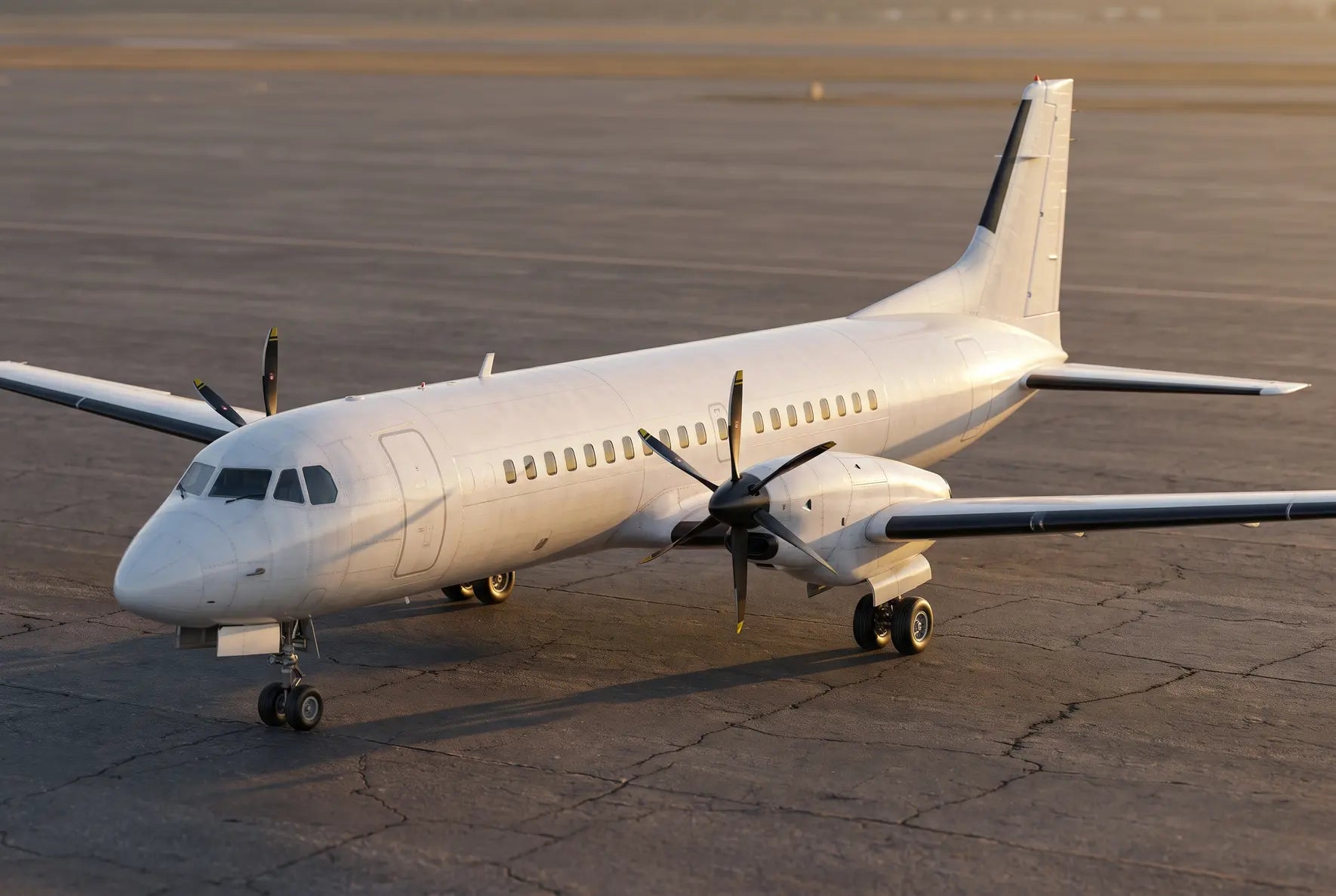
The ATR 72-210 belongs to the ATR 72 family, a twin engine turboprop regional airliner produced by ATR (Avions de Transport Régional), a Franco-Italian manufacturer headquartered in Blagnac, near Toulouse, France. ATR was founded in 1981 as a 50/50 joint venture between Aérospatiale of France (now part of Airbus) and Aeritalia of Italy (now Leonardo S.p.A.). The formal cooperation agreement was signed on 4 November 1981 by Aeritalia chairman Renato Bonifacio and Aérospatiale chairman Jacques Mitterrand in Paris, establishing the basis for the development of what would become the ATR 42 and, ultimately, the ATR 72. All ATR aircraft are assembled at the company's final assembly line in Toulouse, with fuselage and tail sections built by Leonardo in Pomigliano d'Arco near Naples, and wings assembled in Bordeaux by Airbus France.
ATR's first product, the ATR 42, performed its maiden flight on 16 August 1984 and entered service with Air Littoral in December 1985. Building on the ATR 42's early commercial success, ATR announced the launch of a stretched variant on 15 January 1986. Designated the ATR 72 to reflect its higher standard seating capacity of 72 passengers, the new aircraft featured a 4.5 m fuselage stretch, an increased wingspan, more powerful engines, and approximately 10% greater fuel capacity compared to the ATR 42. Development progressed quickly thanks to high structural and systems commonality with its smaller sibling.
The ATR 72 prototype completed its maiden flight on 27 October 1988. Nearly a year later, on 25 September 1989, the type received airworthiness certification from the French Directorate General for Civil Aviation (DGAC). The following month, on 27 October 1989, Finnish carrier Kar Air (operating on behalf of Finnair) became the first airline to operate the ATR 72 in revenue service. The earliest production versions were the ATR 72-100 and ATR 72-200 series, both powered by two Pratt & Whitney Canada PW124B turboprops rated at 2,400 SHP each, driving four blade Hamilton Sundstrand propellers.
By the early 1990s, ATR identified an operational gap: airlines in warm climates and at elevated airports needed better takeoff performance under weight, altitude, and temperature (WAT) limited conditions. The ATR 72-210 was developed as a direct response, replacing the PW124B powerplant with the more powerful Pratt & Whitney Canada PW127 engine. The ATR 72-210 sub-variants (ATR 72-211 and ATR 72-212) received type certification on 15 December 1992 from the French DGAC, with FAA validation following on 18 December 1992 and German certification on 24 February 1993. The first delivery of an ATR 72-210 took place in December 1992.
A notable safety event that affected the entire ATR 72 family during this era was the October 1994 crash of American Eagle Flight 4184 near Roselawn, Indiana, involving an ATR 72-212. The investigation revealed vulnerabilities in the deicing boot coverage when the aircraft encountered supercooled large droplet (SLD) icing conditions beyond the scope of existing certification requirements. In response, the FAA initially prohibited ATR operations in icing conditions in the United States, and ATR subsequently expanded the deicing boot area and revised pilot operating procedures for icing. These changes improved the airworthiness of all ATR 72 variants, including the ATR 72-210, and contributed to broader industry updates in icing certification standards. If you are exploring a career on the ATR or any regional turboprop, professional communities such as airline pilot forums can offer practical insights from experienced ATR operators.
What Distinguishes the ATR 72-210 from Other ATR 72 Variants
The ATR 72-210 occupies a specific position in the ATR 72 lineup, sitting between the original ATR 72-200 and the later ATR 72-212A (marketed as the ATR 72-500). While it shares the same airframe dimensions and overall layout as the ATR 72-200, the key distinguishing feature of the ATR 72-210 is its engine upgrade to the PW127, producing 2,750 SHP per engine under ATPCS (Automatic Takeoff Power Control System) conditions, compared to the 2,400 SHP PW124B on the ATR 72-200. This additional power translated into a takeoff field length reduction of roughly 700 feet and a landing distance reduction of approximately 500 feet versus the ATR 72-200. Crucially, the ATR 72-210 retained the four blade Hamilton Sundstrand 247F propellers of the ATR 72-200, whereas its successor, the ATR 72-212A, adopted six blade composite propellers paired with PW127F or PW127M engines, higher maximum weights, and greater cockpit automation.
The ATR 72-210 also introduced cabin comfort improvements, including advanced internal noise treatment and a superior cabin air conditioning system. The two ATR 72-210 sub-variants, the ATR 72-211 and ATR 72-212, differ primarily in their door configurations: the ATR 72-211 features front and rear passenger doors, while the ATR 72-212 is fitted with a front cargo door and a rear passenger door.
The following verified identifiers summarise the core characteristics of the ATR 72-210:
- Engines: 2 × Pratt & Whitney Canada PW127 turboprops, rated at 2,475 SHP for takeoff (2,750 SHP single engine / ATPCS)
- Propellers: Hamilton Sundstrand 247F, four blade, 3.96 m (13 ft) diameter
- MTOW: 21,500 kg (47,399 lb) basic; 22,000 kg (48,501 lb) optional
- OEW: 12,450 kg (27,447 lb)
- Standard seating: 66 passengers at 31 in (79 cm) pitch
- Certification date: 15 December 1992 (DGAC/EASA), 18 December 1992 (FAA)
- ICAO type designator: AT73
- Key capability: Optimised for hot and high operations with shorter field performance than the ATR 72-200

A Firefly airline ATR 72-500 aircraft is shown in flight against a clear blue sky. The turboprop plane carries the airline's red and white livery with visible branding.
Technical Specifications and Performance of the ATR 72-210
The ATR 72-210 represents an evolution of the baseline ATR 72-200, conceived specifically to address operational demands in hot and high altitude environments. Introduced in 1992, this variant balances the design philosophy of the ATR 72 family with enhanced power and field performance, while preserving the high degree of commonality with the ATR 42 series. The aircraft inherits the stretched fuselage, composite wing structures, and low operating costs of its siblings, but gains a meaningful margin in takeoff and climb capability through uprated engines. This trade focuses less on increasing range or cruise speed and more on unlocking access to challenging airports and expanding payload flexibility in thermally demanding conditions.
Typical configurations seat 66 passengers at 31 inch pitch, though layouts range from 60 to 74 seats depending on cabin density and cargo compartment arrangements. The ATR 72-210 competes in a niche where runway length, altitude, and temperature constrain heavier turboprops and regional jets, offering a solution that sacrifices neither efficiency nor versatility. Operators value the variant's ability to serve thin routes reliably, maintain dispatch rates above 99%, and integrate seamlessly into fleets operating earlier ATR 72-200 or ATR 42-500 models through common type ratings and maintenance programs.
- Dimensions: wingspan 27.05 m (88 ft 9 in), length 27.17 m (89 ft 2 in), height 7.65 m (25 ft 1 in), wing area 61 m²
- Weights: basic max takeoff weight (MTOW) 21,500 kg (47,399 lb), optional MTOW 22,000 kg (48,501 lb); max landing weight 21,350 kg (47,068 lb); basic max zero fuel weight 19,700 kg (43,430 lb), optional 20,000 kg (44,092 lb); operational empty weight approximately 12,450 kg (27,447 lb)
- Engines: two Pratt & Whitney Canada PW127 turboprops, rated at 2,475 shp takeoff power (2,750 shp on one engine with ATPCS); 2,500 shp max continuous, 2,192 shp max climb, 2,132 shp max cruise
- Propellers: Hamilton Standard 247F-1 four blade units with composite blades on steel hubs, diameter 3.96 m (13 ft)
- Performance: max cruise speed 279 KTAS (517 km/h) at 95% MTOW, ISA, optimum flight level; typical cruise 278 knots; range with max passengers approximately 805 nautical miles; service ceiling 25,000 ft (Flight Level 250)
- Field performance: takeoff distance reduced by approximately 700 feet compared to ATR 72-200; landing distance reduced by around 500 feet; optimum climb speed 170 KCAS; one engine net ceiling at 95% MTOW, ISA +10: 10,000 ft
- Fuel capacity: standard 5,000 kg (11,023 lb), equivalent to 1,646 US gallons, distributed between main tanks and outer wing cells
Flight Controls, Automation, and Systems Architecture
The ATR 72-210 employs conventional mechanical flight controls augmented by an automatic flight control system that reduces pilot workload without imposing full fly by wire complexity. Primary control surfaces, ailerons, elevators, and rudder, are cable actuated with aerodynamic balance and trim tabs. Spoilers assist roll control and act as lift dumpers on landing. The autopilot and flight director system integrates with nav aids and can manage heading, altitude, and vertical speed modes; it does not, however, provide autoland capability, keeping the pilot firmly in the loop during approach and touchdown.
Engine control on the PW127 is managed by a single channel Electronic Engine Control (EEC) with hydromechanical backup, ensuring redundancy without adding excessive weight. This system governs fuel flow, propeller pitch, and power output across the flight envelope. The automatic power reserve system (ATPCS) permits transient overspeed to 2,750 shp on the operative engine following an engine failure, aiding safe climb and return. Braking relies on carbon structural brakes with anti skid protection, contributing to the short field performance that defines the variant. Messier Hispano Bugatti landing gear units support operations on semi prepared surfaces, though paved runways remain standard.
Cabin pressurization is controlled automatically, maintaining differential pressure through outflow valves; the system targets passenger comfort up to the 25,000 ft ceiling without requiring supplemental oxygen under normal operations. Environmental control draws bleed air from the engines to power air conditioning packs, with temperature managed by cockpit selectors. Avionics in the ATR 72-210 reflect the early 1990s generation: analogue primary flight instruments with optional EFIS (Electronic Flight Instrument System) glass displays on some aircraft, VHF nav/comm, transponder, weather radar, and basic flight management computing. Later retrofits have introduced GPS, TCAS, EGPWS, and RNP capability, though these are not native to the original certification standard.
The Pratt & Whitney Canada PW127 Engine
The Pratt & Whitney Canada PW127 belongs to the PW100 turboprop family, a lineage that has dominated regional aviation propulsion since the mid 1980s. The PW100 series debuted in service in December 1984 on the de Havilland Dash 8, establishing a reputation for reliability and efficiency across diverse operators. The PW127 variant entered production in the early 1990s, offering increased shaft horsepower within the same core architecture: a reverse flow annular combustor, single stage centrifugal compressor for low pressure, single stage centrifugal compressor for high pressure, and a three stage turbine section driving the propeller via a reduction gearbox.
Rated at 2,475 shp for normal takeoff and capable of 2,750 shp with ATPCS engaged, the PW127 balances thermal efficiency with mechanical robustness. Its pressure ratio of approximately 13.9:1 and relatively low turbine inlet temperatures contribute to extended time on wing and manageable maintenance intervals. Fuel consumption at cruise is approximately 760 kg/h (1,675 lb/h) for the ATR 72-210 configuration, translating to block fuel efficiency that remains competitive decades after introduction. The PW127 also powers the ATR 72-210's successor models, the ATR 42-500, and has been developed into the PW127E, PW127F, and PW127M variants for later generation ATR aircraft. More recently, Pratt & Whitney introduced the PW127XT series, offering 40% longer time on wing, 20% lower maintenance costs, and 3% fuel efficiency improvement, which now equips the current production ATR 42-600 and ATR 72-600 models.
Beyond ATR applications, the PW127 and its siblings have found homes on the CASA C-295 military transport (PW127G variant) and various Dash 8 models. The engine's maturity, global support network, and compatibility with sustainable aviation fuels (successfully tested at 100% SAF on ATR aircraft in 2022) ensure its continued relevance. Operators benefit from a deep pool of certified maintenance facilities, exchange programs, and parts availability, factors that directly influence dispatch reliability and lifecycle costs.
Published performance figures for the ATR 72-210 vary depending on operator selected options, cabin layout, actual operating weights, atmospheric conditions, runway surface and slope, and whether optional higher MTOW or auxiliary systems are installed. Range with maximum passengers assumes specific fuel reserves, climb profiles, and cruise altitudes that may differ in practice; operators flying into hot and high airports will observe reduced payload or range compared to sea level operations in temperate climates. Takeoff and landing distances are predicated on standard ICAO atmosphere, level dry runways, and specific flap settings; wet or contaminated surfaces, tailwinds, and high density altitudes all degrade field performance. Consequently, real world dispatch planning requires consultation of the approved flight manual performance charts for each mission, rather than reliance on headline numbers. Service ceiling of 25,000 feet is a certification limit driven by cabin pressurization system design, not aerodynamic capability; lightly loaded aircraft can climb higher but regulatory and structural considerations cap normal operations at FL250.
Comparison of Regional Turboprop Aircraft Specifications
Scroll horizontally to see more →
| Parameter | ATR 72-210 | ATR 72-600 | ATR 42-600 | DHC-8-400 (Q400) |
|---|---|---|---|---|
| Entry into service | 1995 | 2011 | 2012 | 2000 |
| Engines | 2 × PW127 | 2 × PW127M | 2 × PW127M | 2 × PW150A |
| Length | 27.17 m | 27.17 m | 17.86 m | 32.8 m |
| Wingspan | 27.05 m | 27.05 m | 24.57 m | 28.42 m |
| Height | 7.65 m | 7.65 m | 7.44 m | 7.7 m |
| Typical seating and layout | 2-class: 64–70 passengers | 2-class: 70–78 passengers | 2-class: 48–50 passengers | 2-class: 76–90 passengers |
| MTOW | 22 t | 23 t | 18.6 t | 29.3 t |
| Range | 800 nm | 900 nm | 1,000 nm | 1,500 nm |
| Cruise speed | 0.51 Mach | 0.52 Mach | 0.51 Mach | 0.60 Mach |
| Service ceiling | 25,000 ft | 25,000 ft | 25,000 ft | 27,000 ft |
| Program note | Enhanced hot/high performance version of ATR 72-200 with PW127 engines | Latest generation ATR 72 with modern glass cockpit and improved engines | Latest generation ATR 42 regional turboprop, smaller capacity | High-speed regional turboprop competitor with stretched fuselage |
Scroll horizontally to see more →
This table compares key specifications of the ATR 72-210, ATR 72-600, ATR 42-600, and DHC-8-400 (Q400) turboprop aircraft. The Q400 stands out with the highest speed, MTOW, and range, making it well-suited for longer routes. The ATR 72-600 offers improved performance over the 72-210, with more seating and range. The ATR 42-600 is the smallest, ideal for lower-demand routes with shorter lengths and reduced capacity.
ATR 72-210 Operations: Typical Routes, Missions and Airlines Worldwide
The ATR 72-210 was purpose built for short haul regional flying. With a maximum cruise speed of 279 KTAS (517 km/h) and a range of approximately 791 NM with maximum passengers, this variant excels on sectors typically lasting between 30 minutes and two and a half hours. According to ATR's official data sheet, a 200 NM sector takes approximately 61 minutes of block time and burns around 618 kg of fuel, while a 300 NM sector requires about 83 minutes and 856 kg. These figures make the ATR 72-210 one of the most fuel efficient platforms available for thin regional routes, consuming significantly less fuel per seat than comparable regional jets.
Daily utilisation on the ATR 72 family is typically high. Airlines regularly schedule around eight flights per aircraft per day on short domestic rotations, though peak days can push that figure to 14 sectors, as reported by operators on short routes such as Helsinki to Tallinn. This high cycle count is a defining characteristic of how regional turboprops generate revenue: multiple short rotations rather than a few long flights. The aircraft achieves a dispatch reliability that ATR states exceeds 99%, helping operators maintain tight schedules with minimal disruption.
The ATR 72-210 thrives in hub and spoke networks, where it feeds passengers from secondary and regional airports into larger hubs served by mainline jets. It is equally at home in point to point operations linking pairs of smaller cities that cannot sustain narrowbody jet service. Its short field performance, with a balanced field length of approximately 1,211 m (3,973 ft) and a landing distance of around 902 m, gives it access to airfields that jets simply cannot reach. The variant's enhanced PW127 engines, rated at 2,480 SHP, were specifically designed for improved takeoff performance in hot and high altitude conditions, making it suitable for airports in mountainous or tropical regions. One operational challenge for airlines using older ATR 72-210 airframes today is the rising cost of maintaining ageing PW127 engines and four bladed propellers, especially compared to the six bladed propeller equipped later variants. Sourcing spare parts for early generation avionics can also be a logistical hurdle. Despite these factors, the low acquisition cost of a pre owned ATR 72-210 remains attractive for start ups and operators in developing markets. For context on a comparable Soviet era twin turboprop that served a similar regional role, see the Antonov An-24 overview.
Where the ATR 72-210 Operates Around the World
The ATR 72-210 and the broader ATR 72 family operate across four major regions. In Europe, the type has served dense domestic and intra European networks since its entry into service in 1989, connecting secondary cities to national hubs. In Asia, especially Southeast Asia, ATR 72s form the backbone of island hopping and domestic connectivity, with the region representing the largest share of ATR sales globally. In North and South America, airlines have used the type on both hub feeder routes and point to point domestic services, while freighter conversions serve cargo networks. In Africa, ATR 72 variants provide essential connectivity in markets where runway limitations and thin demand make turboprop economics especially compelling.
Many ATR 72-210 airframes originally delivered to first tier operators in Europe and North America have since migrated to carriers in Africa, Asia and South America through the second hand market, extending the variant's operational life well beyond its original context.
- Europe: Early ATR 72-210 customers on the continent included Finnair (the ATR 72 launch operator), Eurowings (which evolved from NFD), CSA Czech Airlines, Air Littoral, TAT, and Olympic Aviation in Greece. These airlines used the type on domestic routes and short cross border services, feeding traffic into hubs such as Paris, Prague, Frankfurt and Athens. Alitalia Express operated four ATR 72-210s alongside newer ATR 72-500s on Italian domestic routes. Cimber Air and Danish Air Transport in Scandinavia also flew the type on regional services. More recently, operators have transitioned to newer ATR 72-600 variants; Emerald Airlines now flies ATR 72-600s under the Aer Lingus Regional brand, and Olympic Air (an Aegean Airlines subsidiary) continues to expand its ATR 72 fleet in Greece.
- North and South America: American Eagle was one of the largest ATR 72 operators worldwide, flying up to 53 aircraft on short haul regional routes from hubs including Dallas/Fort Worth and San Juan before phasing the type out by 2014 in favour of regional jets. In the cargo sector, operators such as Mountain Air Cargo and Empire Airlines continue to fly ATR 72-200F freighter conversions in the United States on behalf of FedEx. In South America, Azul Brazilian Airlines historically operated ATR 72-200s before transitioning to newer models, and Pantanal Linhas Aéreas in Brazil also flew the early variants. TAG Airlines in Guatemala uses ATR 72s to connect Central American destinations.
- Asia: The ATR 72-210 found a natural home across Southeast Asia and the Pacific. TransAsia Airways (formerly Foshing Airlines) in Taiwan received its first ATR 72-200 in 1991 and operated the type for over two decades on domestic routes. Bangkok Airways in Thailand has been an ATR operator for more than 20 years, using ATR 72s to connect tourist destinations like Koh Samui, Phuket and Siem Reap. Vietnam Airlines, Iran Aseman Airlines and Air Mandalay in Myanmar also operated early ATR 72 variants. In India, Jet Airways was an early operator, while Alliance Air continues with ATR fleets today.
- Africa: Air Algérie, ATR's largest customer on the continent, has been operating ATR aircraft since 2003 and currently flies ATR 72-500s and ATR 72-600s on domestic services across Algeria. Precision Air in Tanzania uses ATR 72s to connect regional cities with Dar es Salaam. Cabo Verde Airlines in West Africa recently added ATR 72-600s to its fleet. Several older ATR 72-200 and ATR 72-210 airframes serve smaller African carriers providing essential domestic connectivity, often operating from unpaved or short runways in remote areas.
Typical Seating Configurations on the ATR 72-210
The ATR 72-210 features a standard configuration of 66 seats in a single class layout, arranged in a 2+2 abreast pattern across a cabin that measures approximately 2.57 m (8 ft 5 in) wide and 19.2 m (63 ft) long. In practice, seating counts vary between 64 and 74 depending on the operator and the seat pitch selected. Network carriers and those serving business travellers typically choose a configuration of around 66 to 70 seats with a pitch between 30 and 31 inches (76 to 79 cm), providing adequate comfort for flights of up to two hours. Low cost and high density operators sometimes push capacity closer to 72 or 74 seats by installing slimline seats and reducing pitch to around 29 inches (74 cm).
The cabin cross section is identical to the ATR 42, meaning a single aisle with two seats on each side. Overhead bins accommodate carry on bags, though large roller cases may not always fit. Boarding typically takes place through the rear door, which is an unusual feature for this class of aircraft. Some regional carriers, especially in Africa and Asia, configure their ATR 72-210s with 70 seats and a pitch of approximately 31 inches, as documented on seat map databases such as SeatLink. Freighter converted ATR 72-210s strip all passenger furnishings and install reinforced floors, 9g cargo nets, and optional large cargo doors, providing a gross usable volume of up to 75.5 m³ for bulk freight or palletised ULD loads.
In this video, watch the pushback operation of an ATR-72-210 aircraft from Air Bosna at Frankfurt Airport (EDDF), showcasing precise ground handling and a close-up view of this regional turboprop in action.
ATR 72-210 Safety Record: Accident History and How Safe It Really Is
The ATR 72-210 belongs to a turboprop family that has been flying commercially since 1989. Over more than three decades of continuous service, the broader ATR 72 fleet has accumulated millions of flight cycles across every continent, with over 1,220 airframes delivered to date. According to data compiled by AirSafe.com, the combined ATR 42 and ATR 72 family records a fatal accident rate of approximately 0.44 per million departures across some 26.8 million flights. That figure compares favourably with several other widely operated types, including the Boeing 727 (0.50) and early Boeing 737 variants (0.62). Across the entire ATR 72 fleet, ten fatal accidents have been recorded over nearly 36 years of operation. Many of these events occurred during operations in challenging environments, involving factors such as severe icing, non standard approaches, or procedural deviations rather than fundamental airframe design flaws.
Major Accidents and Lessons Learned
American Eagle Flight 4184 (1994) remains the most consequential accident directly involving the ATR 72-210 variant. On 31 October 1994, an ATR 72-212 operated by Simmons Airlines (doing business as American Eagle) crashed near Roselawn, Indiana, while holding in freezing rain conditions. All 68 people on board were killed. The NTSB investigation determined that a ridge of ice accreting beyond the de-ice boots on the wings caused an unexpected aileron hinge moment reversal, leading to an uncommanded roll and rapid descent. The investigation also cited ATR's failure to fully disclose known icing vulnerabilities to operators. In response, the FAA issued multiple Airworthiness Directives mandating expanded de-ice boot coverage, revised aileron servo tab geometry, installation of ice detection lights, and strict operational limits in icing conditions. ATR redesigned wing leading edge protections and updated flight manuals with explicit warnings about supercooled large droplet (SLD) icing. These changes reshaped icing certification standards across the industry.
TransAsia Airways Flight 222 (2014) involved an ATR 72-500 that crashed on 23 July 2014 during a non precision VOR approach to Magong Airport, Taiwan, in typhoon related weather. All 48 of the 58 occupants perished. The Taiwan Aviation Safety Council determined the cause was controlled flight into terrain (CFIT): the crew continued descent below the minimum descent altitude without visual contact with the runway. Contributing factors included ineffective safety management, absence of CFIT risk assessments for the route, crew fatigue, and non standard checklist practices. The investigation reinforced the importance of robust standard operating procedures and safety management systems for regional carriers.
Yeti Airlines Flight 691 (2023) saw an ATR 72-500 crash near Pokhara, Nepal, on 15 January 2023, killing all 72 people on board. The final report published with BEA assistance established that the pilot inadvertently moved both condition levers to the feathered position instead of selecting flaps 30, causing both propellers to feather, complete loss of thrust, aerodynamic stall, and collision with terrain. Contributing factors included non adherence to checklists, ineffective crew resource management, and inadequate familiarisation training for the newly opened airport. Safety recommendations focused on enhanced simulator training, validated approach charts, and stricter regulatory oversight of visual approaches at new aerodromes.
Voepass Flight 2283 (2024) involved an ATR 72-500 that crashed on 9 August 2024 near Vinhedo, São Paulo, Brazil, killing all 62 people on board. The aircraft entered a flat spin from approximately 17,000 feet during descent. Preliminary findings from Brazil's CENIPA indicate that icing buildup played a role, despite the de-icing system reportedly being functional. The investigation is ongoing and no final cause has been published. The event has prompted renewed attention to icing procedures and crew training for ATR operators in regions prone to convective weather.
How Safe Is the ATR 72-210 Today
When accident figures are measured against the total volume of flights performed, the ATR 72 family maintains an accident rate well below the global commercial aviation average of 1.87 accidents per million departures reported by EASA in its 2024 Annual Safety Review. The ATR 72-210 benefits from a design philosophy built around twin turboprop redundancy, structural simplicity, and short field performance. Since the Roselawn accident, the aircraft has received successive upgrades to its ice protection systems, stall warning logic, and avionics. Operators follow manufacturer recommended standard operating procedures that cover every phase of flight, including detailed protocols for icing encounters. Regulatory oversight from EASA, the FAA, and national authorities ensures that Airworthiness Directives are implemented and that operators maintain compliance with evolving safety standards. Comparing the ATR 72 to other aircraft types used in regional service, including models featured in broader fleet analyses such as the Boeing 747-300, underscores how each design generation absorbs lessons from past events and translates them into measurable safety improvements. While no aircraft is immune to risk, the ATR 72-210 and its successors continue to serve hundreds of routes worldwide with a strong overall safety profile. As data from Aviation Safety Network and industry bodies consistently confirm, commercial aviation remains one of the safest modes of transport available.
01 What is the typical range and mission profile of the ATR 72-210?
The ATR 72-210 has a range of about 791 to 907 nautical miles with maximum passengers, making it ideal for short to medium regional routes under 1000 NM. It excels in missions like 200-300 NM hops, with block fuel around 618-856 kg and times of 61-83 minutes. This suits high-frequency operations on routes connecting smaller cities or islands.
02 How is the cabin laid out on the ATR 72-210, and what is the passenger experience like?
It typically seats 66 passengers in a standard single-aisle configuration across regional layouts. Enhanced noise treatment and superior air conditioning improve comfort on flights, reducing cabin noise for a quieter ride. Passengers find it reliable for short hops, with good dispatch rates over 99%.
03 Which airlines operate the ATR 72-210 and on what routes?
Airlines like Air New Zealand, IndiGo, and Wings Air use the ATR 72-210 for regional networks. They deploy it on short-haul routes serving secondary airports, islands, and high-density domestic paths under 800 NM. It's popular in hot-and-high environments like parts of Asia and Oceania.
04 How does the ATR 72-210 perform in terms of speed, fuel efficiency, and comparison to similar aircraft?
It cruises at 278-279 KTAS with fuel flow of 760 kg/hr, offering strong efficiency for turboprops on routes up to 900 NM. Compared to the ATR 72-200, the -210's PW127 engines provide better hot-and-high performance and slightly higher power at 2,750 SHP. It outperforms jets on short fields while burning less fuel per passenger on regional legs.
05 What is the safety record and key design features of the ATR 72-210?
The ATR 72-210 maintains high in-service reliability exceeding 99% dispatch rate, with robust turboprop design for regional ops. Key features include PW127 engines for hot-and-high capability and short-field performance, like 1,211 m takeoff at max weight. Its excellent one-engine ceiling of 10,000 ft enhances safety on single-engine scenarios.
06 What should travelers know about seats, windows, and turbulence on the ATR 72-210?
Opt for seats near the wings for minimal turbulence feel, as this high-wing turboprop handles bumps steadily on short flights. Large windows provide good views, and the 2.57 m wide cabin feels spacious for 66 seats. Expect low noise from advanced treatment, making it comfortable even in choppy regional weather.