

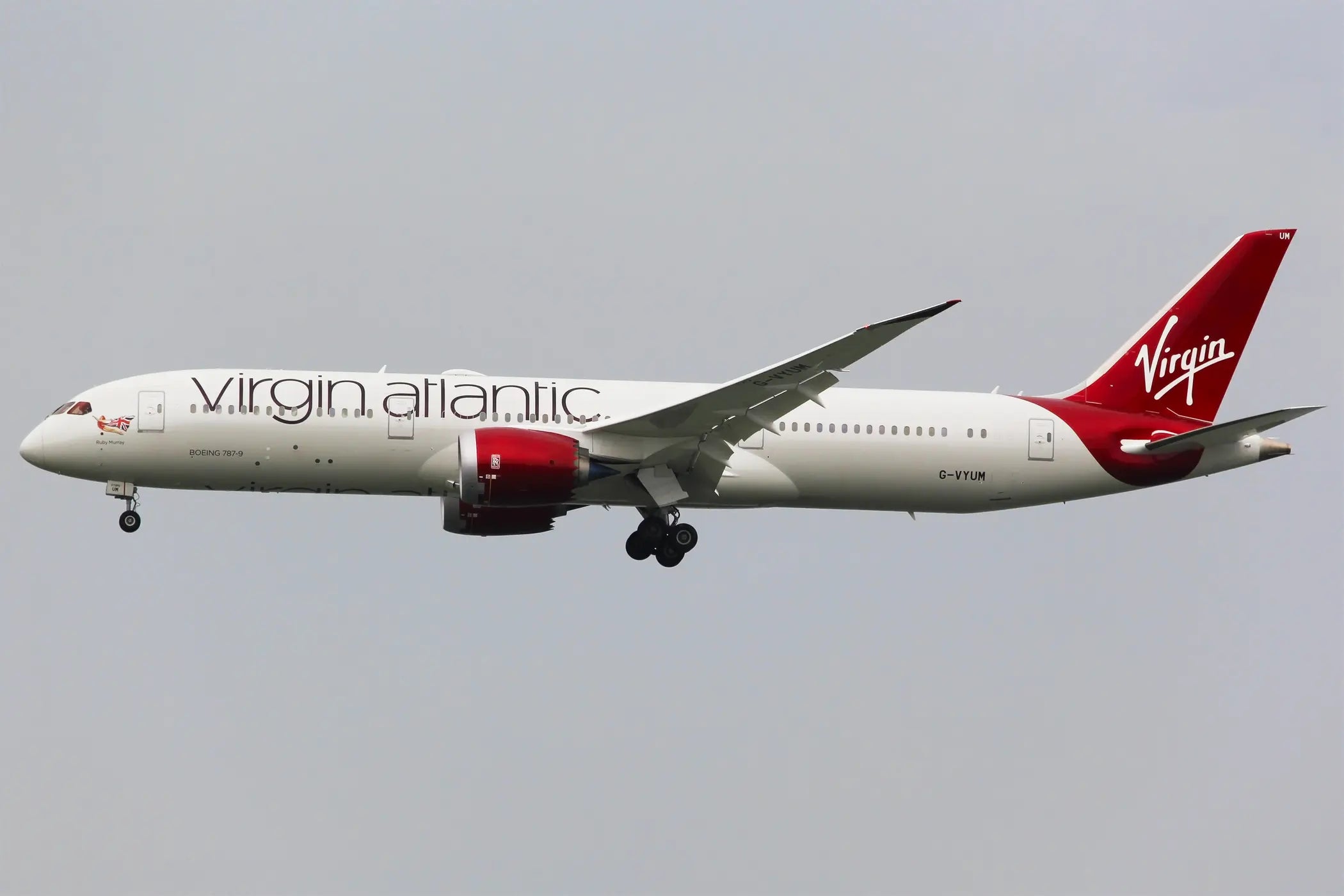
Virgin Atlantic Overview & Company Profile
Virgin Atlantic Airways is one of the United Kingdom's premier long-haul airlines, founded by Sir Richard Branson in 1984 and headquartered in Crawley, West Sussex. The airline operates primarily from London Heathrow Airport, with a secondary hub at Manchester Airport. Virgin Atlantic is jointly owned by Virgin Group (51%) and Delta Air Lines (49%), a partnership that has deeply shaped the airline's strategic direction, fleet procurement, and transatlantic route network.
In March 2023, Virgin Atlantic joined the SkyTeam alliance, unlocking connectivity to over 1,000 destinations worldwide through codeshare and interline agreements with Delta, Air France-KLM, and other SkyTeam members. The airline posted record revenues of £3.3 billion in 2024, a £182 million increase over 2023, and achieved pre-tax profits of £20 million: the first such result since 2016. Virgin Atlantic currently operates approximately 78 daily departures to 29 destinations across 16 countries, carrying around 5.6 million passengers annually.
With approximately 800 pilots and a total workforce of 9,250 employees, Virgin Atlantic positions itself as the UK's only exclusively long-haul airline. The carrier's identity is built on premium service, innovation, and a distinctive brand personality. For pilots, this translates into a career spent entirely on wide-body, long-haul operations, flying some of the youngest aircraft in the Atlantic skies to destinations spanning North America, the Caribbean, Africa, the Middle East, India, and Asia-Pacific.
Fleet Composition & Type Ratings
Virgin Atlantic operates an exclusively wide-body, twin-engine fleet, a distinctive feature that sets it apart from most European carriers. There are no narrowbody aircraft, no regional jets, and no turboprops. Every Virgin Atlantic pilot flies long-haul on modern, fuel-efficient wide-bodies. The fleet comprises four aircraft types across two manufacturer families: Airbus (A330 and A350) and Boeing (787). The airline is in the midst of a $17 billion fleet transformation programme that will see all legacy types replaced by next-generation aircraft by 2028.
| Aircraft Type | Role | In Service | Notes |
|---|---|---|---|
| Boeing 787-9 Dreamliner | Long-haul | 17 | Backbone of the fleet. Serves transatlantic, Caribbean, Africa, India, and Asia-Pacific routes. Trent 1000 engine reliability issues have caused some operational adjustments. |
| Airbus A350-1000 | Long-haul (flagship) | 12 | Premium-configured flagship. Highest-density business class cabin. Serves key transatlantic trunk routes (JFK, LAX, SFO). 2 more on order. |
| Airbus A330-900neo | Long-haul | 8 | Newest fleet addition, replacing A330-300s. 19 total ordered, with deliveries through 2027. |
| Airbus A330-300 | Long-haul | 6 | Legacy type being phased out by 2028, replaced by A330-900neo. Leisure and secondary route focused. |
Fleet data as of late 2025. Numbers are approximate and change with ongoing deliveries and retirements. Source: Planespotters.net and Virgin Atlantic corporate reports.
By 2028, Virgin Atlantic projects a fleet of approximately 45 aircraft: 19 Airbus A330-900neo, 12 Airbus A350-1000, and 14 Boeing 787-9, achieving an average fleet age of approximately 6.4 to 6.9 years. This makes Virgin Atlantic one of the youngest fleets crossing the Atlantic. The all-wide-body, twin-engine strategy simplifies crew training and fleet management, with pilots specializing on either the Airbus family (A330/A350) or the Boeing 787.
Pilots joining Virgin Atlantic are assigned to either the Airbus fleet (covering A330-300, A330-900neo, and A350-1000) or the Boeing 787-9. Initial fleet assignment is determined by operational requirements at the time of hire, though individual preference is considered where possible. Virgin Atlantic covers the cost of type rating for pilots recruited through the official selection process. The Airbus commonality between the A330 and A350 families means Airbus-fleet pilots can transition between types with reduced additional training compared to a full new type rating.
Pilot Salary & Compensation Breakdown
Virgin Atlantic offers one of the most competitive pilot pay packages among UK airlines. Compensation includes a base salary, flight duty pay, layover per diems, and various allowances. The airline operates a 750-hour annual flying contract, meaning pilots who exceed 750 block hours in a year receive overtime pay. This lower utilization limit, compared to the 900+ hours typical at some carriers, is a distinctive feature that pilots value highly. Senior Captains on long-haul A350-1000 operations can see total annual earnings well above £200,000 when all components are included.
First Officer (F/O) Pay Scale
| Seniority | Base Salary | Estimated Total (incl. allowances) | Notes |
|---|---|---|---|
| Year 1 (entry F/O) | ~£73,000 | ~£95,000 - £100,000 | Entry level. Airbus or Boeing fleet. |
| Year 3-5 | ~£80,000 - £85,000 | ~£105,000 - £115,000 | Mid-seniority F/O. Higher allowances on high-frequency routes. |
| Senior F/O (5+ yrs) | ~£88,000 - £93,000 | ~£115,000 - £130,000 | Senior First Officer rank. Command assessment eligibility approaching. |
Figures are estimated annual gross figures in GBP. Actual earnings depend on fleet assignment, routes flown, and individual roster patterns.
Captain Pay Scale
| Seniority | Base Salary | Estimated Total (incl. allowances) | Notes |
|---|---|---|---|
| Year 1 Captain | ~£115,000 | ~£175,000 | New Captain. Including flight duty pay and allowances. |
| Year 5 Captain | ~£125,000 | ~£195,000 | Mid-career Captain. |
| Year 10 Captain | ~£135,000 | ~£210,000 | Senior Captain on long-haul flagship routes. |
| Year 14+ Captain | ~£140,000 | ~£224,000 | Top of scale. A350-1000 premium transatlantic operations. |
Captain pay data sourced from PilotJobsNetwork and industry salary surveys. Training Captains and Examiners receive an additional 12-20% uplift.
These figures are estimates compiled from publicly available data, pilot reports on industry forums, and aviation salary surveys. Actual compensation depends on the current BALPA-negotiated pay agreement, individual seniority year, aircraft type assignment, and the specific routes and roster patterns flown. Virgin Atlantic offers four flexible contract options affecting hours and pay. UK income tax (up to 45% on earnings above £125,140) significantly reduces take-home pay from gross figures. Always verify with the latest official information during the recruitment process.
Roster Pattern & Quality of Life
As an exclusively long-haul operator, Virgin Atlantic's rostering is fundamentally different from short-haul or mixed-fleet airlines. Pilots typically operate 4 to 5 long-haul trips per month, each lasting between 3 and 9 days away from home base. This creates a rhythm of multi-day trips followed by recovery blocks at home. The 750-hour annual flying limit, protected through the BALPA agreement, translates to approximately 80 block hours per month on average, keeping utilization well below the maximum permitted under UK CAA regulations.
📅 Sample Month: Long-Haul First Officer (LHR)
Pilots receive a minimum of 10 days off per month, with the actual average closer to 14 days off once layover rest days, training days, and scheduling buffers are accounted for. Long-haul layovers typically last 24 to 48 hours, with ultra-long-haul routes (such as services to Delhi, Mumbai, or Johannesburg) sometimes requiring longer recovery periods. Augmented crews (3 pilots) are used on sectors exceeding approximately 10 hours to allow in-flight rest.
Virgin Atlantic pilots are based at London Heathrow (primary) or Manchester (secondary), though current recruitment is focused exclusively on the Heathrow base. Many pilots commute significant distances, with some living as far as continental Europe, Scotland, or even further afield. The airline's concessionary travel benefits (available after the 6-month probation period) help facilitate long-distance commuting. However, Heathrow-based pilots living outside the M25 should factor in London's high cost of living or reliable commuting infrastructure when planning their career move. Virgin Atlantic offers four flexible contract options giving pilots more choice over hours and work-life balance.
Benefits, Travel Perks & Retirement
Virgin Atlantic provides a comprehensive benefits package that extends well beyond the base salary. The combination of travel privileges through SkyTeam and Delta Air Lines, private healthcare, a defined contribution pension, and loss of licence insurance creates a well-rounded compensation offer. The airline's rewards programme is marketed under the philosophy of supporting colleagues "as they take on the world in their own way," according to the official benefits page.
Virgin Atlantic's 2023 entry into SkyTeam dramatically expanded pilot travel benefits. Pilots now have access to discounted and standby travel on Delta Air Lines (the 49% owner), Air France-KLM, Korean Air, and dozens of other SkyTeam members across all continents. Combined with Virgin Atlantic's own network, this gives pilots and their families access to affordable travel to virtually any major city in the world. For pilots who value personal travel, this SkyTeam benefit represents a significant upgrade from Virgin Atlantic's pre-alliance travel options.
Career Progression & Seniority
Career progression at Virgin Atlantic follows a clear trajectory: First Officer → Senior First Officer → Captain. The airline does not offer direct-entry Captain positions, meaning all Captains must progress through internal ranks. According to the official Virgin Atlantic pilot careers page, the airline aims to support the journey to command within an 8 to 10 year timeframe, based on operational requirements. This is faster than many legacy carriers where upgrade times can stretch to 15 years or more.
| Career Milestone | Typical Timeline | Notes |
|---|---|---|
| Join as First Officer | Day 1 | Entry on Boeing 787 or Airbus A330/A350 fleet. Type rating funded by Virgin Atlantic. |
| Senior First Officer | 3-5 years | Intermediate rank. Requires 3,000+ hours total time. Enhanced responsibilities and pay. |
| Captain upgrade | 8-10 years | Command assessment including interview and simulator check. Subject to operational demand. |
| Fleet transition (Airbus ↔ Boeing) | Variable | Possible via internal bid. Subject to seniority and vacancies. |
| Training Captain / TRE / TRI | Post-command | Requires separate selection. 12-20% salary uplift for training duties. |
Pilots are assigned to either the Airbus fleet pool (covering A330-300, A330-900neo, and A350-1000) or the Boeing 787-9 pool. Fleet transitions between Airbus and Boeing are possible but depend on vacancies and seniority position. Within the Airbus pool, the commonality between A330 and A350 types simplifies transitions significantly.
Virgin Atlantic is actively recruiting First Officers and Senior First Officers, with positions advertised on both Airbus and Boeing fleets. The completion of the A330-900neo delivery programme (19 aircraft by 2027) and eventual retirement of the remaining A330-300s will create training requirements and fleet transition opportunities for existing pilots. The airline's expansion into new markets, including doubled frequencies to India (targeting 1 million seats annually), creates demand for additional crews. Combined with natural attrition and retirements, this growth environment is expected to maintain healthy upgrade timelines in the coming years.
Recruitment Process & Requirements
Virgin Atlantic recruits experienced commercial pilots through its direct-entry First Officer and Senior First Officer programmes, as well as low-hour pilots through its Future Flyers Programme (a cadet-style pathway). The airline also periodically runs a Military Managed Pathway for serving or former military pilots transitioning to civilian aviation. All pathways ultimately lead to the same seniority list and career progression.
Experienced Pilot Requirements
Selection Stages
Online Application & Screening
Submit application via the Virgin Atlantic careers portal. Initial screening of qualifications, hours, type experience, and right-to-work status. Applications reviewed on a rolling basis.
Virtual Interview & Psychometric Testing
Online psychometric and aptitude assessments followed by a virtual interview. Tests evaluate cognitive ability, situational judgement, and personality fit. The interview assesses CRM skills, leadership potential, and alignment with Virgin Atlantic's values.
Assessment Centre
In-person assessment at Virgin Atlantic's facilities. Includes group exercises, technical discussions, and behavioural competency evaluation. Focus on teamwork, communication, and decision-making under pressure.
Simulator Assessment
Technical flight simulator evaluation demonstrating proficiency on the relevant aircraft type (Airbus or Boeing). Assesses aircraft handling, procedural knowledge, CRM, and non-technical skills in realistic operational scenarios.
Medical & Offer
Successful candidates receive a conditional offer subject to verification of UK CAA Class 1 Medical, right-to-work documentation, and references. Type rating training (funded by the airline) follows for those not currently rated on the assigned fleet.
The Future Flyers Programme is Virgin Atlantic's cadet scheme, developed in partnership with CTC Aviation (now L3Harris). It offers integrated MPL (Multi-Pilot Licence) training leading to a First Officer position on Airbus A330 aircraft. Candidates lodge a £109,000 security deposit at the start of training, which the airline commits to repay during employment upon satisfactory completion. Training spans approximately 18 months, including classroom instruction, core flight training in Phoenix (Arizona, USA), UPRT training in the UK, and A330 type rating with base and line training. The programme provides a direct pathway to wide-body long-haul flying from day one, bypassing the traditional route through regional or short-haul carriers. Maximum three application attempts are permitted. Note: the programme runs periodically and may not always be open for applications.
Top 5 Layover Destinations
As a dedicated long-haul carrier, every Virgin Atlantic flight involves a layover at the destination before the return sector. The airline's route network centres on North America, the Caribbean, Africa, India, and Asia-Pacific, creating a diverse roster of layover cities. Layovers typically last 24 to 48 hours, with ultra-long-haul routes occasionally providing longer rest periods. Hotels are contracted by the airline and are generally 4-star properties. Here are five of the most notable layover destinations for Virgin Atlantic pilots.
All crew hotels are contracted by the airline. Transport between airport and hotel is provided. Under UK CAA Flight Time Limitations, pilots must receive minimum rest periods before the next duty period, with the specific duration determined by preceding duty length and time zone changes. Flights exceeding approximately 10 hours require augmented crews (3 pilots), allowing in-flight rest. The most popular layover destinations are bid for by seniority, so more senior pilots tend to secure routes with the best layover cities and longest rest periods.
How Virgin Atlantic Compares: Airline Radar Chart
How does Virgin Atlantic compare to its closest UK competitors? Below is a comparative analysis against British Airways (the UK's largest long-haul carrier and primary rival on transatlantic routes) and TUI Airways (the UK's largest leisure carrier, offering a different long-haul model). Scores are editorial estimates based on publicly available salary data, benefits information, fleet analysis, and pilot community feedback.
Key Takeaways from the Comparison
Virgin Atlantic leads on salary among the three. First Officers at Virgin Atlantic earn approximately £80,700 annually, compared to around £69,100 at British Airways, according to industry salary comparison data. Captain pay at Virgin Atlantic (£175,000-£224,000 total package) also outperforms BA (£100,600-£121,300 base). TUI captain base salaries are higher (£141,000-£172,000) but TUI's operations are more leisure-focused with different roster dynamics.
Fleet modernity is Virgin Atlantic's strongest advantage. With an average fleet age of approximately 7.6 years and exclusively next-generation wide-bodies, Virgin Atlantic operates some of the youngest aircraft crossing the Atlantic. British Airways operates a larger but older fleet including aging 777s and A320 family narrowbodies. TUI's fleet centres on the Boeing 787 Dreamliner and 737 MAX, which is modern but less diverse than Virgin Atlantic's mix.
British Airways wins on job security and network scale. As part of IAG (International Airlines Group), BA's sheer size (200+ destinations, 2,000+ pilots) provides greater resilience. Virgin Atlantic's smaller workforce (~800 pilots) means changes in fleet or route strategy can have a proportionally larger impact. BA also offers more base options (Heathrow, Gatwick, London City) and includes both short-haul and long-haul flying, giving pilots more operational variety.
Work-life balance is competitive across all three. Virgin Atlantic's 750-hour annual limit is an attractive feature, though BA's larger pilot pool means greater rostering flexibility. TUI's seasonal charter model creates different roster dynamics with peak summer demand. Virgin Atlantic's four flexible contract options provide an additional customisation tool that neither BA nor TUI currently matches.
Scores are editorial estimates based on publicly available salary data, pilot community feedback on forums such as PPRuNe, airline press releases, fleet analysis, and industry benchmarks from Aviation Insider, PilotJobsNetwork, and the UK CAA. They represent a general assessment for an experienced pilot evaluating a long-term career. Individual experiences will vary based on seniority, fleet assignment, and personal priorities.
Union & Industrial Relations
Pilot representation at Virgin Atlantic is handled by the British Airline Pilots' Association (BALPA), the UK's principal pilot trade union representing over 10,000 commercial pilots across the country. BALPA is the recognised union at Virgin Atlantic, meaning it holds formal bargaining rights for pilot pay, conditions, and working arrangements through "single-table bargaining" with the airline's management.
BALPA Structure & Role
A breakaway union, the Professional Pilots Union (PPU), was formed in 2012 by Virgin Atlantic pilots dissatisfied with BALPA's representation. The PPU represented a minority of VS pilots and was never formally recognised by the airline. It dissolved in February 2021. Since then, BALPA has been the sole pilot union at Virgin Atlantic.
Recent Industrial Relations History
Virgin Atlantic has a generally stable industrial relations environment. No major pilot strikes have disrupted operations in the airline's history. BALPA's recognition as the sole bargaining union since the PPU's dissolution in 2021 simplifies the representation landscape. For new pilots, BALPA membership is strongly recommended as it provides access to legal support, loss-of-licence assistance, collective bargaining representation, and a voice in negotiations that directly affect pay and conditions. BALPA also represents pilots at the UK CAA regulatory level on issues like flight time limitations, single-pilot operations opposition, and medical certification standards.
Verdict: Who Is Virgin Atlantic For?
🎯 Our Take
Virgin Atlantic occupies a unique position in UK aviation: it is the country's only exclusively long-haul airline, offering pilots a career spent entirely on modern wide-body aircraft serving some of the world's most exciting destinations. The combination of competitive pay (among the highest in the UK for both First Officers and Captains), a young fleet averaging under 8 years, the 750-hour annual flying limit, and SkyTeam travel benefits creates an attractive overall package.
The trade-offs are worth understanding. Virgin Atlantic is a smaller operation (~800 pilots, 43 aircraft) compared to British Airways or the Gulf majors, which means fleet changes or route adjustments can have a proportionally larger effect on career planning. The Paris-only... correction: the Heathrow-centric base structure means high living costs or long commutes for pilots not based in the London area. Captain upgrade in 8-10 years is reasonable but not guaranteed, and there is no direct-entry Captain pathway. Benefits, while solid, rely on a defined contribution pension rather than the more generous defined benefit schemes available at some legacy carriers.
For experienced commercial pilots seeking premium long-haul flying on next-generation aircraft, strong compensation, and the distinctive culture of one of aviation's most iconic brands, Virgin Atlantic is a compelling choice. The Delta partnership and SkyTeam membership add strategic depth that a standalone carrier of this size could not match alone.
1 Does Virgin Atlantic pay for type rating?
Yes. Virgin Atlantic covers the cost of type rating for pilots recruited through the official selection process. Pilots not currently rated on the assigned fleet (Airbus A330/A350 or Boeing 787) receive company-funded type rating training before entering line operations.
2 How long does it take to become a Captain at Virgin Atlantic?
According to the official Virgin Atlantic careers page, the airline supports the journey to command within an 8 to 10 year timeframe, based on operational requirements. This is faster than many legacy carriers where upgrade times can stretch to 15 years or more. The upgrade involves a command assessment including interview and simulator evaluation, and is not guaranteed.
3 Can I apply with an EASA licence?
You need a UK CAA ATPL to fly for Virgin Atlantic. If you hold an EASA licence, you must convert it to a UK Part-FCL equivalent through the UK CAA before or during the recruitment process. The CAA provides a conversion pathway for EASA licence holders with appropriate documentation.
4 Does Virgin Atlantic recruit direct-entry Captains?
No. Virgin Atlantic does not currently offer direct-entry Captain positions. All Captains must progress through internal First Officer and Senior First Officer ranks. This ensures command-ready experience and familiarity with airline-specific procedures and culture.
5 What is the 750-hour contract?
Virgin Atlantic operates a 750-hour annual flying limit, meaning pilots are contracted to fly up to 750 block hours per year. There is a 10-hour buffer allowing pilots to finish a trip that would take them slightly over 750 hours. Hours beyond the contract attract overtime pay. This lower utilization limit compared to many carriers (some operate 900+ hours) is a key quality-of-life feature valued by pilots. Virgin Atlantic offers four flexible contract options that allow pilots to further customise their hours and work-life balance.
6 Can I live abroad and commute to Heathrow?
Many Virgin Atlantic pilots commute from outside the London area, including from continental Europe, Scotland, and further afield. The airline's concessionary travel benefits become available after the 6-month probation period, facilitating long-distance commuting. The official FAQ states that residency plans are reviewed on an individual basis during recruitment. Pilots commuting from Manchester and other UK cities frequently use rail services and internal flights.
7 How does Virgin Atlantic pay compare to British Airways?
Virgin Atlantic pays more than British Airways at comparable seniority levels. First Officers at Virgin Atlantic earn approximately £80,700 annually compared to approximately £69,100 at BA. Captain pay at Virgin Atlantic (£175,000-£224,000 total package) also significantly exceeds BA's captain base salary range. However, BA offers a larger operation, more base options, and both short-haul and long-haul flying, which may suit different career preferences.
8 What happens if I fail the selection process?
Unsuccessful candidates can reapply after six months from the date of their outcome notification. Virgin Atlantic imposes a maximum of three application attempts for pilot selection. This means candidates should prepare thoroughly before each attempt, as opportunities are limited.
Official Links & Resources
Before applying or making any career decisions, always verify information directly with official sources. These are the key websites and organisations relevant to Virgin Atlantic pilot careers:
Follow BALPA's news page for the latest updates on pilot-specific issues at UK airlines, including Virgin Atlantic pay negotiations, FTL regulation changes, and CAA policy developments. Virgin Atlantic also regularly posts pilot recruitment roadshow dates on its careers page, which are excellent opportunities to meet current pilots and ask questions in person before applying.