

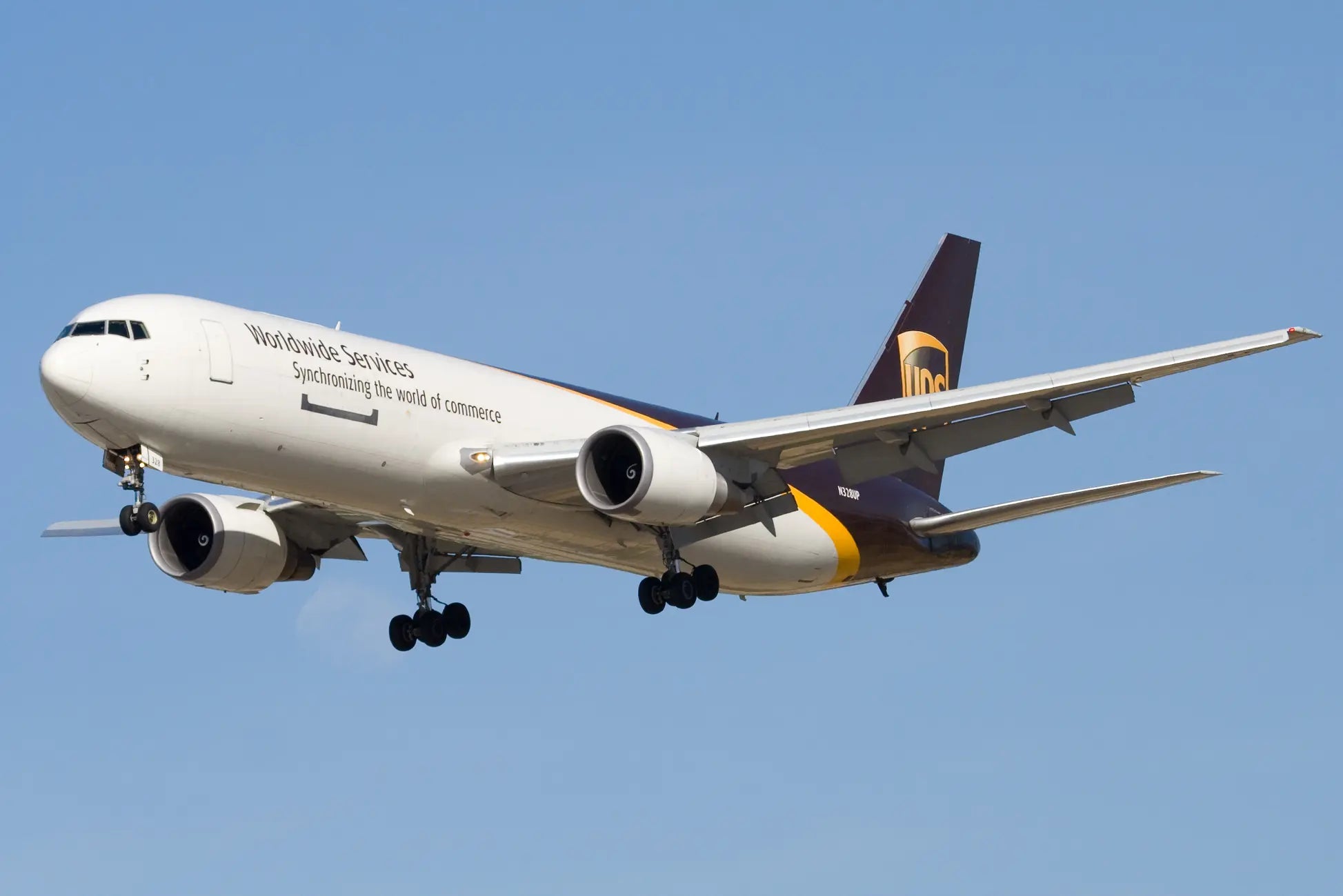
UPS Airlines Overview & Company Profile
UPS Airlines is the aviation arm of United Parcel Service, Inc. (NYSE: UPS), the world's largest package delivery and supply chain management company. Founded in 1988 after UPS received its own FAA operating certificate, UPS Airlines is headquartered at Louisville Muhammad Ali International Airport (SDF) in Louisville, Kentucky, home to the legendary Worldport facility, one of the largest fully automated package sorting hubs on the planet, capable of processing over 416,000 packages per hour.
UPS Airlines is the second-largest cargo airline in the United States (behind FedEx Express) and one of the largest in the world by freight volume. The airline operates a fleet of approximately 269 aircraft serving more than 220 countries and territories worldwide. With over 3,400 pilots represented by the Independent Pilots Association (IPA), UPS Airlines offers some of the highest compensation packages in the industry. The parent company, UPS Inc., generated $88.7 billion in revenue in 2025 and employs approximately 460,000 people globally.
Unlike passenger carriers, UPS Airlines operates primarily at night, moving packages through its hub-and-spoke network with the majority of domestic sorting operations happening between late evening and early morning at Worldport. International operations extend around the clock, with major gateway hubs in Cologne/Bonn (CGN) for Europe, Shanghai (PVG) and Shenzhen for Asia-Pacific, and Miami (MIA) for Latin America.
Fleet Composition & Aircraft Types
UPS Airlines operates an all-freighter fleet spanning narrowbody and widebody Boeing and Airbus types. The airline is in the midst of a significant fleet transition following the permanent retirement of its entire McDonnell Douglas MD-11F fleet in late 2025, accelerated by the tragic crash of Flight 2976 in Louisville on November 4, 2025, which killed 15 people. The Boeing 767-300F is now the backbone of fleet renewal, with 18 new deliveries expected through 2027.
| Aircraft Type | Role | In Service | Notes |
|---|---|---|---|
| Boeing 757-200PF | Narrowbody Freighter | ~75 | Domestic feeder routes. Workhorse of the U.S. overnight network. |
| Airbus A300-600RF | Widebody Freighter | ~52 | Medium-haul. Aging fleet, eventual retirement expected. |
| Boeing 767-300F | Widebody Freighter | ~99 | Fleet backbone. 10 more on order, target 108+ total by 2027. |
| Boeing 747-400F | Heavy Widebody Freighter | ~11 | Long-haul intercontinental. Nearing retirement. |
| Boeing 747-400BCF | Converted Freighter | ~2 | Boeing Converted Freighter variant. Limited remaining service. |
| Boeing 747-8F | Heavy Widebody Freighter | ~30 | Flagship long-haul. Asia-Pacific and transoceanic routes. |
| MD-11F | Widebody Freighter (retired) | 0 | Entire fleet of ~26 retired Q4 2025 following Flight 2976 crash. |
Fleet data as of early 2026. Numbers are approximate and reflect ongoing deliveries and retirements. Source: UPS fleet fact sheets and industry reports.
The retirement of all 26 MD-11F aircraft following the November 2025 crash represents a major operational shift. The MD-11 had been a long-haul workhorse with a maximum payload exceeding 207,000 pounds. UPS is replacing this capacity with Boeing 767-300F freighters (132,000 lb payload) and by repositioning 747-8F assets. The company incurred a $137 million after-tax write-off and approximately $50 million in additional leasing costs during Q4 2025 to maintain network coverage. Five new 767s were expected in the first half of 2026, with ten more in the second half, and three in 2027.
New-hire pilots at UPS are assigned to a fleet based on operational needs and seniority. The most common entry fleet is the Boeing 757/767, which shares a common type rating. Transition to widebody 747 operations is seniority-driven. UPS covers the full cost of type rating training for pilots hired through its selection process. With the MD-11 now retired, the fleet structure has simplified to four main type ratings: 757/767, A300-600, 747-400, and 747-8.
Pilot Salary & Compensation Breakdown
UPS Airlines pilots are among the highest-paid aviators in the world. Compensation is governed by the collective bargaining agreement negotiated with the Independent Pilots Association (IPA). Total pay includes an hourly flight rate (based on seniority year and seat), a monthly guarantee of approximately 81 hours per 28-day pay period (13 periods per year), per diem allowances, override and rig pay, and retirement contributions. The average UPS pilot earns approximately $310,000 per year, with experienced Captains on widebody equipment reaching well above $400,000 annually.
First Officer Pay Scale (Estimated)
| Seniority | Estimated Hourly Rate | Annual Gross (est.) | Notes |
|---|---|---|---|
| Year 1 (entry) | ~$60 – $65/hr | ~$60,000 – $65,000 | First-year rate is significantly lower than subsequent years |
| Year 2–3 | ~$130 – $170/hr | ~$130,000 – $175,000 | Steep pay increase after Year 1 |
| Year 5–6 | ~$200 – $235/hr | ~$210,000 – $245,000 | Mid-career F/O earnings |
| Year 10–12 | ~$245 – $260/hr | ~$255,000 – $270,000 | Senior F/O approaching top of scale |
Estimates based on publicly available data and industry reports. Actual figures depend on the latest IPA contract terms, aircraft type, and hours flown.
Captain Pay Scale (Estimated)
| Seniority | Estimated Hourly Rate | Annual Gross (est.) | Notes |
|---|---|---|---|
| Year 1 Captain | ~$290 – $330/hr | ~$310,000 – $350,000 | Entry Captain rate; varies by equipment |
| Year 5–6 Captain | ~$345 – $365/hr | ~$370,000 – $390,000 | Mid-seniority Captain |
| Year 12+ Captain | ~$370 – $395/hr | ~$390,000 – $420,000 | Top of scale. Widebody 747 Captains at highest rates. |
| Senior Captain (20+ yrs) | ~$390 – $400+/hr | ~$415,000 – $515,000 | With overtime, premium pay, and maximum hours |
Top-end figures include override pay, premium time, and maximum monthly hours. The $515,000 ceiling represents the highest-earning Captains on 747 equipment flying maximum schedules.
These figures are estimates compiled from multiple public sources, pilot forum reports, aviation career websites, and industry salary databases. Exact hourly rates by seniority step are proprietary to the IPA collective bargaining agreement and are not publicly published. The current CBA became amendable on September 1, 2025, and negotiations are ongoing with a federal mediator, meaning pay rates may change. UPS does not publish pilot pay scales publicly. Always verify with the IPA for the most current contract terms.
Roster Pattern & Quality of Life
UPS Airlines operates under FAA Part 121 regulations with duty time limits of 100 block hours per month, 30 hours per 7-day period, and mandatory 8+ hours of rest between duty periods. The airline uses a Preferential Bidding System (PBS) in which pilots bid for their preferred schedules based on seniority across 28-day pay periods (13 periods per year). The monthly flight hour guarantee is approximately 75–81 hours per pay period.
As a cargo carrier, UPS flight operations are heavily weighted toward night and early-morning hours. The iconic "brownbird" fleet launches from Worldport each evening, with the majority of domestic sort operations running between roughly 11 PM and 4 AM. This means many domestic trips involve red-eye flying, which is the most significant quality-of-life difference between UPS and passenger carriers. International long-haul trips, however, often operate on schedules closer to daytime hours and include extended layovers at destination.
📅 Sample Month: Domestic 767 First Officer (SDF Base)
International long-haul pilots operate on different patterns. A typical international rotation might involve a week-long trip (for example, 4–6 days of flying with layovers) followed by an extended rest period of up to two weeks. Some international lines offer 13 days on followed by 15 days off, which is highly sought after by senior pilots.
Vacation Accrual
Vacation at UPS is accrued based on years of service and bid by seniority in the fall for the following year. Vacation is taken in blocks of 7 or 14 days, with strategic bidding allowing pilots to pair vacation blocks with regular days off for extended time away.
| Years of Service | Annual Vacation Days | Typical Blocks |
|---|---|---|
| 1–4 years | 14 days | One 14-day block or two 7-day blocks |
| 5–10 years | 21 days | Multiple block options |
| 11–19 years | 28 days | Two 14-day blocks or four 7-day blocks |
| 20+ years | 35 days | Multiple 14-day and 7-day blocks |
The single biggest quality-of-life consideration at UPS is the nocturnal schedule. Domestic operations require pilots to be awake and flying during hours when most people sleep. While many cargo pilots adapt well and appreciate the trade-off (higher pay, no passengers, strong benefits), others find the circadian disruption challenging over the long term. International flying offers more conventional schedules and is a major draw for senior pilots seeking a healthier sleep cycle. Seniority is everything: the more years you accumulate, the more control you gain over your schedule and quality of life.
Base Options
UPS pilots are domiciled at several locations across the United States. Base availability depends on fleet type, seniority, and operational needs. The primary bases include Louisville (SDF) as the main hub, along with Ontario, CA (ONT), Anchorage (ANC), Chicago-Rockford (RFD), Columbia, SC (CAE), Dallas/Fort Worth (DFW), Miami (MIA), and Philadelphia (PHL). International gateway operations are supported through hubs in Cologne/Bonn (CGN) and Shanghai (PVG), though pilots are generally U.S.-based with rotational assignments to international routes.
Benefits, Retirement & Insurance
UPS Airlines offers one of the most comprehensive benefits packages in the airline industry, reflecting the financial strength of its parent company. Benefits are negotiated by the IPA and are available from the first day of training. The combination of a defined benefit pension, a 12% company-funded money purchase plan, a 401(k), and robust insurance coverage creates a retirement and security package that rivals or exceeds what most passenger carriers offer.
What sets UPS apart from most airlines is the triple-layer retirement structure. The defined benefit pension provides a guaranteed income stream in retirement. On top of that, the 12% company-funded money purchase plan adds substantial contributions based on earnings, with no employee match required. The 401(k) through Fidelity provides additional tax-advantaged savings. Combined, these three vehicles can produce retirement income that significantly exceeds what pilots at most other U.S. carriers receive. For a Captain earning $400,000+ annually, the 12% money purchase plan alone contributes roughly $48,000 per year to retirement savings, before any personal 401(k) contributions.
One trade-off of flying cargo is the lack of traditional staff travel benefits that passenger airline pilots enjoy. UPS pilots do not receive free or heavily discounted airline tickets for personal travel on a passenger network. Instead, they have jumpseat privileges on other carriers and cargo rider seat access on UPS flights. For pilots who value leisure travel perks, this is worth factoring into the overall compensation comparison.
Career Progression & Seniority
Career progression at UPS Airlines is strictly seniority-based. Upgrade from First Officer to Captain, fleet transitions, and base assignments are all driven by your position on the seniority list. UPS does not accept direct-entry Captains; all new-hire pilots enter as First Officers regardless of prior experience. The upgrade timeline to Captain has historically ranged from approximately 5–12 years, depending on hiring waves, fleet changes, and attrition rates.
UPS also operates two structured career pipelines through its partnership with Ameriflight: FlightPath I (for recent flight school graduates) and FlightPath II (for existing Ameriflight pilots). Both are 36-month programs that provide a guaranteed interview with UPS Airlines upon completion. These pathways have become an increasingly popular route to the brown tails for early-career pilots.
| Career Milestone | Typical Timeline | Notes |
|---|---|---|
| FlightPath program (if applicable) | 36 months | Through Ameriflight. Guaranteed UPS interview upon completion. |
| New-hire First Officer | Day 1 | Assigned to 757/767 or A300 fleet. Company-funded type rating. |
| Line check / operational status | 3–6 months | Ground school, simulator training, IOE (Initial Operating Experience). |
| Fleet transition (narrowbody to widebody) | 3–8 years | 767 to 747 transition. Seniority-dependent bid. |
| Captain upgrade | ~5–12 years | Varies significantly with hiring cycles. Sim check + evaluation required. |
| Widebody Captain (747-8F) | 12–20+ years | Top of seniority list. Highest pay rates and international routes. |
| Check Airman / Training Captain | Variable | Requires separate selection and qualification. |
UPS has been actively recruiting pilots, with the pilot workforce growing from approximately 3,200 to over 3,400 in recent years. Hiring classes have run regularly, typically with 10–30 pilots per class. The retirement of the MD-11 fleet has created fleet displacement and transition opportunities, as pilots from that fleet bid into 747 and 767 positions. Additionally, a one-year transport contract with the U.S. Postal Service has expanded operational needs. IPA President Bob Travis noted that pilot expectations are high given the company's historic COVID-era profits, and the ongoing contract negotiations could significantly impact future upgrade timelines and compensation.
Recruitment Process & Requirements
UPS Airlines recruits experienced pilots through a multi-stage selection process. Unlike some airlines that offer cadet or ab-initio pathways, UPS requires all applicants to hold an Airline Transport Pilot (ATP) certificate and substantial flight experience. The airline competes directly with FedEx Express, major passenger carriers, and the military for top talent, and its selection process reflects the caliber of pilot it seeks.
Minimum Requirements
Preferred Qualifications
Selection Stages
Online Application
Submit through the UPS careers portal. Includes resume, flight time documentation, certificates, and work history. Applications are reviewed on a rolling basis.
Phone Screening (~20 minutes)
Initial phone call covering resume review, flight time confirmation, and motivation for joining UPS. This is a brief screening to verify qualifications and assess communication skills.
Hogan Assessment
A personality and leadership assessment tool used to evaluate behavioral traits, leadership potential, and cultural fit within the UPS pilot group.
Zoom Interview (~1–1.5 hours)
Conducted with an HR representative and a retired Chief Pilot. Covers TMAAT (Tell Me About A Time) behavioral questions, CRM/TEM scenarios, technical questions specific to your current aircraft, leadership scenarios, and motivation. Pilots report the interview is professional but designed to make candidates feel comfortable.
Simulator Evaluation
A formal simulator assessment evaluating flying skills, CRM, and decision-making under pressure. Specific aircraft type and scenario details vary.
Conditional Job Offer & Onboarding
Successful candidates receive a CJO (initially by phone, then formalized by email). Pending background check, drug screening, and medical verification, pilots are assigned a class date for ground school and type rating training at the UPS training center.
Competitive applicants typically have 4,000+ total hours with significant turbine PIC time. Military backgrounds are highly valued; UPS applies a 0.3 factor per sortie to military flight time calculations. The FlightPath programs through Ameriflight provide a structured pathway for lower-time pilots to build the experience needed for a UPS career. The typical timeline from application to interview invitation is 2–3 months. Multiple sources indicate that if you reach the interview stage, UPS is genuinely interested in hiring you.
How UPS Airlines Compares: Airline Radar Chart
How does UPS Airlines stack up against the other major U.S. cargo carriers, FedEx Express and Atlas Air? Below is a comparative analysis across the same six metrics used in the scorecard. Scores are editorial estimates based on publicly available data, pilot reports, and industry benchmarks.
Key Takeaways from the Comparison
UPS leads on senior pay. At the top of the scale, UPS Captains on 747 equipment can earn over $400,000 annually, outpacing FedEx Captains who top out around $360,000. However, UPS first-year First Officer pay (~$60,000) is notably lower than FedEx (~$84,000) and Atlas Air (~$100,000). The UPS pay curve is back-loaded, rewarding longevity.
FedEx is the closest competitor overall. FedEx Express offers very similar benefits, comparable long-term compensation, and an equally strong brand. FedEx operates from Memphis (MEM) with bases in Indianapolis, Oakland, and Miami. Its fleet includes the Boeing 777F, 767F, and 757, plus the MD-11 (currently grounded). FedEx generally offers slightly better first-year pay and a wider selection of widebody equipment.
Atlas Air trails on stability and benefits. Atlas Air operates primarily as a CMAR/ACMI carrier (flying for Amazon, DHL, and others), which means less operational control and lower job security compared to integrated carriers like UPS and FedEx. Atlas offers competitive entry pay and widebody access (747, 767, 777) but with less predictable scheduling and weaker retirement benefits.
Quality of life is similar across cargo carriers. All three involve significant night flying for domestic operations. UPS and FedEx offer comparable base options and scheduling systems. Atlas Air's charter-heavy model can mean more irregular schedules. None of the three offer the passenger travel perks that mainline carriers provide.
Scores are editorial estimates based on publicly available salary data, pilot forum discussions, aviation career databases, airline financial reports, and industry benchmarks. They represent a general assessment for an experienced pilot evaluating a long-term cargo career. Individual experiences will vary based on seniority, fleet, base, and personal priorities. FedEx is in active contract negotiations as of early 2026, which may shift compensation comparisons.
Union & Industrial Relations
UPS Airlines pilots are represented by the Independent Pilots Association (IPA), an independent union founded on January 10, 1990, and headquartered in Louisville, Kentucky. Unlike pilots at most major U.S. passenger airlines (who are represented by ALPA), UPS pilots chose to form their own dedicated union. The IPA currently represents more than 3,400 professional pilots and is governed by a six-member Executive Board consisting of UPS pilots elected to serve three-year terms.
IPA Structure
Contract Status & Negotiations
The most recent IPA contract extension was ratified by pilots in August 2022 and took effect on September 1, 2023. That extension became amendable on September 1, 2025, meaning either party could request to renegotiate terms. Negotiations have been underway since the amendment date, with a federal mediator enlisted to facilitate discussions. Key issues on the table include work rules to protect against fatigue, pay increases, healthcare costs, and retirement benefits.
Recent Labor History
The 99% strike authorization vote signals strong pilot solidarity and high expectations for the next contract. UPS earned record profits during the COVID-19 pandemic (net income of $6.7 billion in one year), and pilots believe their compensation should reflect those results. For prospective hires, the outcome of ongoing negotiations will likely determine pay scales, work rules, and benefits for the next several years. Historically, the IPA has been effective at securing strong contracts, and the current leverage position is favorable for pilots. Under the Railway Labor Act (which governs airline labor relations), an actual strike can only occur after an extended mediation and cooling-off process, making a walkout a last resort.
Verdict: Who Is UPS Airlines For?
🎯 Our Take
UPS Airlines is one of the most coveted pilot positions in the world, and for good reason. The combination of industry-leading senior Captain pay (exceeding $400,000 annually on widebody equipment), a triple-layer retirement structure (pension + 12% money purchase plan + 401(k)), rock-solid job security backed by an $89 billion parent company, and a strong union in the IPA makes it an exceptional long-term career choice for pilots willing to commit to the cargo lifestyle.
The trade-offs are real and worth considering carefully. Night flying is the norm for domestic operations, and it takes a toll on sleep, social life, and health over time. First-year pay is significantly lower than at competing carriers. There are no passenger travel perks. The seniority system means everything, from your schedule to your fleet to your base, is earned over years of service. And the current contract uncertainty adds a layer of unpredictability for new hires.
For experienced pilots who prioritize maximum earning potential, financial security, and a career with one of the most stable employers in aviation, UPS Airlines is hard to beat. The path through the early years requires patience, but the long-term rewards are among the best the industry has to offer.
1 How much do UPS pilots make?
The average UPS pilot earns approximately $310,000 per year. First-year First Officers start around $60,000–$65,000, but pay increases steeply from Year 2 onward. Mid-career First Officers earn $200,000–$270,000. Captains range from roughly $310,000 to over $515,000 annually at the top of the scale, depending on equipment type, seniority, and hours flown. UPS pilot compensation is among the highest in the industry.
2 Do UPS pilots fly at night?
Yes, the majority of UPS domestic operations occur at night. The Worldport sorting hub in Louisville processes packages overnight, so domestic feeder and trunk routes typically operate between late evening and early morning. International long-haul routes often operate on more conventional schedules. Night flying is the single biggest quality-of-life consideration for prospective UPS pilots. Many pilots adapt well to the nocturnal schedule, but it requires careful management of sleep and personal time.
3 How many flight hours do I need to get hired at UPS?
The minimum requirement is 1,500 total hours with an FAA ATP certificate. However, competitive applicants typically have 4,000+ total hours, with at least 1,000 hours of PIC time in jet or multi-engine turboprop aircraft. Military backgrounds and transport-category experience are highly valued. The FlightPath programs through Ameriflight offer a structured 36-month pathway for pilots building toward UPS qualifications.
4 Can non-U.S. citizens apply to fly for UPS?
UPS requires legal authorization to work in the United States. While U.S. citizenship is not explicitly required, applicants must hold a valid FAA ATP certificate and have the legal right to work in the U.S. without sponsorship. In practice, this means U.S. citizens, permanent residents (green card holders), and certain visa holders may be eligible. UPS does not typically sponsor work visas for pilot positions.
5 How long does it take to upgrade to Captain at UPS?
The upgrade timeline from First Officer to Captain at UPS has historically ranged from approximately 5 to 12 years, depending on hiring waves, retirements, fleet changes, and company growth. All Captain upgrades come from within; UPS does not accept direct-entry Captains. The upgrade process includes a simulator check and evaluation. The recent MD-11 retirement and ongoing pilot hiring may create additional movement on the seniority list in the coming years.
6 Is UPS or FedEx better for pilots?
Both are excellent long-term career choices and are widely considered the two best cargo pilot positions in the world. UPS generally offers higher top-end Captain pay and a stronger retirement package (pension + 12% money purchase plan). FedEx offers better first-year pay, a larger widebody fleet (including the Boeing 777F), and the Memphis hub with a somewhat different lifestyle. The choice often comes down to personal preferences around base locations, fleet types, and which offer comes first. Both airlines are financially stable, well-compensated, and offer similar quality of life.
7 What happened to the UPS MD-11 fleet?
On November 4, 2025, UPS Flight 2976, an MD-11F, suffered a catastrophic left engine separation during takeoff from Louisville and crashed, killing all three crew members and twelve people on the ground. The FAA subsequently grounded all MD-11 aircraft. In January 2026, UPS announced the permanent retirement of its entire MD-11 fleet (approximately 26 aircraft), accelerating a retirement that had already been planned. The company took a $137 million after-tax write-off and is replacing MD-11 capacity with Boeing 767-300F deliveries.
8 Does UPS have a pilot cadet program?
UPS does not offer a traditional cadet or ab-initio program. However, the FlightPath I and FlightPath II programs through partner airline Ameriflight provide structured 36-month pathways that lead to a guaranteed interview with UPS Airlines. FlightPath I is designed for recent flight school graduates, while FlightPath II is for existing Ameriflight pilots. These programs allow pilots to build the flight experience needed to meet UPS hiring requirements while on a defined career track.
Official Links & Resources
Before applying or making any career decisions, always verify information directly with official sources. These are the key websites and organizations relevant to UPS Airlines pilot careers:
Monitor the IPA press releases page for the latest updates on contract negotiations, as the outcome will directly affect pay and working conditions for years to come. Aviation interview preparation sites also maintain detailed gouge reports from recent UPS interview candidates, which can be invaluable during the selection process.