

Fokker F28-2000: History, Development, and What Makes This Variant Unique
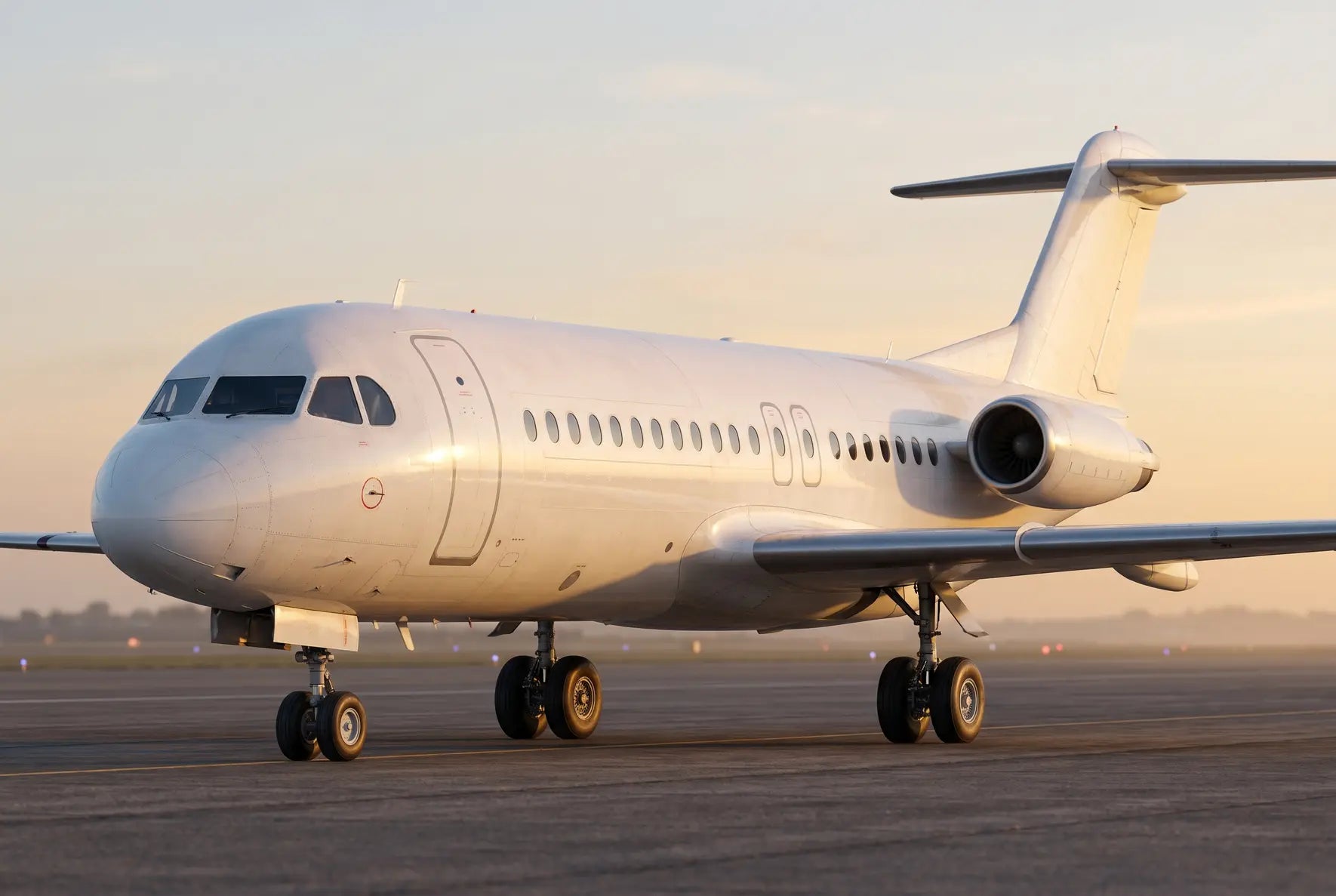
The Fokker F28-2000, also known as the Fellowship Mk 2000, was a stretched derivative of the original F28-1000 regional jet developed by Fokker, the renowned Dutch aircraft manufacturer based in the Netherlands. It was designed to offer greater passenger capacity on short to medium haul routes while retaining the rugged, short field performance that defined the F28 family. Understanding how and why Fokker created this variant requires looking at the broader F28 program and the market it was built to serve.
Fokker conceived the F28 Fellowship in the early 1960s as a jet powered complement to the highly successful F27 Friendship turboprop. The goal was to provide regional airlines with a modern short haul jet capable of operating from smaller, less equipped airports, including many of the same airfields served by the Douglas DC-3 and the F27. The program was publicly announced on April 28, 1962, at the Hannover Air Show, initially proposing a 50 to 65 seat aircraft with a T-tail configuration and rear mounted engines. International risk sharing partners joined the effort: Short Brothers of Belfast built the wings, while VFW (Vereinigte Flugtechnische Werke) and Hamburger Flugzeugbau in Germany manufactured fuselage and tail sections. Fokker itself was responsible for the nose section, final assembly, and flight testing at its facilities near Amsterdam Schiphol.
The first prototype of the base model, the F28-1000 (registered PH-JHG), completed its maiden flight on May 9, 1967. Dutch airworthiness certification followed on February 24, 1969, and the type entered commercial service that same year. The Mk 1000 accommodated up to 65 passengers in a five abreast cabin layout and was powered by two Rolls-Royce RB183 Mk 555-15 turbofan engines mounted at the rear fuselage. LTU of Germany had placed the first order on November 17, 1965, while Braathens SAFE of Norway became one of the earliest operators to fly revenue services.
With the base model established, Fokker moved to develop a higher capacity variant. The Fokker F28-2000 stretched the fuselage by 57 inches (1.45 m) forward of the wing and 30 inches (0.76 m) aft, bringing the overall length to approximately 29.61 m (97 ft 2 in) and increasing maximum seating from 65 to 79 passengers. The Mk 2000 retained the same short span wing (23.58 m) and the same Rolls-Royce Spey 555-15 engines as the Mk 1000, keeping commonality high between variants. The stretched fuselage also provided additional baggage and cargo volume in the lower hold. The F28-2000 completed its first flight on April 28, 1971. Type approval was granted on August 30, 1972, as documented in the EASA Type Certificate Data Sheet (TCDS No. A.037) for the Fokker F28 family.
Despite the increased capacity, the Fokker F28-2000 saw limited commercial uptake. Approximately 10 Mk 2000 airframes were built out of the 241 total F28s manufactured between 1967 and 1987. Operators included Nigeria Airways and TAT European Airlines of France, among a small number of regional carriers. The variant filled a niche but was soon overtaken by more advanced members of the F28 family, particularly the Mk 4000, which combined the stretched fuselage with improved wings and enhanced performance. Production of all F28 variants ended in 1987, and Fokker channeled lessons from the program into the development of the next generation of regional jets, culminating in the Fokker 100 and Fokker 70. Fokker itself ceased aircraft manufacturing after declaring bankruptcy in March 1996, though the type certificate is now held by Fokker Services B.V.
What Distinguishes the Fokker F28-2000 from Other F28 Variants
The F28-2000 occupies a specific position in the F28 family tree. Compared to the F28-1000, the Mk 2000 offered 14 additional seats and a longer cabin, but it shared the same wing, engines, and basic systems. Unlike the later F28-4000, which also featured the stretched fuselage, the Mk 2000 did not benefit from the increased wingspan (extended by 1.52 m with the addition of leading edge slats) or the additional overwing emergency exits that characterised the Mk 4000. The F28-3000 used the short fuselage of the Mk 1000 but incorporated the improved wing of the Mk 4000. The Mk 6000, a proposed variant with an even larger wing and slats on the stretched fuselage, flew on September 27, 1973, but did not enter series production. As documented by authoritative aviation references, the Mk 4000 became the most commercially successful F28 variant with 115 units built, while the Mk 2000 remained a low volume model.
The following list summarises the key variant identifiers for the Fokker F28-2000:
- Engines: 2 × Rolls-Royce RB183 Mk 555-15 turbofans
- Overall length: 29.61 m (97 ft 2 in), stretched from the Mk 1000's 27.40 m
- Wingspan: 23.58 m (77 ft 5 in), unchanged from the Mk 1000 (no leading edge slats)
- Maximum seating: 79 passengers in high density five abreast layout
- Maximum takeoff weight: 29,485 kg (65,000 lb)
- Fuselage stretch: 57 in (1.45 m) forward and 30 in (0.76 m) aft of the wing versus the Mk 1000
- Approximate production: 10 airframes built (out of 241 total F28s)

A Piedmont Airlines Fokker F28-1000 aircraft is captured in flight against a clear blue sky. The airplane features the airline's branding prominently on its fuselage and tail.
Fokker F28-2000 Technical Specifications, Systems and Engine Overview
The Fokker F28-2000 was designed as a stretched derivative of the baseline Fokker F28 Fellowship family, adding approximately 2.2 metres (87 inches) to the fuselage to raise maximum seating from 65 to 79 passengers. This extra capacity came without changes to the wing, engines, or fuel system, meaning the variant traded range for payload on a given mission. Like its siblings, the F28-2000 was built to operate from shorter runways and smaller airports that were typically served by turboprops, combining jet speed with rugged, low-maintenance airframe design.
The design philosophy behind the F28-2000 favoured operational simplicity and short-field capability over outright performance. It retained the same 23.58 m span wing with 16° of sweep and a modest aspect ratio of 7.3:1, paired with effective high-lift devices and a distinctive tailcone-mounted airbrake. The result was an aircraft that could serve a wide variety of regional routes, from paved strips in West Africa to European domestic sectors, and that remained in active service for decades after its introduction in the early 1970s.
- Overall length: 29.61 m (97 ft 2 in)
- Wingspan: 23.58 m (77 ft 5 in)
- Height: 8.47 m (27 ft 9.5 in)
- Wing area: 76.4 m² (822 sq ft), 16° sweep, aspect ratio 7.3:1
- Maximum takeoff weight (MTOW): 29,480 kg (65,000 lb)
- Operating empty weight (OEW): 16,707 kg (36,953 lb)
- Maximum landing weight (MLW): 26,760 kg (58,996 lb)
- Typical seating: up to 79 passengers
- Range with maximum payload: 920 nmi (1,705 km)
- Maximum cruise speed: 458 kn / 848 km/h (approximately Mach 0.75)
- Service ceiling: 35,000 ft (10,668 m)
- Takeoff field length (MTOW, ISA, sea level): 1,676 m (5,500 ft)
- Fuel capacity: 13,040 litres (2,869 Imp Gal)
- Engines: 2 × Rolls-Royce RB.183-2 Spey Junior Mk 555-15 turbofans, each rated at approximately 9,850 lbf (43.8 kN)
Systems, Flight Controls and Handling Technology
The F28-2000 employed a fully hydraulic flight control architecture powered by two independent circuits: the Utility system (System 1), which drove most primary controls, flaps, lift dumpers and wheel brakes, and the Flight Control system (System 2), which provided redundancy for critical surfaces. In the unlikely event of a dual hydraulic failure, the aircraft could revert to a third mode using mechanical control tabs on the ailerons, ensuring basic controllability. Anti-skid braking was standard, integrated with the hydraulic supply and delivering effective deceleration on short or contaminated runways. Lift dumpers (spoilers) deployed automatically on touchdown to dump residual wing lift and transfer weight to the main gear, a feature that enhanced braking performance significantly. The tailcone airbrake, a signature element of the F28 family, split open in flight to increase drag for descent management or speed reduction.
Automation on the F28-2000 was provided by the Automatic Flight Control and Augmentation System (AFCAS), which combined dual autopilots, a flight director, autothrottle, yaw damper and stabiliser trim functions. By the standards of its era, this was a well-integrated suite, though it relied on analogue instruments and electromechanical computing rather than digital avionics. Engine control was hydromechanical, with the crew managing thrust through conventional throttle levers and cockpit gauges for turbine gas temperature, RPM and fuel flow. Airlines operating in demanding environments valued the type for its straightforward maintenance requirements and the resilience of its mechanical systems in austere conditions.
Published performance figures for the F28-2000 should always be interpreted with context. The MTOW of 29,480 kg and takeoff distance of 1,676 m assume standard ISA conditions at sea level. In practice, actual runway requirements vary with elevation, temperature, runway surface condition, obstacle clearance requirements and the operator's chosen cabin configuration. Similarly, range figures depend on passenger count, cargo load, fuel reserves and cruise altitude. Some operators obtained higher weight options through service bulletins, further affecting the numbers. Comparing specifications across sources often reveals small discrepancies that reflect these variables rather than errors.
Rolls-Royce RB.183 Spey Junior: The F28-2000's Dedicated Powerplant
The F28-2000 was powered exclusively by two rear fuselage-mounted Rolls-Royce RB.183-2 Spey Junior Mk 555-15 low-bypass turbofans. Developed in the mid-1960s by Rolls-Royce in the United Kingdom, the Spey Junior was a deliberately lightened and simplified derivative of the larger RB.163 Spey family, which powered aircraft such as the Hawker Siddeley Trident, BAC One-Eleven and the military Blackburn Buccaneer. The objective was to produce an engine scaled specifically for the Fokker F28 programme, offering adequate thrust with reduced weight and lower maintenance costs suitable for regional airline operations.
Each Mk 555-15 unit produced approximately 9,850 lbf (43.8 kN) of takeoff thrust. The engine featured a five-stage axial low-pressure compressor, a twelve-stage high-pressure compressor, ten can-annular combustion chambers, and a four-stage turbine section split between two HP and two LP stages. Fuel control was hydromechanical. The dry weight was approximately 1,008 kg per engine, and the overall diameter measured around 1,008 mm, making it compact enough for the F28's clean rear-fuselage installation. Sub-variants such as the Mk 555-15H and 555-15P introduced improvements including upgraded compressor casings (replacing earlier magnesium components for durability and safety, as addressed by airworthiness directives) and operational refinements.
The RB.183 Spey Junior in its Mk 555-15 form was used exclusively on the Fokker F28 Fellowship and was not adopted by any other airframe. Its legacy, however, continued through the Rolls-Royce RB.183 Tay, a significantly more powerful medium-bypass derivative that retained the Spey Junior's core architecture. The Tay went on to power the Fokker 100 and Fokker 70 as well as re-engined Gulfstream IV and Boeing 727 variants, extending the lineage of the original F28 powerplant well into the 21st century.
Fokker F28 Fellowship Variants Comparison (F28-1000, -2000, -3000, -4000)
Scroll horizontally to see more →
| Parameter | Fokker F28-2000 | Fokker F28-1000 | Fokker F28-3000 | Fokker F28-4000 |
|---|---|---|---|---|
| Entry into service | 1969 | 1969 | 1971 | 1971 |
| Engines | 2 × Rolls-Royce Spey Mk 555-15 | 2 × Rolls-Royce Spey Mk 555-15 | 2 × Rolls-Royce Spey Mk 555-15H | 2 × Rolls-Royce Spey Mk 555-15H |
| Length | 29.6 m | 27.4 m | 27.4 m | 29.6 m |
| Wingspan | 23.6 m | 23.6 m | 25.1 m | 25.1 m |
| Height | 8.5 m | 8.5 m | 8.5 m | 8.5 m |
| Typical seating and layout | 2-class: 70–79 passengers | 2-class: 65 passengers | 2-class: 65 passengers | 2-class: 85 passengers |
| MTOW | 29 t | 29 t | 33 t | 33 t |
| Range | 1,500 nm | 1,200 nm | 1,550 nm | 900 nm |
| Cruise speed | 0.75 Mach | 0.75 Mach | 0.75 Mach | 0.75 Mach |
| Service ceiling | 35,000 ft | 35,000 ft | 35,000 ft | 35,000 ft |
| Program note | Stretched baseline version with increased seating capacity over F28-1000 | Short fuselage baseline model with 65 seats | Short fuselage with larger wing for improved range | Stretched version with larger wing and highest capacity |
Scroll horizontally to see more →
The table compares key specifications across Fokker F28 variants. The F28-1000 and -3000 share the shorter 27.4 m fuselage and 65-seat 2-class layout, but the -3000 adds a larger 25.1 m wing, higher 33 t MTOW, and slightly longer 1,550 nm range. The stretched -2000 raises seating to 70–79 with 1,500 nm range, while the -4000 offers the highest capacity (85) but the shortest range (900 nm). All cruise at Mach 0.75 with a 35,000 ft ceiling.
Fokker F28-2000 Operations: Airlines, Typical Routes and Regional Missions Worldwide
The Fokker F28-2000, also known as the F28 Fellowship Mk 2000, was a stretched variant of the original F28-1000 designed for short haul regional services. With a design range of approximately 1,213 km carrying a full load of 79 passengers and a cruising speed near 843 km/h, the type was built to connect secondary and regional airports on flights typically lasting between 45 minutes and two hours. Its relatively short takeoff field length of around 1,676 m allowed it to serve airfields that larger jets could not reach, making it well suited to hub and spoke feeding duties as well as point to point connections between smaller cities.
Only 10 Fokker F28-2000 airframes were built, according to Forecast International's archived production report. This limited production run meant the variant remained a niche tool within the broader F28 family, which totalled 241 aircraft across all marks. Operators valued the type for its ability to lift more passengers than the shorter F28-1000 while retaining the same Rolls Royce Spey Mk 555 turbofan engines and compact airframe footprint. The aircraft performed best on high frequency, short sector routes where daily utilisation could be maximised through quick turnarounds at smaller terminals with minimal ground infrastructure. Much like other niche regional jets of the era, such as the Boeing 747SP in the long haul segment, the Fokker F28-2000 filled a very specific operational gap that mainstream types could not address efficiently.
Operators faced several challenges. The limited range with a full cabin restricted the type to sectors well under 1,300 km, and the Rolls Royce Spey engines, while reliable, were not the most fuel efficient powerplants by the standards of later decades. Increasing noise regulations in Europe from the 1980s onward also placed pressure on F28 operators, as the early Spey marks did not meet newer Chapter 3 noise standards without modification. Spare parts availability became a growing concern once production ended, particularly for the rare Mk 2000, and several aircraft changed hands multiple times as airlines sought to extend their useful service life.
Where the Fokker F28-2000 Operated
Despite the tiny fleet of just 10 airframes, the Fokker F28-2000 saw service in two broad regions: Europe and Africa. In Europe, the variant was used on intra continental routes by regional and charter carriers based in France, the Netherlands and the United Kingdom. These operators connected capital cities with secondary hubs, oil industry destinations around the North Sea and leisure routes to southern Europe. In Africa, the type served domestic trunk routes in Nigeria and Ghana, linking major cities where jet service was needed but traffic volumes did not justify larger widebody equipment. No confirmed Fokker F28-2000 operations have been documented in Asia or in North and South America, where other F28 variants such as the Mk 1000 and Mk 4000 were far more prevalent.
- Europe: TAT European Airlines (later operating under Air France and British Airways branding) flew at least two Fokker F28-2000 airframes on regional French routes from Paris Orly, as confirmed by AirHistory.net fleet records. NLM CityHopper, the Dutch regional subsidiary of KLM, operated the type on connections from Amsterdam to destinations such as Paris, Brussels and London Heathrow during the late 1970s and early 1980s. Air Anglia in the United Kingdom leased Fokker F28-2000 aircraft for shuttle services between Aberdeen, Edinburgh, Amsterdam and Stavanger, supporting the North Sea oil and gas industry. Air Liberté in France also operated the variant on domestic services.
- Africa: Nigeria Airways was the launch customer for the Fokker F28-2000, placing the type into revenue service in October 1971 on domestic routes. Ghana Airways also operated the variant, including the airframe registered 9G-ACA, as documented by Fokker History, on routes within West Africa.
- North and South America: No confirmed Fokker F28-2000 operators have been identified in this region. Other F28 variants, notably the Mk 1000 and Mk 4000, were widely used by carriers such as Piedmont Airlines, Canadian Regional Airlines and TAME across the continent.
- Asia: The Fokker F28-2000 was not operated in Asia. However, Garuda Indonesia became the largest overall F28 operator worldwide with a fleet of 62 aircraft across other marks, serving its extensive domestic island network.
Typical Seating Configurations on the Fokker F28-2000
The Fokker F28-2000 featured a narrow body cabin arranged in a five abreast layout (3+2) with a single aisle, a configuration standard across all F28 variants. In a typical all economy class arrangement, the aircraft seated up to 79 passengers at a seat pitch of approximately 29 to 31 inches (74 to 79 cm). Most operators chose a single class layout given the short sectors the type flew, although some configured the forward rows with additional legroom for premium or business travellers. LADE, the Argentine governmental airline that operated other F28 marks, for example fitted a two class cabin with 4 business and 69 economy seats on its Fellowship, illustrating the flexibility of the cabin even on a narrow fuselage.
Network carriers tended to offer slightly more generous pitch to match the standards of their mainline fleet, while charter and leisure operators maximised density to keep unit costs low. The extended fuselage of the Mk 2000 provided a baggage hold volume of 15.9 m³, a meaningful increase over the Mk 1000's 13 m³, which gave operators additional cargo revenue potential on thin routes. Detailed seating charts for the F28 family can be explored on the Fokker F28 Fellowship Wikipedia page, which catalogues specifications across all variants.
In this video, watch two Fokker-28 jets fly an ILS approach to runway 34R at Seattle, capturing a concise look at classic regional jet operations and approach technique in real-world conditions.
Fokker F28-2000 Safety Record: Accident History and Overall Risk Profile
The Fokker F28 Fellowship family, of which the Fokker F28-2000 is the stretched variant, entered airline service in 1969 and remained in commercial operation for several decades. A total of 241 F28 airframes were manufactured before production ended in 1987. Only 10 of those were F28-2000 units, making the variant one of the rarest in the lineage. Over a service life spanning more than 40 years, the F28 fleet accumulated millions of flight hours and cycles, primarily with regional carriers in Africa, South America, Southeast Asia and Europe. According to compiled accident data referenced by Wikipedia's F28 Fellowship entry, the overall hull loss rate for the F28 family stands at approximately 4.62 per million flights. That figure is notably higher than the Boeing 737-100/200 (1.78) and the McDonnell Douglas DC-9 (1.45). Context matters, however: many F28 operators flew in regions with limited navigational aids, challenging weather and less developed regulatory oversight during the 1970s and 1980s, factors that contributed to the elevated rate.
Notable Accidents Involving the F28 Family
Although the F28-2000 sub-fleet was small, at least one major accident directly involved the variant. Several other high-profile events affected the broader F28 family and led to lasting safety improvements across the aviation industry.
- Nigeria Airways, Enugu, November 1983 – A Fokker F28-2000 (registration 5N-ANF) crashed approximately 3 km short of Enugu Airport during approach. Of the 72 occupants, 53 lost their lives. The aircraft descended below a safe altitude in poor visibility caused by harmattan haze, while the Instrument Landing System at the airport was inoperative. The event was classified as controlled flight into terrain (CFIT). It highlighted the dangers of non-precision approaches in degraded visibility and underscored the importance of ground proximity warning systems (GPWS), which were not yet universally mandated at the time. Further details are available in the Aviation Safety Network record for this accident.
- Air Ontario Flight 1363, Dryden, March 1989 – A Fokker F28-1000 (C-FONF) stalled during take-off from Dryden Municipal Airport in Ontario, Canada, and crashed into a wooded area, killing 24 of the 69 people on board. Snow and ice had accumulated on the wings during a ground delay, and the aircraft's auxiliary power unit was inoperative, preventing de-icing while engines were running. The Canadian government established the Commission of Inquiry into the Air Ontario Crash at Dryden, which produced sweeping recommendations. These included stricter de-icing and anti-icing protocols, enhanced pilot training on contaminated wing take-offs and improved regulatory oversight of regional carriers. The FAA Lessons Learned page for this event documents the resulting airworthiness directives and rule changes.
- USAir Flight 405, New York LaGuardia, March 1992 – A Fokker F28-4000 (N485US) stalled on take-off after ice accumulated on the wings during a 35-minute ground delay in snow. The aircraft departed the runway surface, broke apart and partially submerged in Flushing Bay; 27 of the 51 occupants perished. The NTSB accident report (AAR-93/02) cited the failure of the airline and the FAA to provide adequate departure procedures in icing conditions as a primary cause. This accident, together with the Dryden crash, accelerated global adoption of holdover time tables for de-icing fluids and reinforced the principle that no aircraft should attempt take-off with contaminated lifting surfaces.
Each of these events prompted measurable improvements: GPWS mandates expanded worldwide after CFIT accidents in the 1970s and 1980s, while the two icing-related crashes drove an industry-wide overhaul of ground de-icing standards that continues to protect passengers on all aircraft types today.
How Safe Is the Fokker F28-2000 Today?
Assessing the safety of the Fokker F28-2000 requires perspective. The type's hull loss rate reflects an era when navigational technology, crew resource management and regulatory frameworks were less mature than they are now. Many of the accidents attributed to the F28 family involved operational factors such as icing mismanagement, CFIT and challenging airport environments rather than fundamental structural or design deficiencies. In fact, NASA and the FAA selected a retired F28 airframe for a full-scale crash test in 2019, using the results to study cabin survivability and improve future safety standards for all transport aircraft.
As the global F28 fleet has almost entirely retired from commercial service, any remaining airframes operate under the oversight of national aviation authorities and must comply with current airworthiness directives. Operators that still fly regional jet fleets in regulated environments benefit from decades of lessons learned, including enhanced pilot training, modernised standard operating procedures and continuous airworthiness monitoring. These layers of defence apply regardless of aircraft age.
Viewed in the broadest terms, the accident record of the Fokker F28-2000 and its sister variants reflects challenges common to first-generation regional jets rather than any unique flaw. The incidents that did occur produced tangible safety advances that benefit the entire airline industry. According to data maintained by organisations such as the AirSafe.com Fokker accident database, the lessons drawn from F28 operations have contributed to an era in which commercial aviation remains one of the safest modes of transport in the world.
01 What is the typical range and mission profile of the Boeing 737?
The Boeing 737 has a maximum range of about 3,800 nautical miles on the 737 MAX variants, making it ideal for short- to medium-haul flights of 2 to 4 hours. Airlines use it for high-frequency routes like domestic U.S. flights or intra-European hops. Its efficiency shines on busy airports with quick turnarounds.
02 How is the cabin laid out on the Boeing 737, and what is the passenger experience like?
Boeing 737 cabins typically feature a 3-3 economy layout with around 160-200 seats depending on the variant and airline configuration. Noise levels are lower than older jets due to advanced engines, providing a quieter ride. Passengers appreciate the larger overhead bins and modern LED lighting in newer MAX models.
03 Which airlines commonly operate the Boeing 737 and on what routes?
Southwest Airlines, Ryanair, and United Airlines are major operators of the Boeing 737 fleet. They deploy it on dense short-haul networks, such as U.S. domestic routes under 1,500 miles or Europe's low-cost point-to-point flights. It's the workhorse for high-utilization schedules.
04 How does the Boeing 737 perform in fuel efficiency compared to similar aircraft?
The Boeing 737 MAX offers 20% better fuel efficiency than the previous generation 737 NG, thanks to CFM LEAP engines and aerodynamic improvements. It outperforms the Airbus A320neo slightly on shorter routes due to its smaller size and optimized winglets. This translates to lower operating costs for airlines.
05 What is the safety record of the Boeing 737?
The Boeing 737 family has a strong safety record, with over 10,000 units delivered and billions of safe passenger miles flown since 1967. Design features like reinforced fuselage and advanced flight controls contribute to its reliability. Post-MCAS updates on the MAX have further enhanced safety standards.
06 What are good seat choices on the Boeing 737 for comfort and views?
Rows 1-5 or the last row before lavatories offer extra legroom on many configurations, ideal for taller passengers. Window seats in rows 10-20 provide better views away from wing obstruction. The 737 handles turbulence smoothly due to its low-wing design, minimizing bumps on choppy flights.