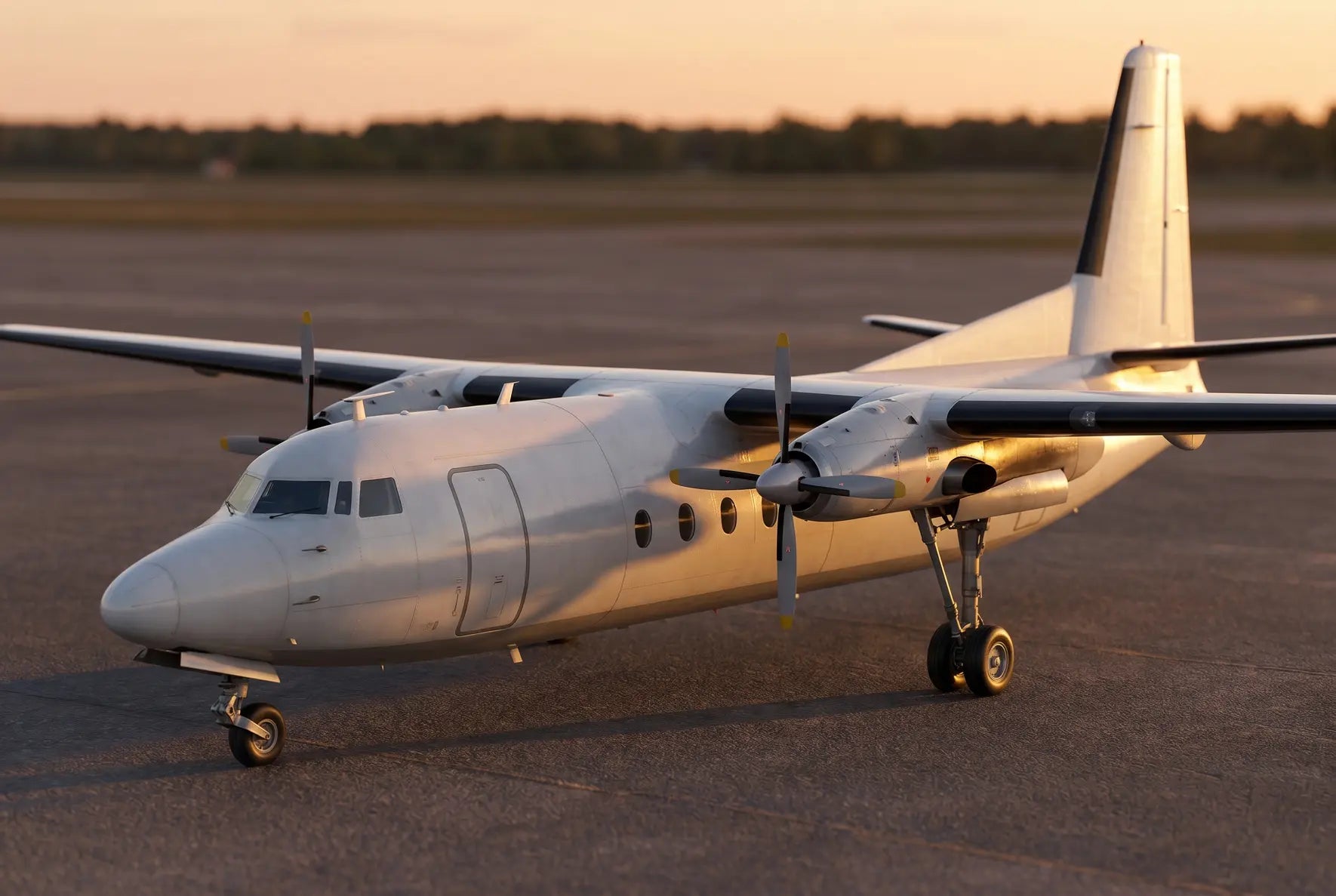
Fokker F27-600: History, Development, and What Sets This Combi Variant Apart
The Fokker F27 Friendship family ranks among the most commercially successful turboprop airliners ever built. Designed by the Dutch manufacturer Fokker, a company founded in 1912 by aviation pioneer Anthony Fokker and headquartered in the Netherlands, the F27 program was conceived in the early 1950s as a modern replacement for the ubiquitous Douglas DC-3. Fokker remained active in aerospace until its bankruptcy in 1996, but the Friendship endured as one of its greatest achievements, with a total of 787 airframes produced: 581 by Fokker in Amsterdam and Schiphol, and 206 under licence by Fairchild in the United States.
The project began as the P275 design study in 1950, initially envisioned as a 32 seat pressurised airliner powered by two Rolls Royce Dart turboprops. By 1952, the design had matured into a 40 seat configuration, and the aircraft was officially named Friendship in 1953. The first prototype flew on 24 November 1955 at Schiphol, fitted with Rolls Royce Dart 507 engines. The first production variant, the F27 Mark 100, took to the air in March 1958, and Aer Lingus became the launch customer, entering revenue service in December 1958.
From the baseline Mark 100, Fokker progressively developed the Friendship family to meet evolving operator demands. The Mark 200 introduced more powerful Rolls Royce Dart Mk 532 engines and higher maximum weights, aimed at airlines needing improved hot and high performance. The Mark 300 added a large forward cargo door and a reinforced, watertight freight floor for dedicated cargo operations. The Mark 400 combined the Mark 200 powerplant with the Mark 300 cargo provisions. The Mark 500, which first flew in November 1967, stretched the fuselage by 1.50 metres, raising passenger capacity to 52 seats.
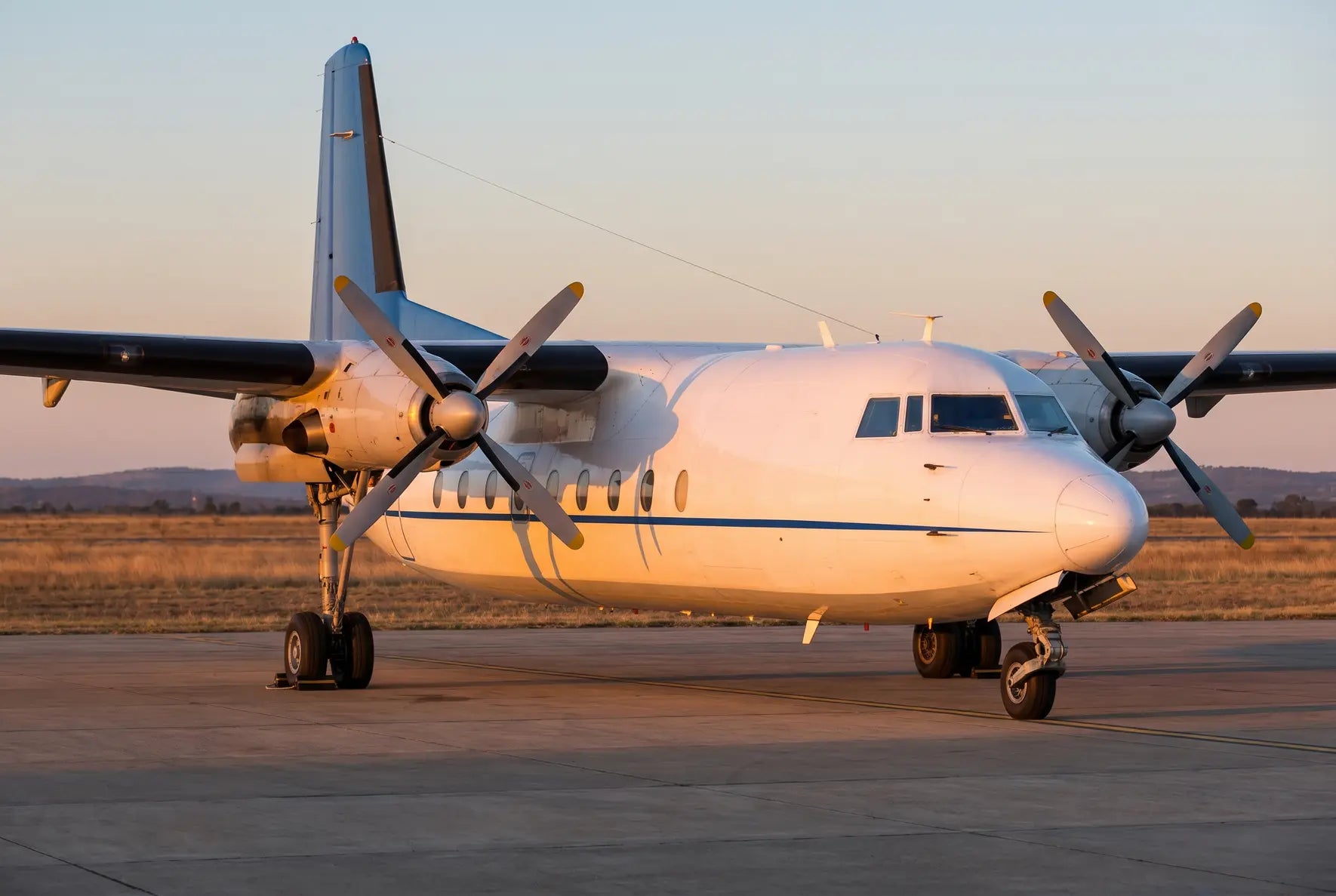
The Fokker F27-600 emerged from this lineage as a purpose built combi variant. According to the EASA Type Certificate Data Sheet (TCDS) No. A.036, the F27 Mark 600 is defined as the same as the F27 Mark 200 except for the addition of a large forward cargo door. This configuration enabled operators to rapidly convert the cabin between passenger and freight layouts, making it especially attractive for airlines that needed a single airframe to perform both roles depending on schedule demand. The first Fokker F27-600 flew on 22 June 1967, and Fokker went on to build 131 units of this variant, making it one of the more widely produced marks in the Friendship range.
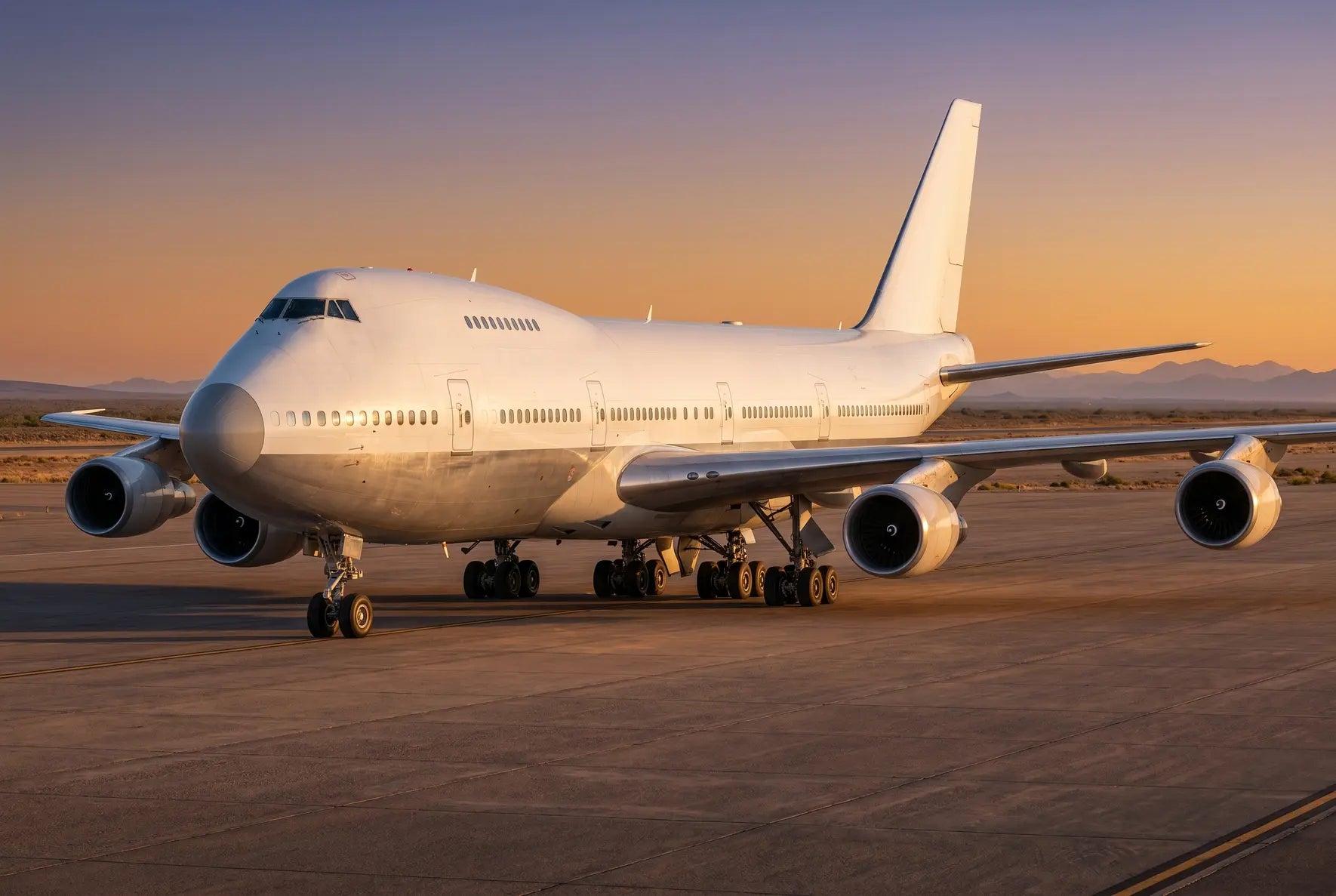
The Fokker F27-600 proved popular with regional carriers, freight operators, and government agencies worldwide. Notable operators included Ansett Airlines and Trans Australia Airlines in Australia, Air UK and Channel Express in the United Kingdom, and various military and governmental users. Its flexibility as a quick change platform anticipated the combi concepts that would later become common on larger types, including widebody freighters such as the Boeing 747 400ERF.
What Distinguishes the Fokker F27-600 from Other F27 Variants
The Fokker F27-600 occupies a specific niche within the Friendship family. While the Mark 200 offered upgraded engines and weights but no cargo door, and the Mark 400 combined those engines with a reinforced freight floor and cargo door for dedicated freighter use, the F27-600 blended the Mark 200 airframe and powerplant with the large forward cargo door but without the all metal, watertight freight floor of the Mark 300 and Mark 400. This made the variant lighter and better suited for mixed operations rather than heavy bulk freight. In contrast, the Mark 500 featured a stretched fuselage but no cargo door in its baseline form, and the Mark 700 paired the Mark 100 engines with a cargo door, targeting operators with less demanding power requirements.
Key identifiers and specifications of the Fokker F27-600, as documented in the Aeropedia reference and the EASA TCDS, include:
- Engines: Two Rolls Royce Dart RDa.7 Mk 532 7R turboprops, each rated at approximately 1,597 kW (2,140 shp)
- Maximum takeoff weight (MTOW): Up to 20,412 kg (45,000 lb) with applicable service bulletins
- Large forward cargo door: Located on the port side, forward of the wing, enabling quick change conversion between passenger and cargo configurations
- Fuselage length: Standard short body at 23.56 m (77 ft 4 in), shared with the Mark 100, 200, 300, and 400
- No reinforced watertight freight floor: Unlike the Mark 300 and Mark 400, emphasising combi flexibility over heavy freight capability
- Units built: 131 airframes produced by Fokker

A Fokker F27 Friendship aircraft in flight, used by the U.S. Army Parachute Team, known as the Golden Knights. The plane features distinct military branding.
Fokker F27 600 Technical Specifications, Systems and Engine Overview
The Fokker F27 600 is a quick change variant of the F27 Friendship family, designed to switch rapidly between passenger and freight configurations. Built on the same short fuselage airframe as the Mk 200 and Mk 400, it retains the proven high wing layout, pressurised cabin and twin turboprop architecture that made the Friendship a global workhorse on regional routes. The key design trade off centres on operational flexibility: the large cargo door and removable cabin fittings allow operators to alternate between carrying up to 44 passengers and hauling palletised freight, at the expense of a modest weight penalty compared with a pure passenger configuration. Its robust landing gear, pneumatic systems and moderate wing loading also give it respectable short field performance, making it suitable for operations from secondary airstrips.
The F27 600 inherits its aerodynamic DNA from earlier Friendship marks, including the 29 m wingspan with a NACA 64 series laminar flow wing, single slotted flaps and conventional manually operated flight controls. Its Rolls Royce Dart turboprops, combined with Dowty Rotol constant speed propellers, deliver dependable cruise performance in the 460 to 480 km/h range at medium altitudes. For airlines and cargo operators exploring turboprop crew requirements, the conditions at carriers such as TUI fly Belgium provide useful context on how operators structure their flightdeck teams.
- Length: 23.56 m (77 ft 4 in)
- Wingspan: 29.00 m (95 ft 2 in)
- Height: 8.50 to 8.59 m (27 ft 11 in to 28 ft 2 in)
- Wing area: 70 m² (754 sq ft)
- Maximum takeoff weight (MTOW): approximately 20,410 kg (45,000 lb)
- Fuel capacity: 5,136 litres (1,358 US gal) usable, split between two wing tanks of 2,568 litres each
- Typical passenger capacity: 44 in standard layout
- Cargo volume: approximately 62 m³ (2,189 cu ft) in freight configuration
- Maximum cruise speed: approximately 480 km/h (260 kt) at optimum altitude
- Range: approximately 1,890 km (1,020 nm) with 44 passengers; up to 2,600 km (1,400 nm) with reduced payload
- Service ceiling: approximately 8,475 m (27,800 ft)
- Engines: 2 × Rolls Royce Dart RDa.7 Mk 536 7R turboprops, each rated at approximately 2,320 ehp (1,730 kW)
- Propellers: Dowty Rotol four blade constant speed units
- Noise certification: certificated under ICAO Annex 16, Chapter 3 standards (where applicable per national authority)
Systems Architecture and Handling
Primary flight controls on the F27 600 are fully manual, using push pull rods and cable runs for ailerons, elevators and rudder. Spring tabs and balance tabs reduce stick forces across the flight envelope. Pitch trim is adjusted via hand wheels on the centre pedestal, connected by cables to a trim tab on the elevator. The aircraft does not feature powered flight controls or fly by wire systems; its handling qualities rely on conventional aerodynamic balancing and the predictable stability of the high wing design.
One distinctive feature of the Friendship family is its pneumatic systems architecture. Rather than hydraulics, the F27 uses engine driven compressors to supply pressurised air for landing gear retraction, wheel brakes, nosewheel steering and wing and tail de icing. An independent emergency pneumatic system provides alternate braking and gear extension in case of primary system failure. The propeller system incorporates automatic pitch lock mechanisms: a flight fine pitch lock at 20° blade angle prevents the propeller from going below the flight fine setting during flight, while a cruise lock at 32° blade angle guards against overspeed above 265 kt TAS. These systems use electro hydraulic pistons and microswitches arranged in series logic for asymmetry protection.
Published performance figures for the F27 600 can vary considerably depending on the source. Differences in operator installed equipment, cabin density, selected MTOW options, atmospheric assumptions (ISA versus hot and high conditions), runway surface and slope all affect real world takeoff distances, range and payload. Manufacturer brochure data typically assumes standard day, sea level conditions with a full passenger load, which may not reflect the figures found in an individual operator's approved flight manual. It is therefore important to treat any quoted number as indicative rather than absolute.
Rolls Royce Dart: The Engine Behind the Friendship
The F27 600 is powered by two Rolls Royce Dart RDa.7 Mk 536 7R turboprops. The Dart holds a special place in aviation history as the world's first mass produced turboprop engine. Designed by Rolls Royce in the mid 1940s, it first ran in 1946 and made its maiden flight on a converted Avro Lancaster testbed in October 1947. It entered revenue service on the Vickers Viscount in 1953, making that type the first turbine powered airliner to carry fare paying passengers on scheduled routes.
The Dart uses a two stage centrifugal compressor feeding seven straight flow combustion chambers and a three stage axial turbine. Unlike later turboprops that adopted axial compressors, the centrifugal design gave the Dart a compact, mechanically robust core that proved exceptionally reliable in service. The turbine drives both the compressor and, through a reduction gearbox, the propeller shaft. Early Dart variants produced around 990 shp, but successive development raised output to over 3,000 shp in the most powerful marks. The Mk 536 7R fitted to the F27 600 is rated at approximately 2,320 equivalent horsepower.
Over the course of roughly 40 years of production, more than 7,000 Dart engines were manufactured, accumulating in excess of 170 million flight hours. Beyond the F27 family, the Dart powered a wide range of aircraft including the Vickers Viscount, the Hawker Siddeley (Avro) HS 748, the NAMC YS 11 and the Breguet Atlantique maritime patrol aircraft. Its longevity and adaptability across civil and military platforms cemented the Dart as one of the most successful aero engines of the twentieth century.
Fokker F27-600 vs F27-500 vs ATR 42-500 vs Dash 8-100: Key Specifications Comparison
Scroll horizontally to see more
| Parameter | Fokker F27-600 | Fokker F27-500 | ATR 42-500 | De Havilland Dash 8-100 |
|---|---|---|---|---|
| Entry into service | 1967 | 1962 | 1996 | 1984 |
| Engines | 2 × Rolls-Royce Dart Mk.532-7R | 2 × Rolls-Royce Dart Mk.532-7R | 2 × Pratt & Whitney PW127E | 2 × Pratt & Whitney PW123 |
| Length | 23.6 m | 25.1 m | 27.2 m | 25.7 m |
| Wingspan | 29.0 m | 29.0 m | 24.6 m | 25.9 m |
| Height | 8.5 m | 8.8 m | 7.9 m | 8.4 m |
| Typical seating and layout | Single-class: 44 passengers | Single-class: 52 passengers | Single-class: 48–50 passengers | Single-class: 37–39 passengers |
| MTOW | 20 t | 21 t | 20 t | 19 t |
| Range | 1,020 nm | 710 nm | 1,500 nm | 1,080 nm |
| Cruise speed | 0.30 Mach | 0.30 Mach | 0.32 Mach | 0.32 Mach |
| Service ceiling | 27,800 ft | 27,800 ft | 30,000 ft | 25,000 ft |
| Program note | Standard passenger variant with improved engines | Stretched version for higher capacity | Modern regional turboprop successor | Contemporary turboprop competitor |
Scroll horizontally to see more
The table compares core specs of the Fokker F27-600 and F27-500 against the ATR 42-500 and Dash 8-100. The F27-500 is longer and seats more (52) than the -600 (44) but has shorter range (710 vs 1,020 nm). ATR 42-500 offers the longest range (1,500 nm) and higher ceiling (30,000 ft), while the Dash 8-100 seats fewer (37–39) and has the lowest ceiling (25,000 ft).
Fokker F27-600 Operations: Typical Routes, Missions and Airlines Worldwide
The Fokker F27-600 was designed as a quick change combi variant of the F27-200, combining passenger transport with rapid conversion to cargo configuration thanks to its large port side freight door measuring approximately 1.78 m by 2.34 m. This versatility made it a practical choice for operators requiring flexibility on regional networks, particularly where demand fluctuated between passenger and freight services. With a maximum range of around 1,930 km and a cruise speed of approximately 430 to 480 km/h, the aircraft was well suited to sectors lasting between 45 minutes and two hours, covering distances typically in the 200 to 800 km range.
Operators commonly deployed the Fokker F27-600 on hub and spoke feeder routes linking secondary or regional airports to larger hubs, as well as on point to point services between smaller cities. Its ability to operate from runways as short as 1,000 m gave it access to airfields that larger aircraft could not serve. Daily utilisation patterns for F27 operators typically involved multiple short rotations, with aircraft completing six or more sectors per day and accumulating eight or more block hours in intensive schedules. Overnight, many airframes were reconfigured for freight duties, carrying newspapers, parcels and time sensitive cargo before returning to passenger service the following morning.
Operators of the Fokker F27-600 faced several challenges over the aircraft's long career. Rising maintenance costs associated with ageing Rolls Royce Dart engines and older airframe technology made the type increasingly expensive to keep airworthy compared to newer generation turboprops such as the ATR 72 or the Dash 8. Stricter noise regulations at European airports also posed difficulties, as the Dart engines produced higher noise levels than modern powerplants. Despite these challenges, the rugged construction and short field performance of the Fokker F27-600 ensured it remained in service for decades with operators who valued its operational flexibility. For passengers travelling on regional turboprops, there are several ways to enhance the flight experience even on shorter sectors.
Where the Fokker F27-600 Operated
The Fokker F27-600 saw service across four broad regions, fulfilling a wide range of missions. In Europe, the type was used for scheduled regional passenger services and overnight freight operations, connecting secondary cities to major hubs. In Asia and Oceania, the aircraft served domestic networks and remote communities where its short field capability was essential. In North America, the variant operated on commuter routes and later transitioned into dedicated cargo roles. While general F27 Friendship variants saw widespread use in Africa, specific confirmed deployment of the F27-600 subvariant on the continent is not well documented in available records.
- Europe: Balair in Switzerland operated the Fokker F27-600 on domestic and regional routes on behalf of Swissair. NLM CityHopper and later KLM CityHopper in the Netherlands used the type as a feeder aircraft connecting regional airports to the Amsterdam Schiphol hub. In the United Kingdom, Channel Express was a prominent cargo operator, flying F27-600 aircraft on overnight freight services carrying newspapers and parcels between airports such as Exeter, Liverpool and Guernsey. WDL Aviation in Germany also operated the variant on regional charter and scheduled services.
- North and South America: Swift Aire Lines in the United States purchased new F27-600 series aircraft directly from Fokker for commuter passenger services. FedEx later operated multiple Fokker F27-600 airframes as dedicated cargo freighters across its US parcel network, taking advantage of the large cargo door for rapid loading and unloading.
- Asia: Biman Bangladesh Airlines operated the Fokker F27-600 on domestic routes within Bangladesh. The Iranian Air Force also used the type in a military transport capacity. Broader F27 family operations in the region were extensive, but confirmed civil F27-600 operators in Asia remain limited in publicly available records.
- Oceania: Trans Australia Airlines (TAA) was a significant operator, with a fleet of several F27-600 aircraft registered as VH-TQN through VH-TQR, serving domestic routes across Australia. Air Niugini in Papua New Guinea used the type to connect remote communities, benefiting from the aircraft's ability to handle unpaved or short runways in challenging tropical conditions.
Typical Seating Configurations
The Fokker F27-600 featured a pressurised cabin with a circular cross section offering a width of approximately 2.10 m to 2.57 m and a standing height of just over 2 m. In a standard all economy passenger layout, the aircraft typically seated 44 passengers in a two by two abreast arrangement, a configuration common among regional and network carriers. Some operators pushed capacity toward 48 or even 52 seats in high density layouts, though this reduced legroom and comfort on longer sectors.
Because the F27-600 was fundamentally a combi aircraft, many operators used mixed configurations with a forward cargo section separated by a bulkhead from a reduced passenger cabin. This approach was typical of airlines serving routes with modest passenger demand but consistent freight requirements. Dedicated cargo operators such as Channel Express and FedEx removed all seating and used the full cabin volume of approximately 62 cubic metres for palletised freight, with a maximum payload capacity of around 5,900 to 6,200 kg. Detailed seat maps for the Fokker F27 Friendship family are rare given the age and retirement of most airframes, but the two by two layout with a single centre aisle remained the standard across virtually all passenger configured examples.
In this video, watch a Fokker F27-600 start at Innsbruck Airport Kranebitten during a jubilee event on 26 October, Austria’s National Day, capturing the unique alpine airport atmosphere.
Fokker F27-600 Safety Record: Accident History and How Safe Is It?
The Fokker F27-600, the final production variant of the renowned Fokker F27 Friendship family, entered service in the late 1960s and remained operational with airlines and freight carriers for several decades. Approximately 132 F27-600 airframes were built, forming part of a broader F27 programme that produced around 786 aircraft across all variants. Over a service life spanning more than 40 years, the Friendship 600 accumulated millions of flight hours and cycles on regional routes worldwide. According to CrashAtlas, 43 incidents of varying severity have been recorded for the F27-600 subtype. While that number may appear significant at first glance, it must be weighed against the type's decades of intensive use on short haul routes, which generate high cycle counts and frequent exposure to challenging weather conditions, remote airfields and varied operational standards around the world.
Notable Accidents Involving the Fokker F27-600
Several hull loss events involving the Fokker F27 Mk 600 have contributed important lessons to aviation safety. The incidents summarised below illustrate the most common causal factors and the regulatory or procedural changes that followed.
- Biman Bangladesh Airlines Flight 426 (S2-ABJ), 5 August 1984, Dhaka. A Fokker F27-600 carrying 49 occupants crashed into marshy terrain approximately 550 metres short of runway 14 at Zia International Airport during a third approach attempt in heavy rain. The crew descended below the minimum descent altitude without acquiring visual reference, resulting in a controlled flight into terrain (CFIT) with no survivors. The accident, documented on Wikipedia, underscored the critical importance of adherence to published instrument approach minima and reinforced the global push for improved crew resource management (CRM) training during the 1980s.
- Myanmar Airways (XY-AES), 27 January 1998, Sandoway. Shortly after takeoff from runway 02, the right engine of this F27-600 failed. The aircraft rolled, struck a concrete wall and broke apart, killing 16 of the 44 occupants. Post accident examination found no pre existing technical anomalies in the engines, landing gear or braking systems. The event highlighted the need for rigorous single engine handling proficiency and the importance of maintaining adequate speed margins during the initial climb phase.
- Channel Express (G-CHNL), 12 January 1999, near Guernsey Airport. A Fokker F27-600 cargo aircraft carrying three tonnes of newspapers experienced an uncommanded pitch up on final approach. The crew were unable to recover, and the aircraft stalled and crashed into a residential area, killing both pilots. The AAIB Report 2/2000 identified three causal factors: operation outside load and balance limitations, undetected cargo distribution errors, and insufficient crew training in load management. Seven safety recommendations followed, prompting tighter cargo reconciliation procedures, enhanced weight and balance verification protocols, and mandatory load management training for freight crews across the United Kingdom.
Across these events, the dominant causal themes are human factors, particularly decision making during adverse weather, single engine handling, and cargo loading discipline, rather than systemic airframe design deficiencies.
How Safe Is the Fokker F27-600?
Assessing the safety of the Fokker F27-600 requires context. The variant operated predominantly on short regional sectors, often serving remote or less developed airports where infrastructure, weather reporting and air traffic services were more limited than at major hubs. These operating conditions naturally elevate exposure to risk compared with long haul jets flying between well equipped international airports. When the number of recorded accidents is considered alongside the millions of sectors flown by F27-600 operators over several decades, the per flight risk aligns broadly with that of other turboprop types of the same era.
The Fokker F27 was designed with a robust high wing configuration, durable Rolls Royce Dart turboprop engines, and a strong landing gear suitable for unpaved strips. These features contributed to the type's exceptional longevity. Over the years, airworthiness directives, service bulletins and operator specific standard operating procedures (SOPs) continuously improved the safety margin of the fleet. Regulatory bodies such as EASA and national civil aviation authorities maintained oversight of remaining F27 operators, ensuring compliance with evolving maintenance and training standards.
For readers interested in how a modern turboprop successor compares, the Bombardier Q400 offers an instructive example of how lessons from earlier generations have been integrated into contemporary design, avionics and crew training frameworks.
Ultimately, each accident in the Fokker F27-600's history generated tangible improvements in procedures, regulation and pilot training. According to global data compiled by Aviation Safety Network, the long term trend across all aircraft types shows a steady decline in hull loss rates per million flights. Aviation remains, statistically, one of the safest forms of transport, and the lessons drawn from legacy types like the F27-600 have directly contributed to that record.
01 What is the typical range and mission profile of the Fokker F27-600?
The Fokker F27-600 has a maximum range of about 2,500 kilometers with full passenger load, making it ideal for regional flights under 2 hours. It excels in short to medium-haul routes, often serving as a feeder liner connecting smaller airports to hubs. Operators use it for high-frequency services in challenging environments like hot-and-high or short runways.
02 How is the cabin laid out on the Fokker F27-600, and what is the passenger experience like?
The Fokker F27-600 typically configures in a 2-1 seating layout for 52 to 65 passengers, offering more personal space than jets in similar categories. Passengers note a relatively quiet cabin for a turboprop, with good window views due to high-wing design and large oval windows. Noise levels are manageable, though engine spool-up is audible during takeoff.
03 Which airlines operate the Fokker F27-600 and on what routes?
Airlines like Air New Zealand, Nortel, and regional carriers in Asia and Africa operate the Fokker F27-600 on domestic and intra-regional routes. Common uses include connecting remote islands, rural areas, or secondary cities to major hubs, such as in Indonesia or South America. It remains active where short-field performance is key.
04 How does the Fokker F27-600 perform compared to similar aircraft?
Powered by two Rolls-Royce Dart turboprops, the F27-600 offers superior short-field capabilities and climb performance over contemporaries like the ATR 42 or Dash 8 early models. It provides good fuel efficiency for its era on routes under 1,000 km, though modern turboprops surpass it in speed and consumption. Its robust design suits unpaved runways better than many peers.
05 What is the safety record of the Fokker F27-600?
The Fokker F27-600 shares the strong safety record of the F27 family, with over 500 built and few hull-loss accidents relative to flight hours. Key design features include a high-mounted wing for debris clearance and forgiving stall characteristics. Incidents often trace to operational factors rather than inherent flaws, per aviation safety databases.
06 What practical tips should travelers know when flying on a Fokker F27-600?
Opt for window seats on the left side for better views during turns, as the high wing enhances scenery. It handles turbulence steadily due to low speeds and robust build, feeling less bumpy than jets. Expect quick boarding with rear airstair access and overhead bins ample for carry-ons.