

Boeing 787-10 Dreamliner: Program Launch, Development History and Key Milestones
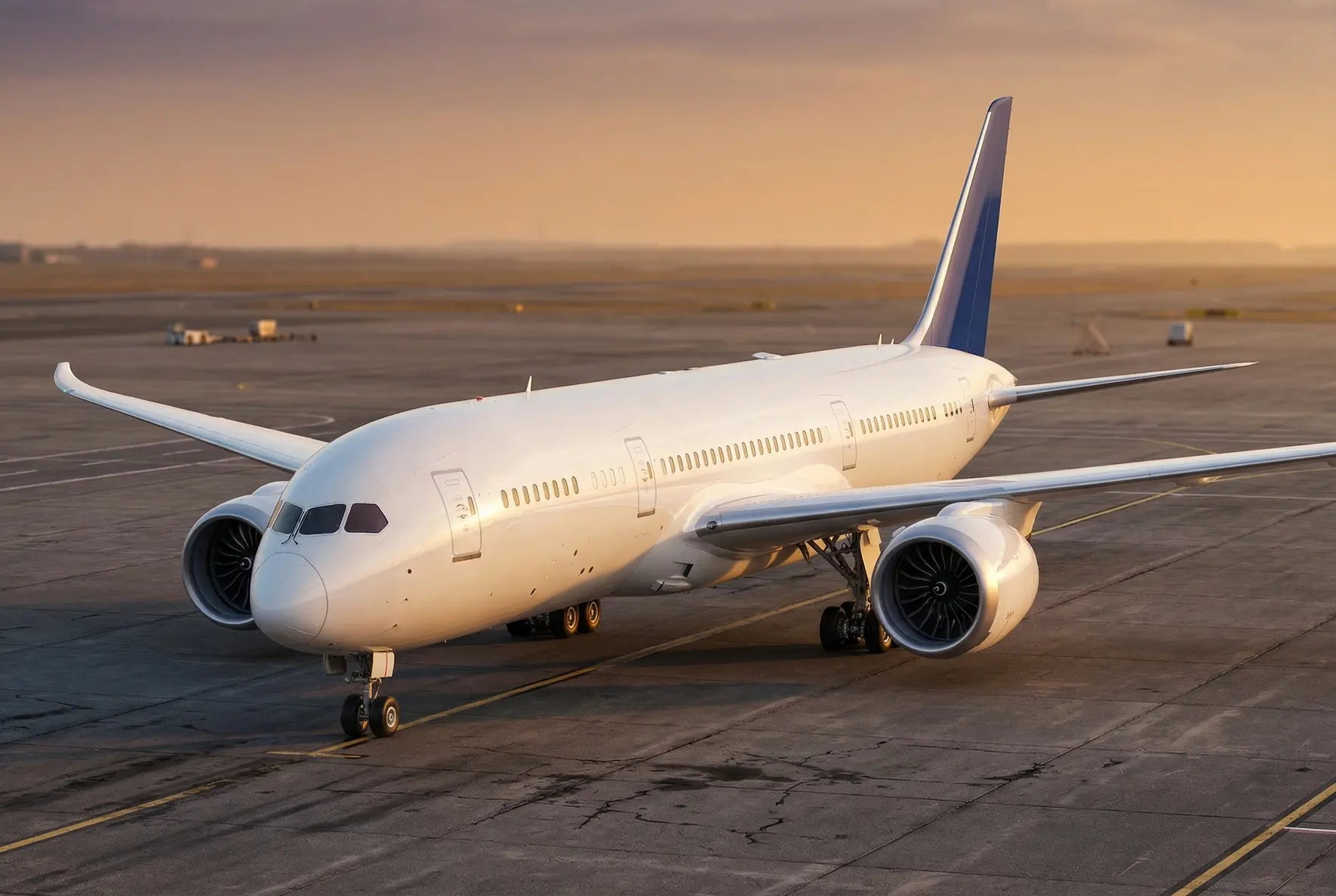
The Boeing 787-10 Dreamliner is the largest and most recent member of the 787 family, a widebody twin engine programme that redefined long haul efficiency when it entered the market in 2011. Built by Boeing Commercial Airplanes, headquartered in Arlington, Virginia, the 787 family was conceived in the early 2000s as a successor to the ageing Boeing 767 and as a response to rising fuel costs. The baseline 787-8 entered service in October 2011 with All Nippon Airways, and the stretched 787-9 followed in August 2014. With strong airline demand for a still larger variant that could carry more passengers on high density routes while retaining the Dreamliner's composite airframe advantages, Boeing moved to develop a further stretch: the 787-10.
The programme was officially launched on 18 June 2013 at the Paris Air Show, backed by 102 commitments from five launch customers: Singapore Airlines (30), Air Lease Corporation (30), United Airlines (20), International Airlines Group / British Airways (12) and GE Capital Aviation Services (10). The aircraft was positioned to replace older widebodies such as the Boeing 777-200 and Airbus A330-300 on routes where higher seat counts and lower per seat fuel burn were decisive factors. Boeing claimed the 787-10 would deliver up to 25 percent better fuel efficiency than the types it was designed to replace and more than 10 percent better economics than any competing aircraft in its size class.
Final assembly of the 787-10 takes place exclusively at Boeing South Carolina in North Charleston, making it the only 787 variant not also assembled at Boeing's Everett, Washington facility. The rollout of the first airframe occurred on 17 February 2017. The variant completed its first flight on 31 March 2017 from Charleston, embarking on a roughly four and a half hour test sortie before further flight testing moved to Seattle. The FAA awarded the type certificate on 25 January 2018, and EASA validation followed in February 2018. Boeing delivered the world's first 787-10 to Singapore Airlines on 25 March 2018, and the airline placed the aircraft into revenue service on 3 April 2018, initially operating flights from Singapore to Osaka and Perth.
Like its siblings, the 787-10 benefits from a fuselage built predominantly from carbon fibre reinforced polymer composites (approximately 50 percent by structural weight), which reduces corrosion, lowers maintenance requirements and allows a higher cabin pressure equivalent of around 6,000 feet. The flight deck shares a common type rating with the 787-8 and 787-9, simplifying crew scheduling for operators flying multiple variants. The cockpit features five large format liquid crystal displays, dual head up displays and a modern fly by wire flight control system. The 787 family also introduced an all electric architecture that replaces traditional bleed air systems for cabin pressurisation and wing ice protection, contributing to overall fuel savings. The variant holds an ETOPS 330 approval, permitting operations up to 330 minutes from a diversion airport, consistent with the broader 787 family certification granted by the FAA in May 2014. For aviation enthusiasts curious about how other popular narrowbody types compare in terms of programme evolution, the Airbus A321-200 offers an interesting parallel as a stretched variant designed for higher capacity within an established family.
What Sets the Boeing 787-10 Apart from the 787-8 and 787-9
The defining characteristic of the Boeing 787-10 is its 5.5 metre (18 foot) fuselage stretch over the 787-9, bringing total length to approximately 68.3 metres (224 feet). This makes it the longest Dreamliner variant and enables a typical two class configuration of around 336 passengers, compared to roughly 296 for the 787-9 and 248 for the 787-8. The trade off for this added capacity is range: the 787-10 covers approximately 6,330 nautical miles (11,720 km), versus about 7,565 nmi for the 787-9 and 7,305 nmi for the 787-8. This positions the 787-10 as a high density, medium to long haul workhorse rather than an ultra long range platform. Despite the stretch, the wingspan remains 60.12 metres (197 ft 3 in) across all three variants, with the same signature raked wingtips and composite wing structure. The maximum takeoff weight rises to approximately 254,011 kg (560,000 lb).
The following variant identifiers summarise what distinguishes the 787-10 within the Dreamliner family:
- ICAO designation: B78J
- Fuselage length: 68.3 m (224 ft), the longest 787 variant
- Typical seating: 336 passengers in two class layout
- Range: 6,330 nmi (11,720 km)
- MTOW: 254,011 kg (560,000 lb)
- Engine options: General Electric GEnx-1B or Rolls-Royce Trent 1000 TEN
- Wingspan: 60.12 m (197 ft 3 in), identical to 787-8 and 787-9
- ETOPS: 330 minutes
- Final assembly: Exclusively at Boeing South Carolina, North Charleston

A Boeing 787 Dreamliner from ANA, All Nippon Airways, soars against a clear blue sky. The aircraft is painted in ANA's livery, showcasing the phrase 'Inspiration of JAPAN.'
Boeing 787-10 Dreamliner: Technical Specifications, Systems and Engine Options
The Boeing 787-10 is the longest member of the Dreamliner family, stretched to 68.3 m (224 ft) to maximize passenger capacity on high demand routes while sharing 95% structural commonality with the 787-9. Its design philosophy prioritizes seat economics over ultra long range: compared to the shorter 787-9, the 787-10 trades approximately 1,200 nmi of range for roughly 40 additional seats in a typical two class layout. The airframe retains the same 60 m composite wing, identical cockpit type rating, and the advanced composite fuselage architecture that defines the 787 programme, with over 50% of the primary structure built from carbon fibre reinforced polymer. This extensive use of composites reduces weight, limits corrosion, and allows a higher cabin pressurisation equivalent of approximately 6,000 ft, improving passenger comfort on sectors that typically last between 6 and 12 hours.
Because it was designed around existing wing and landing gear geometry, the 787-10 shares the same wingspan and wingtip devices (raked wingtips) as its siblings. The strengthened centre wingbox accommodates the higher operating weights, while the fuselage stretch adds capacity both in the cabin and in the lower hold. Airlines operating the type, such as Singapore Airlines, United, and Etihad, typically configure the aircraft for 300 to 340 seats in two or three class layouts. Like other widebody twins, the 787-10 is well suited to medium and high density route networks where frequency and seat cost matter more than extreme range.
- Length: 68.3 m (224 ft)
- Wingspan: 60.1 m (197 ft), with raked wingtips
- Height: 17.0 m (56 ft)
- Fuselage outer diameter: 5.77 m (18.9 ft)
- Typical seating: 330 passengers in a two class configuration
- Maximum takeoff weight (MTOW): 254,011 kg (560,000 lb)
- Maximum landing weight (MLW): 201,848 kg (445,000 lb)
- Maximum zero fuel weight (MZFW): 192,776 kg (425,000 lb)
- Range: 6,330 nmi (11,730 km) with a typical two class payload (manufacturer basis)
- Cruise speed: Mach 0.85 (approximately 903 km/h); maximum operating Mach 0.90
- Service ceiling: 43,100 ft (13,137 m)
- Engines: 2 x General Electric GEnx-1B76 (338 kN / 76,100 lbf) or 2 x Rolls-Royce Trent 1000 TEN (up to 360 kN / 81,000 lbf)
- Fuel capacity: approximately 101,000 kg (126,200 litres)
- Avionics: Honeywell integrated flight deck with five large format LCD displays, dual HUD capability, and Cat IIIB autoland
- Noise compliance: ICAO Chapter 14
Systems Architecture and Handling Technology
The 787-10 uses a triple redundant fly by wire flight control system with no manual reversion. Primary flight surfaces are actuated by a combination of hydraulic and electromechanical actuators; notably, two of the seven spoiler pairs on each wing use electrically powered actuators (EMAs). The aircraft features an active gust alleviation function and a flaps up vertical modal suppression system (F0VMS) that addresses aeroelastic stability requirements specific to the stretched fuselage.
One of the most distinctive features of the 787 family is its bleedless electrical architecture. Rather than drawing compressed air from the engines for cabin pressurisation, wing anti ice, and engine starting, the 787 generates up to 1.45 MW of electrical power via engine driven generators. Wheel brakes are electrically actuated, replacing traditional hydraulic brake systems, and the wing leading edge ice protection uses electrothermal heater mats embedded in the slats. Engine control relies on a Full Authority Digital Engine Control (FADEC) system integrated with both engine options. Health monitoring and maintenance diagnostics are supported by dual flight data recorders (forward and aft) and real time data streaming to airline operations centres.
Published performance figures for the 787-10 should always be interpreted with context. Actual range, takeoff field length, and payload capability vary significantly depending on operator selected cabin configuration, seat count, cargo load, atmospheric conditions (temperature, altitude, humidity), runway surface condition, and the specific engine and MTOW option chosen. Boeing's published range of 6,330 nmi assumes a standard two class, 330 seat layout at maximum structural payload. Airlines operating higher density cabins or selecting the forthcoming increased gross weight (IGW) variant may see different operational envelopes.
Engine Options: GE GEnx-1B and Rolls-Royce Trent 1000 TEN
The Boeing 787-10 is offered with two high bypass turbofan engines: the General Electric GEnx-1B76 and the Rolls-Royce Trent 1000 TEN. Both engines are specifically rated to meet the higher thrust demands of the stretched airframe at its 254,011 kg MTOW.
The GEnx-1B76, rated at 76,100 lbf (338 kN), represents the high thrust end of the GEnx-1B family. Developed by GE Aerospace as the successor to the long serving CF6, the GEnx draws on proven architecture from the GE90 programme that powered the Boeing 777. Key advances include an all composite 111 inch (282 cm) fan with 18 blades, a Twin Annular Pre Swirl (TAPS) combustor reducing NOx emissions by up to 55%, and a bypass ratio of 9.6:1 that delivers approximately 15% lower fuel consumption than the CF6. The GEnx-1B entered service in 2011, has accumulated over 50 million flight hours, and powers approximately two out of every three 787s in operation. The GEnx-2B variant, a related but distinct engine, exclusively powers the Boeing 747-8. No other aircraft types use GEnx engines.
The Rolls-Royce Trent 1000 TEN (Thrust, Efficiency, New technology) is a three shaft turbofan featuring a 112 inch (285 cm) fan, 20 composite fan blades, and the highest bypass ratio in the Trent family at 10:1, with an overall pressure ratio of 50:1. The TEN variant, which entered service in 2017, incorporates a redesigned intermediate pressure compressor, a high pressure turbine shared with the Trent XWB (used on the Airbus A350), and a modulated high pressure air system for improved fuel burn retention over time. The base Trent 1000 first entered service in 2011 with All Nippon Airways on the 787-8. The Trent 1000 family powers only the Boeing 787 and is not used on any other aircraft type. Singapore Airlines selected the Trent 1000 TEN for its fleet of 787-10 aircraft.
Boeing 787-10 vs 787-9 vs 787-8 vs Airbus A350-1000 Specifications Comparison
Scroll horizontally to see more
| Parameter | Boeing 787-10 | Boeing 787-9 | Boeing 787-8 | Airbus A350-1000 |
|---|---|---|---|---|
| Entry into service | 2018 | 2014 | 2011 | 2018 |
| Engines | 2 × Rolls-Royce Trent 1000 or GE GEnx-1B | 2 × Rolls-Royce Trent 1000 or GE GEnx-1B | 2 × Rolls-Royce Trent 1000 or GE GEnx-1B | 2 × Rolls-Royce Trent XWB-97 |
| Length | 68.3 m | 63 m | 57 m | 73.8 m |
| Wingspan | 60.1 m | 60.1 m | 60.1 m | 64.8 m |
| Height | 17.0 m | 17.0 m | 17.0 m | 17.8 m |
| Typical seating and layout | 3-class: 330–340 passengers | 3-class: 290–300 passengers | 3-class: 240–250 passengers | 3-class: 350–410 passengers |
| MTOW | 254 t | 254 t | 228 t | 322 t |
| Range | 6,330 nm | 7,565 nm | 7,305 nm | 8,100 nm |
| Cruise speed | 0.85 Mach | 0.85 Mach | 0.85 Mach | 0.85 Mach |
| Service ceiling | 43,000 ft | 43,000 ft | 43,000 ft | 41,000 ft |
| Program note | Longest 787 variant, optimized for high-capacity medium-long haul routes | Most popular 787, balances capacity and range for versatile long-haul operations | Original baseline 787, focuses on efficiency for standard long-haul missions | Largest A350 variant, direct competitor with higher capacity and longer range |
Scroll horizontally to see more
The table compares key specs across the Boeing 787 family and the Airbus A350-1000. The 787-10 is the highest-capacity 787 (330–340 seats) but has the shortest range at 6,330 nm, while the 787-9 extends to 7,565 nm with slightly lower capacity. The 787-8 is smallest and lighter (228 t MTOW). The A350-1000 is larger and heavier (73.8 m, 322 t) with the longest range at 8,100 nm.
Boeing 787-10 Operations: Typical Routes, Missions and Airlines Worldwide
The Boeing 787-10 is the largest member of the Dreamliner family, stretching 68.3 metres and offering a maximum range of approximately 6,330 nautical miles (11,730 km) according to Boeing's official specifications. That range, roughly 1,200 nautical miles shorter than the 787-9, positions the aircraft for high capacity medium to long haul missions rather than ultra long haul operations. Typical stage lengths fall between 3,000 and 6,000 nautical miles, translating into flights of roughly 6 to 13 hours. Airlines deploy the type on dense transatlantic, intra Asian, and shorter transpacific corridors where passenger demand justifies a widebody with 300 to 340 seats.
Operationally, most carriers slot the Boeing 787-10 into hub and spoke networks, feeding major international gateways such as Singapore Changi, Newark Liberty, Abu Dhabi and Taipei Taoyuan. Its stretched fuselage offers lower seat mile costs on busy city pairs, making it a natural replacement for ageing Boeing 777-200ERs on routes that do not require their full range. Challenges for operators include the aircraft's reduced range flexibility compared to the 787-9, which limits deployment on thinner or longer routes, and its higher maximum takeoff weight of approximately 254,000 kg, which may require longer runway distances at certain airports. On domestic high density corridors, however, such as those in Japan, the type has proven effective thanks to its high capacity and fuel efficient composite airframe. For a comparison with another popular widebody used on similar long haul missions, see the Boeing 777-300 overview.
Where the Boeing 787-10 Operates Around the World
The Boeing 787-10 is flown primarily in Asia and the Middle East, with growing presence in North America and Europe. In Asia, Singapore Airlines is the world's largest operator with 27 units, deploying the aircraft across some 26 regional routes from Changi Airport to cities including Colombo, Dhaka, Bangkok, Bali and Ho Chi Minh City. All Nippon Airways and its subsidiary Air Japan use the type on both international and domestic Japanese services, while EVA Air ranks among the busiest operators by flights, with over 11,000 planned services in 2026. In the Middle East, Etihad Airways operates 10 units from Abu Dhabi to destinations such as Manila and Delhi. In North America, United Airlines fields 21 Boeing 787-10s and has converted 56 additional 787-9 orders to the larger variant to support transatlantic and transpacific expansion. Africa currently has no confirmed active operators of the Boeing 787-10, although some carriers in the region have outstanding orders for the broader 787 family.
- Asia: Singapore Airlines (27 aircraft, regional and medium haul from Singapore), All Nippon Airways and Air Japan (international and domestic routes from Tokyo), EVA Air (transpacific and intra Asian services from Taipei with 342 seat two class layout), and Thai Airways (medium haul operations from Bangkok).
- North & South America: United Airlines (21 aircraft growing to over 70 on order, hub operations from Newark and other US gateways on transatlantic and transpacific routes). Delta Air Lines has ordered 30 firm Boeing 787-10s with deliveries expected from 2031 for transatlantic and South American expansion. Air Canada has 18 on order with deliveries anticipated from 2026.
- Europe: British Airways has ordered 32 Boeing 787-10s confirmed by IAG in May 2025, though none have entered service yet. The variant is expected to strengthen long haul operations from London Heathrow.
- Middle East & Africa: Etihad Airways (10 aircraft, long haul from Abu Dhabi to Asia and Europe). No African carriers currently operate the Boeing 787-10 in active revenue service.
Typical Seating Configurations on the Boeing 787-10
Cabin layouts on the Boeing 787-10 vary significantly depending on the operator's strategy. Boeing quotes a typical two class capacity of around 330 passengers, but real world configurations range from about 294 to 342 seats. Full service network carriers tend to offer three class interiors. All Nippon Airways, for instance, fits 294 seats across business (38 seats in a 1-2-1 layout), premium economy (21 seats) and economy (235 seats in a 3-3-3 arrangement). United Airlines adopts a similar three class approach with 318 seats: 44 Polaris business, 21 premium economy and 253 economy, including 54 designated Economy Plus seats with extra legroom.
Carriers prioritising capacity over premium segmentation opt for denser two class cabins. Singapore Airlines configures its 787-10 with 337 seats: 36 in business and 301 in economy. EVA Air seats 342 passengers with 34 Royal Laurel business class seats in a 1-2-1 layout and 308 economy seats. Etihad Airways also flies a two class arrangement with 32 business seats and 295 economy seats, totalling 327. These variations illustrate how the Boeing 787-10's wide cabin and generous fuselage length give operators the flexibility to tailor layouts from premium heavy three class products to high density configurations suited to leisure and price sensitive markets.
In this video, we examine the Boeing 787-10 and whether its range is truly a limitation. Learn how range affects real-world routes, airline planning, and the aircraft’s role in long-haul fleets.
Boeing 787 10 Safety Record: Incidents, Design Features and How Safe It Is
The Boeing 787 10 is the longest variant of the Dreamliner family and has been in commercial service since 2018. As of early 2026, Aviation Safety Network records no fatal accidents, hull losses or hijackings for the 787 10 (ICAO code B78X). Roughly 11 airlines operate the type worldwide, led by Singapore Airlines with 27 airframes. While the broader 787 programme has experienced notable safety events since its 2011 debut, the 787 10 sub variant itself has maintained an incident free operational record. Placing this in context, the global fleet of all 787 variants has accumulated millions of flight hours and cycles across more than a decade of service.
Notable Safety Events Across the Boeing 787 Family
Although no major accidents have involved the 787 10, three events affecting other Dreamliner variants are directly relevant because they share core systems, structure and certification standards.
- 2013 Lithium Ion Battery Grounding (787 8) – In January 2013 two thermal runaway events struck 787 8 aircraft operated by Japan Airlines at Boston Logan and All Nippon Airways in Japan. The NTSB investigation attributed the root cause to internal short circuits in the auxiliary power unit battery, compounded by inadequate design safeguards. The FAA issued an emergency airworthiness directive grounding the entire worldwide 787 fleet, the first such action since the DC 10 in 1979. Boeing responded with redesigned battery cell insulation, upgraded wiring, and a new stainless steel containment enclosure that vents gases overboard. Over 5,000 hours of laboratory testing validated the fix before the fleet returned to service in April 2013. The episode prompted the FAA to tighten certification standards for lithium ion batteries on all transport category aircraft.
- 2024 LATAM Airlines Seat Movement Incident (787 9) – In March 2024, a LATAM Airlines 787 9 operating from Sydney to Auckland experienced a sudden altitude excursion when the captain’s seat shifted forward unexpectedly. Ten passengers and three crew members sustained injuries before the flight crew recovered control and landed safely. Investigators examined cockpit seat latch mechanisms, leading to revised inspection procedures across 787 operators.
- 2025 Air India Flight 171 (787 8) – On 12 June 2025, Air India Flight 171, a 787 8 registered VT ANB, crashed shortly after takeoff from Ahmedabad while bound for London Gatwick. The aircraft, delivered in 2014 with over 41,000 flight hours and nearly 8,000 cycles, lost altitude within seconds of liftoff. Of the 242 people on board, 241 perished. A preliminary probe reported by Aviation Week noted that fuel control valve positions were found in the cutoff setting, though the reason remains undetermined. The investigation by the Aircraft Accident Investigation Bureau of India is ongoing, and no definitive cause has been established.
These events underscore how each incident, regardless of the sub variant involved, feeds back into the safety framework that benefits every 787 operator, including those flying the 787 10.
How Safe Is the Boeing 787 10 Today?
Judged on its own record, the Boeing 787 10 has experienced zero fatal accidents, zero hull losses and zero serious incidents since entering revenue service. The broader 787 programme recorded its first and only fatal accident in 2025 with a 787 8 airframe, after 14 years and hundreds of thousands of revenue flights across all variants. For comparison, the IATA 2025 Safety Report puts the global all accident rate at 1.32 per million flights (one accident every 759,646 departures), while the fatality risk rate stood at 0.17 per million flights.
From a design perspective, the 787 10 inherits the Dreamliner’s advanced composite fuselage, which resists corrosion and fatigue more effectively than traditional aluminium structures, triple redundant fly by wire flight controls, and an onboard health monitoring system that transmits real time data to maintenance teams on the ground. These features, combined with rigorous Standard Operating Procedures and continuous oversight by regulators such as the FAA and EASA, create multiple layers of defence. Airlines that previously operated older widebodies such as the Boeing 767 300 have increasingly transitioned to the 787 10 for its improved efficiency and modern safety architecture.
Despite occasional high profile events, commercial aviation remains one of the safest modes of long distance transport. The Boeing 787 10, benefiting from lessons learned across the entire Dreamliner programme and backed by a clean operational record, continues to be regarded as a safe and modern widebody aircraft.
01 What is the range of the Boeing 787-10?
The Boeing 787-10 has a maximum range of about 6,430 nautical miles (11,910 km) with typical two-class seating for 330 passengers. With maximum fuel and reserves, it can reach up to 8,050 nautical miles (14,910 km). This makes it suitable for long-haul routes like transatlantic or transpacific flights.
02 How many passengers does the Boeing 787-10 typically carry?
In a typical two-class configuration, the Boeing 787-10 seats 330 passengers, with options like 32 business and 298 economy seats. High-density all-economy setups can accommodate up to 440 passengers, while airlines like British Airways configure it for 256 passengers. Exit limits are around 440 seats.
03 What airlines operate the Boeing 787-10 and on what routes?
Airlines such as British Airways, KLM, and United Airlines operate the Boeing 787-10 on long-haul routes. British Airways uses it for transatlantic flights, while United employs it for routes like Chicago to Tokyo. It serves high-demand international missions efficiently.
04 How fuel-efficient is the Boeing 787-10 compared to similar aircraft?
The Boeing 787-10 achieves about 25% better fuel efficiency than similar-sized jets like the Boeing 767 due to composite materials and advanced engines. Fuel burn is around 2,567 gallons per hour at cruise, with economic cruising at Mach 0.83. This supports its role in point-to-point long-range operations.
05 What makes the Boeing 787-10 cabin comfortable for passengers?
The Boeing 787-10 features larger windows, improved cabin pressurization at lower altitudes for less fatigue, and quieter engines with serrated nacelles reducing noise by up to 60%. Composite fuselage construction minimizes humidity issues common in older jets. Typical seat pitches include 79 cm in economy and 89 cm in premium economy on airlines like KLM.
06 What are key performance specs and safety features of the Boeing 787-10?
It cruises at Mach 0.85 (about 903 km/h), with a service ceiling of 43,100 feet and takeoff distance of 9,100 feet. Design includes raked wingtips for efficiency and robust composite structures. The safety record aligns with the 787 family's strong performance, supported by advanced avionics and redundancy.