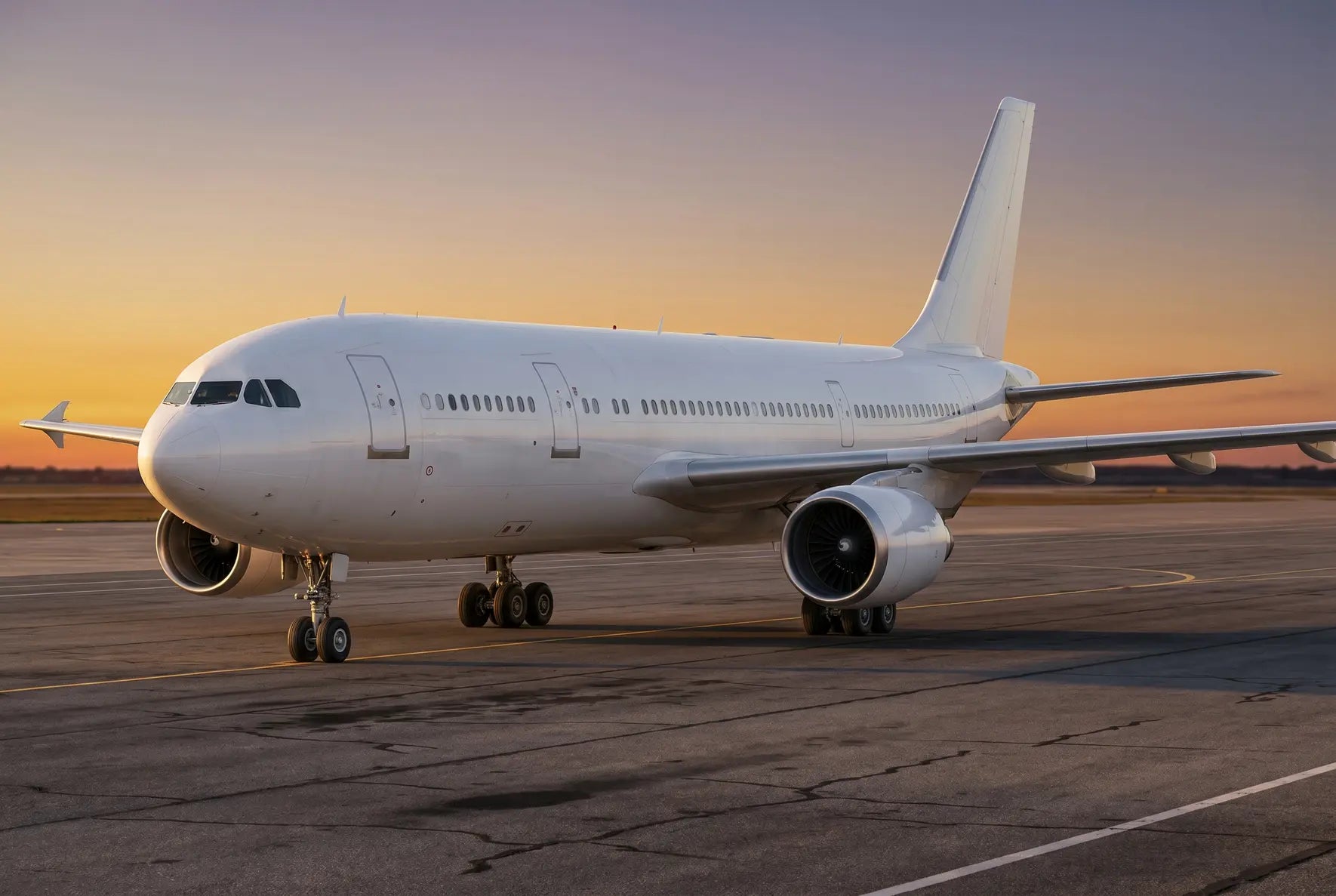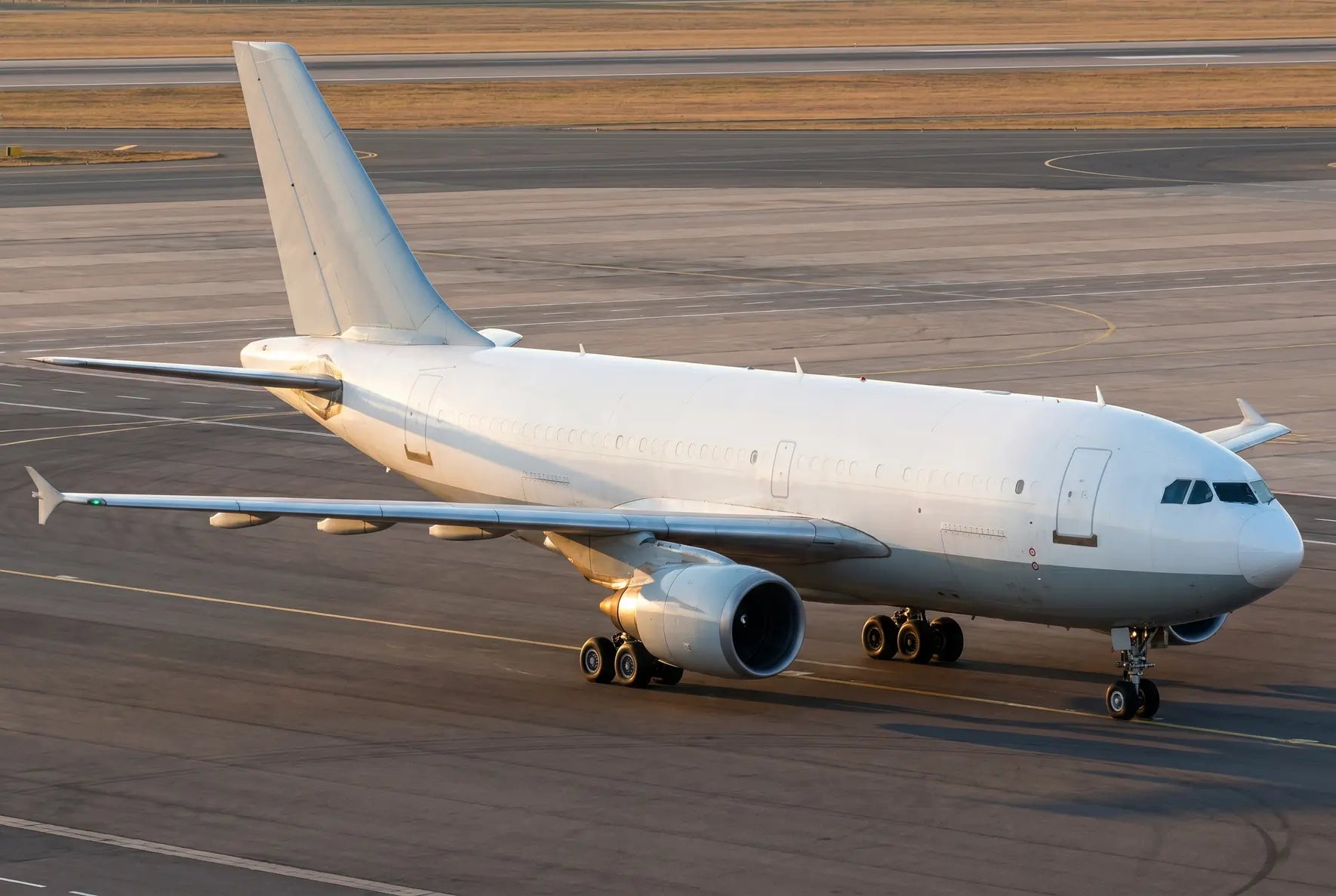



Airbus A310-300: History, Program Launch and Development of the Long Range Variant
The Airbus A310 family traces its origins to the A300B10, a shorter fuselage derivative of the pioneering Airbus A300 wide body airliner. During the mid 1970s, airlines expressed interest in a twin aisle aircraft with fewer seats but greater range per passenger, suited to thinner medium and long haul routes. Airbus Industrie, the European consortium formed by Aérospatiale (France), Deutsche Airbus (Germany), British Aerospace (United Kingdom) and CASA (Spain), responded by developing the A300B10 concept alongside the larger A300 production line.
On 7 July 1978, Airbus officially launched the A310 programme, backed by firm commitments from launch customers Swissair and Lufthansa. The announcement came just one week before Boeing launched the competing 767, underscoring the intense market rivalry for next generation twin engine wide bodies. Swissair had placed the first firm order for 10 aircraft (plus 10 options) earlier that year, while Lufthansa subsequently increased its commitment to 25 aircraft plus 25 options by April 1979.
The initial production variant, the A310-200, made its maiden flight on 3 April 1982 from Toulouse and received its type certificate on 11 March 1983. Swissair placed the aircraft into revenue service the following month. While the A310-200 proved capable on European and medium haul routes, airlines quickly sought a variant with greater intercontinental reach, particularly for transatlantic operations where twin engine economics offered a significant advantage over three and four engine competitors.
The Airbus A310-300 was Airbus Industrie's answer to that demand. Designed as the extended range development of the A310-200, the variant incorporated a horizontal stabiliser trim tank, additional centre fuel tank options, wingtip fences and a higher maximum takeoff weight, all aimed at pushing the aircraft's range well beyond 5,000 nautical miles. The Airbus A310-300 completed its first flight on 8 July 1985 and entered commercial service with Swissair from December 1985.
The type is covered under EASA Type Certificate EASA.A.172, which groups the A300, A310 and A300-600 families. Engine options qualified on the Airbus A310-300 included the General Electric CF6-80C2 and Pratt & Whitney PW4000 series, both high bypass turbofans that enabled 180 minute ETOPS approval for transoceanic sectors. This certification was pivotal: it allowed carriers to fly direct transatlantic routings that had previously been reserved for three or four engine aircraft.
The A310-300 proved the most commercially successful member of the A310 family. Production of the A310-200 wound down by 1988, after which the assembly line at Toulouse focused on the longer range variant. In total, Airbus built 255 A310 airframes across all sub variants, with the A310-300 accounting for the majority of deliveries. The final A310 was delivered in June 1998, closing a programme that had helped establish Airbus as a credible competitor to Boeing in the wide body market. Among other Soviet era long range wide bodies developed during a similar period, the Ilyushin Il-96-300 pursued comparable intercontinental objectives, albeit with a four engine layout.
What Distinguishes the Airbus A310-300 from the A310-200
The core difference between the two variants centres on range capability and the engineering changes required to achieve it. Where the A310-200 was optimised for routes of around 3,500 nautical miles, the Airbus A310-300 stretched that figure to approximately 5,150 NM (9,540 km), making it a genuine intercontinental performer.
The most significant structural addition was the fuel trim tank housed inside the horizontal stabiliser. This tank served a dual purpose: it increased total fuel volume and enabled automatic fuel transfer to manage the aircraft's centre of gravity in flight, reducing trim drag and improving fuel efficiency at cruise. Combined with optional auxiliary centre tanks in the lower cargo hold, total fuel capacity could reach up to 68,300 litres.
Aerodynamically, the Airbus A310-300 introduced wingtip fences, small vertical surfaces at the wingtips designed to reduce induced drag. These devices were effective enough that Airbus subsequently retrofitted them to some A310-200 airframes. The variant also carried a higher maximum takeoff weight of 164,000 kg, compared to 144,000 kg on the baseline A310-200, reflecting the additional fuel load and reinforced structure.
The A310 family was notably the first subsonic commercial aircraft to feature a vertical stabiliser made from carbon fibre reinforced plastic (CFRP), a milestone in composite material usage that paved the way for later Airbus programmes. Both variants shared this innovation, along with a fully digital two crew glass cockpit with electronic flight instrument systems (EFIS).
Key identifiers that distinguish the Airbus A310-300 from the A310-200 include:
- Horizontal stabiliser trim tank for in flight centre of gravity management and additional fuel capacity
- Wingtip fences fitted as standard (retrofittable on A310-200)
- Maximum takeoff weight: up to 164,000 kg (vs. 144,000 kg on the A310-200)
- Total fuel capacity: 61,070 litres standard, extendable to 68,300 litres with optional centre tanks
- Engine options: General Electric CF6-80C2 or Pratt & Whitney PW4000
- Range: approximately 5,150 NM (9,540 km) in a typical two class configuration
- ETOPS: certified for 180 minute extended twin engine operations

An Airbus A310 aircraft belonging to Air Transat is captured mid-flight against a backdrop of clouds. The airliner, featuring the Canadian flag, showcases the airline's distinct livery.
Airbus A310 300 Technical Specifications, Systems and Engine Options
The Airbus A310 300 was designed as a longer range derivative of the A310 200, sharing the same shortened fuselage (6.95 m shorter than the original A300) while introducing key innovations to extend its operational envelope over intercontinental distances. The primary design trade off centred on maximising range without altering the airframe dimensions: Airbus achieved this through an increased Maximum Takeoff Weight (MTOW), the addition of a trim tank in the horizontal stabiliser, and the introduction of wingtip fences for improved aerodynamic efficiency. As a twin engine widebody, the A310 300 bridged the gap between short haul A300 operations and the emerging long range twins that would follow, such as the Airbus A321 100 generation of single aisle aircraft that inherited many of its cockpit philosophies.
The A310 300 retained the eight abreast cross section of the A300 family but introduced a two crew glass cockpit with six CRT based Electronic Flight Instrument System (EFIS) displays, eliminating the flight engineer position. This Forward Facing Crew Cockpit concept, pioneered on the A310 family, became a defining feature of all subsequent Airbus types and established a common type rating philosophy with the A300 600.
- Length: 46.66 m (153 ft 1 in)
- Wingspan: 43.90 m (144 ft 0 in), equipped with wingtip fences for vortex drag reduction
- Height: 15.80 m (51 ft 10 in)
- Typical seating: 220 passengers in two class layout; up to 280 in high density configuration
- MTOW: 164,000 kg (361,558 lb)
- Maximum Landing Weight (MLW): 122,470 kg (271,168 lb)
- Operating Empty Weight (OEW): approximately 79,200 to 83,100 kg depending on configuration
- Fuel capacity: approximately 61,070 litres (16,132 US gal) in wing tanks, plus 6,160 litres (1,630 US gal) in the horizontal stabiliser trim tank
- Range: approximately 9,600 km (5,150 nm) with 220 passengers and baggage
- Cruise speed: Mach 0.80 to Mach 0.84 (typical long range cruise)
- Service ceiling: 12,530 m (41,100 ft)
- Engines: two General Electric CF6 80C2A2 (53,500 lbf) or Pratt & Whitney PW4152 (52,000 lbf) / PW4156A (56,000 lbf)
- Cockpit: two crew EFIS glass cockpit with six CRT displays
- Structural innovation: all composite vertical fin; carbon fibre reinforced plastic on rudder, spoilers and airbrakes
- ETOPS: certified for extended twin engine operations up to 180 minutes
Systems, Handling and Technology
The A310 300 employed conventional hydraulic flight controls rather than the fly by wire architecture introduced on the later A320 family. The wing design featured single slotted Fowler flaps, no outer low speed ailerons, and electrically actuated spoilers. This configuration provided straightforward handling characteristics for pilots transitioning from earlier generation widebody aircraft. The cockpit philosophy, while not fly by wire, represented a generational leap through digital systems integration, including the EFIS suite and a centralised warning and monitoring system displayed on the CRT screens.
A defining system of the A310 300 is the trim tank in the horizontal stabiliser. Controlled by a dedicated Centre of Gravity Control Computer, this system automatically transfers up to 5,000 kg of fuel aft from the wing tanks during cruise above FL255. By shifting the centre of gravity rearward, the system reduces the nose down pitching moment, lowers the required angle of attack, and consequently decreases induced drag and fuel burn. This innovation, documented in Airbus performance analyses, delivered measurable fuel savings and directly extended the aircraft's range capability beyond the A310 200. Periodic forward transfers maintain CG within limits as wing fuel burns off during the flight.
Published performance figures for the A310 300 can vary significantly depending on operator configured options, cabin density, selected engine variant, atmospheric conditions, and runway surface state. The manufacturer range of approximately 5,150 nm is typically quoted for a two class, 220 passenger layout at maximum fuel load. Operators configuring high density cabins, or those operating from hot and high airports, will see meaningfully different payload range results. All quoted figures should therefore be understood as baseline references rather than absolute guarantees.
Engine Options: CF6 80C2 and PW4000 94
The A310 300 offered two engine families from competing manufacturers, giving operators flexibility based on fleet commonality, maintenance infrastructure and performance requirements.
The General Electric CF6 80C2A2 is a high bypass turbofan rated at 53,500 lbf (238 kN) of takeoff thrust, flat rated to 44°C (111°F). It belongs to the CF6 80C2 family, which was certified in June 1985 and entered service on the A300 600 and A310 300 shortly after. The CF6 programme, launched in 1967 and derived from the military TF39, is recognised as the longest running commercial jet engine programme in aviation history. The CF6 80C2 series features a 93 inch fan diameter, a 14 stage high pressure compressor, and an annular combustor. Beyond the A310, the CF6 80C2 powers a wide range of widebody types including the Boeing 767, A300 600, MD 11, and Boeing 747 400, with over 3,500 units built.
The alternative powerplant is the Pratt & Whitney PW4000 94 series, specifically the PW4152 rated at approximately 52,000 lbf and the PW4156A rated at 56,000 lbf (249 kN). Developed in the early 1980s as a successor to the JT9D, the PW4000 94 inch fan family was certified in 1986 and entered service in 1987. The PW4156A variant offers a higher thrust rating with a takeoff boost option suited to hot and high operations. The PW4000 94 series features a bypass ratio of approximately 4.8 to 5.0 and a fan tip diameter of 94 inches (2.4 m). Beyond the A310 300, the PW4000 94 series also powers the Boeing 747 400, Boeing 767, A300 600, and MD 11. Pratt & Whitney quotes a dispatch reliability rate of 99.96% for the PW4000 family across all operators.
Airbus A310-300 vs A310-200 vs A300-600 vs Boeing 767-300ER Specs Comparison
Scroll horizontally to see more →
| Parameter | Airbus A310-300 | Airbus A310-200 | Airbus A300-600 | Boeing 767-300ER |
|---|---|---|---|---|
| Entry into service | 1985 | 1983 | 1984 | 1988 |
| Engines | 2 × GE CF6-80C2 / PW4000 | 2 × GE CF6-80 / PW4000 | 2 × GE CF6-80C2 / PW4000 | 2 × GE CF6-80C2 / PW4000 |
| Length | 46.7 m | 46.7 m | 54.5 m | 54.9 m |
| Wingspan | 43.9 m | 43.9 m | 44.8 m | 47.6 m |
| Height | 15.8 m | 15.8 m | 17.5 m | 15.9 m |
| Typical seating and layout | 2-class: 220–243 passengers | 2-class: 220–243 passengers | 2-class: 266–300 passengers | 2-class: 216–255 passengers |
| MTOW | 164 t | 144 t | 171 t | 186 t |
| Range | 5,150 nm | 4,000 nm | 4,500 nm | 5,990 nm |
| Cruise speed | 0.84 Mach | 0.84 Mach | 0.80 Mach | 0.80 Mach |
| Service ceiling | 41,000 ft | 41,000 ft | 41,000 ft | 43,100 ft |
| Program note | Longer-range version of A310 family for medium-long haul | Baseline shorter-range A310 model | Larger predecessor widebody for medium-long haul | Direct Boeing competitor with extended range capability |
Scroll horizontally to see more →
The table compares key specifications across the Airbus A310-300, A310-200, A300-600, and Boeing 767-300ER, covering dimensions, seating, MTOW, and performance. A310-300 and -200 share the same size and seating, but the -300 adds much more range (5,150 vs 4,000 nm) and higher MTOW. A300-600 and 767-300ER are longer and carry more weight, with the 767 offering the greatest range and ceiling.
Airbus A310-300 Operations: Typical Routes, Missions and Airlines Worldwide
The Airbus A310-300 was designed to fill a gap between short haul narrow bodies and large long haul widebodies. With a maximum range of approximately 5,150 nautical miles (9,540 km) and ETOPS certification for extended twin engine operations over water, this variant became a versatile workhorse on medium to long haul routes. Typical missions ranged from 3 to 9 hour sectors, covering transatlantic crossings, intra continental trunk routes and connections between major hubs and secondary cities.
In hub and spoke networks, the Airbus A310-300 served as a key link from major European hubs such as Frankfurt, Zurich and Lisbon to destinations in North America, Africa and the Middle East. Its twin aisle cabin combined with moderate capacity made it equally suited for point to point operations on thinner long haul routes where larger aircraft like the Boeing 747 would have been uneconomical. Charter and leisure carriers also favoured the type for seasonal holiday traffic between Europe and resort destinations.
For operators, the aircraft offered lower seat mile costs than four engine widebodies of the era, while its two person cockpit reduced crew expenses. However, as production ended in 1998 after 255 A310s had been built, remaining operators increasingly faced challenges tied to airframe age. Rising maintenance costs, diminishing spare parts availability and growing fuel consumption gaps compared to modern twins like the Airbus A330 or the Boeing 737-800BCF in the converted freighter segment accelerated fleet retirements. By early 2025, fewer than 25 Airbus A310s remained in active service worldwide.
Where the Airbus A310-300 Operates and Key Airlines by Region
Throughout its operational life spanning more than four decades, the Airbus A310-300 served airlines on every inhabited continent. In Europe, it anchored medium and long haul schedules at flagship carriers from the 1980s onwards, while in the Americas it became a familiar sight on transatlantic corridors and domestic cargo routes. Across Asia and the Middle East, the type supported rapid airline expansion during the 1980s and 1990s. In Africa, it connected the continent to Europe and the Middle East. The last remaining passenger operators are concentrated in the Middle East and Central Asia, where fleet renewal has been constrained by economic or geopolitical factors.
- Europe: Lufthansa and Swissair were co launch customers of the A310 family from 1983, with Lufthansa operating up to 25 examples on trunk routes from Frankfurt. TAP Air Portugal flew eight A310-300s on transatlantic services to the Americas and on European routes; its last airframe (CS-TGV) was the final A310 in European passenger service. Hapag-Lloyd and Condor deployed the type on leisure routes to the Mediterranean and beyond. Sabena operated A310-300s on its European and African network. Turkish Airlines used four A310-300s on medium haul services, while SATA Azores Airlines connected the Azores with mainland Portugal and North America. KLM and Austrian Airlines also included A310s in their widebody fleets.
- North and South America: Pan Am introduced the A310-300 on transatlantic routes from the United States to Europe. When Delta Air Lines acquired Pan Am's Atlantic division, it inherited much of the fleet, eventually operating up to 30 A310s, the largest passenger fleet of the type. In Canada, Wardair and Canadian Airlines used the aircraft on transcontinental and transatlantic schedules. Air Transat employed A310-300s for leisure services between Canada and Europe and the Caribbean. FedEx Express converted numerous A310-300s into freighters (designated A310-324F) for its domestic US cargo network, operating them from its Memphis hub until the last was retired in 2020.
- Asia and the Middle East: Singapore Airlines was among the largest operators with 17 A310-300s, using them on regional and medium haul routes across Southeast Asia. Pakistan International Airlines deployed the type on services to the Middle East and Europe. Kuwait Airways and Royal Jordanian operated A310-300s on their regional and intercontinental networks. Emirates used early A310s during its formative years on routes from Dubai. Yemenia connected Sana'a with European and Middle Eastern cities. Today, Iran Air, Mahan Air, Iran Airtour, Yazd Airways and Ariana Afghan Airlines remain among the last operators, with a combined fleet of fewer than a dozen active airframes.
- Africa: Air Afrique, the multinational West African carrier, used A310-300s to link cities in West Africa with Paris and other European destinations. Kenya Airways and Nigerian Airways also included the type in their fleets. African Safari Airways of Kenya leased A310-300s from Hapag-Lloyd in the early 2000s for tourism oriented routes.
Typical Seating Configurations on the Airbus A310-300
The Airbus A310-300 cabin accommodates six to nine abreast seating depending on operator requirements. In a standard two class layout, most airlines configured the aircraft for approximately 200 to 250 passengers. Network carriers such as Lufthansa and Swissair typically installed a 2-2-2 business class and a 2-4-2 economy class, resulting in around 210 to 240 total seats, with dedicated galley areas and up to seven lavatories for long haul comfort.
Leisure and charter operators favoured higher density layouts. SATA Azores Airlines, for instance, fitted 222 seats in two classes: 18 business and 204 economy, both in a 2-4-2 arrangement. Pure charter configurations could push capacity to approximately 280 seats in an all economy arrangement using tighter pitch. FedEx Express reconfigured its A310-300s entirely as freighters, removing all passenger furnishings in favour of a main deck cargo hold capable of carrying around 39,000 kg of payload. Whether configured for passengers or freight, the A310-300 cabin cross section offered a spacious widebody experience that helped define Airbus standards for the decades that followed.
In this video, discover how the Airbus A310 emerged a decade after the A300, taking to the skies as a smaller widebody. Learn key moments from its first flight through the factors behind its decline.
Airbus A310 300 Safety Record: Accidents, Incidents and How Safe It Is
The Airbus A310 300 entered commercial service in 1985 as a longer range evolution of the A310 200, featuring additional fuel capacity in the tailplane and improved systems. A total of 255 A310 aircraft (across all variants) were built before production ended in 1998, and the type accumulated millions of flight hours over more than three decades of worldwide operations. As of recent fleet tracking data, fewer than 50 A310s remain active, most serving as freighters or military tankers. Across its entire operational life, the Aviation Safety Network records approximately 11 hull loss accidents for the full A310 family. While that figure must be weighed against the relatively small fleet size and the era in which many of these events occurred, it is important to note that the majority of accidents involved human factors or procedural failures rather than inherent design flaws in the airframe.
Notable Accidents and Lessons Learned
Several high profile events involving the Airbus A310 300 and its sub variants led to significant safety improvements across the industry.
- Thai Airways Flight 311 (1992) – An A310 304 operating from Bangkok struck terrain during a missed approach to Kathmandu Tribhuvan Airport, killing all 113 people on board. The investigation determined that the crew flew an incorrect missed approach track and experienced spatial disorientation in mountainous terrain. Contributing factors included navigation errors and insufficient situational awareness. The accident led to enhanced approach procedures at Kathmandu, stricter requirements for Distance Measuring Equipment (DME) and radial position reporting, and wider adoption of Controlled Flight Into Terrain (CFIT) awareness training.
- Aeroflot Flight 593 (1994) – An A310 304 crashed near Mezhdurechensk, Russia, after the captain allowed his teenage children into the cockpit and one of them inadvertently disengaged a portion of the autopilot by applying force to the side stick. The crew failed to recognise the partial autopilot disconnection in time, leading to a loss of control that killed all 75 occupants. The official investigation concluded that the cause was entirely human factors related, with no technical failure. The event reinforced strict cockpit access restrictions and prompted improvements to autopilot disconnect annunciation, as well as heightened emphasis on Crew Resource Management (CRM) training globally.
- TAROM Flight 371 (1995) – An A310 324 crashed shortly after takeoff from Bucharest Otopeni, killing all 60 on board. The Romanian investigation found that a malfunction in the automatic throttle system (ATS) caused one engine to revert to idle while the other remained at climb power. The captain was incapacitated by a medical event, and the first officer became task saturated while attempting to recover in instrument conditions. The accident report highlighted the risks of known ATS friction issues and single pilot workload under emergency conditions, contributing to broader fleet inspections and updated incapacitation protocols.
- Kenya Airways Flight 431 (2000) – An A310 304 crashed into the sea shortly after takeoff from Abidjan, Côte d’Ivoire, resulting in 169 fatalities and 10 survivors. The investigation found that a false stall warning activated during the initial climb, prompting the pilot flying to push the control column forward rather than applying takeoff/go around thrust. The ground proximity warning system (GPWS) alerts were masked by conflicting stall and overspeed warnings. The event underscored the importance of robust crew training for rare post takeoff false warnings and led to discussions on improving GPWS alert prioritisation logic.
How Safe Is the Airbus A310 300 Today
When assessing the safety of the Airbus A310 300, it is essential to consider that the majority of its recorded accidents occurred during an era when global safety standards, crew training practices and cockpit technology were less mature than they are today. The industry wide fatal accident rate has fallen dramatically, from several accidents per million flights in the 1990s to approximately 0.12 per million flights for modern Western built jet aircraft, according to Airbus statistical analyses. Every accident involving the A310 contributed to iterative improvements in standard operating procedures (SOPs), enhanced ground proximity warning systems (EGPWS), CRM training and regulatory oversight by bodies such as ICAO and EASA.
The A310 300 was designed with Airbus’s philosophy of structural redundancy, fail safe engineering and advanced (for its era) fly by wire inspired automation. While the type is now largely retired from passenger service, the remaining examples in cargo and military roles continue to operate under the same rigorous airworthiness directives and maintenance programmes that govern all commercial aviation. For aspiring pilots preparing for careers with airlines operating modern Airbus fleets, programmes such as the FTE Jerez and Iberia cadet pathway build on decades of lessons learned from types like the A310.
In summary, while the Airbus A310 300 has experienced notable accidents over its long service history, each event led to measurable safety advances. Commercial aviation remains statistically one of the safest modes of transport, and the iterative process of learning from every incident continues to make flying safer for passengers and crew worldwide.
01 What is the typical range of the Airbus A310-300?
The Airbus A310-300 offers a maximum range of around 7900 to 9540 km with full fuel, making it suitable for transatlantic or long regional flights. With typical two-class seating for 220 passengers, it achieves about 8360 km. Optional center tanks extend this further for specific missions like non-stop Berlin to Havana flights of 8360 km.
02 What cabin configurations are common on the Airbus A310-300?
The Airbus A310-300 typically seats 243 to 280 passengers in a twin-aisle layout, with options for six- to nine-abreast seating in economy. Two-class setups often hold 220 passengers comfortably at 34-inch pitch, while high-density arrangements reach 275. Cabin width supports a spacious feel compared to narrowbodies.
03 Which airlines still operate the Airbus A310-300 and on what routes?
Airlines like Air Transat and some cargo operators continue using the Airbus A310-300 for medium to long-haul passenger and freighter services. It serves routes such as transatlantic flights from Europe to North America or holiday charters. Many have transitioned to newer types, but it remains versatile for 5000-9000 km missions.
04 How does the Airbus A310-300 perform in terms of speed and fuel efficiency?
The Airbus A310-300 cruises at Mach 0.80 (about 835-869 km/h), with a maximum speed of Mach 0.86. It provides good fuel efficiency for its era at around 5.53 kg/km in long-range cruise, better than four-engine widebodies due to its twin-engine design and optimized wings. This made it economical for airlines on routes up to 5000 nautical miles.
05 What is the safety record and key design features of the Airbus A310-300?
The Airbus A310-300 has a solid safety record typical of modern widebodies, with advanced fly-by-wire elements in early adoption and robust twin-engine reliability from GE CF6 or PW4000 powerplants. Delta-shaped wingtip fences improve aerodynamics and efficiency. Its service ceiling reaches 12,500 meters, supporting safe high-altitude operations.
06 What should passengers know about flying on an Airbus A310-300?
On the Airbus A310-300, choose window seats in economy rows for larger windows and views, with good overhead space due to its widebody design. It handles turbulence steadily thanks to its size and wing design, though older models may have slightly higher noise levels than current jets. Expect a smooth ride on long-haul routes with reliable performance.