


Embraer E195-E2: History, Program Launch, and Development Path
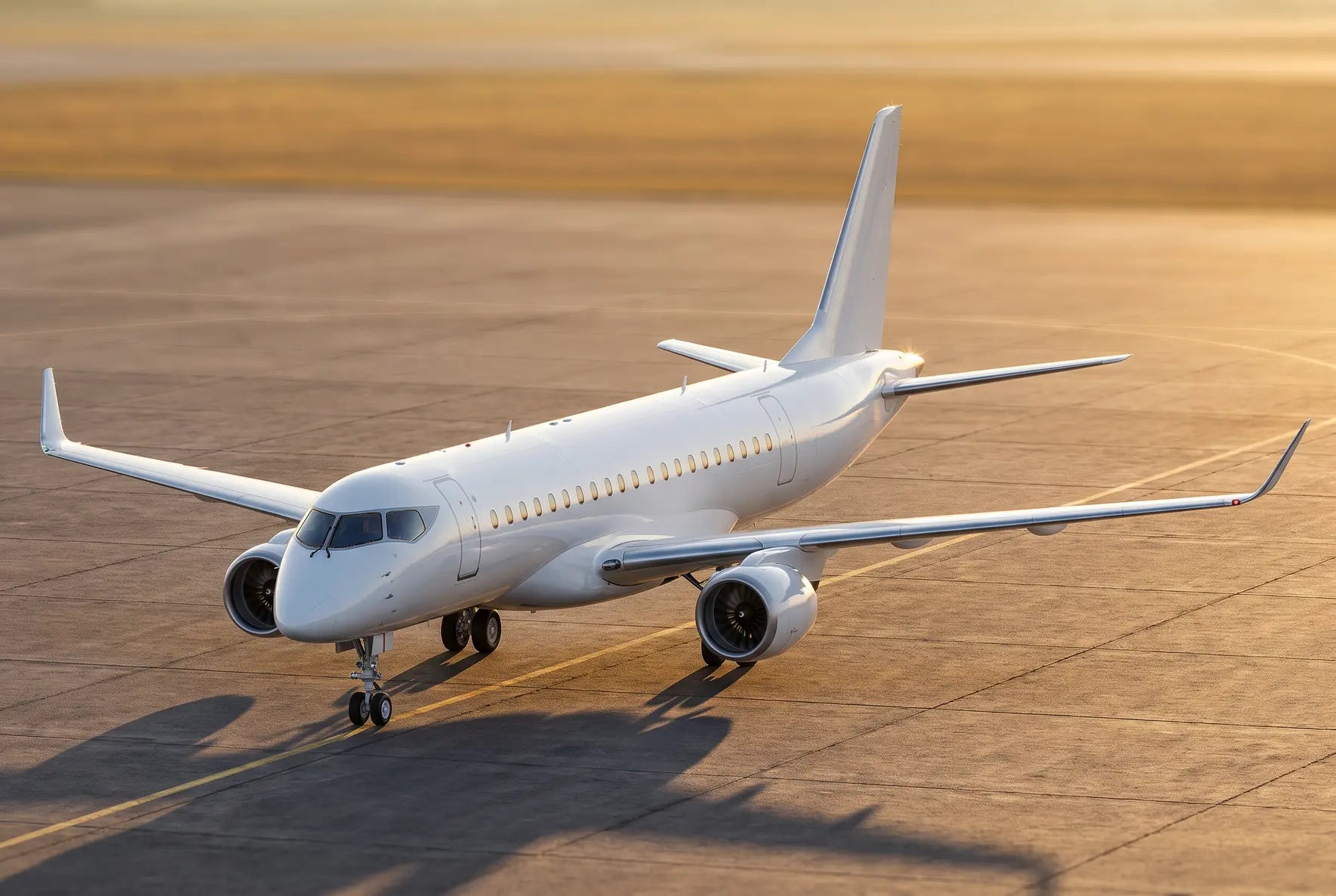
The Embraer E195-E2 is the largest member of the E-Jet E2 family, a second generation of narrow body regional jets designed and manufactured by Brazilian aerospace company Embraer S.A. Founded in 1969 in São José dos Campos, Brazil, Embraer has grown into the world's third largest civil aircraft manufacturer and a global leader in jets seating up to 150 passengers. With over 9,000 aircraft delivered across more than 100 countries, the company has played a defining role in shaping regional aviation. The E195-E2 represents the culmination of decades of expertise in designing right sized aircraft that bridge the gap between turboprops and large single aisle jets.
The original E-Jet family, comprising the E170, E175, E190, and E195, entered service between 2004 and 2006 and quickly became a commercial success, establishing Embraer as a serious competitor in the 70 to 124 seat market segment. However, as fuel prices rose and airlines demanded greater efficiency, Embraer began developing a successor program to keep its product line competitive against the Airbus A220 series and other emerging platforms.
The E-Jet E2 program was officially launched in June 2013 at the Paris Air Show, backed by a total investment of approximately US$1.7 billion. The program encompassed three variants: the E175-E2, E190-E2, and E195-E2, each sharing a common fuselage cross section but featuring new wings, new engines, and full fly by wire flight controls. Embraer targeted improvements of up to 25% in fuel efficiency per seat compared to the first generation E-Jets, alongside reductions in maintenance costs and noise emissions.
The first member of the family to fly was the E190-E2, which completed its maiden flight on 23 May 2016. It received type certification from Brazil's ANAC and from EASA on 28 February 2018, entering service with Norwegian carrier Widerøe on 24 April 2018.
The E195-E2, internally designated ERJ 190-400, followed closely behind. Its prototype was rolled out on 7 March 2017 at Embraer's facility in São José dos Campos. The aircraft completed its first flight on 29 March 2017, more than three months ahead of the original schedule, a testament to the maturity of the E2 platform. Two additional flight test prototypes joined the campaign later that year. The type underwent an extensive certification programme involving aerodynamic performance, systems integration, and engine validation.
In April 2019, the Embraer E195-E2 received simultaneous type certification from ANAC, the FAA, and EASA, clearing it for commercial operations worldwide. The EASA Type Certificate Data Sheet (TCDS IM.EMB-112) covers the aircraft under its official designation ERJ 190-400.
Brazilian carrier Azul Linhas Aéreas became the launch operator, receiving the first production E195-E2 on 12 September 2019 through lessor AerCap. The aircraft was configured with 136 seats in a single class layout, and it entered revenue service shortly after delivery.
Since its entry into service, the E195-E2 has attracted growing interest from airlines worldwide. In July 2021, Canada's Porter Airlines placed a landmark order for 30 E195-E2 aircraft (with options for 50 more), a deal that significantly boosted the programme's commercial momentum. Porter later achieved a major milestone by taking delivery of its 50th E195-E2 in December 2025. Other operators have since joined the fleet, including KLM Cityhopper and Mexicana, while U.S. carrier Avelo Airlines placed an order for 50 units with deliveries expected from 2028.
A significant upgrade was announced on 23 July 2024 at the Farnborough International Airshow, when Embraer revealed performance enhancements for the E195-E2. These included a 2.5% improvement in fuel burn, an increase in maximum take off weight (MTOW) to 62,500 kg, and an extended range of 3,000 nautical miles, up from the original 2,600 nm. These improvements reinforced the aircraft's competitiveness in the 120 to 150 seat market. In November 2023, the E195-E2 also received EASA certification for operations at London City Airport, becoming the largest aircraft approved to use that constrained airfield. Pilots preparing to fly the E195-E2 or any modern commercial aircraft can benefit from reviewing common pilot interview questions and preparation strategies, especially as new type ratings continue to grow in demand.
What Sets the Embraer E195-E2 Apart from Other Variants
Compared to its sibling, the E190-E2, the E195-E2 features a significantly longer fuselage at 41.5 metres (versus 36.2 metres), a wider wingspan of 35.1 metres (versus 33.7 metres), and a higher maximum seating capacity of up to 146 passengers. Both share the same Pratt & Whitney PW1900G geared turbofan engines, but the E195-E2 uses a higher thrust rating of approximately 23,000 lbf per engine compared to the E190-E2's 19,000 lbf setting. Against the original first generation E195, the E195-E2 delivers up to 25% lower fuel consumption per seat, replaces the General Electric CF34-10E engines with the PW1900G, swaps conventional flight controls for a full closed loop fly by wire system, and introduces the Honeywell Primus Epic based avionics suite with four large format displays and synthetic vision capability.
Key variant identifiers of the Embraer E195-E2 include:
- Official type designation: ERJ 190-400 (as per EASA and ANAC certification documentation)
- Engines: 2× Pratt & Whitney PW1900G geared turbofan, each rated at approximately 23,000 lbf thrust
- Wingspan: 35.1 m (115 ft 2 in), featuring new high aspect ratio wings with distinctive swept wingtips
- Fuselage length: 41.5 m (136 ft 2 in)
- MTOW: 62,500 kg (upgraded from initial 61,500 kg)
- Range: up to 3,000 nm (post 2024 upgrade, from original 2,600 nm)
- Seating capacity: 120 to 146 passengers depending on configuration
- Flight controls: full fly by wire with envelope protection
- Avionics: Honeywell Primus Epic (Prodigy Evolution) with SmartView synthetic vision

A Widerøe Embraer E190-E2 aircraft is pictured in flight. The plane, with green and white coloring and the registration LN-WEA, is captured against a cloudy sky.
Embraer E195-E2 Technical Specifications, Systems and Engine Overview
The Embraer E195-E2 is the largest member of the E-Jet E2 family, designed to bridge the gap between traditional regional jets and narrowbody single aisle aircraft. Its airframe incorporates a completely redesigned high aspect ratio wing, fourth generation fly-by-wire controls, and next generation geared turbofan engines, all aimed at reducing fuel burn per seat by approximately 24% compared to the first generation E195. The design philosophy balances range, payload, and short field performance, making the E195-E2 suitable for routes ranging from congested slot constrained airports to hot and high airfields in challenging environments.
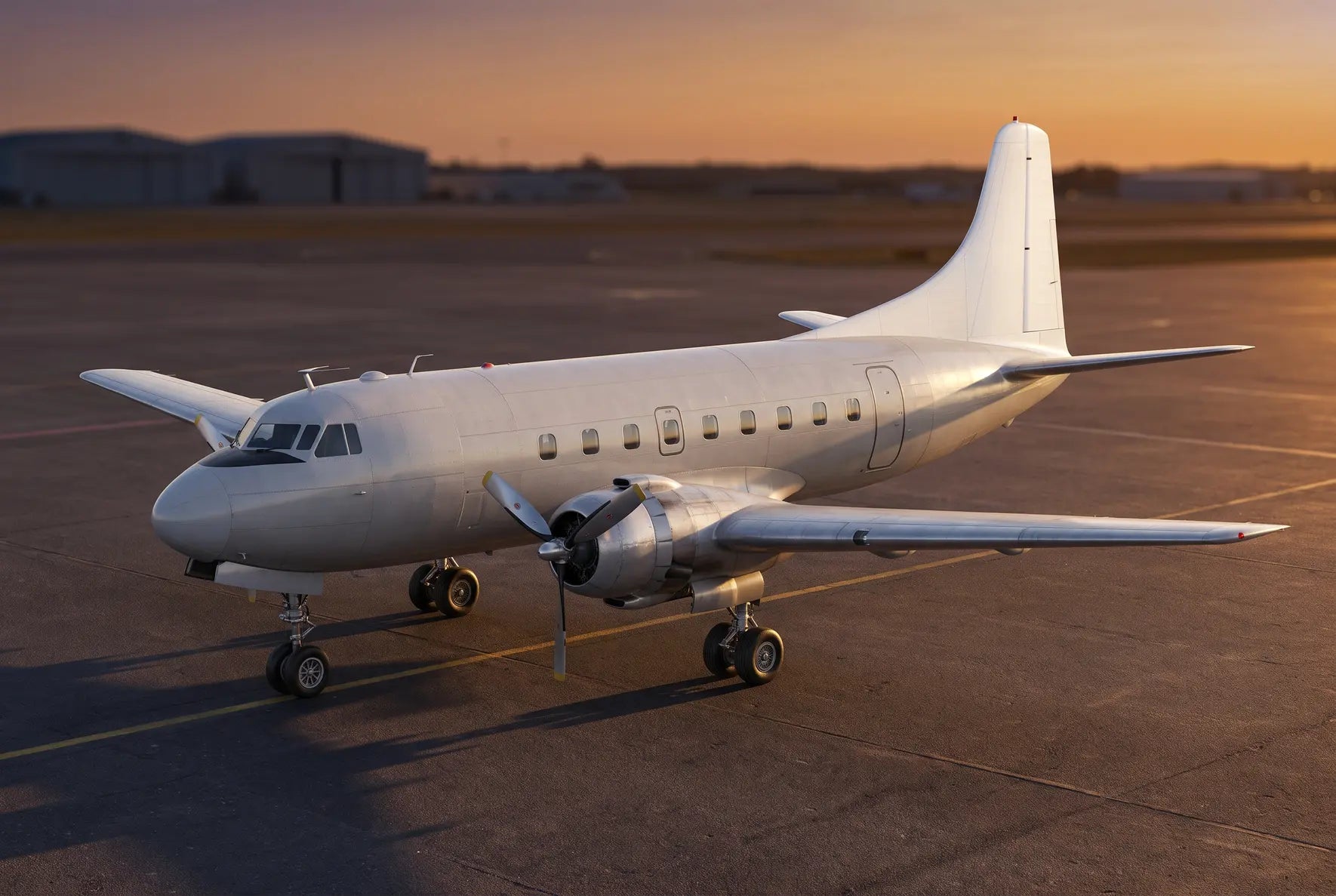
Embraer positioned the E195-E2 to seat between 120 and 146 passengers in a 2+2 single aisle layout, eliminating middle seats entirely. The aircraft inherits cockpit commonality across the E2 family, meaning pilots rated on one E2 variant can transition to another with minimal additional training. This design continuity extends to systems architecture, avionics, and maintenance philosophy, a factor that directly affects fleet economics for operators. Some of its operational characteristics echo those of earlier turboprops and regional aircraft that served similar thin route markets, such as the Fairchild Swearingen Metro II, though at a vastly different scale and level of technology.
- Length: 41.50 m (136.2 ft)
- Wingspan: 35.10 m (115.2 ft), with raked wingtips
- Height: 10.90 m (35.8 ft)
- Typical seating: 120 to 146 passengers (single class, depending on pitch)
- Maximum Takeoff Weight (MTOW): up to 62,500 kg (137,789 lb)
- Maximum Landing Weight (MLW): 54,000 kg (119,049 lb)
- Maximum payload: 16,150 kg (35,604 lb)
- Maximum usable fuel: 13,690 kg (30,181 lb)
- Range: up to 2,600 nm with full passenger load at long range cruise, typical reserves and 100 nm alternate (updated configurations quote up to 3,000 nm)
- Maximum cruise speed: Mach 0.82 (approximately 876 km/h at FL350)
- Service ceiling: 41,000 ft
- Takeoff field length: approximately 1,775 m (5,823 ft) at MTOW, ISA, sea level
- Engines: 2× Pratt & Whitney PW1919G geared turbofans, 19,000 to 23,300 lbf (85 to 104 kN) thrust per engine
- Avionics: Honeywell Primus Epic 2.0 integrated modular avionics suite
Systems Architecture and Handling Technology
The E195-E2 employs a fourth generation, full authority, closed loop fly-by-wire (FBW) flight control system supplied by Moog Inc., replacing all mechanical linkages with digital commands. This FBW architecture provides full envelope protection across all flight phases, automatically preventing the aircraft from exceeding structural or aerodynamic limits. It also enables a 26% reduction in horizontal stabiliser size compared to a conventionally controlled airframe, saving weight and drag while improving fuel efficiency. Embraer draws on its FBW experience from the Legacy 450/500 business jets and the KC-390 military transport in this implementation.
The Honeywell Primus Epic 2.0 avionics suite uses integrated modular avionics (IMA) architecture with landscape displays and an enhanced avionics standard communications bus (eASCB-D). This system connects to and monitors over 40,000 aircraft parameters, feeding data into Embraer's AHEAD (Aircraft Health and Early Detection) prognostic maintenance system. AHEAD enables predictive fault detection and supports efficient troubleshooting, with data transferred to operations teams via WiFi or cellular after each flight. An optional E2 Takeoff System (E2TS) is available, a fail-passive automatic rotation feature using three flight control computers and four air data sensors to optimise the takeoff pitch profile, reduce tail strike risk, and potentially shorten required field length.
Published performance figures for the E195-E2 can vary significantly between sources. Differences arise from operator selected cabin density, specific MTOW options, atmospheric assumptions (ISA versus hot and high conditions), runway surface and slope, reserve policies, and whether the quoted range refers to a maximum structural or a typical operational scenario. For this reason, values such as takeoff field length, range, and payload should always be understood in context and cross referenced with the applicable flight manual or operator documentation.
Pratt & Whitney PW1919G Geared Turbofan Engine
The E195-E2 is exclusively powered by two Pratt & Whitney PW1919G engines, part of the broader PW1000G geared turbofan (GTF) family. Pratt & Whitney began developing the core GTF concept in the late 1990s with the PW8000 demonstrator, eventually refining the technology into the production PW1000G series which entered commercial service in 2016. The defining innovation is a reduction gearbox (with a gear ratio of approximately 3:1) placed between the fan and the low pressure turbine, allowing each to spin at its optimal speed independently. This arrangement enables a high bypass ratio of around 12:1 and a large fan diameter of 81 inches (206 cm), while keeping the core compact and thermally efficient.
The PW1919G delivers between 19,000 and 23,300 lbf of thrust per engine, tailored specifically for the E195-E2's weight and mission profile. Pratt & Whitney quotes overall fuel consumption reductions of approximately 16% compared to previous generation engines of similar class, alongside a 75% reduction in noise footprint, meeting the most stringent current ICAO noise standards. Engine management is handled by a Full Authority Digital Engine Control (FADEC) system that optimises performance across all flight regimes.
The PW1000G family powers a wide range of aircraft beyond the E2 series. The PW1100G variant is one of two engine options on the Airbus A220 and A320neo families, while the PW1400G was selected for the Irkut MC-21, and the PW1200G was developed for the Mitsubishi SpaceJet regional jet programme. MTU Aero Engines and Japanese Aero Engines Corporation are among the key risk and revenue sharing partners in the GTF programme. Pratt & Whitney continues to develop the GTF Advantage evolution, targeting further fuel burn and durability improvements for future applications.
Embraer E-Jets E2 vs Airbus A220-300 Specifications Comparison
Scroll horizontally to see more →
| Parameter | Embraer E195-E2 | Embraer E190-E2 | Embraer E175-E2 | Airbus A220-300 |
|---|---|---|---|---|
| Entry into service | 2019 | 2018 | 2021 | 2016 |
| Engines | 2 × Pratt & Whitney PW1900G | 2 × Pratt & Whitney PW1900G | 2 × Pratt & Whitney PW1700G | 2 × Pratt & Whitney PW1500G |
| Length | 41.5 m | 36.2 m | 32.4 m | 38.7 m |
| Wingspan | 35.1 m | 35.1 m | 29.9 m | 35.1 m |
| Height | 10.9 m | 10.3 m | 9.7 m | 11.5 m |
| Typical seating and layout | 2-class: 120–146 passengers | 2-class: 106–114 passengers | 2-class: 80–88 passengers | 2-class: 130–160 passengers |
| MTOW | 62 t | 57 t | 40 t | 68 t |
| Range | 2,600 nm | 2,850 nm | 2,060 nm | 3,600 nm |
| Cruise speed | 0.82 Mach | 0.82 Mach | 0.82 Mach | 0.78 Mach |
| Service ceiling | 41,000 ft | 41,000 ft | 41,000 ft | 41,000 ft |
| Program note | Largest E2 variant, highest capacity regional jet with extended range | Mid-size E2 family member, balanced capacity and efficiency | Smallest E2, optimized for thin regional routes | Direct competitor, higher capacity with longer range |
Scroll horizontally to see more →
The table compares key specs of Embraer’s E195-E2, E190-E2 and E175-E2 against the Airbus A220-300. The E195-E2 is the longest E2 and offers 120–146 seats, while the A220-300 typically seats 130–160 and has the highest MTOW (68 t). The A220-300 also leads on range at 3,600 nm, versus 2,060–2,850 nm for the E2 family. All E2 variants cruise faster at Mach 0.82 vs Mach 0.78 for the A220.
Embraer E195-E2 Operations: Typical Routes, Missions and Airlines Worldwide
The Embraer E195-E2 is designed for short to medium haul operations, with a maximum range of 2,600 nautical miles (4,815 km) in its standard version and up to 3,000 nautical miles (5,556 km) following the performance upgrade announced in July 2024, which also improved fuel burn by 2.5%. In practice, most operators fly stage lengths of one to three hours on regional and domestic routes, although some airlines push the aircraft well beyond that envelope. Porter Airlines, for example, schedules daily transcontinental services across Canada lasting nearly five hours, such as Toronto Pearson to Vancouver (2,085 miles), while Air Peace flies Lagos to Johannesburg at over six hours, one of the longest scheduled E195-E2 sectors in the world.
Daily utilisation is high. Early operational data from the E2 programme showed the type averaging around 6.5 cycles per day during initial airline service, with stage lengths of roughly 1.28 hours. Maintenance intervals are longer than on the first generation E-Jet: basic inspections occur every 1,000 flight hours (up from 850) and intermediate checks every 10,000 hours (up from 8,500), helping to keep aircraft available for revenue flying. Embraer reports dispatch reliability figures above 99% in early service.
The aircraft suits both hub and spoke networks and point to point operations. Network carriers such as KLM Cityhopper feed passengers into Amsterdam Schiphol with multiple daily short hops, while leisure and low cost operators like TUI fly Belgium use the type on point to point routes from secondary airports, taking advantage of its ability to operate from shorter runways. The 2 plus 2 cabin cross section, with no middle seats, is a selling point for airlines competing on passenger comfort in the regional segment.
One notable operational challenge in 2023 and 2024 was the Pratt & Whitney PW1900G geared turbofan engine inspection programme. A powder metal contamination issue discovered across the broader PW1000G family required accelerated inspections, temporarily grounding some E2 aircraft and extending shop visit turnaround times. By early 2026, the situation had improved significantly, with Embraer confirming that all E2s were expected to return to flying status as spare engine availability increased.
Where the Embraer E195-E2 Operates Around the World
As of January 2026, 194 E2 family jets were in commercial service with 18 operators worldwide, with the E195-E2 accounting for the bulk of that fleet. The three largest operators are Porter Airlines (51 aircraft), Azul Brazilian Airlines, and KLM Cityhopper. The type has found a strong foothold in Europe, where it serves dense intra-continental networks, and in the Americas, where it covers everything from domestic shuttle routes to transcontinental missions. Presence in Africa and the Middle East is growing, while Asia Pacific orders signal future expansion in that region. Discussions among aviation professionals on platforms such as airline pilot forums often highlight the E195-E2 as one of the most sought after regional types for career progression.
- Europe: KLM Cityhopper operates 25 E195-E2s from Amsterdam Schiphol, feeding the KLM long haul network with high frequency short haul services across the continent. Binter Canarias uses the type for inter island and international routes from the Canary Islands, including services to West Africa. Helvetic Airways has ordered up to eight aircraft (first delivery expected late 2026) configured with 134 seats for European regional operations out of Zürich. Luxair ordered six E195-E2s with deliveries between 2026 and 2027 for hub operations from Luxembourg. LOT Polish Airlines also operates the type on European routes. TUI fly Belgium deploys E195-E2s on leisure routes from Belgian airports.
- North and South America: Porter Airlines is the world's largest E195-E2 operator, with 51 aircraft in service and firm orders for 75 (plus purchase rights for 25 more). The carrier flies an extensive point to point network across Canada and into the United States, including transcontinental routes of nearly five hours. Azul Brazilian Airlines was the launch customer in 2019 and operates the type on domestic and regional routes throughout Brazil. LATAM Airlines ordered 24 E195-E2s plus 50 options in 2025, with deliveries starting in the second half of 2026 to strengthen domestic and regional networks. Avelo Airlines placed a firm order for 50 aircraft (plus 50 options), aiming to become the first United States operator of the type from 2028.
- Asia Pacific: Scoot, the low cost subsidiary of Singapore Airlines, has nine E195-E2s on order, signalling the type's entry into the Southeast Asian market for short haul operations. Detailed delivery timelines have not yet been publicly confirmed.
- Africa and Middle East: Airlink in South Africa finalised a lease for 10 new E195-E2s via Azorra, with deliveries running through 2027, expanding its regional network across southern Africa. Air Peace in Nigeria operates the type on domestic routes and on international services including the Lagos to Johannesburg sector. Royal Jordanian has taken delivery of E195-E2s for regional hub operations from Amman.
Typical Seating Configurations on the Embraer E195-E2
The Embraer E195-E2 holds a maximum certified capacity of 146 passengers, but in practice airlines configure between 119 and 136 seats. The cabin features a 2 plus 2 layout throughout, with seat widths of approximately 18.3 inches (46.5 cm), eliminating the middle seat found on larger single aisle jets. This layout is consistent across all operators and is one of the type's key commercial differentiators.
Network carriers tend to offer a multi class product. KLM Cityhopper initially configured its fleet with 132 seats across three branded cabins: Europe Business Class in the forward rows (same 2 plus 2 seats with the adjacent seat blocked), Economy Comfort with 84 cm (33 inch) pitch, and Economy Class at 74 to 76 cm (29 to 30 inches). All 22 aircraft are being retrofitted to 136 seats by June 2026. Royal Jordanian offers a two class layout with 119 total seats, including a dedicated business cabin.
Single class operators favour denser configurations. Azul seats 136 passengers in economy, with the first five rows marketed as Azul Space (extra legroom). Porter Airlines configures 132 seats in a single class, branding the forward rows as Porter Reserve and several additional rows as PorterClassic Stretch for extra pitch. Airlink in South Africa also seats 136 passengers at a 30 inch pitch, with additional legroom in the first five rows and emergency exit rows. Leisure carriers generally follow a similar high density approach, maximising the cabin within the comfort parameters of the 2 plus 2 cross section.
In this video, discover Porter’s E2 strategy and why the E195-E2 stands out as the most fuel-efficient single-aisle aircraft, supporting an airline that is expanding rapidly with a perfect platform for growth.
Embraer E195-E2 Safety Record: How Safe Is This Aircraft?
The Embraer E195-E2 holds one of the strongest safety records in commercial aviation. Since entering revenue service with Widerøe in April 2019, the type has accumulated thousands of flights across more than a dozen operators worldwide, with no hull losses, no fatal accidents, and no passenger fatalities. As of early 2026, over 140 E195-E2 aircraft are in active service with carriers including Azul, Porter Airlines, KLM Cityhopper, and Binter Canarias. The Aviation Safety Network database confirms that every recorded event involving the E195-E2 has been a minor incident, with no aircraft written off and no occupants seriously injured. In a global fleet context where more than 40 million commercial flights are operated each year, this clean record underscores the maturity and reliability of the E Jet E2 platform.
Notable Incidents and Lessons Learned
Although the Embraer E195-E2 has not been involved in any accident resulting in hull loss or fatalities, a small number of incidents have been documented. Each event provided valuable insights for operators, regulators, and the manufacturer.
- KLM Cityhopper, Berlin Brandenburg, September 2021 – A serious incident occurred when both pilots of PH-NXD independently selected the wrong runway intersection on a touchscreen electronic flight bag (EFB) application before departing runway 25R. The performance calculations were based on a longer available runway distance, resulting in reduced thrust and a higher rotation speed. The aircraft became airborne only 144 metres from the runway end. None of the 92 passengers and five crew members were injured and the aircraft sustained no damage. The Dutch Safety Board investigation identified touchscreen interface design and a lack of visual confirmation feedback as contributing factors. The report led to recommendations for improved EFB selection verification, enhanced crew cross check procedures, and updated training modules addressing touchscreen input errors in multi variant fleet operations.
- Azul Linhas Aéreas, Florianópolis, August 2024 – Embraer E195-E2 PS-AEM (flight AD4225) experienced ruptured tires on both left main landing gear wheels during landing at Florianópolis Airport. The runway was temporarily closed while the aircraft was inspected. All passengers and crew disembarked safely without injury. Brazil's CENIPA opened an investigation. Tire events of this nature are rare across all aircraft types and do not reflect a systemic design concern.
- Porter Airlines, en route events, 2023 and 2024 – Two minor incidents were recorded on the same aircraft (C-GKQP). In September 2023, the crew managed an in flight technical indication while operating from Toronto to St. John's; the flight continued to its destination without further issue. In January 2024, a precautionary runway inspection was carried out after landing at Toronto due to a potential brake overheat indication. No damage or injuries resulted from either event.
- Air Peace, Lagos, December 2025 – An E195-E2 (5N-BYH) was struck by a baggage loader while on the ground at Lagos Airport. Damage was minor and the event was classified as a ground handling incident, not a flight safety occurrence.
None of these events resulted in fatalities or significant aircraft damage. Where formal investigations were conducted, the findings focused on human factors, ground procedures, and software interface design rather than structural or aerodynamic shortcomings of the aircraft itself.
How Safe Is the Embraer E195-E2?
The E195-E2 benefits from a modern design philosophy built around multiple layers of protection. Its closed loop fly by wire flight control system incorporates full flight envelope protection, three independent flight control computers, and four air data sensors. The aircraft is powered by two Pratt & Whitney PW1900G geared turbofan engines managed by full authority digital engine control (FADEC), ensuring precise thrust response across all operating conditions. Embraer has also developed the optional E2 Takeoff System (E2TS), an automated rotation feature designed to optimise pitch during departure, prevent tail strikes, and improve takeoff performance. The type holds full type certification from EASA and the FAA, as well as from ANAC (Brazil), Transport Canada, and other national authorities.
When measured against industry wide statistics, the E195-E2's record stands out. According to the IATA 2024 Safety Report, the global all accident rate stood at 1.13 per million flights, with seven fatal accidents recorded across 40.6 million departures. The E195-E2 has recorded zero fatal events since entering service. Its operators follow rigorous standard operating procedures (SOPs) under continuous oversight from regulators such as EASA, the FAA, and national civil aviation authorities. Modern fleet monitoring tools, including Embraer's Ahead Pro predictive maintenance platform, allow airlines to detect anomalies early and address them before they become safety issues.
The global demand for qualified pilots has also prompted operators of the E195-E2 to invest in comprehensive type rating and recurrent training programmes, ensuring that flight crews are well prepared for normal and abnormal situations. This combination of advanced engineering, strict regulatory oversight, thorough pilot training, and proactive maintenance makes the Embraer E195-E2 one of the safest commercial aircraft operating today. As the broader data consistently confirms, commercial aviation remains the safest form of mass transportation in the world.
01 What is the range of the Embraer E195-E2?
The Embraer E195-E2 has a maximum range of up to 3,000 nautical miles with full passengers, typical reserves, and a 100 nm alternate, following recent performance upgrades. This allows non-stop flights across North America or to many European destinations from regional hubs. Range varies with payload, weather, and configuration, often around 2,600 nm in standard operations.
02 What airlines operate the Embraer E195-E2 and on what routes?
Porter Airlines uses the Embraer E195-E2 for non-stop flights to cities across North America. KLM operates it on European regional routes, while Widerøe flies short-haul missions in Norway averaging 1.28 hours. It suits high-frequency regional and short-to-medium haul networks with stage lengths from 500 nm to transcontinental.
03 How fuel-efficient is the Embraer E195-E2 compared to similar aircraft?
The Embraer E195-E2 achieves up to 24% less fuel burn than the original E195 thanks to Pratt & Whitney PW1900G geared turbofan engines with a 12:1 bypass ratio. Recent upgrades improved fuel efficiency by another 2.5%, outperforming competitors on regional routes. Redesigned wings reduce drag, enhancing overall performance.
04 What is the cabin like on the Embraer E195-E2?
The Embraer E195-E2 seats 120 to 146 passengers depending on configuration, with options for three-class or high-density single-class layouts. It features larger windows, improved overhead bins, and a quieter cabin due to geared turbofan engines. Passenger comfort benefits from a spacious feel in its regional jet class.
05 What is the safety record of the Embraer E195-E2?
The Embraer E195-E2 has an excellent dispatch reliability above 99% in early operations, with Widerøe reporting 98.5% after one year. It holds ETOPS 120 approval from regulators, enabling twin-engine extended operations. Key design features include advanced aerodynamics and noise margins exceeding Stage 4 standards by 20 EPNdB.
06 How does the Embraer E195-E2 perform in turbulence and for seat selection?
The Embraer E195-E2 climbs quickly at up to 2,500 ft per minute to 41,000 ft, spending less time in lower turbulence layers. Its stable wing design and high service ceiling help smooth rides on regional routes. For seats, choose rows near the wings for minimal motion, with all seats offering good window views due to larger panes.