

Boeing 777-200: History, Program Launch, and Development of the Original Triple Seven
The Boeing 777-200 emerged from a gap in the Boeing commercial lineup during the late 1980s. At the time, Boeing needed a widebody twinjet to sit between the 767 and the 747, capable of serving high capacity domestic and medium to long haul international routes with twin engine efficiency. Studies for a larger derivative of the 767 began in 1986, but Boeing ultimately decided to develop an entirely new aircraft. That decision gave birth to the 777 program and its first variant, the 777-200.
Boeing adopted a groundbreaking collaborative approach known as "Working Together", inviting eight major airlines to participate directly in the design process. All Nippon Airways, American Airlines, British Airways, Cathay Pacific, Delta Air Lines, Japan Airlines, Qantas, and United Airlines each contributed operational requirements through structured workshops. The first meeting took place in January 1990, during which Boeing circulated a 23 page questionnaire to establish baseline specifications. Input from these carriers shaped critical decisions, from cabin cross section width and interior flexibility to range targets and cockpit layout. This process marked a significant shift in how commercial aircraft were conceived, placing airline operators at the centre of the engineering cycle.
On 29 October 1990, Boeing officially launched the 777 program when United Airlines placed the inaugural order for 34 aircraft, valued at approximately $4 billion at list prices. By 1993, 118 orders from 10 airlines had been secured, confirming strong market demand for the new twinjet.
Design Innovations and Key Milestones
The Boeing 777-200 introduced several firsts for a commercial widebody aircraft. It was the first commercial airliner designed entirely using computer aided design (Dassault Systèmes CATIA software), eliminating the need for a physical mock up. It was also Boeing's first fly by wire aircraft, featuring a digital flight control system while retaining conventional control yokes rather than sidesticks. The glass cockpit used Honeywell LCD displays and integrated a fibre optic avionics network, technologies partly derived from the cancelled Boeing 7J7 program.
Major assembly began on 4 January 1993 at Boeing's Everett factory in Washington state, the largest building by volume in the world. The first aircraft (line number WA001) rolled out on 9 April 1994 and completed its maiden flight on 12 June 1994 from Paine Field, piloted by chief test pilot John E. Cashman and co pilot Kenny Higgins. An 11 month flight test campaign followed, using nine aircraft fitted with all three available engine types and logging thousands of hours across diverse environments worldwide.
The FAA granted type certification on 19 April 1995 (Type Certificate A16WE). Notably, the 777-200 received ETOPS 180 approval at entry into service, a first for any airliner, permitting transoceanic operations up to 180 minutes from a diversion airport on a single engine. Boeing delivered the first production aircraft to United Airlines on 15 May 1995. Revenue service began on 7 June 1995, with United operating the type on the London Heathrow to Washington Dulles route. British Airways received its GE90 powered example on 12 November 1995, and Thai Airways took delivery of the first Rolls Royce Trent powered variant on 31 March 1996.
A folding wingtip option was developed during the design phase to improve gate compatibility at constrained airports, but no airline ever ordered this feature on the baseline 777-200.
What Sets the Boeing 777-200 Apart from Later Variants
The baseline 777-200 was optimised for medium to long haul routes and offered lower operating weights compared to subsequent derivatives. It filled a specific market niche for carriers needing high capacity twin aisle service without the fuel load and structural reinforcement required for ultra long range missions. Understanding how flight operations differ across aircraft types is part of the daily life of an airline pilot, where crews adapt to each variant's unique performance envelope.
The 777-200ER (Extended Range), which first flew on 7 October 1996, introduced a significantly higher maximum takeoff weight of up to 656,000 lb (297,550 kg) and additional fuel capacity of 45,220 US gallons, extending range to approximately 7,725 nautical miles. The 777-300, first delivered in 1998, stretched the fuselage from 209 ft to 242 ft, accommodating roughly 100 additional passengers but retaining the same wing and engine options as the 777-200ER. Second generation variants such as the 777-200LR and 777-300ER later introduced raked wingtips and exclusive GE90 engines producing up to 115,300 lbf of thrust.
The following summary highlights the verified identifiers of the baseline Boeing 777-200:
- Engine options: General Electric GE90 77B, Pratt & Whitney PW4077, Rolls Royce Trent 877, each rated at approximately 77,000 lbf (343 kN)
- Maximum takeoff weight: 545,000 lb (247,200 kg)
- Design range: 5,240 nautical miles (9,700 km) with 305 passengers in a three class layout
- Fuel capacity: 31,000 US gallons (117,340 litres)
- Fuselage length: 209 ft 1 in (63.7 m)
- Wingspan: 199 ft 11 in (60.9 m)
- Wingtip type: Conventional (no raked wingtips)
- ETOPS rating: 180 minutes at entry into service
- Total delivered: 88 aircraft
Boeing ceased production of the baseline 777-200 as demand shifted towards the extended range 777-200ER and later variants, which offered airlines greater operational flexibility for expanding global route networks.

A Cathay Pacific Boeing 777-200 is captured in flight against a clear blue sky. The aircraft is prominently displaying its livery and registration number as it soars upwards.
Boeing 777-200 Technical Specifications, Systems Architecture and Engine Options
The Boeing 777-200 was conceived as a long range, high capacity widebody twinjet designed to fill the gap between the 767 and the 747. As the baseline variant of the 777 family, it targeted transcontinental and medium haul international routes, balancing passenger capacity with fuel efficiency. The airframe introduced several firsts for Boeing: it was the first commercial airplane designed entirely using computer aided design (CATIA), and the first Boeing jetliner to feature a fully digital fly by wire flight control system. With a fuselage cross section of 6.20 m (20 ft 4 in) in external diameter and a cabin interior width of 5.86 m (19 ft 3 in), the 777-200 offered the widest cabin of any twinjet at the time of its introduction, typically configured for nine or ten abreast seating in economy class.
The design philosophy prioritised range versatility and operational flexibility. Airlines could select from multiple maximum takeoff weight (MTOW) options and three competing engine families, allowing operators to tailor the aircraft to their specific route networks. This approach, combined with early ETOPS (Extended range Twin engine Operational Performance Standards) certification, made the 777-200 a practical replacement for older trijets such as the DC-10 and L-1011 on overwater routes. While much larger in scope, the principle of matching engine choice and airframe weight to mission requirements is a universal thread in transport aircraft design, visible even in earlier programmes like the Antonov An-10.
- Overall length: 63.7 m (209 ft 1 in)
- Wingspan: 60.93 m (199 ft 11 in), no winglets on original variant
- Height: 18.5 m (60 ft 9 in)
- Fuselage external diameter: 6.20 m (20 ft 4 in)
- Cabin width: 5.86 m (19 ft 3 in)
- Typical MTOW: 229,510 kg (506,000 lb) to 247,200 kg (545,000 lb), depending on engine and weight option selected
- Design range: up to 5,240 nmi (9,700 km) with full passenger payload in a three class configuration, per Boeing published data
- Cruise speed: Mach 0.84 (typical long range cruise)
- Initial cruise altitude: approximately 35,000 to 39,300 ft (MTOW, ISA +10 °C), depending on weight option
- Landing field length (at MLW): approximately 1,565 m (5,150 ft)
- Engines (three options): General Electric GE90-77B (77,000 lbf), Pratt & Whitney PW4077 (77,000 lbf), or Rolls-Royce Trent 875/877 (75,000 to 77,000 lbf)
- Hydraulic systems: three fully independent systems (left, centre, right)
- Avionics baseline: Honeywell Airplane Information Management System (AIMS) with six screen flat panel flight deck
Fly by Wire Systems and Handling Technology
The 777 was Boeing's first production aircraft to replace mechanical control linkages with a fully digital fly by wire (FBW) architecture. The system relies on three Primary Flight Computers (PFCs) and four Actuator Control Electronics (ACE) units. Each PFC contains three independent computing lanes, giving a total of nine computing channels for redundancy. The ACEs translate pilot inputs from the control column and rudder pedals into digital signals transmitted over ARINC 629 data buses, which the PFCs process to command hydraulic actuators on each control surface. Two hydraulic actuators control each elevator, aileron, and flaperon panel, while the rudder is driven by three actuators. All actuators on a given surface remain powered at all times, eliminating force fight between active and standby units.
The control law design provides envelope protection features including bank angle limiting, stall protection, overspeed protection, and thrust asymmetry compensation. Unlike some competing implementations, the Boeing philosophy preserves the pilot's ability to override protections if required. In Normal mode, full flight control functionality is available; if faults occur, the system degrades gracefully through Secondary and Direct modes. The flight deck also features backdrive actuators that physically move the control column during autopilot operation, providing tactile feedback to the crew. The braking system uses carbon brakes with a digital anti skid system, managed through the same hydraulic architecture.
Published performance figures for the 777-200 can vary significantly depending on operator selected options such as MTOW, cabin configuration, cargo loading, and atmospheric assumptions (e.g., ISA versus ISA +10 °C or ISA +15 °C). Takeoff field length, for example, is highly sensitive to runway elevation, ambient temperature, and actual takeoff weight. Range values quoted by Boeing assume full passenger payload at a specific MTOW, but airline operating ranges will differ based on actual seat count, cargo load, and reserve fuel policies. Any comparison between variants or operators should account for these variables.
Engine Options: GE90, PW4000, and Trent 800
The Boeing 777-200 was offered with a choice of three engine families, each developed specifically for the 777 programme in the 77,000 to 98,000 lbf thrust class. This three way competition was a defining feature of the original 777 programme.
The General Electric GE90 was developed from the ground up for the 777, with the early GE90-77B variant producing 77,000 lbf of takeoff thrust. The GE90 features a fan diameter of 123 inches and a bypass ratio of approximately 8.7:1, making it among the largest turbofans of its era. Its architecture includes a 10 stage high pressure compressor and an annular combustor. GE Aerospace later developed higher thrust GE90 variants (up to the record setting GE90-115B at 115,300 lbf) for second generation 777 models. The GE90 family is used exclusively on the Boeing 777 and has never powered any other aircraft type.
The Pratt & Whitney PW4000 112 inch fan series was the second major derivative of the PW4000 family, following the earlier 94 inch fan version used on the 747-400, 767, MD-11, and A300/A310. Development of the 112 inch variant began in 1990, with the PW4084 achieving first run in 1993 and entering service in 1995. For the 777-200 base, the PW4077 delivered 77,000 lbf of thrust. The PW4000 112 inch fan models feature hollow titanium fan blades, FADEC (Full Authority Digital Engine Control), and were designed for extended ETOPS operations. Like the GE90 and Trent 800, the PW4000 112 inch fan series was developed exclusively for the Boeing 777.
The Rolls-Royce Trent 800 continued the three spool architecture of the RB211 family, with a 110 inch diameter fan. It was offered in a thrust range from 75,000 to 95,000 lbf with a common engine build standard, giving operators the widest thrust flexibility of the three options. The Trent 875 and Trent 877 were the variants typically associated with the 777-200 base, rated at 75,000 and 77,000 lbf respectively. The Trent 800 incorporates FADEC and a wide chord fan design. According to Rolls-Royce, the Trent 800 is used exclusively on the Boeing 777 family (777-200, 777-200ER, and 777-300).
Boeing 777-200 vs 777-300 vs 777-200ER vs 787-9 Specifications Comparison
Scroll horizontally to see more →
| Parameter | Boeing 777-200 | Boeing 777-300 | Boeing 777-200ER | Boeing 787-9 |
|---|---|---|---|---|
| Entry into service | 1995 | 1998 | 1997 | 2014 |
| Engines | 2 × GE90-77B / PW4074 / RR Trent 800 | 2 × GE90-94B / PW4090 / RR Trent 892 | 2 × GE90-92B / PW4077 / RR Trent 892 | 2 × GE GEnx-1B / RR Trent 1000 |
| Length | 63.7 m | 73.9 m | 63.7 m | 62.8 m |
| Wingspan | 60.9 m | 60.9 m | 60.9 m | 60.1 m |
| Height | 18.5 m | 18.5 m | 18.5 m | 17.0 m |
| Typical seating and layout | 3-class: 300–314 passengers | 3-class: 368–386 passengers | 3-class: 301–314 passengers | 3-class: 290–330 passengers |
| MTOW | 297 t | 352 t | 297 t | 254 t |
| Range | 7,725 nm | 6,645 nm | 14,125 nm | 7,635 nm |
| Cruise speed | 0.84 Mach | 0.84 Mach | 0.84 Mach | 0.85 Mach |
| Service ceiling | 43,100 ft | 43,100 ft | 43,100 ft | 43,000 ft |
| Program note | Original baseline long-range twin-aisle widebody | Stretched higher-capacity variant for dense routes | Extended-range version for transoceanic flights | Composite modern twin-aisle with fuel efficiency focus |
Scroll horizontally to see more →
The table compares core specs of the Boeing 777-200, 777-300, 777-200ER and 787-9, highlighting size, capacity, performance and role. The 777-300 is much longer and seats more, but trades range versus the baseline. The 777-200ER is the long-range outlier with the highest stated range. The 787-9 is slightly smaller, lighter in MTOW and a bit faster, reflecting a newer efficiency-focused design.
Boeing 777-200 Operations: Typical Routes, Missions and Airlines Worldwide
The Boeing 777-200, along with its extended range 777-200ER and ultra long range 777-200LR variants, was designed to serve medium to long haul routes connecting major international hubs. With a design range of approximately 5,240 nautical miles for the base model and up to 7,725 nautical miles for the 777-200ER, this widebody twin aisle aircraft bridges the gap between smaller twin aisle jets like the 767 and larger aircraft such as the 747. Typical missions range from 6 to 15 hours depending on the variant and route, covering everything from transcontinental domestic flights to full intercontinental services across the Atlantic and Pacific oceans.
Airlines typically deploy the Boeing 777-200 in hub and spoke networks, funnelling passengers through large international gateways such as London Heathrow, Dubai, New York JFK, Tokyo Narita, and Paris Charles de Gaulle. However, it also excels on high demand point to point routes where its twin engine efficiency provides an advantage over four engine alternatives. According to Boeing 777 data compiled on Wikipedia, the 777 family maintains a dispatch reliability rate above 99%, making it one of the most dependable widebody platforms in commercial aviation. Long haul operators commonly achieve 12 to 14 daily block hours on intercontinental rotations, although aircraft assigned to shorter domestic or regional routes may fly more sectors at lower total hours. The type operates comfortably from major international airports with long runways, though the 777-200ER's flexible performance also allows it to serve secondary long haul airports when demand justifies widebody capacity.
Where the Boeing 777-200 Operates Around the World
The Boeing 777-200 family serves airlines across all major aviation markets. In Europe, network carriers rely on it as a long haul workhorse connecting their hubs to North America, Asia, Africa, and the Middle East. In the Americas, the type covers both transcontinental domestic routes and intercontinental services from east coast and west coast gateways. Across Asia, airlines use it on dense intra regional corridors and ultra long haul links to Europe and North America. In Africa and the Middle East, the aircraft connects growing hubs to the global network, while some carriers also use the 777-200LR on routes where its exceptional range is essential.
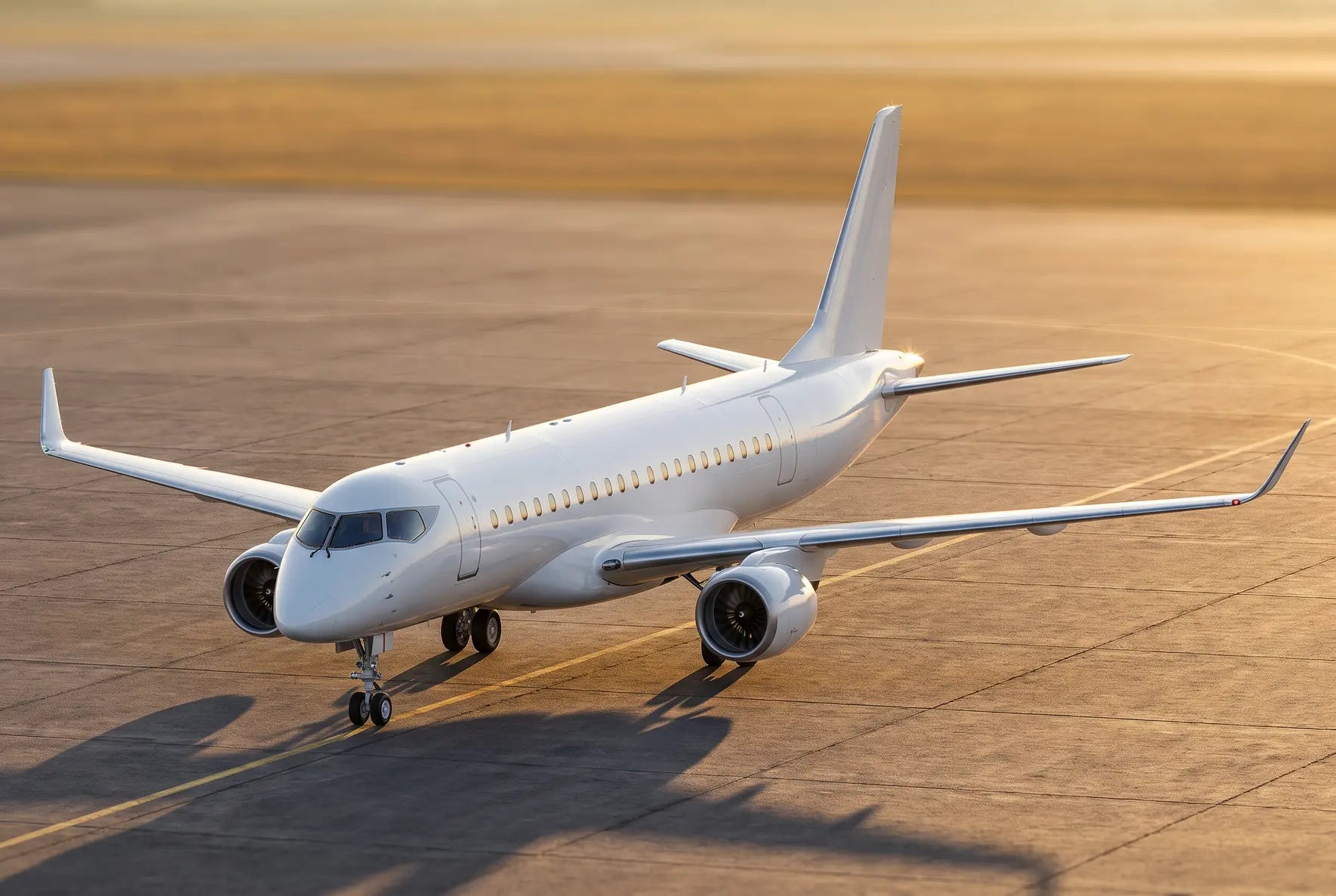
Although many first generation 777-200s have been retired or placed in storage, the 777-200ER remains widely active. Airlines are gradually replacing older frames with the Boeing 787 Dreamliner or the upcoming 777X, but the type will continue to serve in large numbers for years to come. For a look at how regional jets complement widebody operations at smaller airports that feed into these global networks, see this overview of the Embraer E175.
- Europe: British Airways operates 43 Boeing 777-200ER aircraft from London Heathrow on routes spanning North America, Asia, Africa, and the Middle East, making it one of the largest European operators. Air France flies 18 777-200ERs from Paris Charles de Gaulle on its long haul network. KLM uses the 777-200ER from Amsterdam Schiphol for intercontinental services in a three class layout. Austrian Airlines deploys its 777-200ER fleet on long haul routes including Vienna to destinations such as Chicago and Mauritius. El Al operates six 777-200ERs and is currently retrofitting them with updated cabins.
- North & South America: American Airlines operates 47 Boeing 777-200ERs, its largest twin aisle subfleet, on routes from Dallas Fort Worth, Miami, and other hubs to Europe, Asia, and South America. United Airlines flies 45 777-200ERs and 13 original 777-200s; the older frames increasingly serve domestic routes such as Newark to Los Angeles and San Francisco as well as Hawaii services. Historically, Varig of Brazil was a notable South American operator before ceasing operations.
- Asia: Korean Air includes the 777-200ER in its fleet of 41 Boeing 777 family aircraft, serving long haul routes from Seoul Incheon. All Nippon Airways uniquely operates its remaining 777-200s on high density domestic routes within Japan, seating up to 405 passengers. Malaysia Airlines has operated the 777-200ER on routes from Kuala Lumpur. Air India uses 777-200LRs on demanding long haul routes from Delhi and Mumbai. Cathay Pacific has historically been one of the largest 777-200 operators from its Hong Kong hub.
- Africa & Middle East: Emirates operates 10 Boeing 777-200LR aircraft from Dubai on specialist ultra long range routes, having invested $150 million in reconfiguring their cabins. Ethiopian Airlines flies six 777-200ERs on intercontinental services from Addis Ababa to Europe, Asia, and other African destinations. EgyptAir includes two 777-200ERs in its fleet. Kenya Airways also operates the 777 family on long haul routes from Nairobi.
Typical Seating Configurations on the Boeing 777-200
Boeing designed the 777-200 fuselage to accommodate nine or ten abreast seating in economy class, giving airlines significant flexibility in cabin layout. According to Boeing's official specifications, the typical three class arrangement seats 301 passengers. In practice, total seat counts vary widely depending on the operator's strategy, ranging from around 270 in premium heavy configurations to over 400 in high density layouts.
Network carriers focused on international long haul flying typically install three or four cabin classes. American Airlines fits 273 seats across Flagship Business (1 2 1), Premium Economy (2 3 2), and Main Cabin (3 3 3). British Airways offers up to 336 seats in three or four class configurations depending on the route. Air France configures its 777-200 with 328 seats. KLM arranges its 777-200ER in World Business Class (2 2 2), Premium Comfort (2 4 2), and Economy (3 4 3) with seat pitch ranging from 79 cm in economy to full flat beds in business. Meanwhile, operators focused on shorter or domestic routes opt for higher density: ANA seats 405 passengers on its domestic 777-200s with just 21 premium class seats and 384 in economy at 3 4 3 abreast. This contrast between premium international and high density domestic configurations illustrates how versatile the Boeing 777-200 cabin remains across different market segments.
In this video, watch a long-haul economy class review of United Airlines Boeing 777-200 flight N782UA from Munich to Washington, DC on January 30, 2023, plus practical tips for securing extra legroom.
Boeing 777 200 Safety Record: Accidents, Incidents and How Safe Is It?
The Boeing 777 200 entered commercial service with United Airlines in June 1995 and has since accumulated more than three decades of operational history. Across the entire 777 family, Boeing has delivered over 1,780 aircraft to nearly 100 airlines worldwide, carrying an estimated four billion passengers over 49 billion miles. The 777 200 and its extended range counterpart, the 777 200ER, account for around 510 of those deliveries. As of May 2024, the 777 programme has recorded 31 aviation accidents and incidents across all variants, resulting in eight hull losses, five of which involved fatal outcomes and a combined total of 542 fatalities. When measured against the sheer volume of flights, cycles and hours logged over more than 30 years, these figures reflect a remarkably low accident rate for a widebody aircraft of this generation.
Major Accidents and Incidents Involving the Boeing 777 200
British Airways Flight 38 (January 2008) — A 777 200ER operating from Beijing to London Heathrow experienced a dual engine rollback on short final approach. Both Rolls Royce Trent 800 engines lost thrust due to ice crystal accumulation in the fuel oil heat exchangers, a phenomenon triggered by prolonged cruise at extremely cold temperatures. The aircraft landed approximately 330 metres short of runway 27L. All 152 occupants survived, though 47 sustained injuries. The UK Air Accidents Investigation Branch (AAIB) investigation led to redesigned fuel oil heat exchangers on Trent 800 powered 777s and revised cold weather fuel management procedures industry wide.
Asiana Airlines Flight 214 (July 2013) — A 777 200ER struck the seawall short of runway 28L at San Francisco International Airport during a visual approach. Three passengers lost their lives and 187 were injured out of 307 people on board. The NTSB determined that the probable cause was the flight crew's mismanagement of the approach descent rate and airspeed, compounded by inadequate monitoring of the autothrottle system. The investigation yielded 28 safety recommendations, including enhanced simulator training for low energy approaches, improved cockpit alerting for unstabilised approaches and strengthened crew resource management programmes.
Malaysia Airlines Flight 370 (March 2014) — A 777 200ER carrying 239 people disappeared during a flight from Kuala Lumpur to Beijing. Despite the largest search operation in aviation history, the main wreckage and flight recorders have not been located. Confirmed debris recovered from the western Indian Ocean established that the aircraft was lost at sea. Although the cause remains undetermined, MH370 prompted sweeping changes to global flight tracking. ICAO adopted new Annex 6 standards mandating that airlines report aircraft positions at least every 15 minutes, with one minute intervals required when abnormal conditions are detected. These requirements form part of the Global Aeronautical Distress and Safety System (GADSS).
Malaysia Airlines Flight 17 (July 2014) — A 777 200ER was destroyed while cruising at 33,000 feet over eastern Ukraine en route from Amsterdam to Kuala Lumpur. All 298 people on board perished. The Dutch Safety Board concluded that the aircraft was struck by a Buk surface to air missile. This event was entirely external to the aircraft's design and systems. It prompted ICAO and national regulators to strengthen conflict zone airspace risk assessments and information sharing protocols, and many airlines and their flight crews adopted stricter policies for routing around active conflict areas.
How Safe Is the Boeing 777 200 Today?
When the small number of hull losses is weighed against tens of millions of flights completed over three decades, the Boeing 777 200 emerges as one of the safest widebody aircraft ever produced. Critically, none of the fatal accidents in the 777 200 family were attributed to a structural or systemic design flaw in the airframe. The type was Boeing's first fly by wire airliner, featuring flight envelope protection, redundant hydraulic and electrical systems and ETOPS capability that was certified from entry into service. These design principles, combined with rigorous maintenance programmes, continuous airworthiness directives from the FAA and EASA, and standardised operating procedures followed by crews worldwide, contribute to a consistently high dispatch reliability rate.
Each incident described above led to measurable improvements in equipment, training or regulation, reinforcing the self correcting nature of the commercial aviation safety system. According to the Aviation Safety Network, the overall 777 accident record remains well below the industry average for widebody jets when normalised by departures. Aviation continues to be one of the safest modes of long distance transport, and the Boeing 777 200's operational history is a strong reflection of that broader trend.
01 What is the typical range of the Boeing 737?
The Boeing 737 has a maximum range of about 3,115 nautical miles for the 737-800 model, suitable for transcontinental flights. Newer variants like the 737 MAX 8 extend this to around 3,550 nautical miles with improved fuel efficiency. This makes it ideal for medium-haul routes such as New York to Los Angeles or London to Moscow.
02 Which airlines commonly operate the Boeing 737 and on what routes?
Major operators include Southwest Airlines, Ryanair, American Airlines, and United Airlines. They use it extensively for short to medium-haul domestic and regional international routes, like U.S. coast-to-coast flights or European low-cost carrier hops between major cities. In Asia, airlines like Lion Air and Cebu Pacific deploy it on high-frequency domestic networks.
03 How is the cabin layout and passenger comfort on the Boeing 737?
The Boeing 737 typically features a single-aisle layout with 6-abreast seating in economy, offering 29-31 inches of pitch depending on the airline. Noise levels are reduced in MAX variants thanks to advanced engine design, providing a quieter ride. Passengers appreciate the larger overhead bins and optional in-flight Wi-Fi on many configurations.
04 What is the safety record of the Boeing 737?
The Boeing 737 family has a strong safety record, with over 10,000 units delivered and billions of passenger miles flown safely. Design features like reinforced fuselage and advanced avionics contribute to its reliability. Post-737 MAX updates, including software enhancements, have addressed prior issues, aligning it with industry safety standards.
05 How does the Boeing 737 perform compared to the Airbus A320?
The Boeing 737 offers similar range and capacity to the Airbus A320 but excels in short-field performance for smaller airports. Its CFM LEAP engines on MAX models provide 20% better fuel efficiency than previous generations, closely matching the A320neo. Both are workhorses for narrowbody operations, with choice often depending on airline fleet strategy.
06 What are good seat choices on the Boeing 737 for passengers?
Window seats in rows 1-5 or 32-35 offer better views and less turbulence feel due to forward or rear positioning. Avoid seats near galleys or lavatories for quieter experience. Most 737s have large windows, and wing-spanning seats like 12A-F provide stable rides during turbulence.