Airbus A330-300: History, Program Launch, and Development of the Original Variant
The Airbus A330-300 is a wide body, twin engine, long range airliner and the founding variant of the A330 family. Its origins trace back to the mid 1970s, when Airbus began studying larger derivatives of the A300, the European consortium's first wide body twinjet. Initially designated the A300B9, the concept evolved into a significantly longer fuselage design paired with more powerful turbofan engines, targeting high capacity, medium to long range routes that were then dominated by the Boeing 767, McDonnell Douglas DC 10, and Lockheed L 1011 TriStar.
Airbus developed the A330 in tandem with the four engine A340 (originally designated TA9 and TA11 respectively). The two programmes shared a common fuselage cross section, wing design, and cockpit layout derived from the A320's fly by wire architecture. This unprecedented approach reduced combined development costs by an estimated $500 million and allowed pilots to transition between the twin engine and quad engine models with minimal additional training.
On 27 January 1986, the Airbus Supervisory Board formally approved development of both programmes. The first orders arrived on 12 March 1987, when Air Inter placed five firm orders with 15 options and Thai Airways International ordered eight aircraft. Airbus officially launched the A330 and A340 programmes on 5 June 1987 at the Paris Air Show, with an order book of 130 aircraft from ten customers, of which 41 were A330s.
Wing to fuselage mating of the first A330 began in mid February 1992 at the Airbus final assembly line in Toulouse, France. The completed aircraft was rolled out on 14 October 1992 and performed its maiden flight on 2 November 1992, powered by General Electric CF6 80E1 engines. At a maximum takeoff weight of 181,840 kg (400,800 lb), it was the heaviest twinjet to have flown at that time. A flight test programme involving six aircraft accumulated approximately 1,800 hours before simultaneous certification by the European Joint Aviation Authorities (JAA) and the U.S. Federal Aviation Administration (FAA) was granted on 21 October 1993, after 1,114 airborne test hours across 426 flights. The A330-300 entered commercial service with Air Inter on 17 January 1994, operating from Paris Orly to Marseille.
Over subsequent years, Airbus introduced higher gross weight options that progressively raised the maximum takeoff weight from 212 tonnes to 235 tonnes and eventually to 242 tonnes, extending the operational range to approximately 6,350 nautical miles (11,750 km) with a typical two class load. The type also received ETOPS 180 certification, enabling efficient twin engine operations up to 180 minutes from the nearest suitable diversion airport and opening transoceanic route networks. These incremental improvements kept the A330-300 competitive well into the 2010s, until the A330neo programme, launched at the Farnborough Airshow in July 2014, introduced the A330 900 as its direct successor with new Rolls Royce Trent 7000 engines, sharklet wingtips, and a 14% improvement in fuel efficiency per seat.
What Distinguishes the Airbus A330-300 from Other A330 Variants
As the baseline member of the family, the A330-300 is the longest fuselage variant of the classic (ceo) generation at 63.66 metres. The shorter A330-200, which first flew on 13 August 1997 and entered service with Canada 3000 in 1998, trades approximately 30 seats for a significantly greater range of up to 13,450 km (7,260 nmi) thanks to an additional centre fuel tank and lower structural weight. The A330-200F freighter adapts the airframe for cargo operations, while the next generation A330 900 retains the same fuselage length as the A330-300 but adds new engines, an extended wingspan with sharklets, and modernised cabin features from the A350 XWB programme.
The A330-300 was the first Airbus widebody to offer a choice of three engine families, giving operators significant flexibility. Key variant identifiers for the A330-300 include:
- Engine options: General Electric CF6 80E1, Pratt & Whitney PW4000 (PW4164, PW4168, PW4170), or Rolls Royce Trent 700 (Trent 768, Trent 772), each producing approximately 300 to 320 kN of thrust.
- Sub variant designations: Nine certified models ranging from A330 301 to A330 343, where the final digit indicates the engine manufacturer (1 = GE, 2 = PW, 3 = RR), as documented in the EASA Type Certificate Data Sheet EASA.A.004.
- Maximum takeoff weight: Up to 242 tonnes (533,519 lb) in the highest gross weight configuration.
- Typical seating: 250 to 290 passengers in a two class layout, or up to 440 in a high density, single class arrangement.
- Fuselage length: 63.66 m (208 ft 10 in), approximately 4.84 m longer than the A330-200.
- Wingtip devices: Original wingtip fences (not sharklets, which are exclusive to the A330neo generation).

A Turkish Airlines Airbus A330-300 aircraft is captured mid-flight against a clear blue sky. The plane displays the airline's red and white logo on its tail.
Airbus A330 300 Technical Specifications, Systems and Engine Options
The Airbus A330 300 is the longest fuselage member of the original A330 family, designed as a high capacity, medium to long range widebody. Sharing its wing, cockpit and systems architecture with the shorter A330 200 and the four engine A340 series, the A330 300 was optimised for trunk routes where payload volume takes priority over ultra long range. The aircraft balances seat count, fuel efficiency and operational flexibility, allowing operators to tailor maximum takeoff weight (MTOW) from around 212 tonnes up to 242 tonnes depending on mission requirements.
Its widebody fuselage accommodates up to 440 passengers in a high density layout or approximately 277 in a typical three class cabin. With a manufacturer stated range of 11,750 km (6,350 nm) carrying a representative passenger load at the highest weight variant, the A330 300 covers most intercontinental city pairs while remaining efficient on shorter high demand sectors. In that role it competes directly with types such as the Boeing 767 400ER, although the Airbus offers a wider cabin cross section and greater cargo volume beneath the main deck.
- Overall length: 63.66 m (208 ft 10 in)
- Wingspan: 60.30 m (197 ft 10 in)
- Height: 16.79 m (55 ft 1 in)
- Fuselage outer diameter: 5.64 m; maximum cabin width 5.26 m
- Typical MTOW options: 212 t, 217 t, 230 t, 233 t, 235 t, 240 t and 242 t, selectable by operator
- Maximum landing weight (MLW): 174 to 187 tonnes, depending on weight variant
- Operating empty weight (OEW): approximately 121 to 125 tonnes (varies with cabin and engine fit)
- Maximum fuel capacity: approximately 139,090 litres (36,744 US gal)
- Range: up to 11,750 km (6,350 nm) with 277 passengers in three class layout at highest MTOW
- Maximum operating Mach (Mmo): Mach 0.86
- Service ceiling: 41,100 ft
- Engine choices: General Electric CF6 80E1 (67,500 to 72,000 lbf), Pratt & Whitney PW4168/PW4170 (68,600 to 70,000 lbf), Rolls Royce Trent 700 (67,500 to 71,100 lbf)
- Underfloor cargo: up to 33 LD3 containers or 9 pallets plus 5 LD3
- Avionics baseline: six screen EFIS glass cockpit with dual FMGC (Flight Management and Guidance Computer)
Fly by Wire Architecture, Systems and Handling Technology
The A330 300 uses Airbus fly by wire (FBW) flight controls, with pilot inputs through sidestick controllers interpreted by a suite of flight control computers. The architecture comprises three primary computers (PRIM) and two secondary computers (SEC), distributed across three independent hydraulic systems (Green, Blue and Yellow). Each primary computer can control pitch, roll and yaw in normal law, which provides full flight envelope protection including angle of attack limiting, load factor protection and automatic pitch trim. If a primary computer fails, the remaining units reconfigure automatically. The secondary computers manage spoiler panels and can assume limited pitch and roll authority in degraded modes. Two Flight Augmentation Computers (FAC) handle yaw damping and turn coordination. This layered redundancy is a hallmark of Airbus design philosophy, maintaining consistent handling qualities across the flight envelope.
Braking on the A330 300 relies on carbon disc brakes on the main landing gear, paired with an anti skid system and selectable autobrake modes (low, medium and maximum). Engine control is fully digital through Full Authority Digital Engine Control (FADEC) units, which manage thrust, fuel flow, start sequences and limit protection without mechanical backup. Maintenance awareness is supported by a Centralized Fault Display System (CFDS) that logs component faults and feeds the Electronic Centralized Aircraft Monitoring (ECAM) displays, giving crews real time system status and recommended procedures.
Published performance figures for the A330 300 should always be read in context. MTOW, range and field length vary significantly with the operator selected weight variant, engine model, cabin density, atmospheric conditions (temperature, altitude, humidity) and runway surface state. Airbus quotes range at specific seat counts and weight assumptions; airlines operating denser cabins at lower MTOW will see different numbers. Takeoff field length at sea level under ISA conditions and maximum weight is typically in the region of 2,500 m, but this figure changes with every combination of thrust rating, flap setting and ambient temperature.
Engine Options: CF6 80E1, PW4000 and Trent 700
The A330 300 offers three engine families, giving operators flexibility to match fleet commonality, maintenance networks and operating environments.
The General Electric CF6 80E1 is a two spool, high bypass turbofan with a 96.2 inch (244 cm) fan diameter and a bypass ratio of 5.3. Developed from the earlier CF6 80C2 with a redesigned fan, four stage booster and improved high pressure turbine materials, it was first ground tested in late 1990 and certified in 1993. Variants include the CF6 80E1A2 (67,500 lbf), the CF6 80E1A3 (up to 72,000 lbf, the highest thrust in the CF6 family) and the CF6 80E1A4 (70,000 lbf). The CF6 80E1 series is exclusive to the A330. The broader CF6 family, however, has powered the Boeing 747 400, Boeing 767, Airbus A300 600 and McDonnell Douglas MD 11.
The Pratt & Whitney PW4000 100 inch series was developed specifically for the A330 and entered commercial service in 1994. The PW4168A, rated at 68,600 lbf, entered service in 1997 and powers both the A330 200 and A330 300. The later PW4170 Advantage70 variant, certified in 2008 and entering service with Air Caraibes in 2009, offers 70,000 lbf with a roughly 1% improvement in fuel consumption and reduced maintenance costs. While the 100 inch PW4000 is exclusive to the A330, the wider PW4000 family also powers the Boeing 747 400 and 767.
The Rolls Royce Trent 700 is a three shaft turbofan with a 97.4 inch (247 cm) fan, 5:1 bypass ratio and an overall pressure ratio of 36:1. It traces its lineage to the RB211 and was the first member of the Trent family. Cathay Pacific selected it in 1989, it ran for the first time in 1992 and entered service in March 1995. Key variants include the Trent 768 60 at 67,500 lbf and the Trent 772B 60 at 71,100 lbf, the latter offering enhanced thrust retention at high altitude and in hot conditions. Like its competitors on this airframe, the Trent 700 is exclusive to the A330, though its architecture forms the foundation for subsequent Trent models powering the A340 500/600, Boeing 777 and A380.
Airbus A330-300 vs A330-200 vs A330-900neo vs Boeing 787-9: Key Specifications Comparison
Scroll horizontally to see more →
| Parameter | Airbus A330-300 | Airbus A330-200 | Airbus A330-900neo | Boeing 787-9 |
|---|---|---|---|---|
| Entry into service | 1994 | 1998 | 2018 | 2014 |
| Engines | 2 × Rolls-Royce Trent 700 | 2 × Rolls-Royce Trent 700 | 2 × Rolls-Royce Trent 7000 | 2 × GE GEnx-1B |
| Length | 63.7 m | 58.8 m | 63.7 m | 62.8 m |
| Wingspan | 60.3 m | 60.3 m | 64.8 m | 60.1 m |
| Height | 16.8 m | 17.4 m | 16.9 m | 17.0 m |
| Typical seating and layout | 3-class: 250–290 passengers | 3-class: 240–260 passengers | 3-class: 280–310 passengers | 3-class: 290–320 passengers |
| MTOW | 242 t | 242 t | 251 t | 254 t |
| Range | 6,350 nm | 6,450 nm | 8,150 nm | 8,110 nm |
| Cruise speed | 0.86 Mach | 0.86 Mach | 0.85 Mach | 0.85 Mach |
| Service ceiling | 41,000 ft | 41,000 ft | 41,000 ft | 43,000 ft |
| Program note | Long-haul stretched baseline widebody | Shorter-fuselage range-optimized variant | New-generation stretched A330neo flagship | Composite Dreamliner mid-size competitor |
Scroll horizontally to see more →
The table compares core specs of the A330-300, A330-200, A330-900neo and Boeing 787-9. The A330-200 is shorter but offers slightly more range than the -300, while the A330-900neo brings a larger wingspan, higher MTOW and a big range jump. The 787-9 is similar in size to the -300, matches neo-level range, and has the highest service ceiling.
Airbus A330-300 Operations: Typical Routes, Missions and Airlines Worldwide
The Airbus A330-300 is one of the most versatile widebody twin-engine aircraft in commercial aviation, designed for medium to long haul operations with a maximum range of approximately 11,750 km (6,350 nm). Typical missions last between 4 and 12 hours, covering routes such as transatlantic crossings, intra-Asian connections or flights linking Europe to Africa and the Middle East. According to Airbus fleet data, the A330 family averages roughly 10 to 11 block hours of daily utilisation, with an average flight duration of around 4.5 to 5 hours. On high-density corridors, operators can achieve two to three flight cycles per day, while long haul deployments typically involve a single sector of 8 to 14 hours followed by an overnight turnaround.
The aircraft thrives in hub-and-spoke networks, where it feeds long haul passengers through major hubs such as Atlanta, Amsterdam, Istanbul, Hong Kong or Singapore. Its generous underfloor cargo capacity of up to 33 LD3 containers also makes it attractive for belly freight revenue. On point-to-point routes, leisure and charter carriers deploy the A330-300 on seasonal or high-demand services, taking advantage of its wide cabin and twin-engine economics. The type is ETOPS certified beyond 180 minutes, allowing operators to fly oceanic routes with confidence while maintaining compliance with extended diversion time regulations.
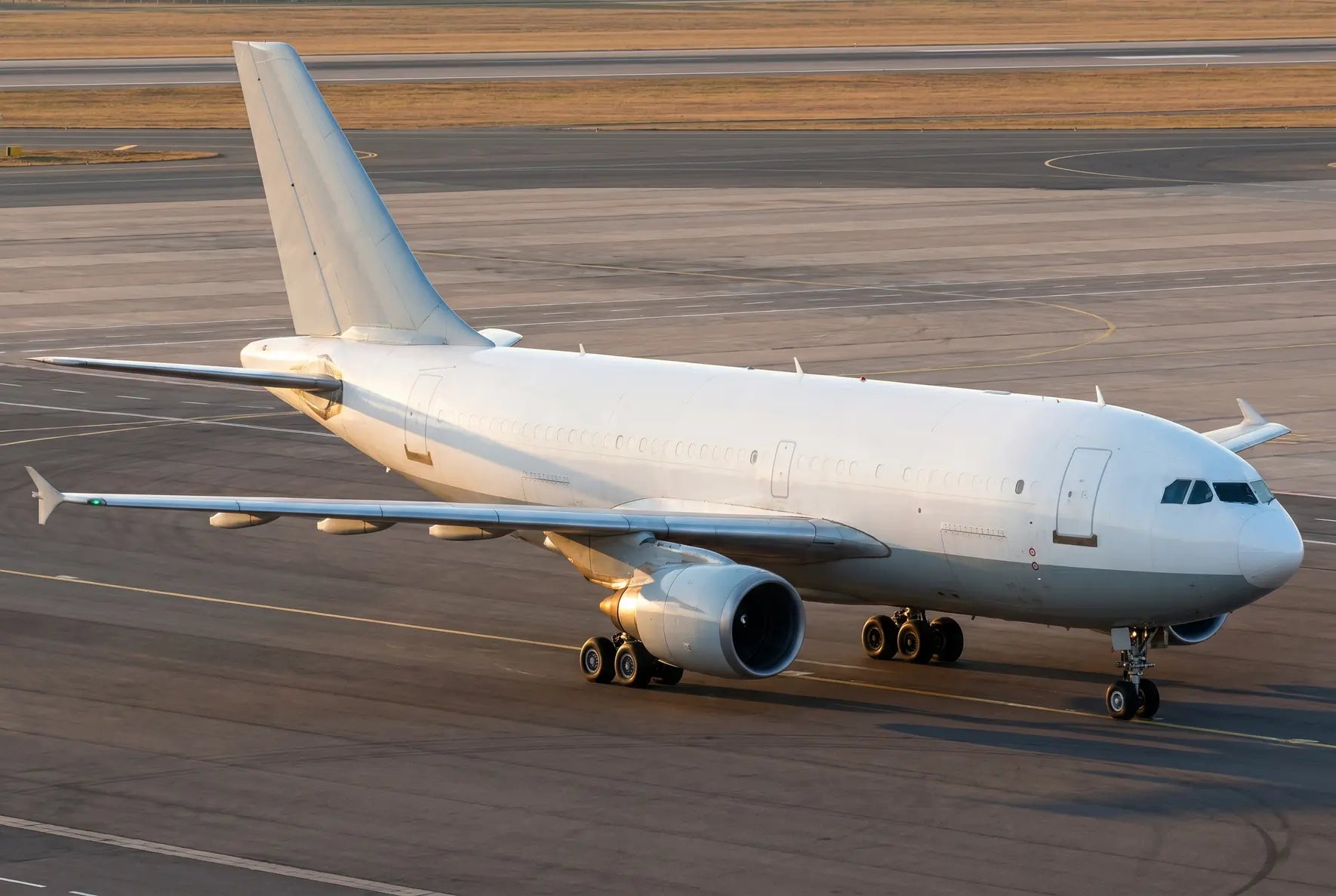
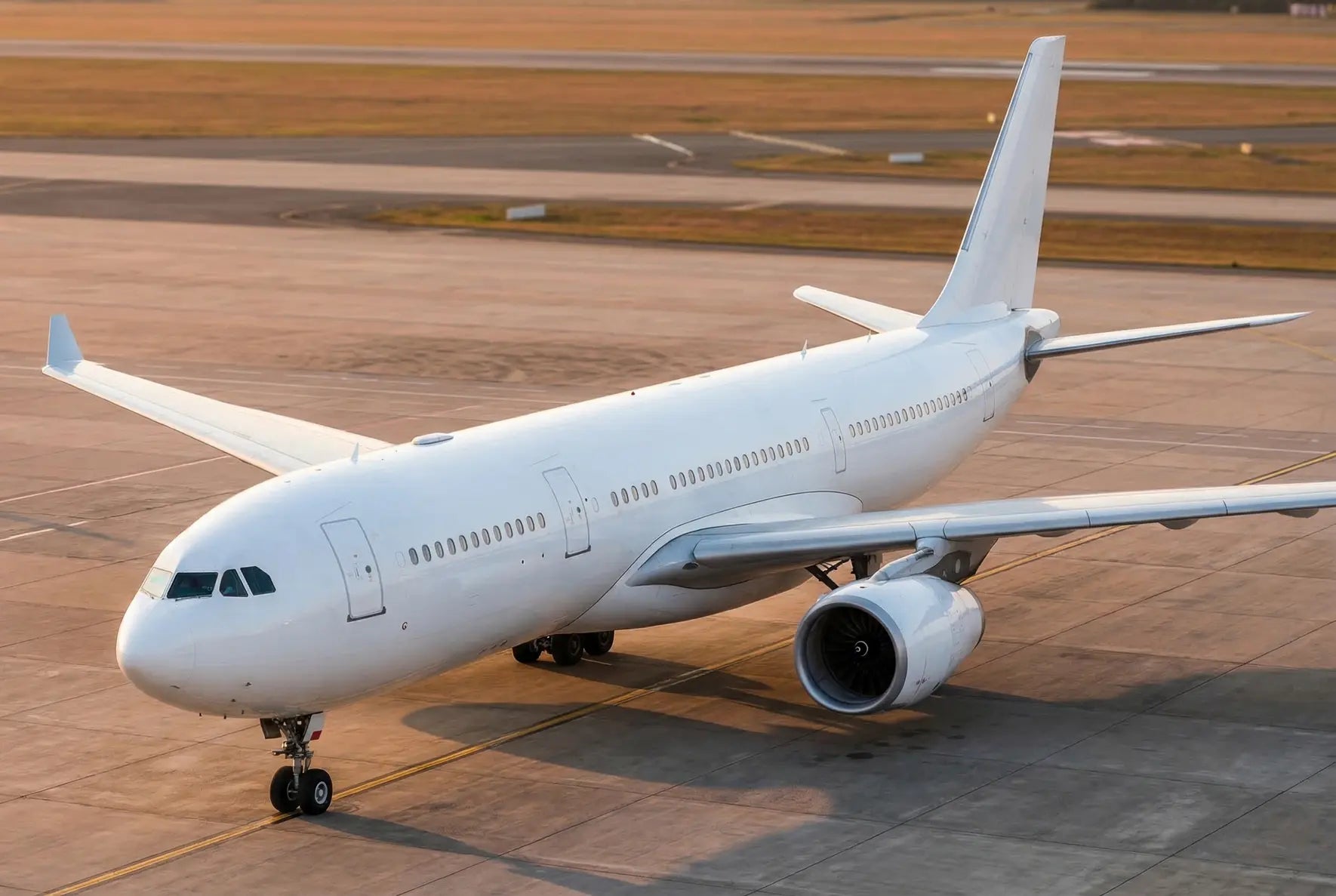
Operators of ageing A330-300 airframes face growing challenges. Compared to the A330neo, older A330-300s burn approximately 25% more fuel per seat, increasing operating costs on competitive long haul routes. Rising maintenance requirements on older engines (CF6, PW4000 and Trent 700 variants) add further cost pressure. Many carriers are gradually replacing their A330-300 fleets with A330-900neo or A350 aircraft, though the type remains economically viable on dense routes where cabin capacity can be maximised. Pilots transitioning between the A330-300 and newer Airbus widebodies benefit from Airbus cross-crew qualification, an advantage that can also be observed through the shared cockpit design philosophy visible from the outside.
Where the Airbus A330-300 Operates Around the World
With over 700 aircraft delivered and hundreds still in active service, the Airbus A330-300 operates on every populated continent. In Europe, it connects major hubs to destinations across North America, Asia and Africa. In Asia, it forms the backbone of many carriers' medium and long haul fleets, serving both intra-regional and intercontinental routes. Across the Americas, operators rely on the type for transatlantic services and north-south connections. In Africa, the A330-300 links the continent to Europe and the Middle East, supporting both scheduled and wet-lease operations.
- Europe: Several major European carriers rely on the A330-300 for long haul operations. Turkish Airlines operates one of the largest A330 fleets globally, using the type on routes from Istanbul to Asia, Africa and the Americas. TAP Air Portugal deploys A330-300s on transatlantic routes from Lisbon to Brazil and North America. Aer Lingus uses the aircraft on Dublin and Shannon services to the United States and Canada. Brussels Airlines operates seven A330-300s on routes linking Brussels to Africa and North America. Finnair has used eight A330-300s on routes between Helsinki and Asia. Leisure operator Air Transat (based in Canada but operating extensively from Europe) configures its A330-300s in high-density layouts for transatlantic holiday routes.
- North and South America: Delta Air Lines is the largest A330-300 operator in the Americas, with 31 A330-300s deployed on transatlantic and transpacific routes from hubs including Atlanta, Detroit and New York JFK. Hawaiian Airlines has historically used the type on long overwater routes from Honolulu to Asia and the US mainland. In South America, Aerolíneas Argentinas operates A330s on services from Buenos Aires to Europe and within the region.
- Asia: The A330-300 is arguably most popular across Asia. Cathay Pacific operates around 43 A330-300s, making it one of the type's largest operators, serving regional and long haul routes from Hong Kong. China Eastern Airlines and China Southern Airlines each operate large A330 fleets connecting Chinese cities to destinations across Asia, Europe and Oceania. Korean Air and Asiana Airlines use the type from Seoul Incheon. Thai Airways deploys six A330-300s on medium haul routes from Bangkok. Philippine Airlines configures its A330-300s in a high-density bi-class layout for transpacific and regional routes. Malaysia Airlines, EVA Air, Hainan Airlines and SriLankan Airlines also maintain A330-300 fleets for long haul services.
- Africa: On the African continent, South African Airways operates leased A330-300s on regional routes to West Africa (Accra, Abidjan) and intercontinental services. Afriqiyah Airways in Libya has also operated the type. Several other African carriers access the A330-300 through wet-lease arrangements, reflecting the flexibility the aircraft offers to airlines rebuilding or expanding their networks.
Typical Seating Configurations on the Airbus A330-300
Cabin layouts on the A330-300 vary significantly depending on the operator's business model. According to Airbus, the aircraft seats 250 to 290 passengers in a typical three-class arrangement, with a maximum certified capacity of 440 in an all-economy configuration. Full-service network carriers such as Delta Air Lines, KLM and Lufthansa typically fit 255 to 297 seats across business (often 2-2-2 lie-flat), premium economy and economy (2-4-2) cabins. For example, Delta's A330-300 carries 282 passengers in four classes, including Delta One suites with lie-flat beds.
Leisure and charter operators prioritise capacity. Air Transat seats up to 365 passengers in a two-class layout with just 12 Club Class seats. Philippine Airlines offers a 363-seat bi-class configuration with 36 lie-flat business seats and 327 economy seats in a 3-3-3 arrangement at 30 to 34 inch pitch. These denser configurations maximise revenue on high-demand routes where ticket prices are more competitive. The contrast between a 282-seat network layout and a 365-seat leisure layout on the same airframe illustrates the remarkable cabin flexibility that has kept the A330-300 relevant for operators around the world.
In this video, you get a full review of Air Canada’s Airbus A330-300 Preferred Economy seat, highlighting comfort, space, and onboard experience for travelers seeking a more premium option than standard economy.
Airbus A330 300 Safety Record: Accidents, Incidents and How Safe It Is
The Airbus A330 300 has been in commercial service since 1994, making it one of the longest serving widebody aircraft in the current global fleet. Across the entire A330 family, Airbus reports more than 1,800 orders, over 1,600 deliveries and upward of 1,460 aircraft in active operation, collectively logging more than 70 million flight hours. According to the Aviation Safety Network database, the A330 programme as a whole has been involved in 47 recorded occurrences, including 14 hull loss events and a total of 338 fatalities across all variants. When those figures are weighed against three decades of high volume operations, tens of millions of flights and thousands of aircraft built, the A330 300 emerges with a safety record that is broadly in line with, or better than, most of its widebody contemporaries.
Notable Accidents and Serious Incidents
Airbus Industrie Flight 129 (1994) – On 30 June 1994, an A330 321 (registration F WWKH) crashed during a certification test flight at Toulouse Blagnac Airport, killing all seven crew members on board. The aircraft was performing a simulated single engine go around at maximum thrust with a very aft centre of gravity. An excessively rapid rotation, combined with the autopilot’s altitude acquisition mode lacking adequate pitch attitude protection, led to a loss of airspeed and control. The investigation prompted Airbus to revise the autopilot software to incorporate improved pitch attitude limiting, refine flight test procedures and tighten briefing protocols for experimental programmes.
Qantas Flight 72 (2008) – On 7 October 2008, an A330 303 (VH QPA) operating from Singapore to Perth experienced two uncommanded nose down pitch events at cruise altitude over Western Australia. At least 119 of the 315 occupants were injured, 12 of them seriously, though there were no fatalities. The Australian Transport Safety Bureau (ATSB) determined that a faulty Air Data Inertial Reference Unit (ADIRU) transmitted erroneous angle of attack data spikes that the Flight Control Primary Computers accepted as valid. As a direct result, Airbus released updated FCPC software across the A330 and A340 fleets to improve rejection of anomalous sensor inputs, and enhanced ADIRU internal fault detection logic.
Air France Flight 447 (2009) – Although this accident involved an A330 200 rather than the 300 variant, it remains the most significant event in the type’s history. On 1 June 2009, the aircraft crashed into the Atlantic Ocean en route from Rio de Janeiro to Paris, resulting in the loss of all 228 people on board. The BEA final report concluded that icing of the pitot tubes caused temporary airspeed inconsistencies, and that the crew’s response led to an unrecovered aerodynamic stall. The aftermath brought sweeping changes: replacement of pitot probes across the A330 fleet, mandatory high altitude upset recovery training for airline crews worldwide, and the extension of underwater locator beacon transmission times from 30 to 90 days. These measures have had a lasting influence on pilot training syllabi, equipment standards and search and rescue regulations. For a look at how different aircraft designs respond to varied operational environments, the Antonov An 24RV profile provides an interesting contrast in engineering philosophy.
How Safe Is the Airbus A330 300?
The overall safety profile of the Airbus A330 300 is strong by any objective measure. Airbus’s own statistical analysis groups the A330 within its Generation 4 aircraft, a category that records a hull loss rate of approximately 0.14 per million flights, significantly lower than the 0.45 figure for the preceding generation. The IATA 2024 Safety Report places the global all accident rate at 1.13 per million flights, with a fatality risk of just 0.06 per million passenger sectors, confirming an overall downward trend in commercial aviation risk.
Several design features contribute to the A330 300’s resilience. The fly by wire flight control system incorporates built in envelope protection that prevents the aircraft from exceeding structural or aerodynamic limits in normal law. Redundant hydraulic circuits, multiple electrical generators and duplicated avionics ensure that the loss of a single system does not compromise the ability to fly safely. These design principles are reinforced by stringent EASA and FAA certification requirements, continuous airworthiness directives and standardised operating procedures that every operator must follow.
Each incident in the A330’s history has driven measurable improvements in hardware, software, training or regulation. That iterative process, combined with robust regulatory oversight and data driven safety management across the industry, means that commercial aviation remains statistically one of the safest forms of transport available. The Airbus A330 300, with decades of service and continuous refinement behind it, exemplifies that principle.
01 What is the typical range and seating capacity of the Airbus A330-300?
The Airbus A330-300 has a maximum range of 11,750 km or 6,350 nautical miles, ideal for long-haul flights like transatlantic or transpacific routes. It typically seats 250-290 passengers in a three-class configuration, with high-density setups accommodating up to 440. This versatility suits both medium and long-distance missions.
02 Which airlines commonly operate the Airbus A330-300 and on what routes?
Major operators include Cathay Pacific, Singapore Airlines, Turkish Airlines, Delta, and KLM. These airlines use it on intercontinental routes such as Europe to Asia, North America to Europe, and trans-Pacific flights. Its efficiency makes it popular for high-demand long-haul corridors.
03 How does the cabin layout and passenger comfort compare on the Airbus A330-300?
The A330-300 features a wide fuselage of 5.26 meters cabin width, providing spacious seating in economy with typical pitches around 79 cm. Upper class often includes flat-bed seats, Wi-Fi, USB power, and personal screens for entertainment. Noise levels are low due to advanced engines, enhancing overall comfort on long flights.
04 What are the performance and fuel efficiency highlights of the Airbus A330-300?
Powered by engines like GE CF6, PW4000, or Rolls-Royce Trent 700 producing up to 72,000 pounds of thrust, it cruises at Mach 0.86 with a maximum takeoff weight of 242 tonnes. It offers excellent fuel efficiency for its class, burning less fuel than older quad-engine widebodies while matching range. This positions it competitively against the Boeing 767 and 777.
05 What safety features contribute to the Airbus A330-300's record?
The A330-300 has a strong safety record, certified by FAA and EASA, with features like a six-screen glass cockpit for enhanced pilot situational awareness and fly-by-wire controls for stability. Its twin-engine design and robust landing gear support reliable operations. No major hull-loss incidents have marred its reputation in passenger service.
06 What practical tips should travelers know about the Airbus A330-300?
Opt for seats in the forward economy section for quicker boarding and deplaning, and check airline-specific seat maps for window views avoiding wing obstruction. The aircraft handles turbulence smoothly due to its size and wing design. Bring noise-canceling headphones as cabin noise is minimal but present on long flights.