

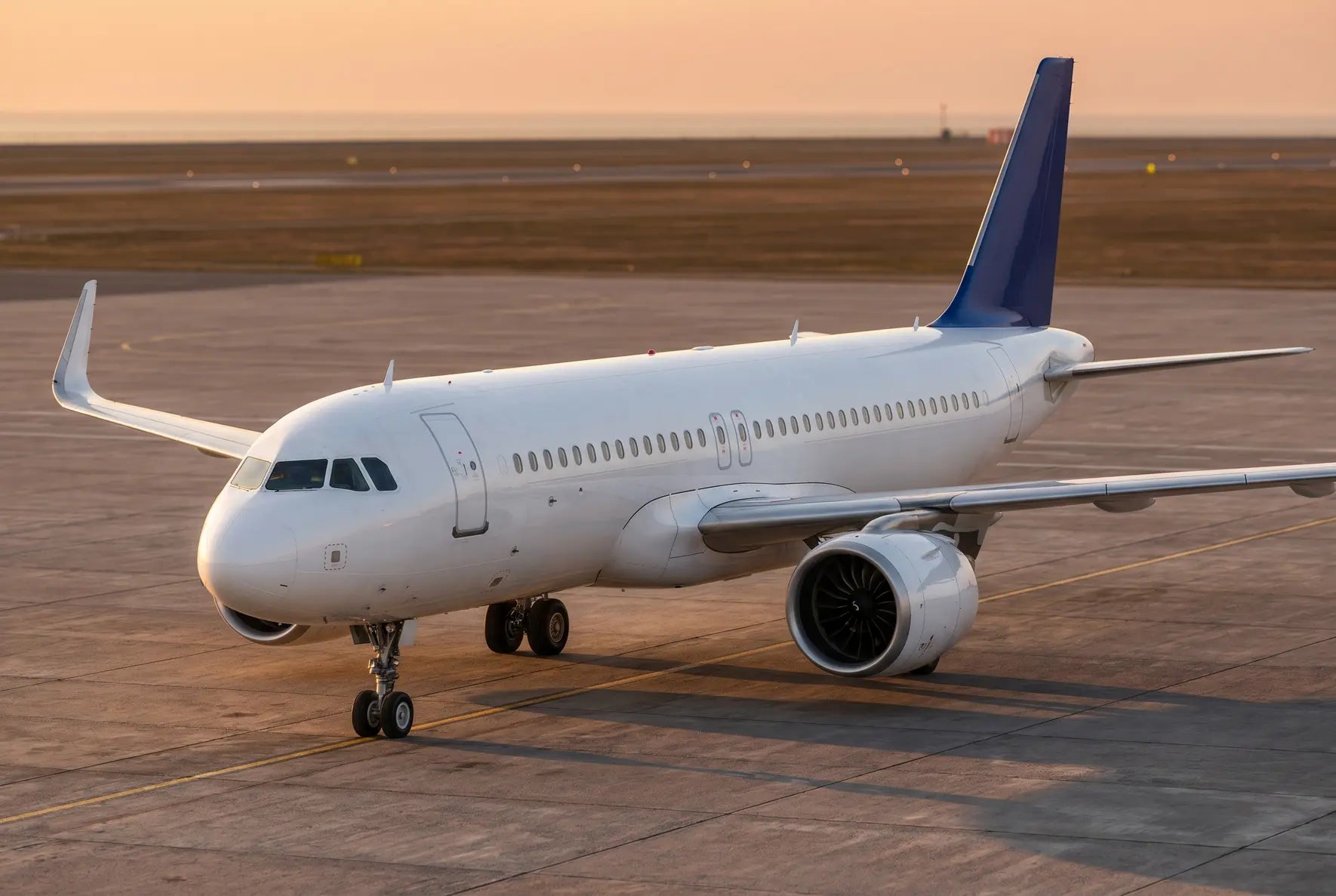
Airbus A320neo: History, Program Launch, and Development of the Re-Engined Single-Aisle
The Airbus A320neo (New Engine Option) is the re-engined evolution of the original A320, one of the most commercially successful single-aisle aircraft families ever built. Manufactured by Airbus, a European aerospace corporation headquartered in Toulouse, France, the A320neo was conceived to extend the competitive life of the A320 platform by delivering significant improvements in fuel efficiency, emissions, and noise without requiring an entirely new airframe design.
The original A320 programme was launched in March 1984, with the first flight on 22 February 1987 and entry into service with Air France in April 1988. The A320 pioneered digital fly-by-wire controls in a commercial single-aisle jet and went on to become the backbone of short- and medium-haul fleets worldwide. By the late 2000s, however, airlines were demanding lower operating costs, and both Airbus and Boeing faced pressure to offer more fuel-efficient narrowbody aircraft.
After evaluating a clean-sheet replacement versus a re-engining strategy, Airbus formally launched the A320neo programme on 1 December 2010. The decision allowed airlines to benefit from new-generation engine technology while retaining the proven A320 airframe, cockpit commonality, and global support infrastructure. Initial market projections anticipated around 4,000 aircraft; actual demand far exceeded that figure. Many airlines around the world now operate or have ordered the type, including carriers across Europe, Asia, and the Americas. For an example of how European operators structure their pilot workforce, see this overview of Air Serbia pilot conditions.
The development and flight-test campaign proceeded on a tight schedule. In July 2014, the first A320neo test airframe (MSN 6101) was rolled out at the Toulouse final assembly line. The first flight took place on 25 September 2014, powered by Pratt & Whitney PW1100G-JM geared turbofan engines. A parallel test programme with CFM International LEAP-1A engines followed shortly after. EASA granted type certification for the PW1100G-JM-powered A320neo on 24 November 2015, with FAA validation following in December 2015. The LEAP-1A-powered variant received EASA certification on 31 May 2016. All A320neo models are covered under EASA Type Certificate EASA.A.064, the same certificate that encompasses the entire A318/A319/A320/A321 single-aisle family.
The first A320neo was delivered to Lufthansa on 20 January 2016, and the launch operator flew its first commercial service on 25 January 2016 on the Frankfurt-Hamburg route. Demand accelerated rapidly: by March 2018, Airbus reported over 6,000 A320neo-family orders, and by 2024 the backlog had surpassed 10,000 aircraft, capturing roughly 60% of the re-engined single-aisle market.
In 2020, the COVID-19 pandemic forced Airbus to reduce A320-family production from 60 to 40 aircraft per month, though output recovered as travel demand returned. On the engine side, Pratt & Whitney disclosed a powder-metal contamination issue affecting PW1100G-JM high-pressure turbine components produced between late 2015 and 2021. This led to accelerated inspections, early engine removals, and temporary aircraft groundings for some operators from 2023 onward, although the A320neo airframe itself was not implicated. Airbus and Pratt & Whitney have since worked to increase maintenance capacity and reduce shop-visit turnaround times.
What Distinguishes the Airbus A320neo from the A320ceo
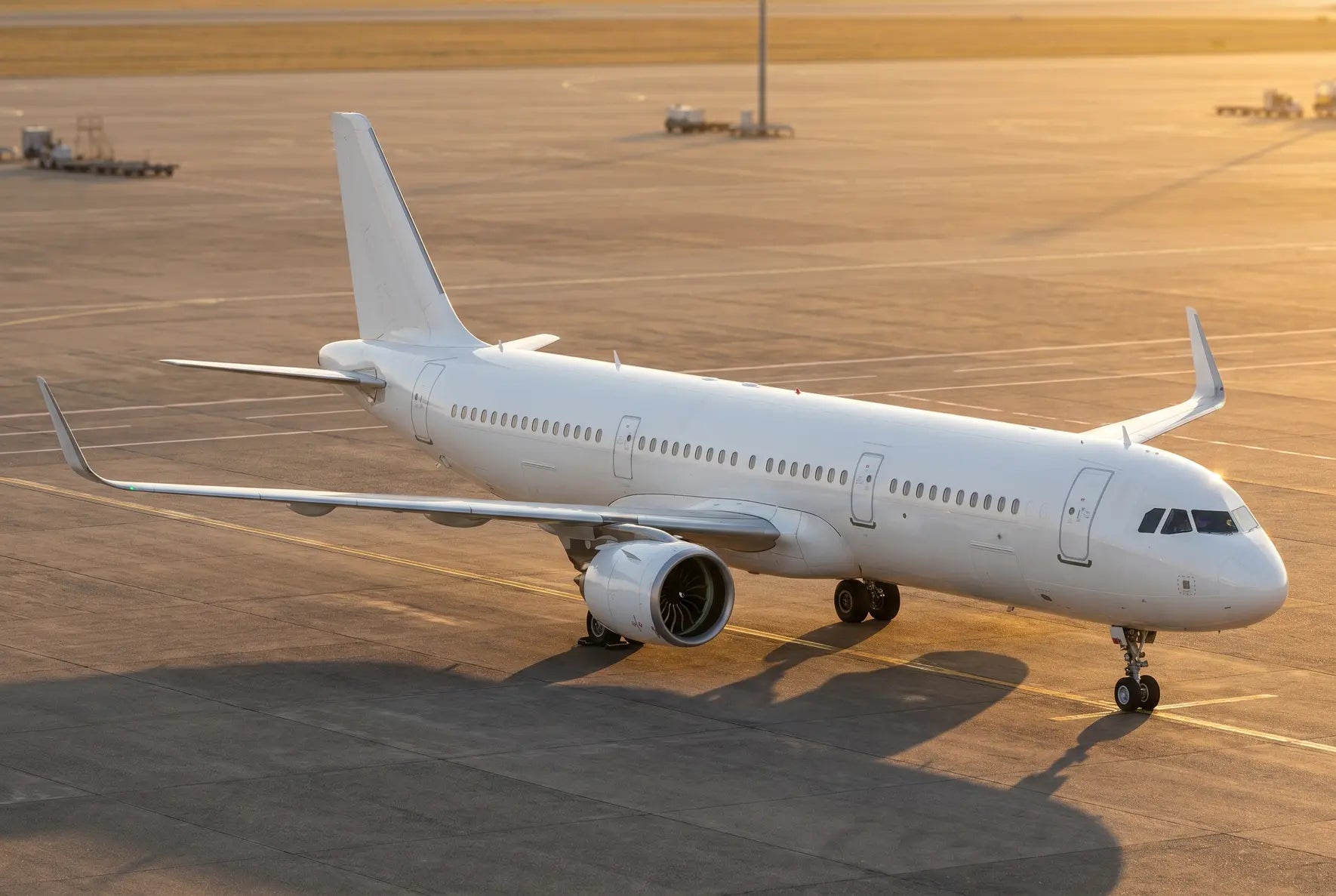
The A320neo retains the same fuselage cross-section, wing planform, and cockpit layout as the A320ceo (Current Engine Option), which means a common type rating for pilots and shared ground-support equipment. The core differences lie in propulsion, aerodynamics, and cabin options. The ceo relied on CFM56-5B or IAE V2500 engines and originally featured wingtip fences, whereas the neo exclusively offers next-generation powerplants and integrates Sharklet wingtip devices as standard. Airbus states the combined effect delivers around 20% lower fuel burn per seat compared with the previous generation, along with approximately 50% less noise and a meaningful reduction in CO2 and NOx emissions. A later cabin upgrade, the Airspace by Airbus interior announced in 2016 and entering service on A320-family aircraft from 2021, introduced larger overhead bins, improved LED lighting, and redesigned sidewall panels.
The following list summarises the key variant identifiers of the Airbus A320neo:
- Type designations (per EASA TCDS EASA.A.064): A320-251N, A320-252N, A320-253N (LEAP-1A variants); A320-271N, A320-272N, A320-273N (PW1100G-JM variants)
- Engine options: CFM International LEAP-1A or Pratt & Whitney PW1100G-JM geared turbofan
- Wingtip devices: Sharklets (blended winglets) as standard
- Maximum take-off weight: up to approximately 79,000 kg, depending on weight variant
- Typical range: around 3,400 to 3,500 nm (approximately 6,300 to 6,500 km) in a two-class configuration
- Typical seating: approximately 150 to 180 passengers (two-class); up to around 194 in high-density layout
- Fuel efficiency gain: approximately 15 to 20% lower fuel burn per seat versus the A320ceo
- Cabin option: Airspace by Airbus interior available from 2021

The image shows an IndiGo Airbus A320neo aircraft in flight against a clear blue sky. The airplane is prominently displaying its distinctive blue and white livery and brand logo.
Airbus A320neo Technical Specifications, Systems and Engine Options
The Airbus A320neo (New Engine Option) builds directly on the proven A320ceo airframe while introducing new-generation powerplants and aerodynamic refinements. The design philosophy centres on maximising fuel efficiency and lowering operating costs without altering the fuselage cross-section or the fly-by-wire flight control architecture shared across the entire A320 family. This approach preserves a common type rating for pilots transitioning between the A318, A319, A320 and A321, while delivering up to 20% lower fuel burn and CO₂ emissions per seat compared with the previous-generation A320ceo.
The aircraft retains the same cabin width of 3.70 m (12 ft 1 in) and can accommodate 150 to 180 passengers in a typical two-class layout, or up to 194 in a high-density configuration. Equipped with Sharklet wingtip devices as standard, the A320neo reduces induced drag and extends range, making it suitable for both short-haul shuttle operations and medium-range routes of up to 3,400 NM. Much like other single-aisle workhorses such as the BAe 146-300, the A320neo is designed to operate efficiently from a wide variety of airports, although it targets a significantly larger route network.
- Overall length: 37.57 m (123 ft 3 in)
- Wingspan (with Sharklets): 35.80 m (117 ft 5 in)
- Height: 11.76 m (38 ft 7 in)
- Typical seating: 150-180 pax (two-class); up to 194 (high-density)
- Maximum takeoff weight (MTOW): 79,000 kg (174,200 lb)
- Maximum landing weight (MLW): 68,400 kg (149,910 lb)
- Maximum zero fuel weight (MZFW): 65,300 kg (143,300 lb)
- Maximum fuel capacity: 26,730 litres (approx. 7,060 US gal)
- Range: up to 3,400 NM (6,300 km) per Airbus data
- Cruise speed: Mach 0.78 (approx. 833 km/h); MMO Mach 0.82
- Service ceiling: approximately 39,100-39,800 ft (11,900-12,100 m)
- Engines: CFM International LEAP-1A or Pratt & Whitney PW1100G-JM
- Avionics: glass cockpit with six LCD displays, dual FMGCs, ECAM monitoring
- Noise: up to 50% smaller noise footprint versus A320ceo, ICAO Chapter 4 compliant
Systems, Flight Controls and Handling Technology
The A320neo retains the full digital fly-by-wire system that made the original A320 a landmark aircraft. Pilot inputs via sidestick controllers are processed by flight control computers, including ELACs (Elevator Aileron Computers), SECs (Spoiler Elevator Computers) and FACs (Flight Augmentation Computers). In Normal Law, the sidestick commands load factor in pitch and roll rate in roll, with automatic trim. The system provides comprehensive flight envelope protections: angle-of-attack limiting, overspeed prevention, load-factor capping and bank-angle protection. Degraded modes (Alternate Law, Direct Law) are available with reduced protections in the event of multiple system failures.
Braking relies on multi-disc carbon brakes controlled by the Brake and Steering Control Unit (BSCU), incorporating digital anti-skid modulation and an autobrake system. Engine management is handled by dual-channel Full Authority Digital Engine Control (FADEC), which governs fuel flow, variable stator vanes and bleed valves, while integrating seamlessly with the auto-thrust system and FMS for optimised thrust settings throughout all flight phases. Health monitoring is supported by the Central Maintenance System (CMS) with built-in test equipment and, for many operators, real-time data analytics via the Airbus Skywise digital platform for predictive maintenance.
Published performance figures for the A320neo vary depending on operator-selected options, cabin configuration and passenger density, actual operating weights, atmospheric conditions (temperature, altitude, wind) and runway state. Airbus range and field-length values assume specific standard conditions and payload assumptions. Operators calculate actual takeoff and landing performance for each departure using FMS computations or Electronic Flight Bag applications, which account for local variables. For this reason, any single performance figure should be understood as representative rather than absolute.
Engine Options: LEAP-1A and PW1100G-JM
The A320neo offers a choice between two powerplants, each representing a distinct engineering philosophy. The CFM International LEAP-1A is a twin-spool, direct-drive high-bypass turbofan produced by CFM International, a 50/50 joint venture between GE Aerospace and Safran Aircraft Engines. The LEAP-1A features a 78-inch (1.98 m) fan with 3D-woven carbon-fibre composite blades, a bypass ratio of approximately 11:1, and an overall pressure ratio of around 40:1. It incorporates ceramic matrix composites (CMCs) in the high-pressure turbine shrouds and titanium-aluminide blades in the low-pressure turbine, contributing to reduced weight and higher thermal efficiency. The LEAP-1A offers thrust ratings from approximately 24,000 to 33,000 lbf depending on the sub-variant selected. It entered service in 2016 and is part of a broader LEAP family that also powers the Boeing 737 MAX (LEAP-1B) and COMAC C919 (LEAP-1C).
The Pratt & Whitney PW1100G-JM is a geared turbofan (GTF) developed with risk-sharing partners including MTU Aero Engines and Japanese Aero Engines Corporation. Its defining feature is a planetary reduction gearbox that decouples the fan from the low-pressure turbine, allowing each to spin at its optimal speed. This enables a larger fan diameter of approximately 81 inches (2.06 m) and a higher bypass ratio of around 12:1, producing very low fan noise and excellent propulsive efficiency. Thrust ratings for the A320neo application range from about 24,000 to 33,000 lbf. The PW1100G-JM also entered service in 2016. The broader PW1000G geared turbofan family powers the Airbus A220 (PW1500G) and Embraer E-Jet E2 series (PW1900G). Both A320neo engine options deliver approximately 15-20% lower fuel consumption compared with the CFM56 and V2500 engines fitted to the A320ceo, and both are certified for operation with up to 50% sustainable aviation fuel (SAF) blends.
Airbus A320neo vs A319neo vs A321neo vs Boeing 737 MAX 8 Specifications Comparison
Scroll horizontally to see more →
| Parameter | Airbus A320neo | Airbus A319neo | Airbus A321neo | Boeing 737 MAX 8 |
|---|---|---|---|---|
| Entry into service | 2016 | 2022 | 2017 | 2017 |
| Engines | 2 × CFM LEAP-1A or Pratt & Whitney PW1100G-JM | 2 × CFM LEAP-1A or Pratt & Whitney PW1100G-JM | 2 × CFM LEAP-1A or Pratt & Whitney PW1100G-JM | 2 × CFM LEAP-1B |
| Length | 37.6 m | 33.8 m | 44.5 m | 39.5 m |
| Wingspan | 35.8 m | 35.8 m | 35.8 m | 35.9 m |
| Height | 11.8 m | 11.8 m | 11.8 m | 12.3 m |
| Typical seating and layout (short description + approximate passengers) | 2-class: 150–180 passengers | 2-class: 120–150 passengers | 2-class: 180–220 passengers | 2-class: 162–178 passengers |
| MTOW | 79 t | 75.5 t | 97 t | 82.2 t |
| Range | 3,400 nm | 3,750 nm | 3,500 nm | 3,550 nm |
| Cruise speed | 0.78 Mach | 0.78 Mach | 0.78 Mach | 0.79 Mach |
| Service ceiling | 39,800 ft | 39,800 ft | 39,800 ft | 41,000 ft |
| Program note | Baseline neo-generation Airbus narrow-body, balancing fuel efficiency with versatility on short- to medium-haul routes. | Short-fuselage neo variant targeting thinner routes and higher-performance airports while retaining commonality with larger models. | Stretched neo variant offering higher capacity and range for dense medium-haul and some longer transcontinental missions. | Boeing’s new-generation 737 family member competing directly with the A320neo segment on efficiency and operating economics. |
Scroll horizontally to see more →
The table compares key specs of the A320neo family against the Boeing 737 MAX 8, covering size, seating, weights and performance. The A321neo is the longest and carries the most passengers with the highest MTOW (97 t), while the A319neo is shortest and offers the longest range (3,750 nm). The 737 MAX 8 sits close to the A320neo in length and seating, with a slightly higher cruise speed and service ceiling.
Airbus A320neo Operations: Typical Routes, Missions and Airlines Worldwide
The Airbus A320neo is designed for short- to medium-haul passenger transport and serves as the backbone of both network carriers and low-cost airlines. Typical missions range from 45-minute domestic hops to sectors of up to 6 hours, with the majority of flights lasting between 1.5 and 3 block hours. According to Airbus, A320 operations span over 1,600 airports worldwide, with an average stage length of roughly 900 nautical miles (1,670 km). Early US fleet data showed the A320neo averaging approximately 9 block hours per day across about 4 flights, with a typical leg duration of around 2 hours and 20 minutes. Low-cost operators often push daily utilisation toward 10 block hours, while network carriers typically average 7 to 9 block hours per day.
In hub-and-spoke networks, the A320neo functions as a feeder aircraft connecting secondary cities to major hubs such as Frankfurt, Paris Charles de Gaulle, Atlanta or Delhi. It also operates medium-haul trunk routes between hubs. In point-to-point networks favoured by low-cost carriers, operators exploit the aircraft's quick turnaround capability, targeting 25- to 35-minute ground times to maximise fleet productivity. The aircraft is equally at home at major international airports and smaller regional facilities, making it versatile across a wide range of operational environments. For comparison, long-haul freighter operations use very different aircraft such as the Boeing 747-400ERF, which serves intercontinental cargo routes where narrow-body jets cannot reach.
A notable operational challenge facing A320neo operators involves engine reliability. The Pratt & Whitney PW1100G-JM geared turbofan has experienced durability issues, including a powder-metal manufacturing defect disclosed in 2023 that led to accelerated inspections and temporary groundings across multiple fleets worldwide. Operators powered by the PW1100G have had to increase spare-engine pools and build scheduling buffers. The CFM International LEAP-1A has generally demonstrated stronger early-service maturity, though it has also required tighter hot-section inspection intervals than originally projected. Both engine programmes have pushed operators to plan for higher engine-maintenance downtime than anticipated at programme launch.
Where the Airbus A320neo Operates Around the World
The A320neo flies with over 90 airlines spanning every inhabited continent. In Europe, it is the workhorse of both legacy carriers and ultra-low-cost operators, covering dense intra-European networks and routes into North Africa and the Middle East. In North and South America, the type dominates US domestic trunk routes, cross-border services into Mexico and the Caribbean, and growing intra-South American networks. Asia represents the largest regional concentration of A320neo aircraft, driven by massive domestic markets in India and China along with high-frequency Southeast Asian low-cost networks. In Africa and the Middle East, adoption is growing steadily, with the aircraft linking regional capitals and connecting African cities to Gulf hubs.
- Europe: Wizz Air operates one of the largest A320neo-family fleets on the continent, serving ultra-low-cost point-to-point routes across Europe and into the Middle East. Lufthansa uses A320neo aircraft on European feeder routes from its Frankfurt and Munich hubs. easyJet deploys the type across bases such as London Gatwick, Milan and Geneva for intra-European leisure and business routes. Vueling, Aegean Airlines, SAS and TAP Air Portugal also operate the A320neo on short- and medium-haul European services.
- North & South America: Frontier Airlines is among the largest A320neo operators in North America, using the type for ultra-low-cost domestic and near-international routes. American Airlines and Delta Air Lines fly the A320neo family on domestic trunk and Caribbean routes from their major hubs. Volaris in Mexico runs an all-Airbus fleet on domestic and US cross-border services. In South America, LATAM Airlines Group deploys the A320neo on domestic and regional routes in Brazil, Chile and Peru, while JetSMART and Sky Airline use it for low-cost operations across Chile, Argentina and Peru.
- Asia: IndiGo is the world's largest A320neo operator with a fleet exceeding 300 aircraft, covering a massive domestic Indian network and regional international routes to the Middle East and Southeast Asia. China Southern Airlines and China Eastern Airlines together operate several hundred A320neo-family aircraft on dense Chinese domestic routes. AirAsia and Cebu Pacific fly the type across high-frequency low-cost networks in Southeast Asia. Air India uses the A320neo on domestic trunk routes and short-haul international services. All Nippon Airways and Peach Aviation operate the type on Japanese domestic and regional routes.
- Africa: EgyptAir uses the A320neo on short- and medium-haul routes from Cairo across the Middle East, Africa and Europe. Air Senegal operates the type on West African regional services and selected European routes. Tunisair deploys the A320neo on regional connections between North Africa and Europe. Adoption is expanding across the continent as more carriers modernise their short-haul fleets.
Typical Seating Configurations on the Airbus A320neo
The A320neo Airspace cabin accommodates a wide range of layouts, from high-density all-economy arrangements up to a maximum of 194 seats to more spacious two-class configurations. Low-cost and ultra-low-cost carriers typically install 180 to 186 seats in a single-class 3-3 layout. SAS fits 180 economy seats, while Spirit Airlines configures 182 seats including designated extra-legroom rows. Network and full-service airlines generally opt for lower density, typically 150 to 170 seats in a two-class arrangement. Air India, for example, operates one A320neo variant with 162 seats split between 12 business-class and 150 economy seats, and another with 164 seats across three cabins including premium economy. Lufthansa offers both a 168-seat and a 180-seat A320neo configuration depending on the route. Air New Zealand seats 165 passengers in an all-economy layout with dedicated Space+ extra-legroom rows at the front of the cabin. Leisure-oriented carriers and those operating medium-haul routes often fall somewhere between full-service and ultra-low-cost layouts, seating 168 to 180 passengers with a small premium section or enhanced-legroom product.
In this video, we compare the costs of operating the Boeing 737 MAX and the Airbus A320neo, highlighting key factors that influence airline expenses and what those differences can mean for fleet decisions.
Airbus A320neo Safety Record: Accident History and How Safe Is It?
Since entering service with Lufthansa in January 2016, the Airbus A320neo family has built one of the strongest safety records of any commercial aircraft generation. As of early 2026, the global A320neo fleet had completed more than 20 million flights and accumulated over 44 million block hours, with approximately 4,500 aircraft delivered to more than 130 operators worldwide. Across roughly a decade of revenue operations, the A320neo family has recorded one hull-loss accident and no passenger or crew fatalities. That translates to a hull-loss rate of approximately 0.05 per million departures, which compares favourably with the broader commercial jet fleet average. For context, IATA's 2023 global safety report placed the all-accident rate for commercial aviation at around 0.80 per million flights. The A320neo's record reflects both the maturity of the A320 platform, now in its fourth decade of continuous development, and the rigorous certification standards enforced by EASA and the FAA.
Notable Accidents and Incidents Involving the A320neo Family
Although the A320neo's overall record is strong, a small number of significant events deserve attention for the lessons they prompted.
- LATAM Airlines Peru, Flight LA2213 (18 November 2022, Lima, Peru) - During the takeoff roll at Jorge Chavez International Airport, an A320-271N (registration CC-BHB) collided at high speed with an airport fire truck that had entered the active runway. The right main landing gear was torn away, fuel ignited and the aircraft was destroyed. All passengers and crew evacuated successfully, but three firefighters aboard the truck lost their lives. The Peruvian investigation authority (CIAA) focused on coordination and clearance failures between air traffic control, airport operations and the fire service. The event led to revised runway-incursion prevention procedures at Lima and reinforced the importance of strict vehicle access protocols on active runways. This remains the only confirmed hull loss for the A320neo family. Full details are available on the Aviation Safety Network database.
- TAP Air Portugal, Flight TP1492 (2 September 2022, Conakry, Guinea) - An A320-251N (CS-TVI) struck a motorcycle carrying two people on the runway during landing at Ahmed Sekou Toure International Airport. Both motorcycle occupants were killed. No one aboard the aircraft was injured, and the A320neo sustained damage to the right engine and lower fuselage. The event underscored the critical importance of runway safety management at airports in developing regions, including perimeter security and surface movement control.
- PW1100G Powder-Metal Contamination (2023 to 2025) - Pratt & Whitney discovered that contaminated powder metal used to manufacture high-pressure turbine and compressor disks between late 2015 and mid-2021 could cause premature fatigue cracking. The issue prompted EASA and FAA emergency airworthiness directives requiring accelerated engine removals and inspections. At peak impact in early 2024, an estimated 300 to 350 PW1100G-powered A320neo aircraft were grounded worldwide at any given time. Although the engine reliability issue caused significant operational disruption, it did not result in any fatal accident. Airlines mitigated the impact through schedule adjustments, wet-leasing older aircraft and engine swaps, while Pratt & Whitney revised manufacturing processes and life limits for affected parts. The broader Airbus accident statistics portal provides additional fleet-wide safety data.
It is worth noting that both hull-damage events described above were caused by ground-side hazards (a fire truck and a motorcycle on the runway), not by airframe design or system failures. No A320neo family aircraft has suffered a fatal in-flight accident as of early 2026.
How Safe Is the Airbus A320neo?
By every conventional measure, the Airbus A320neo ranks among the safest commercial aircraft flying today. Its fly-by-wire flight control system, inherited from the original A320 and continuously refined, provides multiple layers of envelope protection including angle-of-attack limiting, load-factor protection and overspeed prevention. The airframe follows a combined fail-safe and damage-tolerant design philosophy, with redundant flight controls, hydraulic circuits and electrical systems. These features are validated through certification under EASA CS-25 and FAA Part 25 standards, which impose some of the most demanding safety requirements in any transport industry.
Operational safety is further supported by standardised crew training through Airbus' common type-rating philosophy, meaning pilots transitioning from the A320ceo to the neo require minimal additional instruction. Airlines operating the type follow strict standard operating procedures, and global oversight by national aviation authorities ensures continued airworthiness throughout each aircraft's service life. Even the PW1100G engine campaign, while disruptive, demonstrated that the regulatory system works: potential risks were identified, directives were issued, and corrective actions were implemented before any catastrophic failure occurred.
With a hull-loss rate well below the industry average and zero onboard fatalities in over 20 million flights, the A320neo reaffirms that modern commercial aviation remains one of the safest forms of transport available. Whether compared to older single-aisle types like the ATR 42-300, a regional turboprop with a very different operational profile, or to its direct competitor, the record speaks clearly. For passengers, pilots and engineers alike, the data confirms that the A320neo meets the highest safety standards the industry demands.
01 What kind of routes and range is the Airbus A320neo typically used for?
The Airbus A320neo is designed mainly for short- and medium‑haul routes, typically flying sectors of 1 to 5 hours. Depending on the exact variant and airline configuration, its maximum range is roughly 6,300–6,500 km (about 3,400–3,500 nautical miles). In practice, it is commonly used on busy domestic routes, intra-European flights, and regional international services such as transcontinental flights in the US or routes like London–Canary Islands or Dubai–Mumbai. Some airlines also use it on thinner long domestic legs where a widebody aircraft would be too large.
02 How comfortable and quiet is the Airbus A320neo cabin for passengers?
The Airbus A320neo has a noticeably quieter cabin than earlier A320 models, largely due to new-generation engines and aerodynamic improvements. Most cabins use modern LED lighting, large pivoting overhead bins, and updated sidewalls, which improve the sense of space. Airlines typically configure the A320neo with 3–3 seating in economy and may include extra‑legroom rows at the front or over the wings. Noise levels during takeoff and climb are usually lower, which many frequent flyers find more comfortable on longer sectors.
03 Which airlines commonly operate the Airbus A320neo and on what kinds of routes?
Major operators of the Airbus A320neo include airlines such as Lufthansa, British Airways, easyJet, IndiGo, Wizz Air, LATAM, Turkish Airlines, and many large US and Asian carriers through their A320neo-family fleets. In Europe, it is widely used on dense city pairs like London–Berlin, Paris–Rome, or Frankfurt–Madrid. In India and Southeast Asia, A320neo aircraft connect major hubs with regional cities on high‑frequency services. In the Americas, similar aircraft operate on transcontinental and busy domestic routes such as New York–Miami or São Paulo–Brasília, depending on the airline.
04 How does the Airbus A320neo compare in fuel efficiency and performance to older models?
The Airbus A320neo offers roughly 15–20% better fuel efficiency per seat compared with the previous‑generation A320ceo, thanks to new engines and aerodynamic changes like sharklet wingtip devices. This improved efficiency allows airlines to reduce operating costs and emissions while maintaining similar or better performance on challenging routes. The aircraft can carry more passengers or fuel for the same mission, and in some cases can operate slightly longer routes than earlier A320 variants. For travellers, this often translates into more nonstop options and a modern fleet on familiar routes.
05 What is the safety record and key safety features of the Airbus A320neo?
The Airbus A320neo is part of the long‑running A320 family, which has accumulated many millions of flight hours and is widely regarded as a mature, safe design. The A320neo incorporates updated avionics, modern flight control computers, and redundant systems consistent with current certification standards. Safety is also heavily influenced by airline maintenance practices, crew training, and regulatory oversight, which remain strict for this aircraft category. As with other modern airliners, incidents are rare relative to the high number of daily flights worldwide.
06 Are there practical tips for choosing a seat and flying on an Airbus A320neo?
On most Airbus A320neo aircraft, seats ahead of the wing tend to be slightly quieter, while seats over the wing can feel a bit more stable in light turbulence. Extra‑legroom rows are often located at the front of the cabin and at the over‑wing exits, though these may have limited recline depending on the airline. Window alignment varies by carrier, but rows just ahead of the wing usually offer a clear view of both the wing and the scenery. Checking the airline’s seat map or an independent seat review site before check‑in can help identify the best seats for legroom, quiet, or views on a specific A320neo configuration.