Boeing 757-200PF: History, Development, and What Makes This Freighter Unique
The Boeing 757-200PF (Package Freighter) is a purpose built, all cargo variant of the widely successful Boeing 757-200 narrowbody twinjet. Unlike passenger to freighter conversions that followed later, the 757-200PF was manufactured from new on the Renton, Washington production line specifically for freight operations. Its creation reflected a growing demand in the mid 1980s for a medium range, high capacity package freighter capable of serving the expanding overnight express delivery market.
The Boeing 757 programme itself dates to the mid 1970s, when Boeing began studying a successor to the popular but ageing Boeing 727. The result was a new narrowbody twinjet that shared the 727's fuselage cross section but offered substantially improved fuel efficiency, range, and payload thanks to modern high bypass turbofan engines and advanced avionics. The baseline 757-200 passenger variant completed its first flight on 19 February 1982 and received FAA type certification on 21 December 1982. It entered commercial service with Eastern Air Lines in January 1983.
Recognising the airframe's potential beyond passenger transport, Boeing developed the dedicated freighter variant shortly after the 757-200 entered service. The 757-200PF programme was announced following a launch order from UPS Airlines in December 1985 for 20 aircraft, with options on 15 more. UPS, the largest package delivery company in the United States, required an efficient jet freighter to modernise its ageing fleet and support its rapidly growing overnight air network. The first 757-200PF was delivered to UPS in September 1987, marking the entry into service of the variant. Over subsequent years, UPS expanded its orders: a further 10 aircraft were ordered in March 1989, and an additional five Rolls-Royce RB211-535E4 powered examples were ordered in 1996 for delivery in 1998. In total, 80 Boeing 757-200PF airframes were manufactured, with UPS as the sole new build customer. Production of the entire 757 family, which reached 1,050 aircraft for 54 customers, concluded with the last delivery in October 2004.
Boeing, headquartered in Arlington, Virginia (with commercial aircraft manufacturing centred in the Seattle metropolitan area), designed and assembled the 757-200PF alongside passenger variants at its Renton facility. The type falls under FAA Type Certificate A2NM, which covers the 757-200, 757-200CB, 757-200PF, and 757-300 series.
What Sets the Boeing 757-200PF Apart from Other 757 Variants
The most immediate distinction of the Boeing 757-200PF is that it was engineered and built as a freighter from the outset. Unlike the 757-200SF (Special Freighter) and the 757-200PCF (Precision Converted Freighter), which are passenger to freighter conversions of used 757-200 airframes, the PF variant left the factory without cabin windows, passenger doors, or any passenger amenities. Instead, it features a large main deck cargo door on the forward left side of the fuselage measuring approximately 134 x 86 inches (340 x 218 cm), compatible with standard cargo pallets and containers. A small crew entry door is positioned forward of the cargo door for cockpit access. The main deck accommodates up to 15 standard cargo pallets or containers, with a main deck volume of approximately 6,600 cubic feet (187 cubic metres). Two lower hold compartments add a further 1,830 cubic feet (52 cubic metres) of cargo space, bringing total volume to roughly 8,430 cubic feet (239 cubic metres).
The variant was offered with a choice of two engine types: the Rolls-Royce RB211-535E4 and the Pratt & Whitney PW2037 or PW2040. The UPS fleet includes aircraft fitted with both powerplants. With a maximum takeoff weight (MTOW) of 255,000 lb (115,660 kg), the 757-200PF can carry a maximum gross payload of approximately 87,700 lb (39,800 kg) and deliver a range of around 2,935 nautical miles (5,435 km) with a standard payload, making it well suited for domestic trunk routes and transatlantic operations. Operators looking for larger dedicated freighters in the Boeing family may also find the Boeing 747-400ERF of interest for long haul, high volume cargo missions.
Key identifiers and features that distinguish the Boeing 757-200PF from related sub variants include:
- Factory built freighter with no cabin windows or passenger doors, unlike the 757-200SF and 757-200PCF conversions which retain blanked over window outlines
- Main deck cargo door of approximately 134 x 86 inches on the forward port fuselage
- 15 main deck pallet positions (conversions may accommodate 14 full pallets plus one LD3 container depending on configuration)
- Engine options: Rolls-Royce RB211-535E4 or Pratt & Whitney PW2037/PW2040
- MTOW: 255,000 lb (115,660 kg)
- Maximum gross payload: approximately 87,700 lb (39,800 kg)
- Total cargo volume: approximately 8,430 cubic feet (239 cubic metres)
As a dedicated build, the 757-200PF offered structural optimisation and higher payload capacity compared to later conversion programmes, which partly explains why UPS continues to operate a significant fleet of these aircraft decades after the last example rolled off the assembly line. The type has proven remarkably durable, serving as a backbone of medium haul express freight networks well into the 2020s. For a broader perspective on the Boeing 757 family, its variants, and production history, several authoritative references are available from aviation databases and manufacturer documentation.

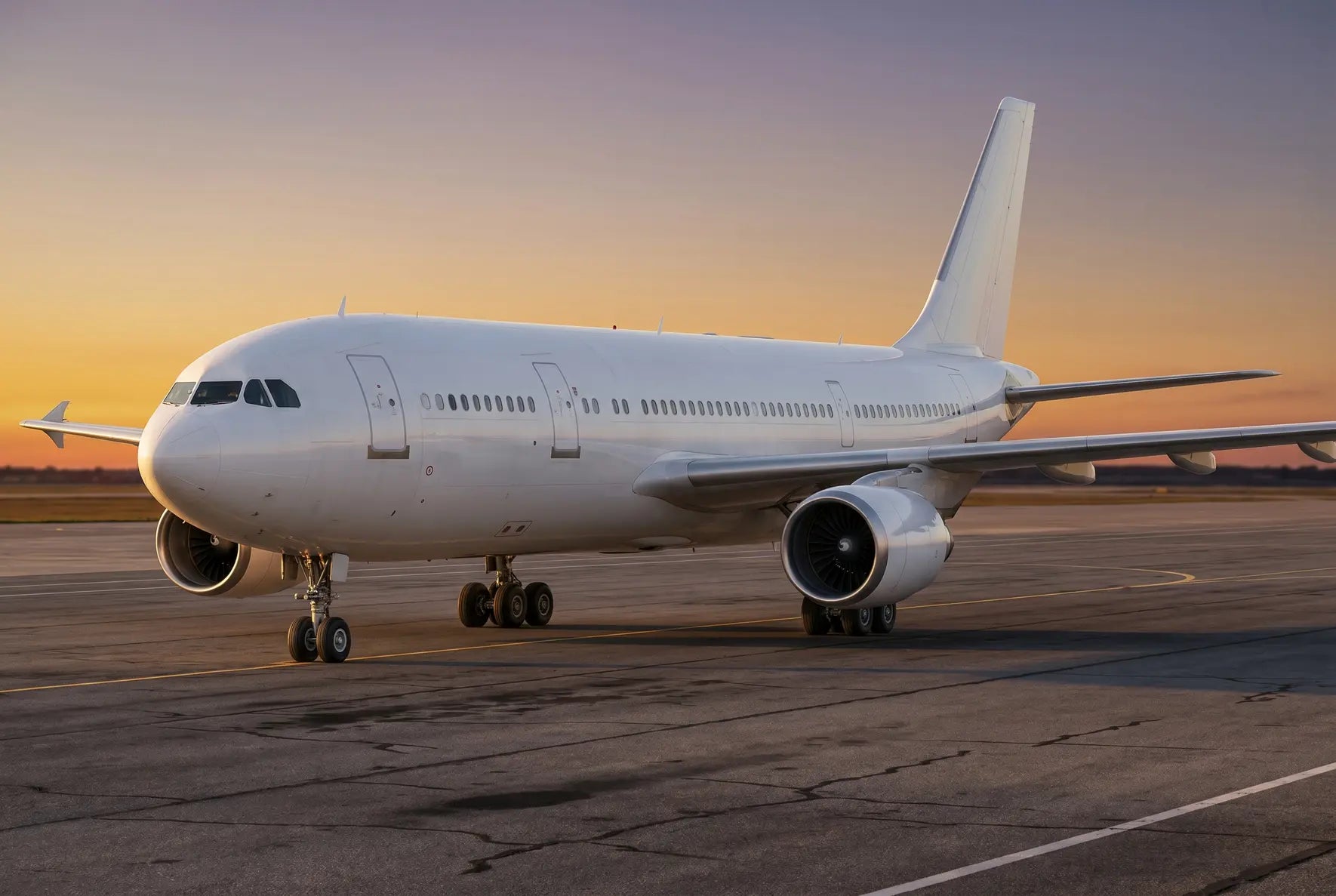
A Delta Air Lines Boeing 757-200 is shown in the image on its final approach to Boston. The aircraft appears against a clear blue sky, showcasing its distinctive livery.
Boeing 757 200PF Technical Specifications, Systems Highlights and Engine Options
The Boeing 757 200PF (Package Freighter) is a purpose built, production line freighter variant of the 757 200 family, designed from the outset for overnight express parcel and medium haul cargo operations. Unlike passenger to freighter conversions, the 757 200PF left the factory with a reinforced main deck floor, a large forward left side cargo door, and no passenger cabin fittings, giving operators a lighter airframe optimised for payload rather than seat count. The variant shares the same supercritical wing, fuselage cross section and flight deck as the passenger 757 200, inheriting that airframe's well known combination of strong climb performance, moderate fuel burn and the ability to operate from constrained runways.
Where passenger 757 200 models balance range against seat capacity, the 757 200PF trades cabin volume for structural payload. With a maximum takeoff weight of up to 255,000 lb (115,660 kg), the freighter can carry a substantial load over distances exceeding 3,000 nautical miles, making it well suited to domestic trunk routes and transatlantic cargo flights. Two MTOW options allow operators to tailor acquisition and performance to their network requirements.
- Overall length: 47.32 m (155 ft 3 in)
- Wingspan: 38.05 m (124 ft 10 in)
- Height: 13.56 m (44 ft 6 in)
- MTOW options: 250,000 lb (113,400 kg) or 255,000 lb (115,660 kg)
- Maximum landing weight (MLW): 210,000 lb (95,254 kg)
- Maximum structural payload: approximately 87,700 lb (39,800 kg) including container tare weight
- Main deck cargo volume: approximately 6,600 cu ft (187 m³), accommodating up to 15 standard containers or pallets
- Lower hold volume (bulk): approximately 1,830 cu ft (51.8 m³)
- Typical cruise speed: Mach 0.80
- Service ceiling: 42,000 ft
- Fuel capacity: 11,276 US gal (42,680 L)
- Engines: Rolls Royce RB211 535E4 (40,100 to 43,100 lbf) or Pratt & Whitney PW2037 (38,250 lbf) / PW2040 (41,700 lbf)
- Cockpit: two crew glass flight deck with six CRT displays, EFIS and EICAS, shared with the Boeing 767
- Noise compliance: ICAO Annex 16, Chapter 3 and Chapter 4 (depending on engine and modification status)
Systems, Flight Controls and Handling Technology
The 757 200PF retains the conventional yet refined flight control architecture of the passenger variant. Primary pitch and roll surfaces are actuated through steel cables and hydraulic power control units, while the spoiler panels use electrical signaling, a partial fly by wire approach that saves weight and allows independent panel operation for roll augmentation, speed braking and ground spoiler deployment. Three independent hydraulic systems provide redundancy: the left and right systems are engine driven, and the centre system relies on electric pumps with a ram air turbine available as an emergency backup. Braking uses a carbon brake stack on main gear wheels, managed by an autobrake system with selectable deceleration rates (1 through 4, MAX AUTO and RTO) working together with a Hydro Aire anti skid system to deliver consistent stopping performance on short or contaminated runways.
The flight deck features a Honeywell and Rockwell Collins integrated avionics suite originally developed in tandem with the Boeing 767 programme. The layout centres on an Electronic Flight Instrument System (EFIS) paired with an Engine Indication and Crew Alerting System (EICAS), supported by a dual Flight Management System (FMS) and laser gyro Inertial Reference System (IRS). Later production and retrofit upgrades added Enhanced Ground Proximity Warning System (EGPWS) with terrain display and predictive windshear detection. Pilots transitioning to or from the 757 200PF often benefit from the common type rating shared with the 767, and those preparing for airline selection programmes will find that understanding aptitude assessments such as cut e tests can be an important step in the recruitment process for cargo operators that fly this type.
Published performance figures for the 757 200PF can vary significantly between sources. Differences arise from the selected MTOW option, engine variant, cargo loading density (volume limited versus weight limited), atmospheric conditions (ISA versus hot and high), runway elevation, route reserves and regulatory assumptions. Boeing's own freighter brochure, for example, presents payload range charts at two distinct gross weights with different engine pairings, each yielding different achievable distances. Any single number for range or payload should therefore be understood as one point on a broader trade off curve rather than an absolute limit.
Engine Options: Rolls Royce RB211 535 and Pratt & Whitney PW2000
The 757 200PF was offered with two competing turbofan families, both certified for 180 minute ETOPS and representing different engineering philosophies of the early 1980s.
The Rolls Royce RB211 535E4 is a three shaft (low, intermediate and high pressure spools) high bypass turbofan rated between 40,100 and 43,100 lbf of takeoff thrust. Derived from the larger RB211 524 that powered the Lockheed L 1011 TriStar and Boeing 747, the 535 series was scaled down with a cropped fan diameter and redesigned intermediate pressure compressor specifically for the 757 programme. The initial RB211 535C entered service in 1983 at 37,400 lbf with Eastern Airlines. Rolls Royce then introduced the 535E4 variant with hollow, wide chord, snubberless fan blades, a technology that improved aerodynamic efficiency, reduced noise and set a world record time on wing exceeding 40,500 hours. Beyond the 757 family, the RB211 535E4 also powers certain variants of the Tupolev Tu 204 120, making it one of the few Western engines certified on a Russian built airframe. Approximately 59 percent of all 757s built were equipped with RB211 535 variants.
The Pratt & Whitney PW2000 series is a two shaft high bypass turbofan covering a thrust range from 37,000 to 43,000 lbf. The PW2037, rated at 38,250 lbf, entered service as the launch alternative to the RB211 and is widely recognised as the first commercial turbofan to feature full authority digital engine control (FADEC), giving the electronic engine control system autonomous authority over fuel scheduling, thrust management and limit protection without any hydromechanical backup. The higher thrust PW2040 (41,700 lbf) was offered for heavier gross weight 757 200 and 757 200PF operations, while the PW2043 (43,000 lbf) was later developed for the stretched 757 300. A military derivative, designated the F117 PW 100, powers the Boeing C 17 Globemaster III strategic airlifter, demonstrating the core design's durability and thrust growth potential across very different mission profiles. Both engine families are now out of production, but remain widely supported through mature MRO networks serving the large global fleet of 757 freighters still in daily operation.
Boeing 757 Variants vs Airbus A321-200 Specifications Comparison
Scroll horizontally to see more
| Parameter | Boeing 757-200PF | Boeing 757-200 | Boeing 757-300 | Airbus A321-200 |
|---|---|---|---|---|
| Entry into service | 1990 | 1983 | 1999 | 1996 |
| Engines | 2 × Rolls-Royce RB211-535E4 or PW2037 | 2 × Rolls-Royce RB211-535 or PW2000 | 2 × Rolls-Royce RB211-535E4 or PW2043 | 2 × IAE V2500 or CFM56-5B |
| Length | 47.3 m | 47.3 m | 54.5 m | 44.5 m |
| Wingspan | 38.0 m | 38.0 m | 38.0 m | 34.1 m |
| Height | 13.6 m | 13.6 m | 13.6 m | 11.8 m |
| Typical seating and layout | Freighter: N/A passengers | 2-class: 200–239 passengers | 2-class: 243 passengers | 2-class: 185 passengers |
| MTOW | 113 t | 116 t | 122 t | 93 t |
| Range | 3,000 nm | 3,900 nm | 3,200 nm | 3,200 nm |
| Cruise speed | 0.80 Mach | 0.80 Mach | 0.80 Mach | 0.80 Mach |
| Service ceiling | 42,000 ft | 42,000 ft | 42,000 ft | 39,000 ft |
| Program note | Dedicated package freighter variant of 757-200 with large main deck cargo door | Baseline narrowbody for medium-haul routes with excellent hot/high performance | Stretched higher-capacity variant for denser medium-haul routes | Main Airbus narrowbody competitor with similar capacity and single-aisle efficiency |
Scroll horizontally to see more
The table compares key specs of the Boeing 757-200PF, 757-200, 757-300 and Airbus A321-200. The 757 family has wider wingspan, higher MTOW and a 42,000 ft ceiling, while the A321 is shorter, lighter and capped at 39,000 ft. Range varies most: the passenger 757-200 leads at 3,900 nm, while the 757-200PF is optimized for cargo with a lower 3,000 nm range.
Boeing 757-200PF Operations: Routes, Cargo Missions and Airlines Worldwide
The Boeing 757-200PF (Package Freighter) was purpose built as a factory freighter for the overnight express parcel market. Boeing produced exactly 80 units of this variant, with UPS Airlines as the launch customer receiving its first aircraft in 1987. Unlike passenger to freighter conversions such as the 757-200SF, the 757-200PF was designed from the outset with a large forward cargo door, no cabin windows, and a main deck capable of accommodating up to 15 standard containers or pallets. With a maximum payload of approximately 87,700 lb (39,780 kg) and a design range of around 3,150 nautical miles (5,830 km) when fully loaded, this freighter is optimised for domestic and medium haul cargo routes typically ranging from 1,000 to 3,000 nautical miles.
In daily operations, the Boeing 757-200PF typically logs between 10 and 12 block hours per day within hub and spoke networks, cycling through multiple short sectors during overnight sorting windows. Turnaround times are kept to a minimum thanks to the ANCRA cargo handling system fitted to the main deck, which uses ball bearing floor mats for rapid loading and unloading. A typical mission involves departing a regional airport in the early evening, flying to a central sorting hub, and returning before dawn, a cycle that repeats several times per night during peak volume periods. The aircraft's ability to operate from runways as short as 2,350 metres also allows it to serve secondary and regional airports that larger widebody freighters cannot access, making it highly versatile within express logistics networks.
Operators of the Boeing 757-200PF face a number of challenges. The fleet is ageing, with many airframes now exceeding 30 years of service. In 2024, the FAA issued airworthiness directives addressing fatigue cracking around structural panels on converted 757 freighters, and a separate bulletin required inspections of main deck cargo doors after incidents involving latching failures. Maintenance costs are rising as spare parts become scarcer, and operators must balance the cost of continued structural inspections against the investment in newer freighter types. Despite these pressures, the 757-200PF remains economically attractive for medium haul express operations due to its low acquisition cost and proven reliability.
Where the Boeing 757-200PF Operates Around the World
The Boeing 757-200PF and its converted freighter siblings form a backbone of express cargo aviation across several continents. In North America, the type dominates domestic overnight parcel networks, connecting major sorting hubs to dozens of regional airports. In Europe, it serves as a feeder aircraft for integrator hubs, linking secondary cities to central distribution centres. Across Asia, rapid e-commerce growth has driven significant fleet expansion, particularly in China, where the type supports high volume domestic parcel delivery. In Africa, dedicated 757 freighter operations remain limited, with the type appearing mainly on charter and humanitarian relief missions rather than in scheduled service.
- North America: UPS Airlines is the largest operator of factory built 757-200PF aircraft, with a fleet of 75 units as of late 2024 according to UPS fleet data. The airline uses the type extensively to connect its Worldport superhub in Louisville (SDF) with cities across the United States and Canada. FedEx Express operates around 63 Boeing 757 freighters (primarily converted variants) for similar domestic express duties out of its Memphis (MEM) hub. Cargojet Airways in Canada operates a fleet of 757-200 freighter conversions, linking Hamilton (YHM) with major Canadian cities and U.S. destinations for time sensitive freight and e-commerce parcels. Amerijet International uses the type for cargo services connecting Miami with Latin America and the Caribbean.
- Europe: DHL is the dominant European operator of 757 freighters through subsidiaries including DHL Air UK, DHL Air Austria, and EAT Leipzig. These aircraft feed the major DHL hubs at Leipzig (LEJ) and East Midlands (EMA), handling intra-European express parcels and connecting to intercontinental networks. Swiftair and Cygnus Air in Spain also operate 757 freighter conversions, often on ACMI wet lease contracts for integrators across Europe. Smaller turboprop freighters like the Fokker 50 serve the thinner feeder routes that complement the 757's trunk operations.
- Asia: SF Airlines in China operates the world's largest 757 freighter fleet with over 40 aircraft, supporting the massive domestic e-commerce market from hubs including Shenzhen (SZX) and its dedicated cargo hub at Ezhou Huahu (EHU). China Postal Airlines and YTO Cargo Airlines also deploy 757 freighter conversions for parcel sorting and mail distribution. Blue Dart Aviation in India uses the type as a feeder for FedEx across the Indian subcontinent.
- Africa: No major scheduled 757-200PF operations are documented on the continent. The type appears occasionally on humanitarian and charter missions operated by organisations such as Samaritan's Purse, and some DHL charter flights serve African destinations on an ad hoc basis.
Cargo Configuration and Loading Layout
As a dedicated freighter, the Boeing 757-200PF has no passenger cabin or seating. The main deck accommodates up to 15 standard ULD containers (88 × 125 inches each), providing approximately 6,600 cubic feet (187 m³) of cargo volume. Two lower deck holds add a further 1,830 cubic feet (52 m³) of bulk cargo space, with the forward hold rated for 10,300 lb and the rear hold for 16,300 lb according to Boeing's 757 Freighter specifications. Converted variants such as the 757-200SF typically carry 14 main deck pallets instead of 15, as the retention of original passenger doors reduces available floor space. The total cargo volume of the 757-200PF offers approximately 97% of the capacity of a full 15 pallet configuration, making it one of the most space efficient narrowbody freighters in its class. Operators loading express parcels can often fill the volume before reaching the weight limit, which is why the aircraft is particularly well suited to the lightweight, high volume shipments that characterise modern e-commerce logistics.
In this video, discover why the Boeing 757 earned a reputation for exceptional performance and versatility. Explore what makes it stand out and how it compares with key competitors in its class.
Boeing 757-200PF Safety Record: Accident History and How Safe Is It
The Boeing 757-200PF is the purpose built package freighter variant of the 757 family, with 80 airframes delivered between 1987 and 2004. Across more than three decades of continuous cargo operations, the type has accumulated millions of flight hours in the fleets of major integrators such as DHL, UPS and FedEx. When measured against that volume of service, the 757-200PF has recorded only one hull loss accident, a figure that reflects a remarkably strong safety profile for a freighter serving demanding global networks. The broader Boeing 757 family, encompassing all passenger and cargo sub variants, has experienced 13 hull losses out of 1,050 aircraft produced, representing approximately 1.24% of the total fleet. As of November 2023 the Aviation Safety Network had logged 47 aviation occurrences for the 757 type, a tally that includes incidents of widely varying severity across more than 40 years of operations.
Notable Accidents and Incidents Involving the 757-200PF and Related Variants
The only confirmed hull loss of a factory built Boeing 757-200PF occurred on 1 July 2002, when DHL Aviation Flight 611, a 757-23APF registered A9C-DHL, collided in mid air with Bashkirian Airlines Flight 2937, a Tupolev Tu-154M, over Überlingen in southern Germany. Both aircraft were destroyed and all 71 people on board the two flights lost their lives, including two crew members on the 757. The German Federal Bureau of Aircraft Accident Investigation (BFU) determined that the primary cause was a failure by Zurich area control to detect the converging traffic in time, compounded by the Tu-154M crew following a late ATC descent instruction instead of the TCAS Resolution Advisory commanding a climb. The DHL 757 crew had correctly followed their own TCAS RA to descend, but the opposing aircraft's non compliance made the collision unavoidable. In the aftermath, ICAO mandated that TCAS Resolution Advisories take absolute precedence over conflicting ATC instructions. Eurocontrol accelerated the rollout of Short Term Conflict Alert (STCA) tools, and air navigation service providers introduced stricter staffing rules to prevent single controller operations during periods of reduced system availability.
Although not a 757-200PF, the loss of American Airlines Flight 965 on 20 December 1995 remains one of the most consequential events in 757 operational history. The 757-223 struck a mountain during a night approach to Cali, Colombia, killing 159 of 163 occupants. Investigators attributed the crash to navigation errors, improper use of the Flight Management System and the crew's failure to discontinue an unstabilised approach. The accident was instrumental in driving the industry wide adoption of Enhanced Ground Proximity Warning Systems (EGPWS) with forward looking terrain awareness, improvements that benefit every 757 variant still flying, including the 200PF.
On 7 April 2022, DHL de Guatemala Flight 7216, a converted 757 freighter, experienced a left hydraulic system failure shortly after departing San José, Costa Rica. The crew returned for an emergency landing but lost directional control during the rollout; the aircraft departed the runway, collapsed its landing gear and broke apart. Both pilots survived without serious injury. The Costa Rican investigation authority attributed the failure to fatigue cracking in a flexible hydraulic hose. While this airframe was a passenger to freighter conversion rather than a factory built 757-200PF, the event prompted renewed attention to hydraulic system inspection intervals across all 757 freighter fleets.
How Safe Is the Boeing 757-200PF
When the single hull loss is set against the type's decades of high utilisation cargo flying, the Boeing 757-200PF emerges as one of the safer narrowbody freighters in service. Across all 757 variants the fatal accident rate stands at approximately 0.22 per million departures, a figure that compares favourably with other narrowbody types of its generation. That rate reflects not only a sound structural and systems design philosophy but also the rigorous standard operating procedures maintained by the large cargo operators that form the backbone of the 757-200PF fleet. Continuous FAA airworthiness directives address age related concerns such as fuselage fatigue cracking and hydraulic component wear, ensuring the type remains compliant with modern safety expectations as airframes mature. Understanding the differences between aircraft generations, such as those outlined in this comparison of the A320ceo and A320neo, helps illustrate how evolving design standards and regulatory oversight continually raise the bar for the entire commercial fleet. With robust maintenance programmes, comprehensive crew training and layered regulatory supervision, the Boeing 757-200PF continues to operate safely, reinforcing the well established principle that commercial aviation remains one of the safest forms of transport in the world.
01 What is the typical range and mission profile of the Boeing 757-200PF?
The Boeing 757-200PF, a dedicated freighter variant, has a design range of about 3,750-4,000 nautical miles with typical payloads, making it suitable for medium-haul cargo routes like transcontinental or regional international flights. It excels on missions from 1,000 to 3,000 nautical miles with volume-limited payloads, offering efficient fuel burn around 10,000-19,000 pounds for 500-1,000 nmi sectors depending on engines. This configuration prioritizes cargo capacity over passenger loads, with strong performance from short runways.
02 Which airlines operate the Boeing 757-200PF and on what routes?
Major cargo operators like UPS, FedEx, and DHL use the Boeing 757-200PF for high-frequency domestic and regional international freight. Common routes include U.S. East Coast to West Coast hauls, Europe to Middle East sectors, and intra-Asia networks up to 3,000 km. Its efficiency suits time-sensitive parcel delivery over medium distances without needing widebody infrastructure.
03 How does the Boeing 757-200PF perform in terms of fuel efficiency compared to similar freighters?
The Boeing 757-200PF achieves low fuel consumption of about 10,264 kg for 500 nmi and 18,308 kg for 1,000 nmi at volume-limited payloads with Pratt & Whitney engines, competitive among narrowbody freighters. Its supercritical wing and high-thrust turbofans like PW2043 or RB211-535E4 provide better efficiency per ton-mile than older trijets on medium routes. This makes it a cost-effective choice for operators replacing 727s or DC-8s.
04 What are key design features of the Boeing 757-200PF that enhance safety and operations?
The Boeing 757-200PF features a reinforced main deck for 49,910-51,060 lbs structural payload and MTOW up to 255,000 lbs, with excellent hot/high runway performance from powerful engines rated at 43,100 lbf thrust. It includes advanced EFIS glass cockpit avionics for reliable all-weather operations and a service ceiling of 42,000 ft. These traits contribute to its strong safety record in cargo service, matching passenger 757 standards.
05 How does the Boeing 757-200PF differ from the passenger Boeing 757-200?
Unlike the passenger Boeing 757-200 with up to 239 seats, the PF variant has a large main deck cargo door and no windows or seats, optimized for 2,382 cu ft belly freight plus pallets. It shares the same fuselage length and engines but boosts payload to over 50,000 lbs with higher MZFW configurations. Range remains similar at 3,600-3,900 nm but focuses on cargo volume over passenger comfort.
06 What should cargo handlers or spotters know about Boeing 757-200PF ground operations?
The Boeing 757-200PF requires runways of about 2,350 meters for takeoff at typical weights, with approach speeds around 132-142 kias and landing field lengths of 1,735 meters. Fuel capacity reaches 43,490 liters with certain engines, supporting extended diversions. Spotters note its distinctive freight door behind the cockpit and lack of passenger windows, aiding quick identification at cargo ramps.