
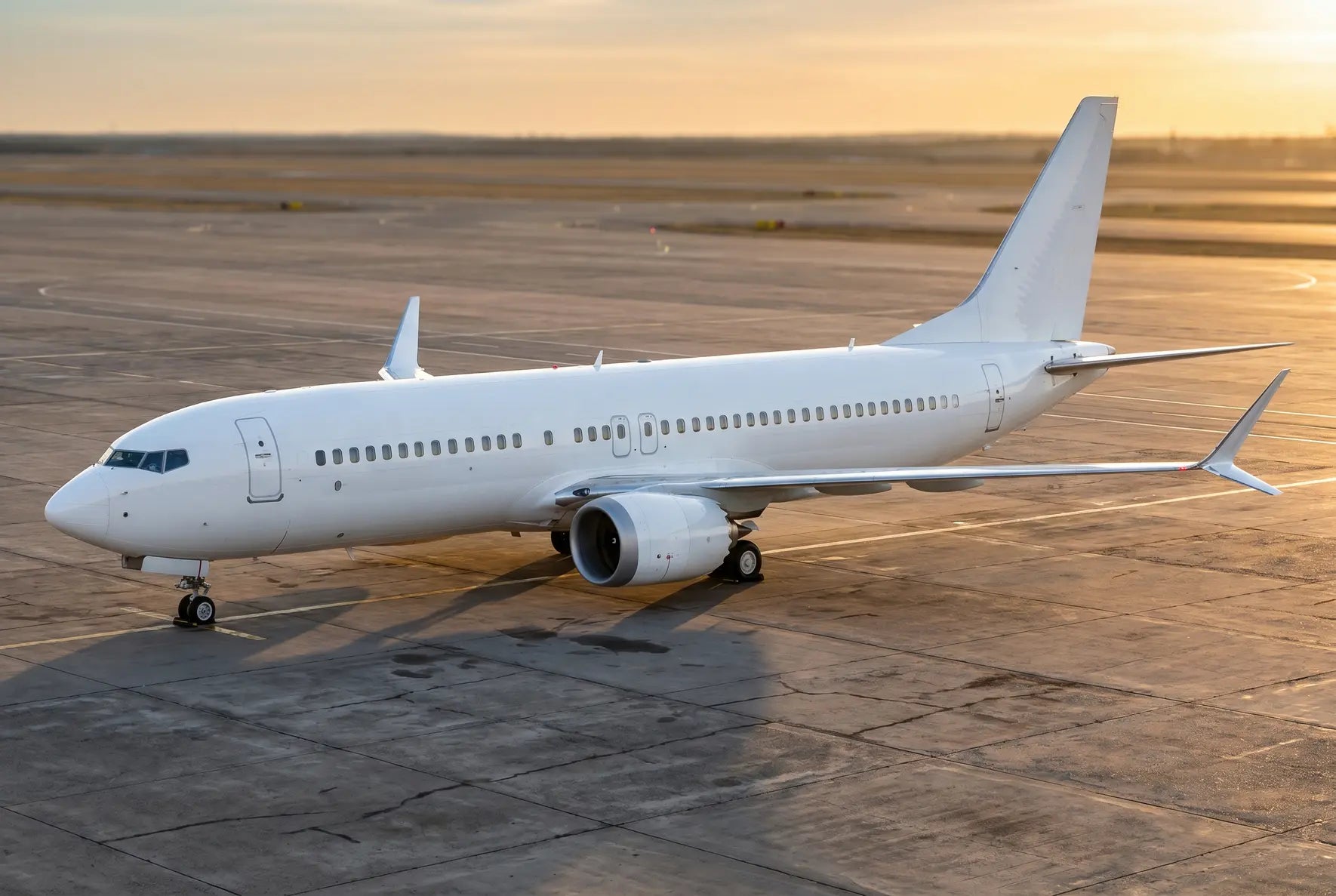
Boeing 737 MAX 8: History, Program Launch, and Development of the Variant
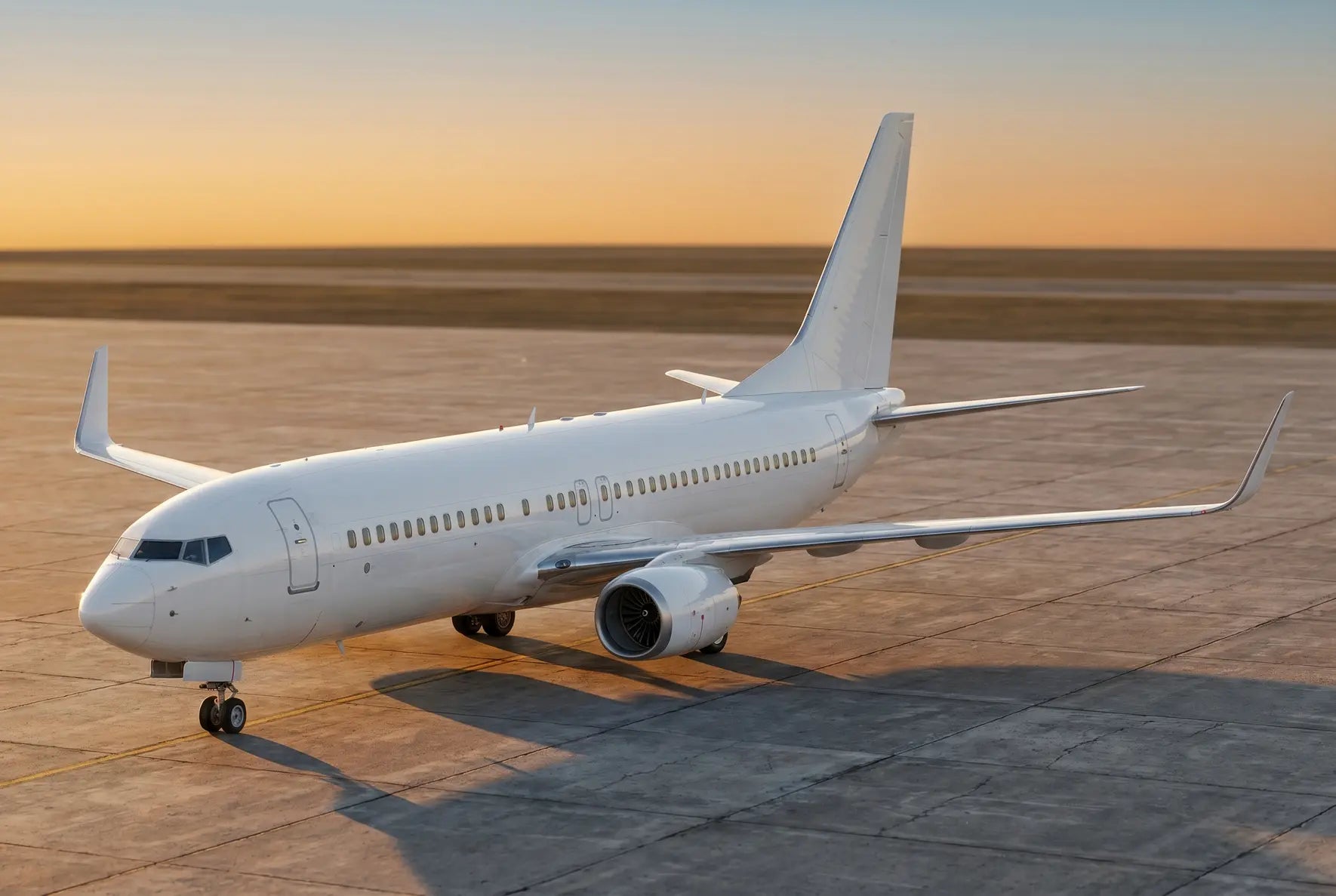
The Boeing 737 MAX 8 is the baseline and most widely ordered member of the 737 MAX family, a fourth-generation re-engining of the long-running Boeing 737 narrow-body programme. Conceived as a direct response to the Airbus A320neo family launched in December 2010, the MAX programme was born out of intense competitive pressure in the single-aisle market segment. Rather than developing a clean-sheet aircraft, Boeing chose to re-engine and refine the proven 737 airframe to accelerate time-to-market and preserve commonality for existing 737 operators.
By mid-2011, the A320neo had already attracted more than 1,000 commitments. A pivotal moment came in July 2011, when American Airlines, a long-standing Boeing customer, announced an order for 460 narrowbody jets that included Airbus A320neo variants. The Boeing board of directors formally approved the 737 MAX programme on 30 August 2011, selecting the CFM International LEAP-1B engine as the sole powerplant. By December 2011, the programme had already secured 948 commitments and firm orders from thirteen customers, with Southwest Airlines as the anchor launch customer.
Boeing, headquartered in Arlington, Virginia, and one of the world's largest aerospace manufacturers, committed its Renton, Washington, production facility to assembling the 737 MAX. The company positioned the MAX 8 (designated 737-8 in certification documents) as the versatile workhorse of the family, sized to replace the popular 737-800NG on core domestic and medium-haul routes.
Key milestones in the programme's development followed a disciplined schedule:
- November 2015 - The first production-complete 737 MAX 8, named Spirit of Renton, rolled out of the Renton factory paint hangar on the exact date defined four years earlier.
- 8 December 2015 - Formal rollout ceremony of the first flight-test aircraft in a distinctive teal Boeing livery.
- 29 January 2016 - Maiden flight of the 737 MAX 8, launching an extensive flight-test campaign that included high-altitude trials at La Paz, Bolivia (elevation 4,060 m / 13,300 ft).
- March 2017 - The U.S. Federal Aviation Administration (FAA) granted type certification under Type Certificate Data Sheet A16WE.
- May 2017 - First delivery to Malindo Air (now Batik Air Malaysia), which began commercial revenue service on 22 May 2017 between Kuala Lumpur and Singapore.
- October 2017 - Southwest Airlines, the launch customer, introduced its first MAX 8 services from Dallas Love Field.
Incremental upgrades that define the MAX 8 over its 737-800NG predecessor include the larger-diameter CFM LEAP-1B turbofan engines delivering approximately 14 to 20 percent better fuel efficiency, Boeing's signature split-tip winglets (replacing the blended winglets of the NG series) for roughly 1.8 percent additional drag reduction, a reinforced fuselage and landing gear structure to accommodate the heavier powerplants, updated cockpit avionics featuring a larger crew-alerting system display, and the Boeing Sky Interior cabin. These changes added approximately 2,950 kg to empty weight compared with the 737-800NG, offset by a higher maximum take-off weight of around 82,190 kg (181,200 lb).
What Sets the Boeing 737 MAX 8 Apart from Other MAX Variants
Within the MAX family, the 737 MAX 8 occupies the middle ground in terms of fuselage length, passenger capacity, and range. The shorter MAX 7 (35.56 m) targets thinner routes with fewer seats but the longest range in the family at 3,800 nm. The stretched MAX 9 (42.16 m) and MAX 10 (43.80 m) trade range for higher capacity. A high-density sub-variant, the 737-8-200, was developed for Ryanair and can seat up to 210 passengers using a modified cabin layout with additional emergency exits. Unlike early narrow-body jets such as the Hawker Siddeley Trident, whose development was shaped by a single-airline specification, the MAX 8 was designed from the outset to serve a broad global customer base.
Key variant identifiers for the Boeing 737 MAX 8:
- Engines: 2 x CFM International LEAP-1B turbofans (up to approximately 130 kN / 29,000 lbf thrust each)
- Wingtip type: Split-tip (advanced technology) winglets
- Typical seating: 162 to 178 passengers in two-class layout; up to 210 in high-density (737-8-200)
- Range: approximately 3,500 nm (6,480 km)
- Overall length: 39.52 m (129 ft 8 in)
- Wingspan: 35.9 m (117 ft 10 in)
- MTOW: approximately 82,190 kg (181,200 lb)
The programme faced its most serious crisis in October 2018 and March 2019, when two fatal accidents involving the Maneuvering Characteristics Augmentation System (MCAS) led to a worldwide grounding from March 2019. Investigations revealed that MCAS, designed to compensate for the pitch-up tendency introduced by the larger LEAP-1B engine nacelles, relied on data from a single angle-of-attack sensor and could issue repeated uncommanded nose-down trim commands. Boeing developed a comprehensive software and training update that introduced dual angle-of-attack sensor cross-checking, limited MCAS authority and activation frequency, added cockpit disagree alerts, and revised pilot training requirements. The FAA rescinded the grounding order on 18 November 2020 after issuing Airworthiness Directive 2020-21-13, and EASA independently approved the aircraft's return to service in January 2021. These events prompted lasting changes to FAA certification oversight procedures and reinforced the importance of redundancy in flight-critical systems.

An Alaska Airlines Boeing 737 Max 9 aircraft is captured mid-flight against a clear blue sky, showcasing its sleek design and distinctive livery with the airline's logo on the tail.
Boeing 737 MAX 8 Technical Specifications, Systems and Engine Overview
The Boeing 737 MAX 8 is a single-aisle, short-to-medium-haul narrowbody designed to replace the 737-800 while delivering lower fuel burn, reduced emissions and improved range. It retains the 737 family's proven fuselage cross-section and two-engine-under-wing layout, but pairs a re-profiled wing equipped with Boeing's signature split-tip winglets with the next-generation CFM International LEAP-1B turbofan. The core design trade-off centres on stretching range and payload capability from a mature airframe while keeping airport compatibility, crew commonality with the 737NG and competitive seat-mile costs.
Compared to the 737-800, the MAX 8 offers roughly 14% lower fuel consumption per seat, a longer manufacturer-stated range, and reduced noise footprint. The aircraft is certified for a maximum of 210 passengers in a high-density single-class layout, though most operators configure it between 162 and 189 seats in one- or two-class cabins. These choices directly affect operational weights, range and field performance.
- Overall length: 39.52 m (129 ft 8 in)
- Wingspan (with split-tip winglets): 35.9 m (117 ft 10 in)
- Height: 12.3 m (40 ft 4 in)
- Fuselage external width: 3.76 m (12 ft 4 in)
- Maximum takeoff weight (MTOW): up to 82,191 kg (181,200 lb); baseline option 78,018 kg (172,000 lb)
- Maximum landing weight (MLW): 70,307 kg (155,000 lb)
- Fuel capacity: 25,817 litres / 6,820 US gal (approximately 20,730 kg at standard density)
- Manufacturer range: 3,550 NM (6,570 km) with a typical passenger load, per published specifications
- Typical cruise speed: Mach 0.79 (approximately 839 km/h / 453 kt TAS; varies with altitude and temperature)
- Service ceiling: 41,000 ft (12,500 m)
- Engines: 2 x CFM International LEAP-1B turbofans, thrust class up to 28,000 lbf (124.5 kN) per engine
- Avionics baseline: four 15-inch LCD displays (PFD/ND), dual FMS with CDU, optional Head-Up Guidance System (HGS)
- Cabin configurations: 138 to 210 seats depending on class layout and operator specification
Flight Controls, Systems and Handling Technology
The 737 MAX 8 retains a conventional hydraulic flight-control architecture powered by two independent systems (A and B), each capable of driving all primary surfaces. Unlike fly-by-wire designs, the pilot's control inputs are mechanically linked to the surfaces through cables and hydraulic actuators, with redundancy built into every axis. Roll control combines ailerons and flight spoilers, while pitch is managed by a mechanically trimmable horizontal stabiliser and hydraulic elevators.
A key addition to the MAX family is the Maneuvering Characteristics Augmentation System (MCAS), a flight-control law introduced to preserve NG-like handling qualities at high angles of attack. Following extensive review and certification updates, the revised MCAS now compares inputs from both angle-of-attack sensors, limits itself to a single corrective input per event, and cannot command more stabiliser deflection than the pilot can override. The Enhanced Digital Flight Control System (EDFCS) integrates autopilot, autothrottle and flight director functions. Braking relies on a hydro-mechanical system with digital anti-skid managed by the Brake System Control Unit, and autobrake modes (1 through 4, plus RTO) are standard. Engine control is handled by a Full Authority Digital Engine Control (FADEC) unit on each LEAP-1B, automating thrust management from start-up to shutdown.
Published performance figures for the 737 MAX 8 should always be interpreted in context. Range values assume specific passenger counts, cargo loads, reserve-fuel policies and atmospheric conditions (typically ISA at sea level for field-length data). Takeoff and landing distances vary significantly with MTOW selection, runway elevation, temperature, slope and surface condition. Operators selecting different cabin densities, additional crew training options or optional auxiliary fuel tanks will see different operational envelopes. Comparing headline numbers between airlines or sources without aligning these assumptions can be misleading.
CFM International LEAP-1B: The Sole Powerplant
The Boeing 737 MAX 8 is exclusively powered by the CFM International LEAP-1B, a high-bypass turbofan developed as the successor to the long-running CFM56-7B that equipped the 737NG. CFM International is a 50/50 joint venture between GE Aerospace (United States) and Safran Aircraft Engines (France), a partnership formed in 1974 that has since delivered more than 35,000 engines across the CFM56 and LEAP product lines.
The LEAP programme was launched to meet airline demand for a step-change in fuel efficiency and environmental performance in the single-aisle segment. The LEAP-1B variant, optimised specifically for the 737 MAX, features a 69-inch (176 cm) fan diameter, a bypass ratio of approximately 9:1, and an overall pressure ratio of around 40:1 (rising to approximately 50:1 at top of climb). It incorporates 3D-woven carbon-fibre composite fan blades produced via resin transfer moulding, along with ceramic matrix composite (CMC) turbine shrouds that reduce weight and tolerate higher temperatures. The engine entered service in 2017 and delivers approximately 15% lower specific fuel consumption and significantly reduced NOx emissions compared to the CFM56 generation.
The LEAP family extends beyond the 737 MAX. The LEAP-1A, with a larger 78-inch fan and thrust ratings up to 35,000 lbf, powers the Airbus A320neo family as one of two engine options alongside the Pratt & Whitney PW1100G-JM. The LEAP-1C, also featuring a 78-inch fan at up to 31,000 lbf, serves as the sole Western engine option on the COMAC C919. While all three variants share core architecture, including the TAPS II (Twin Annular Premixing Swirler) low-emission combustor and advanced compressor aerodynamics, each is individually sized and tuned for its host airframe. For the 737 MAX 8, the LEAP-1B's combination of proven reliability, competitive direct maintenance cost and strong residual value has made it a cornerstone of the type's market success.
Boeing 737 MAX 8 vs 737-800 vs 737 MAX 9 vs Airbus A321neo Specifications
Scroll horizontally to see more
| Parameter | Boeing 737 MAX 8 | Boeing 737-800 | Boeing 737 MAX 9 | Airbus A321neo |
|---|---|---|---|---|
| Entry into service | 2017 | 1998 | 2018 | 2016 |
| Engines | 2 × CFM LEAP-1B | 2 × CFM56-7B | 2 × CFM LEAP-1B | 2 × CFM LEAP-1A or PW1100G |
| Length | 39.5 m | 39.5 m | 42.2 m | 44.5 m |
| Wingspan | 35.9 m | 35.8 m | 35.9 m | 35.8 m |
| Height | 12.3 m | 12.5 m | 12.3 m | 11.8 m |
| Typical seating and layout | 2-class: 162–178 passengers | 2-class: 160–170 passengers | 2-class: 178–193 passengers | 2-class: 180–220 passengers |
| MTOW | 82 t | 79 t | 88 t | 97 t |
| Range | 3,500 nm | 3,000 nm | 3,300 nm | 4,000 nm |
| Cruise speed | 0.79 Mach | 0.78 Mach | 0.79 Mach | 0.78 Mach |
| Service ceiling | 41,000 ft | 41,000 ft | 41,000 ft | 41,000 ft |
| Program note | Baseline MAX model with new LEAP engines and advanced aerodynamics for 20% better fuel efficiency | Previous generation workhorse for short/medium-haul routes | Stretched MAX variant for higher capacity on denser routes | Main competitor single-aisle with higher capacity and optional long-range capability |
Scroll horizontally to see more
The table compares key specs across the 737 MAX 8, 737-800, 737 MAX 9, and A321neo. MAX models use LEAP-1B engines and offer more range than the 737-800 (3,500 nm for MAX 8 vs 3,000 nm). The MAX 9 adds capacity via a longer fuselage (42.2 m) and higher MTOW (88 t). The A321neo is longest (44.5 m), seats the most (up to 220), and leads range at 4,000 nm, while cruise and ceiling are broadly similar.
Boeing 737 MAX 8 Operations: Typical Routes, Missions and Airlines Worldwide
The Boeing 737 MAX 8 is designed for short- to medium-haul missions, with a published range of 3,500 nautical miles (6,480 km) according to Boeing's official specifications. In practice, most operators deploy the aircraft on sectors between 500 and 2,500 nautical miles, translating into block times of roughly 1 to 5.5 hours. Flights beyond five hours, such as transcontinental services across the United States or routes linking the mainland to Hawaii, remain possible but represent the upper limit of regular operations. Boeing states that more than one million passengers fly on a Boeing 737 MAX every day, which underlines the type's position as a backbone of global single-aisle traffic.
Daily utilisation for the Boeing 737 MAX 8 typically falls between 10 and 13 block hours per aircraft, depending on the operator's business model. Low-cost carriers targeting high-frequency rotations with turnaround times of 25 to 35 minutes can push utilisation toward the higher end, while full-service airlines feeding a hub structure usually average around 10 to 11 block hours. According to US Department of Transportation Form 41 data compiled by MSG Aviation, large narrowbody fleets (including Boeing 737 MAX 8 and Airbus A320 types) averaged approximately 10.8 block hours per day in 2019, with around 3.6 departures per aircraft and an average stage length of roughly 1,170 miles.
The aircraft excels in both point-to-point and hub-and-spoke networks. Budget carriers use it to connect secondary and regional airports without requiring a central hub, keeping fares low and frequencies high. Network carriers integrate the type into domestic and short-haul international rotations from major hubs such as Dallas-Fort Worth, Chicago O'Hare, Dubai, Istanbul and Frankfurt. Its runway performance also allows it to operate from shorter airfields and airports at higher elevations, making it suitable for markets that larger widebody aircraft cannot serve efficiently.
One challenge operators have faced is the global grounding that lasted from March 2019 to late 2020 following the Lion Air and Ethiopian Airlines Flight 302 accidents. The return to service required software updates, enhanced pilot training and recertification by aviation authorities worldwide. Some carriers in Asia, including Lion Air in Indonesia, kept their MAX 8 fleets stored for extended periods, while others such as Ethiopian Airlines resumed operations on 1 February 2022. Supply-chain constraints and Boeing's production issues have also led to delivery delays, forcing certain airlines to retain older 737NG aircraft longer than originally planned.
Where the Boeing 737 MAX 8 Operates Around the World
The Boeing 737 MAX 8 is the most widely delivered variant in the MAX family, with over 2,200 aircraft handed to airlines as of early 2026. Its global footprint stretches across Europe, North and South America, Asia and Africa. In North America, it dominates high-density domestic networks, while in Europe it is the workhorse of major low-cost carriers. Across Asia and the Middle East, it serves fast-growing point-to-point and hub feeder markets. In Africa, adoption is more recent, led by the continent's largest carrier, but the type is steadily replacing older narrowbodies on regional routes. Its versatility makes it equally at home linking primary hubs and connecting smaller cities that did not previously enjoy direct jet service. Some heritage widebody routes, such as those once operated by types like the McDonnell Douglas DC-10-40, have been replaced by higher-frequency narrowbody services where the Boeing 737 MAX 8 now plays a central role.
- Europe: Ryanair is the dominant European operator through its group (including subsidiaries Malta Air and Buzz), flying the high-density 737 MAX 8-200 variant with up to 197 seats on short-haul routes across the continent. Turkish Airlines operates 27 Boeing 737 MAX 8 aircraft for regional and domestic services from Istanbul. TUI fly uses the type for leisure routes from northern Europe to Mediterranean destinations. LOT Polish Airlines deploys eight aircraft on European services from Warsaw, while Icelandair operates a fleet of Boeing 737 MAX 8 and MAX 9 aircraft, notably using the type on transatlantic routes between Reykjavik and North America.
- North and South America: Southwest Airlines holds the world's largest Boeing 737 MAX 8 fleet with over 260 aircraft, serving an extensive point-to-point domestic network in the United States. United Airlines operates more than 115 MAX 8s alongside MAX 9 variants, while American Airlines fields around 75 units on domestic and Caribbean routes. Alaska Airlines uses the type as part of its West Coast network. In Canada, WestJet operates approximately 40 Boeing 737 MAX 8 aircraft on domestic and transborder routes. Further south, Aeromexico flies the type on domestic Mexican and short Latin American sectors, GOL Linhas Aereas in Brazil is one of the largest operators in the region with 59 active aircraft, and Arajet in the Dominican Republic uses the MAX 8 for Caribbean and inter-American services.
- Asia and Middle East: flydubai stands out with 68 Boeing 737 MAX 8 aircraft operating from Dubai on a dense network reaching Europe, Africa and South Asia. Singapore Airlines deploys the type on regional routes with a two-class layout seating 154 passengers. In India, Akasa Air and SpiceJet operate the type on domestic services, with Akasa Air expanding rapidly. Several Chinese airlines, including Hainan Airlines, Xiamen Airlines, Shanghai Airlines and Shenzhen Airlines, have reintroduced the Boeing 737 MAX 8 following the lifting of China's grounding order. In Central Asia, SCAT Airlines of Kazakhstan was the first carrier in the sub-region to fly the type.
- Africa: Ethiopian Airlines is the leading operator on the continent, having returned the Boeing 737 MAX 8 to service in February 2022 and subsequently ordering 11 additional aircraft. Royal Air Maroc in Morocco operates the type on domestic and short-haul European routes. Mauritania Airlines also flies a single Boeing 737 MAX 8. Several other African carriers, including FlySafair in South Africa and Air Senegal, have ordered the type for future delivery.
Typical Seating Configurations for the Boeing 737 MAX 8
Boeing publishes a two-class capacity of 162 to 178 seats and a maximum single-class capacity of 210 for the Boeing 737 MAX 8. In practice, configurations vary widely depending on the airline's business model. Network carriers generally install a premium cabin with 10 to 16 seats in a 2-2 layout, paired with an economy section in the standard 3-3 arrangement. American Airlines, for example, configures its fleet with 16 first-class seats and 156 economy seats for a total of 172, while United Airlines offers a three-cabin layout with 16 first-class, 54 Economy Plus and 96 economy seats for a total of 166. Singapore Airlines opts for a relatively spacious 154-seat layout with 10 business-class and 144 economy-class seats, reflecting its premium brand positioning even on short regional sectors.
Low-cost and leisure operators push density higher. Southwest Airlines uses a single-class configuration with 175 economy seats at 32 inches of pitch, while GOL Linhas Aereas installs 186 seats. The densest mainstream configuration belongs to Ryanair's 737 MAX 8-200 variant, which features additional overwing exits permitting up to 197 seats in an all-economy layout. WestJet takes a middle path with 12 premium and 162 economy seats totalling 174. Detailed seat maps for most operators are available on sites such as AeroLOPA. Across the global fleet, seat counts typically range from 150 on premium-heavy regional configurations to around 200 on high-density leisure and budget operations, making the Boeing 737 MAX 8 one of the most adaptable narrowbody platforms in service today.
In this video, see what it is like flying American Airlines 737 MAX 8 economy from Cancun to New York JFK, with a practical look at the onboard experience, comfort, and what to expect on this route.
Boeing 737 MAX 8 Safety Record: Accidents, Fixes and How Safe It Is Today
The Boeing 737 MAX 8 entered commercial service in May 2017 and quickly became the backbone of many short- and medium-haul fleets worldwide. By early 2026, Boeing had delivered more than 2,150 aircraft across the 737 MAX family, with the MAX 8 accounting for the vast majority. Since the type returned to revenue flying in late 2020, the global fleet has accumulated millions of flight hours and cycles with no fatal accidents linked to design or system failures. That post-return record must, however, be read alongside the two catastrophic crashes that preceded a 20-month worldwide grounding and triggered the most far-reaching safety overhaul in modern commercial aviation.
Major Accidents and the Changes They Prompted
Lion Air Flight 610 (October 2018). A nearly new 737 MAX 8 operated by Lion Air crashed into the Java Sea shortly after departure from Jakarta, killing all 189 people on board. Indonesia's National Transportation Safety Committee (KNKT) determined that a faulty angle-of-attack (AOA) sensor fed erroneous data to the Maneuvering Characteristics Augmentation System (MCAS), which repeatedly commanded nose-down stabiliser trim. The flight crew struggled to counteract the uncommanded inputs. Investigators also noted that the same aircraft had experienced a similar AOA discrepancy on its previous flight, during which the crew managed to regain control. In the immediate aftermath, Boeing issued an Operations Manual Bulletin reminding pilots of the existing runaway-stabiliser checklist, and the FAA published an Emergency Airworthiness Directive requiring updated flight-crew procedures.
Ethiopian Airlines Flight 302 (March 2019). Less than five months later, an Ethiopian Airlines 737 MAX 8 crashed near Bishoftu, Ethiopia, six minutes after take-off from Addis Ababa, killing all 157 occupants. The final accident report confirmed a near-identical failure sequence: a defective AOA sensor activated MCAS, which drove the nose down repeatedly despite the crew's attempts to follow Boeing's recommended procedures. The striking similarity between the two events led aviation authorities around the world to ground the entire 737 MAX fleet by mid-March 2019. The grounding lasted approximately 20 months in the United States and even longer in some other jurisdictions.
Together, these two accidents exposed critical shortcomings in the original MCAS design, Boeing's disclosure practices and elements of the FAA certification process. The consequences reshaped both the aircraft and the regulatory landscape:
- Dual-sensor MCAS logic. The revised software now compares data from both AOA sensors. If they disagree beyond a set threshold, MCAS is automatically inhibited, and a cockpit alert fires.
- Limited authority and single activation. MCAS can now command a maximum stabiliser movement roughly half of what the original system allowed, and it will not repeatedly reset after the pilot intervenes.
- Mandatory AOA disagree alert. Previously sold as an optional extra, the AOA disagree indicator became a standard cockpit feature on every 737 MAX.
- Enhanced pilot training. Regulators worldwide required MAX-specific simulator sessions covering MCAS behaviour and manual trim recovery, going beyond the initial difference training that had accompanied the type's entry into service.
- Regulatory reform. The FAA restructured its Organisation Designation Authorization (ODA) oversight process, and international authorities such as EASA conducted independent reviews before clearing the MAX to fly again in their respective airspaces.
The Aviation Safety Network database for the 737 MAX 8 records no further fatal hull-loss accidents since the fleet returned to service. Minor operational events, such as isolated hard landings or precautionary diversions, have occurred but are common across all high-utilisation narrowbody types and have not raised systemic concerns about the MAX design.
How Safe Is the Boeing 737 MAX 8 Today?
Judging any aircraft's safety requires context. With more than 2,100 airframes delivered, a backlog exceeding 4,700 orders, and airlines on every continent operating the type on tens of thousands of weekly departures, the 737 MAX 8 now has a substantial body of post-fix operational evidence. The redesigned MCAS, combined with improved crew training, enhanced cockpit alerts and tighter production-quality oversight by the FAA, addresses the specific failure chain behind both 2018-2019 accidents. Many operators, including carriers across Europe, have integrated the MAX 8 into their fleets alongside established types with confidence in the revised certification basis.
From a broader statistical perspective, commercial aviation remains one of the safest forms of transport. The global fatal accident rate for commercial jets has fallen steadily over the decades. According to data published by IATA's annual Safety Report, the industry-wide hull-loss rate for modern narrowbody jets is well below one event per million flights. The 737 MAX 8's clean record since returning to service, across millions of flight hours and growing fleet numbers, is consistent with that trend. While no aircraft can ever be described as risk-free, the combination of redundant design philosophy, standardised operating procedures, continuous airworthiness directives and multi-layered regulatory oversight means the MAX 8 meets the rigorous safety standards expected of a current-generation airliner.
01 What is the typical range and mission profile of the Boeing 737 MAX 8?
The Boeing 737 MAX 8 has a maximum range of approximately 3,550 nautical miles, making it ideal for single-aisle, medium-haul routes across North America, Europe, and Asia-Pacific regions. This aircraft typically carries 162 to 189 passengers in standard configurations and serves both short-haul and extended medium-haul missions, including some transatlantic routes with reduced payload.
02 Which airlines commonly operate the Boeing 737 MAX 8, and what routes do they use it for?
Major carriers including Southwest Airlines, American Airlines, United Airlines, Turkish Airlines, and Air Canada operate the Boeing 737 MAX 8 on networks ranging from domestic short-haul to international medium-haul routes. Airlines typically deploy this aircraft on high-frequency city-pair markets, seasonal international routes, and backbone domestic networks where fuel efficiency and passenger capacity balance operational economics.
03 How does the Boeing 737 MAX 8 compare to similar aircraft in fuel efficiency and performance?
The Boeing 737 MAX 8 delivers approximately 20 percent better fuel efficiency than the previous-generation 737 NG, achieved through advanced CFM LEAP-1B engines, aerodynamic improvements, and weight reductions. This efficiency advantage translates to lower operating costs and reduced emissions, making it one of the most cost-effective single-aisle aircraft for airlines operating in the 160-190 seat category.
04 What is the cabin layout and passenger experience on a Boeing 737 MAX 8?
The Boeing 737 MAX 8 typically features a single-deck cabin with a six-abreast seating layout, offering 162 to 189 seats depending on configuration and airline preferences. The cabin benefits from larger windows, improved air quality systems, and enhanced lighting that reduce fatigue on medium-haul flights, while the wider fuselage compared to earlier 737 models provides marginally improved comfort and easier aisle movement.
05 What safety features distinguish the Boeing 737 MAX 8, and what is its safety record?
The Boeing 737 MAX 8 incorporates enhanced flight control systems, improved cockpit displays, and Maneuvering Characteristics Augmentation System (MCAS) technology designed to prevent unintended pitch changes. Following comprehensive design reviews and software updates, the aircraft has returned to active service with a reinforced safety culture; modern 737 MAX variants maintain safety records consistent with contemporary commercial aviation standards.
06 What seat positions offer the best experience for comfort and views on a Boeing 737 MAX 8?
Window seats on the Boeing 737 MAX 8 provide natural light and exterior views, while aisle seats offer easier access and movement on medium-haul flights; mid-cabin positions experience slightly less vibration than the tail. Seats over the wing tend to experience less turbulence perception, and the aircraft's newer suspension and damping systems reduce structural noise compared to earlier 737 generations, making the overall cabin environment relatively quiet for a single-aisle aircraft.