


Airbus A321-200: History, Program Launch, and Development of the Variant
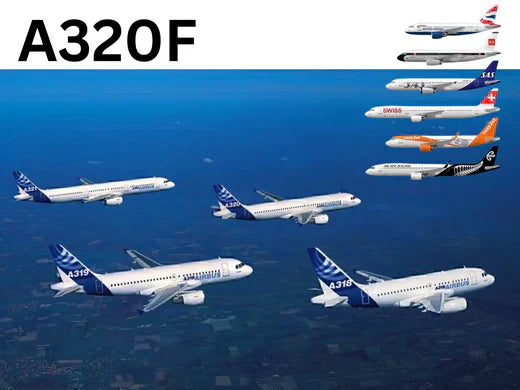
The Airbus A321-200 is a member of the Airbus A320 family, one of the most commercially successful single aisle aircraft programmes in aviation history. Manufactured by Airbus, a European aerospace corporation headquartered in Toulouse, France, the A321 was conceived as a stretched derivative of the A320 to compete directly with the Boeing 757 in the high capacity, short to medium haul market segment. Understanding how the A321-200 came to be requires looking at the origins of the A321 programme itself and the limitations of its predecessor, the A321-100.
The A321 programme was formally launched on 24 November 1988, backed by commitments for 183 aircraft from ten airline customers. Final assembly was established at the Airbus facility in Hamburg Finkenwerder, Germany, making the A321 the first Airbus type to be assembled outside France. The prototype, registered F-WWIA and powered by IAE V2500 engines, completed its maiden flight on 11 March 1993 from Hamburg. A second prototype equipped with CFM56-5B engines followed in May 1993. The initial production variant, the A321-100, entered commercial service on 27 January 1994 with Lufthansa, operating V2500-A5 powered aircraft. Alitalia followed as the second operator, receiving its first CFM56-5B powered A321-100 on 22 March 1994.
However, the A321-100 presented a notable shortcoming: its range with a full passenger load was actually shorter than that of the smaller A320 due to the heavier airframe without a corresponding increase in fuel capacity. This limitation restricted its appeal for operators needing to cover longer domestic routes, particularly transcontinental services within the United States.
To address this, Airbus began development of the A321-200 in 1995, aiming to provide full passenger transcontinental US range. The programme achieved this through a combination of higher thrust engines, additional fuel tankage, and structural reinforcements. The A321-200 made its first flight in December 1996 and entered service in April 1997 with Monarch Airlines as the launch operator. The variant quickly supplanted the A321-100 in production and became the standard build for all subsequent A321ceo (current engine option) deliveries.
A further significant upgrade arrived in September 2013, when Finnair became the first airline worldwide to receive an A321 equipped with Sharklets, the fuel saving wingtip devices that reduce aerodynamic drag and extend range by approximately 100 nautical miles. From that point onward, Sharklets became a widely adopted option on newly delivered A321-200 aircraft. Aircraft enthusiasts who enjoy comparing how different manufacturers tackle similar engineering challenges may find it interesting to explore other transport aircraft designs, such as the Antonov An-26, which took a very different approach to regional and tactical airlift.
What Distinguishes the A321-200 from the A321-100 and Later Variants
The core distinction between the A321-200 and its predecessor, the A321-100, lies in increased fuel capacity, higher maximum takeoff weight, and more powerful engine options. Whereas the A321-100 was limited by a maximum takeoff weight of approximately 83,000 kg (183,000 lb) and baseline fuel tanks, the A321-200 introduced one or two optional additional centre tanks (ACTs) installed in the rear underfloor cargo hold. These tanks raised the total fuel capacity to 30,030 litres (7,930 US gallons), a substantial increase that directly translated into greater range. Structural reinforcements to the fuselage, wings, and landing gear supported a higher maximum takeoff weight of 93,000 kg (205,000 lb).
On the engine side, the A321-200 offered upgraded powerplants from two manufacturers: the CFM International CFM56-5B3 and the International Aero Engines V2533-A5, both in the thrust range of 133 to 147 kN (30,000 to 33,000 lbf). These higher thrust ratings enabled the heavier aircraft to maintain safe takeoff and climb performance from a wide variety of airports. In a typical two class cabin configuration, the A321-200 achieves a range of approximately 3,200 nautical miles, according to industry appraisal data published by Acumen Aviation.
Compared to later members of the A321 family, the A321-200 uses conventional turbofan engines (the ceo generation) rather than the geared turbofan or LEAP engines found on the A321neo, A321LR, and A321XLR. It does not feature the structural rear centre tank of the A321XLR or the three ACT configuration of the A321LR, both of which push single aisle range well beyond 4,000 nautical miles.
The following list summarises the key identifiers of the Airbus A321-200 variant:
- Engine options: CFM56-5B3 or IAE V2533-A5, thrust range 133 to 147 kN
- Maximum takeoff weight: 93,000 kg (205,000 lb)
- Fuel capacity: up to 30,030 L (7,930 US gal) with optional rear underfloor ACTs
- Typical range: approximately 3,200 nautical miles in two class configuration
- Wingtip devices: Sharklets available from 2013 (optional), adding approximately 100 nm of range
- EASA Type Certificate: covered under TCDS EASA.A.064 for the A318/A319/A320/A321 Single Aisle family
- Final assembly: Hamburg Finkenwerder, Germany (later also Mobile, Alabama, USA)

An American Airlines Airbus A321 takes flight against a clear blue sky. The aircraft, identified as N915US, showcases the airline's distinct livery with its red, white, and blue tail design.
Airbus A321-200 Technical Specifications, Systems and Engine Options
The Airbus A321-200 is the higher gross weight evolution of the original A321-100, designed to carry more passengers over longer ranges while preserving full commonality with the A320 family. By adding an additional centre fuel tank (ACT) in the cargo hold and raising the maximum takeoff weight, Airbus gave operators a genuine single aisle aircraft capable of covering medium haul routes that previously required widebody equipment. The fuselage is stretched 6.94 m compared with the A320, accommodating up to 220 passengers in a high density layout, yet the wing, landing gear and fly by wire architecture remain shared with smaller siblings, reducing training and maintenance costs across mixed fleets.
The design trade offs centre on range versus payload flexibility. At higher MTOW options the A321-200 can fly sectors beyond 3,000 nautical miles with a typical two class cabin, making it well suited for transatlantic operations in some configurations. Runway performance, however, requires longer field lengths than the lighter A319 or A320 due to the increased weight and fuselage length, a consideration that matters at altitude or hot climate airports.
- Overall length: 44.51 m (146 ft 0 in)
- Wingspan: 35.80 m (117 ft 5 in) with wingtip fences; same geometric span with optional Sharklet wingtip devices
- Fuselage outer diameter: 3.95 m (13.0 ft); cabin width 3.70 m (12.1 ft)
- Tail height: 11.76 m (38 ft 7 in)
- Typical seating: 185 (two class) up to 220 (single class high density)
- Maximum takeoff weight (MTOW): up to 93,500 kg (206,000 lb), with lower weight variants available depending on operator selection
- Maximum landing weight (MLW): 77,800 kg (171,500 lb)
- Maximum zero fuel weight (MZFW): 73,800 kg (162,700 lb)
- Operating empty weight (OEW): approximately 48,500 kg (106,900 lb), varying with cabin configuration and options
- Fuel capacity: approximately 23,860 litres (6,300 US gal) in standard wing tanks; extendable with an additional centre tank (ACT)
- Range: up to 5,950 km (3,200 nm) with Sharklets at typical load, per manufacturer published figures; actual range varies with passenger count, cargo, reserves and atmospheric conditions
- Typical cruise speed: Mach 0.78 (approximately 450 kn / 833 km/h at cruise altitude)
- Service ceiling: 39,100 ft (11,918 m)
- Engines (two options): CFM International CFM56-5B3/P (up to 142 kN / 32,000 lbf) or IAE V2533-A5 (up to 140.6 kN / 31,600 lbf)
- Avionics baseline: EFIS glass cockpit with ECAM (Electronic Centralized Aircraft Monitor), dual FMGC (Flight Management and Guidance Computers), and three ADIRU (Air Data and Inertial Reference Units)
Systems, Flight Controls and Handling Technology
Like every member of the A320 family, the A321-200 uses a full digital fly by wire (FBW) flight control system. Pilot commands are entered through sidestick controllers and processed by multiple flight control computers, which translate inputs into electrical signals sent to hydraulic actuators on the control surfaces. The system operates under a hierarchy of control laws (Normal, Alternate, Direct) that provide flight envelope protections in Normal Law, preventing exceedances in angle of attack, load factor, pitch attitude and bank angle. This architecture was pioneered on the A320 in 1988 and has been proven across billions of flight hours.
Auto thrust is managed by the FMGC in coordination with the autoflight system and the full authority digital engine control (FADEC) on each powerplant. The ECAM continuously monitors engines and aircraft systems, displaying relevant pages automatically when a fault is detected, reducing crew workload during abnormal situations. Braking relies on a digital anti skid system with autobrake modes selectable for landing and rejected takeoff scenarios, complemented by carbon brakes on most in service aircraft. Onboard maintenance systems log faults in a centralised maintenance computer, enabling line maintenance teams to access troubleshooting data before the aircraft arrives at the gate.
Published performance figures for the A321-200 should always be interpreted with caution. Actual takeoff field length, landing distance, range and payload capability depend on many variables: operator selected MTOW variant, cabin density, centre of gravity, outside air temperature, airport elevation, runway condition (dry, wet, contaminated) and regulatory reserve requirements. Airbus performance engineering manuals provide charts and software tools that allow airlines to compute precise figures for each specific scenario. Numbers quoted by airlines or in general reference material are therefore indicative, not absolute.
Engine Options: CFM56-5B and IAE V2500
The A321-200 is offered with two engine families, both mature high bypass turbofans in the 30,000 to 33,000 lbf thrust class. The CFM International CFM56-5B3/P is part of the CFM56-5B series, designed specifically for the A320 family. CFM International is a 50/50 joint venture between GE Aerospace (formerly General Electric Aviation) and Safran Aircraft Engines (formerly Snecma) of France. The CFM56-5B series represented a significant evolution over the earlier CFM56-5A, incorporating a new wider chord fan in a longer fan case and a four stage low pressure compressor (up from three stages). The 5B3/P variant used on the A321-200 delivers up to 142 kN (32,000 lbf) of takeoff thrust, with a bypass ratio of approximately 5.4:1 and a dry weight of around 2,380 kg (5,250 lb). An optional double annular combustor (DAC) was available, reducing NOx emissions by more than 40 percent. The CFM56-5B series has been the highest volume engine supplied to Airbus, also powering the A318, A319 and A320.
The alternative powerplant is the IAE V2533-A5, the highest thrust member of the V2500 engine family. International Aero Engines (IAE) was originally formed in 1984 as a consortium of Pratt & Whitney, Rolls Royce, Japanese Aero Engine Corporation (JAEC), MTU Aero Engines and Fiat Aviazione. The partnership has evolved over the decades; today the active shareholders are Pratt & Whitney, JAEC and MTU. The V2533-A5 produces up to 140.6 kN (31,600 lbf) of thrust, with a bypass ratio of 4.5:1, a fan diameter of 1.61 m (5.2 ft) and a dry weight of approximately 2,404 kg (5,300 lb). Beyond the A320 family, the V2500 engine line also powered the McDonnell Douglas MD-90 in the V2525-D5 variant, giving the engine family broad commercial reach across single aisle aviation. Both engine options feature FADEC for precise thrust management and are fully interchangeable from a maintenance certification perspective within their respective type ratings.
Airbus A321-200 vs A320-200 vs A321neo vs A321XLR Specifications Comparison
Scroll horizontally to see more →
| Parameter | Airbus A321-200 | Airbus A320-200 | Airbus A321neo | Airbus A321XLR |
|---|---|---|---|---|
| Entry into service | 1996 | 1988 | 2017 | 2024 |
| Engines | 2 × CFM56-5B or IAE V2500 | 2 × CFM56-5B or IAE V2500 | 2 × CFM LEAP-1A or PW1100G | 2 × CFM LEAP-1A |
| Length | 44.5 m | 37.6 m | 44.5 m | 44.5 m |
| Wingspan | 35.8 m | 35.8 m | 35.8 m | 35.8 m |
| Height | 11.8 m | 12.6 m | 11.8 m | 11.8 m |
| Typical seating and layout | 2-class: 185–220 passengers | 2-class: 150–180 passengers | 2-class: 180–220 passengers | 2-class: 180–220 passengers |
| MTOW | 93 t | 78 t | 97 t | 101 t |
| Range | 3,200 nm | 3,100 nm | 4,000 nm | 4,700 nm |
| Cruise speed | 0.78 Mach | 0.78 Mach | 0.78 Mach | 0.78 Mach |
| Service ceiling | 39,000 ft | 39,000 ft | 41,000 ft | 41,000 ft |
| Program note | Stretched A320 family baseline for medium-haul with higher capacity | Original A320 family baseline narrowbody for short/medium-haul | New engine option version with 15-20% better fuel efficiency | Longest-range single-aisle ever, enabling transatlantic capability |
Scroll horizontally to see more →
The table compares key specs across the A320 family, showing how the A321-200 stretches the A320-200 for higher capacity (185–220 vs 150–180 seats) with similar cruise speed and wingspan. Newer variants boost performance: the A321neo raises MTOW and range to 4,000 nm, while the A321XLR goes further to 4,700 nm and 101 t MTOW, enabling longer routes despite the same basic dimensions.
Airbus A321-200 Typical Routes, Missions and Airlines Operating Worldwide
The Airbus A321-200 is designed for short to medium haul missions, covering stage lengths typically ranging from 1,000 to 5,500 km (540 to 3,000 nautical miles). With a maximum range of approximately 5,950 km when fitted with Sharklets, the type comfortably handles flights lasting between one and six hours at a cruising speed of around 830 to 870 km/h (Mach 0.78). Airlines operating the A321-200 in high utilisation networks commonly achieve 8 to 12 block hours per day across three to five sectors, with turnaround times of approximately 45 to 60 minutes at major airports. The design flight time per sector is approximately 2.4 hours, making it well suited to dense intra continental networks.
The aircraft is equally at home in hub and spoke operations and point to point networks. Full service carriers such as American Airlines and British Airways deploy it on high demand spokes from major hubs, while low cost carriers like Wizz Air use it for direct point to point services across secondary airports. Its ability to operate from runways of approximately 2,000 to 2,500 metres makes it compatible with most commercial airports, though operators must account for reduced payload at high altitude or hot climate airports due to higher takeoff speeds and longer required field lengths. As the A321-200 fleet ages, maintenance costs tend to increase, and fuel burn remains around 15 to 20% higher than the newer A321neo, prompting many airlines to transition to the next generation variant. Cabin configuration flexibility also presents challenges: some airlines that adopted the Airbus Space Flex galley layout to add seats have experienced crew service delays and reduced passenger comfort, leading carriers like Qantas to reverse those changes. For an example of how different aircraft types serve very different mission profiles, consider the Pilatus PC-12, a versatile single engine turboprop tailored to short field and remote operations.
Where the Airbus A321-200 Operates Around the World
The Airbus A321-200 is one of the most widely deployed narrowbody aircraft globally. As of mid 2025, over 1,700 A321ceo variants have been delivered to more than 100 operators worldwide, according to Airbus production records. In Europe, it anchors both legacy and low cost networks on dense intra continental routes. Across North America, it serves as a workhorse for domestic transcontinental and medium haul flying. In Asia, major Chinese carriers and regional airlines rely on it for high frequency domestic and short haul international services. Presence in Africa and South America is more limited, with only a handful of operators deploying the type in those regions.
- Europe: The A321-200 is a cornerstone of European aviation. British Airways operates 11 aircraft on short and medium haul routes from London, while Turkish Airlines deploys a significant fleet from its Istanbul hub to destinations across Europe, North Africa and the Middle East, typically in a two class layout with 20 business and 162 economy seats. Wizz Air configures its A321-200s in a high density 230 seat all economy layout for budget point to point services. Aegean Airlines uses the type on routes within Europe and to the eastern Mediterranean, while Aeroflot has historically operated the variant on domestic Russian and short haul international routes. Condor flies it on leisure routes with 210 to 220 seats, including up to 24 in a business class cabin.
- North and South America: American Airlines is the world's largest operator with over 200 A321-200s, using them on high capacity domestic routes and notably in a premium A321T transcontinental configuration between New York JFK and Los Angeles or San Francisco. Delta Air Lines operates around 100 aircraft on medium haul routes up to approximately 4,100 km, while JetBlue Airways deploys the type on domestic and Caribbean services. In South America, the A321-200 has virtually no presence in passenger operations, though Levu Air Cargo in Brazil operates an A321P2F freighter conversion for cargo services.
- Asia: China Southern Airlines and China Eastern Airlines are among the largest Asian operators, each deploying large fleets on domestic Chinese routes and short haul regional services. Asiana Airlines in South Korea operates around 11 to 13 A321-200s for regional international flights in a 171 seat two class configuration (12 business, 159 economy). Air Astana and Air Busan also use the type for medium haul and domestic services respectively.
- Africa and Middle East: Penetration in Africa remains limited. South African Airways operates seven A321-200s on regional African routes, and Nile Air in Egypt uses the type for scheduled domestic and international services. In the Middle East, Air Arabia includes several A321-200s in its fleet for low cost short haul operations from Sharjah and regional bases.
Typical Seating Configurations on the Airbus A321-200
The Airbus A321-200 has a maximum certified seating capacity of 230 passengers in a single class layout, though typical configurations vary considerably by operator type. Full service network carriers generally seat 170 to 200 passengers in two classes. British Airways offers up to 218 seats with a flexible Club Europe cabin (up to 56 business seats with the middle seat blocked) and a Euro Traveller economy section. Turkish Airlines typically installs 20 business class seats at 43 inch pitch in a 2 by 2 layout and 162 economy seats at 31 inch pitch. Delta Air Lines seats 191 passengers across three classes: 20 in First (37 inch pitch), 35 in Comfort+ (34 inch pitch) and 136 in Main Cabin (31 inch pitch).
Low cost and ultra low cost carriers maximise capacity. Wizz Air fits 230 economy seats with a tight 28 to 29 inch pitch and non reclining seats, while leisure operators like Condor offer layouts of 210 to 220 seats with optional business class rows. At the other end of the spectrum, American Airlines operates a premium A321T transcontinental variant with just 102 seats: 10 First Class lie flat suites, 20 recliner Business seats and 72 economy seats, demonstrating the remarkable flexibility of the A321-200 cabin. Economy seat width is generally 18 inches across all configurations, arranged in a standard 3 by 3 abreast layout within the 3.70 metre wide cabin.
In this video, compare the Airbus A320 and A321 to see how they differ in capacity, performance, and typical routes, and learn which jet may be the better choice for airlines and passengers.
Airbus A321-200 Safety Record: How Safe Is This Aircraft?
The Airbus A321-200 belongs to the A320 family, a generation of fly-by-wire narrowbody aircraft that has accumulated one of the strongest safety records in commercial aviation history. As of June 2025, more than 3,536 A321 aircraft have been delivered worldwide, with approximately 3,453 still in active service across hundreds of operators. The A320 family as a whole has logged over 293 million flight cycles since entering service in 1988. According to Airbus accident statistics, generation 4 aircraft, which include the A321-200, recorded a fatal accident rate of just 0.04 per million flight cycles in 2025. Through 2015, the entire A320 family experienced 0.12 fatal hull loss accidents per million takeoffs and 0.26 total hull loss accidents per million takeoffs, figures that rank among the lowest for any airliner type. Within this large operational footprint, the A321 specifically has been involved in very few hull loss events, reinforcing its reputation as a dependable workhorse for short and medium haul routes worldwide.
Notable Accidents and Incidents Involving the Airbus A321
While the overall safety record of the A321-200 is strong, several high profile events have shaped safety practices across the industry.
- Airblue Flight 202 (2010) — On 28 July 2010, an Airblue Airbus A321-231 crashed into the Margalla Hills near Islamabad, Pakistan, killing all 152 people on board. The investigation published on the Aviation Safety Network classified the event as Controlled Flight Into Terrain (CFIT). The primary cause was pilot error: the captain violated established procedures for a visual approach, descended below minimum descent altitude in poor weather, and failed to respond to 21 Enhanced Ground Proximity Warning System alerts over a period of 70 seconds. Crew resource management breakdowns were also cited, as the first officer did not effectively intervene. The accident led to increased emphasis on CRM training standards in Pakistan and reinforced the importance of EGPWS compliance procedures across the industry.
- Metrojet Flight 9268 (2015) — On 31 October 2015, a Metrojet (Kogalymavia) Airbus A321-231 broke apart in flight over the Sinai Peninsula, Egypt, killing all 224 passengers and crew. Multiple intelligence agencies and the Russian government attributed the destruction to an explosive device concealed in the baggage hold. This was not an airframe or system failure but an act of terrorism. In the aftermath, several countries suspended flights to Sharm El Sheikh, and aviation security protocols at airports worldwide were strengthened, with particular attention to baggage screening, staff vetting and access control in airport restricted areas.
- Ural Airlines Flight 178 (2019) — On 15 August 2019, a Ural Airlines Airbus A321-211 struck a flock of gulls shortly after takeoff from Zhukovsky Airport near Moscow, causing both engines to lose power. The crew executed a gear up emergency landing in a cornfield approximately three kilometres from the runway. All 233 occupants survived, though 28 were injured. The investigation by the Interstate Aviation Committee (MAK) noted that inadequate bird hazard management around the airport contributed to the strike, and that certain crew actions during the emergency could have been improved. The event highlighted the ongoing need for rigorous wildlife management programmes near airports, a concern also relevant to operations at airports served by smaller regional aircraft such as the Bombardier CRJ1000.
How Safe Is the Airbus A321-200?
When accident statistics are measured against the enormous volume of flights operated, the Airbus A321-200 stands out as one of the safest single aisle aircraft in service. The A320 family's fatal accident rate of approximately 0.07 per million flights is among the lowest for any commercial aircraft type. A key factor in this performance is the Airbus fly-by-wire design philosophy, which includes flight envelope protection. This system prevents the aircraft from exceeding safe parameters in pitch, bank angle and speed, dramatically reducing the risk of loss of control in flight (LOC-I). According to Airbus, flight envelope protection has helped reduce LOC-I fatal accident rates by 91% compared with earlier generation aircraft, while Controlled Flight Into Terrain (CFIT) fatal accidents have decreased by 87%.
Beyond hardware design, the A321-200 benefits from standardised operating procedures (SOPs) shared across the entire A320 family, allowing pilots to transition between variants with minimal additional training. This commonality reduces human factor risks. Continuous regulatory oversight from authorities such as EASA and the FAA ensures that airworthiness directives, mandatory inspections and operational requirements keep the fleet at the highest safety standards throughout its service life. Taken together, these layers of engineering, training, regulation and operational practice confirm that commercial aviation, and the A321-200 in particular, remains one of the safest modes of transport available.
01 What is the typical range and mission profile of the Airbus A321-200?
The Airbus A321-200 has a range of approximately 5,600 to 5,950 kilometres (3,000 to 3,700 miles), making it ideal for short to medium-haul routes across continents and regions. This range allows airlines to operate efficiently on transcontinental flights while maintaining the economics of a single-aisle aircraft, positioning it as a versatile workhorse for both leisure and business travel without requiring long-haul widebody aircraft.
02 How many passengers does the Airbus A321-200 typically carry?
The Airbus A321-200 can accommodate between 170 and 220 passengers depending on the cabin configuration chosen by individual airlines. Most carriers configure it with two or three classes, typically ranging from 190 to 210 seats in mixed-class layouts, though high-density all-economy configurations can reach 220 seats. This flexibility allows airlines to tailor the aircraft to their specific route requirements and business model.
03 What makes the Airbus A321-200 cabin more comfortable than other single-aisle aircraft?
The Airbus A321-200 features the widest single-aisle fuselage on the market at 3.70 metres cabin width, offering passengers noticeably more shoulder and elbow room compared to competitors. Many airlines equip their A321-200 fleets with leather seats, power sockets at each seat, and quieter cabin environments due to improved engine and insulation technology, creating a more premium experience typical of larger widebody aircraft.
04 What is the cruising speed and maximum altitude of the Airbus A321-200?
The Airbus A321-200 cruises at approximately 828 to 840 kilometres per hour (511 to 520 miles per hour) at Mach 0.82, and has a maximum service ceiling of 11,918 metres (39,100 feet). These performance characteristics allow the aircraft to operate efficiently on busy international routes and climb above most weather systems, ensuring reliable on-time performance.
05 How does the Airbus A321-200 compare to the standard A320 in terms of size and capability?
The Airbus A321-200 is the stretched fuselage variant of the A320, offering approximately 44 percent more cabin length and greater payload capacity, resulting in significantly higher passenger capacity and range. Beyond the fuselage stretch, the A321-200 features more powerful engines, a strengthened undercarriage, and larger tyres to handle the additional weight while maintaining excellent fuel efficiency.
06 Which airlines operate the Airbus A321-200 and on what types of routes?
The Airbus A321-200 is operated by numerous airlines worldwide including British Airways, Delta Air Lines, Condor, and Air Transat, among many others. These carriers use the aircraft extensively on transcontinental routes, holiday destinations, and dense point-to-point city pairs where its range and capacity provide superior economics compared to widebody aircraft while delivering genuine passenger comfort.