

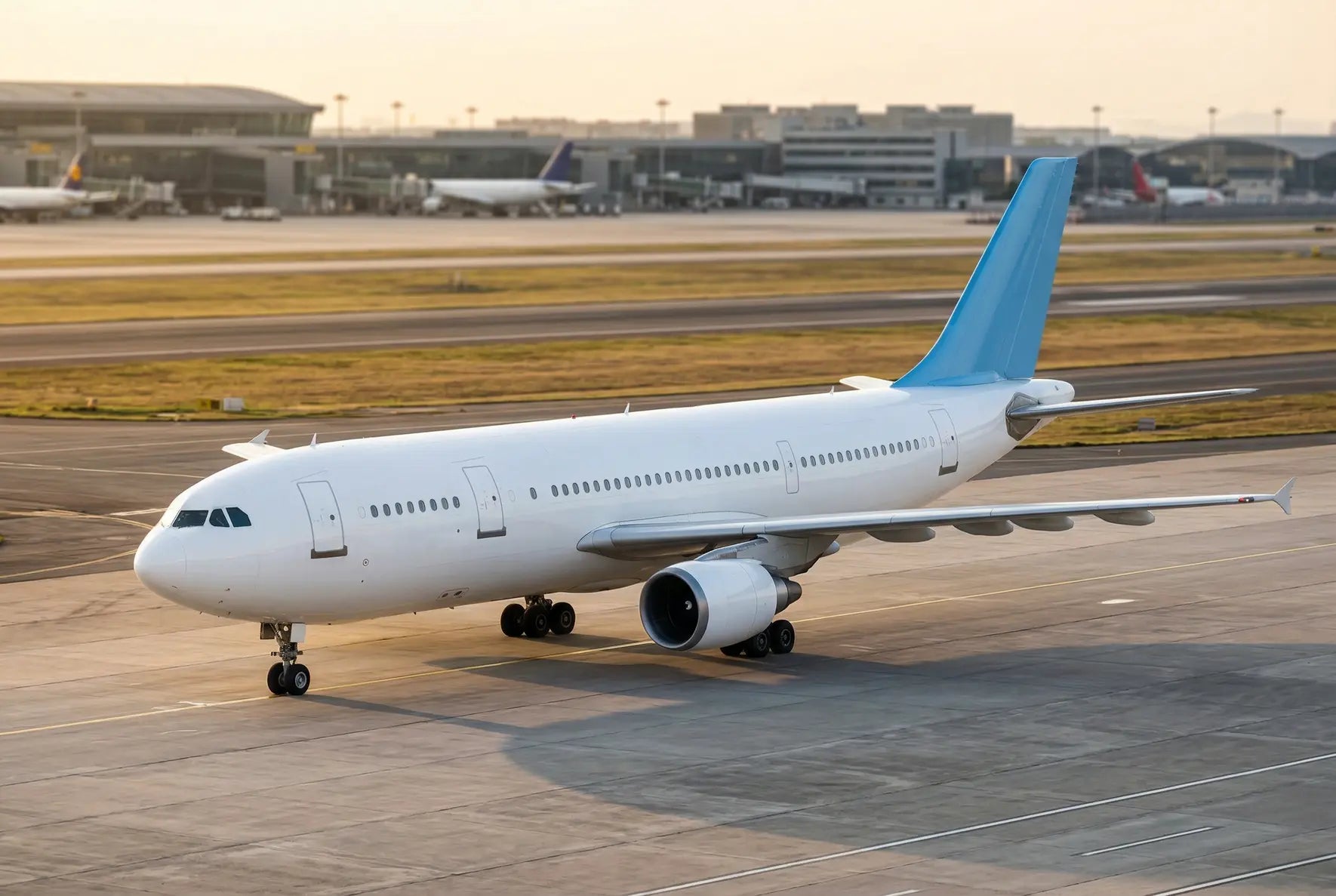
History and Development of the Airbus A300B2: How Europe's First Widebody Took Shape
The Airbus A300B2 holds a singular place in commercial aviation as the first production variant of the A300 family and, more broadly, the aircraft that launched Airbus as a credible manufacturer. Its story begins in the mid 1960s, when European governments recognised that no single national aerospace firm could challenge the dominance of American manufacturers such as Boeing and McDonnell Douglas in the widebody market. A collaborative effort was the only viable path, and the A300 programme became the vehicle for that ambition.
Origins of the A300 Programme and the Airbus Consortium
Discussions between France, West Germany and the United Kingdom started in 1965 and led to a memorandum of understanding signed on 26 September 1967 to develop a 300 seat European widebody airliner. The original concept, sometimes referenced as the HBN 100 study by Sud Aviation, envisioned a large twin aisle aircraft for high density short haul routes. By 1968, the design was scaled down to roughly 250 seats and redesignated the A300B, reflecting both practical airline requirements and the unavailability of a sufficiently powerful engine for the original 300 seat layout.
On 29 May 1969, France and West Germany signed a formal agreement at the Paris Air Show to proceed with the A300B as equal partners after the United Kingdom had withdrawn government funding. Hawker Siddeley, however, continued to participate as a wing design and manufacturing partner on a private risk sharing basis. Airbus Industrie was formally established on 18 December 1970 as a Groupement d'Intérêt Économique (GIE) under French law, with Aérospatiale (France) and Deutsche Airbus (West Germany) as founding members. CASA of Spain joined in 1971 with a 4.2% share, contributing horizontal tailplane sections. Manufacturing was distributed across borders: Aérospatiale handled the cockpit, centre fuselage sections and final assembly in Toulouse; Deutsche Airbus produced forward and rear fuselage sections; Hawker Siddeley designed and built the advanced supercritical wing; and CASA manufactured the horizontal stabiliser.
From the A300B1 Prototype to the A300B2 Production Model
The first aircraft to fly was the A300B1 prototype (MSN 001, registration F WUAB), which took off from Toulouse Blagnac on 28 October 1972. The A300B1 served purely as a flight test and demonstration airframe; only two were built (MSN 001 and MSN 002). Powered by a pair of General Electric CF6 50A turbofans, these prototypes validated the fundamental aerodynamic and structural design of the widebody twin engine concept.
Air France, the intended launch customer, requested a longer fuselage to increase seat capacity and improve economics on its European network. This led directly to the creation of the Airbus A300B2, which featured a fuselage stretched by 2.65 metres compared with the B1, bringing total length to approximately 53.6 metres and enabling a typical two class layout of around 251 passengers. MSN 003, the first A300B2, flew in June 1973. Together with the two B1 prototypes, it completed an intensive certification flight test programme.
The French DGAC granted type certification for the A300B2 on 15 March 1974, followed by European validation under what is now EASA Type Certificate EASA.A.172. The United States FAA awarded its own type certificate in May 1974. The first production A300B2 (MSN 005, F BVGA) was delivered to Air France on 10 May 1974, and the type entered revenue service on 30 May 1974 on the Paris to London route. Early operators beyond Air France included Air Inter, South African Airways, Iran Air and several other carriers seeking an efficient widebody for short to medium haul operations.
What Distinguishes the Airbus A300B2 from Other A300 Variants
The A300B2 was designed as a short range, high capacity widebody. It relied exclusively on wing fuel tanks, without the centre section fuel tank that would later define the longer range A300B4. This gave the B2 a maximum range of roughly 1,700 nautical miles with a full passenger load, well suited to dense European and regional routes but insufficient for longer intercontinental sectors. Structurally, the B2 was lighter than the B4, with lower maximum takeoff weights. Three main sub variants were produced:
- A300B2 100: the baseline production model with a maximum takeoff weight (MTOW) of approximately 137 tonnes, powered by General Electric CF6 50C turbofans.
- A300B2 200: a higher gross weight derivative (MTOW approximately 142 tonnes) with structural reinforcements. Nine were built, the majority for Iran Air. Some B2 200 airframes incorporated Krueger flaps on the wing leading edge (designated B2K) for improved performance in hot and high altitude conditions.
- A300B2 320: a later development with increased maximum landing weight and maximum zero fuel weight limits, providing greater payload flexibility.
By contrast, the successor A300B4 added a centre fuel tank (raising total fuel capacity to approximately 47,500 kg), higher MTOW options of up to 165 tonnes (on the B4 200), and a range of up to 2,900 nautical miles, opening the type to medium haul and even some long haul routes. Combined A300B2 and B4 production totalled 248 aircraft before Airbus transitioned to the more advanced A300 600 series in the 1980s. For context on how Airbus later applied lessons from the A300 programme to smaller single aisle designs, see the Airbus A318 100 overview.
The Airbus A300B2 proved that a twin engine widebody could operate economically on short haul routes, a concept that fundamentally reshaped airline fleet planning worldwide. Its successful certification and service entry validated both the collaborative European manufacturing model and the technical premise that two engines were sufficient for widebody operations, laying the groundwork for the entire Airbus product line that followed.

An Iran Air Airbus A300-605R is captured mid-flight against a clear blue sky. The aircraft is prominently displaying its Iran Air livery and registration EP-IBD.
Airbus A300B2 Technical Specifications, Systems and Engine Options
The Airbus A300B2 was designed as a short to medium haul widebody airliner optimised for high capacity operations on European and regional routes. As the first production variant of the Airbus A300 family, the B2 prioritised payload over range, carrying up to 250 passengers in a typical high density layout over distances of approximately 1,450 nautical miles. Its twin engine configuration on a wide fuselage represented a fundamental departure from the three and four engine widebodies of the era, trading ultra long range capability for lower operating costs per seat on dense short haul networks.
The A300B2 inherited the A300 family's distinctive wide fuselage cross section (5.64 m external diameter), supercritical wing design, and triple hydraulic redundancy. Its principal design trade off compared to the later A300B4 was a lower maximum takeoff weight and reduced fuel capacity, as the B2 relied solely on wing fuel tanks without the centre section tank added on the B4. This made the B2 lighter and well suited to sectors where runway performance and turnaround efficiency mattered more than intercontinental range.
- Overall length: 53.6 m (175 ft 11 in)
- Wingspan: 44.84 m (147 ft 1 in)
- Wing area: 260 m² (2,799 sq ft)
- Overall height: 16.53 m (54 ft 3 in)
- Fuselage external diameter: 5.64 m (18 ft 6 in)
- Typical passenger capacity: 220 to 250 (single class); up to 336 in maximum density
- MTOW (A300B2 100): 137,000 kg (302,030 lb)
- OEW: approximately 89,000 kg (196,210 lb), configuration dependent
- MLW: 130,000 kg (286,600 lb)
- MZFW: 120,500 kg (265,660 lb)
- Maximum structural payload: approximately 31,430 kg (69,290 lb)
- Fuel capacity: 43,000 litres (11,360 US gal), wing tanks only
- Range: approximately 1,450 nm (2,685 km) with 250 passengers at MTOW
- Cruise speed: Mach 0.78 to 0.82 (approximately 470 kt), depending on altitude and weight
- Engines (A300B2 100): 2 × General Electric CF6 50C or CF6 50C2 turbofans, each rated at approximately 227 to 233 kN (51,000 to 52,500 lbf)
- Engines (A300B2 200 options): GE CF6 50C1 (234 kN) or Pratt & Whitney JT9D 59A (236 kN / 53,000 lbf)
- Flight deck: three crew (two pilots plus flight engineer), analogue instrumentation
- Hydraulic systems: three independent circuits (Green, Yellow, Blue)
Systems, Flight Controls and Handling Technology
The A300B2 used conventional mechanical flight controls with hydraulic actuation, a generation before the fly by wire architecture that Airbus would introduce on the A320. Pilot inputs on the control column and rudder pedals were transmitted through rods, cables, pulleys, and bell cranks to hydraulic servo actuators at each control surface. The three independent hydraulic systems provided a high degree of redundancy: each primary surface (ailerons, elevators, rudder) was powered by multiple actuators fed from different circuits, allowing continued safe flight and landing even after a dual hydraulic failure.
The cockpit featured a dedicated flight engineer station for monitoring engine parameters, hydraulics, electrical systems, fuel management, and pressurisation. Automation was limited to a basic autopilot with pitch, roll, heading, and altitude hold modes coupled to dual inertial reference systems and radio navigation aids. There was no digital flight management system or electronic flight instrument system on the original B2; the philosophy emphasised mechanical reliability and direct pilot authority rather than envelope protection. Secondary flight controls included leading edge Krueger flaps and slats managed by a dedicated slats and flaps control computer, one of the earliest uses of electronic sequencing on a commercial widebody. Anti skid braking on the main landing gear used wheel speed sensors and a brake control computer to modulate hydraulic pressure and prevent tyre lockup, with autobrake modes available for landing and rejected takeoff scenarios.
Published performance figures for the A300B2 can vary significantly depending on the operator's chosen cabin configuration, actual operating empty weight, payload, atmospheric conditions, and runway state. The MTOW of 137,000 kg applies to the baseline A300B2 100; later sub variants such as the B2 200 (also known as B2K) were certificated at higher weights with improved takeoff performance through Krueger flap modifications. Range values quoted as 1,450 nm assume a typical 250 passenger load and standard atmospheric conditions; real world range will differ with wind, temperature, altitude, and airline specific equipment fits. Operators evaluating airline pilot career paths at carriers that historically flew the A300 will note how the type's manual systems and three crew operation shaped a distinctive piloting culture.
Engines: General Electric CF6 50 and Pratt & Whitney JT9D
The majority of A300B2 100 aircraft were powered by the General Electric CF6 50C or CF6 50C2 high bypass turbofan engines. The CF6 family traces its origins to the late 1960s, when GE adapted the military TF39 engine (developed for the Lockheed C 5 Galaxy) into a commercial powerplant. The CF6 6 variant entered service in 1971 on the McDonnell Douglas DC 10 Series 10, and the higher thrust CF6 50 series followed shortly after for heavier widebody applications. On the A300B2 100, the CF6 50C was rated at approximately 227 kN (51,000 lbf) of takeoff thrust, while the CF6 50C2 produced around 233 kN (52,500 lbf). Both variants featured a single stage fan, a three stage low pressure compressor, a 14 stage high pressure compressor, and a bypass ratio of approximately 4.3:1. The CF6 50 family also powered the McDonnell Douglas DC 10 30, Boeing 747 200, and the military KC 10A Extender, making it one of the most prolific widebody engine programmes of its era.
Select A300B2 200 airframes were fitted with the Pratt & Whitney JT9D 59A as an alternative. The JT9D programme began in the mid 1960s as a clean sheet high bypass turbofan; its initial variant, the JT9D 3A, famously powered the Boeing 747 from its entry into service in 1970, making it the first high bypass engine to fly on a commercial widebody. The JT9D 59A delivered 236 kN (53,000 lbf) of takeoff thrust, with a bypass ratio of approximately 5.0:1, a fan tip diameter of 2.38 m (93.6 in), and a dry weight of approximately 4,154 kg (9,155 lb). Beyond the A300, the broader JT9D family was used on the Boeing 747, McDonnell Douglas DC 10 40, and certain Boeing 767 variants. Production of the JT9D series ended around 1990, succeeded by the Pratt & Whitney PW4000. A total of 30 A300B2 100 airframes were built, all with CF6 50 series engines, while the nine A300B2 200 aircraft were delivered with either CF6 or JT9D options depending on customer selection.
Airbus A300 Variants vs Boeing 767-200: Key Specifications Comparison
Scroll horizontally to see more →
| Parameter | Airbus A300B2 | Airbus A300B4-100 | Airbus A300-600 | Boeing 767-200 |
|---|---|---|---|---|
| Entry into service | 1974 | 1979 | 1984 | 1982 |
| Engines | 2 × GE CF6-50C1 | 2 × GE CF6-50C2 | 2 × GE CF6-80C2 | 2 × GE CF6-80A |
| Length | 53.6 m | 54.0 m | 54.5 m | 48.5 m |
| Wingspan | 44.8 m | 44.8 m | 44.8 m | 47.6 m |
| Height | 16.5 m | 16.7 m | 17.3 m | 15.9 m |
| Typical seating and layout | 2-class: 250–280 passengers | 2-class: 260–290 passengers | 2-class: 260–300 passengers | 2-class: 216–255 passengers |
| MTOW | 142 t | 165 t | 171 t | 151 t |
| Range | 2,600 nm | 3,000 nm | 4,000 nm | 3,900 nm |
| Cruise speed | 0.80 Mach | 0.80 Mach | 0.80 Mach | 0.80 Mach |
| Service ceiling | 37,000 ft | 41,000 ft | 41,000 ft | 43,100 ft |
| Program note | Original short-fuselage baseline model for short-medium haul | Stretched fuselage version with increased MTOW and range | Further improved stretched model with better engines and efficiency | Main competitor twin-aisle from Boeing same generation and capacity |
Scroll horizontally to see more →
The table compares key specs of early Airbus A300 variants (B2, B4-100, A300-600) against the Boeing 767-200. It shows the A300 family growing in length, MTOW, and range, with the A300-600 reaching 4,000 nm. The 767-200 is shorter but has a larger wingspan and the highest service ceiling, while cruise speed is identical at Mach 0.80.
Airbus A300B2 Operations: Typical Routes, Airlines and Missions Worldwide
The Airbus A300B2 was designed as a short to medium haul widebody, optimised for high capacity routes typically ranging from 1,000 to 3,500 km. The B2 100 sub variant offered a range of approximately 2,200 km with 251 passengers, while the improved B2 200 could cover around 3,400 km carrying 265 passengers in a standard two class layout. These specifications made the aircraft particularly suited to dense domestic trunk routes, intra continental corridors and busy regional sectors where passenger volumes justified widebody capacity but stage lengths remained under three hours.
In service, the Airbus A300B2 was recorded achieving an average daily utilisation of roughly 5 hours, accumulating between 1,800 and 2,500 flight hours and 500 to 950 cycles per year. Average sector times hovered around 1 hour 55 minutes, reflecting its role on short to medium distance segments. Airlines typically scheduled two to three rotations per day, taking advantage of the aircraft's generous underfloor cargo hold (capable of accommodating 20 LD3 containers) and its relatively quick turnaround capability for a widebody. These utilisation patterns aligned with hub and spoke network strategies, where the A300B2 would feed major airports with high density traffic flows during morning and evening peak waves.
The operational environment of the Airbus A300B2 centred on major hub airports, though its relatively modest runway requirements (takeoff distance of approximately 2,850 m and landing distance of around 1,640 m) also permitted use at larger secondary airports. Operators deployed it primarily on point to point routes within continents and on hub feeders linking capital cities. As the type aged through the 1980s and 1990s, airlines faced growing challenges: the three crew member cockpit (pilot, co pilot and flight engineer) increased labour costs compared to newer two crew aircraft, while the General Electric CF6 engines, although reliable, consumed more fuel per seat than the powerplants fitted to successor types such as the Airbus A310 and the A300 600. Maintenance costs also rose as airframes approached structural thresholds around 34,000 flight cycles, prompting many operators to convert passenger aircraft into freighters or retire them altogether. Modern pilot training techniques, including virtual reality based simulation, have since transformed the way crews transition between legacy and contemporary cockpit environments.
Where the Airbus A300B2 Operated Around the World
The Airbus A300B2 saw service across four broad regions, fulfilling roles that ranged from high frequency domestic shuttles to medium haul international connections. In Europe, the aircraft served as the backbone of several flag carriers on busy intra continental corridors. In North America, it found a niche on dense East Coast routes and Caribbean services. Across Asia, airlines deployed it on heavily trafficked domestic sectors and regional international flights. In Africa and the Middle East, the type connected capital cities and provided capacity on routes linking the two continents to Europe.
- Europe: Air France was the launch customer, receiving the first production A300B2 in May 1974 and operating it from Paris on busy intra European routes to cities across Europe and North Africa. Lufthansa was another early adopter, deploying the type from Frankfurt and Munich on medium haul European sectors before transitioning to newer Airbus models. Trans European Airways in Belgium operated the B2 100 on charter and scheduled services. Later in the aircraft's career, Turkish operators including MNG Airlines, Onur Air, Fly Air and cargo specialist ACT Airlines acquired and converted A300B2 airframes for freight operations across Europe and the Middle East, making Turkey one of the largest operating regions for the variant.
- North and South America: Eastern Airlines introduced the A300B2 on high density East Coast corridors in the United States, notably between New York and Miami, and on its Air Shuttle service. Continental Airlines later inherited several of these aircraft. No confirmed South American passenger operator of the A300B2 has been documented, though US based cargo carriers extended freighter operations into Latin America and the Caribbean.
- Asia: Indian Airlines deployed the Airbus A300B2 on busy domestic trunk routes such as Mumbai to Delhi and Kolkata to Chennai, taking advantage of its widebody capacity on sectors of roughly 700 to 1,500 km. Korean Air used the type on domestic and short haul regional services from Seoul. Thai Airways International operated the variant on Southeast Asian regional routes from Bangkok, and Pakistan International Airlines flew the type on medium haul sectors to the Middle East and Europe.
- Africa and the Middle East: Air Afrique operated the A300B2 on pan African routes from hubs such as Dakar and Abidjan, including services to Europe. South African Airways configured its aircraft in a comfortable two class layout for domestic and regional sectors. Iran Air has been among the last operators of the Airbus A300 family in passenger service, maintaining A300B2 and B4 variants on domestic and regional routes from Tehran. EgyptAir also operated converted freighter variants on cargo routes connecting North Africa with the Middle East and Europe.
Typical Seating Configurations on the Airbus A300B2
The Airbus A300B2 featured a wide fuselage with a cabin width that supported twin aisle seating. In the standard economy class arrangement, airlines installed eight abreast seating in a 2 4 2 configuration with seat widths of approximately 21 inches (53 cm). Business or first class cabins typically used a six abreast 2 2 2 layout with wider seats of 20 to 22 inches and greater pitch.
Network carriers generally configured the aircraft in a two class layout seating between 250 and 281 passengers. South African Airways, for example, fitted 265 seats with 25 in business class and 240 in economy at a generous 34 inch (86 cm) pitch. Iran Air operated a 278 seat two class layout comprising 30 business class and 248 economy class seats. Continental Airlines offered 24 first class seats in a 2 2 2 arrangement forward of door two, with the remainder of the cabin in economy.
Leisure and shuttle operators favoured higher density configurations. Eastern Airlines used an all coach layout with 265 seats on its Air Shuttle services, removing the premium cabin to maximise throughput on short, high frequency sectors. At maximum density, the A300B2 could accommodate up to 336 passengers in a single class arrangement at a reduced pitch of approximately 30 inches (77 cm), a layout sometimes adopted by charter carriers seeking the lowest possible seat cost on seasonal holiday routes. These variations illustrate how the widebody cross section of the Airbus A300B2 gave operators considerable flexibility to tailor the cabin to their specific market, whether a full service intercontinental airline or a high volume domestic shuttle. Further technical details on the aircraft family can be found in the official Airbus A300 aircraft characteristics document.
In this video, discover how Airbus nearly failed to launch and how the A300 became the program that changed the company’s future. Learn the key decisions, challenges, and turning points behind its creation.
Airbus A300B2 Safety Record and How Safe Is This Aircraft?
The Airbus A300B2 entered commercial service with Air France in May 1974 as the first production variant of the A300 programme. Approximately 57 A300B2 airframes were delivered, forming part of a broader family of 561 A300s built by the time production ended in 2007. Over more than three decades of active flying, A300B2 operators accumulated tens of thousands of flights on short and medium haul routes across Europe, Asia and the Middle East. When evaluating the safety record of this variant, it is important to distinguish between accidents caused by design or mechanical factors and those resulting from external threats, crew decision making or geopolitical events. Across the entire A300 family, the Aviation Safety Network records 24 hull loss accidents and approximately 1,133 fatalities over roughly 12.57 million departures. A significant proportion of those losses involved later variants such as the A300B4 and A300‑600 rather than the B2 specifically. In the context of first generation widebody twins operating from the mid 1970s onward, that record is broadly comparable to contemporary types of the same era.
Notable Accidents and Incidents Involving the Airbus A300B2
Several high profile events have shaped public perception of the A300B2, though most were driven by factors outside aircraft design.
- Iran Air Flight 655 (3 July 1988) – An Airbus A300B2‑203 (registration EP‑IBU) operating a scheduled Tehran–Dubai service was shot down over the Strait of Hormuz by two SM‑2MR missiles fired from the USS Vincennes during the Iran–Iraq War. All 290 occupants perished. The U.S. Navy investigation found that the cruiser's crew misidentified the climbing airliner as a descending F‑14 fighter, despite the aircraft squawking a civilian transponder code on an established airway. The ICAO fact finding report confirmed the flight was on its filed route within Iranian airspace. The tragedy prompted reviews of military identification friend or foe (IFF) protocols and rules of engagement near civilian air corridors, and it remains a landmark case in the study of human factors within automated combat systems.
- Air France Flight 8969 (24 December 1994) – An A300B2‑1C (F‑GBEC) was hijacked at Algiers by four members of the Armed Islamic Group (GIA). Three passengers were killed during the standoff before the aircraft flew to Marseille, where the French GIGN stormed the cabin and neutralised all four hijackers. The 173 remaining hostages survived. The event led to tighter airport security screening procedures at airports serving high risk regions and influenced European protocols for crisis management during flight, including coordination between national counter terrorism units and civil aviation authorities.
- Indian Airlines Flight 440 (15 November 1993) – An A300B2‑101 (VT‑EDV) carrying 262 people ran out of fuel after a missed approach at Hyderabad compounded by a flap malfunction. The crew executed a forced belly landing in a paddy field roughly 26 km from Tirupati Airport. Remarkably, there were zero fatalities. The investigation attributed the accident to inadequate fuel monitoring and ill conceived diversion decisions by the flight crew, prompting Indian Airlines to reinforce fuel planning procedures and crew resource management (CRM) training across its A300 fleet.
How Safe Is the Airbus A300B2?
When hull loss figures for the A300 family are measured against more than 12 million departures spanning over 30 years of service, the resulting accident rate is broadly in line with other first generation widebody types such as the early Boeing 747 and the McDonnell Douglas DC‑10. According to data compiled by AirSafe.com, the A300 recorded a fatal event rate of approximately 0.46 per million departures. Crucially, a large share of hull losses on the A300B2 resulted from hijackings, military action or operational errors rather than from structural or systems failures in the aircraft itself.
The A300 introduced several safety oriented design principles that were ahead of their time in the 1970s, including triple redundant hydraulic systems, a damage tolerant fuselage structure, early use of composite materials in secondary airframe components and an advanced wind shear detection capability. These features, combined with continuous airworthiness directives issued by EASA (and previously the DGAC), helped maintain structural integrity even as airframes aged well beyond their original design life targets.
From a broader perspective, improvements driven by lessons learned from A300 era incidents, such as enhanced CRM training, stricter fuel planning regulations and better coordination between military and civilian airspace users, have contributed to making commercial aviation progressively safer. Today, the global fatal accident rate for jet airliners stands below 0.10 per million flights according to Airbus accident statistics. Aviation remains one of the safest modes of transport, and the Airbus A300B2 played its part in that journey by serving as a platform from which manufacturers, regulators and operators drew critical safety lessons that continue to protect passengers worldwide.
01 What is the typical range of the Airbus A300B2 on passenger routes?
The Airbus A300B2 offers a range of about 3,400 km with a typical two-class passenger load of 265 people, making it ideal for medium-haul routes like intra-European or transcontinental flights. With maximum fuel, it can reach up to 3,500 km, or even 4,261 km on ferry flights without payload. This suited it for missions such as transatlantic hops or high-density regional services.
02 How does the cabin layout and passenger experience feel on the Airbus A300B2?
The Airbus A300B2 typically seats 247 to 336 passengers in a twin-aisle widebody layout, providing more space than narrowbodies for comfort on medium routes. Passengers appreciate the quieter cabin due to its design and turbofan engines, with good window views from large panes. Noise levels are lower than older jets, enhancing the overall experience for frequent flyers.
03 Which airlines operated the Airbus A300B2 and on what routes?
Major operators included Air France, Lufthansa, and American Airlines, using the A300B2 for medium-haul routes like Europe to the Middle East or U.S. domestic transcons. It served high-density short-haul like Paris to New York or intra-Asia flights efficiently. Many cargo conversions now fly freight on similar paths.
04 How does the Airbus A300B2 perform compared to similar aircraft?
The A300B2 cruises at up to 917 km/h (Mach 0.84) with a service ceiling of 10,675 m, offering solid performance for its era against the Boeing 767 or DC-10. Its takeoff distance is around 2,850 m, and it burns fuel at about 0.248 kg per ton-km, competitive for medium-range efficiency. Power loading of 302-304 kg/kN supports reliable climbs on hot runways.
05 What is the safety record of the Airbus A300B2?
The Airbus A300B2 has a strong safety record as the first twin-engine widebody, with design features like a high service ceiling of over 10,000 m and robust load factors up to 2.5g. It underwent rigorous certification for 27,000+ flight hours and 23,000 cycles. Incidents were rare relative to its operations, bolstered by advanced avionics for the time.
06 What should passengers know about flying on the Airbus A300B2, like seats and turbulence?
Opt for window seats in economy for the A300B2's expansive views from its large windows, especially over water on medium routes. Its widebody stability and 35,000 ft ceiling help smooth turbulence better than smaller jets. Approach speeds around 131-136 knots mean gentle landings, with cabin comfort aided by lower noise.