

Finnair Overview & Company Profile
Finnair is the flag carrier of Finland and one of the world's oldest continuously operating airlines, founded in 1923 and headquartered at Helsinki Airport in Vantaa. The Finnish government holds approximately 55.9% of the airline's shares, providing a level of state-backed financial stability that is rare among European carriers. Finnair is a member of the Oneworld alliance, alongside British Airways, Japan Airlines, Qantas, and American Airlines, giving its passengers and pilots access to one of the most extensive global networks in aviation.
Finnair's strategic position is built on Helsinki's geographic advantage as the shortest air route between many European cities and key Asian destinations. The airline operates over 300 flights daily during peak summer periods to approximately 130 destinations spanning Europe, Asia, North America, and the Middle East. In 2025, the airline reported annual revenue of €3.1 billion (up 1.9% year-on-year), carrying 11.9 million passengers at a load factor of 76.9%. The fourth quarter of 2025 was the strongest Q4 in the airline's 103-year history, with comparable operating profit reaching €61.7 million. For 2026, Finnair projects revenue of €3.3 to €3.4 billion with a comparable operating result of €120 to €190 million, along with approximately 5% capacity growth across its network.
With approximately 850 pilots on its roster and active recruitment underway following a new collective agreement in June 2025, Finnair is expanding its operations. The airline plans to hire roughly 400 pilots and cabin crew in the near term to support fleet expansion, new routes (including the landmark Helsinki-Bangkok-Melbourne service launching in October 2026), and the addition of 12 new European destinations for summer 2026. The 2026 network will comprise 93 European destinations, 11 in Asia, 7 in North America, and 2 in the Middle East.
Fleet Composition & Type Ratings
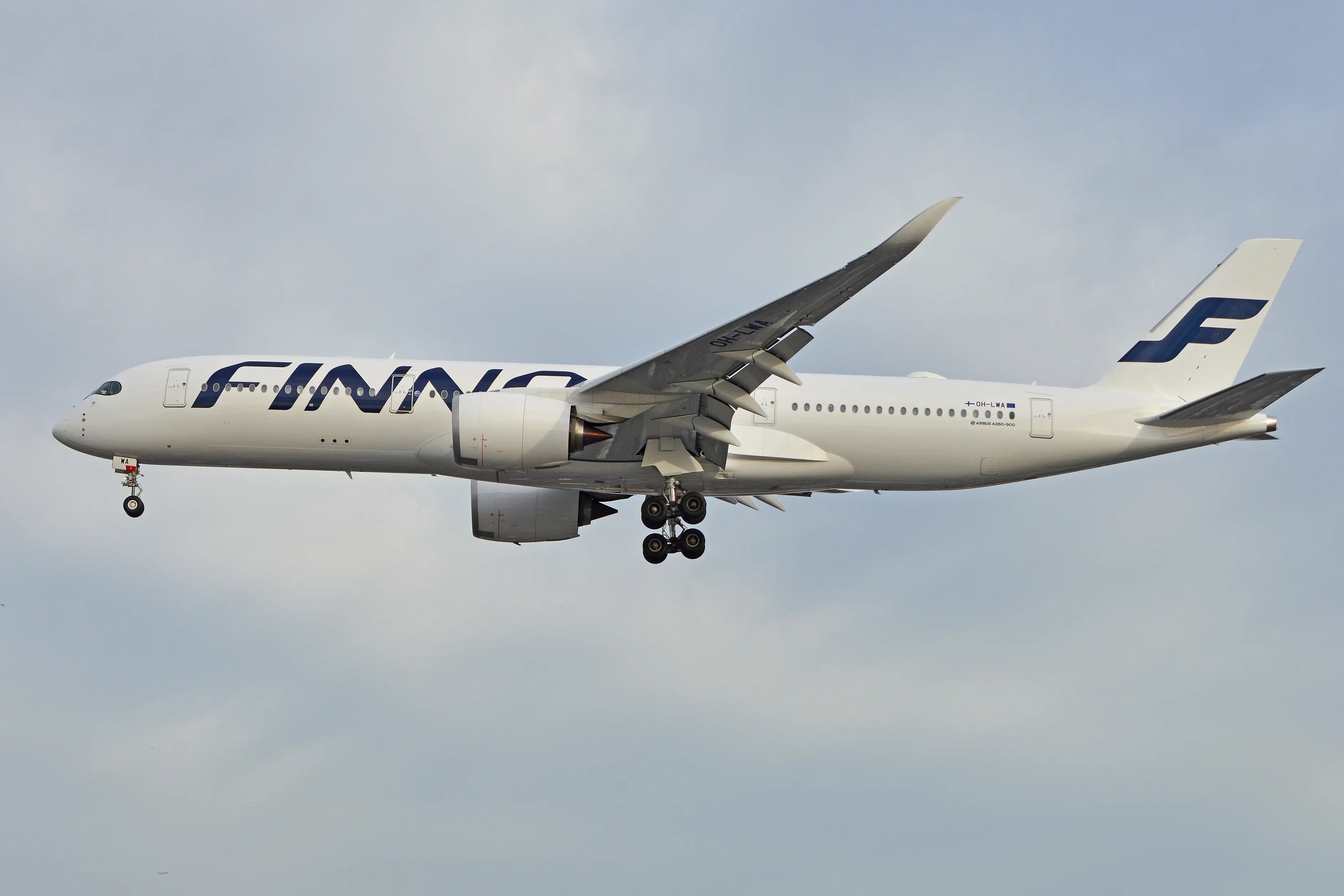
Finnair operates an all-Airbus mainline fleet complemented by regional turboprop and jet equipment through its subsidiary Nordic Regional Airlines (Norra). The airline's wide-body fleet is among the youngest in Europe, anchored by 18 Airbus A350-900 aircraft with an average age of approximately 7.6 years. The narrowbody fleet is considerably older, with A319s averaging over 24 years and A320s over 23 years, prompting management to consider an order for 15 to 30 new narrowbody aircraft to replace these aging jets. Finnair became the third airline globally to operate the A350-900 when it took delivery in October 2015, and the type has since become the airline's flagship long-haul platform.
| Aircraft Type | Role | In Service | Routes / Notes |
|---|---|---|---|
| Airbus A350-900 | Widebody | 18 | Long-haul flagship. Asia, North America, Middle East. 1 on order (delivery by end 2026). Average age: 7.6 years. |
| Airbus A330-300 | Widebody | 6-8 | Long-haul supplementary. 2 aircraft wet-leased to Qantas for Bangkok/Singapore-Sydney routes. |
| Airbus A321-200 | Narrowbody | 14-15 | European medium-haul. Newest narrowbody type (avg. 11.1 years). Includes Sharklet-equipped variants. |
| Airbus A320-200 | Narrowbody | 10 | European short/medium-haul. Average age: 23.2 years. Planned for replacement. |
| Airbus A319-100 | Narrowbody | 5 | European short-haul. Oldest type in fleet (avg. 24.3 years). First to be retired. |
| Embraer E190 | Regional Jet | 12 | Operated by Norra. Nordic/Baltic feeder routes. Fleet expansion planned to 18 aircraft. |
| ATR 72-500 | Turboprop | 12 | Operated by Norra. Domestic Finnish routes and thin Scandinavian connections. |
Fleet data as of early 2026 based on Finnair official fleet page, Flightradar24, and Planespotters data. Numbers may vary slightly due to seasonal storage and wet-lease arrangements.
The fleet renewal story at Finnair is significant for prospective pilots. CEO Turkka Kuusisto confirmed in September 2025 that the airline is actively evaluating an order for 15 to 30 new narrowbody aircraft to replace the aging A319 and A320 fleet. A final decision was expected by the end of 2025, though no formal announcement has yet been made. This renewal, potentially worth up to €4 billion, would bring modern, fuel-efficient narrowbody jets into service and create substantial training and type-rating transition opportunities for pilots in the late 2020s.
Finnair Flight Academy, based at Helsinki Airport, provides all type rating training in-house using Level D full-flight simulators for the A320 family, A330, A350, E190, and ATR 72. New First Officers are typically assigned to the A320 family for short and medium-haul European operations. Progression to wide-body types (A350 or A330) is seniority-based. The Finnair Flight Academy also offers commander training courses, second-in-command training for long-haul relief duties, and instructor (TRI/SFI) qualification programmes.
Pilot Salary & Compensation Breakdown
Finnair pilot compensation is governed by a collective agreement negotiated between the airline (represented by the service sector employers' association Palta) and the Finnish Air Line Pilots' Association (SLL). The most recent tentative agreement was reached on June 8, 2025, following ten months of intensive and at times contentious negotiations. This three-year agreement (with an optional fourth year) establishes the pay framework through 2028.
Finnair does not publicly release its full pilot pay scale. However, based on industry data, pilot reports, and publicly available sources, the following estimates reflect Finnair pilot compensation levels. The starting monthly salary for a new First Officer at Finnair is approximately €4,500 per month including flight allowance, equating to roughly €54,000 annually before additional allowances and per diems.
First Officer (F/O) Pay Scale
| Seniority | Monthly Gross (est.) | Annual Gross (est.) | Notes |
|---|---|---|---|
| Year 1 (entry) | €4,500 | ~€54,000 | Starting salary including flight allowance. A320 family assignment typical. |
| Year 3-5 | €5,500 - €7,000 | ~€66,000 - €84,000 | Seniority progression. May include night/weekend premiums. |
| Year 7-10 | €7,500 - €9,000 | ~€90,000 - €108,000 | Potential transition to wide-body F/O (A350/A330) boosting compensation. |
| Senior F/O (10+ yrs) | €9,000 - €11,000 | ~€108,000 - €132,000 | Wide-body long-haul F/O rates. Per diems and layover allowances add significantly. |
Captain (CDB) Pay Scale
| Seniority | Monthly Gross (est.) | Annual Gross (est.) | Notes |
|---|---|---|---|
| Entry Captain (narrowbody) | €10,000 - €12,000 | ~€120,000 - €144,000 | A320 family Captain. European short/medium-haul. |
| Captain, 5+ yrs (widebody) | €13,000 - €16,000 | ~€156,000 - €192,000 | A350 or A330 Captain. Long-haul Asia/North America routes. |
| Senior Captain (A350 LH) | €15,000 - €18,000 | ~€180,000 - €200,000+ | Top of scale. Includes all allowances, per diems, and premiums. |
Figures are gross annual estimates compiled from industry salary databases (Simple Flying, Pilot Jobs Network), European pilot salary benchmarking, and pilot forum discussions. Actual compensation depends on the latest SLL collective agreement, seniority steps, aircraft type, and flight hours logged.
These salary figures are estimates and should be treated as indicative ranges rather than exact values. Finnair does not publish its pilot pay scales publicly. The June 2025 collective agreement likely adjusted compensation upward from previous levels, but the specific terms have not been publicly disclosed at the time of writing. Finnish income tax is progressive (ranging from approximately 6% to 44% depending on income), and mandatory social contributions further reduce take-home pay. Per diem allowances for overnight layovers, overtime premiums, and night/weekend supplements can add 10-20% to the base figures shown. Always verify current rates directly with SLL or Finnair during the recruitment process.
Roster Pattern & Quality of Life
Finnair pilot rostering operates within the framework of EASA Flight Time Limitations (FTL), Finnish national aviation regulation (Traficom OPS M3-2), and the SLL collective agreement. Finnish FTL rules set maximum flight time limits of 12 hours within any 24-hour period and 16 hours within any 48-hour period for two-pilot crews. The collective agreement negotiated between SLL and Finnair builds on these regulatory foundations with additional protections around rest periods, standby protocols, and scheduling practices.
One of the most significant quality-of-life features is Finnair's 60-minute pre-flight duty period, which starts one hour before aircraft departure. This was a contentious issue during the 2024-2025 negotiations, as Finnair introduced digital flight preparation tools enabling pilots to complete some briefing activities remotely. The pilot union successfully preserved the traditional 60-minute compensated pre-flight window in the 2025 agreement, ensuring that preparation time remains fully within paid duty hours regardless of the physical location where preparation occurs.
📅 Sample Month: Narrowbody First Officer (HEL)
Long-haul crews operating the A350 and A330 on Asian and North American routes follow different patterns. A typical long-haul rotation involves 1-2 days of outbound flying (with a layover at destination lasting 24-48 hours), followed by a return sector and 2-4 days of rest. Augmented crews (3 pilots) are used on ultra-long sectors such as Helsinki-Singapore, Helsinki-Seoul, and the new Helsinki-Bangkok-Melbourne routing, allowing in-flight rest periods during cruise. Long-haul pilots generally log fewer duty days per month but accumulate higher block hours per trip.
All Finnair pilots are based at Helsinki Airport (HEL). There is no alternative base option within the mainline operation. This means pilots either live in the greater Helsinki metropolitan area or commute. Helsinki offers a high quality of life with excellent public transport, safety, and access to nature, though the cost of living is above the European average. The Norra regional operation also flies from Helsinki. For pilots relocating to Finland, the country's comprehensive social welfare system, universal healthcare, and world-class education are significant advantages, particularly for families. Finnish winters are long and dark, however, and the climate is a genuine quality-of-life consideration for pilots from warmer regions.
Benefits, Travel Perks & Retirement
As a Nordic flag carrier operating under Finnish employment law, Finnair provides a comprehensive benefits package reflecting the Scandinavian tradition of strong employee welfare protections. The combination of statutory Finnish workers' rights, the SLL collective agreement, and airline-specific perks creates a total compensation package that extends well beyond the base salary.
Finland's pension system is among the strongest in Europe. The statutory occupational pension (TyEL) guarantees a basic retirement income calculated as a percentage of career earnings. On top of this, the Finnair Pension Fund, established as a private supplementary scheme, provides additional retirement benefits specifically for Finnair employees. With assets exceeding €700 million, the fund is well-capitalized to meet long-term obligations. Combined with the Finnish state pension, this creates a multi-layered retirement structure that compares favorably with dedicated aircrew pension schemes elsewhere in Europe. Finnish pension accrual rates increase with age (1.5% of annual earnings from age 17, rising to 1.7% from age 53), rewarding longer careers.
Career Progression & Seniority
Career progression at Finnair follows a strictly seniority-based system common across European legacy carriers. Each pilot receives a permanent seniority number upon hiring, and this number determines upgrade eligibility, fleet assignment priority, and schedule bidding power throughout their career. The significance of seniority cannot be overstated: even a few months' difference in hiring date translates into career-long advantages in route selection, aircraft assignment, and upgrade timing.
New pilots typically join Finnair as First Officers on the A320 family (A319/A320/A321) for European short and medium-haul operations. Progression to wide-body types (A350 or A330) for long-haul flying depends on accumulating sufficient seniority to bid successfully for available positions. Captain upgrade timing varies significantly depending on fleet expansion, retirement waves, and airline growth rates, but under favorable conditions, pilots with strong seniority positions may achieve upgrade within 5 to 10 years, while slower growth periods could extend this timeline.
| Career Milestone | Typical Timeline | Notes |
|---|---|---|
| Basic flight training (if ab-initio) | ~24 months | Finnish Aviation Academy in Pori or equivalent EASA ATO. CPL/IR/ME qualification. |
| First Officer Course + Type Rating | 2-3 months | Finnair Flight Academy. Simulator + line training. Typically A320 family. |
| Join as F/O (A320 family) | Day 1 post-training | European short/medium-haul operations from Helsinki. |
| Wide-body F/O transition (A350/A330) | 5-8 years | Seniority-dependent bid. A350 type rating at Finnair Flight Academy. |
| Captain upgrade (narrowbody) | 5-10 years | Command assessment required: interview + simulator evaluation. Not guaranteed. |
| Captain on wide-body (A350) | 12-20+ years | Long-haul command. Top of seniority list. Highest compensation tier. |
| Training Captain / TRI / SFI | Variable | Requires 1,500+ hours in multi-pilot aircraft. Separate selection and instructor training at Finnair Flight Academy. |
Finnair's projected 5% capacity growth for 2026, combined with new route launches (Melbourne, Toronto, 12 new European destinations), the planned narrowbody fleet renewal of up to 30 aircraft, and the Norra E190 fleet expansion from 12 to 18 aircraft, all point toward accelerated hiring and potentially faster upgrade timelines. The resolution of the pilot collective agreement in June 2025 and the hiring of approximately 400 pilots and cabin crew create a favorable environment for career advancement. Pilots joining Finnair during this expansion phase stand to benefit from improved seniority positioning as the airline grows its fleet and network through the late 2020s.
Recruitment Process & Requirements
Finnair recruits pilots through its official careers portal, with positions advertised for both experienced pilots (holding EASA CPL/ATPL) and, at times, lower-hour pilots who complete training through the Finnair Flight Academy. The selection process emphasizes technical competency, language proficiency, medical fitness, and personal suitability for a career in commercial aviation.
Minimum Requirements
Selection Process
Online Application
Submit your application through Finnair's careers portal when pilot positions are advertised. Include CV, licence details, flight hours, medical certificate status, and language certifications. Applications are screened against minimum requirements before progressing.
Aptitude & Psychometric Testing
Candidates who pass initial screening are invited for aptitude assessments. These typically include cognitive ability tests, psychomotor coordination evaluations, multitasking exercises, spatial reasoning, and personality profiling. Testing is designed to assess suitability for multi-crew airline operations.
Interview & Group Assessment
Successful candidates attend interviews at Finnair's facilities near Helsinki Airport. The process evaluates CRM skills, leadership potential, cultural fit, stress management, and motivation. Finnish language proficiency is assessed during this stage. A group exercise component may be included.
Simulator Assessment
For experienced pilot candidates, a simulator evaluation may be included. This assesses basic handling skills, instrument flying, multi-crew coordination, and decision-making under pressure. The assessment is conducted at Finnair Flight Academy using Level D simulators.
Medical & Security Clearance
Final stage. A valid EASA Class 1 Medical is required, assessed through Traficom-approved aeromedical examiners. Police security clearance must confirm no criminal convictions. Successful candidates receive a training date for the First Officer Course and type rating.
The single most distinctive (and restrictive) requirement for Finnair pilots is fluent Finnish. Unlike most major European carriers that operate in English, Finnair requires all pilots to be proficient in Finnish for internal communications, briefings, and company culture. This effectively limits the applicant pool to Finnish natives, long-term residents of Finland, or international pilots who have invested significant time in learning Finnish, which is widely regarded as one of Europe's most challenging languages. Non-Finnish speakers considering a Finnair career should plan for 1-3 years of intensive language study before applying. The Finnish Aviation Academy in Pori conducts its ab-initio training primarily in Finnish, further reinforcing the language requirement from the earliest career stage.
Top 5 Layover Destinations
Finnair's unique geographic position makes Helsinki the shortest great-circle connection between much of Europe and Asia. Long-haul layovers are a significant quality-of-life perk for pilots on the A350 and A330 fleets. Finnair operates daily services to multiple Asian capitals plus a growing North American network. Layovers typically last 24-48 hours, with augmented crews used on the longest sectors. The airline contracts crew hotels, and pilots do not choose their own accommodation.
All crew hotels are contracted by Finnair. Transport between hotel and airport is provided. Under EASA FTL rules, pilots must have a minimum rest opportunity allowing 8 hours of uninterrupted sleep before the next duty period. Long-haul flights over 11 hours require augmented crews (3 pilots), and layovers are typically 24 hours minimum. Layover destinations are determined by roster bids, with more senior pilots getting first pick of the most popular routes. The closure of Russian airspace since February 2022 has significantly impacted Finnair's Asian routing, adding 1-3 hours to many sectors via polar or southern alternatives, which has also affected layover scheduling and crew rest requirements.
How Finnair Compares: Airline Radar Chart
How does Finnair stack up against its two closest Scandinavian competitors: SAS (Scandinavian Airlines) and Norwegian Air Shuttle? Below is a comparative analysis across five key metrics. Scores are editorial estimates based on publicly available data, pilot reports, and industry benchmarks.
Key Takeaways from the Comparison
Norwegian leads on salary. Norwegian Air Shuttle offers significantly higher pilot compensation than both Finnair and SAS. Entry-level First Officers at Norwegian earn approximately €71,000 annually, compared to Finnair's roughly €54,000 and SAS's approximately €47,000. Senior Norwegian Captains command around €170,000, well above SAS's approximately €95,000 at equivalent seniority. Finnair falls between the two, with senior widebody Captains reaching the €180,000-€200,000 range.
Finnair wins on fleet modernity and diversity. The A350-900 fleet (average age 7.6 years) gives Finnair one of Europe's youngest widebody operations. SAS operates A350s and Boeing 787 Dreamliners but returned multiple aircraft to lessors following the Russian airspace closure, creating fleet instability. Norwegian runs a standardized Boeing 737 fleet, efficient for low-cost operations but limiting career diversity for pilots who value wide-body international flying.
Job security favors Finnair. With 55.9% Finnish state ownership, Finnair has a government backstop that neither Norwegian (private) nor SAS (restructured through bankruptcy) can match. SAS filed for Chapter 11 in 2022 and underwent significant restructuring, creating pilot furloughs and seniority disruptions. Finnair has never reduced pilot positions for operational reasons in its 101-year history, although this was threatened during the 2025 labor dispute.
Work-life balance is strongest at Finnair. Finnish labor law mandates 30 days of annual leave (above the EU minimum), and the collective agreement likely provides additional protections. SAS offers comparable Nordic labor protections, while Norwegian's low-cost model generally emphasizes efficiency and higher utilization rates, potentially reducing quality-of-life margins.
Scores are editorial estimates based on publicly available salary data, union publications, airline press releases, pilot forum discussions, and industry benchmarks (FlightDeckFriend, ECA, IFALPA, Simple Flying). They represent a general assessment for an experienced pilot evaluating a long-term career. Individual experiences will vary based on seniority, fleet assignment, and personal priorities. SAS scores reflect the post-restructuring environment, which may continue to evolve.
Union & Industrial Relations
Understanding the union landscape is essential for any pilot considering Finnair. The Finnish Air Line Pilots' Association (SLL, Suomen Liikennelentäjäliitto) is the exclusive union representing Finnair's approximately 950 pilots. Founded in 1949, SLL negotiates the collective labor agreement covering salary scales, roster rules, per diem allowances, standby protocols, and all other employment conditions for commercial pilots at Finnair. SLL is a member of SAK (Central Organisation of Finnish Trade Unions) and cooperates internationally through the Finnish Pilots' Association (FPA), which holds membership in both the European Cockpit Association (ECA) (representing 40,000+ pilots across Europe) and IFALPA (representing 100,000+ pilots in 95 countries).
SLL Structure & Membership
SLL membership dues are set at 0.45% of gross wages, plus a monthly branch membership fee of €24.15, and a minimum basic rate for combined life and licence insurance (varying by age). Membership is tax-deductible but does not include unemployment fund coverage. Students enrolled in Finnair's First Officer Course or type training programmes may join as student members at a reduced rate of €5 per month.
The 2024-2025 Labor Dispute: A Timeline
The 2024-2025 dispute was the most significant pilot labor action in Finnair's recent history. The resolution demonstrates SLL's effectiveness in protecting core working conditions (pre-flight duty time, per diem allowances, standby protections) while achieving a sustainable long-term framework through 2028. For new recruits, the resolved agreement provides stability and clarity on employment conditions. Union membership is not legally mandatory but is strongly encouraged; the overwhelming majority of Finnair pilots are SLL members, and the combined life and licence insurance benefit alone makes membership valuable. The dispute's resolution also unlocked Finnair's growth plans, including hiring approximately 400 personnel and expanding the Norra fleet.
Verdict: Who Is Finnair For?
🎯 Our Take
Finnair is a compelling career choice for pilots who value long-term stability, a modern wide-body fleet, and access to premium Asian and North American long-haul routes from a unique Nordic base. The combination of 55.9% Finnish state ownership, a young A350 fleet (one of Europe's best), Oneworld alliance membership, and the strong protections of Finnish labor law and the SLL collective agreement creates a package that is hard to match among medium-sized European carriers.
The trade-offs are clear: the mandatory Finnish language requirement dramatically narrows the applicant pool, entry-level salary is moderate compared to competitors like Norwegian Air Shuttle, Helsinki is the only base (with a high cost of living and challenging winters), and the 2024-2025 labor dispute highlighted the tensions that can arise between management efficiency goals and pilot working conditions. Compensation at Finnair is competitive within the Nordic market but does not reach the levels of Gulf carriers or US majors.
For Finnish-speaking pilots with a long-term outlook, Finnair offers something few airlines its size can: a complete career from First Officer to wide-body Captain, operating one of Europe's youngest long-haul fleets to destinations across Asia and North America, backed by the financial security of state ownership and the cultural richness of Finnish aviation heritage spanning over a century.
1 Do I need to speak Finnish to fly for Finnair?
Yes. Fluent Finnish is mandatory for all Finnair pilot positions, regardless of nationality. This is the single most restrictive requirement and effectively limits the applicant pool to Finnish natives, long-term residents, or international pilots who have achieved fluency in Finnish. English proficiency (ICAO Level 4+) is also required for international operations.
2 Does Finnair have a cadet or ab-initio programme?
Finnair does not currently operate a fully-funded cadet programme comparable to Air France or British Airways. The typical pathway is through the Finnish Aviation Academy in Pori (approximately 2 years of flight training at the student's expense), followed by application to Finnair's First Officer Course. Finnair Flight Academy provides the type rating and airline-specific training once selected. Some pilot training may be partially supported through Finnish education funding systems.
3 How long does it take to upgrade to Captain at Finnair?
Captain upgrade at Finnair is seniority-based and varies significantly depending on fleet growth, retirements, and airline expansion. Under favorable conditions (such as the current growth phase with 5% capacity expansion planned for 2026), upgrades may be achievable within 5-10 years. During slower growth periods, the timeline could extend further. The upgrade process includes a command assessment at Finnair Flight Academy.
4 Can non-EU citizens apply to Finnair?
Yes, Finnish citizenship is not a requirement. Finnair welcomes qualified pilots from any country, provided they hold a valid EASA licence, meet the Finnish language fluency requirement, and can obtain Finnish work authorization. EU/EEA citizens benefit from freedom of movement provisions, while non-EU applicants must secure appropriate work permits.
5 What aircraft will I fly as a new Finnair pilot?
New First Officers are typically assigned to the Airbus A320 family (A319/A320/A321) for European short and medium-haul operations from Helsinki. Transition to the wide-body A350-900 or A330-300 for long-haul routes is seniority-based and typically occurs after several years of service. With the planned narrowbody fleet renewal (15-30 new aircraft), the entry fleet may change to newer variants in the coming years.
6 How does the Russian airspace closure affect Finnair pilots?
The closure of Russian airspace since February 2022 has significantly impacted Finnair's operations, as Helsinki's geographic advantage for Asia-Europe routing relied partly on flying over Russia. Asian routes now use polar or southern alternatives, adding 1-3 hours to many sectors. This has increased fuel costs, required fleet adjustments (the A330s have limited range without Russian overflights), and led to the wet-lease arrangement with Qantas. For pilots, it means longer duty times on Asian routes and adjusted crew augmentation requirements.
7 How does Finnair pilot pay compare to Norwegian and SAS?
Norwegian Air Shuttle offers the highest pilot salaries among Scandinavian carriers, with entry-level First Officers earning approximately €71,000 annually compared to Finnair's roughly €54,000 and SAS's approximately €47,000. At the Captain level, Norwegian leads with around €170,000 for senior captains, while Finnair widebody Captains can reach €180,000-€200,000+. Finnair compensates with stronger job security (state ownership), a modern A350 fleet, and more comprehensive benefits under Finnish labor law.
8 Is Finnair a good long-term career choice?
For Finnish-speaking pilots, Finnair represents one of the strongest long-term career propositions in Nordic aviation. State ownership provides financial stability, the A350 fleet offers premium wide-body flying, the Oneworld alliance provides global connectivity, and Finnish labor protections ensure strong working conditions. The airline has never involuntarily reduced pilot numbers in its 101-year history. The main risks are the ongoing impact of Russian airspace closure on Asian route economics and potential future disruptions if state ownership levels change.
Official Links & Resources
Before applying or making any career decisions, always verify information directly with official sources. These are the key websites and organisations relevant to Finnair pilot careers:
Bookmark the SLL website (sllpilots.fi/en) for the latest updates on pilot conditions at Finnair, including collective agreement news and membership information. For financial and route network updates, the Finnair Investor Relations page publishes detailed quarterly reports that include passenger statistics, fleet changes, and strategic outlook, all useful for pilots evaluating career timing and growth prospects.