Air France Overview & Company Profile
Air France is the national flag carrier of France and one of the most prestigious airlines in Europe. Established in 1933, the airline is headquartered near Paris Charles de Gaulle Airport (CDG) and operates as the core subsidiary of the Air France-KLM Group, which posted €33 billion in revenue for the 2025 financial year. Air France serves close to 190 destinations in 83 countries, operating up to 900 flights daily during the peak summer season. The carrier is a founding member of the SkyTeam alliance, connecting its network with 18 other partner airlines worldwide.
With approximately 4,300 pilots on its roster and an annual recruitment target of around 300 new pilots, Air France remains one of the most desirable legacy carriers to fly for on the continent. The airline operates from two main Paris hubs, CDG for long-haul and European traffic and Orly for domestic and some overseas territory routes, with secondary operations at Lyon, Marseille, Nice, and Toulouse. Its long-haul network covers destinations across North America, South America, Africa, Asia, and the Caribbean, while the short- and medium-haul operation connects over 90 European and French domestic cities. Air France is the largest private employer in the Ile-de-France region, employing more than 40,000 staff in total.
Fleet Composition & Type Ratings
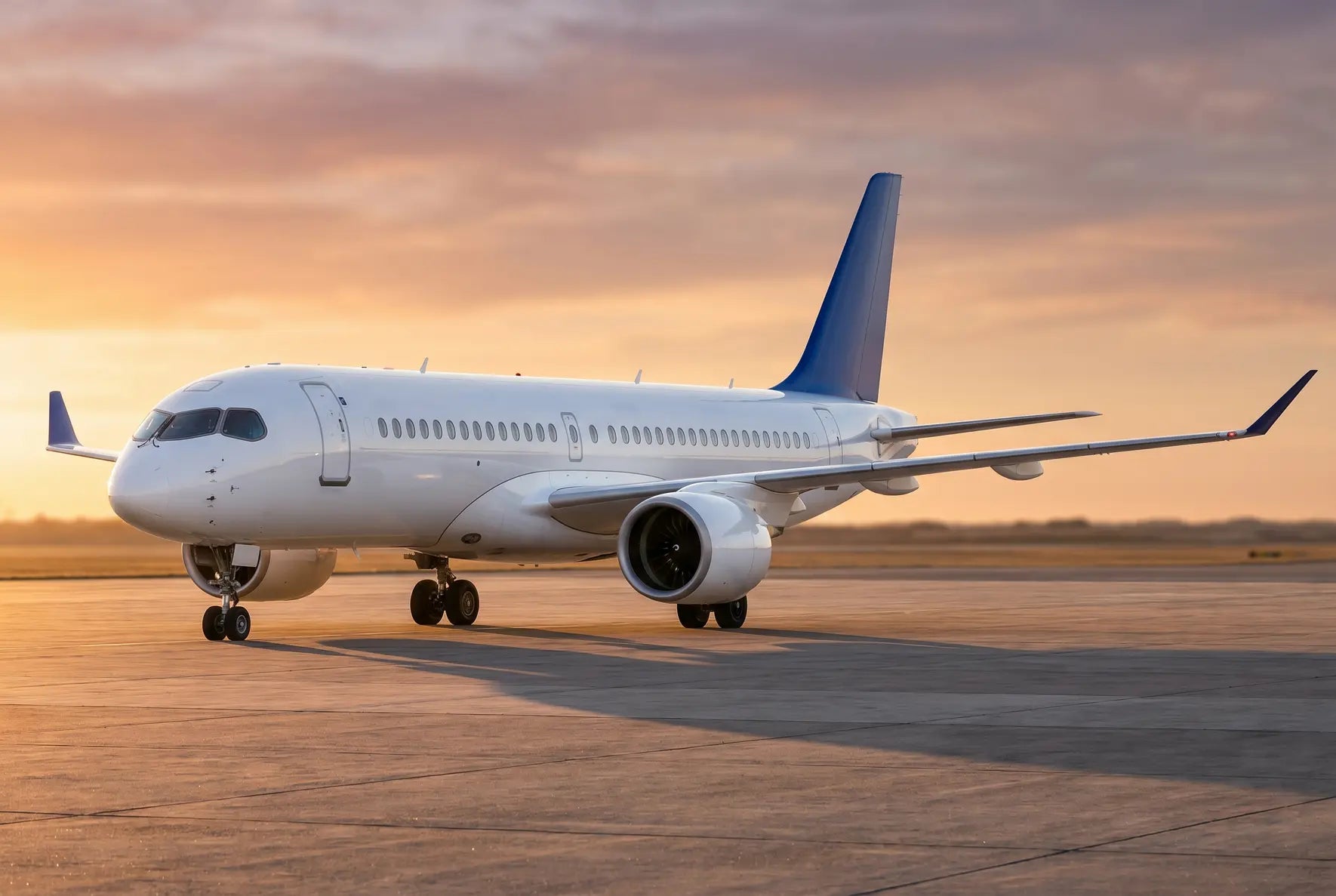
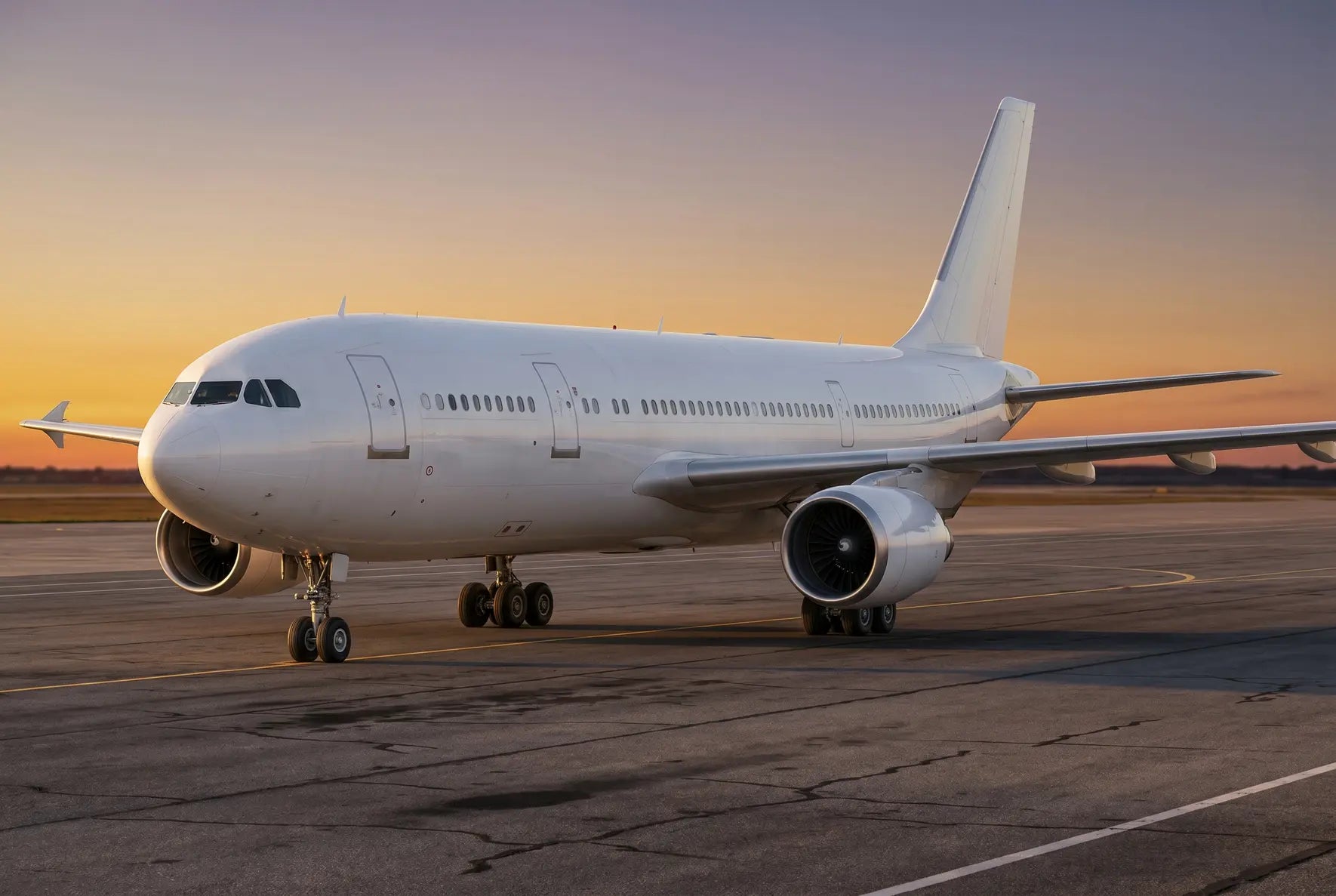
Air France operates one of the most diverse fleets among European legacy carriers, with an all-Airbus narrowbody lineup and a mix of Airbus and Boeing widebodies for intercontinental operations. The airline is currently in the middle of a major fleet renewal programme, investing over €1 billion annually and taking delivery of nearly two new aircraft every month. The Airbus A220-300 and A350-900 are the centrepieces of this modernisation effort, with over 50 A220s and 41 A350s delivered by early 2026. The older A318 and A319 types have been almost fully phased out, the A330-200 fleet is shrinking, and the 43-strong Boeing 777-300ER fleet is expected to be replaced by A350-1000s or a widebody order yet to be confirmed.
| Aircraft Type | Role | In Service | Routes / Notes |
|---|---|---|---|
| Airbus A220-300 | Narrowbody | ~53 | European & domestic. Replacing A318/A319. Target: 90+ total. 20% less CO2 than predecessors. |
| Airbus A318/A319 | Narrowbody | ~7 | Final units being phased out. Rare A318 still in limited service. |
| Airbus A320/A321 | Narrowbody | ~48 | European short/medium-haul backbone. A321 variants included. |
| Embraer E190 | Regional | ~17 | Operated via Air France HOP. Regional feeds and smaller airfields. |
| Airbus A330-200 | Widebody | ~8 | Long-haul. Being retired as A350-900 deliveries continue. |
| Airbus A350-900 | Widebody | ~41 | Long-haul flagship. 25% less CO2, 40% less noise. ~50 more on order (shared with KLM). |
| Boeing 777-200ER | Widebody | ~18 | Long-haul. Gradual retirement planned, replaced by A350-900. |
| Boeing 777-300ER | Widebody | 43 | Long-haul workhorse. La Premiere suite equipped. Replacement decision pending. |
| Boeing 787-9 | Widebody | 10 | Long-haul. Montreal, Nairobi, Singapore among top routes. 4 more on order. |
| Boeing 777F | Freighter | 2 | Cargo operations via Air France KLM Martinair Cargo. |
Fleet data as of early 2026. Numbers are approximate and change with ongoing deliveries and retirements. Source: Air France corporate communications and Wikipedia fleet records.
Air France fully covers the cost of type rating for pilots recruited through its official selection process. The A220 or A320 is the most common entry fleet for new First Officers. Cadets may also be assigned to Transavia (Boeing 737-800 or A320neo). Transition to widebody types such as the A350, 777, or 787 is seniority-based and comes through internal bid processes. Careers are managed on a single seniority list across Air France and Transavia, meaning you cannot choose your aircraft type or assignment at entry.
Pilot Salary & Compensation
Air France pilot salaries are governed by collective agreements negotiated between management and the SNPL France ALPA (Syndicat National des Pilotes de Ligne), the dominant pilots' union in France. Compensation includes a monthly base salary, per-flight-hour pay, per diem allowances for layovers, night and weekend premiums, a 13th month payment, and annual profit-sharing (interessement and participation). The latest contract cycle (2024-2025) placed Air France among the highest-paying carriers in Europe for senior pilots. A long-haul Captain on widebody equipment can realistically exceed €250,000 gross per year when all components are included.
First Officer (OPL) Pay Scale
| Seniority | Monthly Base | Annual Gross (est.) | Hourly Rate |
|---|---|---|---|
| Year 1 (entry) | €5,000 - €5,500 | ~€60,000 - €70,000 | €40 - €55/hr |
| Year 3-5 | €7,000 - €8,500 | ~€85,000 - €100,000 | €55 - €75/hr |
| Year 7-10 | €9,000 - €10,500 | ~€105,000 - €125,000 | €70 - €90/hr |
| Senior F/O (10+ yrs) | €10,500 - €11,500 | ~€125,000 - €150,000 | €80 - €95/hr |
Annual gross estimates include base salary, flight pay, and standard allowances. Actual take-home is significantly lower due to French social charges (~22-25%) and income tax.
Captain (CDB) Pay Scale
| Seniority | Monthly Base | Annual Gross (est.) | Hourly Rate |
|---|---|---|---|
| Entry Captain (short/med-haul) | €12,500 - €14,000 | ~€150,000 - €170,000 | €90 - €110/hr |
| Captain, 5 yrs (widebody) | €16,000 - €18,000 | ~€190,000 - €220,000 | €110 - €130/hr |
| Senior CDB (777/A350 long-haul) | €18,000 - €22,000 | ~€220,000 - €260,000+ | €120 - €140/hr |
Top annual totals can exceed €260,000 when per diems, overtime, holiday pay, profit-sharing, and bi-qualification bonuses are included. Long-haul widebody flying yields the highest earnings. A 2% premium applies to pilots maintaining currency on two fleet types simultaneously.
These figures are estimates compiled from multiple public sources, pilot reports, union data, and industry benchmarks. Actual compensation depends on the latest SNPL collective agreement, individual seniority steps, aircraft type, and flight hours logged. The 2024-2025 contract cycle lifted the upper range for Captains. French income tax rates (marginal rate up to ~45%) and social charges further reduce take-home pay compared to gross figures. The tripling of the TSBA aviation solidarity tax, adopted in February 2025, added financial pressure to the entire French aviation sector, with Air France estimating a €280 million annual impact on the group. Always verify current figures with official SNPL publications.
Roster Pattern & Quality of Life
Air France operates under French labour law combined with EASA Flight Time Limitation (FTL) rules and the SNPL collective agreement, which together create one of the most pilot-friendly roster environments in Europe. Pilots receive approximately 12-15 days off per month, with a minimum of 12 guaranteed in the collective agreement, plus 45 days of paid annual leave. This is significantly above the European industry average and one of the strongest quality-of-life packages available. Rostering follows a mixed system of fixed patterns and random assignments, with schedule bids influenced by seniority.
📅 Sample Month: Medium-Haul First Officer (CDG)
Long-haul crews operate on different patterns. A typical rotation involves 2-4 days of flying with layovers at destination, followed by 3-5 recovery days off. Augmented crews (3 or 4 pilots) are used on ultra-long-haul sectors exceeding 11 hours, allowing in-flight rest breaks. Long-haul pilots generally log fewer flying days per month but accumulate higher block hours per trip.
All Air France pilots are based in Paris (CDG or Orly). There is no base bidding system like at US carriers. Living in or near the Paris region is essentially required, or pilots must commute. CDG is the main hub for both short-haul and long-haul operations, while Orly handles certain domestic services and flights to French overseas territories. Living costs in Paris are high, but pilots benefit from French social protections, excellent public transport, and access to Europe's largest aviation hub.
Benefits, Travel Perks & Retirement
As a legacy flag carrier operating under French social law, Air France provides one of the most comprehensive benefits packages available to European pilots. The combination of statutory French employee rights, the SNPL collective agreement, and airline-specific perks creates a package that often compensates for the salary gap versus Gulf or US carriers.
The CRPN is a private non-profit pension fund specifically for French-based aircrew, in operation since 1951. It provides a supplementary pension on top of the basic French state pension. For 2025, total contribution rates are 21.30% of gross salary (13.63% employer, 7.67% employee), applied up to a ceiling of €384,480 per year. Pensions are calculated on career-average earnings with bonus provisions for parents who raised 3+ children. The scheme also includes a survivors' pension (60% of the member's entitlement) and orphan's benefits. This is one of the most generous aviation-specific retirement systems in Europe, and the SNPL has fought hard to preserve it through successive rounds of French pension reform.
Career Progression & Seniority
Career progression at Air France is strictly seniority-based. Upgrade to Captain and transition to widebody fleets depend primarily on your position in the seniority list. The airline does not accept direct-entry Captains: all command upgrades come from within, through the internal assessment process. While this provides long-term predictability and fairness, wait times can be significant. The current estimated upgrade time to Captain is approximately 15 years, though this fluctuates with retirement waves, fleet expansion, and company growth cycles.
A critical structural feature is that Air France and Transavia France pilots share a single seniority list. A pilot hired into the Transavia operation has the same long-term career trajectory as one placed directly on Air France mainline metal. This means being assigned to Transavia at entry has no negative impact on career development.
| Career Milestone | Typical Timeline | Notes |
|---|---|---|
| Cadet training (if cadet path) | 24 months | Fully funded by Air France. Partner flight schools including ENAC. |
| Join as F/O (A220 or A320) | Day 1 post-training | Most common entry fleet. May also be assigned to Transavia (737/A320neo). |
| Widebody F/O transition | 5-10 years | A330, A350, 777, or 787. Seniority-dependent bid process. |
| Captain upgrade (short/med-haul) | ~15 years | Command assessment: interview + simulator check. Not guaranteed. |
| Captain on widebody | 18-25+ years | 777 or A350 command. Top of the seniority list. |
| Training Captain / TRE / TRI | Variable | Separate selection and instructor training required. |
Air France is recruiting approximately 300 pilots per year, including both cadets and experienced professionals. Since the cadet programme was relaunched in 2018, several hundred pilots have joined Air France and Transavia through this pathway. The airline is actively expanding its A350 fleet and phasing out older types, which should create significant transition opportunities and potentially accelerate upgrade timelines in the late 2020s. Pilots maintaining currency on two fleet types (bi-qualification) receive a 2% salary premium. The ongoing expansion of Transavia France and the associated route transfers from Air France mainline remain a key topic in SNPL negotiations.
Recruitment Process & Requirements
Air France recruits pilots through two distinct pathways: the Cadet Programme (for candidates with little or no flight experience) and the Professional Pilot stream (for experienced holders of a CPL or ATPL). Both pathways lead to the same seniority list and identical career progression. The selection process is notoriously rigorous, with approximately 3,000 applicants competing for roughly 80-100 cadet spots each year, giving a selection rate of around 2-3%.
Cadet Programme: Requirements
Professional Pilot: Requirements
Selection Stages
PSY 0: Online Pre-Selection
Remote proctored test lasting approximately 2 hours, to be completed within a 36-hour window. Covers logic, psycho-technical reasoning, aeronautical knowledge, and English proficiency. Results are used to rank candidates for the next phase. This is the first major filter and eliminates a significant portion of applicants.
PSY 1: Psychotechnical & Psychomotor Tests
Full-day assessment at the ENAC campus in Toulouse. Computer-based aptitude tests assessing spatial reasoning, multitasking, coordination, memory, and cognitive processing. This is where the majority of candidates are eliminated. Cadets face definitive elimination after 3 failures at PSY 0 or 2 failures at PSY 1. Professional pilots have a 2-failure deferral rule.
PSY 2: Group Exercise & Interview
Held at Roissy CDG, Air France Selection Centre. Includes personality inventories, a group exercise, and an individual interview. Focus on CRM skills, leadership qualities, cultural fit, and stress management. A confidentiality charter must be signed. Air France has noted that paid preparatory courses show no measurable added value at this stage.
Recruitment Committee Review
Candidate files are reviewed by an internal committee that decides: pass, deferral, or elimination. For professional pilots, a flight simulator assessment may also be required at this stage.
Class 1 Medical & Contract
Successful candidates receive a training date (cadets) or direct fleet assignment. A valid Class 1 medical is required before entering school or line operations. Cadets begin the 24-month fully-funded training programme; professional pilots proceed to type rating and line training on their assigned fleet.
French language fluency is absolutely non-negotiable. All internal communications, briefings, CRM, and company culture operate in French. Parts of the selection process are conducted in French. Air France typically runs one cadet campaign per year (the 2025 campaign opened in June). For professional pilots, positions are advertised on the Air France careers portal on a rolling basis. Being eliminated twice from any Air France pilot selection permanently disqualifies you from future attempts.
Top 5 Layover Destinations
Long-haul layovers are one of the defining perks of flying for a major legacy carrier, and Air France has one of the most extensive intercontinental networks in Europe. The airline operates multiple daily flights to New York JFK, plus daily or near-daily services to Tokyo, Singapore, Los Angeles, and dozens of destinations across Africa, South America, and the Caribbean. Layovers typically last 24-48 hours, with some routes offering longer rest periods depending on crew augmentation and scheduling requirements. Hotels are contracted by Air France and are generally 4- or 5-star properties.
All crew hotels are contracted by the airline: pilots do not choose or book their own accommodation. Transport between hotel and airport is provided. Under EASA FTL rules, pilots must have a minimum 10-hour rest opportunity before the next duty period, with at least 8 hours of uninterrupted sleep. Long-haul flights over 11 hours require augmented crews (3-4 pilots), and layovers are typically 24 hours minimum. Layover destinations are determined by your roster bid and seniority: more senior pilots get first pick of the most sought-after routes.
How Air France Compares: Airline Radar Chart
How does Air France stack up against Europe's other two "Big Three" legacy carriers, Lufthansa and British Airways? Below is a comparative analysis across five key metrics. Scores are editorial estimates based on publicly available data, pilot reports, union publications, and industry benchmarks from sources including FlightDeckFriend, the European Cockpit Association (ECA), and IFALPA.
Key Takeaways from the Comparison
Air France leads on quality of life and benefits. With 45 days of annual leave (versus approximately 30 at Lufthansa including seniority bonuses, and 28 statutory at BA), the CRPN dedicated pilot pension, and 12-15 days off per month, Air France offers the strongest work-life package of the three. French labour protections add an extra layer of security that neither German nor British law can fully match.
Salaries are competitive at the top end. Senior long-haul Captains at all three airlines earn in the €160,000-€290,000 range. Air France Captains can reach €220,000-€260,000+ gross, while Lufthansa long-haul Captains earn €164,000-€280,000 and BA long-haul Captains earn approximately £150,000-£175,000 (~€175,000-€205,000). However, French social charges are among the highest in Europe, which erodes take-home pay more than in Germany or the UK.
Career progression is faster at BA. British Airways accepts direct-entry Captains and progression can take 6-9 years, while Air France's strictly internal seniority-only system means approximately 15 years. Lufthansa sits in between at 7-10 years. BA also offers more base options (Heathrow, Gatwick, London City) versus Air France's Paris-only base.
Fleet diversity favours Air France. Air France operates 10+ distinct aircraft types from the A220 to the 777, with active fleet renewal (A350 replacing A330 and 777-200ER, A220 replacing A318/A319). Lufthansa's fleet is comparable in size but includes ageing 747-8s. BA's fleet is modern but less diverse since retiring the A380.
Scores are editorial estimates based on research into publicly available salary data, pilot reports, union publications, airline press releases, and industry benchmarks from FlightDeckFriend, the European Cockpit Association, and IFALPA. They represent a general assessment for an experienced pilot considering a long-term career. Individual experiences will vary based on seniority, fleet assignment, and personal priorities.
Union & Industrial Relations
Understanding the union landscape is essential for any pilot considering Air France. The SNPL France ALPA (Syndicat National des Pilotes de Ligne) is the dominant force in French airline pilot representation. Founded in 1952 and headquartered at Roissy-en-France near Paris CDG, the SNPL represents all professional airline pilots based in France, not just Air France. It holds a strong majority of the vote in the Air France-Transavia pilot electoral college, making it the most powerful voice in pilot negotiations at the airline.
SNPL Structure & Governance
Pilots elect their section representatives every four years. The SNPL merged with SPAC Air France on January 1, 2008, adopting the "France ALPA" suffix to emphasise its international affiliation. It is the only French pilot association represented at both European (ECA) and global (IFALPA) levels, and is a member of Europeans For Fair Competition (E4FC).
Recent Strike History & Key Disputes
Air France has been relatively strike-free on the pilot side in recent years, particularly compared to the turbulent 2014-2016 period. The 2024 national action was exceptional, driven by a tax policy threatening the entire French aviation sector rather than an internal Air France dispute. The strong union representation benefits pilots: the SNPL negotiates aggressively on salary, roster protections, Transavia integration safeguards, and pension preservation. For new recruits, union membership is optional but strongly encouraged. The overwhelming majority of Air France pilots are SNPL members. In December 2025, Air France and its unions (including the SNPL) signed a 5-year agreement on workplace safety and violence prevention, signalling a constructive labour relations climate.
Verdict: Who Is Air France For?
🎯 Our Take
Air France is one of the premier legacy carriers to fly for in Europe. The combination of a world-class diversified fleet (from the A220 to the 777), strong French labour protections, 45 days of annual leave, a dedicated CRPN pilot pension, generous staff travel on the SkyTeam network, and the prestige of France's flag carrier make it an exceptional long-term career choice.
The trade-offs are real: the seniority-based system means roughly 15 years to Captain with no direct-entry shortcut, French income tax and social charges significantly reduce take-home pay compared to gross figures, the Paris-only base means high living costs, and the ongoing tensions around Transavia route transfers and the tripled TSBA tax create some uncertainty. Salaries are competitive within Europe but do not match Gulf carriers or US majors in net terms.
For French-speaking pilots with a long-term vision, Air France offers something few airlines can: a complete career from cadet to widebody Captain, all within one of the most iconic and well-protected aviation environments in the world.
1 Do I need to speak French to fly for Air France?
Yes. Fluent French is mandatory for all pilot positions at Air France, both the Cadet and Professional Pilot streams. Non-native French speakers must hold FCL.055 Level 6 in French. Internal communications, company culture, union interactions, and parts of the selection process are all conducted in French. There is no English-only pathway.
2 Does Air France pay for the type rating?
Yes. For pilots recruited through the official selection process (both cadet and professional pathways), Air France covers the full cost of type rating training. Cadets receive a fully-funded 24-month training programme at partner schools. Professional pilots receive company-funded type rating on their assigned aircraft, typically the A220 or A320 family.
3 How long does it take to upgrade to Captain?
The current estimate is approximately 15 years. This is strictly seniority-based and varies with retirement waves, fleet expansion, and company growth. Air France does not accept direct-entry Captains. The upgrade process includes a command assessment (interview plus simulator check) and is not automatic.
4 Can non-EU citizens apply?
No. Air France requires all applicants to be nationals of an EU/EEA member state or Switzerland. This is stated explicitly in the eligibility criteria for both the cadet and professional pilot selections. There is no work permit or sponsorship pathway for non-EU citizens.
5 What is the difference between flying for Air France and Transavia?
Transavia France is the low-cost subsidiary of Air France-KLM, based at Paris-Orly. Pilots recruited through the Air France selection may be assigned to either Air France or Transavia without choice. The key point is that both operations share a single seniority list, so being assigned to Transavia has no impact on long-term career progression. Transavia operates Boeing 737-800s and A320neos on shorter European and Mediterranean routes. The SNPL has been negotiating protections for pilots who transfer between the two operations, particularly around preserving pay scales and bidding rights.
6 Is the Air France cadet programme a good way to start a career?
Absolutely, if you can secure a place. The Cadet Programme is designed for candidates with little or no flight experience. Training is fully funded over 24 months, and cadets enter the same seniority list as experienced recruits. The strong training culture, job security, and lifetime career trajectory make Air France one of the best "first and only airline" options in Europe. Competition is intense though: roughly 3,000 applicants for approximately 80-100 cadet positions, giving a selection rate of 2-3%.
7 What happens if I fail a stage of the selection?
Air France has strict deferral and elimination rules. For cadets: 3 failures at PSY 0 means definitive elimination from the cadet stream (though you can still try the professional pilot stream). 2 failures at PSY 1 results in definitive elimination from the cadet path. For professional pilots: 2 deferrals at PSY 2 means elimination. Being eliminated twice from any Air France pilot selection, regardless of which stream, permanently disqualifies you from future attempts.
8 How does Air France pilot pay compare to other European legacy carriers?
Air France pilot salaries are broadly competitive with Lufthansa and British Airways. Long-haul Captains at all three airlines can earn between €160,000 and €290,000 annually depending on seniority and fleet type. Where Air France stands out is in quality of life: 45 days annual leave (versus approximately 28-30 at BA and 30 at Lufthansa), the CRPN pension system, and generally more favourable roster patterns. However, French social charges are among the highest in Europe, which reduces net take-home pay more than in the UK or Germany.
Official Links & Resources
Before applying or making any career decisions, always verify information directly with official sources. These are the key websites and organisations relevant to Air France pilot careers:
Bookmark the SNPL press releases page (snpl.com/presse). It is the fastest way to stay informed about pilot-specific developments at Air France, including salary negotiations, strike notices, and regulatory changes. Many aspiring pilots also follow the SNPL on LinkedIn for more informal updates and industry commentary.