

Aeroflot Overview & Company Profile
Aeroflot (PJSC Aeroflot, Russian Airlines) is Russia's flag carrier and its largest airline by passenger volume. Founded in 1923, it is one of the oldest continuously operating airlines in the world. Headquartered in Moscow with its primary hub at Sheremetyevo International Airport (SVO), Aeroflot is a member of the SkyTeam alliance, though its effective participation has been severely curtailed since 2022 due to Western sanctions imposed following Russia's military actions in Ukraine.
The airline is majority state-owned, with the Federal Agency for State Property Management holding 73.77% of shares as of 2025. The Aeroflot Group encompasses three distinct brands: the flagship Aeroflot airline for international and premium domestic routes, Rossiya Airlines for secondary domestic services, and Pobeda as the low-cost carrier. Together, the group transported approximately 55.3 million passengers in 2024 and maintained a combined market share of around 41.8% of Russian aviation traffic. Group revenue reached 760.4 billion rubles in 2025 (a 6.7% year-on-year increase), although adjusted earnings declined sharply to 11.8 billion rubles from 59 billion in 2024, reflecting mounting operational costs and sanctions-related maintenance challenges.
The group's network in 2025 covered approximately 290 routes across 64 Russian cities and 19 countries, a significant reduction from the pre-sanctions era when Aeroflot served 146+ international destinations. Domestic passengers represent about 76% of total traffic, with the international network now focused primarily on Turkey, the UAE, Thailand, China, India, the Maldives, and CIS countries. The airline employs approximately 25,000-30,000 personnel across the group, with an estimated pilot workforce of 5,000-6,000.
Since February 2022, Aeroflot has operated under severe Western sanctions that have fundamentally transformed the airline. EU, US, UK and allied nations banned spare parts exports, aircraft deliveries, and technical support from Boeing and Airbus. European and North American airspace is closed to Russian carriers. The Russian government retained over 500 foreign-leased aircraft on Russian soil through emergency legislation. By 2025, Aeroflot had purchased approximately 150 of these aircraft through insurance settlements with foreign lessors, with remaining ownership disputes still pending in international courts. This sanctions environment colors every aspect of pilot working conditions discussed in this article.
Fleet Composition & Sanctions Impact
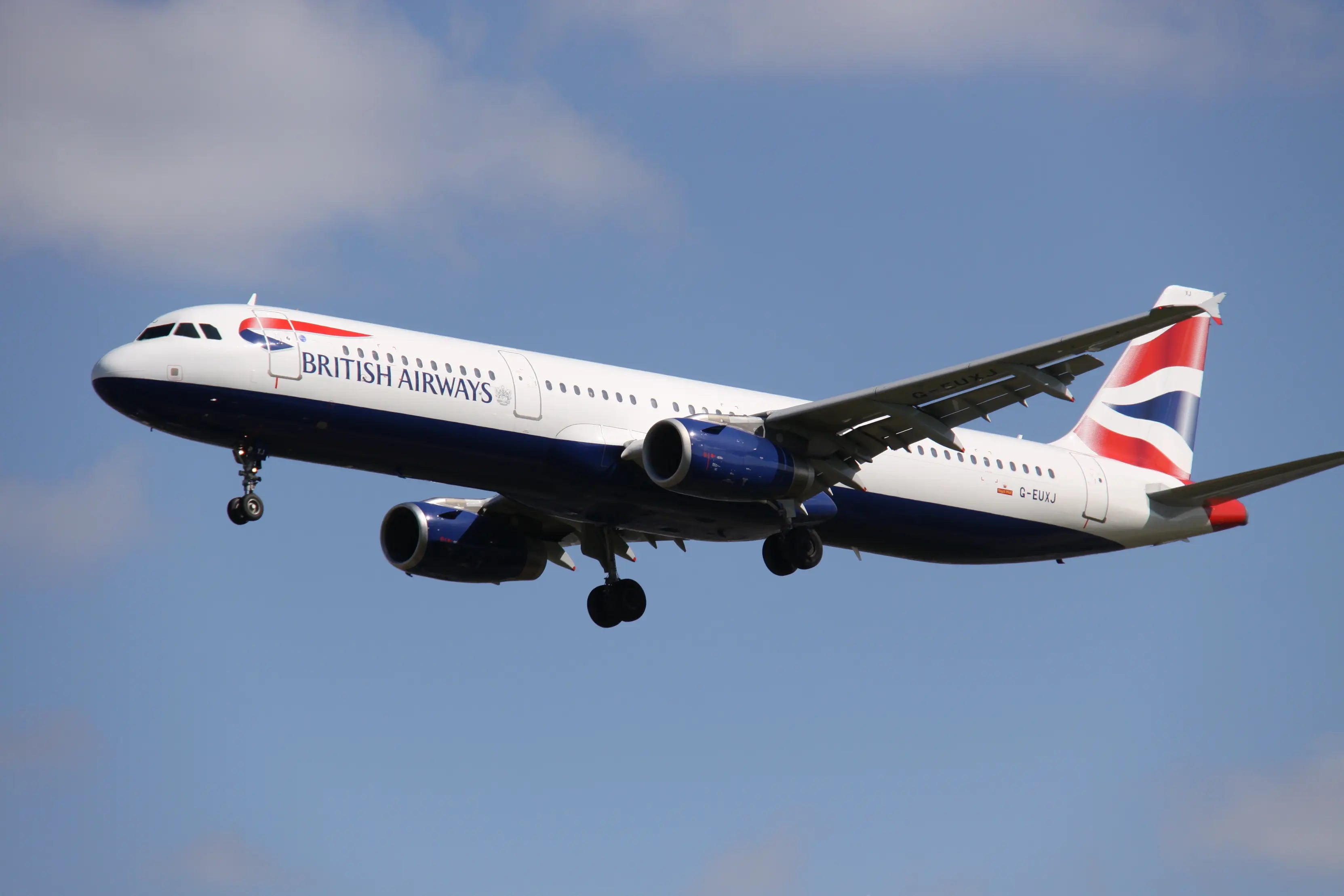
Aeroflot mainline operates approximately 171 passenger aircraft as of October 2025, with an average age of 9.7 years. The fleet is approximately 65% Airbus and 35% Boeing, entirely Western-manufactured at mainline level. The broader Aeroflot Group fleet totals around 352 aircraft, including 78 Russian-built Sukhoi Superjet 100s operated primarily by subsidiary Rossiya Airlines, plus 59 wide-body and 212 narrow-body Western aircraft across all group carriers.
The fleet's future is the single most critical issue facing Aeroflot pilots. Sanctions have cut off access to new Western aircraft deliveries, original manufacturer spare parts, and certified maintenance support from Boeing and Airbus. The airline has resorted to controversial measures including aircraft cannibalization (dismantling retired aircraft for parts), parallel import supply chains through non-sanctioned countries, and domestic reverse-engineering of components. Approximately 30% of long-haul aircraft lack operational readiness at any given time due to maintenance backlogs.
| Aircraft Type | Role | In Service (est.) | Notes |
|---|---|---|---|
| Airbus A320-200 | Narrowbody | ~52 | Short/medium-haul workhorse. Domestic and regional international routes. |
| Airbus A321-200/neo | Narrowbody | ~18 | Higher capacity short/medium-haul. Some neo variants (youngest in fleet). |
| Boeing 737-800 | Narrowbody | ~37 | Domestic backbone. Some aircraft sourced from group transfers. |
| Airbus A330-300 | Widebody | ~12 | Medium/long-haul. Routes to Turkey, UAE, Thailand, China. |
| Airbus A350-900 | Widebody | ~7 | Newest widebody type (avg. ~3 years). Premium international routes. |
| Boeing 777-300ER | Widebody | ~22 | Long-haul flagship. Heaviest aircraft in fleet. Southeast Asia, Middle East. |
| Sukhoi Superjet 100 | Regional (Group) | ~78 | Operated mainly by Rossiya. Regional/domestic. Undergoing avionics upgrades. |
Fleet data compiled from multiple sources as of late 2025. Exact numbers fluctuate as aircraft rotate between active service, maintenance, and storage.
A pessimistic scenario developed by Russia's aviation regulator Rosaviatsiya projects that up to 339 aircraft (approximately 30% of the total Russian fleet) could be retired by 2030: 109 Western-origin aircraft unable to maintain airworthiness without manufacturer support, plus 230 Soviet-era aircraft exceeding useful service life. Russia's domestic aircraft replacement program has repeatedly missed targets. Only one of 15 planned commercial airliner deliveries materialized during 2025. The Yakovlev MC-21, intended as Aeroflot's future flagship, remains in certification with serial production expected from 2026 at the earliest. Aeroflot has outstanding orders for 198 MC-21s, 55 Sukhoi Superjets, and 40 Tupolev Tu-214s, but actual delivery timelines remain highly uncertain.
Aircraft availability constraints directly limit pilot utilization. Pilots sometimes cannot accumulate monthly flight-hour targets due to insufficient airworthy aircraft despite demand. Flight operations planning must incorporate larger buffers for potential technical failures, meaning crews may be scheduled for flights that subsequently cancel after briefing. Pilots flying aircraft with cannibalized components face uncertainty regarding component history and maintenance records, though Russian aviation authority Rosaviatsiya has approved these practices under sanctions-era emergency conditions.
Pilot Salary & Compensation Breakdown
Aeroflot pilot compensation is among the highest in the Russian aviation market but remains significantly below international standards. Salaries are denominated in Russian rubles, and the ruble's depreciation since 2022 has eroded international purchasing power considerably. Compensation includes a monthly base salary, flight-hour premiums, per diem allowances for layovers, night/weekend premiums, and discretionary bonuses linked to airline profitability. Senior Captains on long-haul widebodies can earn the highest figures, though even top earners fall well short of equivalent positions at Western or Gulf carriers.
First Officer Pay Scale
| Seniority | Monthly (RUB) | Monthly (USD est.) | Annual Gross (USD est.) |
|---|---|---|---|
| Year 1 (entry) | 200,000 - 220,000 ₽ | ~$2,600 - $2,900 | ~$31,000 - $35,000 |
| Year 3-5 | 240,000 - 280,000 ₽ | ~$3,100 - $3,600 | ~$37,000 - $43,000 |
| Year 5-8 (widebody) | 300,000 - 380,000 ₽ | ~$3,900 - $4,900 | ~$47,000 - $59,000 |
| Senior F/O (10+ yrs, LH) | 400,000 - 500,000 ₽ | ~$5,200 - $6,500 | ~$62,000 - $78,000 |
Captain Pay Scale
| Seniority / Fleet | Monthly (RUB) | Monthly (USD est.) | Annual Gross (USD est.) |
|---|---|---|---|
| Entry Captain (narrowbody) | 450,000 - 550,000 ₽ | ~$5,800 - $7,100 | ~$70,000 - $85,000 |
| Captain, A330/A350 | 550,000 - 650,000 ₽ | ~$7,100 - $8,400 | ~$85,000 - $101,000 |
| Senior Captain (B777 LH) | 650,000 - 800,000 ₽ | ~$8,400 - $10,400 | ~$101,000 - $125,000 |
USD equivalents based on approximate 2025 exchange rate of ~77 RUB/USD. Actual take-home varies with flight hours, bonuses (15-25% additional), and Russian income tax (13% flat rate for residents).
These figures are estimates compiled from aviation job boards, pilot forums (PPRuNe, AirlinePilotForums), and industry reporting. Aeroflot does not publicly disclose detailed pilot pay scales. Salary payment reliability has been strained as airline profitability declined, with discretionary bonuses sometimes reduced or delayed. Russian inflation reached 9.13% in 2025 according to the Central Bank of Russia, yet pilot salary adjustments were reported at only 4-6% annually, meaning real wages have declined. The compensation gap versus international carriers is dramatic: Turkish Airlines narrow-body captains earn approximately $16,000/month, Gulf carriers pay 2-2.5x Aeroflot levels, and US major airline captains earn 5-6x more for equivalent experience and aircraft.
Roster Pattern & Quality of Life
Aeroflot pilots operate under Russian flight-time regulations enforced by the Federal Air Transport Agency (Rosaviatsiya). These differ significantly from Western EASA or FAA frameworks. The regulatory maximum was historically 80 flight hours per month and 800 hours annually, with 90-hour months permitted only exceptionally with pilot and union consent. In September 2025, Russia's Ministry of Transport standardized the 90-hour monthly limit (and 900-hour annual cap) as the regular operating standard, a controversial change opposed by pilot unions who argued it would degrade safety and quality of life.
In practice, Aeroflot pilots typically log between 85-92 flight hours monthly when flying consistent schedules, operating very close to regulatory maximums. This intensive utilization reflects both airline scheduling pressures and pilot economic incentives, since higher monthly hours translate directly to higher earnings through hourly premiums.
📅 Sample Month — Narrowbody First Officer (SVO)
Long-haul crews operating to Bangkok, Dubai, Beijing, or other distant destinations face extended duty periods of 12-18 hours with 8-10 hours of actual flight time, followed by 18-36 hour layovers. Aeroflot maintains some long-haul flights with two-pilot crews regardless of duration, though augmented crews (3-4 pilots) are used on the longest sectors. The Moscow-St. Petersburg shuttle service (70+ daily flights) creates particularly intensive scheduling, with pilots sometimes assigned multiple consecutive shuttle rotations in a single day.
The vast majority of Aeroflot pilots are based at Moscow Sheremetyevo (SVO), which serves as the airline's primary hub for both domestic and international operations. Secondary bases exist at St. Petersburg (LED), Krasnoyarsk (KJA), and Sochi (AER), though with far fewer positions available. Moscow is extremely expensive by Russian standards, with one-bedroom apartments renting for approximately $1,500-2,000/month. Aeroflot provides modest hotel-style accommodation in communities near Sheremetyevo for crew layovers, but quality has reportedly declined. Pilots not resident in Moscow face long commutes or must rely on airline-provided housing.
Benefits, Travel Perks & Retirement
Aeroflot's benefits package includes standard Russian employment protections supplemented by airline-specific perks. While not comparable to the comprehensive packages offered by Western legacy carriers or Gulf airlines, the benefits remain among the better offerings within the Russian aviation market. However, sanctions have significantly eroded the value of certain perks, particularly staff travel.
The practical value of Aeroflot's benefits package has diminished since 2022. Staff travel, once one of the most attractive perks (offering access to SkyTeam's global network), now covers a fraction of previous destinations. Health insurance quality varies, and access to Western-standard medical facilities for pilots abroad is limited. The ruble's depreciation has eroded the purchasing power of pension contributions and per diem allowances when measured against international costs. Pilots considering Aeroflot should evaluate benefits in the context of Russia's current economic and geopolitical isolation.
Career Progression & Seniority
Career progression at Aeroflot operates differently from Western carriers that use transparent, seniority-based systems. Aeroflot does not employ a formal seniority list governing captain upgrade eligibility and fleet assignments in the manner of US or European airlines. Instead, management exercises substantial discretion in upgrade decisions, which are influenced by connections, internal relationships, and operational needs rather than pure tenure-based advancement. This system creates both opportunities (faster upgrades for well-positioned pilots) and frustrations (unpredictable advancement for others).
Aeroflot does accept direct-entry Captains with appropriate experience, a significant difference from airlines like Air France or Lufthansa that require all Captains to upgrade internally. Foreign captains with 3,000+ total hours (including 500+ hours as captain on Aeroflot-operated types) may be hired directly into the left seat. As of 2025, approximately 24 foreign captains remained employed at Aeroflot, down from earlier peaks as many departed for better-paying opportunities.
| Career Milestone | Typical Timeline | Notes |
|---|---|---|
| Join as First Officer (NB) | Day 1 post-training | Typically A320 or B737. Type rating covered by airline. |
| Widebody F/O transition | 3-6 years | A330, A350, or B777. Based on operational need and connections. |
| Captain upgrade (narrowbody) | 5-10+ years | Highly variable. Management discretion, not pure seniority. Some achieve it in 5 years, others wait 10+. |
| Captain (widebody long-haul) | 10-15+ years | B777 or A350 command. Top positions in the airline. |
| Training Captain / Check Airman | Variable | Requires separate selection. Extended IOE periods for new captains (up to 6 months reported). |
The most defining career dynamic at Aeroflot in 2025 is pilot emigration. According to RFE/RL investigations, Aeroflot has struggled to retain experienced pilots who can earn 2-5x more at Persian Gulf carriers, Asian airlines, or Turkish Airlines. During summer 2024, systematic crew shortages emerged at Sheremetyevo, with approximately 330 flight delays and 20+ cancellations attributed to crew unavailability on single operating days. Aeroflot's CEO acknowledged that without competitive salaries, the airline risked exhausting its pilot workforce. Signing bonuses of 650,000 rubles (~$8,700) have been offered for multi-year commitments, but these have proven insufficient to stem departures. For pilots considering Aeroflot, this environment creates both risk (institutional instability) and potential opportunity (faster upgrades due to attrition).
Recruitment Process & Requirements
Aeroflot recruits pilots through direct hiring of experienced aviators. Unlike Air France or British Airways, the airline does not currently operate a formal cadet (ab-initio) program. Prospective pilots must accumulate required experience through independent flight school training, regional airline positions, or military service before applying. Recruitment requirements differ for Captain and First Officer positions.
Captain Requirements
First Officer Requirements
Selection Stages
Application & Document Review
Submit comprehensive CV, copies of licenses and medical certificates, flight hour evidence, reference letters, and formal application. Posted through aviation job boards and Aeroflot's careers portal. Non-qualified applicants eliminated at this stage.
Technical Interview
Assessment of systems knowledge, procedures understanding, and operational competence. Conducted at Aeroflot's offices in Moscow. Focus on aircraft type knowledge and situational judgment.
Simulator Assessment & Senior Captain Interview
Multi-step evaluation including full-motion simulator session assessing flying skills and CRM. Interview with senior captain and flight operations management. Final assessment of cultural fit and professional standards.
Chief Pilot Office & Rosaviatsiya Approval
Final hiring requires approval from Aeroflot's Chief Pilot Office, Flight Operations management, and the Russian Federal Air Transport Agency (Rosaviatsiya). Total timeline from application to contract: approximately 4-6 months.
Type Rating & Line Training
3-6 months of type rating ground school, simulator training, and Initial Operating Experience (IOE). IOE can extend to 50-100+ flight hours under supervision. Aeroflot covers all training costs for directly recruited pilots.
EU sanctions imposed restrictions on pilot training and licensing for Russian citizens, limiting their ability to maintain EASA licenses or obtain EU-based advanced training. Russian citizens retain the ability to exercise private pilot privileges on small aircraft within EU territory, but commercial licensing and professional pilot training in the EU became prohibited. This effectively cuts off EU-based training pathways historically used by some Russian pilots seeking supplementary qualifications, reinforcing dependence on Russian aviation authority (Rosaviatsiya) certification.
Top 5 Layover Destinations
Aeroflot's layover landscape has been transformed by sanctions. Pre-2022, pilots enjoyed layovers in London, Paris, New York, and dozens of European capitals. Today, the international network is concentrated on destinations in the Middle East, Southeast Asia, China, and CIS countries. Domestic layovers in Russia's vast territory also form a significant part of pilot rotations. Long-haul layovers typically last 18-36 hours, with hotels contracted by the airline.
Hotels are contracted by the airline. Transport between hotel and airport is provided for international layovers. Under Russian FTL regulations, pilots must receive minimum rest periods before next duty. Long-haul flights over certain thresholds may use augmented crews (3-4 pilots), though Aeroflot has been known to operate some long sectors with standard two-pilot crews. Layover destinations are determined by roster assignment, with more senior pilots generally having better access to preferred routes.
How Aeroflot Compares: Airline Radar Chart
How does Aeroflot stack up against its closest Russian competitor S7 Airlines and a major international reference point Turkish Airlines? Below is a comparative analysis across five key metrics. Scores are editorial estimates based on publicly available data, pilot reports, and industry analysis.
Key Takeaways from the Comparison
Turkish Airlines dominates across all metrics. With captain salaries approximately 2.5-3x higher than Aeroflot, a modern fleet of 350+ aircraft with active deliveries from Boeing and Airbus, access to 350+ global destinations, and strong benefits including staff travel on Star Alliance, Turkish Airlines represents a dramatically superior proposition for pilots. This gap explains why Turkish Airlines has been a frequent destination for Russian pilots emigrating from Aeroflot.
Aeroflot leads S7 on salary but trails on work-life balance. Aeroflot's captain salaries are approximately 10-20% higher than S7, and the airline offers wider fleet diversity and more long-haul opportunities. However, S7 pilots report more transparent seniority systems, more predictable captain upgrade timelines (7-10 years average vs. Aeroflot's variable 5-10+ years), and somewhat better roster patterns. S7's all-Airbus fleet is also easier to maintain under sanctions conditions.
Job security is moderate for both Russian carriers. State ownership gives Aeroflot a degree of protection against insolvency, and Russia's domestic aviation market remains robust. However, the long-term fleet sustainability question hangs over both airlines. S7, as a private carrier, faces more financial vulnerability but benefits from a more agile management structure.
Scores are editorial estimates based on research into publicly available salary data, pilot forum reports (PPRuNe, AirlinePilotForums), industry journalism (RFE/RL, SimpleFlying, Russian Aviation Insider), and regulatory filings. They represent a general assessment for an experienced pilot evaluating long-term career options. Individual experiences will vary based on seniority, fleet assignment, and personal priorities. The sanctions environment makes reliable data collection for Russian carriers more challenging than for Western airlines.
Union & Industrial Relations
Pilot labor representation in Russia differs substantially from the well-established union frameworks found in Western Europe or North America. The Russian Flight Crew Union (commonly abbreviated PLC in transliteration) serves as the primary industry union representing Aeroflot and other Russian airline pilots. The union negotiates collective agreements covering compensation, working conditions, duty-hour limits, and grievance procedures, though its bargaining power is constrained compared to Western counterparts like ALPA, BALPA, or the SNPL.
Key Union Bodies
Recent Disputes & Key Issues
The Russian aviation labor environment is significantly less structured than Western counterparts. Formal strike action by pilots is rare and faces political constraints given Aeroflot's state ownership. The union's primary leverage comes from the practical reality of pilot shortages rather than industrial action. For international pilots considering Aeroflot, understanding that union protections are weaker than at Western carriers is important. Grievance procedures, seniority protections, and collective bargaining outcomes carry less force than at airlines with strong ALPA, ECA, or IFALPA-affiliated unions.
Verdict: Who Is Aeroflot For?
🎯 Our Take
Aeroflot is Russia's flag carrier and offers the most diverse fleet, widest route network, and highest pilot salaries within the Russian aviation market. For pilots who are Russian citizens, speak Russian fluently, and wish to build a career within the Russian aviation system, it remains the most prestigious domestic option with access to widebody long-haul operations, international layovers, and the relative stability of state ownership.
However, the challenges are severe and unprecedented. Western sanctions have created a fleet sustainability crisis, with aircraft maintenance becoming increasingly difficult and the long-term future of Western-built aircraft in the fleet uncertain. Pilot salaries remain 2-5x below comparable positions at Turkish, Gulf, or Western European carriers. The 2025 regulatory change to 90-hour monthly flight limits threatens work-life balance. Pilot emigration has created staffing instability. The informal, connection-based career progression system lacks the transparency of Western seniority lists. And the international route network has shrunk dramatically, limiting career development opportunities for long-haul pilots.
For non-Russian pilots or those with options to fly elsewhere, Aeroflot is difficult to recommend in its current form. The combination of sanctions-era operational risks, comparatively low compensation, weak union protections, and uncertain fleet future make carriers in Turkey, the Gulf, or Western Europe substantially more attractive career propositions.
1 Do I need to speak Russian to fly for Aeroflot?
For First Officer positions, Russian workplace fluency is strongly preferred and effectively required for day-to-day operations, internal communications, and safety briefings. For Captain positions, ICAO Level 4 English is required, and Russian proficiency is expected for domestic operations. Historically, Aeroflot hired some non-Russian-speaking foreign captains, but these positions have decreased significantly since 2022. Internal company culture, union interactions, and regulatory compliance all operate in Russian.
2 Does Aeroflot pay for the type rating?
Yes. For pilots recruited through the official selection process, Aeroflot covers the cost of type rating training on the assigned aircraft type. This includes ground school, simulator training, and Initial Operating Experience (IOE). The IOE phase can be extended (up to 6 months for some newly upgraded captains), which is longer than typical Western carrier programs.
3 How long does it take to upgrade to Captain at Aeroflot?
Captain upgrade timelines at Aeroflot are highly variable, ranging from 5 years for well-connected pilots to 10+ years for others. Unlike Western carriers with transparent seniority systems, Aeroflot management exercises substantial discretion in upgrade decisions. The current pilot shortage may accelerate upgrades for some, but the process remains unpredictable. Aeroflot also accepts direct-entry Captains with appropriate experience (3,000+ hours total, 500+ PIC on type).
4 Can non-Russian citizens fly for Aeroflot?
Yes, though the number of foreign pilots has decreased significantly since sanctions. As of 2025, approximately 24 foreign captains remained employed at Aeroflot, primarily from CIS countries or retained from earlier hiring cohorts. Visa restrictions, complex employment authorization procedures, and reduced financial incentives have made foreign recruitment more difficult. EU sanctions also restrict European pilots from taking positions at Russian carriers.
5 How do Aeroflot pilot salaries compare to international carriers?
Aeroflot salaries are significantly below international benchmarks. A senior Aeroflot B777 Captain earns approximately $8,400-10,400/month. By comparison, Turkish Airlines narrow-body captains earn ~$16,000/month, Gulf carriers pay $15,000-25,000/month for widebody captains, and US major airline captains with equivalent experience earn $30,000-50,000/month. This 2-5x compensation gap is the primary driver of pilot emigration from Aeroflot.
6 Is Aeroflot safe to fly for given sanctions and maintenance challenges?
This is the most debated question in Russian aviation. Rosaviatsiya reported a 39% decline in civil aviation accidents compared to the prior year, but data reliability under sanctions conditions is questioned by international observers. Aircraft cannibalization practices, parallel-imported parts, and reduced manufacturer support create maintenance uncertainties that do not exist at Western carriers. Russian aviation authority certification processes continue, and basic airworthiness standards are maintained, but secondary systems sometimes operate in degraded conditions. Each pilot must make their own informed risk assessment.
7 What happens to my EASA license if I work for Aeroflot?
EU sanctions restrict professional pilot training and commercial licensing activities for Russian-based operations. Working exclusively under Russian Rosaviatsiya certification may affect your ability to maintain EASA license currency if you hold one. Returning to EASA-regulated employment after extended service at a Russian carrier could require additional validation processes. Consult with your national aviation authority for specific implications.
8 Does Aeroflot have a cadet program?
No. Unlike Air France, British Airways, or Lufthansa, Aeroflot does not operate a formal cadet/ab-initio pilot training program. Prospective pilots must accumulate minimum flight hours (1,500 for F/O, 3,000 for Captain) through independent flight schools, regional airlines, or military service before applying. Several independent Russian aviation training organizations provide ab-initio commercial pilot training, but tuition costs ($80,000-150,000+) are borne entirely by the individual.
Official Links & Resources
Before applying or making career decisions, always verify information directly with official sources. Note that some Russian-hosted websites may have intermittent accessibility from outside Russia due to sanctions-related infrastructure issues.
For the most current information on Russian aviation regulations and pilot working conditions, monitor Russian Aviation Insider and the English-language sections of Aeroflot's investor relations portal, which publishes detailed annual and ESG reports with personnel data. Pilot forums on PPRuNe and AirlinePilotForums also contain valuable firsthand accounts from current and former Aeroflot pilots, though information should be cross-referenced given the rapidly changing environment.