

Aer Lingus Overview & Company Profile
Aer Lingus is the flag carrier of Ireland, founded in 1936 and headquartered at Dublin Airport (DUB). Since 2015, the airline has been a wholly owned subsidiary of International Airlines Group (IAG), the parent company of British Airways, Iberia, Vueling, and LEVEL. This places Aer Lingus within one of Europe's largest aviation groups, giving pilots access to a broader career ecosystem and extensive staff travel benefits across the group.
The airline operates approximately 60 mainline aircraft on around 90 routes to the United Kingdom and Europe, plus a growing network of over 20 direct transatlantic routes to North America. In 2025, Aer Lingus reported its strongest financial performance since 2018, posting an operating profit of €282 million on revenue of €2.53 billion, carrying 11.3 million passengers. The airline is a member of the oneworld alliance (via IAG) and participates in the oneworld transatlantic joint venture with British Airways and American Airlines, significantly expanding its commercial reach across the North Atlantic.
For pilots, Aer Lingus offers a distinctive proposition: a legacy carrier with genuine long-haul flying on widebody aircraft, combined with the operational scale of a mid-size airline where seniority progression is more tangible than at the largest European flag carriers. The introduction of the Airbus A321XLR in late 2024 marked a new chapter, opening transatlantic routes to smaller US cities that were previously uneconomical.
Fleet Composition & Type Ratings
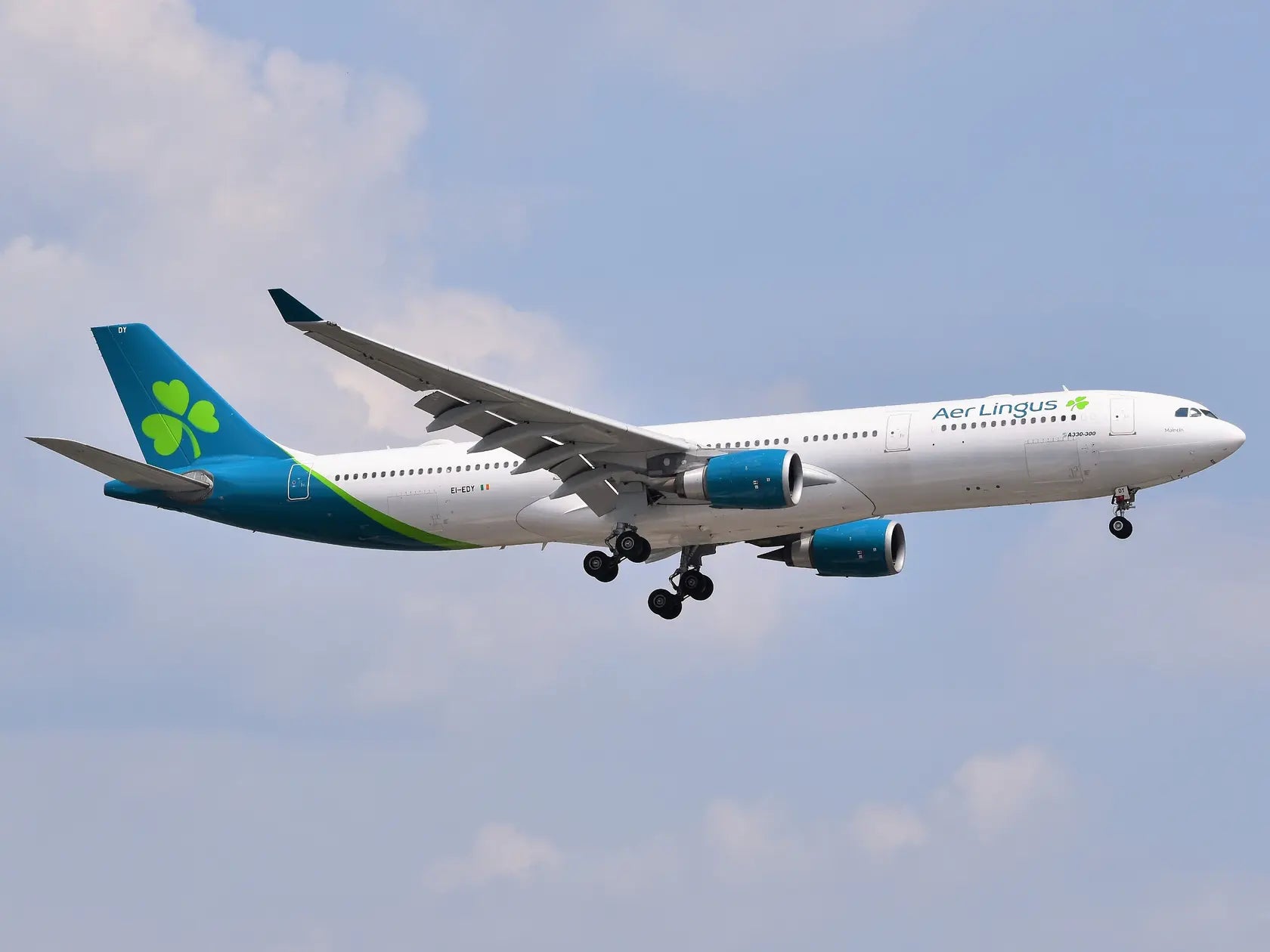
Aer Lingus operates an all-Airbus fleet, having retired its last Boeing aircraft in 2005. This single-manufacturer strategy simplifies type ratings, training, and crew scheduling. The fleet is divided into two broad categories: the A320 family handles European and UK short-haul operations, while the A330 family and A321neo/LR/XLR variants serve the transatlantic long-haul network. The airline is in the middle of a significant modernisation programme, with the A321XLR representing the most exciting recent addition.
| Aircraft Type | Role | In Service | Routes / Notes |
|---|---|---|---|
| Airbus A320-200 | Narrowbody | ~27 | European and UK short-haul. Backbone of the network. |
| Airbus A321neo | Narrowbody | ~8 | Medium-haul Europe and select transatlantic (EWR, IAD, PHL, BDL). |
| Airbus A321LR | Long-range narrowbody | ~8 | Transatlantic point-to-point. Hartford, Minneapolis, Cleveland routes. |
| Airbus A321XLR | Extra-long-range narrowbody | ~6 | Newest type. Nashville, Indianapolis, Raleigh-Durham. 184 seats (16J + 168Y). Orders for 6 total. |
| Airbus A330-300 | Widebody | ~10 | High-demand transatlantic: JFK, BOS, ORD, LAX, SFO, MIA. Fleet workhorse. |
| Airbus A330-200 | Widebody | ~3 | Longer-range transatlantic. Denver, Las Vegas, seasonal routes. |
Fleet data as of late 2025. Numbers are approximate and change with ongoing deliveries and seasonal wet-lease arrangements.
Beyond the mainline fleet, Aer Lingus Regional is operated by Emerald Airlines under franchise, flying 19 ATR 72-600 turboprops on regional UK, France, and Channel Islands routes from Dublin, Belfast, Cork, and Shannon. Emerald Airlines has its own pilot recruitment and is a separate employer.
In early 2025, IAG announced a major order for 21 Airbus A330-900neo and 32 Boeing 787-10 aircraft, with deliveries between 2028 and 2033. A portion of the A330-900neo order is earmarked for Aer Lingus, which will eventually replace the ageing A330-200 fleet and supplement the A330-300 fleet. This represents a significant career opportunity for pilots: those joining Aer Lingus in 2025-2026 could be among the first to operate the A330neo, gaining valuable experience on the latest widebody platform. The A321XLR deliveries continue, with all 6 aircraft now in service and additional orders under evaluation.
Pilot Salary & Compensation Breakdown
Aer Lingus pilot compensation underwent a major transformation following the landmark 2024 pay settlement, which delivered the largest pay award for Aer Lingus pilots in 30 years. The four-year deal, brokered through the Irish Labour Court, provides 30% increases for junior pilots and new joiners and 19.3% increases for senior pilots. Compensation includes a monthly base salary, hourly flight pay for hours exceeding annual thresholds, per-sector allowances, and pension contributions of up to 21% of salary.
First Officer (F/O) Pay Scale
| Seniority | Annual Gross (est.) | Hourly Overage Rate | Notes |
|---|---|---|---|
| Year 1 (entry) | €72,000 - €85,000 | €85/hr (above 620 hrs/yr) | Post-2024 pay deal. Reflects 30% junior uplift. |
| Year 3-5 | €95,000 - €120,000 | €85/hr | Mid-scale progression. Short-haul typical. |
| Year 7-10 | €130,000 - €155,000 | €85/hr | Senior F/O. Long-haul A330 or A321XLR likely. |
| Senior F/O (10+ yrs) | €155,000 - €172,000 | €85/hr | Top of the F/O scale. Approaching upgrade zone. |
Figures are annual gross estimates including base salary, flight pay, and standard allowances. Based on publicly reported data from aviation salary databases and the 2024 pay settlement terms.
Captain Pay Scale
| Seniority | Annual Gross (est.) | Hourly Overage Rate | Notes |
|---|---|---|---|
| Entry Captain (A320) | €125,000 - €150,000 | €120/hr (above 620 hrs/yr) | First command. Short/medium-haul. |
| Captain, 5 yrs (A330) | €175,000 - €210,000 | €120/hr | Long-haul widebody command. |
| Senior Captain (10+ yrs) | €210,000 - €240,000 | €120/hr | Top of the Captain scale. Most senior long-haul. |
Top-end annual figures can exceed €240,000 when overtime, sector allowances, and peak-season flying are included. Long-haul Captains earn the highest totals.
Sector Allowances
On top of base salary and hourly rates, Aer Lingus pays per-sector allowances that vary by destination: €18 per sector for UK flights, €25 for mainland Europe, €50 for the Canary Islands, €100 for US East Coast, and €150 for US West Coast. For a long-haul Captain operating five US East Coast round trips per month, that adds approximately €12,000 annually in sector pay alone.
These figures are estimates compiled from publicly available salary databases, pilot community reports, and the terms of the 2024 Labour Court settlement. Actual compensation depends on the specific collective agreement in force, individual seniority position, aircraft type flown, and annual block hours. Ireland applies income tax at 20% (standard) and 40% (higher rate on earnings above ~€42,000 for single filers), plus USC and PRSI social charges. Always verify with IALPA or the latest collective agreement before making career decisions based on salary expectations.
Roster Pattern & Quality of Life
Aer Lingus operates a 5-on / 3-off roster pattern, one of the more favourable structures available at European airlines. Pilots work five consecutive days followed by three consecutive days off, creating a predictable and repeating cycle. This translates to approximately 18-20 days off per month from the roster alone, before annual leave is factored in. Combined with generous annual leave entitlements of 35-51 days (depending on seniority), the total time off is substantial.
📅 Sample Month: Short-Haul First Officer (DUB)
Long-haul crews operating the A330 or A321XLR on transatlantic routes work different patterns. A typical transatlantic rotation involves 1-2 days of flying (outbound + layover + return) followed by recovery days off. Long-haul pilots generally log fewer flying days per month but accumulate higher block hours per trip, with individual transatlantic sectors lasting 7-9 hours. Augmented crews (3 pilots) may be used on the longest A330 routes to the US West Coast.
Aer Lingus pilots are primarily based at Dublin Airport (DUB), which is the main hub for all short-haul and long-haul operations. Shannon Airport has historically served as a secondary crew base for some transatlantic flying, though the airline has consolidated operations increasingly toward Dublin. The closure of the Manchester transatlantic base (announced early 2026) further concentrates pilot positions in Dublin. For pilots not living in the Dublin area, commuting is a consideration, although Dublin's relatively compact geography and well-connected airport make it more manageable than commuting to major European hubs like London Heathrow or Paris CDG. Cork-based operations exist for short-haul routes but are limited in scope.
Benefits, Travel Perks & Retirement
Aer Lingus offers a comprehensive benefits package that compares well with other European legacy carriers. The standout feature is the employer pension contribution of up to 21% of salary, one of the most generous defined contribution schemes available in European aviation. Combined with staff travel across the entire IAG network and oneworld alliance, the total benefits package adds significant value beyond the headline salary.
The employer pension contribution of up to 21% is a significant financial advantage that compounds over a full career. A pilot earning €150,000 annually could receive up to €31,500 per year in employer pension contributions alone. Over a 35-year career, assuming moderate investment returns, this could build a retirement fund well in excess of €1 million from employer contributions alone, before any personal contributions. In comparison, many European airlines offer employer pension contributions in the 8-15% range, making the Aer Lingus scheme one of the most attractive in the industry. The scheme is a defined contribution plan, meaning the accumulated funds belong to the individual pilot and are portable if leaving the airline.
Career Progression & Seniority
Career progression at Aer Lingus is strictly seniority-based. Upgrade to Captain, fleet transitions between narrowbody and widebody types, and schedule bidding priority are all determined by position on the seniority list. This system provides transparency and long-term predictability, but it also means that upgrade timelines are dependent on factors beyond individual control: retirement rates, fleet growth, and overall pilot group size.
The current estimated upgrade timeline from First Officer to Captain is approximately 8-12 years for pilots hired in recent years. This is somewhat faster than at the largest European flag carriers (Air France at ~15 years, Lufthansa at ~12-18 years), reflecting Aer Lingus's smaller pilot group and ongoing fleet expansion. The 2024 pay settlement and improving financial results suggest continued hiring, which may further accelerate upgrade timelines in the late 2020s.
| Career Milestone | Typical Timeline | Notes |
|---|---|---|
| Future Pilot Programme (cadet) | ~18-24 months training | Ab-initio pathway. Requires Level 7 degree. |
| Join as F/O (A320 family) | Day 1 post-training | Most common entry fleet for both cadets and direct entry. |
| Transition to long-haul F/O | 3-6 years | A330 or A321XLR. Seniority-dependent bid. |
| Captain upgrade (short-haul) | ~8-12 years | Command assessment required. Not guaranteed. |
| Captain on widebody (A330) | 12-18+ years | Top seniority positions. Most senior long-haul commands. |
| Training Captain / TRE | Variable | Requires separate selection and instructor qualification. |
Aer Lingus does recruit experienced pilots through its Direct Entry Pilot programme, which accepts qualified pilots from other airlines. Direct entry candidates may join as First Officers or, in some cases, as Captains depending on qualifications and operational requirements. However, direct entry Captains are relatively uncommon, and most command positions are filled through internal upgrade.
The introduction of the A321XLR, planned A330-900neo deliveries from 2028, and the airline's expanding transatlantic network (26 North American routes planned for summer 2026) all point to sustained fleet growth. Each new aircraft requires additional crew, creating promotion opportunities throughout the seniority list. Pilots joining Aer Lingus in 2025-2026 are well positioned to benefit from this expansion cycle, potentially achieving Captain upgrade in the 8-10 year range if growth continues at the current pace. The all-Airbus fleet also simplifies career transitions, as pilots can move between A320/A321/A330 variants with relatively efficient cross-crew qualification training.
Recruitment Process & Requirements
Aer Lingus recruits pilots through two distinct pathways: the Direct Entry Pilot programme for experienced commercial pilots and the Future Pilot Programme for aspiring pilots without airline experience. Both pathways lead to the same seniority list and long-term career opportunities. Recruitment activity has been measured since the 2024 pay dispute, with the airline drawing from existing hold pools of assessed candidates alongside new recruitment campaigns.
Direct Entry Pilot: Requirements
Future Pilot Programme: Requirements
Selection Stages
Online Application & Screening
Candidates submit applications through the Aer Lingus careers portal. Initial screening verifies license credentials, flight experience, medical status, and eligibility requirements. Candidates who pass screening proceed to assessment.
Technical Assessment
Computer-based technical evaluation covering aviation knowledge, meteorology, flight planning, and Airbus systems. The assessment tests both theoretical knowledge and practical decision-making ability under time pressure.
Simulator Assessment
Simulator-based evaluation at Dublin. Candidates are assessed on aircraft handling, CRM (Crew Resource Management), emergency response, and decision-making. Both normal operations and non-normal scenarios are included.
Assessment Centre & Interview
In-person assessment centre at Aer Lingus headquarters in Dublin. Includes group exercises, individual behavioural interview, and competency evaluation. Focus on interpersonal skills, teamwork, flexibility, communication, and alignment with Aer Lingus values.
Medical & Background Checks
Final pre-employment checks including Class 1 medical verification, criminal background check, and reference verification. Successful candidates receive a conditional offer and training start date.
Aer Lingus places significant emphasis on CRM competencies and cultural fit during the selection process. The airline values flexibility, communication skills, and the ability to work in a team-oriented cockpit environment. Brush up on Airbus philosophy and fly-by-wire concepts even if your current experience is on Boeing types. The Future Pilot Programme assessment centres for 2025 were scheduled for March-April. Direct Entry recruitment tends to operate on a rolling basis, with candidates sometimes held in a pool for several months before receiving firm start dates. Monitor the official careers page and pilot forums regularly for application windows.
Top 5 Layover Destinations
Transatlantic layovers are one of the defining advantages of flying for Aer Lingus. The airline operates over 20 direct routes from Dublin to North America, with the majority concentrated on the US East Coast. Layovers typically last 18-24 hours, providing crews with genuine downtime in some of the most popular cities in the United States. Hotels are contracted by the airline at 4-star standard, and crew transport between hotel and airport is provided.
All crew hotels are contracted by the airline and cannot be selected by individual pilots. Transport between hotel and airport is provided. Under EASA Flight Time Limitations, pilots must receive a minimum rest opportunity before the next duty period, ensuring adequate sleep time at every layover destination. Layover destinations are determined by your roster and seniority, with more senior pilots typically having first pick of the most popular routes. The growing A321XLR network is adding new layover destinations like Nashville, Indianapolis, and Raleigh-Durham, though these narrowbody routes may have shorter layover windows compared to the traditional A330 long-haul services.
How Aer Lingus Compares: Airline Radar Chart
How does Aer Lingus stack up against its two most relevant competitors for pilots: Ryanair (Ireland's largest airline and direct domestic rival) and British Airways (IAG sister airline and transatlantic competitor)? Below is a comparative analysis across five key metrics. Scores are editorial estimates based on publicly available data, pilot community feedback, and industry benchmarks.
Key Takeaways from the Comparison
Aer Lingus wins on work-life balance versus Ryanair. The 5/3 roster pattern with 35-51 days annual leave and moderate monthly block hours creates a substantially better lifestyle than the high-utilisation model at Ryanair, where pilots fly significantly more sectors per month. Ryanair Captains can earn up to approximately €180,000, broadly comparable to senior Aer Lingus Captains, but the daily workload is markedly higher.
British Airways offers higher top-end salaries but a more complex base system. BA long-haul Captains can exceed £150,000 (€175,000+), and the fleet diversity (A350, 777, 787, A380) is unmatched. However, BA pilots face London living costs, longer upgrade timelines (12-15 years), and a larger, more complex seniority system. Aer Lingus offers a more manageable career trajectory with genuine long-haul flying on a smaller, more navigable pilot list.
Fleet modernisation favours Aer Lingus in the short term. The A321XLR introduction places Aer Lingus at the forefront of ultra-long-range narrowbody operations. Ryanair operates an all-737 fleet with no widebody types, limiting route diversity and career variety. BA has the most diverse fleet but is also managing complex transitions across multiple types.
Job security is strongest at Ryanair by volume. As Europe's largest airline by passenger numbers, Ryanair offers scale-driven job security. Aer Lingus, while financially healthy (€282M operating profit in 2025), remains a smaller carrier within the IAG group, making it somewhat more vulnerable to strategic decisions at the parent level. BA benefits from similar IAG backing but has experienced more frequent industrial disputes.
Scores are editorial estimates based on publicly available salary data, pilot forum discussions, airline financial results, and industry benchmarks from sources including the European Cockpit Association, aviation salary databases, and airline press releases. They represent a general assessment for an experienced pilot considering a long-term career. Individual experiences vary based on seniority, fleet type, and personal priorities.
Union & Industrial Relations
The Irish Air Line Pilots' Association (IALPA) represents Aer Lingus pilots and has been the central force in pilot industrial relations since its founding in 1946. IALPA operates as a branch of the Forsa trade union, Ireland's largest public service and civil service union. This affiliation gives IALPA access to Forsa's legal, research, and industrial relations infrastructure while maintaining its aviation-specific identity and expertise.
IALPA Structure & Governance
IALPA has a proud history of Irish aviation representation, having been founded by Aer Lingus pilots and producing three IFALPA presidents over the decades. The union represents over 1,200 Irish pilots across multiple airlines, with the Aer Lingus section being its largest and most influential constituency.
The 2024 Pilot Pay Dispute: A Turning Point
The 2024 pay dispute and its resolution fundamentally improved the compensation landscape for Aer Lingus pilots, particularly at the junior end with the 30% increase for new joiners. The proactive contract extension discussions suggest a more collaborative industrial relations climate going forward. For pilots considering joining Aer Lingus, the post-settlement environment is significantly more favourable than the years of pay stagnation (2019-2024) that preceded it. IALPA membership is strongly encouraged, and the union plays an active role in protecting pilot interests on issues ranging from salary and roster rules to fatigue management and training standards.
Verdict: Who Is Aer Lingus For?
🎯 Our Take
Aer Lingus occupies a distinctive niche in European aviation: a mid-size legacy carrier with genuine long-haul transatlantic flying, a modern all-Airbus fleet, and a quality of life that is hard to match at larger flag carriers. The 5/3 roster pattern, 35-51 days annual leave, and up to 21% employer pension contribution create one of the strongest work-life balance packages available in European aviation.
The trade-offs are clear: the pilot group is smaller than at Air France, Lufthansa, or BA, which means fewer total positions but also a more navigable seniority list. Captain upgrade at 8-12 years is competitive. The 2024 pay settlement brought salaries to a competitive level, with senior Captains approaching €240,000 and junior F/O pay significantly boosted by the 30% increase. The Dublin-centric base structure works well for those living in Ireland but limits flexibility for those based elsewhere.
For pilots seeking transatlantic flying without the scale and complexity of a mega-carrier, combined with the career stability of IAG ownership and oneworld alliance membership, Aer Lingus is an excellent long-term choice. The A321XLR introduction and upcoming A330neo deliveries ensure an exciting fleet trajectory through the 2030s.
1 Do I need to be Irish to fly for Aer Lingus?
No. Aer Lingus does not restrict recruitment to Irish nationals. Candidates must hold a valid EASA license and the right to work in Ireland. EU/EEA citizens have automatic work rights. Non-EU citizens would need a valid work permit, though the airline primarily recruits from the EASA-licensed pilot pool. English language proficiency at EASA ELP Level 5 or above is required.
2 Does Aer Lingus pay for the type rating?
For Direct Entry pilots recruited through the official selection process, Aer Lingus covers the cost of type rating on the assigned aircraft (typically A320 family). For Future Pilot Programme candidates, training costs are primarily self-funded through the integrated ATPL course at an approved training organisation, though the airline provides the pathway and eventual type rating upon successful completion of the programme.
3 How long does it take to upgrade to Captain?
The current estimated upgrade timeline is approximately 8-12 years for pilots hired in recent years. This is strictly seniority-based and depends on retirement rates, fleet growth, and the overall pilot group size. The airline's expanding transatlantic network and planned A330neo deliveries may accelerate this timeline in the late 2020s and early 2030s.
4 What happened with the 2024 pilot strike?
In June-July 2024, IALPA initiated work-to-rule action and an 8-hour strike over pilot pay, demanding a 24% increase to compensate for inflation since 2019. The dispute was resolved through the Irish Labour Court, which recommended an 18% increase. This was formalised into a four-year deal providing 19.3% for senior pilots and 30% for junior pilots and new joiners. The settlement restored pre-COVID pay scales and cancelled a pilot debt to the airline. Industrial relations have been relatively stable since.
5 Can I transfer to British Airways or other IAG airlines?
While Aer Lingus is part of the IAG group alongside British Airways, Iberia, and Vueling, formal pilot transfer mechanisms between IAG airlines are limited. Each airline maintains its own seniority list and recruitment process. In practice, Aer Lingus pilots seeking to move to BA or Iberia would need to apply through the normal external recruitment channels. However, IAG ownership does provide staff travel benefits across the group and potential future opportunities as the group evolves.
6 How does the A321XLR change the pilot experience?
The A321XLR opens routes to US cities that were previously uneconomical with widebody aircraft, such as Nashville, Indianapolis, and Raleigh-Durham. For pilots, this means more diverse transatlantic flying on a single-aisle aircraft with advanced cockpit systems. The A321XLR features full-flat Business Class seats (16J + 168Y configuration) and can fly up to 4,700 nautical miles, bringing a genuine long-haul experience to a narrowbody platform. Pilots rated on the A320 family can transition to the XLR with a differences course rather than a full type rating.
7 What is the pension contribution at Aer Lingus?
Aer Lingus offers a defined contribution pension scheme with employer contributions of up to 21% of salary. This is one of the most generous employer pension rates in European aviation. A pilot earning €150,000 annually could receive up to €31,500 in employer pension contributions alone. The pension is a portable defined contribution scheme, meaning accumulated funds belong to the individual and can be transferred if leaving the airline.
8 Is Aer Lingus better than Ryanair for pilots?
It depends on priorities. Aer Lingus offers genuine long-haul flying, a legacy carrier culture, stronger work-life balance (5/3 roster, fewer monthly block hours), and a 21% pension. Ryanair offers scale-driven job security, faster promotion in some periods, and competitive top-end Captain pay (~€180,000). Ryanair operates a higher-utilisation model with more sectors per day and no widebody or long-haul flying. For pilots valuing transatlantic operations, roster quality, and pension benefits, Aer Lingus is generally preferred. For those prioritising rapid career progression and volume flying, Ryanair may appeal.
Official Links & Resources
Before applying or making any career decisions, always verify information directly with official sources. These are the key websites and organisations relevant to Aer Lingus pilot careers:
Monitor the PPRUNE forums (Professional Pilots Rumour Network) for real-time discussions about Aer Lingus recruitment timelines, assessment centre experiences, and hold pool updates. The Aer Lingus Direct Entry Pilots thread is particularly active during recruitment windows. For official updates, subscribe to the Aer Lingus careers newsletter and follow the airline's media centre for route and fleet announcements that may signal future hiring needs.