
Hawker Siddeley Trident: History, Program Launch and Development Path
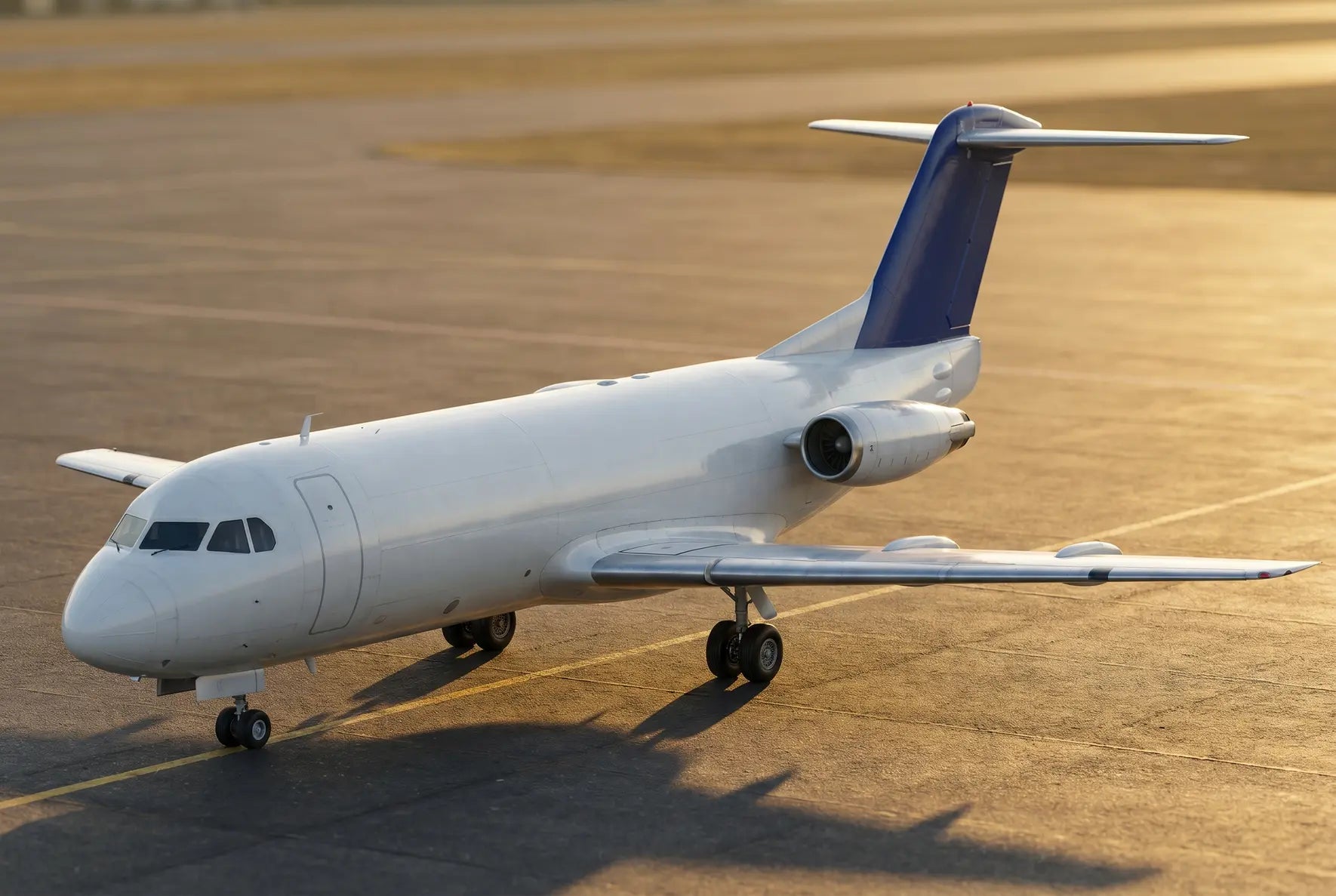
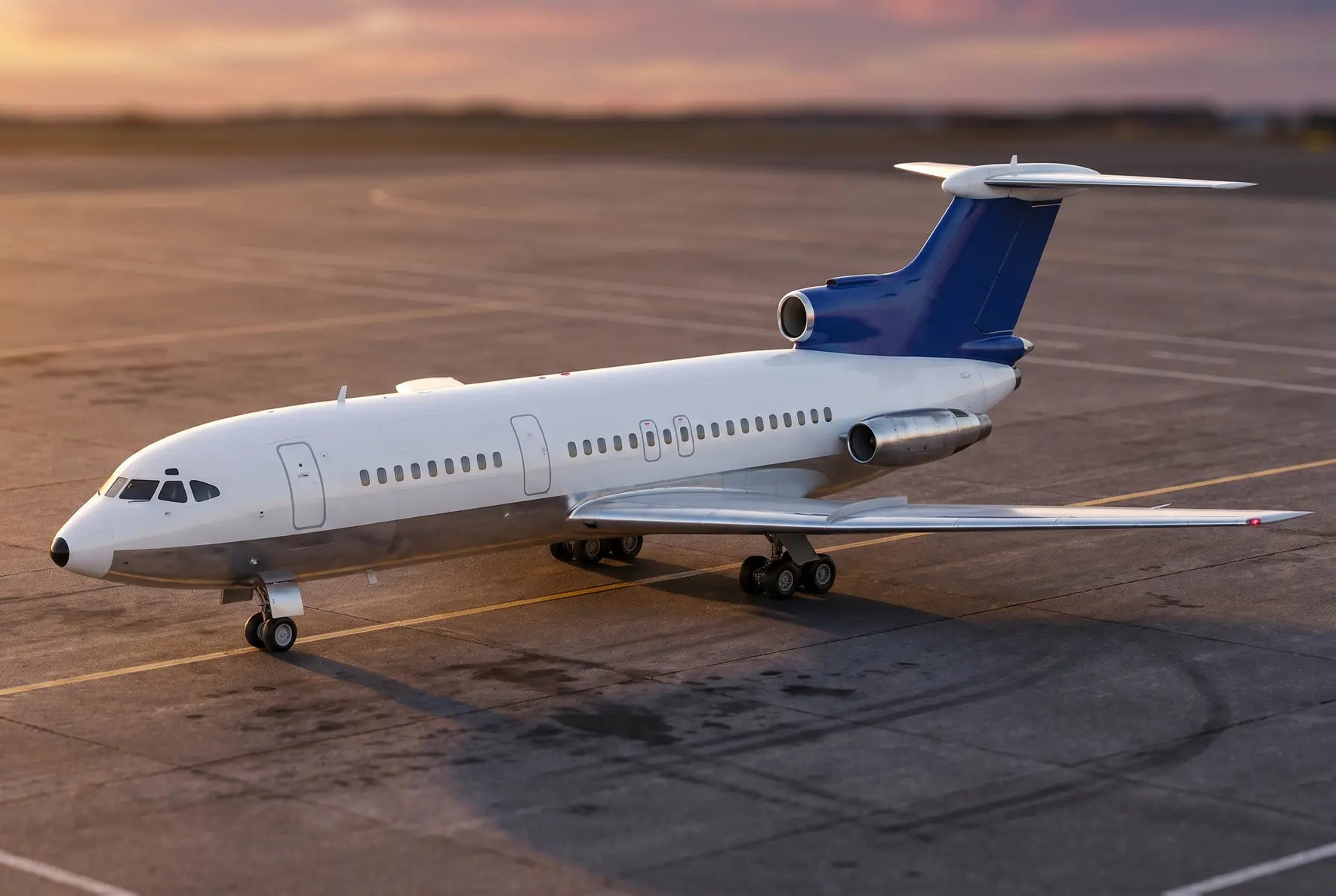
The Hawker Siddeley Trident traces its origins to the late 1950s, when British European Airways (BEA) sought a modern short to medium range jet airliner to replace its ageing turboprop fleet of Vickers Viscounts and Vanguards. The de Havilland Aircraft Company responded in 1957 with the DH.121, a revolutionary trijet featuring three rear mounted Rolls Royce engines and a T tail configuration. The original DH.121 was a relatively large aircraft, designed to seat around 140 passengers with transatlantic capable range, and it attracted interest from American Airlines. However, BEA concluded that projected passenger growth was slower than anticipated and requested a smaller, lighter airframe tailored exclusively to European routes. This fateful downsizing reduced capacity by roughly a quarter, shortened the fuselage, and swapped the powerful Rolls Royce Medway engines for the smaller Rolls Royce Spey. American Airlines subsequently chose the Boeing 727, which matched its original requirements more closely.
On 24 August 1959, BEA formally ordered 24 aircraft with options for 12 more. Meanwhile, a government driven consolidation of the British aviation industry forced de Havilland to merge into Hawker Siddeley in 1960, and the project was redesignated HS.121 Trident. The name Trident was announced at the September 1960 Farnborough Airshow, referencing the aircraft's three engines and triple redundant hydraulic systems. Corporate upheaval and management changes caused significant delays, allowing the Boeing 727 to secure orders from airlines worldwide while prospective Trident buyers hesitated.
The prototype Trident 1C (G ARPA) completed its maiden flight on 9 January 1962 from Hatfield Aerodrome. The type entered revenue service with BEA on 1 April 1964, two months after the Boeing 727 had already begun commercial operations. Early Trident 1C aircraft, powered by three Rolls Royce Spey 505 turbofans producing 10,400 lbf each, suffered from limited low speed lift, earning the nickname The Gripper among crews due to longer takeoff rolls.
The Trident was nonetheless a technological trailblazer. Developed in partnership with Smiths Aircraft Instruments, its fully automatic blind landing system enabled the world's first autoland on a scheduled commercial service on 10 June 1965. This capability allowed BEA to maintain operations in fog conditions that grounded other aircraft, and it laid the foundation for modern CAT III approach procedures used globally today. For crew and passengers alike, long sectors on early jets also raised new questions about the impact of sustained flight time on health and fatigue, a topic that grew in relevance as jet operations expanded throughout the 1960s.
Hawker Siddeley progressively developed improved variants to address the 1C's shortcomings. The Trident 1E introduced uprated Rolls Royce Spey 511 engines (11,400 lbf each), an enlarged wing, and greater fuel capacity, raising the maximum takeoff weight to 128,000 lb. Fifteen were built for export customers including Kuwait Airways, Pakistan International Airlines, and Iraqi Airways. The Trident 2E, entering service in 1968, further extended range and capacity with Spey 512 engines (11,960 lbf each), a wingspan increased to 98 ft, and fuel capacity of 5,774 imperial gallons. Fifty Trident 2E aircraft were produced, with major orders from BEA and the Civil Aviation Administration of China (CAAC). The Trident 3B, which first flew on 11 December 1969 and entered service on 1 April 1971, featured a fuselage stretched to 131 ft 2 in and an innovative fourth engine, the Rolls Royce RB162 boost jet mounted in the tail, delivering 5,250 lbf of additional thrust for takeoff at a weight penalty of only five percent.
The programme suffered a significant setback on 18 June 1972 when BEA Flight 548, a Trident 1C (G ARPI), crashed near Staines shortly after departing London Heathrow, killing all 118 people on board. The official investigation determined that the leading edge slats were retracted prematurely at low speed and the stall recovery system was manually overridden, resulting in a deep stall from which recovery was impossible. The accident intensified scrutiny of cockpit procedures and stall protection design across the industry.
Variant Identifiers and Key Differences
Each Trident sub variant addressed specific operational requirements. The following summary highlights the verified distinguishing features across the production family:
- Trident 1C: Three Rolls Royce Spey 505 engines (10,400 lbf each); wingspan 89 ft 10 in; MTOW 115,000 lb; range approximately 1,760 nmi; 24 built for BEA.
- Trident 1E: Uprated Spey 511 engines (11,400 lbf each); extended wing chord; MTOW 128,000 lb; range approximately 1,910 nmi; 15 built for export operators.
- Trident 2E: Spey 512 engines (11,960 lbf each); wingspan 98 ft; highest fuel capacity (5,774 imp gal); range approximately 2,350 nmi; 50 built.
- Trident 3B: Three Spey 555 engines plus one RB162 boost jet; fuselage stretched to 131 ft 2 in; up to 180 passengers; MTOW 150,000 lb; 26 built for BEA.
- Super Trident 3B: Enhanced variant of the 3B with increased fuel capacity and higher operating weights; 2 built.
Production of the Hawker Siddeley Trident ended in 1978 after 117 aircraft had been completed. BEA (later British Airways) retired its last Tridents on 31 December 1985, while CAAC continued operating the type in China until 1995. Despite its advanced autoland technology and technical sophistication, the Trident's commercial reach remained limited by the early decision to tailor the design exclusively to BEA's requirements, a constraint that allowed the Boeing 727, with 1,832 units produced, to dominate the global trijet market.

A British Airways Trident 3B aircraft is shown in-flight, displaying its distinctive livery and design. The landing gear is visible, indicating the plane is preparing for landing.
Hawker Siddeley Trident: Technical Specifications, Systems and Engine Overview
The Hawker Siddeley HS.121 Trident was designed by de Havilland to meet a 1956 British European Airways (BEA) requirement for a high speed, short to medium haul jet airliner capable of fast inter city travel across European routes. The three engine, T tail configuration with a low swept wing gave the aircraft a distinctive silhouette and enabled centralised thrust management, reducing asymmetric handling risks compared to wing mounted engine layouts. However, the decision by BEA to downsize the original DH.121 design from the larger Rolls Royce Medway powered proposal into a smaller airframe with less powerful Spey engines limited the Trident's range and payload capacity, a trade off that would constrain its export competitiveness against rivals like the Boeing 727.
The Trident was produced in four main variants: the 1C, 1E, 2E, and 3B. Each iteration brought increased weights, extended range, or higher passenger capacity, while sharing the same fundamental airframe philosophy and rear mounted engine arrangement. The aircraft's all metal construction, powered flight controls, and advanced avionics suite made it one of the most technologically ambitious airliners of its era, notably pioneering fully automatic blind landing capability in commercial service.
- Length: 34.98 m (114 ft 9 in) for Trident 1C, 1E and 2E; 39.98 m (131 ft 2 in) for the stretched Trident 3B
- Wingspan: 27.38 m (89 ft 10 in) on the 1C; 28.96 m (95 ft) on the 1E; 29.87 m (98 ft) on the 2E and 3B, featuring Küchemann style wingtip extensions
- Height: 8.23 m (27 ft) for 1C/1E/2E; 8.61 m (28 ft 3 in) for the 3B
- Maximum Takeoff Weight (MTOW): 52,163 kg (115,000 lb) for the 1C; 58,060 kg (128,000 lb) for the 1E; 64,637 kg (142,500 lb) for the 2E; 68,039 kg (150,000 lb) for the 3B
- Operating Empty Weight (OEW): approximately 30,500 kg (67,200 lb) for the 1C, rising to approximately 37,600 kg (83,000 lb) for the 3B
- Range: 1,010 to 1,760 nmi (1,870 to 3,260 km) for the 1C; up to 1,910 nmi (3,540 km) for the 1E; up to 2,350 nmi (4,350 km) for the 2E; approximately 1,940 nmi (3,590 km) for the heavier 3B
- Typical cruise speed: Mach 0.88 at altitude (approximately 525 knots TAS, depending on variant and conditions)
- Passenger capacity: 97 to 103 in typical layout for the 1C; up to 115 for the 1E; 114 to 149 for the 2E; up to 180 for the 3B in high density configuration
- Engines: three Rolls Royce Spey low bypass turbofans (variant dependent); Trident 3B added a fourth Rolls Royce RB.162 booster turbojet
Systems, Avionics and Handling Technology
The Trident's most celebrated technological achievement was its Smiths Aircraft Industries Autoland system (SEP5), which made the aircraft the first airliner in the world certified for fully automatic blind landings. On 10 June 1965, a BEA Trident performed the world's first automatic landing by a commercial jet, and by 1968 the fleet had achieved Category III ILS certification, enabling operations in near zero visibility conditions at fog prone airports like London Heathrow. The autoland system used triplex redundancy with three independent channels sharing no common elements, enabling fail operational performance. It controlled approach, flare, touchdown, and rollout, coupling to ILS guidance while radio altimeters managed the flare profile and rudder inputs corrected for crosswind.
The flight control architecture incorporated a fully integrated Automatic Flight Control System (AFCS) with paravisual display guidance for ground roll, a Ground Run Monitor for post landing control, and Doppler based navigation feeding an electromechanical moving map display. The aircraft also featured in flight reverse thrust capability on some variants, allowing deceleration during descent to reduce approach speeds and preserve brake efficiency on wet runways.
Published performance figures for the Trident can vary significantly between sources. These differences reflect operator specific cabin configurations, actual payload and fuel load, atmospheric conditions at departure and arrival airports, and runway surface state. MTOW options also differed between customers, and range figures are particularly sensitive to the number of passengers carried and reserve fuel policies. Any specifications should therefore be understood as representative of a given configuration rather than absolute values.
Rolls Royce Spey Engines and the RB.162 Booster
All Trident variants were powered by three rear mounted Rolls Royce Spey low bypass turbofans from the RB.163 family. The Spey was originally derived from the larger Rolls Royce Medway engine after BEA's decision to reduce the Trident's size, scaling down the fan diameter while retaining the proven two spool axial compressor layout. The engine featured a five stage low pressure compressor (four stage on early variants), a twelve stage high pressure compressor, ten can annular combustion chambers, and two stage high and low pressure turbines, with a bypass ratio of approximately 0.64:1.
The Trident 1C used the Spey 505, rated at approximately 11,000 lbf (49 kN) of thrust per engine. The improved 1E employed the Spey 511 at 11,400 lbf (50.7 kN), while both the 2E and 3B variants were fitted with the more powerful Spey 512 (RB.163 25), producing 11,960 lbf (53.2 kN) per engine. The Spey entered civil service in 1964 and earned a strong reputation for reliability and maintainability. Beyond the Trident, the Spey family powered several other aircraft types in both civil and military roles, including the BAC One Eleven, Fokker F28 Fellowship, Grumman Gulfstream II and III, Blackburn Buccaneer S.2, the British variants of the McDonnell Douglas Phantom (F 4K and F 4M as the RB.168 Mk 202 with reheat), and the Hawker Siddeley Nimrod maritime patrol aircraft.
The Trident 3B introduced a unique fourth engine: the Rolls Royce RB.162, a small turbojet producing approximately 5,250 lbf (23.4 kN) of thrust, installed above the centre Spey exhaust in the tail. This booster engine, originally developed as a VTOL lift engine, provided a roughly 15% increase in takeoff thrust for the heavier 3B variant, improving short field and hot weather performance. It operated via a separate intake with movable doors and was used only during takeoff, making the Trident 3B the only commercial airliner to fly with a dedicated booster engine of this type.
Hawker Siddeley Trident Variants Specifications Comparison
Scroll horizontally to see more →
| Parameter | Hawker Siddeley Trident | Trident 1C | Trident 2E | Trident 3B |
|---|---|---|---|---|
| Entry into service | 1964 | 1966 | 1967 | 1969 |
| Engines | 3 × Rolls-Royce Spey | 3 × Rolls-Royce Spey 505 | 3 × Rolls-Royce Spey 512 | 3 × Rolls-Royce Spey 512 + 1 × Rolls-Royce RB162 |
| Length | 35.0 m | 35.0 m | 35.0 m | 40.0 m |
| Wingspan | 28.0 m | 27.4 m | 29.9 m | 29.9 m |
| Height | 8.6 m | 8.6 m | 8.6 m | 8.6 m |
| Typical seating and layout | 2-class: 100–150 passengers | 2-class: 88–115 passengers | 2-class: 130–149 passengers | 2-class: 150–180 passengers |
| MTOW | 68 t | 52 t | 65 t | 68 t |
| Range | 2,200 nm | 2,000 nm | 2,500 nm | 1,300 nm |
| Cruise speed | 0.88 Mach | 0.88 Mach | 0.88 Mach | 0.88 Mach |
| Service ceiling | 35,000 ft | 35,000 ft | 35,000 ft | 35,000 ft |
| Program note | Baseline short/medium-haul trijet | Initial production variant for short-haul | Improved range and capacity version | Stretched high-capacity with tail booster jet |
Scroll horizontally to see more →
The table compares key specs across the Hawker Siddeley Trident family, showing how the design evolved from the 1964 baseline to later variants. Trident 1C is the lightest at 52 t MTOW with the shortest 2,000 nm range and smaller 88–115 seat layouts. Trident 2E increases wingspan and pushes range to 2,500 nm with higher capacity, while the stretched Trident 3B seats up to 180 but sacrifices range to 1,300 nm and adds an RB162 booster.
Hawker Siddeley Trident Operations: Airlines, Routes and Typical Missions Worldwide
The Hawker Siddeley Trident was designed from the outset to serve short to medium haul routes within Europe, tailored to the specific requirements of British European Airways (BEA). Typical stage lengths ranged from around 930 to 2,400 nautical miles depending on the variant, translating into flight durations of roughly one to three hours at a cruising speed of approximately 506 knots at 35,000 feet. The Trident 1C covered routes up to about 1,010 nm (1,870 km), while the improved Trident 2E extended the operational reach to approximately 2,400 nm (4,350 km). The stretched Trident 3B, with its boosted takeoff performance, operated sectors of around 1,300 nm (2,400 km) with a heavier payload.
Daily utilisation of the Hawker Siddeley Trident was generally high, as its short sector lengths allowed multiple rotations per day. One preserved example, G‑AWZJ, accumulated 19,784 landings over its career, suggesting an intensive cycle count typical of high frequency European shuttle operations. The aircraft was optimised for hub and spoke networks, feeding traffic through major airports such as London Heathrow to destinations across the United Kingdom and continental Europe. It was not commonly used on point to point leisure routes, although charter operators like Channel Airways did briefly fly the type.
A defining advantage of the Hawker Siddeley Trident was its pioneering autoland system, which made it the first airliner to perform a fully automatic blind landing in revenue service in 1965. This capability allowed all weather operations at fog prone hubs, particularly London Heathrow, and kept schedules reliable during British winters. However, the type faced significant commercial challenges. Its range and payload were originally constrained by the very specific BEA specification, making it less attractive to international buyers compared to the larger and longer ranged Boeing 727. Government interference in the design process and limited export success restricted total production to just 117 airframes.
Where the Hawker Siddeley Trident Operated Around the World
Although conceived for the European market, the Hawker Siddeley Trident found operators in Asia and, to a limited extent, in Africa. It never entered service with any airline in North or South America. In Europe, the type was dominant on BEA and later British Airways routes radiating from London to cities such as Paris, Brussels, Frankfurt and Copenhagen, as well as domestic UK services. In Asia, the largest overseas customer was the Civil Aviation Administration of China (CAAC), which acquired 37 Tridents and operated them on domestic trunk routes until the mid 1990s. Smaller Asian operators used the type on regional services in the Indian subcontinent and the Middle East. In Africa, only one operator briefly flew the Trident on regional charter work.
- Europe: British European Airways (BEA) was the launch customer and largest operator, flying 24 Trident 1C aircraft followed by 15 Trident 2E and 26 Trident 3B units on high frequency services from London Heathrow. British Airways inherited the entire fleet in 1974 and continued operations until the mid 1980s. Northeast Airlines (formerly BKS Air Transport) operated Trident 1E aircraft on domestic routes from Newcastle. Channel Airways briefly used the type on inclusive tour charters. Cyprus Airways operated two Trident 2E aircraft on regional Mediterranean services. Iraqi Airways flew three Trident 1E aircraft from 1965 on Middle Eastern routes until 1977, and Kuwait Airways also operated the Trident 1E on regional sectors.
- North and South America: No airlines in the Americas operated the Hawker Siddeley Trident. The type's limited range and payload, combined with strong competition from the Boeing 727, prevented any sales in this region.
- Asia: CAAC (Civil Aviation Administration of China) was the largest export customer, acquiring 4 ex Pakistan International Airlines Trident 1E aircraft in 1970 and ordering 33 new Trident 2E units from 1972, plus 2 Super Trident 3B aircraft. After CAAC was restructured, successor airlines including Air China and China United Airlines continued to fly the type until final retirement in 1995, making China the last country to operate the Trident commercially. Pakistan International Airlines was an early export customer with 4 Trident 1E aircraft from 1966, used on regional routes before being sold to China in 1970. Air Ceylon operated a single Trident 1E from 1969 on services to India until 1978.
- Africa: Air Charter Service of Zaire (ACS) acquired five ex British Airways Tridents in 1984 and operated regional services for approximately two years before the aircraft were scrapped. No other African airline is known to have flown the type.
Typical Seating Configurations on the Hawker Siddeley Trident
Cabin layouts on the Hawker Siddeley Trident varied considerably across variants and operators. All versions shared the same fuselage cross section, which accommodated six abreast seating in economy class as the standard arrangement. The Trident 1C was typically configured for 98 to 109 passengers in a two class layout, with around 16 first class seats and 64 to 76 economy seats. A distinctive feature of early BEA Trident cabins was the use of face to face seating near the over wing escape hatches and rear facing seats in parts of the economy section, a configuration that has largely disappeared from modern aviation.
The Trident 1E offered greater flexibility, seating between 115 and 139 passengers depending on class mix, with a maximum of around 123 in all economy. Cyprus Airways notably adopted a dense seven abreast configuration on its Trident 1E aircraft. The Trident 2E maintained similar capacity options. The stretched Trident 3B, with a fuselage extended by approximately 5 metres, could seat up to 180 passengers in a high density all economy layout, or around 14 first class and 119 economy in a two class arrangement. Leisure or charter configurations on the Trident 3B typically pushed capacity toward the higher end of the range, while network carriers like British Airways retained more comfortable two class layouts throughout service.
In this video, explore the Hawker Siddeley HS-121 Trident, a mid-range passenger trijet developed by De Havilland, tracing its rise to prominence and the factors behind its eventual decline.
Hawker Siddeley Trident Safety Record: How Safe Was This Trijet?
The Hawker Siddeley Trident entered commercial service in 1964 and was retired in 1995, spanning over three decades of operation. A total of 117 airframes were built, serving principally with British European Airways (later British Airways), the Civil Aviation Administration of China (CAAC) and a handful of smaller carriers including Cyprus Airways and Kuwait Airways. Over that period the type was involved in several hull loss accidents, some of which proved pivotal in reshaping global aviation safety standards. While the overall loss rate appears high by modern standards, it must be weighed against the era in which the Trident operated: flight data recorders were not yet universal, cockpit voice recorders were only mandated in the United Kingdom after one of the accidents discussed below, and crew resource management (CRM) training was still in its infancy.
Major Accidents Involving the Hawker Siddeley Trident
1966 Felthorpe test flight crash. On 3 June 1966, a brand new Trident 1C (G‑ARPY) broke up near Felthorpe, Norfolk, during a pre‑delivery stalling test with all safety systems intentionally disabled per the test schedule. The aircraft entered an irrecoverable deep stall (also called a superstall) and descended in a flat spin from roughly 11,600 ft, killing all four crew members on board. The accident underlined the T‑tail configuration's susceptibility to deep stall conditions and led to strengthened stall protection requirements for subsequent Trident variants.
1972 BEA Flight 548 (Staines disaster). On 18 June 1972, Trident 1C G‑ARPI crashed into a field near Staines, Surrey, barely three minutes after departing London Heathrow for Brussels. All 118 occupants perished, making it the deadliest air accident in UK history at that time. The official investigation (AAIB Report 4/1973) found that the captain retracted the leading edge slats at too low a speed. The stick pusher activated but was overridden manually, allowing the aircraft to enter an unrecoverable deep stall. Contributing factors included crew workload and an authority gradient that discouraged the junior officers from challenging the captain. The aftermath was far reaching: the UK mandated cockpit voice recorders, reinforced stall protection system procedures, and tightened medical oversight for pilots. The disaster is also widely cited as one of the catalysts for modern CRM training programmes, which encourage all crew members to speak up when safety is at risk.
1976 Zagreb midair collision. On 10 September 1976, British Airways Trident 3B (G‑AWZT), operating Flight 476 from London to Istanbul, collided at FL 330 with an Inex‑Adria DC‑9 near Vrbovec, Yugoslavia. All 176 people on both aircraft were killed, including 63 on the Trident. The AAIB report (9/1982) attributed the collision to air traffic control errors, including inadequate separation and a last second instruction issued in a language the British crew could not understand. The tragedy accelerated international efforts to standardise English as the language of air traffic control and contributed to the long term development of the Traffic Collision Avoidance System (TCAS), now a mandatory fitment on large transport aircraft worldwide.
1988 CAAC Flight 301 (Hong Kong). On 31 August 1988, a CAAC Trident 2E struck approach lights while landing at Hong Kong Kai Tak Airport in heavy rain and poor visibility, overran the runway, and came to rest partially submerged in Kowloon Bay. Seven of the 89 occupants lost their lives. Investigators could not conclusively determine the cause but concluded the commander likely continued a destabilised approach after transitioning to visual references, with possible windshear as a contributing factor.
How Safe Was the Hawker Siddeley Trident?
Assessing the HS 121 Trident's safety record requires historical context. The type operated during an era when crew training philosophies and cockpit culture were evolving rapidly, and many of the safety defences taken for granted today, such as TCAS, enhanced ground proximity warning systems and comprehensive CRM syllabi, did not yet exist. Several of the Trident's most serious accidents were rooted not in airframe deficiencies but in human factors: premature override of stall protection, authority gradients that silenced junior pilots, and air traffic control shortcomings. Crucially, each accident drove concrete improvements in procedures, regulation and technology that benefited the entire industry.
From a design standpoint, the Trident was a genuinely innovative aircraft. It was the first airliner to achieve a fully automatic, hands off landing (autoland) in regular revenue service, a capability certified to CAT IIIB standards. That system later informed autoland development across the commercial fleet. By the standards of the Aviation Safety Network database, the Trident's hull loss ratio reflects both the smaller fleet size (117 aircraft versus thousands for competitors like the Boeing 727) and the higher baseline accident rates common to the 1960s and 1970s. According to statistical analyses published by SKYbrary, fatal accident rates for commercial aviation have fallen by more than 90 percent since the decade in which the Trident entered service, thanks in large part to the lessons drawn from events like those summarised above. Aviation remains, by a wide margin, one of the safest modes of long distance transport available.
01 What is the typical range of the Boeing 737?
The Boeing 737 family offers ranges from 3,000 nautical miles for shorter variants like the 737-800 to over 3,800 nautical miles for the advanced 737 MAX 8. This makes it ideal for transcontinental and medium-haul routes such as New York to Los Angeles or London to Dubai. Range varies by model, fuel load, and configuration.
02 Which airlines commonly operate the Boeing 737 and on what routes?
Major operators include Southwest Airlines, Ryanair, United Airlines, and American Airlines. They use it for high-frequency domestic routes in the US, short-haul European flights, and regional international services in Asia. It's the world's most-flown narrowbody jet due to its versatility.
03 How is the cabin layout and passenger comfort on the Boeing 737?
The Boeing 737 typically features a 3-3 economy layout with 126 to 220 seats depending on the variant and airline. Newer MAX models have larger windows, LED lighting, and quieter cabins for better comfort. Noise levels are reduced compared to older jets, enhancing the overall experience.
04 What is the safety record of the Boeing 737?
The Boeing 737 has a strong safety record with over 10,000 units produced and billions of passenger miles flown safely. It includes redundant systems and advanced avionics for reliability. Modern variants incorporate flight envelope protection to prevent stalls.
05 How does the Boeing 737 compare in fuel efficiency to similar aircraft?
The 737 MAX series achieves 20% better fuel efficiency than the previous generation thanks to new engines and aerodynamics. It competes closely with the Airbus A320neo, offering similar per-seat fuel burn on comparable routes. This efficiency supports lower operating costs for airlines.
06 What are good seat choices on the Boeing 737 for travelers?
Window seats in rows 1-10 or the last row often provide better views and legroom on many configurations. Avoid seats near galleys or lavatories for less noise and traffic. The Boeing 737 handles turbulence smoothly due to its low wing design and stable flight characteristics.