


Airbus A318-100 programme history: launch, milestones and distinct features
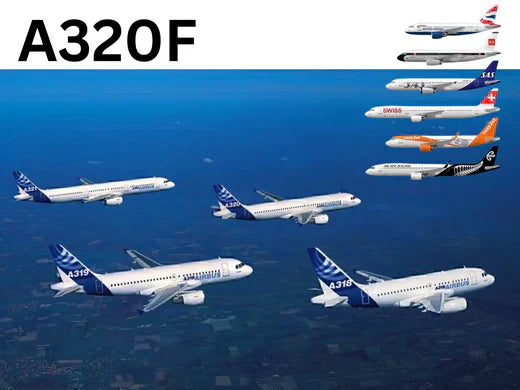
The Airbus A318-100 is the smallest member of the Airbus A320 Family and a shortened derivative designed to extend the family’s common cockpit and systems into the 100 seat market segment. Airbus summarises the family concept and its Single Type Rating logic in the A320 Family overview.
For airlines already operating A319, A320 or A321 variants, the A318-100 aimed to deliver a lower capacity option while preserving the handling, procedures and maintenance philosophy that underpin family commonality. This rationale also explains why the A318-100 development was focused on minimum change engineering and on certification of multiple engine subvariants rather than on an all new airframe.
Programme launch, flight test and certification milestones
The certification trail starts with the regulator. The EASA Type Certificate Data Sheet A.064 records Airbus Industrie’s application for A318 certification on 11 December 1998 and lists Airbus S.A.S. as the manufacturer and type certificate holder. Airbus publicly announced the A318 on 26 April 1999, reporting 109 orders and commitments and highlighting A320 family commonality, as covered by The Guardian.
Industrial preparation gathered pace in January 2001. Flight International reported that Airbus had begun manufacturing components for the first A318 and was preparing final assembly in Hamburg, while also introducing laser welded fuselage panels as a production technique intended to reduce weight and manufacturing effort, in Airbus starts work on first A318.
Flight testing began on 15 January 2002. In January 2002, Flight International reported that performance issues with the Pratt and Whitney PW6000, originally planned as the launch powerplant, would delay the PW6000 variant and make the CFM56 powered aircraft the lead certificating version, in CFM56 takes pole position on A318. By April 2002, the same publication described Pratt and Whitney’s plan to restart the PW6000 effort around an MTU designed six stage high pressure compressor to resolve performance shortfalls, in Pratt and Whitney strains every nerve to rescue PW6000.
The certification record reflects that sequencing. EASA lists the CFM powered A318-111 and A318-112 with state of design type certification on 23 May 2003, while the PW6000 powered A318-121 and A318-122 appear under EASA TCDS issue 1, dated 21 December 2005. The first airline delivery came on 22 July 2003, when Frontier Airlines took delivery of the first CFM56 powered A318, according to CFM International’s delivery announcement.
Later incremental changes were handled through the normal A320 family modification process rather than through a distinct Airbus A318-100 redesign. The EASA data sheet, for example, documents the introduction of CFM56-5Bx/3 Tech Insertion engines for the A318 CFM variants via Airbus modifications, changing the engine designation to /3 while leaving certified characteristics unchanged.
How the Airbus A318-100 differs from adjacent A320 Family variants
The closest family neighbour to the Airbus A318-100 is the A319-100. Flight International described the A318 as a shrink derivative featuring a fuselage 2.39 m shorter than the A319, allowing it to offer a smaller cabin while preserving much of the A320 family’s architecture and commonality benefits. Early A318 coverage also highlighted that the fuselage width, flight controls and operational commonality philosophy matched the rest of the family.
The Airbus A318-100 label is widely used commercially, but formal model identifiers are defined by engine and certification standard. Under EASA A.064, the A318 series comprises A318-111 and A318-112 with CFM56-5B engines, plus A318-121 and A318-122 with PW6000 family engines, each tied to specific certification dates and engine designations. For engineers and fleet planners, these suffixes are the practical shorthand for propulsion configuration, documentation and parts compatibility.
From a flight operations perspective, the A318-100 keeps the A320 family cockpit commonality that underpins a Single Type Rating across the four core variants. This commonality can simplify training planning and crew flexibility, including structured ab initio schemes such as the Multi Crew Pilot Licence, where aircraft similarity can reduce transition steps between family members.
Variant identifiers for the Airbus A318-100 include:
- Regulatory model set A318-111, A318-112, A318-121 and A318-122 listed under EASA TCDS A.064.
- Key certification milestones with CFM variants dated 23 May 2003 and PW6000 variants dated 21 December 2005.
- Engine pairings including CFM56-5B8/P and CFM56-5B9/P for the CFM variants and PW6122A and PW6124A for the PW variants.
- Documented upgrade path including the CFM56-5Bx/3 Tech Insertion designation for A318 CFM variants introduced via Airbus modifications.
What also makes the Airbus A318-100 distinctive in hindsight is what did not follow. Airbus introduced the A320neo programme in 2010, but the neo line up focuses on A319, A320 and A321, leaving the A318-100 as the smallest expression of the earlier engine generation within the A320 family.

An Air France Airbus A318 aircraft with registration F-GUGI is captured during its final approach for landing, with landing gear deployed against a blue sky.
Airbus A318 100 technical specs, performance and systems overview
The Airbus A318-100 is the shortest member of the A320 Family, built around the same basic wing and systems architecture but with a shorter fuselage. Technically, that design choice prioritises runway performance, climb capability and scheduling flexibility on thinner routes, while accepting a key trade off: many trip costs remain close to larger A320 Family variants, but are spread over fewer seats. Operator economics therefore depend heavily on weight variant selection, engine choice and cabin density.
For verifiable planning data, Airbus publishes an Aircraft Characteristics airport and maintenance planning document for the A318-100, while the type design, limitations and certified configuration items are consolidated in the EASA Type Certificate Data Sheet A.064 for the A318 series. From a pilot perspective, the A318-100 also inherits the A320 Family cockpit philosophy and operational approach, which is why A320 pathway training and recruitment material (such as this Avion Express cadet programme overview) is often relevant background reading even when discussing the smallest variant.
- Airframe length: 31.45 m
- Wingspan: 34.10 m, with wing tip fences
- Certified maximum passenger seating capacity: 136
- Standard seating capacity (single class, manufacturer planning figure): 132
- Maximum takeoff weight options (weight variant dependent): 59,000 kg to 68,000 kg
- Maximum landing weight (weight variant dependent): 56,000 kg or 57,500 kg
- Maximum zero fuel weight (certified): 54,500 kg
- Usable fuel (typical 3 tank configuration): 24,209 litres total, comprising 15,959 litres wing and 8,250 litres centre
- Maximum operating Mach and speed limits: MMO 0.82 and VMO 350 kt
- Maximum operating altitude: 39,800 ft pressure altitude, or 41,100 ft on A318-111 and A318-112 when a specific modification is embodied
- Certified engine installations (A318 subvariants): two CFMI CFM56-5B8/P on A318-111, two CFMI CFM56-5B9/P on A318-112, two Pratt and Whitney PW6122A on A318-121, or two Pratt and Whitney PW6124A on A318-122
Systems and handling relevant technology
The A318-100 follows Airbus’ established A320 Family design philosophy: high levels of automation, standardised cockpit ergonomics across the family and a fly by wire flight control concept with sidestick controllers. In operational terms, this common baseline supports fleet flexibility and reduces the cognitive overhead of moving between closely related variants, while keeping handling qualities consistent over a wide weight and centre of gravity range.
Airbus has highlighted several A318 features in the context of its corporate and special mission derivatives, including fly by wire controls, carbon brakes, Category III B autoland capability and centralised maintenance functions. These items are referenced in Airbus’ announcement of the A318 Elite, which also discusses the airframe’s short field strengths and the availability of a steep approach capability of 5.5 degrees for constrained airports (Airbus press release). While not every A318-100 is equipped or approved for steep approach operations, that option illustrates how the platform can be tailored for noise and obstacle environments when the relevant standards, procedures and aircraft configuration are met.
Published performance numbers vary because the A318-100 exists in multiple certified weight variants, with two engine families and a wide set of options and airline specific configurations. Field performance depends on assumed thrust rating, derate policy, bleed and anti icing demands, flap and brake energy limits, and runway condition, as well as pressure altitude, temperature and wind. Even when two aircraft share the same headline designation, differences in cabin layout and operating weights can materially change climb, range and takeoff and landing margins, which is why manufacturer planning documents focus on envelopes and limitations rather than a single universal runway distance.
Engine options: CFM56 5B and PW6000
The A318-100 was offered with two distinct engine lines. On the CFM side, the aircraft uses A318 specific thrust ratings of the CFM56-5B family: the CFM56-5B8 rated at 21,600 lbf (96 kN) and the CFM56-5B9 rated at 23,300 lbf (103.5 kN), as published by CFM International during A318 certification activities (CFM International A318 press article). In the EASA aircraft TCDS, these installations correspond to the A318-111 (CFM56-5B8/P) and A318-112 (CFM56-5B9/P), with documentation also describing a designation change to a slash 3 standard when specific production or retrofit modifications are embodied.
For operators, the technical appeal of the CFM56-5B on an A318-100 is largely about commonality. CFM positions the CFM56-5B as the engine that can power all A320ceo family models, supporting shared spares, maintenance processes and crew and engineering familiarity across mixed fleets (CFM56-5B product overview). At a fleet level, the broader CFM56 programme is supported by a very large installed base, with CFM publishing cumulative service figures for the engine family including total flight hours and engines delivered (CFM56 family overview).
The alternative powerplant is Pratt and Whitney’s PW6000 series, installed as PW6122A on the A318-121 and PW6124A on the A318-122 per the aircraft type certificate. From a development and industrial perspective, the programme is closely associated with MTU Aero Engines, which describes its role in developing the six stage high pressure compressor and in final assembly and acceptance testing, and also summarises the PW6000 as a two shaft turbofan in the 18,000 to 24,000 lbf thrust category with published characteristics such as bypass ratio, pressure ratio and weight (MTU PW6000 programme page). Unlike the CFM56-5B, the PW6000 was intended specifically for the A318, so the engine choice is tightly coupled to A318 fleet support and the long term maintenance ecosystem around a comparatively small population.
Comparison of Airbus A318, A319, A320, and A321 Specifications
Scroll horizontally to see more
| Parameter | Airbus A318-100 | Airbus A319-100 | Airbus A320-200 | Airbus A321-200 |
|---|---|---|---|---|
| Entry into service | 2003 | 1996 | 1988 | 1994 |
| Engines | 2 × CFM56-5B | 2 × CFM56-5B | 2 × CFM56-5B | 2 × CFM56-5B |
| Length | 31.4 m | 33.8 m | 37.6 m | 44.5 m |
| Wingspan | 34.1 m | 35.8 m | 35.8 m | 35.8 m |
| Height | 12.6 m | 11.8 m | 12.6 m | 11.8 m |
| Typical seating and layout | 2-class: 107–132 passengers | 2-class: 124–150 passengers | 2-class: 150–180 passengers | 2-class: 185–220 passengers |
| MTOW | 68 t | 75 t | 77 t | 93 t |
| Range | 3,100 nm | 3,700 nm | 3,100 nm | 3,000 nm |
| Cruise speed | 0.78 Mach | 0.82 Mach | 0.82 Mach | 0.82 Mach |
| Service ceiling | 39,000 ft | 41,000 ft | 39,000 ft | 39,000 ft |
| Program note | Shortest member of A320 family, optimized for low-demand thin routes | Slightly stretched baseline model with increased capacity | Core family model, workhorse of short/medium-haul operations | Stretched high-capacity variant for dense short-haul routes |
Scroll horizontally to see more
This table compares key specifications across the Airbus A320 family, highlighting differences in size, capacity, and performance. The A318 is the smallest, best suited for lower-demand routes, while the A321 offers the highest capacity for dense operations. Range and cruise speeds vary slightly, with the A319 having the longest range. All models share similar engine types and wingspans, showing a unified design philosophy with scale variations.
Airbus A318‑100 operations: routes, missions and operators worldwide
The Airbus A318‑100 was built for low demand, high frequency short haul flying where right sizing matters more than maximum seat count. In airline service it is typically assigned to thinner city pairs, off peak frequencies on trunk routes, and airports with operational constraints, while still keeping A320 Family cockpit commonality for mixed fleets. Typical commercial missions sit well inside the maximum cruise range published by TAROM for its Airbus A318‑111 fleet, 2,780 km, which is consistent with domestic sectors and cross border legs across Europe, the Mediterranean and nearby regions.TAROM A318 fleet data
Where performance constraints dominate, the A318‑100 has also been used for premium niche missions. London City Airport publishes a 5.5 degree ILS approach, and the airport’s single runway is 1,508 m long and 30 m wide, both of which drive specific aircraft capability and crew approval requirements.London City Airport steep approach context SKYbrary London City Airport data British Airways famously used the type on its long haul all business service between London City and New York, operated by two uniquely configured Airbus A318 aircraft flying twice daily, with 32 fully flat beds, and a westbound fuel stop at Shannon due to London City takeoff limits.British Airways launch release
Charter operators have also used the A318‑100 for multi leg, long duty day missions into demanding airfields. In April 2020, Titan Airways operated an Airbus A318 flight to St Helena via Accra and Ascension Island, and the crew conducted additional circuits to build local operating experience at an airport known for challenging winds and special crew requirements.St Helena Airport report
Operational challenges for A318‑100 operators are less about capability than economics and fleet strategy. With fewer seats than an A319 or A320, unit costs are harder to dilute on competitive routes, and small sub fleets increase spares, maintenance planning complexity, and scheduling sensitivity to disruptions. Airports that require special procedures, such as steep approaches or short runway performance margins, also add training, regulatory approval, and recurrent checking overhead. For flight crew and enthusiasts looking to connect aircraft capability with real world procedures and decision making, structured operational reading can be paired with route context, for example via Ready for Take Off.
Where the Airbus A318‑100 operates
In Europe, the Airbus A318‑100 has been most visible in network carrier roles, covering short haul domestic and intra European sectors, plus specialised operations into constrained airports. In North & South America, it has primarily served as a right sized narrowbody for legacy and low cost networks, with early adoption and later fleet rationalisation as larger A320 Family variants or newer generation aircraft entered service. In Asia, scheduled airline use has been limited, but the type has had a clearer footprint in VIP and corporate transport through the Airbus A318 Elite and ACJ derivatives. In Africa, the aircraft is more often seen on charter, humanitarian and positioning flights rather than as a mainstream scheduled workhorse.
- Europe: Air France has used the Airbus A318‑100 on short haul services, published as a 131 seat aircraft in its fleet information, typically suited to lower demand frequencies and shorter stage lengths within its network.Air France A318 fleet page TAROM operated four A318 aircraft acquired in 2006 and 2007, using flexible two class layouts for regional and medium range missions from Bucharest, supported by a published 2,780 km maximum cruise range for the sub fleet.TAROM A318 fleet data British Airways used the A318 for the premium London City to New York concept, shaped by the 5.5 degree approach environment at London City and the airport’s runway dimensions.British Airways launch release SKYbrary London City Airport data
- North & South America: Frontier Airlines was an early operator of the type, taking delivery of the first CFM powered A318 and using it as a small gauge single aisle aircraft for domestic network flying.CFM International Frontier A318 delivery Mexicana took delivery of CFM powered Airbus A318 aircraft (leased from GECAS), using them across a network spanning Mexico, North America, Central America, South America and the Caribbean, illustrating the variant’s fit on medium range missions where frequency mattered more than maximum capacity.GE Aerospace on Mexicana A318 delivery
- Asia: the scheduled airline footprint has been small, but Airbus positioned the A318 Elite as a medium range corporate jetliner concept with up to 4,000 nm range, aimed at intercity missions that connect major business centres across the region and to Europe with fewer passengers and a high service level.Airbus A318 Elite introduction
- Africa: A318‑100 appearances are often driven by ad hoc missions rather than routine scheduled service. Titan Airways demonstrated this profile by operating an Airbus A318 flight to St Helena via West Africa and the South Atlantic, followed by training circuits on arrival to support safe operations into a demanding airfield environment.St Helena Airport report
Typical seating and cabin layouts
Cabin layouts on the Airbus A318‑100 range from high density single class seating to premium heavy, low seat count configurations. Airbus published typical interior arrangements for the A318‑100 including a 132 seat, single class high density layout at 29 to 30 inch pitch, and a 107 seat two class layout with 8 first class seats at 38 inch pitch and 99 economy seats at 32 inch pitch, illustrating the baseline envelope airlines work within.Airbus A318 Aircraft Characteristics
Operator choices then reflect network strategy. Air France presents its A318 as a 131 seat aircraft and provides a public seat map reference, aligning with a dense short haul configuration for mainstream network flying.Air France A318 fleet page TAROM publishes two main two class options, 14 business plus 99 economy and 26 business plus 81 economy, showing how a small narrowbody can be tuned toward premium heavy regional demand or higher economy density depending on season and market.TAROM A318 fleet data At the extreme premium end, British Airways configured its London City concept aircraft with 32 fully flat beds, prioritising product and schedule convenience over seat count on a specialised mission profile.British Airways launch release
This video explores why Airbus developed the A318, the smallest commercial passenger aircraft in its lineup, measuring just 31.44 meters in length, and examines the role it played in the company’s broader aviation strategy.
Airbus A318-100 safety record and how safe it is in daily service
The Airbus A318-100 has a comparatively small global footprint, which matters when interpreting its safety record. The A318 entered airline service in July 2003 and total production is listed as 80+ aircraft, so exposure in flight hours and cycles is far lower than mainstream short haul types. Even so, it operates in the same high utilisation environment as other short haul jets: frequent takeoffs and landings, many pressurisation cycles, and repeated operations in busy terminal airspace.
In recognised occurrence databases, the A318 shows a limited number of reportable events and no hull loss occurrences in the type record, with most entries categorised as incidents or serious incidents rather than accidents involving structural loss. A key reason is that the A318 is a small subset of the wider A320 family, which Airbus describes as having logged 380M+ flight hours across more than 300 operators, meaning the underlying systems and procedures have been exercised at very large scale over decades. Relevant reference points include the Aviation Safety Network Airbus A318 type record and Airbus A320 family programme data at Airbus A320 Family.
Notable occurrences and what investigations highlighted
- Air France, 2010 (airprox near Bordeaux FIR): A serious incident involved an Airbus A318 and a Pilatus PC 12, with the investigation attributing the loss of separation to erroneous altitude and speed information caused by a static pressure system leak on the other aircraft. The report underlined an important systemic limitation: both ground based conflict alerting and airborne collision avoidance rely on transponder reported altitude, so incorrect Mode C altitude can defeat last line defences. The investigation included safety recommendations focused on ensuring air traffic services can rapidly protect a safety volume when a crew expresses doubt about vertical position, and on improving flight manual procedures for doubtful or erroneous altitude. Details are available in the official BEA publication: BEA serious incident report page.
- Air France, 2019 (false ILS glideslope capture near Hyères Le Palyvestre): During an ILS approach to runway 05 with a strong tailwind component, the aircraft levelled at a selected altitude and later captured a false ILS upper lobe, leading to a significant pitch up under autopilot before a go around and safe landing. The investigation narrative emphasised threat management in the briefing (tailwind as an approach path threat, not only a landing performance item), active monitoring of Flight Mode Annunciations, and disciplined stabilisation gates and cross checks when attempting to intercept a glideslope from above. The official BEA event page is: BEA incident report page.
- Air France, 2020 (unstabilised approach near Paris Orly): An approach was flown with high energy and outside the profile described in the operator SOP, contributing to workload, temporary path deviations and terrain related alerting (including ground warnings and an MSAW alert in the tower). The investigation did not point to an A318-100 design issue; instead, it focused on how deviations from stabilised approach criteria can be normalised when they do not immediately produce consequences. In this case, the BEA issued safety recommendations aimed at improving the operator Flight Data Monitoring detection criteria for non stabilised approaches and SOP deviations, and strengthening oversight of that monitoring system. See: BEA incident report and recommendations.
How safe is the Airbus A318-100 today?
Overall, the Airbus A318-100 benefits from the A320 family design philosophy: digital fly by wire flight controls, extensive redundancy, and well defined operational protections and alerting, combined with mature airline SOPs and regulator oversight for both operations and continuing airworthiness. The type specific record shows very few high consequence outcomes, but it also needs careful interpretation because the fleet is small, so traditional rate comparisons can be statistically noisy. The more useful question is whether the A318-100 is operated within the same multi layer safety system applied to modern commercial jets: stabilised approach policies, recurrent simulator training, safety management systems, flight data monitoring, and mandatory compliance with airworthiness directives.
Against the scale of global traffic, reportable events remain rare. For broader context, IATA reported an all accident rate of 1.13 per million flights in 2024 across 40.6 million flights, illustrating how infrequent accidents are at industry level even with enormous exposure: IATA 2024 Annual Safety Report release. For readers comparing how safety performance and procedures evolved across different airliner generations, the site also includes an aircraft profile on the MD 88. Taken together, the A318-100 record and the regulatory and operational environment it flies in support a clear conclusion: commercial aviation remains one of the safest modes of transport.
01 What is the typical passenger capacity and range of the Airbus A318-100?
The Airbus A318-100 seats 107 to 132 passengers in typical configurations. It offers a maximum range of 5,750 km, suitable for short- to medium-haul routes like transatlantic flights on optimized setups. This makes it ideal for lower-demand city pairs or airports with runway constraints.
02 Which airlines operate the Airbus A318-100 and on what routes?
Airlines like Air France, Frontier Airlines, British Airways, and Tarom commonly operate the Airbus A318-100. They use it for short- to medium-haul flights, including routes to smaller airports or those with steep approaches like London City Airport. It serves thinner markets efficiently without larger aircraft.
03 How does the cabin comfort and noise level compare on the Airbus A318-100?
The Airbus A318-100 features a spacious cabin width of 3.70m with two-class layouts for premium and economy seating. It provides a quiet environment thanks to its design and engines like CFM56-5. Passengers experience good comfort on medium-haul flights despite the compact size.
04 What are the performance specs and fuel efficiency of the Airbus A318-100?
Powered by two CFM56-5 or PW6000 engines, the Airbus A318-100 cruises at Mach 0.78-0.81 with a max takeoff weight around 68,000 kg. It requires about 1,831m for takeoff and offers fuel efficiency of roughly 0.111 kg per ton-km. Sharklets extend range by 185 km while cutting fuel use.
05 What is the safety record and key design features of the Airbus A318-100?
The Airbus A318-100 shares the A320 family's strong safety record with fly-by-wire controls and advanced avionics. It handles short runways well and has a service ceiling of 11,250m. Design limits like high wheel pressure restrict it to paved runways, enhancing operational safety.
06 What should passengers know about flying on the Airbus A318-100?
Seat choices near the front offer quicker boarding and deplaning on the Airbus A318-100's single-aisle layout. Windows align well with seats for views, and its stable fly-by-wire system smooths turbulence. Expect a quieter ride with good legroom in standard economy setups.