
Air Arabia Maroc Overview & Company Profile
Air Arabia Maroc is Morocco's leading low-cost carrier, established in April 2009 as a joint venture between Air Arabia Group (the UAE-based ultra-low-cost airline headquartered in Sharjah), Regional Air Lines (a former subsidiary of Royal Air Maroc), and Ithmaar Bank. The airline commenced operations in May 2009 with its maiden flight from Casablanca to London Stansted, and rapidly expanded across Europe and North Africa.
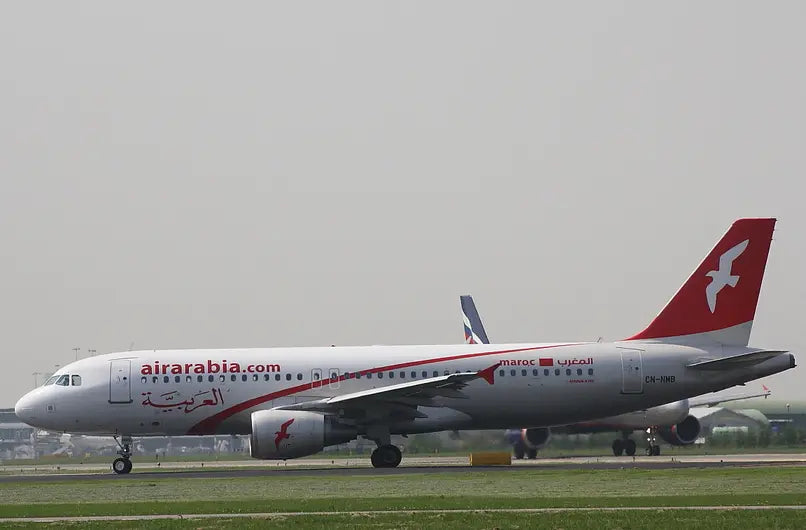
Today, Air Arabia Maroc operates from four Moroccan bases, connecting 35 destinations across 10 countries on 53 routes (47 international and 6 domestic). The airline focuses on point-to-point short- and medium-haul services linking Morocco to key European cities including Barcelona, Brussels, Paris, Amsterdam, Lyon, and Milan, as well as domestic routes serving cities like Agadir, Marrakech, and Rabat. With approximately 48 daily flights and a fleet of 11 Airbus A320-200 aircraft, Air Arabia Maroc is a significant player in the Moroccan aviation market alongside the flag carrier Royal Air Maroc.
As a subsidiary of the Air Arabia Group, the airline benefits from the financial strength of a parent company that posted a record pre-tax net profit of AED 1.8 billion (approximately USD 490 million) in 2025, with group-wide revenues of AED 7.78 billion and 21.8 million passengers carried. The Group operates across six hubs in the UAE, Morocco, Egypt, Pakistan, and Saudi Arabia, with a combined fleet of 90+ aircraft and 120 more on order. Air Arabia Maroc is led by CEO Laila Mechbal and headquartered at Mohammed V International Airport in Casablanca.
Fleet Composition & Type Ratings
Air Arabia Maroc operates an all-Airbus narrowbody fleet consisting exclusively of Airbus A320-200 aircraft. This single-type fleet strategy is a hallmark of the low-cost carrier model, minimizing training costs, simplifying maintenance, and maximizing crew flexibility across all routes. Each aircraft is configured in a single-class economy layout seating 174 passengers.
The fleet's average age stands at approximately 12.3 years, which is above the industry average for narrowbody fleets. While the aircraft remain serviceable and meet all regulatory requirements, the aging fleet contrasts with the parent Air Arabia Group's ongoing modernization program, which took delivery of its first five Airbus A320neo aircraft in 2025 for the Sharjah hub. The Group has a total order backlog of 120 aircraft, predominantly A320neo, A321neo, and A321XLR variants. However, no A320neo deliveries are currently announced specifically for the Moroccan subsidiary.
| Aircraft Type | Role | In Service | Configuration / Notes |
|---|---|---|---|
| Airbus A320-200 | Narrowbody | 11 | 174 pax, single-class economy. All routes (domestic + international). |
Fleet data as of early 2026. One additional aircraft may be wet-leased seasonally from Electra Airways during peak periods.
All pilots joining Air Arabia Maroc fly the Airbus A320-200. The airline requires current A320 type rating and recent flying experience on type for both First Officers and Captains. Type rating training is available through Air Arabia Academy in Sharjah, which operates Level D Full Flight Simulators for the A320 family. Historical data suggests type rating plus line training costs approximately 470,000 MAD (around EUR 43,000) when not covered by the airline. The single-type operation means there are no fleet transition opportunities within Air Arabia Maroc itself, though the broader Air Arabia Group could offer future mobility if A321neo or A321XLR operations expand to Morocco.
At 12+ years average age, the Air Arabia Maroc fleet is considerably older than the group average. The parent company's A320neo deliveries are currently allocated to Sharjah, Abu Dhabi, and new hubs. Prospective pilots should monitor fleet renewal announcements, as the introduction of neo-generation aircraft would improve operational efficiency, reduce noise levels, and potentially signal longer-term investment in the Moroccan operation.
Pilot Salary & Compensation Breakdown
Pilot compensation at Air Arabia Maroc follows a multi-component structure comprising a monthly base salary, block-hour flying allowances, duty pay, and per diem allowances for overnight stays. Pay scales are seniority-based and increase progressively with years of service. However, compared to Gulf-based Air Arabia Group operations (where tax-free salaries in AED are the norm), Moroccan-based pilots earn in Moroccan Dirhams (MAD) and are subject to Moroccan income tax, which reaches up to 38% for higher brackets, plus CNSS (social security) contributions of approximately 8.67%.
First Officer (F/O) Pay Scale
| Seniority | Monthly Base (MAD) | Estimated Annual Gross (EUR) | Notes |
|---|---|---|---|
| Year 1 (entry) | ~28,000 - 32,000 MAD | ~EUR 30,000 - 38,000 | Base + limited flying pay during line training phase |
| Year 2-4 | ~32,000 - 38,000 MAD | ~EUR 38,000 - 48,000 | Full flying pay with ~65-75 block hrs/month |
| Year 5-8 | ~38,000 - 45,000 MAD | ~EUR 48,000 - 55,000 | Seniority increments of ~5-10% apply |
| Senior F/O (8+ yrs) | ~45,000 - 55,000 MAD | ~EUR 55,000 - 65,000 | Top of F/O scale before Captain upgrade |
Figures are estimates compiled from industry sources, pilot reports, and historical Air Arabia Maroc data. Monthly totals include base salary plus typical flying allowances at ~70 block hours/month. EUR conversions at approximate rate of 1 EUR = 10.8 MAD.
Captain (CDB) Pay Scale
| Seniority | Monthly Base (MAD) | Estimated Annual Gross (EUR) | Notes |
|---|---|---|---|
| Entry Captain | ~55,000 - 65,000 MAD | ~EUR 65,000 - 78,000 | Newly upgraded or direct-entry Captain |
| Captain 3-5 yrs | ~65,000 - 75,000 MAD | ~EUR 78,000 - 90,000 | Seniority-based increments |
| Senior Captain (5+ yrs) | ~75,000 - 85,000 MAD | ~EUR 90,000 - 100,000 | Top of pay scale with maximum seniority bonuses |
Captain figures include base salary plus flying allowances at typical block hours. Actual take-home pay is significantly lower after Moroccan income tax (up to 38%) and CNSS social security contributions (~8.67%).
Block Hour Flying Allowances
Air Arabia Group structures flying pay on a tiered block-hour system. Based on documented Air Arabia Group rates (which may be adapted for the Moroccan operation), the structure works as follows: the first 25 credited block hours per month are compensated at a base rate, hours 26-50 at double the base rate, hours 51-75 at four times the base rate, and any hours above 75 at eight times the base rate. Night flights (defined as sectors with block time between 22:00 and 06:00 local) attract a 1.5x multiplier on flying allowances. An additional duty pay of approximately AED 15 (around 45 MAD) per actual flying duty hour is added on top.
Air Arabia Maroc does not publicly disclose pilot salary scales. The figures presented are estimates compiled from pilot forums, recruitment agencies, historical job postings, and Air Arabia Group-wide documentation. Actual compensation varies based on the current collective or individual contract terms, base assignment, block hours flown, and applicable tax rates. Moroccan-based salaries are subject to significant income tax and social charges that reduce net take-home pay by 30-45% compared to gross figures. Pilots considering Air Arabia Maroc should request detailed compensation breakdowns during the recruitment process. Always verify with the latest offer documentation.
Air Arabia Group contracts typically require pilots to sign a service undertaking bond of AED 60,000 (approximately 180,000 MAD or EUR 16,300), amortized over a three-year period. This means leaving the airline before completing three years of service triggers a pro-rata repayment obligation. While common practice among Middle Eastern carriers, this bond represents a substantial financial commitment that effectively limits pilot mobility during the early years of employment.
Roster Pattern & Quality of Life
Air Arabia Maroc operates under Moroccan DGAC aviation regulations combined with EASA Third Country Operator (TCO) authorization requirements for its European operations. The airline's roster system follows a variable pattern typical of low-cost carriers, with duty assignments determined by operational needs rather than fixed rotations. Pilots can expect to fly multiple short-haul sectors per duty day, with typical duty periods involving 2 to 4 flight segments.
Air Arabia Group documentation indicates pilots receive a minimum of 7 consecutive days off per month, combined with 30 days of annual leave per year. However, quality of life at Air Arabia Maroc has come under scrutiny following a 2024 EASA audit that identified critical violations related to flight and duty time limitations and crew scheduling during mandatory rest periods (detailed in Section 9 below).
📅 Sample Month, A320 First Officer (Tangier Base)
As a short-haul low-cost carrier, Air Arabia Maroc pilots typically complete 2 to 4 sectors per duty day, with turnaround times as short as 25-30 minutes at outstation airports. Typical block hours range from 65 to 80 hours per month, though high-season demand (summer and holiday periods) can push utilization toward the upper limit. The airline's multi-base operation from Casablanca, Tangier, Fès, and Nador means pilots may be assigned to any of these four bases, with base preferences determined by seniority.
A September 2024 EASA on-site audit identified critical violations at Air Arabia Maroc related to flight and duty time limitations, including allegations of scheduling pilots during mandatory rest periods. These findings are among the most serious regulatory classifications available. Prospective pilots should carefully evaluate the airline's fatigue management practices and request detailed information about post-audit corrective actions before accepting a position. See Section 9 for a full analysis.
Benefits, Travel Perks & Insurance
As a Moroccan-registered employer, Air Arabia Maroc provides benefits that combine Moroccan statutory requirements with Air Arabia Group-standard offerings. The benefits package is lean compared to legacy carriers or Gulf-based operations, reflecting the airline's ultra-low-cost operating philosophy. That said, pilots do receive a reasonable suite of travel privileges, insurance coverage, and statutory protections under Moroccan labor law.
Pilots based at Air Arabia's Sharjah or Abu Dhabi hubs receive significantly enhanced packages including a housing allowance of AED 12,000/month (~EUR 3,000), transportation allowance of AED 2,000/month, uniform allowance, and tax-free salary in the UAE. Air Arabia Maroc pilots, being Moroccan-based, do not receive these Gulf-specific allowances and are subject to Moroccan income tax. This creates a notable compensation gap between Moroccan and Gulf-based positions within the same group, even when flying the same aircraft type on similar routes.
Career Progression & Seniority
Career progression at Air Arabia Maroc follows a standard seniority-based model. Scheduling preferences, vacation bidding, base selection, and ultimately the upgrade from First Officer to Captain are all determined primarily by years of service with the airline. This is consistent with the Air Arabia Group's approach across all subsidiaries.
Unlike legacy carriers with strict internal-only promotion paths, Air Arabia Maroc does accept direct-entry Captains from external airlines, provided they meet the minimum experience requirements (typically 4,000-5,000 total hours with 1,000+ hours PIC on A320 and a valid ATPL). This is common in the LCC sector and reflects the faster growth trajectory that creates Captain vacancies more quickly than internal upgrades alone can fill.
| Career Milestone | Typical Timeline | Notes |
|---|---|---|
| Join as F/O (A320) | Day 1 | Requires current A320 type rating + minimum 500 hrs on type + 1,000 total hrs. |
| Senior F/O | 3-5 years | Seniority-based pay increments. Eligible for preferred base bidding. |
| Captain upgrade (internal) | 8-12 years | Subject to fleet growth, attrition, and command assessment. Not guaranteed. |
| Direct-entry Captain | N/A (external) | Requires 4,000+ total hrs, 1,000+ PIC on A320, valid ATPL. |
| Training Captain / TRI / TRE | Variable | Requires separate selection and instructor qualification via Air Arabia Academy. |
| Group mobility | Variable | Potential transfers to other Air Arabia hubs (Sharjah, Abu Dhabi, Egypt, KSA). |
One of Air Arabia Maroc's genuine career advantages is membership in the broader Air Arabia Group. As the group expands (it added 30 new routes and grew capacity 10% in 2025 alone), pilots may have opportunities to transfer to other subsidiaries: Air Arabia Abu Dhabi, Air Arabia Egypt, Fly Jinnah (Pakistan), or the newly launched Saudi Arabia operation. Group transfers can offer significantly different compensation packages (especially to the tax-free Gulf hubs), new route networks, and faster career progression where growth is strongest.
The Air Arabia Group is in an active expansion phase, having grown its fleet to 90+ aircraft with 120 more on order. The group's 2025 record financial results (AED 1.8 billion net profit, up 14%) and launch of new hubs in Saudi Arabia signal continued growth that should create pilot vacancies and potentially accelerate upgrade timelines. However, the Moroccan subsidiary's fleet has remained relatively stable at 11 aircraft, and expansion announcements have primarily concerned other hubs. Pilots hoping for rapid career progression may find better opportunities at the group's faster-growing operations.
Recruitment Process & Requirements
Air Arabia Maroc recruits experienced pilots through the centralized Air Arabia Group careers portal. The airline does not operate an ab-initio cadet program specific to Morocco, though the Air Arabia Academy in Sharjah offers a Modular Pilot License (MPL) program for aspiring pilots (self-funded at approximately AED 700,000 / EUR 175,000). Recruitment is ongoing and driven by operational needs, with positions advertised on the group portal and at aviation recruitment events across the region.
First Officer Requirements
Captain Requirements
Selection Stages
Online Application
Submit CV, licenses, logbook summary, and certifications via the Air Arabia Group careers portal. Applications are screened against minimum hour and type-rating requirements. Incomplete applications are automatically rejected.
Technical Assessment
ATPL-level knowledge test covering aircraft systems, performance, meteorology, navigation, and air law. This may be conducted online or at an assessment center. The scope is standard airline technical screening aligned with EASA ATPL syllabi.
Simulator Assessment
A320 simulator session evaluating handling skills, SOP adherence, CRM, threat and error management, and non-normal procedures. Typically conducted at Air Arabia Academy in Sharjah or at a contracted sim center. Captain candidates face a more demanding profile including engine failures, weather diversions, and time-critical decision-making.
Panel Interview
Competency-based interview covering CRM scenarios, career motivation, company knowledge, and behavioral questions. Conducted by a panel including the Chief Pilot or Head of Training. Questions often probe experience with difficult operational decisions, fatigue management, and crew dynamics.
Medical & Documentation
Verification of Class 1 Medical, license validation with Moroccan DGAC, background check, and contract signing. Foreign license holders may need to complete Moroccan DGAC validation, which can take several months for non-EASA/JAA license holders.
Pilots holding EASA or JAA licenses face a relatively straightforward validation process with the Moroccan DGAC. However, FAA-licensed pilots must complete a full theory and practical examination for CPL and IR conversion under Moroccan standards, which can take several months. Non-EASA license holders should factor in this conversion timeline when planning their application. Air Arabia Maroc's European route network also requires EASA TCO compliance, which may impose additional documentation requirements.
How Air Arabia Maroc Compares: Airline Radar Chart
How does Air Arabia Maroc stack up against Morocco's flag carrier Royal Air Maroc and its sister subsidiary Air Arabia Abu Dhabi? Below is a comparative analysis across five key pilot career metrics. Scores are editorial estimates based on publicly available data, pilot reports, and industry benchmarks.
Key Takeaways from the Comparison
Royal Air Maroc leads on fleet diversity and benefits. As the national flag carrier, RAM operates a mixed fleet including Boeing 787 Dreamliners, 737 MAX, ATR 72s, and Embraer 190s, offering pilots the opportunity to fly widebody long-haul, narrowbody, and regional aircraft. RAM's benefits include more structured pension provisions and a wider route network covering Africa, the Middle East, and the Americas. Captain salaries at RAM can reach approximately EUR 10,000/month on expat contracts.
Air Arabia Abu Dhabi wins on compensation. Despite flying the same A320 aircraft, pilots based in Abu Dhabi benefit from tax-free UAE salaries, a housing allowance of AED 12,000/month (~EUR 3,000), and a transportation allowance. This creates a significantly higher net take-home pay compared to the Moroccan operation, even when base salaries are similar in gross terms. For pilots purely optimizing earnings, the Abu Dhabi hub is the more attractive option within the Air Arabia Group.
Air Arabia Maroc offers the strongest geographic advantage for European-oriented pilots. Based in Morocco with routes to Barcelona, Brussels, Paris, Amsterdam, and Lyon, pilots enjoy easy personal access to Europe. The relatively low cost of living in Moroccan cities (particularly Tangier, Fès, and Nador) means that lower absolute salaries can still provide a reasonable standard of living. For Moroccan pilots or those seeking a Mediterranean lifestyle, this positioning has genuine appeal.
Job security is moderate across all three. Air Arabia Maroc benefits from the parent group's strong financial performance and growth trajectory. However, the small fleet size (11 aircraft) and lack of announced expansion create less certainty than the rapidly growing Abu Dhabi operation. Royal Air Maroc, as the national carrier with government backing and ambitious fleet plans (targeting 200 aircraft by 2037), offers the strongest long-term security for Morocco-based pilots.
Scores are editorial estimates based on publicly available salary data, pilot reports, airline documentation, and industry benchmarks. They represent a general assessment for an experienced pilot considering a multi-year career. Individual experiences will vary based on seniority, contract type, base assignment, and personal priorities. Scores will be updated as dedicated guides for Royal Air Maroc and Air Arabia Abu Dhabi are published.
Safety Record & EASA Audit Findings
Any pilot evaluating a prospective employer must carefully assess its safety culture and regulatory compliance record. In the case of Air Arabia Maroc, a significant development in late 2024 warrants serious attention. In September 2024, the European Union Aviation Safety Agency (EASA) conducted an on-site technical assessment at Air Arabia Maroc's facilities. The results, made public in October 2024, revealed critical safety concerns that are directly relevant to pilot working conditions.
What the EASA Audit Found
The audit identified eight Level 1 (critical) violations and one Level 2 (significant) violation. In EASA terminology, Level 1 findings represent the most serious classification, indicating systemic non-compliance that directly impacts flight safety. The key findings included:
The EASA investigation was reportedly initiated following a confidential report from within the organization pointing to operational and maintenance issues potentially compromising flight safety. EASA has declined to comment publicly on specific outcomes or remedial actions, citing standard non-disclosure policies for Third Country Operator (TCO) audit processes.
The documented fatigue management violations are among the most serious concerns for any pilot evaluating employment. Scheduling pilots during mandatory rest periods directly compromises alertness, decision-making capability, and flight safety. While Air Arabia Maroc remains operational and retains its EASA TCO authorization, the placement under intensified surveillance indicates ongoing regulatory monitoring. Prospective applicants should directly question the airline about corrective actions taken since the audit, request documentation of updated fatigue management policies, and assess whether the safety culture has meaningfully changed. The presence of eight critical findings suggests systemic issues that typically require sustained management commitment to resolve.
Verdict: Who Is Air Arabia Maroc For?
🎯 Our Take
Air Arabia Maroc occupies a specific niche in the pilot job market: it is a small, single-type narrowbody LCC operating from Morocco with connections to a larger, financially strong Gulf-based airline group. For the right candidate, it can serve as a stepping stone into the broader Air Arabia Group network or as a geographically convenient position for pilots with ties to Morocco or Southern Europe.
The trade-offs are significant. Salaries are among the lowest for A320 operators in the Europe/MENA region, particularly after Moroccan tax and social charges. The fleet is aging with no announced neo-generation deliveries. The 2024 EASA audit findings regarding critical safety violations, fatigue management breaches, and crew scheduling irregularities raise serious concerns about operational culture. The absence of formal pilot union representation means there is no collective voice to address these issues on behalf of the pilot workforce.
For pilots seeking the highest compensation, modern fleets, or strong quality-of-life protections, other options within the same group (Air Arabia Abu Dhabi) or within Morocco (Royal Air Maroc) may be more attractive. Air Arabia Maroc works best as a building-hours position, a gateway to the Air Arabia Group's faster-growing hubs, or a lifestyle choice for pilots who value living in Morocco while maintaining an international flying career.
1 Do I need to speak French to fly for Air Arabia Maroc?
French is not listed as a mandatory requirement in official recruitment postings, but it is strongly preferred. Morocco is a French-speaking country, and most internal communications, ATC interactions at Moroccan airports, and crew culture are conducted in French. ICAO English Level 4 or higher is mandatory for all positions. Arabic is an additional asset but not required.
2 Does Air Arabia Maroc pay for the type rating?
Air Arabia Maroc requires candidates to already hold a current A320 type rating with recent flying experience on type. The airline does not typically fund type rating for new hires. Historical data suggests the type rating plus line training costs approximately 470,000 MAD (around EUR 43,000) when self-funded. The Air Arabia Academy in Sharjah offers A320 type rating courses for pilots entering the group.
3 How long does it take to upgrade to Captain?
Internal upgrade from First Officer to Captain at Air Arabia Maroc is estimated at 8 to 12 years, depending on fleet growth, attrition rates, and individual performance. The airline also accepts direct-entry Captains with minimum 4,000-5,000 total hours and 1,000+ hours PIC on A320. During periods of group-wide expansion, upgrade timelines may compress.
4 Can non-Moroccan pilots apply?
Yes. Air Arabia Maroc accepts applications from international pilots, though Moroccan and GCC nationals may receive hiring priority. Foreign pilots holding non-EASA licenses will need to complete Moroccan DGAC license validation, which varies in complexity depending on the license issuing authority. EASA/JAA license holders face a simpler process than FAA-licensed pilots.
5 Is there a service bond?
Air Arabia Group contracts typically include a service bond of AED 60,000 (approximately EUR 16,300), amortized over three years. If you leave before completing the three-year period, a pro-rata repayment is required. This is standard practice among Air Arabia Group subsidiaries and many Middle Eastern carriers, designed to recover training and onboarding costs.
6 Can I transfer to other Air Arabia Group hubs?
In principle, yes. The Air Arabia Group operates six subsidiary airlines across the UAE (Sharjah, Abu Dhabi), Morocco, Egypt, Pakistan, and Saudi Arabia. Pilots may apply for internal transfers to other hubs, subject to operational needs and management approval. Transferring to a Gulf-based hub (Sharjah or Abu Dhabi) would typically result in a significant compensation increase due to tax-free salaries and housing allowances.
7 What happened with the 2024 EASA safety audit?
In September 2024, EASA conducted an on-site technical assessment and identified eight critical (Level 1) violations and one significant (Level 2) violation. Key findings included flight and duty time limitation violations, improper crew scheduling during mandatory rest periods, and delays in MEL updates. Air Arabia Maroc was placed under intensified EASA surveillance. EASA has not publicly disclosed specific corrective actions or outcomes. Prospective pilots should request information about post-audit remediation directly from the airline during the recruitment process.
8 How does Air Arabia Maroc pay compare to Royal Air Maroc?
Compensation at both airlines is below the European average for A320 operators. Royal Air Maroc Captain salaries reach approximately EUR 10,000/month on expat contracts (B737), with First Officers earning EUR 4,500-6,000. Air Arabia Maroc Captains earn an estimated EUR 5,000-7,800/month and First Officers EUR 2,500-5,000/month. RAM offers greater fleet diversity, structured union representation, and more comprehensive pension provisions, but Air Arabia Maroc provides potential group mobility to tax-free Gulf positions.
Official Links & Resources
Before applying or making any career decisions, always verify information directly with official sources. These are the key websites and organisations relevant to Air Arabia Maroc pilot careers:
Bookmark the Air Arabia Group careers portal (careers.airarabia.com) and check it regularly. Pilot positions are posted on a rolling basis across all six hubs, and the group's rapid expansion means new opportunities appear frequently. If Air Arabia Maroc salaries seem low, the same application process may give you access to better-compensated positions at the Sharjah or Abu Dhabi operations.